Bad ESN: What It Means and How to Fix It (2026 Guide)
A bad ESN means your phone is blacklisted by a carrier. Learn how to check ESN status for free and fix it through your carrier or third-party services.
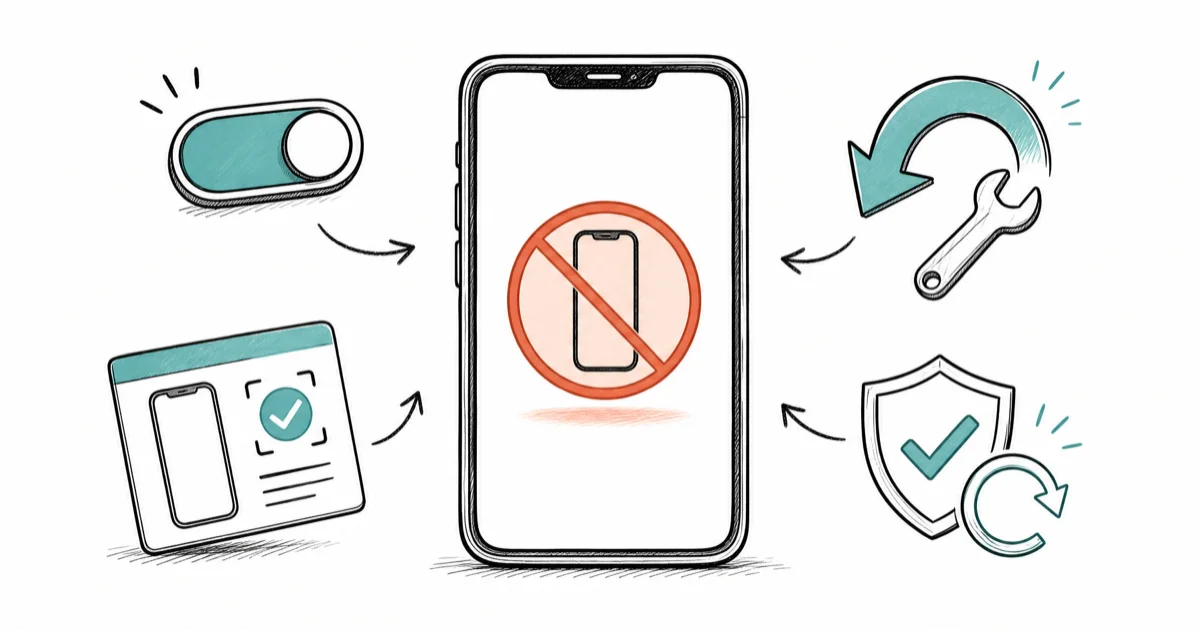
Quick AnswerA bad ESN means a phone has been blacklisted by a carrier due to being reported lost or stolen, having unpaid bills, or fraud. You can check a phone's ESN status for free using your carrier's IMEI checker or sites like Swappa before purchasing a used device.
A bad ESN can turn a perfectly good phone into an expensive paperweight. The good news is that checking ESN status is fast and free: most carrier IMEI checkers return a result almost instantly, while calling a support line for the same answer is usually slower.
Check ESN, IMEI, or carrier status only for your own phone or a device you are considering with the seller’s permission, and keep screenshots of the listing and carrier response before you pay. Prioritize official carrier tools, manufacturer support pages, and verified marketplace checks before buying or activating, because they give the most reliable status, clearer ownership context, and a documented support path if the listing is wrong or the seller later disputes what was promised.
- A bad ESN means a phone has been blacklisted by a carrier, typically for being reported lost or stolen, having unpaid bills, or fraud
- Always check a used phone’s ESN or IMEI before buying using your carrier’s checker or Swappa, which is free and takes under a minute
- A blacklisted device can’t make calls, send texts, or use mobile data, but it can still connect to Wi-Fi and run apps
- Bad ESNs caused by unpaid bills can often be cleared by settling the outstanding balance directly with the carrier
- Using or unlocking a stolen device with a bad ESN can have serious legal consequences, even if you purchased it in good faith
#ESN Basics: What It Is and Why It Matters
An Electronic Serial Number (ESN) is a unique identifier assigned to mobile devices on CDMA networks. According to Wikipedia’s reference on Electronic Serial Numbers, the FCC created the 32-bit ESN format in the early 1980s, and it was replaced by the longer MEID format after the codes ran out, with the last unused ESNs allocated in November 2008. Think of it as a digital fingerprint that tells the network exactly which phone is connecting.
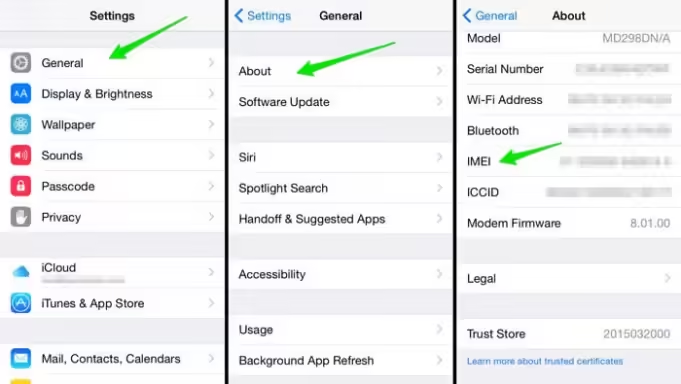
ESNs are 11-digit numbers (sometimes shown in 8-digit hex format) used primarily by CDMA carriers like Verizon and Sprint. They’re being phased out in favor of IMEIs (International Mobile Equipment Identity) for GSM networks like AT&T and T-Mobile.
If you’re curious about your iPhone’s IMEI, you can check it easily online. The process is similar for checking ESN status.
#Common Causes of a Bad ESN
A “bad ESN” means a carrier has blacklisted the device. According to Verizon’s device unlocking policy, carriers blacklist phones for four main reasons:
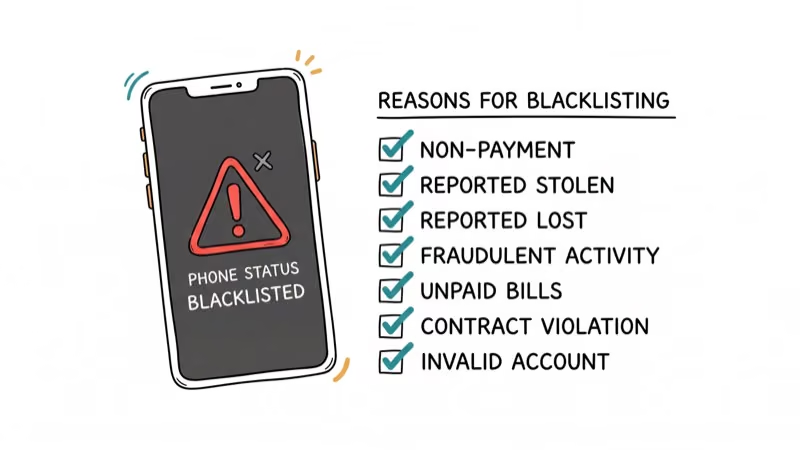
- Reported lost or stolen - carriers immediately flag the ESN to prevent unauthorized use
- Unpaid bills - the previous owner’s outstanding balance triggers a blacklist until the debt is settled
- Fraud - devices tied to fraudulent accounts get blocked
- Contract violations - early termination without paying required fees
The impact is significant. A blacklisted phone won’t activate on Verizon, T-Mobile, or AT&T. It can still connect to Wi-Fi, but cellular service stays dead across every network that checks the shared blacklist database.
#How Do You Check if a Phone Has a Bad ESN?
Always check before you buy. Here’s how to verify ESN status in under 2 minutes:
- Find the ESN/IMEI - go to
Settings>About Phoneon the device, or dial*#06# - Run a free online check - sites like Swappa’s IMEI check and IMEIpro.info show blacklist status instantly
- Call the carrier directly - they can confirm the exact status and reason for any blacklist
- Use the carrier’s website - Verizon, T-Mobile, and AT&T all have online IMEI/ESN checkers
If the seller won’t let you check the ESN before buying, walk away. That’s the single biggest red flag in used phone transactions.
#Can You Fix a Bad ESN?
Yes, depending on the cause. Here’s what works for each scenario:
Unpaid bills - settle the outstanding balance with the carrier. ESNs are often cleared within 24-48 hours after payment, though some carriers take up to 5 business days.
Reported lost/stolen by the original owner - if you bought the phone legitimately, contact the carrier with your proof of purchase. They may clear it after verifying the claim.
ESN cleaning services - third-party services exist that claim to whitelist devices, but results vary widely. According to T-Mobile’s support documentation, they don’t recognize third-party unlocking services.
Carrier switch - some blacklisted phones can be unlocked for use on other networks, though this doesn’t guarantee the ESN will be clean on the new carrier.
For those dealing with SIM-related issues alongside ESN problems, understanding carrier lock and SIM restrictions can help you figure out which problem to tackle first.
#Using a Phone with a Bad ESN
A blacklisted phone isn’t completely useless. Here’s what still works:
- Wi-Fi connectivity - browsing, apps, streaming, and VoIP calls all work normally
- Media device - use it as a dedicated music player, security camera, or kid’s tablet
- International use - in some countries, the US blacklist doesn’t apply, so the phone works with local SIM cards
That said, a bad ESN phone loses roughly 60-70% of its resale value compared to a clean device. If you’re locked out of the phone entirely, you may also need to unlock it without a passcode before you can even use it on Wi-Fi.
#Avoiding Bad ESN Phones When Buying Used
Prevention takes less than 2 minutes and saves hundreds of dollars:
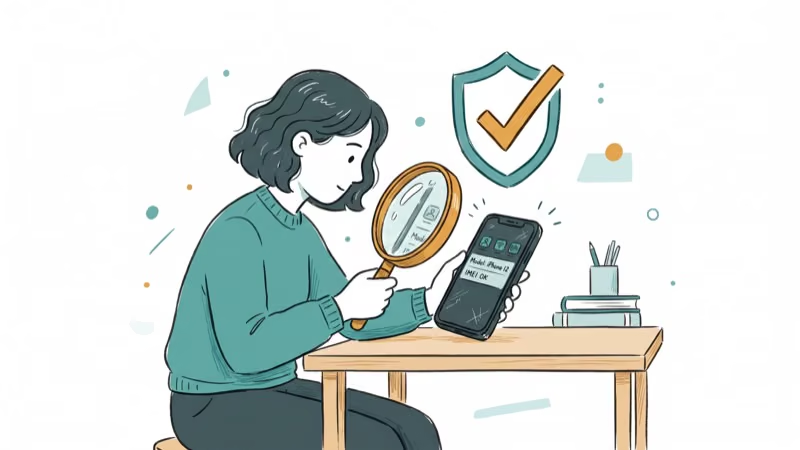
- Buy from verified sellers - Swappa, Amazon Renewed, and carrier-certified pre-owned programs all verify ESN status before listing
- Always run an IMEI check - free and takes 10 seconds through Swappa or the carrier’s site
- Watch for pricing red flags - an iPhone 15 listed at half market price is almost certainly blacklisted or stolen
- Get a receipt - written proof of purchase protects you if the ESN goes bad after the sale
If you’re buying an iPhone specifically, iCloud Activation Lock is a separate issue that can also brick a device. You may need to resolve the Activation Lock even after clearing the ESN, so check both before purchasing.
#Bottom Line
Check the ESN before you buy any used phone. The entire process takes under a minute using Swappa’s free IMEI check or your carrier’s website. If you already own a phone with a bad ESN, start by calling the carrier to find out the specific reason for the blacklist. Unpaid bill cases are the easiest to resolve since paying the balance usually clears the device within a few days. For stolen device flags, you’ll need proof of legitimate purchase.
#Frequently Asked Questions
Can a bad ESN be fixed?
Yes. Contact the carrier to find out why it’s blacklisted. If it’s due to unpaid bills, settling the debt usually clears the ESN within 24-48 hours. Stolen device flags are harder to resolve and may require proof of purchase.
Can I use a phone with a bad ESN?
You can use it on Wi-Fi for browsing, apps, and streaming. Cellular service (calls, texts, mobile data) won’t work on any carrier that checks the blacklist database.
Is it legal to sell a phone with a bad ESN?
Yes, but you must disclose the bad ESN status to the buyer. Selling a stolen phone is illegal regardless of ESN status.
How long does a bad ESN last?
It depends on the cause. Unpaid bill blacklists can be cleared within days of payment. Stolen device flags may remain permanently unless the original owner removes the report.
Does unlocking a phone fix a bad ESN?
No. Unlocking removes carrier restrictions so you can use different SIM cards, but it doesn’t clear the ESN blacklist. These are two separate issues.
What’s the difference between ESN and IMEI?
ESNs are used on CDMA networks (older Verizon and Sprint devices). IMEIs are used on GSM networks (AT&T, T-Mobile) and have become the universal standard. Both serve the same purpose: identifying your device on the network.
Apple Siri Settlement: Who Qualifies and How to Claim
Apple's $250 million Siri settlement covers iPhone 15 Pro and iPhone 16 models bought June 2024 to March 2025. See who qualifies and how claims work.
iOS 26.6.1 Security Update: What Apple Fixed and Who Gets It
Apple released iOS 26.6.1 on August 17 with 29 security fixes, including an IPSec interception bug. See what it patches, who gets it, and how to update.
iPhone Adaptive Power: How It Works and When to Use It
Learn how iPhone Adaptive Power works, which models support it, what it changes, and when Low Power Mode is still the better battery-saving choice.
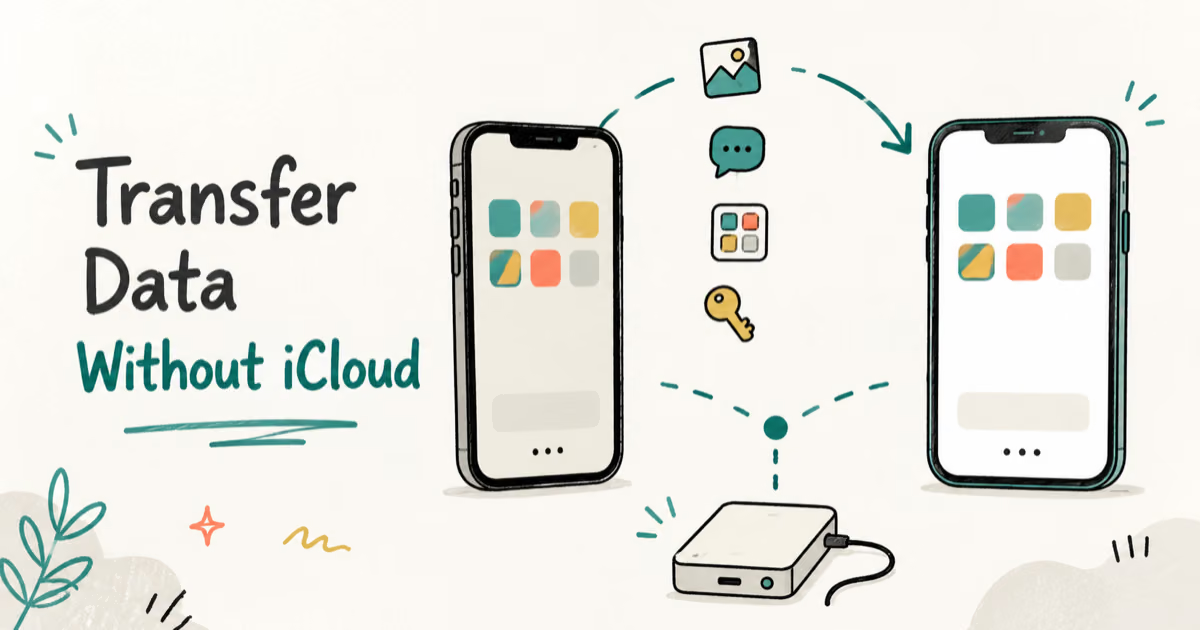
How to Transfer Data to a New iPhone Without iCloud
Move everything to your new iPhone without iCloud: Quick Start device-to-device transfer, wired migration, and encrypted Finder or iTunes backups.