3Unlocker and Phone Unlock Services: What to Verify
3Unlocker and similar services mix Activation Lock, carrier unlock, and passcode claims. Learn the official paths and evidence to require before paying.
Quick AnswerSearch visibility doesn't verify 3Unlocker or any unlock site. Identify the lock first, then use Apple's Activation Lock steps or your carrier's official process; don't share account passwords or device passcodes.
Search results group 3Unlocker with services making different promises. This guide covers only your own device or one you’re authorized to handle, and it doesn’t label a named provider effective or fraudulent without verifiable evidence.
- A marketing claim, search ranking, or review score doesn’t prove that an unlock works.
- Activation Lock, carrier lock, screen passcode, and an IMEI block are different problems with different owners.
- Apple documents account-based Activation Lock removal and a proof-of-purchase support-request path.
- Carrier-unlock eligibility and timing come from the carrier, not a universal IMEI-code generator.
- Don’t share an Apple Account password, device passcode, two-factor code, or payment details before verifying who receives them and why.
#What Kind of Lock Are You Dealing With?
The word “unlock” hides several unrelated systems. Picking a service before identifying the lock is how readers end up paying for a process that can’t address their device.
Activation Lock is part of Find My. According to Apple’s current removal guide, the owner can enter the linked Apple Account and password or device passcode on the device, or remove an offline device through Find My on the web. If proof of purchase is available, Apple also provides a support-request path, but the page doesn’t promise approval or a specific price.
Carrier or SIM lock controls whether a device can use another provider’s network. AT&T states that its current eligibility rules include a device purchased more than 60 days ago, paid in full, not reported lost or stolen, and attached to a current account when applicable. Our carrier-unlock overview explains why that process is separate from Activation Lock.
Screen passcode protects local access to the operating system and data. Start with the platform owner’s recovery process, such as our locked-out iPhone guide or Android lock-screen recovery guide, instead of treating an IMEI submission as passcode recovery.
IMEI network blocking belongs in the carrier and CTIA path in our blacklisted iPhone guide, not Activation Lock.
#What Can We Verify About 3Unlocker?
This audit didn’t find primary documentation or a repeatable test that proves a current 3Unlocker workflow completes any specific lock-removal task. That finding is about the evidence available in this run, not proof that the service always fails or that its operators committed wrongdoing.
We therefore don’t repeat earlier unsupported prices, failure rates, trust scores, review counts, or accusations as facts. Before relying on 3Unlocker or any similarly named service, require a current official site, a legal business identity, exact supported devices and lock types, written refund terms, and a clear explanation of what data leaves your device.
If the provider calls a temporary setup workaround a permanent removal, stop. A bypass that limits calls, cellular service, iCloud sign-in, updates, or restarts isn’t the same outcome as removing the underlying lock.
#Red Flags Before You Pay
According to the FTC’s current tech-support scam guidance, scammers may use search ads, ask for remote access, or demand hard-to-recover payment methods such as gift cards, wire transfers, cryptocurrency, or payment apps. Those patterns don’t prove that every unlock site is fraudulent, but each one is a reason to pause and verify independently.
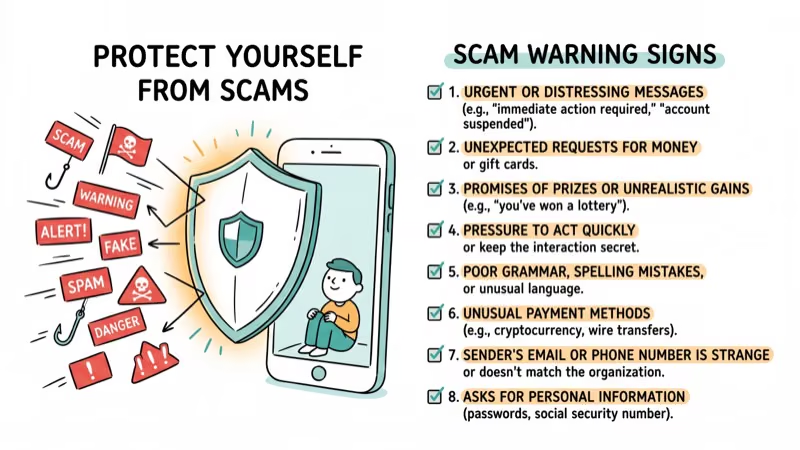
| Warning sign | What to verify before continuing |
|---|---|
| ”Instant” or guaranteed result | The exact lock type, device model, OS range, and limitations |
| Payment before diagnosis | Total price, refund trigger, merchant identity, and billing descriptor |
| Request for Apple Account credentials | Why the account holder can’t use Apple’s own removal path instead |
| Remote-control software | What access is granted, how to revoke it, and whether files can be copied |
| Vague use of “unlock” | Whether the result is removal, carrier eligibility, passcode recovery, or a temporary bypass |
| Reviews only on the seller’s site | Independent evidence tied to the same domain, company, and current product version |
#Proof Checklist for Any Unlock Service
Treat the purchase like a security decision, not a download decision.
- Match the device screen or carrier message to one lock type.
- Check the platform owner or carrier’s official path first.
- Save the provider’s current terms, refund policy, support address, and full price before paying.
- Confirm whether the process erases data, requires a jailbreak, breaks cellular service, or stops working after an update or restart.
- Use a payment method with a dispute process, and never pay by gift card or by transferring cryptocurrency to an unknown recipient.
An IMEI identifies hardware, not ownership. Don’t combine it with account credentials, two-factor codes, identity documents, remote access, or card details.
#Official Paths That Match the Lock
For Activation Lock, follow Apple’s account-holder steps first. If the previous owner is reachable, have that person remove the device from Find My. If you have proof of purchase and still need help, start from Apple’s support-request instructions. Our Activation Lock guide adds a plain-language walkthrough without promising that proof guarantees approval.
For a carrier lock, use the carrier’s current eligibility page. AT&T publishes its requirements and request portal but doesn’t state a processing time on that page. T-Mobile confirms that an eligible device supporting remote unlock is unlocked automatically within two business days. Policies differ, so one carrier’s number shouldn’t be applied to another.
For a passcode lock, use the platform’s erase or account-recovery route and expect local data loss if no backup exists. For a used iPhone, also check carrier-lock status and Activation Lock before money changes hands.
This article doesn’t recommend third-party bypass tools. Compatibility and post-restart behavior change, and bypass isn’t the same as removal.
#If You Already Paid or Shared Data
Move quickly, but don’t assume a refund outcome. Contact the card issuer, bank, or payment provider through the number or app you already trust, describe the transaction accurately, and ask what dispute options and deadlines apply to that payment method.
The FTC recommends changing shared and reused passwords immediately. Remove remote-control software, review account sessions, update the device, and run a security scan. Report deceptive conduct through ReportFraud.ftc.gov.
If the phone belongs to someone else or shows a previous owner’s account, stop the unlock attempt. Return it to the seller or follow the lost-device path; our lost and erased iPhone guide explains why erasing the phone doesn’t remove the account link.
#Bottom Line
We can’t certify 3Unlocker from search visibility, marketing copy, or uncited review summaries. We also won’t call it criminal without primary evidence. The useful decision is simpler: identify the lock, use Apple or the carrier first, and require current written proof before giving a third party money, credentials, or device access.
Official removal is not the same as a temporary bypass. If a service can’t state which one it delivers, what stops working, and when the result can reverse, don’t proceed.
#Frequently Asked Questions
Is 3Unlocker legitimate?
We couldn’t verify a current, repeatable result from primary documentation in this audit. That isn’t proof of fraud or proof that the service works. Treat its claims as unverified until the provider supplies a current official identity, supported-device matrix, written limitations, and refund terms.
Are there free unlock tools that work?
It depends on the lock. Apple’s owner-controlled Activation Lock steps don’t require buying a third-party tool, and carriers may unlock eligible devices through their own process. Neither statement guarantees that a third-party bypass will work or that an Apple support request will be approved.
Is it safe to enter an IMEI on an unlock site?
An IMEI is a device identifier, not a password, but the site’s data-handling practices still matter. Don’t pair it with account credentials, two-factor codes, identity documents, remote access, or card information unless you have verified the recipient and the need for each item.
How long does a carrier unlock take?
There is no universal number. AT&T’s current public page lists eligibility and a request portal without stating a processing time there; T-Mobile states that an eligible remote-unlock-capable device is unlocked automatically within two business days. Check the provider responsible for your device.
What payment method should I use?
Read the refund policy and use a payment method whose dispute process you understand. The FTC warns that gift cards, wire transfers, cryptocurrency, and some payment-app transfers can be hard to recover, so don’t use them with an unverified recipient.
Can I always get a refund if the unlock fails?
No universal rule guarantees that result. The answer depends on the seller’s terms, what was promised, the evidence you kept, the payment method, and the payment provider’s current policy. Contact the provider promptly instead of relying on a fixed deadline copied from another service.
Is it legal to unlock a phone I own?
Carrier unlocking, account-based Activation Lock removal, passcode recovery, and security bypasses aren’t the same legal act. Rules vary by jurisdiction and circumstances, and ownership alone doesn’t make every bypass method endorsed or lawful. Use official processes and seek local legal advice when the status is disputed.
What should I do if the iPhone is linked to a previous owner?
Ask the previous owner to remove it from Find My, or return the phone. According to Apple’s Activation Lock guidance, a buyer shouldn’t take ownership until the device is erased and removed from the previous owner’s account. Proof of purchase can start a support request, but it doesn’t guarantee removal.
Is This Bank App Real? Spot a Fake App on Your Home Screen
A bank app can land on your home screen from a web page with no install warning. Learn the checks that tell a real banking app from a phishing web app.
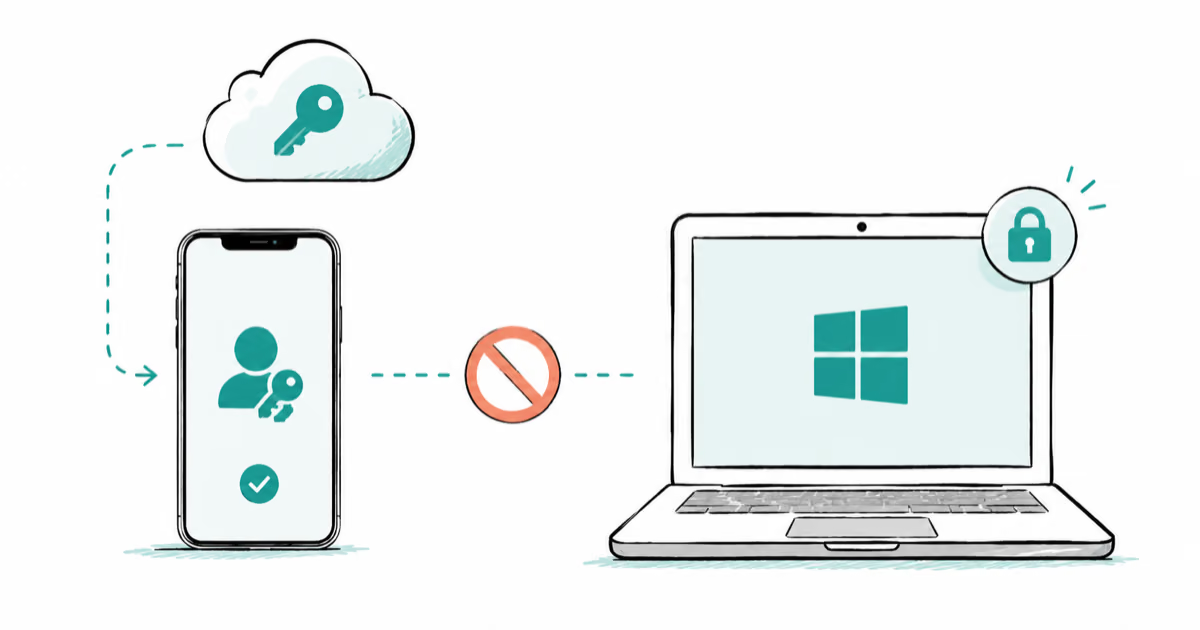
Passkeys Not Syncing Between iPhone and Windows? Read This
Passkeys not syncing between iPhone and Windows is by design, not a bug. Here is why iCloud passkeys skip Windows Hello and the three ways to fix it.
VPN Not Working on Snapdragon X? Why It Fails, How to Fix
Your VPN won't install or connect on a Snapdragon X Copilot Plus PC because Windows on ARM can't emulate the network driver. Here are the fixes that work.
How to Check If a Link Is Safe Before You Click It
Learn how to check if a link is safe with official-first steps: read the real domain, use the app instead, and treat scanners as a second opinion only.