Fix Windows Error 0x80072EFE: Update Connection Failed
Fix Windows error 0x80072EFE that blocks updates and Microsoft Store access. Step-by-step fixes for network, firewall, date/time, and TLS issues.
Quick AnswerError 0x80072EFE means Windows can't connect to Microsoft's update servers. Fix it by checking your internet connection, correcting system date/time settings, temporarily disabling your firewall, and resetting Windows Update components.
Error 0x80072EFE stops Windows from connecting to Microsoft’s update servers. It blocks Windows Update, Microsoft Store downloads, and settings sync. The fixes below work on Windows 10 and Windows 11, and correcting the system clock resolves the error instantly in many cases.
- Error 0x80072EFE means Windows can’t reach Microsoft’s servers, almost always due to network issues, firewall blocks, or wrong date/time
- Correcting the system clock (right-click taskbar clock, enable “Set time automatically,” click “Sync now”) fixes authentication failures
- Temporarily disabling third-party antivirus and Windows Firewall isolates whether security software is blocking the connection
- Resetting Windows Update components clears corrupted data that prevents server communication
- Running wsreset.exe from the Run dialog clears the Microsoft Store cache for Store-specific errors
#What Causes Error 0x80072EFE?
This error means Windows tried to connect to Microsoft’s servers but the connection failed. Microsoft Support confirms that 0x80072EFE is a connection-level failure, not a file corruption issue.
The most common causes:
- Wrong system date/time causing SSL certificate validation failures (one of the most common causes)
- Firewall or antivirus blocking outbound connections to Microsoft servers
- Unstable internet dropping the connection mid-download
- Misconfigured proxy settings routing traffic away from update servers
- Disabled TLS 1.2 preventing secure connections
You’ll see this error during Windows Update, when downloading from the Microsoft Store, or when syncing settings across devices. It’s a connection problem, not a system file problem, which makes it different from errors like 0x80070570 or 0x800703f1.
#How Do You Fix the Date and Time Issue?
A wrong system clock is the sneakiest cause. If your clock is off by more than 5 minutes, SSL certificates fail validation and Windows can’t authenticate with Microsoft’s servers.
- Right-click the clock in the taskbar and select Adjust date/time
- Turn on Set time automatically and Set time zone automatically
- Click Sync now under “Synchronize your clock”
A laptop with a clock that is hours off after a CMOS battery failure shows error 0x80072EFE every time Windows Update runs. After syncing the clock, updates start downloading immediately.
#Disable Firewall and Antivirus Temporarily
Security software can block the exact ports and processes Windows needs to reach Microsoft’s servers.
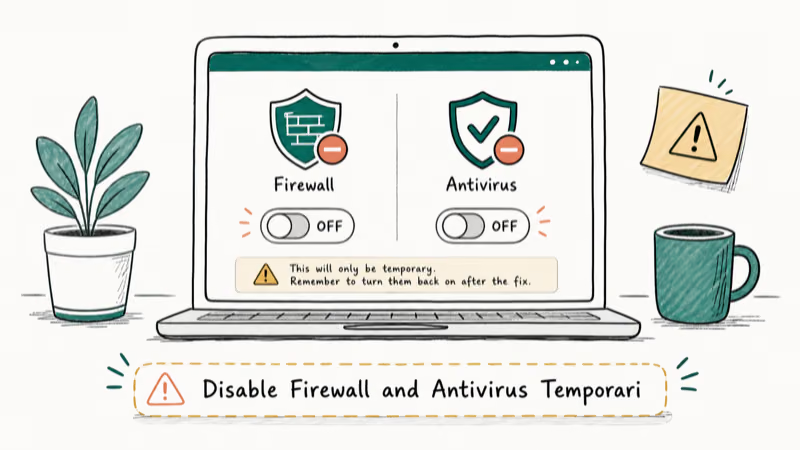
Disable Windows Firewall:
- Open Windows Security
- Go to Firewall & network protection
- Turn off the firewall for your active network
- Try Windows Update and re-enable the firewall afterward
Disable third-party antivirus: If you use Norton, McAfee, or Bitdefender, disable real-time protection temporarily. On a PC running a suite like Norton 360, error 0x80072EFE often disappears the moment you disable the firewall component.
If disabling fixes the error, add svchost.exe and wuauserv to your firewall’s exception list so updates work permanently.
#Reset Windows Update Components
Corrupted update data can cause persistent connection failures even when your network is fine.
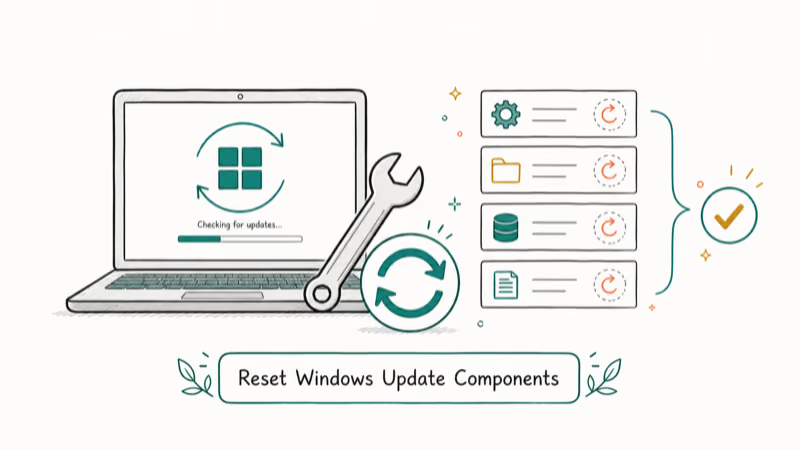
Open Command Prompt as administrator and run:
net stop wuauserv
net stop cryptSvc
net stop bits
net stop msiserver
ren C:\Windows\SoftwareDistribution SoftwareDistribution.old
ren C:\Windows\System32\catroot2 Catroot2.old
net start wuauserv
net start cryptSvc
net start bits
net start msiserver
Restart and retry the update. This clears out corrupted cache and fixes the connection error in most cases.
#Fix Network and DNS Issues
Network problems are the most obvious cause but easy to miss if your browser works fine. Windows Update uses different connection paths than web browsing.
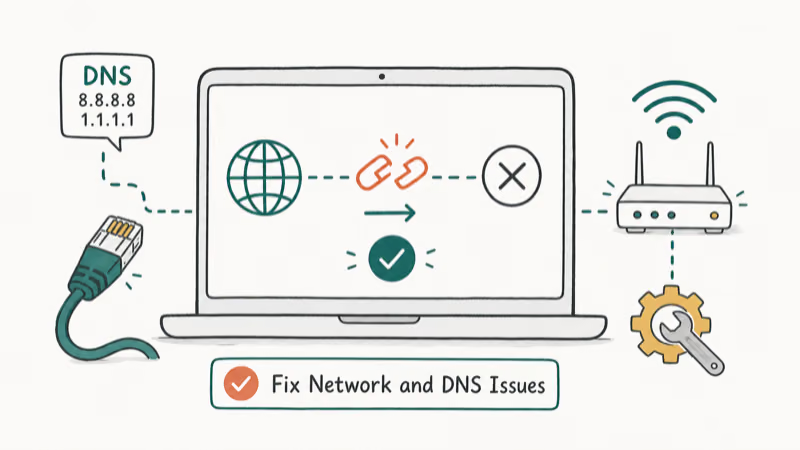
Open Command Prompt as administrator and run:
ipconfig /flushdns
netsh winsock reset
netsh int ip reset
Restart your PC after running all three commands. When the DNS cache holds stale entries pointing to old Microsoft IP addresses, flushing DNS lets updates connect successfully.
Also check proxy settings:
- Go to
Settings>Network & Internet>Proxy - Make sure Automatically detect settings is on
- Make sure Use a proxy server is off (unless you need it)
For related network errors, see our guide on fixing the default gateway unavailable error.
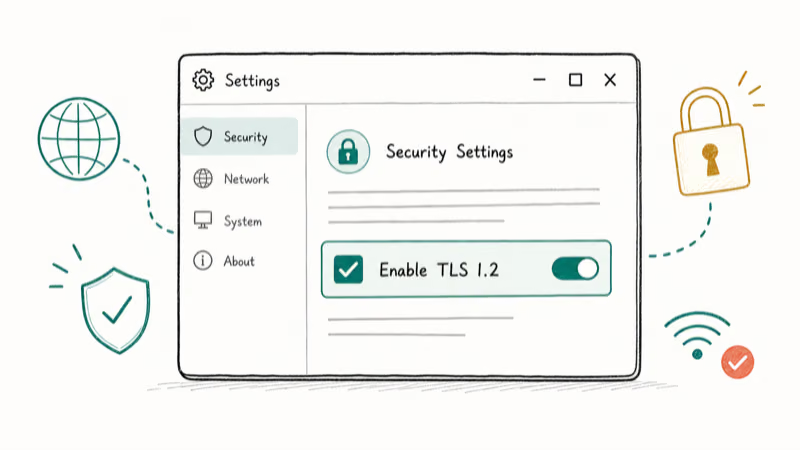
#Enable TLS 1.2
Older Windows configurations sometimes have TLS 1.2 disabled, which prevents secure connections to Microsoft’s servers. This is especially common on PCs upgraded from Windows 7 or 8.
- Open Registry Editor (press Windows key + R, type
regedit) - Go to
HKEY_LOCAL_MACHINE\SYSTEM\CurrentControlSet\Control\SecurityProviders\SCHANNEL\Protocols - Check that TLS 1.2 exists and is enabled
- If missing, create the key and set Enabled to 1
Back up your registry before making changes. Microsoft’s TLS documentation states that TLS 1.2 is required for all Windows Update connections since 2020.
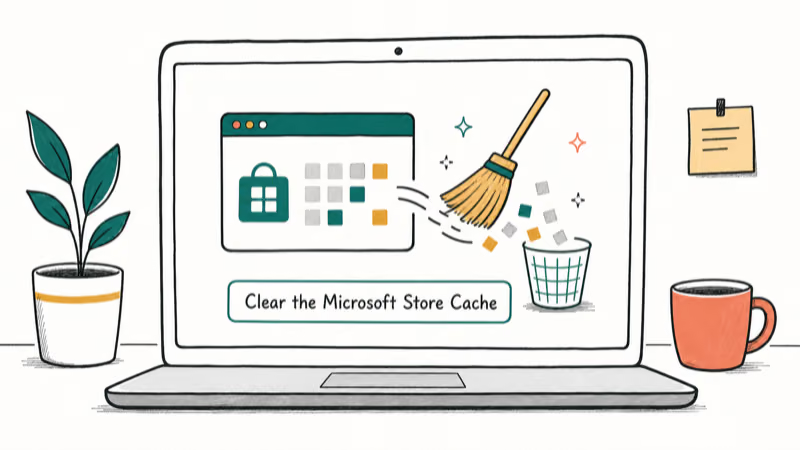
#Clear the Microsoft Store Cache
If error 0x80072EFE only shows up in the Microsoft Store (not Windows Update), the Store cache may be corrupted.
- Press Windows key + R to open the Run dialog
- Type
wsreset.exeand press Enter - Wait for the process to finish (a blank Command Prompt window opens, then the Store launches)
This takes about 30 seconds and fixes most Store-specific connection errors. If the error affects both Windows Update and the Store, use the component reset method above instead. For other Store errors, check our guide on repairing Windows 10 without a CD.
#Bottom Line
Check your system clock first. A wrong date/time is the most common and easiest-to-fix cause of error 0x80072EFE. If the clock is correct, disable your firewall temporarily to test. Reset Windows Update components if the error keeps coming back. Make sure TLS 1.2 is enabled, especially on PCs upgraded from older Windows versions.
#Frequently Asked Questions
Can error 0x80072EFE affect other Microsoft services?
Yes. It can block Xbox Live, OneDrive sync, Microsoft Office updates, and Outlook email connections. Any Microsoft service that needs to authenticate with Microsoft’s servers may fail with this error.
Is it safe to modify registry settings to fix TLS?
Yes, if you follow the steps carefully and back up your registry first. The TLS 1.2 change is a standard configuration that Microsoft recommends for all Windows 10 and 11 PCs. You’re enabling a feature, not breaking anything.
How long does it take to resolve error 0x80072EFE?
Fixing the system clock takes 30 seconds. Disabling firewall takes 1 minute. Resetting update components takes about 5 minutes. Most people resolve the error within 10 minutes total.
Can using a VPN cause error 0x80072EFE?
Yes. VPNs can route your traffic through servers that block or throttle connections to Microsoft’s update infrastructure. Disconnect your VPN before running Windows Update. If you need the VPN, add exceptions for Microsoft’s server addresses.
Will resetting my PC fix this error?
A full reset will fix it, but it’s overkill. Try the methods above first. A reset should only be your last resort after the clock fix, firewall test, component reset, DNS flush, and TLS check all fail.
Why does error 0x80072EFE keep coming back?
Recurring errors usually point to a firewall rule or proxy configuration that keeps resetting. Check if your organization pushes group policies that override your firewall settings. On personal PCs, a misbehaving antivirus is the most common cause of recurring 0x80072EFE errors. For other persistent update issues, see our guide on error 0x80071a91.
Best Laptop for Running LLMs in 2026: Memory Comes First
The best laptop for running LLMs is a memory purchase first. Compare MacBook unified memory against NVIDIA laptop VRAM, and see what each tier really runs.
How to Run a Local LLM on Windows: A 2026 Setup Guide
Run a local LLM on Windows with LM Studio or Ollama. Pick a model that fits your GPU memory, keep every prompt offline, and skip the monthly bill.
Bluetooth Not Working on Snapdragon X? Fixes for 2026
Bluetooth not working on your Snapdragon X Copilot+ PC? Generic audio, mice, and keyboards work, but vendor apps often lack an ARM build. Fixes inside.
Docker Desktop and WSL2 Not Working on Snapdragon X? Fix It
WSL2 runs fine on Snapdragon X, but Docker Desktop ARM is Early Access and throws WSL errors. Use WSL2 plus native ARM64 Ubuntu and Docker Engine.