What Is Omegle? Risks, Shutdown, and Safer Alternatives
What Omegle was, how it worked, why it shut down in November 2023, and the safer chat alternatives parents and teens should know about today.

Quick AnswerOmegle was a free anonymous chat site that paired strangers for text and video chat from 2009 to November 2023. Founder Leif K-Brooks shut it down after years of child-safety lawsuits. The site is offline, but copycat apps like OmeTV and Chatroulette still run the same model.
Omegle was the anonymous chat site that paired you with a random stranger and let you talk by text or webcam, with no signup needed. Founder Leif K-Brooks ran it from March 2009 until November 8, 2023, when he announced the closure after a string of child-safety lawsuits. The platform is dead, but its DNA lives on in OmeTV, Shagle, Chatroulette, and a wave of similar apps that pair strangers the same way.
- Omegle launched in March 2009 from Brattleboro, Vermont, and shut down on November 8, 2023
- Founder Leif K-Brooks closed the site after settling a federal lawsuit involving a minor matched with a predator
- The site never required signup or age verification, only a single click to talk to strangers
- Omegle stored chat metadata for around four months and cooperated with law-enforcement subpoenas
- Clones like OmeTV, Shagle, Chatroulette, Monkey, and Joingy still use the same random-pairing model with the same risks
#What Was Omegle and Who Created It?
Omegle was a free, anonymous, peer-to-peer chat site that randomly paired two users for one-on-one conversation. According to Wikipedia, in 2009 Leif K-Brooks launched Omegle from his bedroom in Brattleboro, Vermont, at age 18. The tagline “Talk to Strangers!” sat at the top of every page for fourteen years.
You didn’t need an account. Pick text or video, type an optional interest tag, and you were in. Two labels appeared on screen: You and Stranger.
The site grew quickly because it removed every step that other chat platforms required, no signup, no profile, no friend graph. You hit the front page, clicked a button, and you were in.
After that, the product hardly changed shape.
#How Did Omegle Work?
The site offered three core modes that grew over its run.
Text chat was the original 2009 product. You typed, the stranger typed, and either party could end the chat by clicking Stop. You could re-roll instantly and land in a brand new conversation.
Video chat launched in March 2010. Webcam and microphone connected you face-to-face with another stranger, with a small text window beside the video.
Spy mode, added in 2011, was the strangest feature. One user asked a question, and Omegle paired two other strangers to discuss it while the asker watched silently. The spy could leave any time and let the two strangers keep chatting.
In 2012, Omegle added interest tags. You typed in topics like “music,” “anime,” or “fitness,” and the algorithm tried to match you with strangers who listed the same tags. If no overlap existed, you were paired with a random user instead.
The site had two surveillance tiers. The “moderated” section used automated filters plus human reviewers to flag bad behavior. The “unmoderated” section, gated behind a click-through warning, had no oversight. Omegle’s terms of service stated that users had to be 18 or older, or 13 to 17 with parental permission, but the site never asked for proof.
In its final months, the warning banner on the moderated section reminded users that video was monitored and to keep it clean. A single click past that banner dropped a user straight into a stranger video chat within seconds.
#Why Omegle Shut Down in 2023
Legal pressure became the breaking point. The site faced a steady drumbeat of lawsuits alleging it had matched minors with adult predators, and several of those cases reached federal court.

The decisive lawsuit was filed in 2021 in Oregon by the parents of an 11-year-old. According to court records summarized in the Omegle Wikipedia entry, the girl had been paired in 2014 with an adult man who coerced her into producing sexual content for the next three years, and Omegle settled in November 2023 for an undisclosed sum.
In his farewell letter, posted on the omegle.com homepage, he wrote that “the stress and expense of this fight” had become unsustainable. The site replaced the chat button with a tombstone image and the headline “Omegle.com, 14 years.”
The shutdown happened with no warning to users. One day the chat worked, the next day it didn’t.
#The Five Recurring Omegle Safety Risks
Five risk patterns came up over and over in police reports, lawsuits, and child-safety investigations.
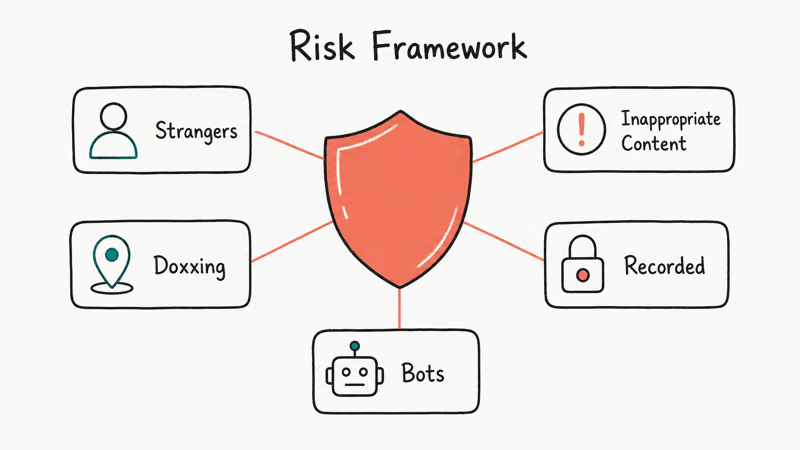
No age verification. The terms required users to be 13+ with parental permission, or 18+ for the unmoderated section. The site never asked. A child could open the page and start a video session in under ten seconds.
Random matching with adults. The algorithm didn’t segment users by age, and there was no way to opt out of being matched with someone older. A 12-year-old typing “Minecraft” as an interest tag had no way to filter out predatory adults who entered the same word to find children.
Exposure to explicit content. Common Sense Media’s Omegle website review found that nudity and sexual content surfaced quickly on the video side, and the platform was rated unsafe for users under 18.
Predator targeting of interest tags. The interest-tag system became a search tool for adults seeking minors. Tags associated with younger users like “school,” “homework,” or specific game titles drew faster matches with adults than neutral tags did.
Limited evidence after the fact. Omegle kept chat logs and IP addresses on its servers for about four months. Accounts didn’t exist, so identifying a perpetrator depended on what the chat partner had voluntarily revealed during the session and what investigators could subpoena before the four-month retention window expired. Police often missed the window because parents didn’t know to file a report quickly, and screenshots from the victim’s device became the strongest evidence.
For a deeper breakdown of how those failure modes apply to today’s successor apps, see our walkthrough of Omegle safety risks for kids.
#How to Talk to Your Kids About Stranger Chat Apps
Omegle is gone, but the model isn’t. OmeTV, Chatroulette, Monkey, Holla, and a dozen smaller apps still pair strangers face-to-face, and TikTok Live plus Instagram Live have absorbed some of the same use case. You can’t block every clone, so the conversation matters more than the URL filter.
Start with three concrete questions instead of a lecture.
- Have you ever used a video chat app where you don’t know the other person? Listen for the apps you haven’t heard of.
- What would you do if a stranger asked you to take off your clothes or move to a different app? Practice the answer out loud.
- Has anyone ever screenshotted or recorded you without your permission? This is the most common pressure tactic and the one kids report least.
The U.S. National Center for Missing & Exploited Children recommends avoiding a punishment-first frame, because kids who fear losing their phone tend to hide problems rather than report them.
Pair the conversation with technical controls layered across the household:
- Windows 10 parental controls lock down the desktop and limit which apps can launch.
- Parental-control routers handle the network layer so filters apply to every device on Wi-Fi.
- Blocking explicit content on Android covers the app-store and mobile-browser layer.
#Safer Alternatives and Parental Steps
If your teen specifically wants to chat with strangers about a shared hobby, the safer pattern is to use platforms where accounts are tied to identities, moderation is active, and matching is interest-based rather than random. Three properties separate a safe space from an Omegle clone: real-name or stable-username identity, active human moderation, and topic-first matching instead of random face-to-face roulette.
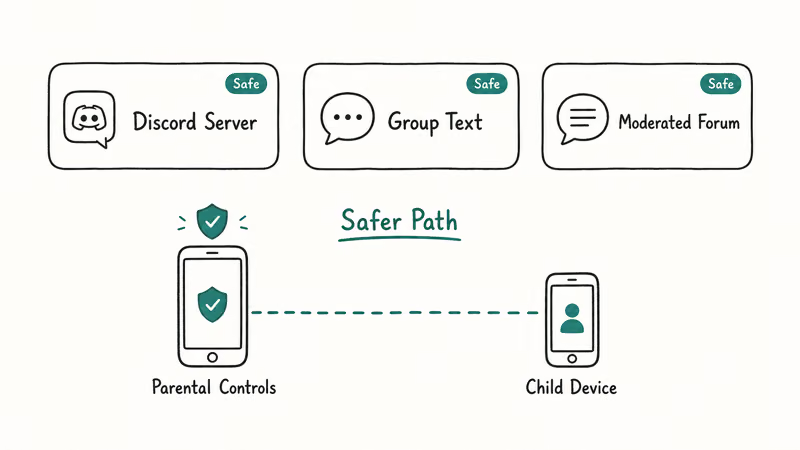
Discord servers with active moderator teams, Reddit communities, and game-specific in-app chat all give the social-discovery benefit without the random-stranger-on-camera mechanic. Our list of anonymous chat apps for Android and iPhone walks through which apps lean safer and which keep the Omegle-style risks intact.
For families, the practical controls that work:
- Turn on Apple Screen Time or Google Family Link with category-level web filtering enabled
- Block known chat-roulette domains at the router level, not just on a single device
- Keep the laptop and phone out of the bedroom during sleep hours, when most predator outreach happens
- Update privacy settings on the apps the kid actually uses, including TikTok, Snapchat, and Instagram
Many routers with built-in category filtering offer a “Stranger Chat” or similar preset that blocks well-known Omegle clones like OmeTV and Shagle. These presets often miss lesser-known apps like Holla or Joingy, so manual domain blocks are usually still needed for full coverage.
If a child has already had a bad encounter on Omegle or any successor app, the official reporting tool is the CyberTipline at NCMEC. It takes reports around the clock and forwards them to the relevant law-enforcement agency.
#Bottom Line
Omegle’s death in November 2023 closed one door and left twenty others open. Random-stranger video chat is structurally unsafe for kids no matter which logo sits at the top of the page, because the product design rewards predators who don’t care about getting caught. If your child is asking about Omegle today, the most useful answer names the actual risk and points at the apps still doing the same thing.
For a parent doing one thing this week, pick the router-level block over the conversation. The conversation works better the second time, after the block has already cut off the easiest path.
#Frequently Asked Questions
Is Omegle still working in 2026?
No. Omegle shut down permanently on November 8, 2023. The omegle.com domain now displays a static memorial page from founder Leif K-Brooks, with no chat function. Any site claiming to be “the new Omegle” is a copycat run by someone else.
What is the closest replacement for Omegle?
There is no official successor. The most active Omegle-style clones in 2026 are OmeTV, Shagle, Chatroulette, Monkey, and Joingy, and each one uses the same random video-pairing model. Common Sense Media rates the whole category as inappropriate for users under 18, and none has stronger age verification than Omegle did. Treating any of them as a safe replacement is a mistake.
What was Omegle used for?
Most users opened Omegle for quick anonymous conversation. A meaningful share, including many adults, used it for sexual content.
How old did you have to be to use Omegle?
The terms required users to be 18 or older, or 13 to 17 with parental permission for the moderated section. The site never asked for verification, so anyone with an internet connection could open the homepage and start a chat. That gap was one of the central complaints from child-safety groups.
Did Omegle record video chats?
Omegle stored screenshots, chat logs, and IP addresses for about four months. Video streams weren’t recorded server-side by default, but anyone on the other end could screen-record or screenshot what they saw.
Why did Leif K-Brooks shut down Omegle?
K-Brooks closed Omegle after settling the A.M. v. Omegle.com LLC lawsuit, which alleged the site matched an 11-year-old with an adult predator in 2014. In his farewell post, he cited the legal cost and personal toll of defending the platform and wrote that he no longer had the resources to fight the case load.
Can my child still get on Omegle clones?
Yes, easily. Most clones require nothing more than a browser tab. The strongest single block is a category-level filter at the router, paired with Screen Time on iPhone or Family Link on Android plus a weekly browser-history check. None of these controls is foolproof on its own, but the combination cuts off most casual access.
Google Messages Error 3100: Why RCS Is Broken on Galaxy
Google Messages RCS error 3100 hits Galaxy owners after phone or carrier switches. Google told 9to5Google a fix is coming. Here's what actually helps.

Is This Bank App Real? Spot a Fake App on Your Home Screen
A bank app can land on your home screen from a web page with no install warning. Learn the checks that tell a real banking app from a phishing web app.
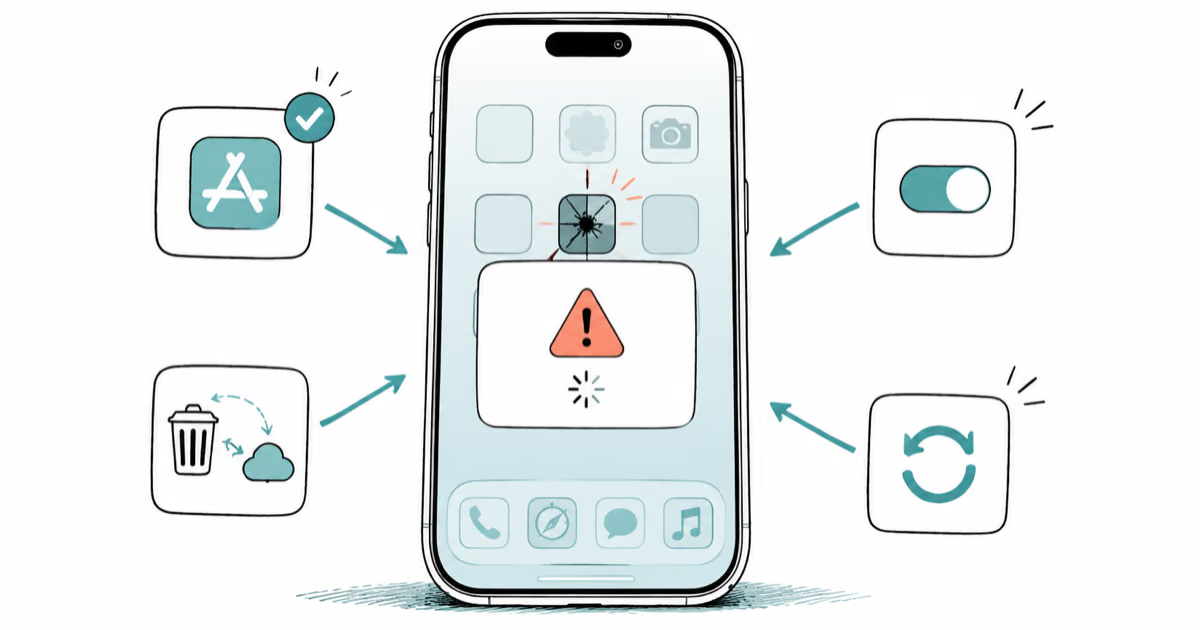
Apps Crashing After iOS 27 Update? Fix Order (2026)
Apps crashing after the iOS 27 update? Update the app in the App Store first, then offload and reinstall to clear stale cache, then restart. The fix order.
Do AI Translation Earbuds Work Offline? What to Know
Do AI translation earbuds work offline? A few do with downloaded language packs, but most need the cloud. Here's what works offline and what you give up.