Is Omegle Safe for Kids? Risks, Shutdown, and Parent Guide
Omegle shut down in 2023 after child safety lawsuits. Here's what made it dangerous, what replaced it, and how to protect your kid from copycat sites.
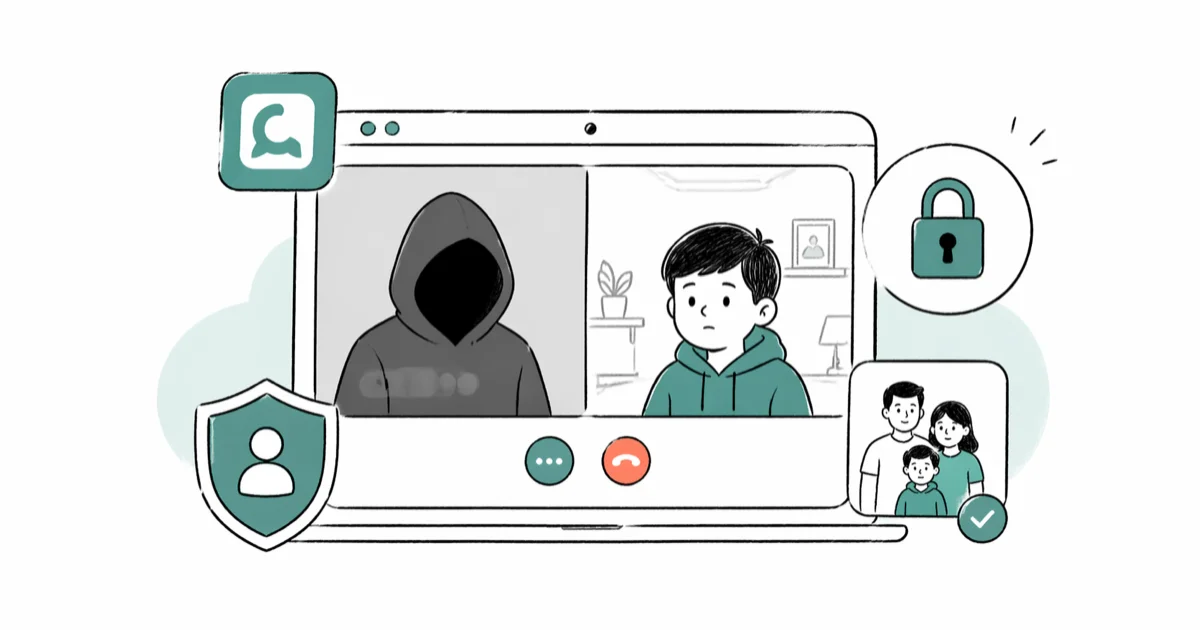
Quick AnswerNo. Omegle was never safe for kids and shut down in November 2023 after a $22 million child exploitation settlement. Lookalike sites still pose the same risks to minors today.
Parents searching “is Omegle safe” in 2026 deserve a direct answer first. Omegle was never safe for kids, and the site shut down for good on November 8, 2023, after a child sexual abuse lawsuit forced a $22 million settlement. The risks didn’t go away with the URL, though. This guide covers the alternatives, the lookalikes, and the parental controls available on iOS and Android so you can see what your kid is exposed to now.
- Omegle permanently shut down on November 8, 2023 after a $22 million child exploitation lawsuit settlement
- The BBC documented over 50 cases of child sexual abuse linked to Omegle before its closure
- Copycat sites like OmeTV, Chatroulette, and Monkey still match minors with adult strangers despite age gates
- iOS Screen Time and Google Family Link can block random video chat sites at the device level for free
- Report any predator contact involving a minor to the NCMEC CyberTipline at 1-800-843-5678 or local police
#Why Omegle Closed in 2023
Omegle launched in 2009 as a free anonymous chat site that paired strangers for one-on-one text or video. No account, no age verification, no real moderation. You clicked Start and you were live with whoever the algorithm picked.
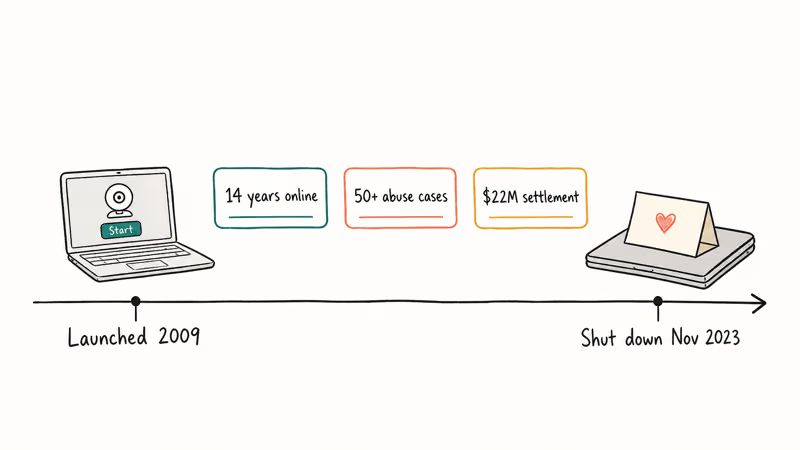
That model created a 14-year-long failure. According to NBC News’ coverage of the shutdown, founder Leif K-Brooks closed the site as a condition of settling a lawsuit filed by a woman who was matched with her adult abuser at age 11. Three human moderators were never enough to police tens of millions of monthly chats.
The BBC’s investigative team found that police forces in multiple countries had connected Omegle to over 50 child sexual abuse cases in the prior two years alone.
The Omegle homepage now shows a farewell letter and nothing else. The site is dead. The danger pattern is not.
#Is Omegle Safe for Kids Today?
No, and not because the original site might come back. The threat is the wave of clones and successors that took its place. Sites like OmeTV, Chatroulette, Monkey, Emerald Chat, and Chathub all advertise themselves as “the new Omegle.” Most claim age verification but rely on a clicked checkbox instead of meaningful identity or age checks.
Common Sense Media’s review of Omegle flagged it as 18+ only and warned that the site’s “moderated” video section was effectively unmoderated. That assessment carries forward to the lookalikes. When a site claims AI plus human moderation, ask how many human moderators are on staff and whether they cover all time zones. If the answer isn’t on the company’s About page, it isn’t real coverage.
For the technical sweep of what replaced Omegle in the random chat category, our Omegle alternatives roundup compares moderation rules and report systems on each platform. Every option in that piece restricts users to 18 and over.
#The Five Risks Omegle Posed to Children
Five categories of harm came up repeatedly in news coverage and police reports during Omegle’s last five years.
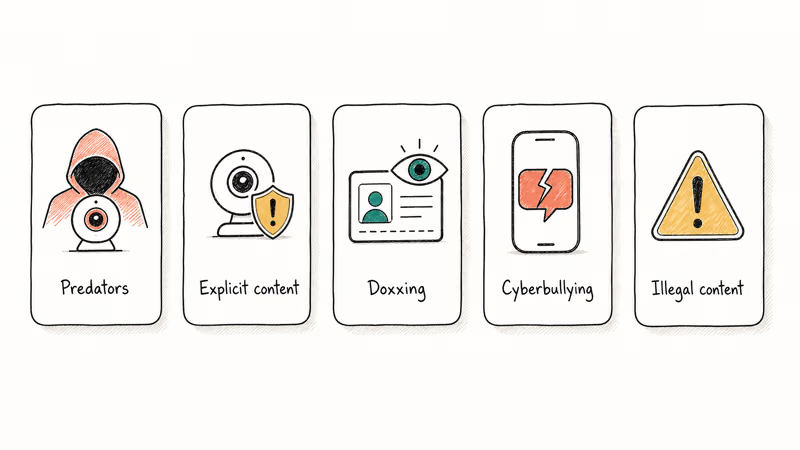
Sexual predators and grooming. Omegle’s anonymity attracted predators by design. Investigators in the UK, Canada, and Australia each documented cases of adults using the site to target minors for grooming, sextortion, and in-person abuse. The same playbook works on the copycat sites.
Live exposure to nudity and sex acts. Even users who never sought adult content stumbled onto it within minutes. The site had no functional content filter on the unmonitored side, and the monitored side leaked.
Doxxing and identity theft. Strangers asked kids for their full name, school, neighborhood, or Snapchat. Once shared, that information surfaced on harassment forums, deepfake sites, and stalker tools.
Cyberbullying and emotional manipulation. Random pairings meant random cruelty. Some kids were ridiculed by groups that recorded the calls and posted them to TikTok or YouTube. The clips often spread before the child realized they had been filmed, and content moderation on the secondary platforms rarely caught them in time. Reputational damage at school followed within days.
Illegal content exposure. Police reports linked Omegle to live-streamed self-harm, drug deals, and acts of violence shown to minors who couldn’t unsee them.
These risk categories transferred whole to OmeTV, Monkey, and the rest. The platforms changed names. The harm pattern didn’t.
#How to Block Omegle-Style Sites at Home
Three levers actually work. Use all three.
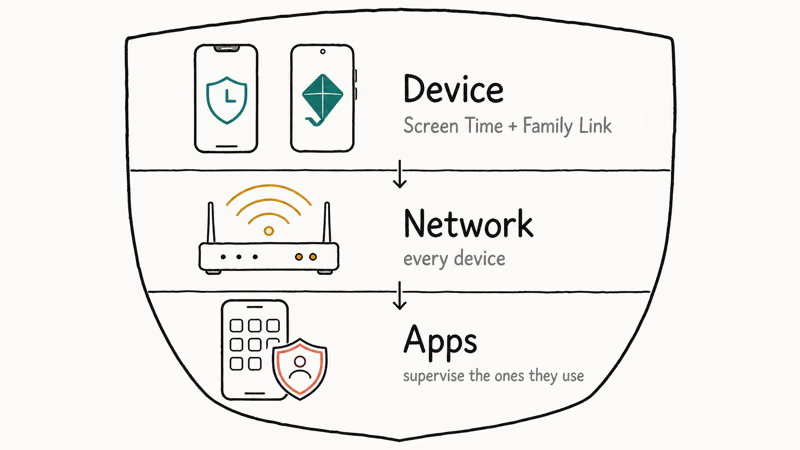
Start with the device. On iOS, open Settings, tap Screen Time, then Content & Privacy Restrictions. Apple’s Screen Time content restriction guide shows how to limit web content to allowed adult sites only or to a custom whitelist. Apply the block in Safari and any installed browser, then restart the device and confirm the restriction still holds.
On Android, Google’s Family Link app does the same job. Install it on your kid’s device, link to your parent account, and block specific URLs. Both tools are free and built in.
Add network-level blocking next. A good parental control router lets you blacklist domains across every device that connects to your home Wi-Fi, including the smart TV, the gaming console, and the friend’s phone visiting on a sleepover. Use router-level controls as a backstop for devices that don’t reliably enforce browser restrictions on their own.
Finally, monitor the apps your kid actually uses. Random chat is one risk vector. The bigger ones are the apps already on the phone.
If your kid is on TikTok, walk through TikTok’s parental controls together and turn on Family Pairing. The Restricted Mode toggle alone filters out a lot of suggestive content.
#What to Do If Your Child Was Harmed on Omegle
If you discover that your child has been targeted, recorded, or solicited on Omegle or any successor site, do these things in order. Acting in the first 24 hours preserves the most evidence, gives investigators the best chance to identify the offender, and locks down the chat logs before the platform purges them on a routine cycle.
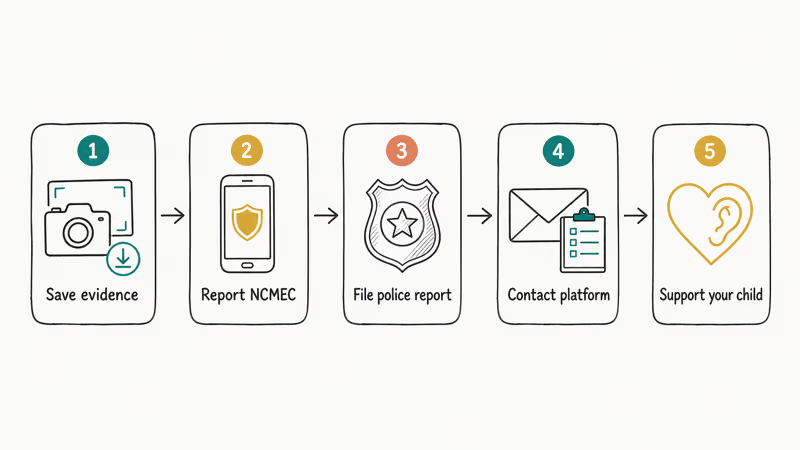
- Save evidence first. Screenshot the chat, the username if any, the date and time, and the URL. Don’t message the predator back.
- Report to NCMEC. The National Center for Missing & Exploited Children runs the CyberTipline at 1-800-843-5678 and accepts online reports 24/7. They forward credible reports to the FBI and state law enforcement.
- File a local police report. Bring your screenshots. Request that the report be cross-filed with your state’s Internet Crimes Against Children Task Force.
- Contact the platform. If the harm happened on a still-operating site, send your evidence to its abuse address and request the offending account be terminated and chat logs preserved.
- Get your child support. Pediatricians and school counselors can refer you to a trauma-informed therapist. Don’t try to handle this alone.
You are not overreacting. Online predator cases are prosecuted regularly when evidence is preserved.
#Are Omegle Successor Sites Any Safer?
Marginally, in a few cases. Most of the post-Omegle platforms added AI nudity filters, age gates, and report buttons after regulatory pressure from Australia’s eSafety Commissioner and the EU’s Digital Services Act. Emerald Chat and OmeTV both publish moderation transparency reports now. Monkey raised its minimum age to 18 and added camera scans in 2024.
That doesn’t make any of them safe for a 12-year-old. The age gate is one click. The camera scan can be defeated by holding up a photo. AI moderation catches the obvious cases and misses the grooming conversation because grooming sounds friendly.
If your kid is curious about meeting new people online, point them toward stranger chat apps with stronger structural protections. The better answer is usually a moderated community built around a hobby they already care about.
Our sites like Omegle list flags which clones are 18-plus and which run any real moderation. Use it as a blocklist, not a recommendation.
#Frequently Asked Questions
Is Omegle still online?
No. The site shut down on November 8, 2023 and has not reopened. The Omegle.com domain currently shows a static letter from founder Leif K-Brooks explaining the closure. Any site claiming to be the new Omegle is unaffiliated and operates under a different company.
Why did Omegle shut down?
Omegle settled a $22 million lawsuit filed by a woman who was matched with her adult abuser through the site at age 11. The plaintiff, identified in court filings as A.M., said the abuse continued for roughly three years after that first random pairing. Closing the platform was part of the November 2023 settlement. According to NBC News’ reporting, K-Brooks said the financial and emotional cost of operating Omegle had become unsustainable as that case dragged on for years.
Can my child still access Omegle clones?
Yes. Sites like OmeTV, Chathub, Chatroulette, and Monkey use the same random video pairing model. Most have minimum ages of 18 listed in their terms but no real verification. Block them at the router level with a parental control router and at the device level with iOS Screen Time or Google Family Link.
How do I tell if my child has been using random chat sites?
Watch for browser history that gets cleared frequently, sudden secrecy around phone or laptop use, friend requests from people you don’t know, or anxiety that spikes after time alone with the device. Ask your kid directly. The conversation matters more than any monitoring app.
What should I say if my kid asks why Omegle was bad?
Be specific. The site let any adult video-chat any kid with no check on age. Predators used that gap to target children. People got hurt.
The same pattern is on the copycat sites, so the same safety rule applies there too.
Is there a safe way for kids to chat with strangers online?
Not really, if the chat is one-on-one and unmoderated. Kid-focused communities like Kidzworld, Roblox group chats with restricted mode on, or Discord servers run by trusted creators with active moderation are closer to safe but still need parent supervision. Random video chat with strangers is not appropriate for minors at any age.
What’s the legal age to use Omegle alternatives?
All major Omegle successors list 18 as the minimum age in their terms of service. Some allow 13 with parental permission for text-only sections, but every video section is 18-plus. Letting an underage child use them violates the TOS.
#Bottom Line
Omegle is gone, but the kid who Googled it tonight just clicked the third lookalike result instead. Stay safe by sticking to your own account or your child’s account that you set up and supervise, using the platform’s own report-and-block tools when conversations turn predatory, and reporting any illegal behavior involving a minor to local authorities or the National Center for Missing & Exploited Children at 1-800-843-5678.
Pair iOS Screen Time or Google Family Link with a parental control router so the block survives a friend’s house and a new app store install. The conversation with your kid matters most. Have it tonight.
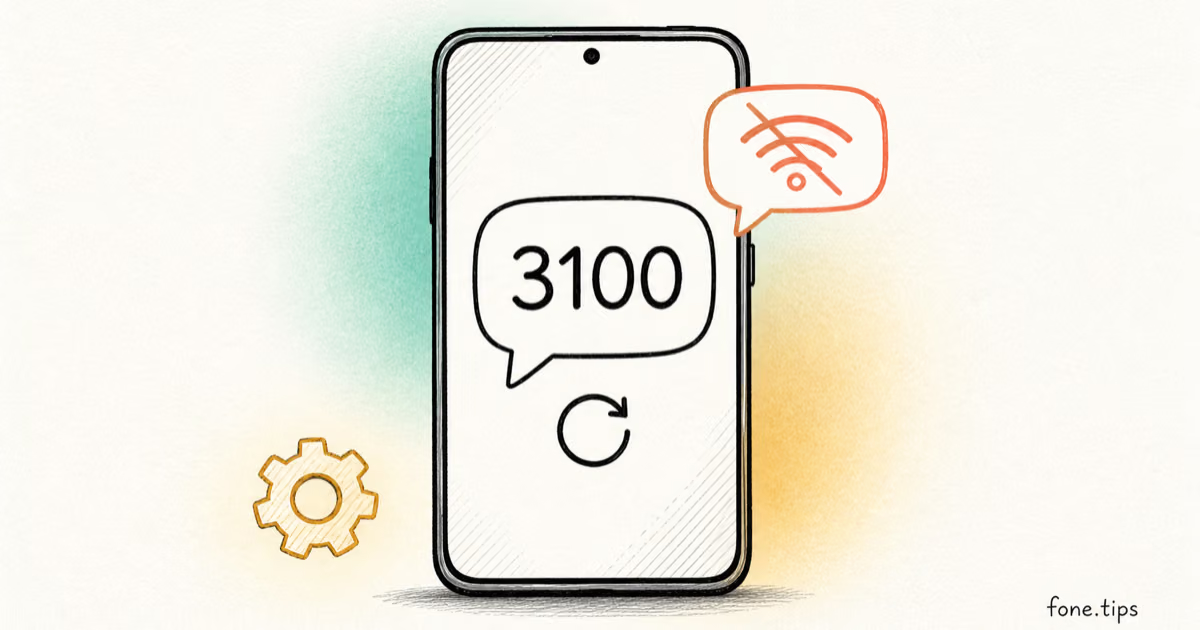
Google Messages Error 3100: Why RCS Is Broken on Galaxy
Google Messages RCS error 3100 hits Galaxy owners after phone or carrier switches. Google told 9to5Google a fix is coming. Here's what actually helps.

Is This Bank App Real? Spot a Fake App on Your Home Screen
A bank app can land on your home screen from a web page with no install warning. Learn the checks that tell a real banking app from a phishing web app.
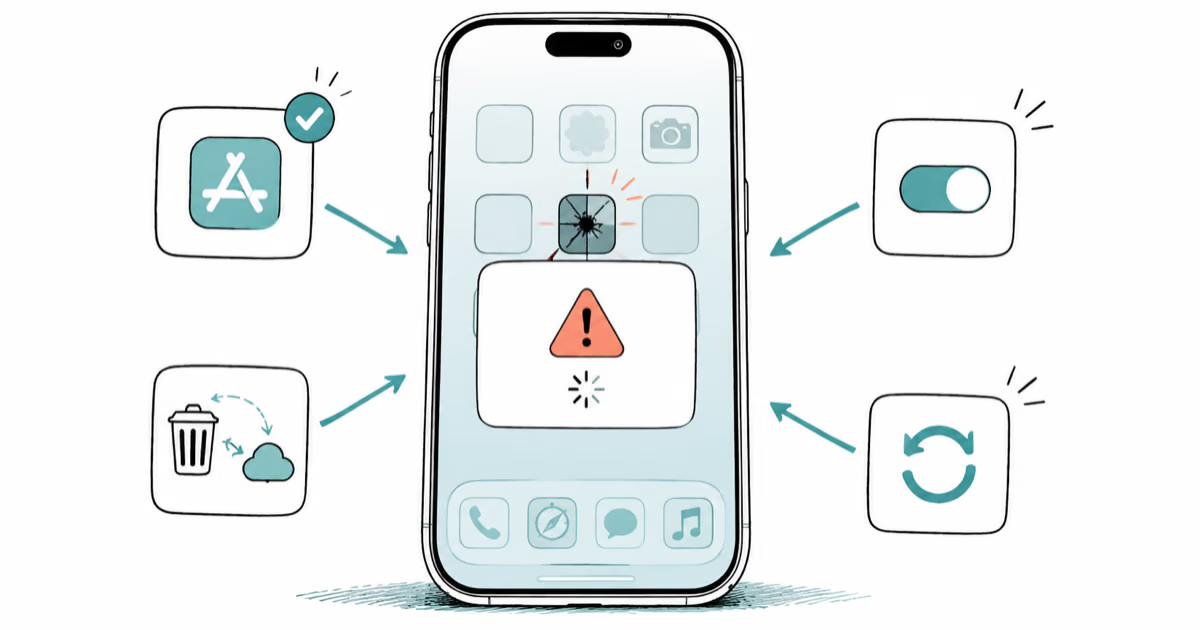
Apps Crashing After iOS 27 Update? Fix Order (2026)
Apps crashing after the iOS 27 update? Update the app in the App Store first, then offload and reinstall to clear stale cache, then restart. The fix order.
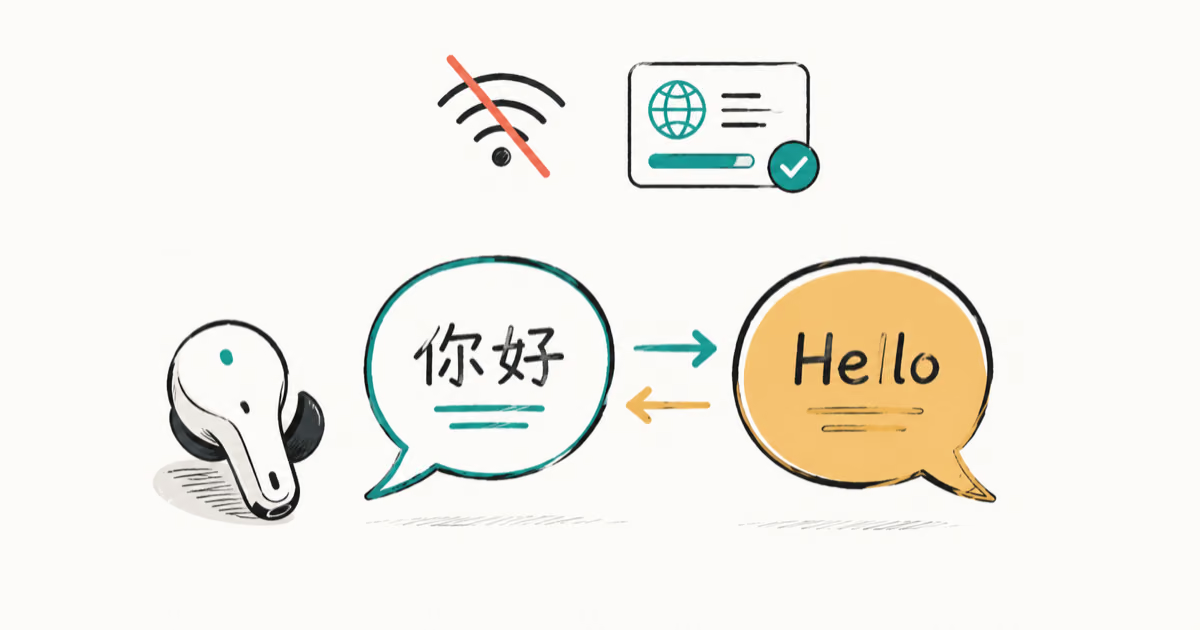
Do AI Translation Earbuds Work Offline? What to Know
Do AI translation earbuds work offline? A few do with downloaded language packs, but most need the cloud. Here's what works offline and what you give up.