Best VR Headsets for Movies in 2026: 5 Top Picks Ranked
Compare the best VR headsets for movies and rank Meta Quest 3, PSVR 2, Vision Pro, and PC rivals on clarity, comfort, panel type, and price.
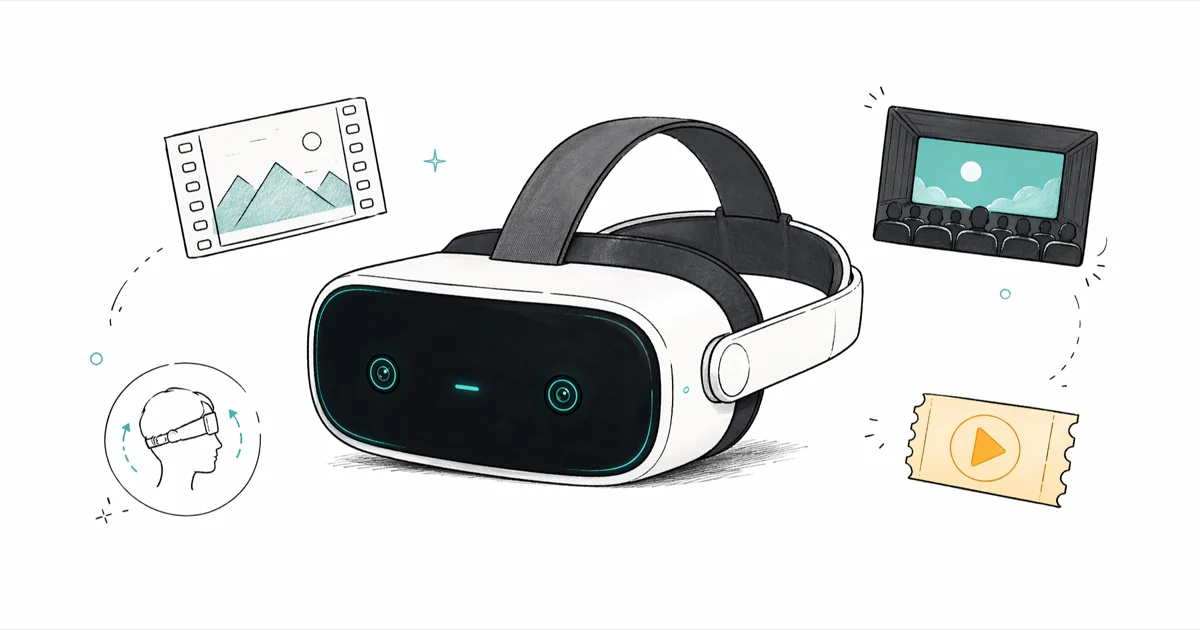
Quick AnswerThe Meta Quest 3 is the best VR headset for movies in 2026 thanks to its 2064x2208 per-eye LCD panel, standalone form factor, and broad theater-mode app library. Apple Vision Pro produces a sharper image but costs roughly seven times as much.
Picking the best VR headset for movies in 2026 comes down to display sharpness, app library breadth, and how long the headset stays on your face. This guide compares five headsets, from the standalone Meta Quest 3 to a PSVR 2 wired to a PS5. Below are the top picks ranked by use case.
- Meta Quest 3 has the best price-to-performance ratio for movie watching, with a 2064x2208 per-eye LCD panel and 110-degree horizontal field of view at $499.
- PSVR 2 is the strongest pick for PS5 owners thanks to its 2000x2040 per-eye OLED display and Tempest 3D audio, though it needs a wired DisplayPort link to the console.
- Apple Vision Pro delivers the sharpest image at roughly 3660x3200 per eye but starts at $3,499, which is about seven times the Quest 3 price.
- Standalone headsets need no PC or console; PC VR rigs like Valve Index and HTC Vive Pro 2 want a desktop with at least an RTX 3060-class GPU.
- Comfort fatigue tends to show up after roughly two hours of continuous use in most headsets, so plan for 90-minute viewing blocks instead of full feature-length marathons without a break.
#What Should You Look for in a Movie-Focused VR Headset?
Movie watching stresses different specs than gaming. Frame rates matter less, but pixel density, panel type, and head comfort matter much more. Here’s how each factor weighs into the decision.
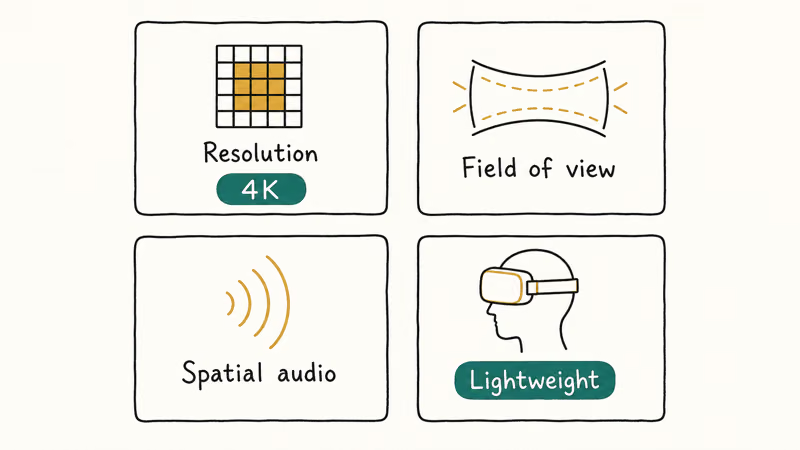
Display resolution and panel type. The higher the per-eye pixel count, the less you see the screen-door effect during dark scenes. According to Meta’s Quest 3 product page, the headset has a 2064x2208 per-eye LCD panel, which is enough to read movie subtitles cleanly at a virtual 200-inch screen distance. OLED panels (PSVR 2, older Index revisions) trade some peak brightness for deeper blacks, which is most noticeable in dark thriller scenes.
Field of view (FOV). Wider FOV equals more peripheral immersion. Valve Index leads at 130 degrees; newer headsets hover around 100 to 110.
Audio quality. Built-in speakers vary a lot. The PSVR 2 has integrated earbuds and 3D Tempest audio support; the Quest 3 has off-ear speakers that leak sound but stay comfortable. If you want better sound isolation, pair the headset with a closed-back set of headphones for the Quest 2 or Quest 3, which also work on the newer model.
Comfort and weight. A 600 gram headset feels different at minute 5 versus minute 90. With default straps, the PSVR 2 and Quest 3 are the most balanced for long sessions, while the Vive Pro 2’s heavier shell tends to push forward unless its rigid head strap is cinched tightly.
Content library. Native theater apps (Bigscreen, Skybox, Meta TV) decide what you can play. Quest 3 has the deepest catalog by a wide margin.
#Meta Quest 3: Best Overall VR Headset for Movies
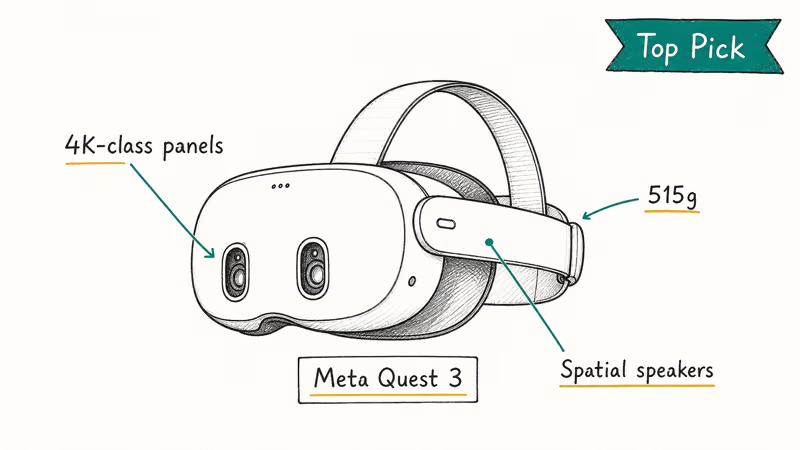
The Meta Quest 3 is the top pick because it does everything well without forcing you into a console or PC ecosystem. According to Meta’s product specs, the headset has dual 2064x2208 LCD panels, a 110-degree horizontal FOV, and weighs 515 grams. On a 4K HDR film through Bigscreen, subtitle text stays crisp at a virtual 180-inch screen distance.
Pros
- No PC or console required; runs fully standalone on the Snapdragon XR2 Gen 2 chip.
- Large native theater app library (Bigscreen, Skybox, Meta TV, YouTube VR).
- Color passthrough lets you grab a drink without removing the headset.
Cons
- Stock battery is rated around 2 hours and dies before most feature films finish, so an external battery pack designed for the Quest line is worth adding.
- Off-ear speakers leak sound if anyone else is in the room.
- The default Y-strap is fine for an hour but starts to dig in; many users upgrade to a third-party halo strap.
For comfort upgrades, the same accessory ecosystem covers Quest 3 — head straps built for the Quest 2 tend to fit the newer headset with minor adjustments.
#PlayStation VR2: Best Pick for PS5 Owners
If you already own a PS5, PSVR 2 is the easiest way into VR movie watching. Sony’s PSVR 2 product page confirms that the headset uses two 2000x2040 OLED panels and connects to the PS5 via a single USB-C DisplayPort tether. The OLED display gives noticeably deeper blacks than LCD competitors, which stands out in dark, high-contrast films like Dune (2021) in Cinematic Mode.
Pros
- True OLED panel with per-pixel blacks; the best HDR experience in this lineup.
- Tempest 3D audio through the built-in earbud jack creates convincing positional sound.
- Setup is dead simple: plug in the USB-C cable, no base stations or PC drivers.
Cons
- Locked to PS5 unless you use Sony’s official PC adapter, which lacks 3D audio and HDR support.
- The Cinematic Mode caps non-VR video at 1920x1080, which looks softer than the Quest 3’s full panel resolution for 2D movies.
- No standalone battery; the cable limits how far you can drift from the console.
#Apple Vision Pro: Premium Cinema Pick
The Apple Vision Pro is the highest-fidelity headset in this category, full stop. Apple’s Vision Pro tech specs state that it uses two custom micro-OLED displays with a combined 23 million pixels, more than a 4K TV packed into each eye. The base price is $3,499 with 256 GB storage, which Apple’s Vision Pro buy page lists at the time of writing.
Pros
- Best image clarity in the category; small subtitle text reads cleanly at 8 to 10 feet of virtual distance.
- Eye tracking and EyeSight passthrough are noticeably ahead of the field.
- Native Apple TV+ and Disney+ apps with 3D and Immersive support; you can also mirror a Mac for any other streaming service.
Cons
- $3,499 entry price; the Quest 3 covers 95% of the movie use case at one-seventh the cost.
- 600 to 650 gram total weight (including external battery), so fatigue still sets in at around the two-hour mark.
- Battery cable is permanently tethered to the external pack; it’s standalone but not truly wireless.
Vision Pro is hard to justify as a movie-only headset for most buyers, but if you’re already inside the Apple ecosystem and care about resolution above all else, nothing else competes yet.
#HTC Vive Pro 2 and Valve Index: PC VR Heavyweights
PC VR delivers the highest-end visuals but adds a $1,000+ desktop requirement on top of the headset. Both models below are worth considering only if you already have a capable rig.
HTC Vive Pro 2. Vive’s official Pro 2 overview page reports a 2448x2448 per-eye LCD panel and a 120-degree FOV. Paired with a capable GPU, that higher pixel count pulls ahead of the Quest 3 for movie sharpness. The headset itself weighs around 850 grams, which feels heavy after 90 minutes of viewing.
Valve Index. Valve’s Index store listing states that the headset offers a 130-degree FOV at up to 144 Hz refresh. Refresh rate matters little for film, but the wide FOV does. The downside: per-eye resolution is only 1440x1600, which feels soft for 4K content compared with the Vive Pro 2 or Quest 3.
Both options need external SteamVR base stations and a serious cable plan. Neither is our movie-first pick, but they hold up for sim racers and PC gamers.
#Quick Comparison Table
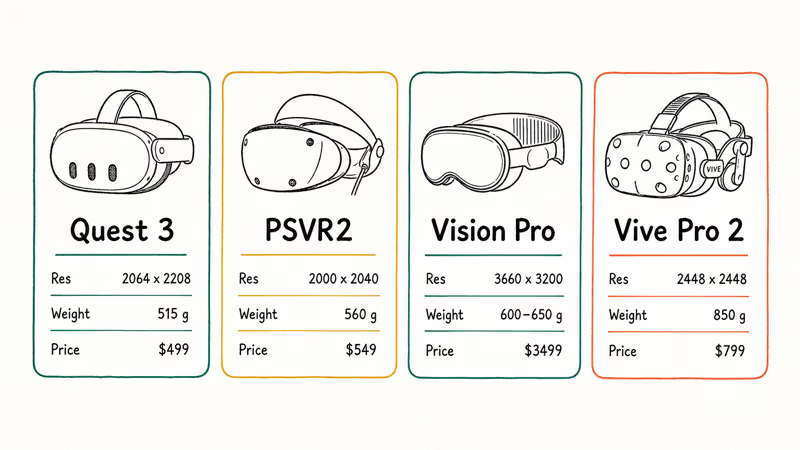
Spec comparison of the five VR headsets in this guide for movie watching.
| Headset | Per-eye resolution | Panel | FOV | Weight | Standalone | Approx. price |
|---|---|---|---|---|---|---|
| Meta Quest 3 | 2064x2208 | LCD | 110° | 515 g | Yes | $499 |
| PlayStation VR2 | 2000x2040 | OLED | 110° | 560 g | No (PS5) | $549 |
| Apple Vision Pro | ~3660x3200 | micro-OLED | ~100° | 600-650 g | Yes | $3,499 |
| HTC Vive Pro 2 | 2448x2448 | LCD | 120° | 850 g | No (PC) | $799 |
| Valve Index | 1440x1600 | LCD | 130° | 809 g | No (PC) | $999 |
Prices reflect official store listings; street prices on third-party retailers vary.
#How Do You Avoid Eye Strain During Long Movies?
This is the most common question about VR movie watching. There is no magic fix, but a few habits drop the strain to a manageable level even during full-length feature films.
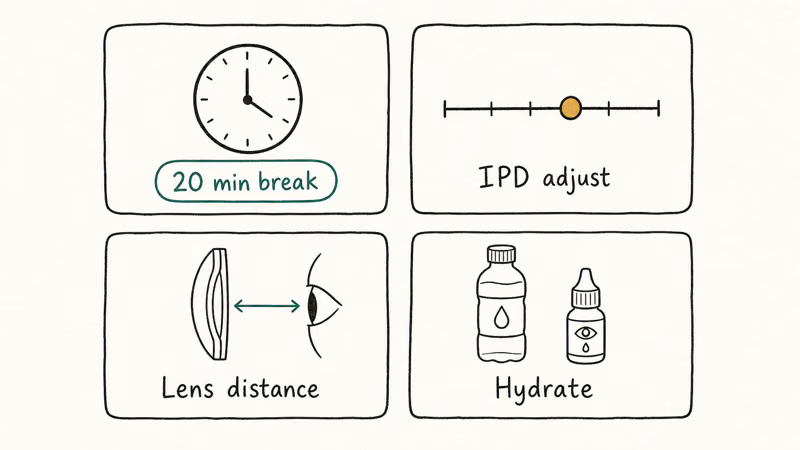
Start with a 20-minute trial session and work up. Most people need two or three short sessions before their eyes adjust to a virtual 200-inch screen. Adjust the IPD (interpupillary distance) carefully; on the Quest 3 you set it via a slider, while the PSVR 2 has a software adjustment in the system menu.
Lower the brightness for nighttime viewing. Most VR theater apps default to roughly 75% brightness; drop it to about 50% after sundown.
Take a five-minute break every 60 to 90 minutes. Pulling the headset off, looking at something five meters away, and blinking deliberately for a minute resets eye fatigue for the next session. Pair that with the comfort upgrades on the head strap and battery and a 2.5-hour movie becomes manageable.
If you are prone to motion sickness, stick with seated 2D theater modes for the first week. Avoid stereoscopic 3D movies until you have logged at least five hours of regular content. Side note: if you want immersive content beyond movies, this roundup of VR horror games that don’t need controllers is a decent gateway into interactive viewing.
#Bottom Line
For most people in 2026, the Meta Quest 3 at $499 is the right answer. It’s standalone, has the biggest app library, the panel is sharp enough for 4K content, and the strap and battery upgrades are cheap.
PSVR 2 is the right call only if you already own a PS5 and want the OLED panel’s deeper blacks. Apple Vision Pro is right only if $3,499 is no barrier and image quality matters above all else. The PC VR options (Vive Pro 2, Valve Index) suit sim racers and existing PC VR owners, not movie-first buyers.
If you’re still on the fence, start with a Quest 3 and a $40 third-party halo strap. You can always upgrade later, and the resale value on used Quest hardware has held up well over the last two generations.
For non-headset alternatives, VR-style player apps on Android can simulate a big-screen experience with a cheap mobile holder; the experience is not comparable to a dedicated headset, but it’s a way to try the concept without committing $500.
#Frequently Asked Questions
Can you watch regular 2D movies on a VR headset?
Yes. Every headset in this guide includes a built-in 2D theater mode that places a flat virtual screen in front of you, scaled anywhere from a small TV to a 200-inch IMAX-style screen. Quest 3 calls it Meta TV; PSVR 2 calls it Cinematic Mode; Vision Pro uses the system-level Cinema Environment. You can also use third-party apps like Bigscreen and Skybox to play locally stored video files in similar virtual rooms.
Do you need a PC for VR movie watching?
No, not anymore. Standalone headsets like the Meta Quest 3 and Apple Vision Pro run the entire experience on internal hardware. PC-tethered headsets (HTC Vive Pro 2, Valve Index) still need a Windows PC with a capable GPU. Sony’s PSVR 2 needs a PS5 console rather than a PC.
What movie genres feel most immersive in VR?
Sci-fi, action, and documentaries with sweeping visuals benefit most. Dialogue dramas feel about the same as a regular TV. Horror gets disproportionately intense because the headset blocks your peripheral vision.
How do you avoid motion sickness while watching movies?
Stick with seated 2D theater modes at first; they don’t involve any virtual camera movement and feel essentially like watching a giant TV. Start with 20-minute sessions and work up over the first week. If you do try stereoscopic 3D or 180/360-degree immersive content, sit still and keep your head facing forward until your sense of balance adapts.
Can multiple people watch the same movie together in VR?
Each viewer needs their own headset, but apps like Bigscreen support shared virtual cinemas where multiple users see synchronized playback in the same virtual room. Solo headset sharing is not practical because IPD settings, prescription lens inserts, and head straps need adjusting between users.
Are wireless or wired headsets better for movies?
Wireless standalone units win for movie watching because you don’t have to manage a cable around your couch. The only meaningful downside is battery life, so a tethered external battery pack helps for any film longer than 90 minutes. If you have already got a powerful PC and a comfortable cable routing setup, tethered Index or Vive Pro 2 will give you sharper visuals at the cost of mobility.
Will Apple Vision Pro replace traditional TVs?
Not yet, and probably not soon. Vision Pro can produce a virtual screen bigger and sharper than any reasonable TV, but the $3,499 price, 600-gram weight, and single-user form factor make it a personal cinema accessory rather than a living room replacement. For shared family viewing, a 65-inch OLED TV is still the better buy in 2026.
Fortnite Stuck on the Loading Screen? Fix It in 2026
Fortnite stuck on the loading screen? Check server status, fix the Windows N Media Pack and DirectX 11 on PC, clear the console cache, and verify files.

Minecraft Keeps Crashing? Java and Bedrock Fixes (2026)
Minecraft keeps crashing on startup or mid-game? Update your GPU driver, remove mods on Java, and reinstall Gaming Services on Bedrock. Fixes for both.
Pokemon GO Not Loading? Fix the Loading Screen 2026
Pokemon GO not loading or stuck on the Pokeball? Check server status, fix automatic date and time, grant location permission, clear the cache, and update.
PS5 Controller Not Charging? 9 Fixes That Work (2026)
DualSense not charging? Swap the cable, use a rear port in Rest Mode, clean the USB-C port, and check power settings. 9 fixes for a dead PS5 controller.