VR Player for Android: The Guide to Immersive Mobile
Compare Android VR players for 360-degree and 3D playback, with format support, setup steps, headset tips, and honest limits for phone viewing.
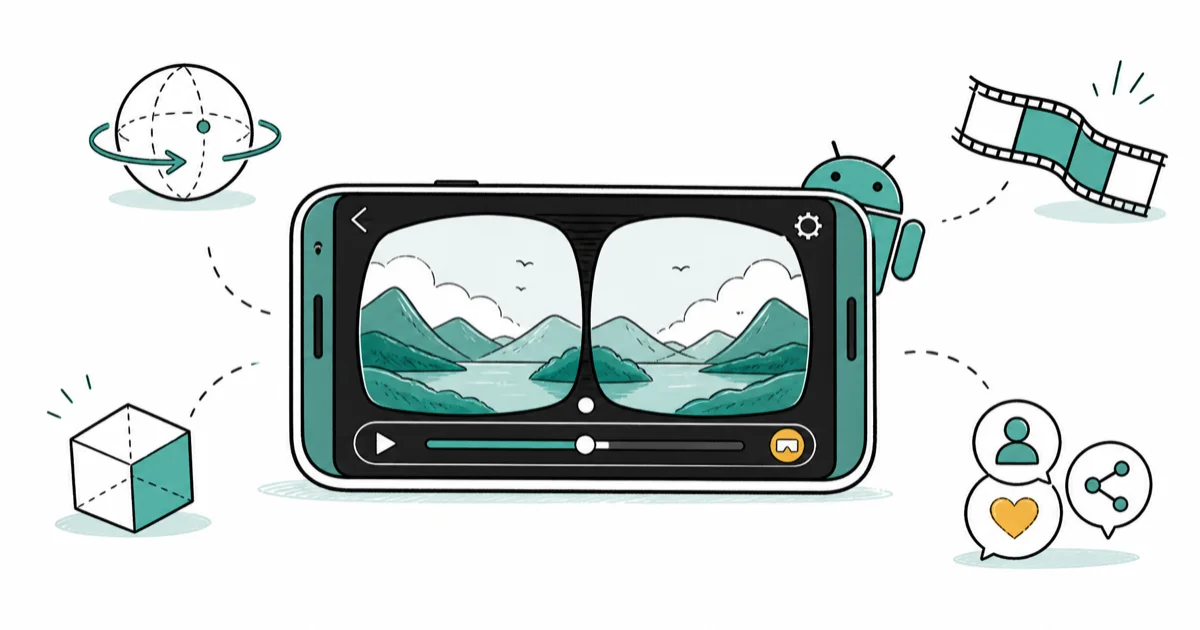
Quick AnswerThe best VR players for Android are VR Media Player for broad format support, Fulldive VR for social features, and AAA VR Cinema for a premium theater-like viewing experience.
Virtual reality (VR) technology has changed how people consume media, offering immersive experiences that transport viewers to new worlds. For Android users, VR players have become essential tools for enjoying 360-degree videos, 3D content, and virtual environments. This guide explores the best VR players for Android, their features, and how to make the most of your mobile VR experience.
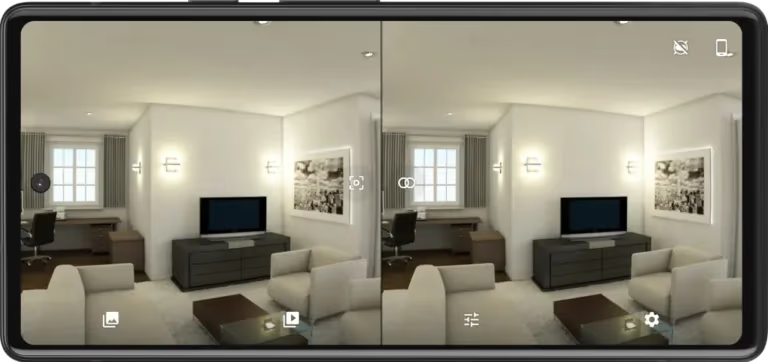
- VR players split your phone screen into two side-by-side images and use the gyroscope and accelerometer to track head movements, creating a stereoscopic 3D effect.
- SKYBOX VR Video Player remains the strongest free pick for Android thanks to Wi-Fi streaming and a clean library view, provided your wireless connection is stable.
- PLAY’A VR Player advertises 8K video support on compatible hardware and exposes advanced playback controls including tilt, height, zoom, and speed adjustments.
- High-resolution 360-degree footage can occupy multiple gigabytes per ten minutes, so check available storage before downloading VR content to your device.
- Calibrate your phone’s gyroscope before each session, use headphones for spatial audio, and take regular breaks to reduce eye strain during longer viewing sessions on mobile VR.
#Understanding VR Players for Android
#What is a VR player?
A VR player is a specialized media player designed to provide an immersive viewing experience for virtual reality content. These players support various VR formats, including 360-degree videos, 3D stereoscopic content, and interactive VR environments.
#How do VR players work on Android devices?
VR players on Android utilize the device’s gyroscope and accelerometer to track head movements, allowing users to look around virtual environments simply by moving their heads. The player splits the screen into two images, one for each eye, creating a stereoscopic 3D effect when viewed through a VR headset.
According to Google’s Android Sensors developer guide, the SensorManager API exposes a fused TYPE_GAME_ROTATION_VECTOR stream that combines gyroscope and accelerometer data. This is the same low-latency feed most Android VR players read to follow head movement.
#Benefits of using VR players on Android
- Immersive viewing experience
- Support for various VR content formats
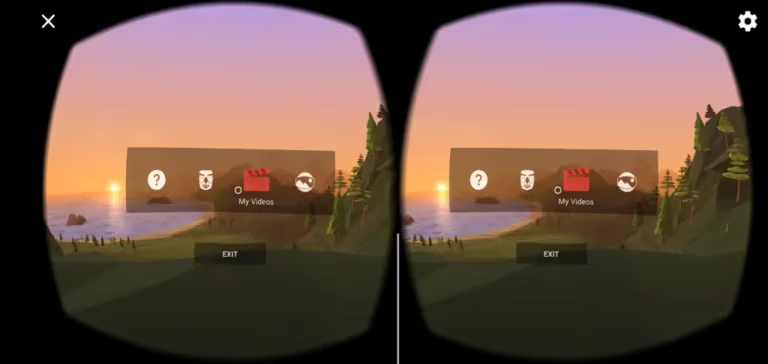
- Compatibility with affordable VR headsets like Google Cardboard
- Access to a wide range of VR content through Android app stores
- Portability and convenience of mobile VR
#Top VR Players for Android in 2026
#1. VR Media Player
VR Media Player is a versatile option that supports a wide range of formats, including:
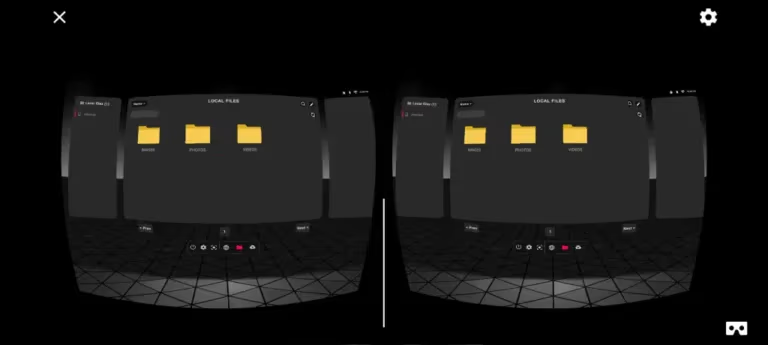
- 360° and 180° equirectangular videos
- Regular lens and fisheye lens photos and videos
- 3D stereoscopic side-by-side and over-under formats
Key features:
- Smooth touch panning and natural pinching zoom
- Roll rotation with 3-axis touch panning
- Motion sensor support to keep images horizontal
#2. PLAY’A VR Cardboard
PLAY’A VR Player is known for its intuitive interface and advanced playback features:
- Supports 2D, 3D, flat, 180°, and 360° videos
- 8K video support on compatible hardware
- Advanced playback controls (tilt, height, zoom, speed)
- Privacy modes and convenient folder navigation
#3. SKYBOX VR Video Player
SKYBOX stands out for its streaming capabilities and user-friendly design:
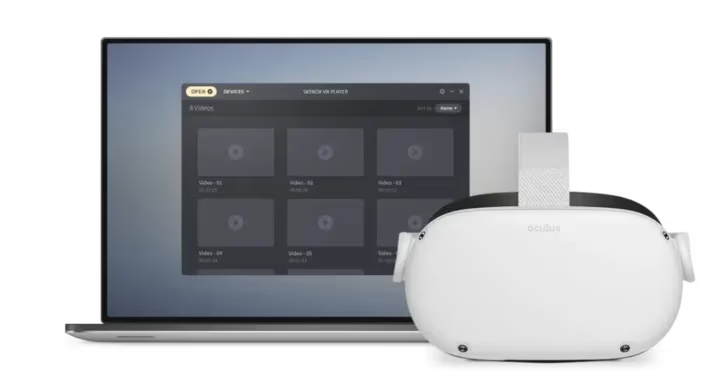
- Wi-Fi streaming pulls files directly from a PC on the same LAN
- Support for the major mono and stereo VR formats
- Clean, easy-to-navigate interface
- High performance and smooth playback on mid-range Android devices
Download SKYBOX VR Video Player
#4. Gizmo VR Video Player
Gizmo offers a comprehensive set of features for VR enthusiasts:
- Support for 360° virtual reality videos
- Multiple viewing options
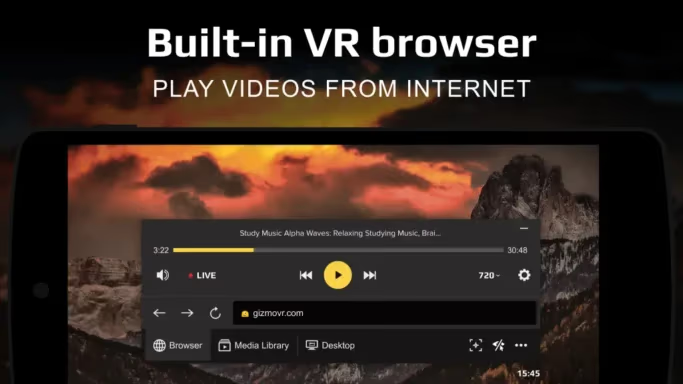
- Integrated browser for easy content discovery
- Hands-free mode control
Download Gizmo VR Video Player
#5. VRTV VR Video Player
VRTV is a popular choice among Android users for its flexibility:
- Multiple viewing options
- Support for various VR formats
- Advanced playback features
- Highly rated user experience
#6. Google Cardboard
While not a standalone player, Google Cardboard is an affordable VR platform that works with various VR apps:
- Compatible with both Android and iOS
- Supports a wide range of VR content
- Simple and user-friendly interface
- Great starting point for VR beginners
#7. Fulldive VR
Fulldive VR goes beyond just video playback, offering a comprehensive VR platform:
- Support for various VR content types
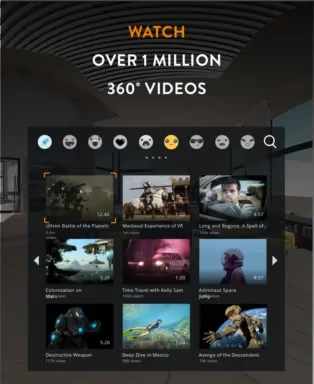
- Social features for connecting with other VR users
- Built-in browser for VR content discovery
- User-friendly interface
#What Features Should You Look For in a VR Player?
When choosing a VR player for your Android device, consider the following features:
#360° and 180° video support
Look for players that support both fully immersive 360-degree videos and the increasingly popular 180-degree format. YouTube’s Help Center for 360-degree video states that monoscopic spherical uploads should use equirectangular projection with a 2
aspect ratio, which mirrors the layout VR Media Player and PLAY’A VR expect when loading local files.#3D stereoscopic modes
Support for side-by-side and over-under 3D formats enhances depth perception and realism. Players that recognize common stereo layouts can save you from manual mode switching, but unusual files may still need a manual format pick.
#Head tracking capabilities
Accurate head tracking is non-negotiable for VR comfort.
#Compatibility with VR headsets
Ensure the player works well with your chosen VR headset, whether it’s a simple Google Cardboard or a more advanced option. For a great movie-watching experience, consider investing in a VR headset optimized for movies.
#User interface and controls
An intuitive interface and easy-to-use controls are essential for an enjoyable VR experience. Look for players with customizable controls and clear menus. Some VR experiences even offer games without controllers, while others provide immersive gameplay with controllers.
#How Do You Set Up VR Playback on Android?
Getting started with VR on your Android device is simpler than you might think. Follow these steps:
- Download and install a VR player app from the Google Play Store.
- Open the app and browse available VR videos or load your own content.
- Select a video and tap the play button.
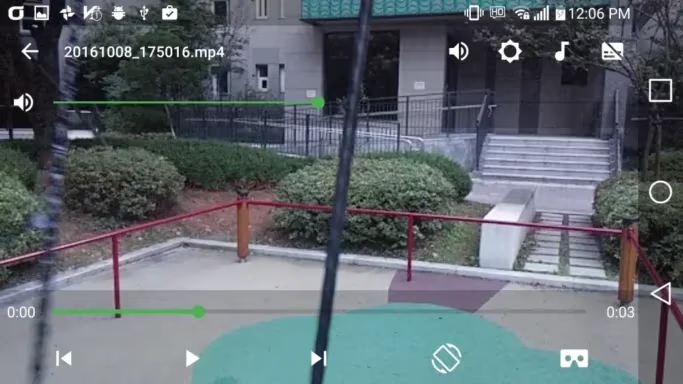
- Tap the VR headset icon to split the screen for stereoscopic viewing.
- Insert your smartphone into a compatible VR headset.
- Adjust the headset for a comfortable fit and clear focus.
- Use head movements to look around and explore the virtual environment.
For Wi-Fi streaming, SKYBOX VR Video Player works best when the phone and source PC are on the same stable network. VRTV is a lighter fallback if PLAY’A feels sluggish on older Android hardware.
Tips for optimal viewing:
- Ensure your phone’s gyroscope is calibrated for accurate head tracking.
- Use headphones for a more immersive audio experience.
- Take regular breaks to avoid eye strain and disorientation.
#Comparing Popular VR Players for Android
Each app trades depth for breadth differently. The grid below pulls the format coverage and headline feature for each pick, with user reception summarized rather than pinned to a moving star count.
| Player | Formats Supported | Key Features | User Reception |
|---|---|---|---|
| VR Media Player | 360°, 180°, 3D | Touch panning, zoom | Solid free pick for casual users |
| PLAY’A VR Player | 2D, 3D, 360°, 180° | 8K support, advanced controls | Favored by enthusiasts on flagship phones |
| SKYBOX | Major VR formats | Wi-Fi streaming, clean library | Frequently the top-rated free Android VR player |
| Gizmo | 360° videos | Integrated browser, hands-free mode | Niche pick for browsing-first workflows |
| VRTV | Major VR formats | Multiple viewing options | Reliable on lower-end Android hardware |
#Pros and Cons:
VR Media Player:
- Wide format support
- Smooth touch controls
- Limited streaming options
PLAY’A VR Player:
- Advanced playback features
- High-resolution support
- May be complex for beginners
SKYBOX:
- Excellent streaming capabilities
- User-friendly interface
- Requires good Wi-Fi for optimal performance
Gizmo:
- Integrated content browser
- Hands-free control
- Limited to 360° videos
VRTV:
- Flexible viewing options
- Good format support
- Interface may be less intuitive for some users
#Future Trends in VR Player Technology
The world of VR is rapidly evolving. Here are some trends to watch in VR player technology:
According to Google’s Cardboard developer site, the Cardboard SDK transitioned to open source in November 2019, with maintenance handed to the community and partners. That handoff is the reason a number of Cardboard-compatible Android VR apps are still receiving updates today.
#Advancements in head tracking
Future VR players will likely offer even more precise and responsive head tracking, possibly incorporating eye-tracking technology for an enhanced sense of immersion.
#Higher resolution support
Expect 8K mobile playback to become routine.
#Enhanced compatibility
Expect to see broader compatibility with various VR headsets and technologies, making it easier for users to switch between devices and platforms.
#AI integration
AI could also shape future VR players with personalized recommendations.
#Expanded content libraries
As VR technology becomes more mainstream, expect a growing library of VR content, including VR games for kids and open-world racing games optimized for virtual reality.
#Bottom Line
For most Android viewers, SKYBOX VR Video Player is the right starting point. It pairs Wi-Fi streaming from a same-LAN PC with a fast on-device library, and the interface stays out of the way during long sessions.
Pick VR Media Player if you mainly side-load mixed equirectangular and fisheye files on a mid-range phone and want broad codec coverage without paid upgrades. Power users running local 4K equirectangular footage on a flagship like the Pixel 8 or Galaxy S22 should download PLAY’A VR Player for its tilt, height, and speed controls.
Skip Fulldive VR unless you want its social discovery layer. Pair whichever app you choose with a Google Cardboard viewer and headphones for spatial audio, and you’ll get a noticeably better sense of depth than the flat player alone provides.
#Frequently Asked Questions
Can I use VR players without a headset?
While possible, using a VR headset provides the best immersive experience. Most apps include a “magic window” mode for headset-free viewing on the bare phone screen, which works for quickly previewing a file before sliding the phone into a Cardboard or similar viewer for an actual session — it’s convenient but not what these players are designed around.
Do all VR players support 3D content?
No. Check the feature list first.
Can I watch regular videos in VR players?
Yes. Most VR players support standard 2D videos, often displaying them inside a virtual theater environment so you can simulate a cinema seat without an actual screen.
How much storage do VR videos require?
VR videos can be large.
Are there any free VR players for Android?
Yes, plenty. Many VR players offer free versions with the core playback features unlocked, and premium tiers usually add advanced settings, ad removal, or cloud-library sync on top. SKYBOX, VR Media Player, and Fulldive VR all have free entry points on the Play Store, so you can install two or three and decide which interface and format-handling style fits your library best before paying for anything.
Do these VR players work with Google Cardboard?
Most of the apps in this guide ship Cardboard-compatible viewer profiles, so any standard Cardboard QR-paired headset should load correctly. Because the Cardboard SDK is now open source, even older Cardboard viewers continue to work with current Android VR apps as long as the QR profile loads cleanly during pairing.
Why does my VR video look distorted?
Usually a format mismatch.
How do I reduce motion sickness when using mobile VR?
Stick to seated, slow-pan content while you build tolerance, take a break every twenty to thirty minutes, and prefer 60 fps or higher source files when you can. Calibrating the gyroscope before each session and keeping the headset lenses centered on your eyes also helps. If symptoms persist after a few sessions, switch to forward-facing 180° content rather than full 360° captures, which tends to feel less jarring on phones.
By exploring the various VR players available for Android and understanding their features, you can choose the best option for your needs and dive into the exciting world of mobile virtual reality. Whether you’re watching 360-degree videos, exploring virtual environments, or enjoying 3D content, these players will help you make the most of your VR experience on Android.
For an optimal VR gaming experience, consider using a vertical gaming mouse to reduce hand strain during extended play sessions.
Pixel 11 vs Pixel 10: What Changed and Who Should Upgrade
Pixel 11 vs Pixel 10: same screen and camera resolution, new Tensor G6, 25W wireless, and Gemini Intelligence. Here is who should actually upgrade.

Verizon Not Receiving Texts? How to Fix It in 9 Steps
Verizon not receiving texts? Fix it in 9 steps: check Message Blocking in My Verizon, reset network settings, deregister iMessage, and call support.
Pixel Battery Drain: What Google's July Fix Really Covers
Google marked the Pixel idle battery drain bug fixed in July, but only some phones got the patch. Here is who is covered, who is not, and what to try.
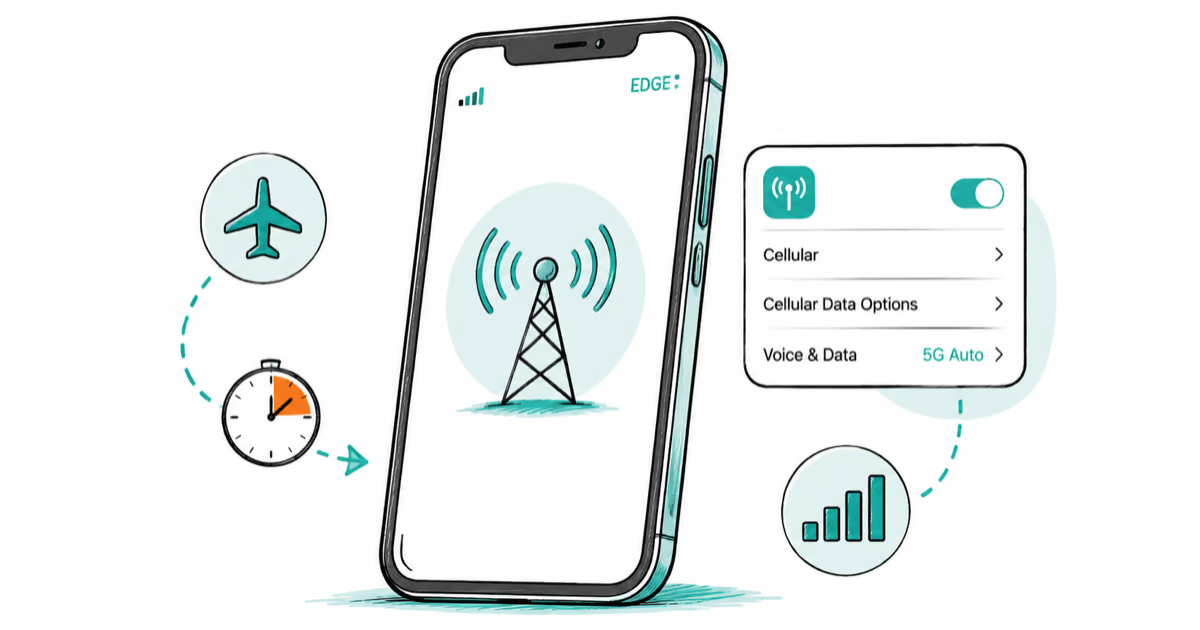
iPhone Stuck on EDGE? How to Get 5G or LTE Back (2026)
iPhone stuck on EDGE with crawling data? Here's why the E icon appears, which settings force 5G or LTE back, and when the problem is your carrier.