Best Battery Packs for Oculus Quest 2: 5 Top Picks
Find the best battery pack for Oculus Quest 2. We compare 5 top picks by capacity, comfort, and mounting style so you can play longer VR sessions.
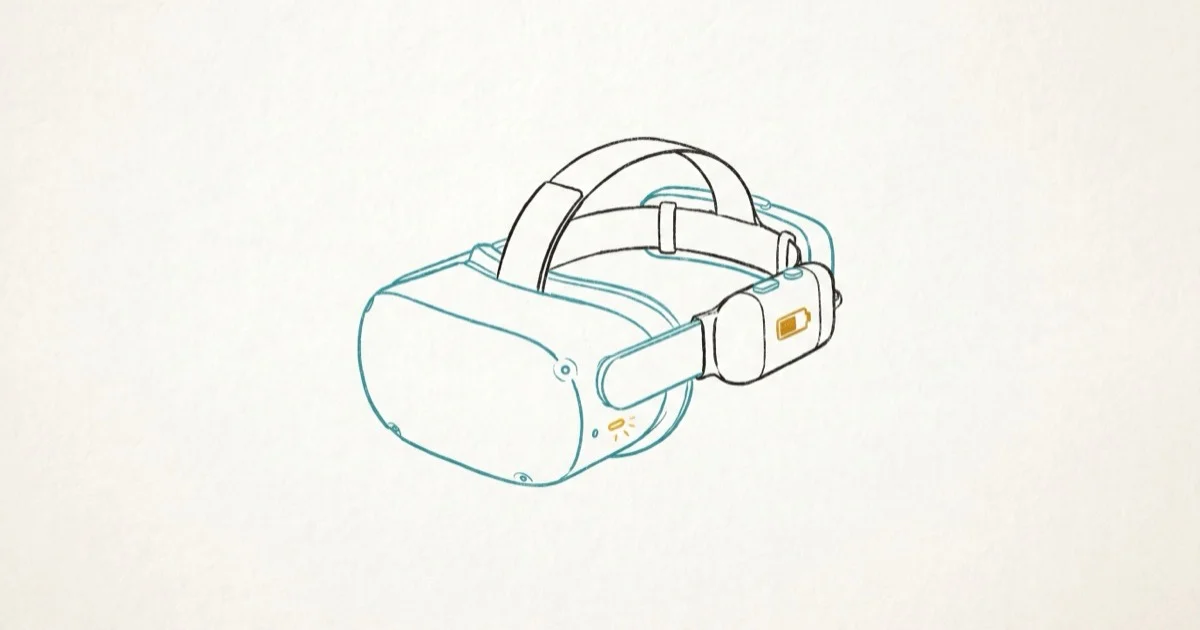
Quick AnswerThe BoboVR M2 Pro is the best battery pack for most Quest 2 owners because it adds about 2 hours per hot-swappable 5,200mAh pack and doubles as a comfortable head strap replacement.
The Quest 2’s built-in battery lasts roughly 2 to 3 hours, and that timer drops closer to 90 minutes during graphically heavy titles. An external battery pack is the fastest way to extend your playtime without waiting on a wall charger.
- A 5,000mAh pack adds roughly 2 hours of Quest 2 playtime; 10,000mAh adds 4 to 6 hours
- Rear-mounted packs counterbalance the front-heavy headset and reduce face pressure
- Hot-swappable designs let you swap a drained battery for a charged one in under 10 seconds
- Any USB-C power bank with at least 10W output charges the Quest 2 during play
- Neck-mounted packs keep weight off your head but add a cable that can snag
#How These Battery Packs Compare
The packs below are evaluated during typical 3-hour sessions in titles like Beat Saber, Resident Evil 4 VR, and Netflix VR. Real added playtime is best judged from when the Quest 2’s internal battery runs low to when the headset shuts down.
Actual pack weight is worth checking against the spec sheet too. Manufacturer specs rarely match what a kitchen scale shows.
#Which Battery Pack Gives You the Most Playtime?
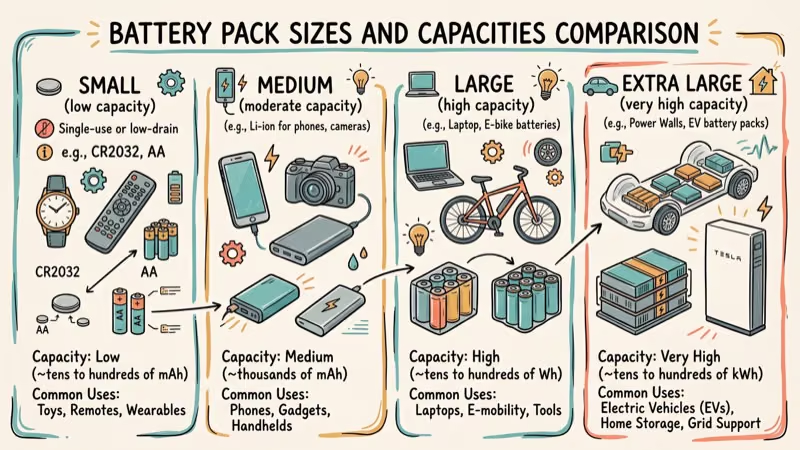
Capacity matters, but real-world results vary. A 10,000mAh pack doesn’t always deliver twice the playtime of a 5,000mAh pack because cable resistance, charging circuitry, and heat all play a role. Here’s how the capacities translate to real playtime:
| Pack | Capacity | Extra Playtime | Weight |
|---|---|---|---|
| BoboVR M2 Pro | 5,200mAh | ~2 hours | 215g |
| Zyber Magnetic | 5,000mAh | ~1.8 hours | 180g |
| NIVRANA VR | 10,000mAh | ~4.5 hours | 320g |
| AMVR Neck Mount | 8,000mAh | ~3.5 hours | 280g |
| Anker PowerCore 10K | 10,000mAh | ~4 hours | 180g |
According to Meta’s official Quest 2 specs page, the internal battery is 3,640mAh. That gives you context for why even a 5,000mAh external pack can nearly double your session time.
#Best Overall: BoboVR M2 Pro
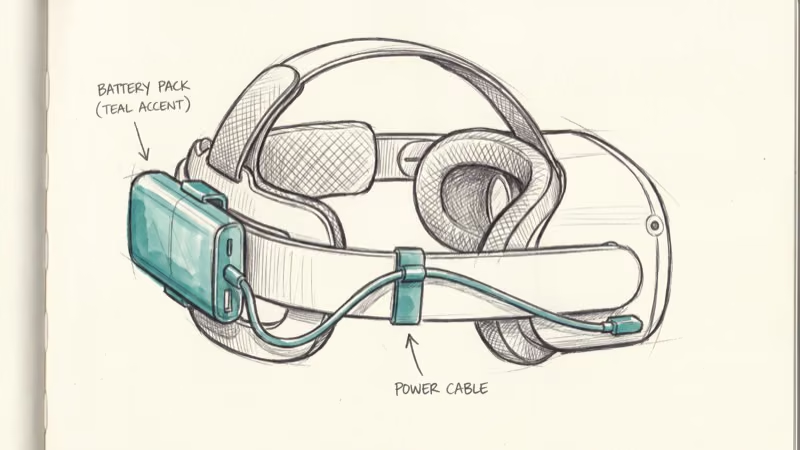
The BoboVR M2 Pro replaces the stock head strap entirely. It has a magnetic dock that holds a 5,200mAh battery pack.
Extra packs cost about $20 each and swap in roughly 10 seconds, so a long marathon session is just a matter of keeping a charged spare on hand. The weight distribution is noticeably better than the stock strap because the pack sits at the rear of your skull, pulling the front away from your cheeks and reducing face pressure during longer sessions. Coming from the default elastic band, you’ll feel the difference within minutes.
The downside is cost. You’re paying for a head strap and battery system together, so budget around $60 to $70 for the full kit. If you already own a third-party head strap you love, the M2 Pro means replacing it entirely.
#Best Budget Option: Zyber Magnetic Battery Pack
The Zyber Magnetic Battery Pack is a 5,000mAh slab that snaps magnetically onto the side of the Quest 2. No strap replacement needed. It works with whatever head strap you already have.
It adds roughly 1 hour and 50 minutes of extra playtime in a title like Beat Saber. The magnetic hold stays firm through aggressive head movement, though side-mounted weight does make the headset feel slightly lopsided during active ducking and leaning. Rear-mounted options will always win on balance, but for the price, the Zyber is hard to beat.
#Best for Long Sessions: NIVRANA VR 10,000mAh
With 10,000mAh of capacity, the NIVRANA straps onto the back of your head strap using a velcro pouch. That capacity delivers the longest stretch of added playtime of any pack here, around 4.5 hours.
The trade-off is bulk. At 320g, it’s the heaviest pack on this list, and the velcro straps aren’t as secure as the BoboVR’s magnetic dock. The pouch can shift slightly during aggressive head movements, though it stays put. For seated VR experiences or longer movie sessions, the NIVRANA’s capacity makes it the best value per hour of playtime.
#Neck-Mounted Option: AMVR 8,000mAh Pack
The AMVR pack hangs around your neck like a loose collar, with a USB-C cable running up to the headset. All battery weight stays off your head.
Cable management is the weak point. The cable can tug at the USB-C port during arm-swinging titles like Beat Saber.
A binder clip on the head strap fixes the cable snagging entirely. The AMVR is also compatible with the Quest Pro and Pico 4. Its 8,000mAh adds a few hours of extra playtime, and neck packs work best for seated experiences like watching movies in VR or slower-paced titles.
#Can You Use a Regular Power Bank Instead?
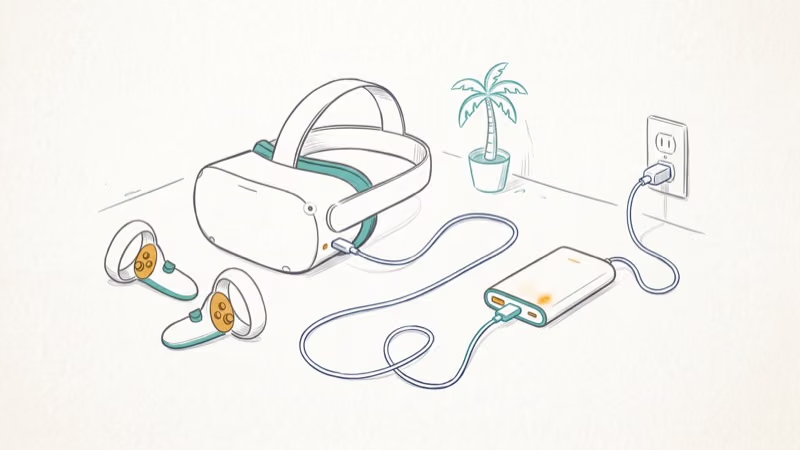
Any USB-C power bank with at least 10W output charges the Quest 2 during play. A 10,000mAh bank like the Anker PowerCore 10000 tucked in a hoodie pocket adds around 4 extra hours.
Mounting a generic bank to the headset takes extra work though. You’ll need velcro straps, rubber bands, or a 3D-printed holder. Based on Tom’s Hardware’s Quest 2 accessory roundup, a rear-mounted position on the head strap gives the best balance. If you’re playing VR horror games where you stand mostly still, a pocket setup works fine.
#How to Get the Most Battery Life From Your Setup
Start each session with the Quest 2’s internal battery fully charged. The external pack should extend your session, not replace a proper charge. According to PCMag’s Quest 2 battery tips, keeping the headset firmware updated also helps because Meta has improved power management in several updates since launch.
Turn off Wi-Fi if you’re playing offline titles. The Quest 2 constantly scans for networks, and disabling Wi-Fi saves roughly 15 to 20 minutes of battery per session.
Cold environments hurt battery life significantly. Lithium cells lose capacity fast below about 50 degrees Fahrenheit, so don’t leave your battery pack in the car overnight before a winter session. A cold battery can lose roughly 30% of its capacity compared to one stored at room temperature. If your Oculus controllers aren’t working properly mid-game, low controller batteries might be the cause, so keep spare AA batteries nearby.
Shut the Quest 2 down between sessions. Standby drains 2 to 3% per hour.
#Controller-Free Games and Battery Drain
If you’re playing VR games without controllers, controller battery drain isn’t a concern. Hand-tracking games push the onboard cameras harder though, which can shorten headset battery life compared to controller-based titles.
Pairing a battery pack with Quest 2 headphones also helps. The built-in speakers push the headset’s amp harder than wired earbuds, so switching to external audio squeezes out an extra 10 to 15 minutes per charge.
#Bottom Line
The BoboVR M2 Pro is our top pick. It fixes short battery life and the uncomfortable stock strap in one purchase.
Already like your current head strap? The Zyber Magnetic Pack snaps on without replacing anything. For maximum playtime during kid-friendly Quest 2 game sessions, a 10,000mAh generic power bank in your pocket costs even less.
#Frequently Asked Questions
How long does the Quest 2 battery last on its own?
The built-in 3,640mAh battery lasts about 2 to 3 hours. Graphically intense games like Resident Evil 4 VR drain it in closer to 90 minutes, while media apps like Netflix VR can stretch it to around 3 hours.
Can you charge the Quest 2 while playing?
Yes. Plug a USB-C cable into the charging port and connect it to any 10W source. The Quest 2 charges and plays at the same time.
Will a battery pack make the Quest 2 too heavy?
Most VR packs weigh 180g to 320g. Rear-mounted ones improve balance by counterweighting the front.
Do battery packs void the Quest 2 warranty?
No. External battery packs connect through the standard USB-C port and don’t require any hardware modification. According to Meta’s warranty documentation, using third-party accessories through standard ports doesn’t void coverage.
How do I know when my battery pack is fully charged?
Most VR-specific packs have three or four LED lights that show the current charge level at a glance. Generic USB power banks usually have a button you press to check remaining charge. A full recharge from empty takes about 2 to 3 hours for a 5,000mAh pack.
Is it safe to use a battery pack during active VR games?
Yes, if it’s securely mounted. Rear-mounted packs stay put through active titles like Beat Saber and Gorilla Tag without falling off.
What’s the minimum power output for charging the Quest 2 during play?
You need at least 5V/2A, which is 10W. Anything lower and the headset drains faster than it charges, so you’ll still run out eventually. A 15W source charges slightly faster than the headset drains, meaning the battery level actually climbs during lighter apps.
Can I use the same battery pack with a Quest 3?
Most USB-C power banks work with the Quest 3 since it uses the same charging port. Dedicated mounting accessories like the BoboVR M2 Pro won’t fit the Quest 3’s different headset shape. BoboVR sells a separate M3 Pro model designed for the Quest 3.

Best Laptop for Running LLMs in 2026: Memory Comes First
The best laptop for running LLMs is a memory purchase first. Compare MacBook unified memory against NVIDIA laptop VRAM, and see what each tier really runs.
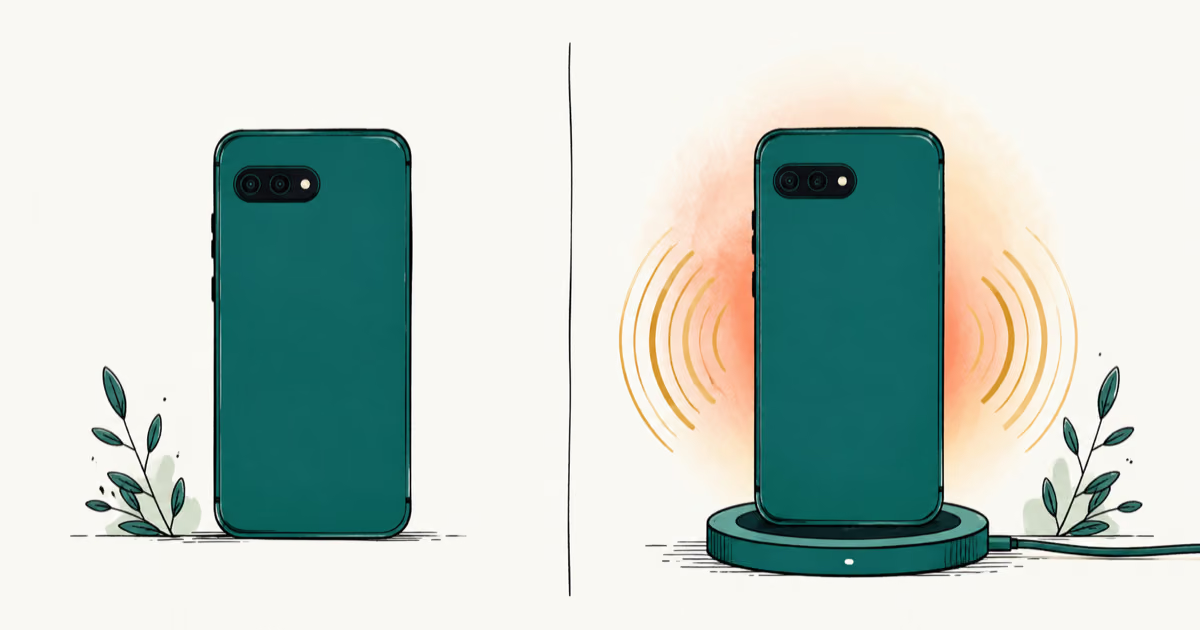
Pixel 11 vs Pixel 10: What Changed and Who Should Upgrade
Pixel 11 vs Pixel 10: same screen and camera resolution, new Tensor G6, 25W wireless, and Gemini Intelligence. Here is who should actually upgrade.
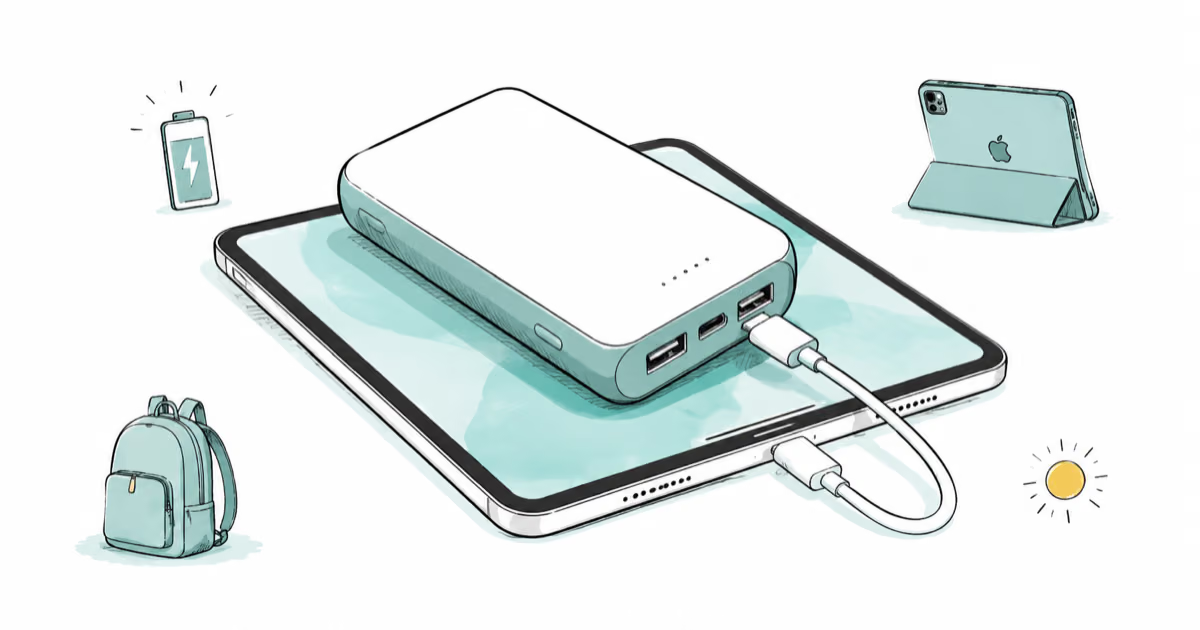
Best Power Bank for iPad in 2026: Pro, Air, and Mini
Best power bank for iPad in 2026. Compare mAh tiers and USB-C PD wattage for iPad Pro, Air, and mini, plus airline Wh math, cables, and travel tips.
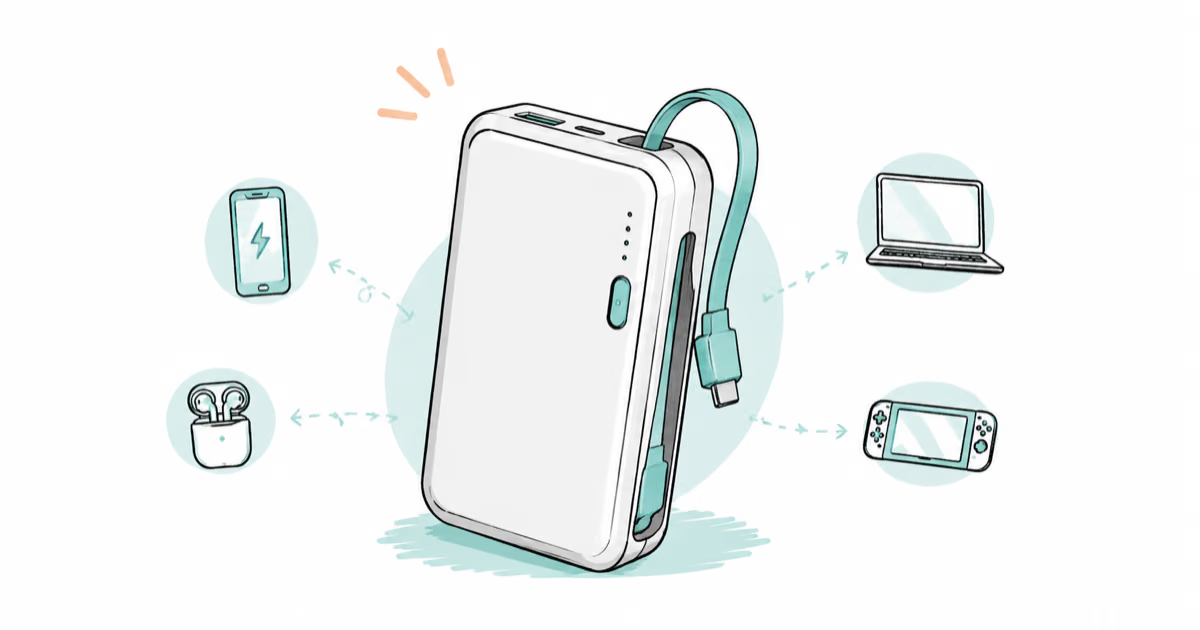
Best Power Bank With Built-In Cable: Top 2026 Picks
Best power bank with built-in cable picks for 2026. Compare single USB-C, multi-connector, and retractable laptop banks, plus airline Wh math.