How to Uninstall Chrome on Mac Completely: 3 Methods (2026)
Uninstall Chrome from your Mac in 3 ways: drag to Trash, use Launchpad, or automated removal. Remove all leftover files to free up storage space.
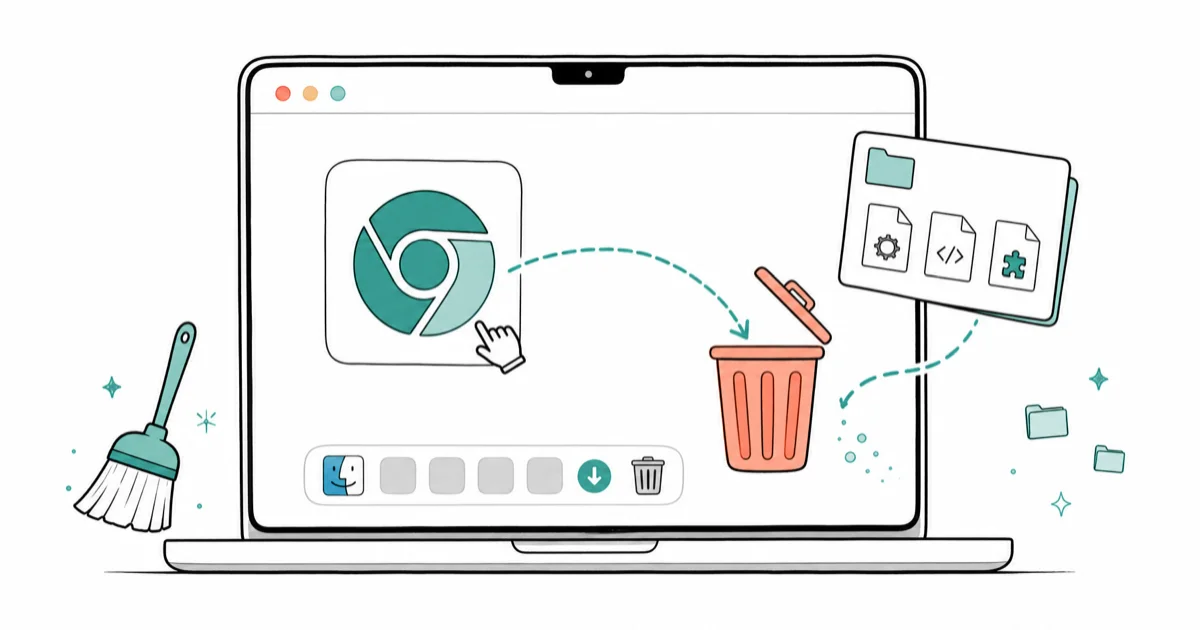
Quick AnswerDrag Chrome from Applications to Trash, then delete library files in ~/Library/Application Support/Google/Chrome to fully remove all Chrome data and free up space.
Uninstalling Chrome on Mac leaves behind gigabytes of hidden data if you only drag it to Trash. The complete removal process matters because Chrome stores files across several system folders, not just the Applications folder.
- Simply dragging Chrome to Trash leaves 2-5GB of leftover data in Library folders that must be deleted manually
- Chrome stores files in 7 locations: Application Support, Preferences, Caches, WebKit, Saved Application State, LaunchServices, and Logs
- Method 1 (Launchpad) is fastest for removing the app, but Method 3 (automated tools) removes all traces in one click
- Back up bookmarks before uninstalling since deleting ~/Library/Application Support/Google/Chrome removes all local data permanently
- Force quit Chrome if it won’t close normally using Command+Option+Esc before attempting removal
#Why Would You Want to Remove Chrome?
Chrome uses significant system resources that can slow down your Mac. On lower-memory Macs, Chrome can consume a noticeable amount of RAM even with just a few tabs open. Other reasons to uninstall:
- Storage space: Chrome can accumulate 2-5GB of cached data over time
- Battery life: Chrome is one of the most battery-intensive Mac apps, according to Apple’s Activity Monitor documentation
- Privacy preferences: Users switching to Safari, Firefox, or other browsers for better privacy
- Performance issues: If you’re experiencing Chrome crashes or freezing
- Connection problems: Similar to AirPods not connecting to Mac, Chrome can sometimes cause Bluetooth connectivity issues
#Method 1: Quick Removal via Launchpad
This is the fastest way to remove Chrome’s main application:
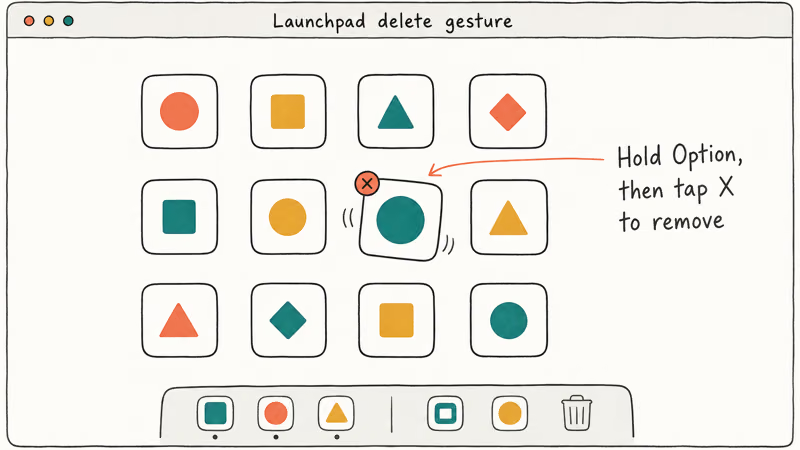
- Press F4 or click the Launchpad icon in your Dock
- Find the Google Chrome icon
- Click and hold Chrome until all icons start wiggling
- Click the X that appears on Chrome’s icon
- Confirm removal when prompted
Note: This only removes the app file, not the data stored in Library folders.
#Method 2: Complete Manual Removal
For a thorough uninstall that removes all Chrome data:
#Step 1: Force Quit Chrome
- Right-click Chrome in the Dock and select Quit
- If Chrome won’t quit, press Command+Option+Esc and force quit
#Step 2: Remove the Application
- Open Finder and go to Applications
- Drag Google Chrome to Trash
- Right-click Trash and select Empty Trash
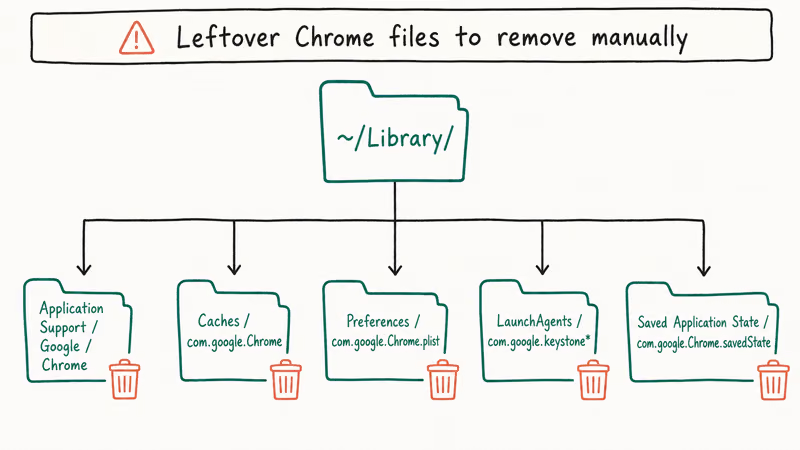
#Step 3: Delete Chrome’s Library Files
According to Apple’s macOS file system guide, applications store data in multiple Library locations. Remove these Chrome folders:
- Press Command+Shift+G to open “Go to Folder”
- Enter
~/Libraryand click Go - Delete these Chrome-related folders and files:
In Application Support folder:
- Google/Chrome (entire folder)
In Preferences folder:
- com.google.Chrome.plist
- com.google.Chrome.helper.plist
In Caches folder:
- com.google.Chrome
- com.google.Chrome.helper
In WebKit folder:
- com.google.Chrome
In Saved Application State folder:
- com.google.Chrome.savedState
#Step 4: Remove Launch Services Data
According to Apple’s support guidance, a stale Launch Services database can leave a removed app registered with the system, so rebuilding it finishes the cleanup.
- Go to
~/Library/LaunchServices - Delete any files containing “Chrome” in the name
- Rebuild the Launch Services database by running:
lsregister -kill -r -domain local -domain system -domain user
#Method 3: Automated Removal Tools
Third-party uninstaller apps can remove Chrome and all its files in one click:
#CleanMyMac X (Most Thorough)
- Download CleanMyMac X from the official website
- Open the app and click Uninstaller in the sidebar
- Find Google Chrome in the list of installed apps
- Check the box next to Chrome and click Remove
- CleanMyMac X automatically deletes all associated files
Some links on this page are affiliate links, which means fone.tips may earn a commission at no extra cost to you.
#AppCleaner (Free Alternative)
- Download AppCleaner from Freemacsoft
- Drag Chrome’s icon from Applications onto AppCleaner
- Review the list of files it finds (should show 15-20 Chrome files)
- Click Delete to remove everything
#What Happens If You Skip Library File Cleanup?
After a partial Chrome removal (just dragging to Trash), these files remain: the Application Support folder (browsing data, extensions, profiles), the Caches folder (temporary web files), and smaller amounts in the Preferences folder (settings and configurations) and WebKit folder (web engine data).
This leftover data can add up to several gigabytes that continue consuming storage space.
#How to Back Up Chrome Data Before Removal
If you want to save your bookmarks and settings:
- Open Chrome and go to chrome://settings/syncSetup
- Sign in to your Google account to sync data
- Or manually export bookmarks:
Bookmarks>Bookmark Manager>Organize>Export Bookmarks
#Browser Alternatives After Chrome Removal
Consider these Mac-optimized browsers:
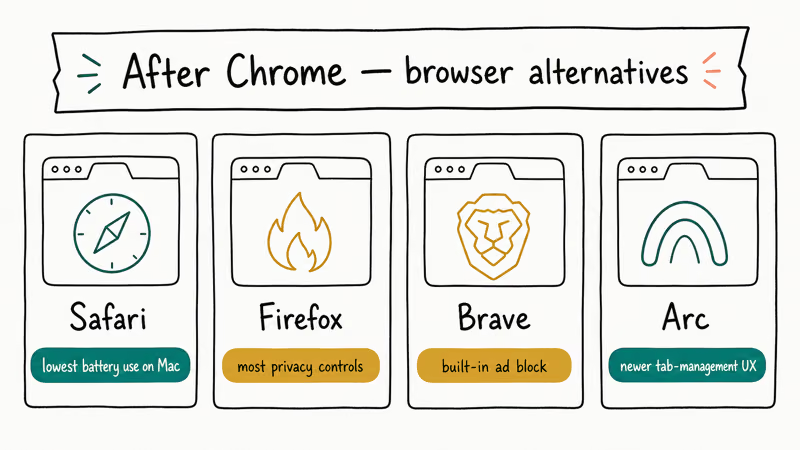
- Safari: Uses noticeably less battery than Chrome on Macs and works seamlessly with Chromecast from Safari
- Firefox: Strong privacy features with tracking protection
- Arc: Modern interface with workspace organization
- Brave: Blocks ads and trackers by default
Each browser can import your Chrome bookmarks during first setup. For Android TV users, there are also excellent browser alternatives available.
#Troubleshooting Chrome Removal Issues
#Chrome Won’t Force Quit?
If Command+Option+Esc doesn’t work:
- Open Activity Monitor (
Applications>Utilities) - Search for “Chrome” processes
- Select each Chrome process and click Force Quit
#Some Library Files Won’t Delete?
This happens when Chrome processes are still running. Restart your Mac completely, then try deleting the Library files again. If still stuck, use Terminal: sudo rm -rf ~/Library/Application\ Support/Google/Chrome
#Chrome Keeps Appearing After Removal?
Incomplete uninstall causes this. Check /Library/Application Support/Google/ (system-wide folder) and look in /Users/Shared/ for shared Chrome files. Use Terminal command: find / -name "*Chrome*" 2>/dev/null to locate all remaining files.
Mac Tips & Tricks
#Frequently Asked Questions
Can I uninstall Chrome without losing bookmarks?
Yes, if you sync bookmarks to your Google account before removal. Go to chrome://settings/syncSetup and enable bookmark sync.
Will removing Chrome affect other Google services?
No, Chrome removal doesn’t impact Gmail, Google Drive, or other web-based Google services you can access from any browser.
How much storage will I free up?
Removing Chrome and all its data can free up a large amount of storage space, depending on your usage history.
Can I reinstall Chrome later?
Yes, download it again from google.com/chrome. Your synced data will restore automatically when you sign in.
Should I remove Chrome extensions first?
No need — deleting the Application Support folder removes all extensions and their data automatically.
What if I use Chrome for work accounts?
Back up work-related bookmarks and check with your IT department about alternative browsers they support.
#Bottom Line
Start with Method 1 (Launchpad) for quick removal, but use Method 2 (manual Library cleanup) to free up the full amount of Chrome data. Only complete Library file removal prevents leftover data from consuming storage space. If you’re uncomfortable with manual file deletion, Method 3’s automated tools handle everything safely.
macOS 27 Golden Gate: Release Date and Compatible Macs
macOS 27 Golden Gate was announced at WWDC 2026. Here is the release date, the Apple Silicon-only compatible Mac list, and every confirmed new feature.
How to Copy and Paste on a Mac: Shortcuts and Fixes
Copy and paste on a Mac with Command-C and Command-V. Learn the cut shortcut, paste without formatting, Universal Clipboard, and fixes when it breaks.

How to Use the Phone App on Mac: macOS Tahoe Setup Guide
Set up the Phone app on macOS Tahoe to relay iPhone cellular calls. Covers requirements, FaceTime setup, Call Screening, and common firewall fixes.
How to Use iPhone Mirroring on Mac: Full 2026 Setup Guide
Set up iPhone Mirroring on macOS Sequoia with iOS 18. Covers hardware requirements, the six common error messages, EU limits, and a shared-Mac privacy fix.