7 Easy Methods to Transfer Notes from iPhone to Android
Transfer notes from iPhone to Android using 7 easy methods including iCloud sync, email, Google Keep, and third-party tools. Keep all your notes safe.
Quick AnswerThe easiest way to transfer notes from iPhone to Android is to sync iPhone notes to your Gmail account via Settings, then access them on Android through the Gmail app or Google Keep.
Switching from an iPhone to an Android device can be exciting, but it also brings the challenge of moving your important data, including notes. Whether you’re jotting down ideas, keeping to-do lists, or storing reference info, your notes are valuable and shouldn’t be left behind. This guide walks you through seven reliable methods to move your notes from iPhone to Android, so you don’t lose any details in the switch.
- Syncing iPhone Notes to Gmail via Settings is the fastest method and requires no extra apps or cables.
- Google Keep is the best cross-platform solution because it works natively on both iOS and Android and syncs automatically.
- Email transfer works for individual notes but becomes impractical when you have dozens or hundreds of notes to move.
- iCloud export produces plain text files compatible with Android note apps like Notion, Bear, or Samsung Notes.
- Third-party tools like iMobie MobieTrans can transfer an entire Notes library in one batch, including formatted content.
#Why Transfer Notes from iPhone to Android?
Before diving into the methods, let’s consider why transferring your notes is essential:
- Platform Flexibility: Moving your notes allows you to switch between iOS and Android without losing important information.
- Broader Device Choices: Android offers a wide range of devices from various manufacturers, each with unique features. Transferring your notes enables you to take advantage of this diversity.
- Continuity: Keeping your notes ensures you can pick up where you left off on your new device.
#Preparing for the Transfer
Before initiating any transfer method, it’s crucial to prepare both your iPhone and Android device. According to Apple, every Apple ID includes 5 GB of free iCloud storage by default, which handles most personal Notes libraries before you ever need a paid tier (see the iCloud storage plans page).
#Backing up Your iPhone Notes
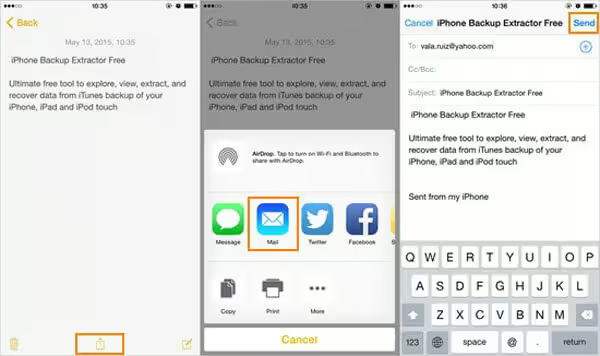
- Go to Settings > [Your Name] > iCloud
- Ensure “Notes” is toggled on to sync with iCloud
- Tap “iCloud Backup” and select “Back Up Now” to create a recent backup
If you’re unsure about what’s in your iCloud backup, you can learn how to see what’s in your iCloud to ensure your notes are included.
#Setting up Your Android Device
- Ensure your Android device is fully charged
- Connect to a stable Wi-Fi network
- Sign in to your Google account if you haven’t already
Now that you’re prepared, let’s explore the seven methods to transfer your notes.
#Method 1: Using Email to Transfer Notes
This method is straightforward and doesn’t require any additional software.
Steps:
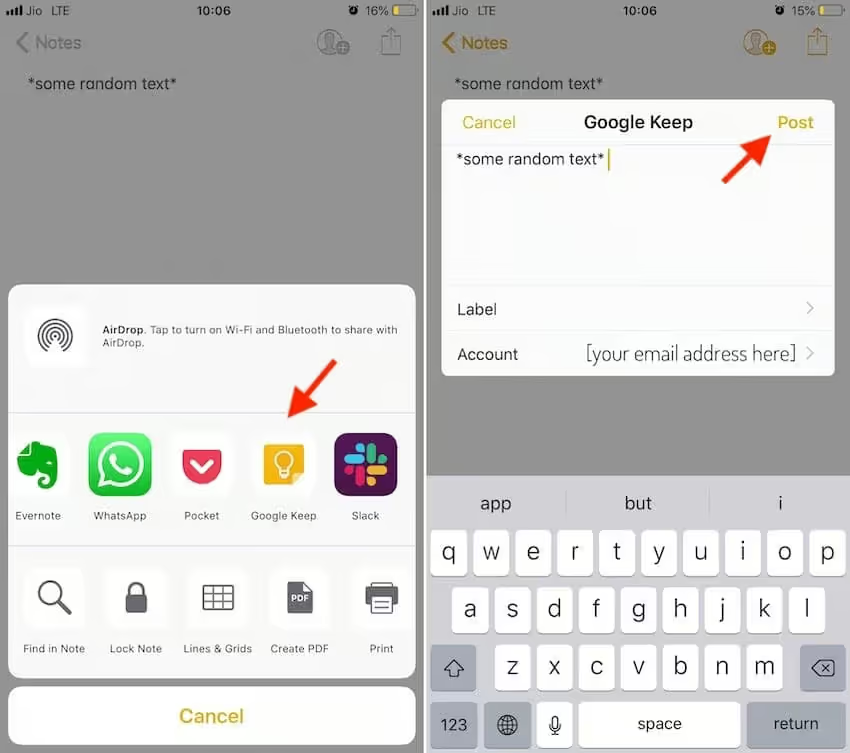
- Open the Notes app on your iPhone
- Select the note you want to transfer
- Tap the Share button (usually an icon with an arrow pointing up)
- Choose “Mail” from the sharing options
- Enter your email address and send the note to yourself
- On your Android device, open the email and save the note
Pros:
- Simple and quick for transferring a few notes
- Doesn’t require additional apps or services
Cons:
- Time-consuming for large numbers of notes
- May not preserve formatting or attachments
Email works best for a small number of plain-text notes. It becomes tedious for larger libraries because the share-to-Mail dialog has to load and send each note individually.
#Method 2: iCloud Sync and Web Access
This method utilizes Apple’s iCloud service to sync notes and access them via a web browser on your Android device.
Steps:
- On your iPhone, go to Settings > [Your Name] > iCloud
- Ensure “Notes” is toggled on
- On your Android device, open a web browser and go to icloud.com
- Sign in with your Apple ID
- Select “Notes” and access your synced notes
If your iCloud notes don’t appear right away on icloud.com, the iCloud notes not syncing fixes guide walks through the most common culprits.
Pros:
- Maintains original formatting
- Allows access to all synced notes
Cons:
- Requires an internet connection
- Notes aren’t directly saved on your Android device
#Method 3: Google Keep for Cross-Platform Syncing
Google Keep is a versatile note-taking app that works well across iOS and Android. Google’s Keep help center confirms that any note you create or edit on one device shows up on every other device signed in to the same Google account, with no manual export step.
Steps:
- Download Google Keep from the App Store on your iPhone
- Sign in with your Google account
- Manually copy your important notes from the iOS Notes app to Google Keep
- On your Android device, install Google Keep from the Google Play Store
- Sign in with the same Google account to access your notes
Pros:
- Automatic syncing across devices
- Additional features like reminders and collaboration
Cons:
- Requires manual copying of notes from the iOS Notes app
- May not support all formatting options from iOS Notes
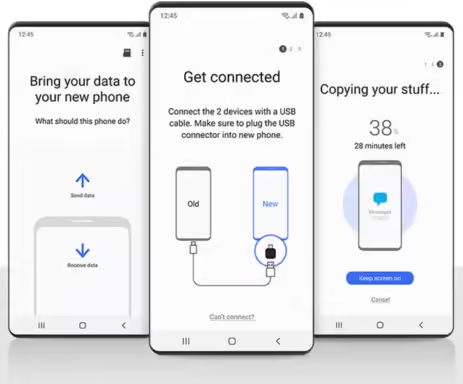
#Method 4: Using Samsung Smart Switch
For those moving to a Samsung device, Smart Switch offers a comprehensive transfer solution. Samsung’s Smart Switch support page states that the tool can move Notes alongside contacts, calendar, photos, and messages in one iPhone-to-Galaxy session.
Steps:
- Download Smart Switch on your Samsung Android device
- Connect your iPhone and Samsung device using a USB cable or Wi-Fi
- Follow the on-screen instructions to select and transfer your notes
Smart Switch can move notes in the same session as contacts, calendar, photos, and messages, but embedded images or complex note attachments may still need a manual check afterward.
If you’re switching between Android devices, you can also transfer WhatsApp from Samsung to Huawei using similar methods.
Pros:
- Transfers multiple data types, including notes, in one go
- User-friendly interface
Cons:
- Only compatible with Samsung devices
- May require a USB cable for optimal performance
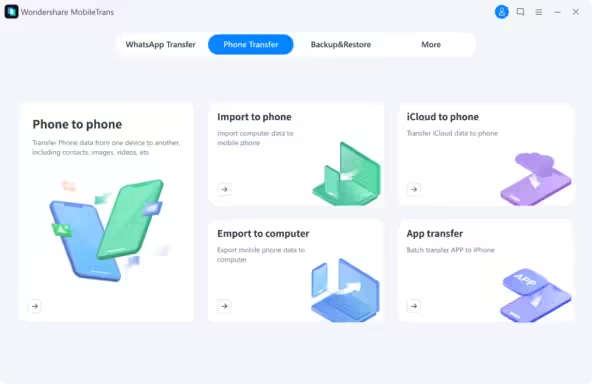
#Method 5: Third-Party Transfer Apps
Several third-party apps can facilitate the transfer of notes from iPhone to Android.
Popular options include:
Some links on this page are affiliate links, which means fone.tips may earn a commission at no extra cost to you.
General Steps:
- Download and install the chosen app on your computer
- Connect both your iPhone and Android device to the computer
- Select “Notes” from the data types to transfer
- Initiate the transfer process
If you encounter issues connecting your Android device to your computer, you might need to troubleshoot Android File Transfer not working.
Pros:
- Often support multiple data types beyond just notes
- Can be more comprehensive than native solutions
Cons:
- May require a computer to facilitate the transfer
- Some apps may have a cost associated with full functionality
#Method 6: Manual Copy and Paste
While time-consuming, manually copying and pasting notes can be a last resort option.
Steps:
- Open a note on your iPhone
- Select and copy the text
- Use a cloud service like Google Drive or email to transfer the text
- On your Android device, paste the text into your preferred note-taking app
If you’re using cloud services, you might find it helpful to transfer Dropbox to Google Drive or transfer iCloud to Google Drive to consolidate your data.
Pros:
- Doesn’t require any special apps or services
- Allows for selective transfer of specific notes or portions
Cons:
- Extremely time-consuming for large numbers of notes
- May not preserve formatting or attachments
#Method 7: Gmail Sync Method
This method leverages Gmail to sync your notes between devices.
Steps:
- On your iPhone, go to
Settings>Mail>Accounts>Add Account>Google - Sign in to your Gmail account and enable sync for Notes
- In the Notes app, move your notes to the Gmail account
- On your Android device, open the Gmail app to access your synced notes
Pros:
- Utilizes existing Gmail infrastructure
- Automatic syncing once set up
Cons:
- Requires a Gmail account
- May not support all formatting options from iOS Notes
#What If Notes Don’t Transfer Properly?
When transferring notes, you might run into a few snags. Here are quick fixes for the most common ones:
- Sync Errors: Ensure both devices are connected to a stable internet connection. Try toggling sync off and on again.
- Missing Notes: Double-check that all notes are included in the sync or transfer process. Some methods may not transfer certain types of notes (e.g., password-protected notes).
- Formatting Problems: Be aware that some formatting may not transfer perfectly between iOS and Android. Complex formatting or attachments may need to be adjusted manually.
Use this quick matching guide if you’re deciding between the seven methods instead of trying them in order.
| Situation | Best first method | Why it fits |
|---|---|---|
| You only have a few plain-text notes | Email individual notes | It’s slow but doesn’t require new apps or a computer. |
| You already use Gmail on both phones | Gmail sync | It keeps a live copy available from the Android Mail or Gmail app. |
| You’re moving to a Samsung Galaxy | Samsung Smart Switch | It can bundle notes with contacts, photos, and messages in one transfer. |
| You want ongoing cross-platform notes | Google Keep | It keeps future edits visible on both iOS and Android. |
| Your notes include attachments or folders | MobileTrans or dr.fone | These tools give you a guided desktop workflow when free methods drop structure. |
Before you wipe or sell the iPhone, open a handful of transferred notes on the Android side and compare them with the originals. Check one plain-text note, one checklist, one note with an image, and one older note from a different folder. That small spot check catches most sync gaps before the iPhone is gone.
Also keep the original iPhone backup for at least a few days after the move.
Notes migrations can look complete on day one and reveal missing attachments only when you search for an older project note later. A short overlap period gives you time to re-run one method without rebuilding the whole phone setup.
That backup window is especially useful if you used more than one Notes folder.
#Bottom Line
For most people switching to Android, start with the Gmail sync method (Method 7): it’s free, avoids cables, and keeps your iPhone copy intact. Pick Samsung Smart Switch only if you’re moving to a Galaxy and want contacts and photos in the same pass. Save tools like MobileTrans or dr.fone – Phone Transfer for large or formatting-heavy libraries where the simpler routes drop too many details.
As you settle into Android, you might also want to export your WhatsApp chats so your conversations make the trip alongside your notes.
#Frequently Asked Questions
Will my note formatting transfer perfectly to Android?
Plain text and bullet lists usually come over cleanly. Rich formatting like checkboxes, drawings, scanned documents, and table layouts often gets simplified or dropped — Android note apps don’t read Apple’s proprietary format directly. Expect to clean up complex notes by hand.
Can I move password-protected notes from iPhone to Android?
No. Password-protected iCloud notes can’t be opened outside the Apple Notes app, so they won’t sync to icloud.com on a browser and Smart Switch will skip them. Open those notes on your own iPhone first with your existing password, remove the protection, then run the transfer.
How long does the Gmail sync method usually take?
It depends on library size, attachments, and network speed. Plain-text notes usually sync quickly, while attachment-heavy collections can take longer on the first sync.
Do I need a USB cable to transfer my notes?
Only for Samsung Smart Switch’s fastest mode. Email, iCloud web access, Google Keep, and Gmail sync all work over Wi-Fi without a cable. Most third-party desktop tools want a cable for stability, but a few support wireless too.
Will photos and attachments inside my notes come over?
It depends on the method. Smart Switch and paid third-party tools usually bring photos along. Email, iCloud.com web access, and the Gmail sync method tend to drop or flatten attachments. If photos matter, plan to back them up separately through Google Photos.
What happens to my iCloud notes after I switch to Android?
They stay on Apple’s servers as long as your Apple ID is active, and you can keep reading them at icloud.com from any browser. They won’t auto-sync to your Android note app, so the cleanest mental model is to treat iCloud as the archive copy and your Android app as the live workspace. If you eventually delete the Apple ID, every iCloud note attached to that ID disappears too, so export anything irreplaceable first.
Can I keep my iPhone notes accessible after switching?
Yes. Keep the Apple ID active and you’ve got two clean options: sign in to icloud.com from your Android browser for occasional reads, or move the notes you actively edit into Gmail or Google Keep so both platforms stay in sync going forward.
Apple Siri Settlement: Who Qualifies and How to Claim
Apple's $250 million Siri settlement covers iPhone 15 Pro and iPhone 16 models bought June 2024 to March 2025. See who qualifies and how claims work.
iOS 26.6.1 Security Update: What Apple Fixed and Who Gets It
Apple released iOS 26.6.1 on August 17 with 29 security fixes, including an IPSec interception bug. See what it patches, who gets it, and how to update.
iPhone Adaptive Power: How It Works and When to Use It
Learn how iPhone Adaptive Power works, which models support it, what it changes, and when Low Power Mode is still the better battery-saving choice.
How to Transfer Data to a New iPhone Without iCloud
Move everything to your new iPhone without iCloud: Quick Start device-to-device transfer, wired migration, and encrypted Finder or iTunes backups.