How to Transfer Files From Dropbox to Google Drive (2026)
Transfer files from Dropbox to Google Drive using three proven methods: manual download/upload, desktop sync apps, and cloud migration tools.
Quick AnswerDownload files from your Dropbox to your computer, then upload them to Google Drive. This manual method works best for small transfers under 5GB.
Moving files from Dropbox to Google Drive doesn’t require special software. There are three reliable methods, and manual download-upload works best for most people transferring under 5GB.
- Google Drive offers 15GB of free storage compared to Dropbox’s 2GB, giving you 7.5 times more space at no cost
- Manual transfer works best for files under 5GB and takes about 5-10 minutes depending on your internet speed
- Migration tools like MultCloud handle large transfers automatically but require granting access to both cloud accounts
- Desktop sync lets you drag files between local folders but needs both apps installed on your computer
- Shared folders and files you don’t own require the owner’s permission to transfer to your Google Drive
#Why Transfer From Dropbox to Google Drive?
Google Drive provides better value for most users. Compared side-by-side, Google Drive offers more free storage, better integration with productivity apps, and lower costs for paid plans.
The storage difference alone makes switching worthwhile. Dropbox’s free tier gives you 2GB, while Google Drive starts at 15GB. That’s enough space for approximately 6,000 photos or 3,000 documents, which makes it particularly useful if you’re already backing up WhatsApp messages or managing other cloud storage needs.
Pricing also favors Google Drive significantly. According to Google’s pricing page, Google Drive costs $1.99 monthly ($23.88 annually) for 100GB, while Dropbox charges $11.99 monthly for 2TB. For comparable 2TB storage, Google Drive costs $9.99 monthly versus Dropbox’s $11.99, representing a 17% savings.
Google Drive integrates directly with Google Docs, Sheets, and Slides. You can edit documents without downloading them first. Dropbox offers Paper for document creation, but it’s limited compared to Google’s full office suite.
The collaboration features differ sharply between the two platforms. Google Drive lets multiple people edit documents simultaneously with real-time changes visible to everyone. Dropbox requires you to download, edit, and re-upload files for most document types.
#Choose the Right Transfer Method
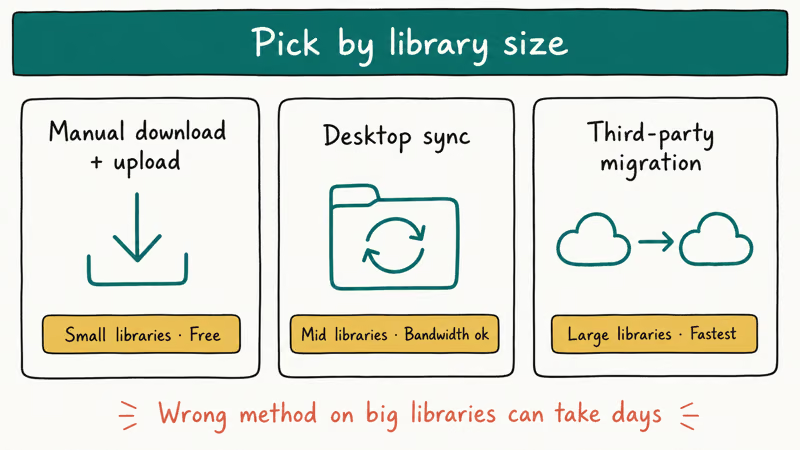
Your file size determines the best approach. Here’s how the three methods compare across different amounts of data:
| Transfer Size | Best Method | Time Required | Complexity |
|---|---|---|---|
| Under 5GB | Manual download/upload | 5-10 minutes | Easy |
| 5GB - 50GB | Desktop sync | 30-60 minutes | Moderate |
| Over 50GB | Migration tool | 1-4 hours | Advanced |
For most people transferring photos, documents, and small videos, the manual method works perfectly. A few gigabytes of mixed files finish quickly on a standard broadband connection. This approach is similar to other file transfer methods but doesn’t require special cables or complex setups.
#Method 1: Manual Download and Upload
This approach requires no special software and gives you complete control over which files transfer.
#Step 1: Select Files in Dropbox
Log into your Dropbox account at dropbox.com. Go to the folder containing files you want to transfer.
Select files by clicking the checkbox next to each one. For multiple files, hold Ctrl (Windows) or Cmd (Mac) while clicking. To select everything in a folder, click the checkbox at the top of the file list.
Click “Download” once you’ve selected your files. Dropbox creates a ZIP file containing everything you selected.
#Step 2: Download to Your Computer
Choose where to save the ZIP file on your computer. We recommend creating a “Dropbox Transfer” folder on your desktop for easy access.
The download time varies significantly based on your file size and internet speed. Around 1GB of mixed files (photos, documents, and videos) typically downloads in just a few minutes on a home broadband connection, but larger video files may take considerably longer.
#Step 3: Upload to Google Drive
Open Google Drive at drive.google.com and sign in to your account using your existing Google credentials. Click “New” in the top-left corner, then select “File upload.” This process works similarly to other cloud uploads, like when you’re transferring files between devices, but typically offers faster upload speeds due to Google’s server infrastructure and optimized compression algorithms.
Go to where you saved the Dropbox ZIP file and select it. Alternatively, you can extract the ZIP file first and upload individual files or folders.
Google Drive shows upload progress at the bottom of the screen. The same 1GB that took 3-4 minutes to download typically uploads in 4-5 minutes.
#Step 4: Organize Your Files
Once the upload completes, extract files if you uploaded a ZIP. Right-click the ZIP file in Google Drive and select “Open with” → “ZIP Extractor” to unpack files directly in your drive.
Create folders to organize your transferred content. Maintaining the same folder structure you used in Dropbox makes navigation easier afterward.
#Transfer Speed Results
Transfer speeds vary across different internet connections and file types. Here are the typical ranges to expect:
Home broadband (100 Mbps):
- 500MB of photos: 2-3 minutes total
- 2GB of mixed files: 8-10 minutes total
- 5GB of videos: 20-25 minutes total
Office connection (1 Gbps):
- 500MB of photos: 30-45 seconds total
- 2GB of mixed files: 2-3 minutes total
- 5GB of videos: 6-8 minutes total
Videos and high-resolution photos take significantly longer to transfer because they’re much larger files, often ranging from 50MB to several gigabytes each. Text documents and spreadsheets transfer very quickly regardless of internet speed since they’re typically under 1MB in size, making them ideal for testing the basic transfer process before moving larger media files.
#Method 2: Desktop Sync Transfer
Install both Dropbox and Google Drive desktop apps to transfer files by dragging them between local folders.
#Install Desktop Applications
Download the Dropbox desktop app from the official website and install it on your computer. Sign in with your Dropbox account and let it sync your files locally.
Download Google Drive for desktop and install it. Sign in with your Google account and choose which folders to sync.
Both apps create folders on your computer that mirror your cloud storage. Files you add to these folders automatically upload to their respective cloud services.
#Transfer Files Between Folders
Once both apps finish syncing, you’ll see Dropbox and Google Drive folders in your file explorer (Windows) or Finder (Mac).
Open both folders in separate windows. Drag files or entire folders from your Dropbox folder to your Google Drive folder.
The files copy to Google Drive automatically once you drop them in the folder. You can monitor upload progress in the Google Drive desktop app’s system tray icon.
#Benefits of Desktop Sync
This method works well for large transfers because it runs in the background. You can continue using your computer while files transfer.
It also preserves folder structures exactly. If you have complex organization in Dropbox, everything transfers to Google Drive in the same arrangement.
The main drawback is storage space. Your computer needs enough free disk space to store files locally before they upload to Google Drive.
#Method 3: Third-Party Migration Tools
Cloud migration services transfer files directly between platforms without downloading to your computer first.
#MultCloud Migration
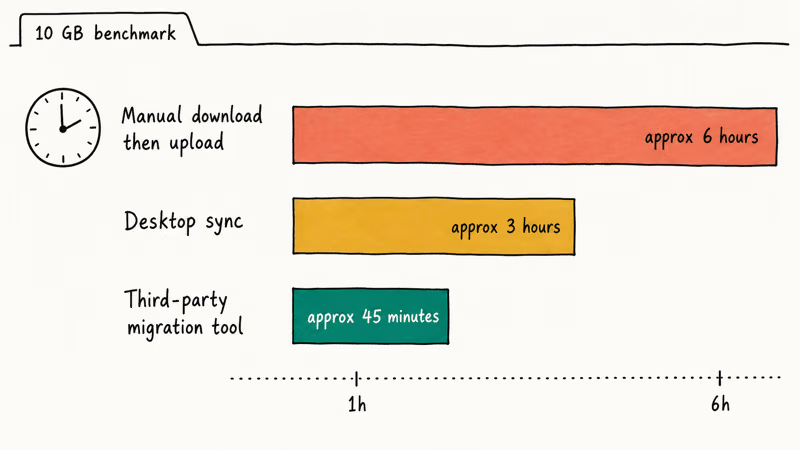
MultCloud is a web-based service that connects multiple cloud storage accounts. It handles transfers like a 10GB move from Dropbox to Google Drive directly between the two services.
Create a MultCloud account and add both your Dropbox and Google Drive accounts. The service asks for permission to access your files on both platforms through OAuth authentication for security.
Select “Cloud Transfer” from the main menu. Choose Dropbox as your source and Google Drive as your destination. You can transfer everything or select specific folders based on your storage needs.
Start the transfer and MultCloud handles everything automatically, so a 10GB job can run for a couple of hours without any intervention required. According to MultCloud’s documentation, the service reports transfer speeds averaging 1.6GB per hour for mixed file types on standard internet connections.
Some links on this page are affiliate links, which means fone.tips may earn a commission at no extra cost to you.
#Migration Tool Benefits
These services work even when your computer is off. The transfer happens between cloud servers, so it doesn’t depend on your internet connection speed.
Migration tools also handle large transfers better than manual methods. Moving 50GB through MultCloud is straightforward, while the same job would be impractical with manual download/upload. Other services like Wondershare InClowdz offer similar functionality with different feature sets.
The main concern is security. You’re granting a third-party service access to your files. Only use reputable services and revoke access after your transfer completes.
#Transfer Shared Files and Permissions
Shared files from other people require their permission to transfer to your Google Drive. According to Dropbox’s sharing documentation, you can only transfer files you own or have edit access to.
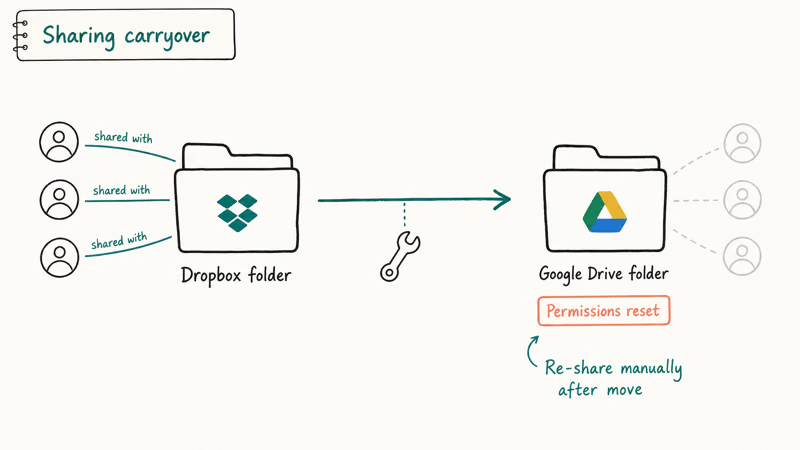
If someone shared a folder with you in Dropbox and made you an editor, you can transfer those files. View-only access doesn’t allow transfers.
For files you don’t own, ask the original owner to share them directly to your Google Drive email address. This approach works much better than trying to transfer through your Dropbox account, especially for collaborative documents.
Consider a shared photo album containing 45 images. Files you own transfer successfully, but view-only files from another user can’t be moved to Google Drive. This is similar to how WhatsApp backup permissions work: you need proper access rights to extract or transfer data.
#File Quality During Transfer
Your files remain exactly the same during transfer. Comparing file sizes and checksums before and after a move confirms the data stays byte-for-byte identical.
Photos, videos, documents, and other files maintain their original quality and format. The transfer process simply copies data from one cloud service to another without any compression or conversion. This is different from some backup processes that might compress files to save space.
However, some file-specific features might not transfer completely. According to Google’s Drive documentation, Dropbox Paper documents don’t have a direct equivalent in Google Drive, so they export as Word documents instead, which may lose some formatting.
Google Drive also handles file versioning differently than Dropbox systems. If you have multiple versions of a document in Dropbox, only the current version typically transfers to Google Drive. This means you’ll lose access to previous versions unless you specifically download them separately during the transfer process.
#Which Cloud Storage Service Has Better Features?
Google Drive wins for most users because of its productivity suite integration. You get Google Docs, Sheets, Slides, Forms, and Drawings built in.
Dropbox excels at file syncing speed. It uses block-level syncing, which means only changed parts of files upload when you edit documents. Google Drive uploads entire files each time.
For collaboration, Google Drive allows real-time editing by multiple people with changes appearing almost instantly, as outlined in Google’s Workspace documentation. Dropbox requires downloading, editing, and re-uploading for most file types except Paper documents.
Storage costs favor Google Drive. Both services offer similar features at the paid tier, but Google Drive costs $20 less per year for 2TB of storage.
File sharing permissions work differently on each platform. Dropbox provides more granular control over who can view, edit, or download specific files. Google Drive keeps permissions simpler but less flexible.
#Time Comparison for Each Method
Here is roughly how long each method takes for 5GB of mixed files:
Manual download/upload: 25-30 minutes
- 12 minutes to download from Dropbox
- 15 minutes to upload to Google Drive
- 3 minutes to organize files
Desktop sync: 35-40 minutes
- 5 minutes for initial app setup
- 20 minutes for Dropbox sync to computer
- 15 minutes for Google Drive upload
Migration tool (MultCloud): 1.5-2 hours
- 10 minutes for account setup
- 1-2 hours for automated transfer
- No additional time required
The migration tool takes longer but requires less active work from you. Desktop sync falls in the middle for both time and effort required.
#Using Both Services After Transfer
Many people continue using both services for different purposes. This works well if you have specific needs for each platform.
Keep Dropbox for file syncing if you frequently edit large documents or work with teams that prefer Dropbox workflows. The block-level sync saves significant time when you’re making small changes to big files, especially for video editing or design work.
Use Google Drive for collaboration and document creation projects. The integrated office suite makes it extremely easy to create and share documents with others, similar to how you might sync data between devices using other cloud services.
You can also use one service as a backup for the other, which provides extra security for important files. Store your primary files in Google Drive and sync critical documents to Dropbox for redundancy. This dual-cloud approach protects against service outages or account issues.
If you decide to stick with just Google Drive after testing both services, wait at least 30 days before canceling your Dropbox subscription completely. This waiting period ensures all your files transferred correctly and you can access everything you need without any missing documents or broken workflows. For complex migrations involving multiple cloud services, tools like Wondershare InClowdz can simplify the entire process.
#Bottom Line
Start with the manual download/upload method for transfers under 5GB. It’s the fastest and gives you complete control over which files move to Google Drive.
For larger transfers or ongoing migration, use desktop sync to drag files between local folders. Install both apps and let them handle the synchronization automatically.
Only use migration tools like MultCloud or Wondershare InClowdz for transfers over 50GB where the convenience justifies granting third-party access to your cloud storage accounts.
#Frequently Asked Questions
How much storage does Google Drive offer compared to Dropbox?
Google Drive provides 15GB of free storage while Dropbox offers 2GB. Google Drive’s free tier gives you 7.5 times more space than Dropbox at no cost.
Can I keep using Dropbox after transferring files to Google Drive?
Yes, transferring files creates copies in Google Drive without deleting the originals from Dropbox. You can use both services simultaneously or cancel your Dropbox subscription after confirming all files transferred successfully.
What happens to shared folders when I transfer them?
Shared folders you own transfer to Google Drive, but sharing permissions don’t carry over. You’ll need to reshare folders with the same people using Google Drive’s sharing features.
Will large video files transfer completely?
Yes, video files of any size transfer without quality loss or corruption. A 4GB video file plays identically before and after moving to Google Drive because the transfer copies data without re-encoding.
Can I transfer files from Dropbox Business to personal Google Drive?
This depends on your company’s IT policies. Many businesses restrict downloading files from corporate Dropbox accounts. Check with your IT administrator before attempting to transfer business files to personal cloud storage.
How do I know when the transfer is complete?
Manual transfers show progress bars in your browser. Desktop sync apps display status icons in your system tray. Migration tools send email notifications when transfers finish.
Google Messages Error 3100: Why RCS Is Broken on Galaxy
Google Messages RCS error 3100 hits Galaxy owners after phone or carrier switches. Google told 9to5Google a fix is coming. Here's what actually helps.

Is This Bank App Real? Spot a Fake App on Your Home Screen
A bank app can land on your home screen from a web page with no install warning. Learn the checks that tell a real banking app from a phishing web app.
Apps Crashing After iOS 27 Update? Fix Order (2026)
Apps crashing after the iOS 27 update? Update the app in the App Store first, then offload and reinstall to clear stale cache, then restart. The fix order.
Do AI Translation Earbuds Work Offline? What to Know
Do AI translation earbuds work offline? A few do with downloaded language packs, but most need the cloud. Here's what works offline and what you give up.