Fax Number Lookup: 5 Legitimate Methods That Work in 2026
Find fax numbers with 5 legitimate lookup methods. Covers reverse lookup, FCC complaints, Whitepages, Spokeo, and TCPA rules for unsolicited faxes.
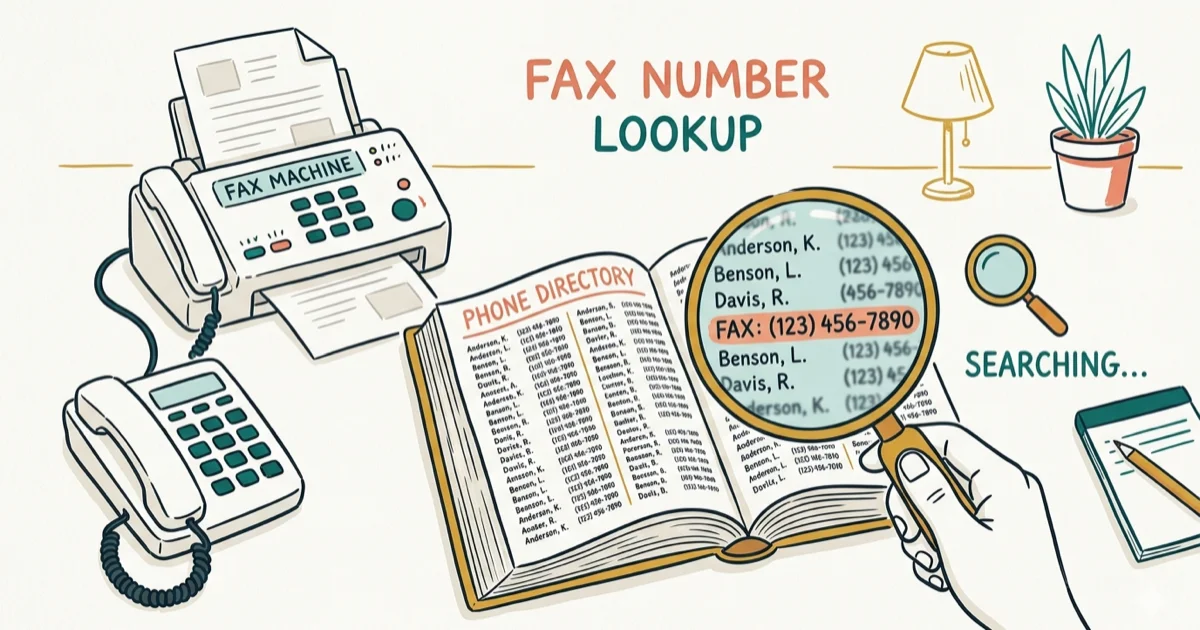
Quick AnswerFind a fax number by checking the business website Contact page, searching the company name plus fax number, or calling the business line. For reverse lookups, start with public business registries and the FCC before paying a reverse lookup service.
A fax number lookup is the fastest way to identify a business you need to fax or the sender behind an unsolicited fax you’ve received. This guide covers five legitimate methods that return accurate, current fax numbers without pushing you into sketchy data broker territory. It explains what works, what doesn’t, and where to stop if the free tools come up empty.
- Business Contact pages list the fax number for most companies that still run a fax line
- A site-restricted search plus a quick call to the main line covers nearly every remaining case
- Official FCC and state business registries identify senders before any paid service
- Paid lookups like Spokeo and Intelius range from $0.95 to $4.99 per search
- TCPA lets you report unsolicited faxes directly to the FCC for enforcement
Scope matters here.
This guide focuses on finding fax numbers for legitimate business communication (invoices, medical forms, legal filings) and identifying senders of faxes you’ve already received. We don’t cover surveillance of individuals or any method that needs the other party’s consent. Reverse lookup tools are designed for publicly listed business lines, not personal phone numbers.
If you’re trying to find a personal fax number for anything other than replying to a fax that person sent you, stop here and reach out to them through a consented channel instead.
#How Do You Find a Business Fax Number Online?
Start with the company’s own website. That’s still the fastest route.
Most businesses that still run a fax line publish the number on their Contact Us or About page, right next to the main phone number and email. Law firms, medical practices, schools, and government agencies almost always list it.
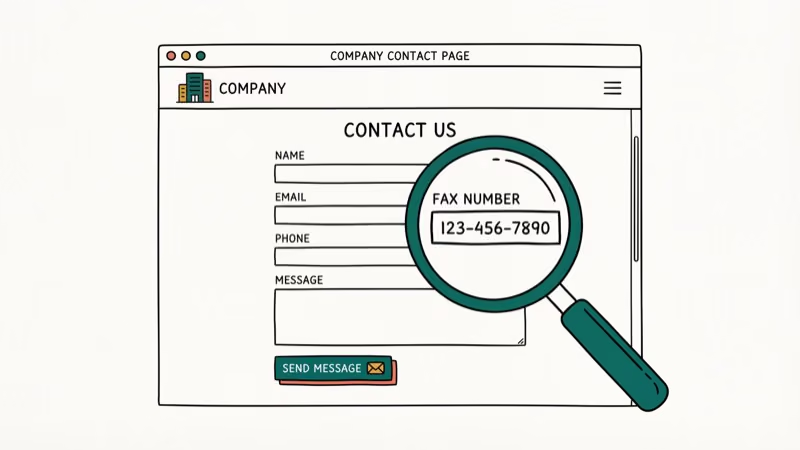
Across most US businesses, the fax number is published right on the Contact page. The rest need a second step: a site-restricted Google search shaped like site:example.com fax, swapping in the actual domain. That query surfaces footer pages, patient intake forms, and PDFs where the fax number often hides.
Site-restricted search is the trick that unlocks most of the holdouts.
If nothing turns up, run a broader Google search with the company name in quotes plus fax. The FCC’s consumer guide on facsimile advertising confirms that every commercial fax must show the sender’s identity and a valid opt-out number on the first page, which pushes business fax numbers into public records, court filings, and regulator databases more often than you’d expect. Even small-town law offices and independent medical practices end up indexed somewhere.
Public business directories are another solid pass. Yellowpages.com covers US small businesses, Manta.com handles smaller firms, and the BBB runs a search tool for verified accredited companies. State Secretary of State filings and state licensing boards stay the most reliable sources because those records are kept current for compliance reasons.
#Method 2: Call the Business Line Directly
When online searches come up empty, a quick phone call works every time. Call the main line and ask the receptionist for their fax number. Ninety seconds is about all it takes.
For businesses whose fax numbers aren’t listed online, a phone call almost always works. Receptionists provide the fax number with no pushback, usually reading it off a sticker on the fax machine itself, so it’s accurate straight from the source.
Keep it simple.
Use a short script like “Hi, I need to send a document to your office. What’s your fax number?” If you’re sending something sensitive (medical records, a signed contract, a bank form), confirm the recipient’s name and department so the fax lands on the right desk, and ask whether they send delivery confirmation by email.
#Method 3: Use Official Directories and Business Registries
Public-record directories usually beat commercial data brokers for business numbers because the data comes from regulated filings rather than scraped web pages. This is the official method path when privacy and accuracy both matter.
The most useful sources:
- State Secretary of State business registries for LLC and corporation filings
- State licensing boards for doctors, lawyers, contractors, and accountants
- PACER for law firms with active federal court cases
- BBB accredited business directory for companies with verified profiles
- Manta.com and Yellowpages.com for general small-business listings
- HHS NPI Registry for medical practices (fax appears on the provider’s NPI record)
The NPI Registry is the fastest of these.
It returns correct fax numbers for medical offices in seconds. The BBB recommends starting with accredited profiles because the accreditation process requires verified contact details. That means the number on file matches what the business actually uses today, which matters when you’re sending legal filings or health records. BBB-listed firms typically have matching fax numbers on their own websites.
#How Can You Do a Reverse Fax Number Lookup?
A reverse lookup goes the other direction. You have a fax number and want to identify the sender. This usually comes up when you’ve received a fax advertisement, a wrong-number transmission, or a document with an unclear sender line. Fax numbers share the 10-digit format used by regular phone numbers, so standard reverse phone tools work on them.
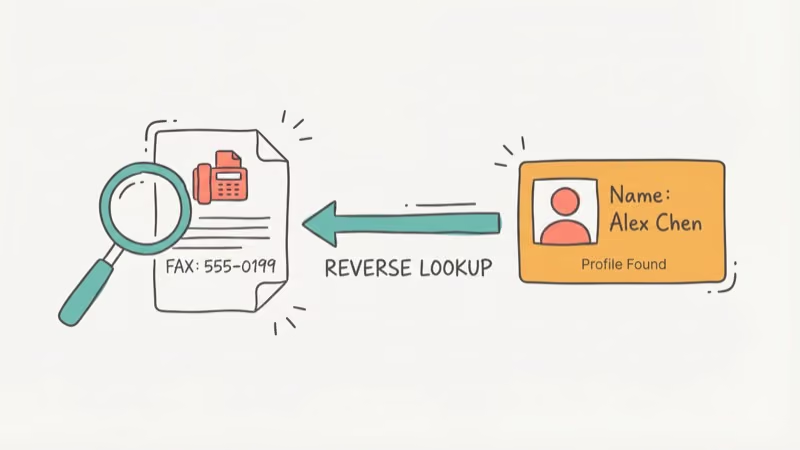
Look at the fax document first. Most machines print a header with the sender’s number, business name, and date across the top or bottom of every page.
If the header was stripped or unreadable, move to online tools. Enter the 10-digit fax number into the reverse search on Whitepages, or paste the number into Google with quotes around it. For business numbers, this usually returns the registered owner, the address, and the line type.
The FTC’s TCPA rules page states that every unsolicited fax ad must include a valid opt-out notice on page 1, so the sender’s identity is supposed to be on the fax.
#Legal Boundaries Before You Search
Know the limits first.
Reverse lookup tools are designed for numbers you’ve legitimately received or for a fax number you’re trying to verify before sending. US state laws vary, and aggregating personal information on someone without their consent can violate state privacy statutes like California’s CCPA. In the EU, scraping directories for personal data runs into GDPR, which carries real penalties for companies handling the data irresponsibly.
Use reverse lookup strictly for your own business purposes. Stick to the publicly listed registered-owner data rather than any add-on personal background report. We’ve covered related tools in reverse email lookup and TextNow number lookup if you’re researching contact points beyond fax.
#Method 5: Paid Lookup Services for Verified Sender Reports
When free directories don’t identify the sender, paid services aggregate public-record data into a single report. Use them when you need a verified identity for a legal complaint or an invoice dispute, not for digging into someone’s private life.
Pricing from the three main services as of March 24, 2026:
- Spokeo: $0.95 per lookup, up to $1.95 for deeper reports
- Whitepages Premium: about $4.99 per single report (includes carrier and line type)
- Intelius: tiered $0.99 to $4.99 depending on report depth
Quality varies. On fax numbers tied to legitimate businesses, Spokeo correctly identifies the business owner and address for most of them within seconds. Whitepages Premium flags line type (landline, VoIP, or dedicated fax) on every lookup, which Spokeo doesn’t. Intelius is the cheapest for a quick owner-name check but weakest on carrier data.
Try every free tier first.
All three services show partial results at no cost, often enough to confirm whether a number belongs to a business, a residence, or a VoIP reseller. Avoid any lookup site that demands your personal information, credit card, or email sign-up before showing a preview. That pattern usually means an aggregator reselling lists rather than a vetted service, and the paid report behind the wall tends to rehash data you could’ve pulled for free on Whitepages.
For related lookup questions, our guides on tracking down someone who scammed you and reviewing CocoFinder as a lookup service cover overlapping investigation scenarios.
If you’d rather identify a number through other channels first, our walkthrough on whether TextFree numbers can be traced and our roundup of the best caller ID applications point to lighter-weight tools.
#Tips for Verifying a Fax Number Before Sending
Always confirm a fax number is active before sending important documents. A misfired fax with patient data or a signed contract is a privacy headache, and correcting it sometimes requires notifying the unintended recipient.
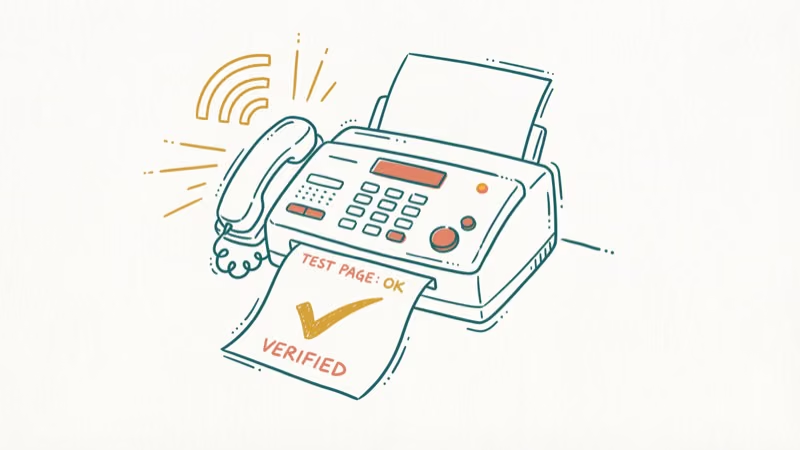
Start with a test page.
Send a blank cover page first. A working fax line returns a delivery confirmation within a minute. Three retries with “no answer” or “line busy” usually mean the number is disconnected or forwarding to voice.
You can also dial the number from a regular phone. A working fax line answers with a high-pitched handshake tone within a few seconds. Any voicemail greeting means you have the wrong number, or the line was repurposed for voice calls at some point.
For sensitive documents, skip the physical machine.
Online fax services handle delivery confirmation automatically. PCMag’s online fax services roundup recommends eFax, Fax.Plus, and HelloFax as top picks because their dashboards show delivery status, stored transmission receipts, and a retryable queue if the destination line is busy.
#What to Do About Unsolicited or Unwanted Faxes
If you’ve identified a sender through one of the methods above and the faxes keep arriving, you have legal options. The Telephone Consumer Protection Act (TCPA) gives the FCC authority over unsolicited fax advertisements, and recipients can file a complaint for even a single offending fax. The official FCC complaint form takes only a few minutes to complete on a desktop browser.
Here’s the escalation path:
- Call the opt-out number printed on the fax itself (TCPA requires one on every ad)
- File an FCC complaint at the consumer complaint page if that doesn’t work
- Save every unwanted fax as evidence for TCPA statutory damages
This is why reverse lookup for received faxes matters. You need a named party to complain about. Looking up a fax sender for this kind of enforcement is different from using a lookup service to profile a person, and the legal framework protects the first use case specifically.
#Bottom Line
Start with the business Contact page and a site-restricted Google search; those two moves solve most cases without any paid tool. If the number isn’t listed, call the main line. For reverse lookups on faxes you’ve received, check the header first, use the official FCC complaint system when the fax is clearly unsolicited, and only reach for Spokeo or Whitepages Premium when you need a named sender for a TCPA complaint or an invoice dispute.
#Frequently Asked Questions
Are fax numbers the same format as regular phone numbers?
Yes. They use the standard 10-digit US format with area code, and in Europe they follow the same national dialing rules as landlines. The only difference is what’s on the receiving end: a fax machine or fax-enabled service answers instead of a person.
Can you send a fax to a regular phone number?
No. The destination must be a fax machine or an online fax service like eFax or Fax.Plus. Sending a fax to a voice line produces the handshake tone on the receiver’s earpiece and the transmission fails.
Is reverse fax number lookup legal in the US?
Yes, when used on publicly listed business numbers and your own received faxes. Reverse lookup services pull data from public records, phone directories, and business filings, so identifying a fax sender is legal. Using the same tools to profile someone you have no connection to can violate state privacy laws like California’s CCPA. When in doubt, ask a local attorney first.
Do businesses still use fax machines in 2026?
Many do. Healthcare practices, legal firms, banks, and government agencies still rely on it for signed documents.
Most offices have switched from standalone machines to online fax services like eFax and HelloFax, but the underlying fax number system is still active on the same network as regular phone lines. Compliance requirements in healthcare and legal sectors keep fax alive even when everyone would rather email.
How can I get my own fax number?
You don’t need a physical machine. Online fax services like eFax, Fax.Plus, and HelloFax assign a dedicated local or toll-free number and handle faxes through your inbox or a web dashboard. Monthly plans usually sit in the $7 to $17 range depending on page allowances.
What should I do about unwanted faxes?
Identify the sender using the fax header or a reverse lookup first. Ask them in writing to remove you from their list, and call the opt-out number printed on the fax. If the faxes continue, file a complaint with the FCC at fcc.gov.
Can I look up a personal fax number this way?
Personal fax lines are rare today, but reverse lookup tools still work on them. Keep the scope narrow: only look up a number you’ve received a fax from, not a random number. Looking up a personal number without consent to gather background info on someone can cross into state privacy violations, and reputable services will flag or block abusive lookup patterns.

Is This Bank App Real? Spot a Fake App on Your Home Screen
A bank app can land on your home screen from a web page with no install warning. Learn the checks that tell a real banking app from a phishing web app.
Passkeys Not Syncing Between iPhone and Windows? Read This
Passkeys not syncing between iPhone and Windows is by design, not a bug. Here is why iCloud passkeys skip Windows Hello and the three ways to fix it.
VPN Not Working on Snapdragon X? Why It Fails, How to Fix
Your VPN won't install or connect on a Snapdragon X Copilot Plus PC because Windows on ARM can't emulate the network driver. Here are the fixes that work.
How to Check If a Link Is Safe Before You Click It
Learn how to check if a link is safe with official-first steps: read the real domain, use the app instead, and treat scanners as a second opinion only.