Most Profitable Crops in Stardew Valley by Season (2026)
Starfruit nets about 27 gold per day and Ancient Fruit clears 550 gold per harvest. Ranked profit list per season, with Keg math and timing tips.
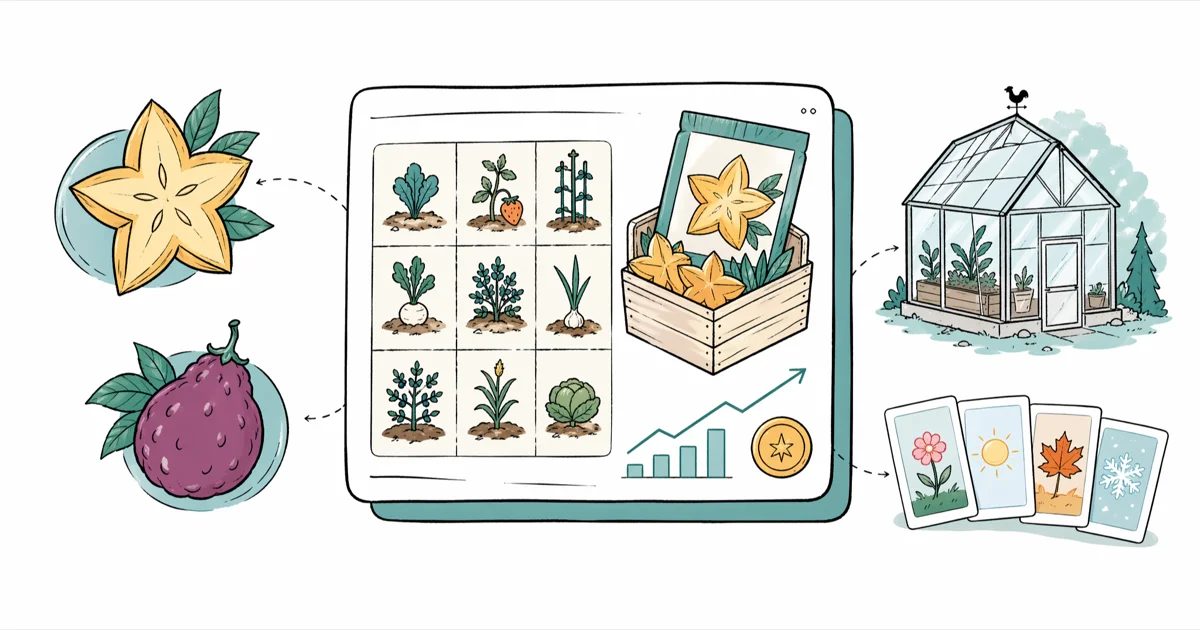
Quick AnswerStarfruit (summer) and Ancient Fruit (greenhouse) are the most profitable crops in Stardew Valley. Starfruit sells for 750 gold and earns about 27 gold per day. Ancient Fruit clears 550 gold per harvest, regrowing every 7 days year-round once your greenhouse is repaired.
Starfruit earns roughly 27 gold per day in summer. Ancient Fruit clears 550 gold per harvest in the greenhouse, every 7 days, indefinitely. Those two numbers drive almost every gold-maximizing decision on a Stardew Valley farm.
This guide ranks crops by seed cost, sell price, regrow cycles, seasonal timing, and greenhouse value.
- Starfruit leads summer: 750 gold sell price, about 27 gold daily profit, 400-gold Oasis seed cost
- Cranberries regrow every 5 days at 240 gold per seed, two berries per harvest
- Strawberries from the Egg Festival (100 gold) hit 21 gold per day starting the following Spring 1
- Ancient Fruit: 550 gold every 7 days in the greenhouse, year-round
- Wine and artisan goods multiply crop value by 2x to 3x base price
#Best Spring Crops for Profit
Spring delivers two standout earners and a long-term setup crop worth prioritizing even if you don’t profit in Year 1. The seasonal farming loop, artisan-goods chain, and Community Center bundles that gate greenhouse access are summarized in the Stardew Valley overview on Wikipedia for new players who want game-wide context before optimizing crop choice.
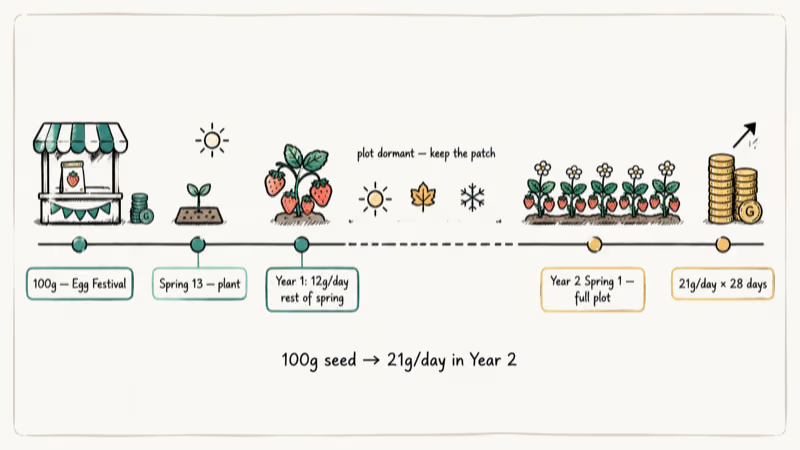
Strawberries are the top spring pick. Seeds cost 100 gold at the Egg Festival on Spring 13. The crop sells for 120 gold and regrows every 4 days, yielding about 12 gold per day for the rest of the current spring.
The real payoff comes next year. Starting Spring 1 with a full plot of established strawberries, you’ll hit 21 gold per day for the complete 28-day season.
Rhubarb costs 100 gold at the Oasis. It sells for 220 gold, matures in 13 days, and does not regrow. That’s about 9 gold per day. Use it as a backup when you miss the Egg Festival, or to fill extra tiles without juggling a regrow schedule through mid-spring.
Cauliflower is 80 gold at Pierre’s and sells for 175 gold, about 8 gold per day. Plant it in 3x3 patches to roll for the giant-crop bonus.
Coffee Beans start at 2,500 gold from the Traveling Cart. They regrow every 2 days and drop 4 beans per harvest. Brew coffee from 5 beans for 150 gold, or run them through a Keg. Expensive upfront, but the regrowth cadence carries straight into summer.
#Best Summer Crops for Profit
Summer is where the numbers get serious.
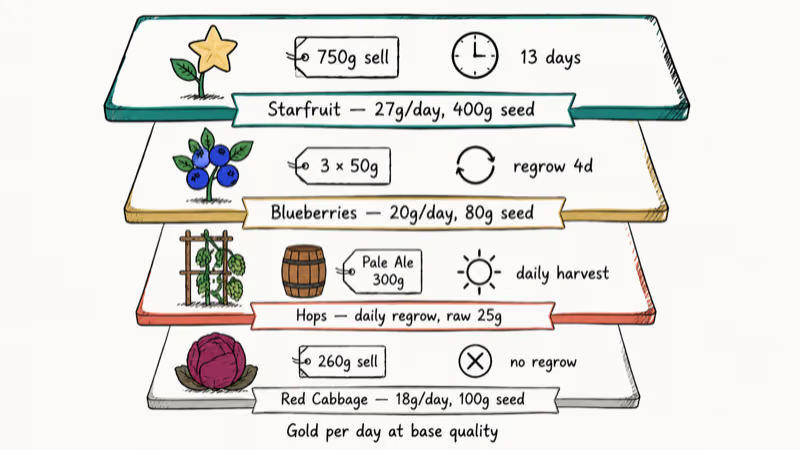
Starfruit is the best raw-gold crop per day in the game. Seeds cost 400 gold at the Oasis, the crop sells for 750 gold, and it matures in 13 days. That works out to about 27 gold per day. Process it in a Keg and Starfruit Wine sells for 2,250 gold per bottle.
According to the Stardew Valley Wiki’s artisan goods page, wine equals 3x the base crop price. With the Artisan profession bonus, Starfruit Wine reaches 3,150 gold per bottle.
Blueberries are the budget pick, and they scale better than anything else this season. Seeds cost 80 gold at Pierre’s, well within reach by mid-spring even on a fresh save. Three berries drop per harvest at 50 gold each, regrowing every 4 days — the most consistent cadence of any summer crop.
Over a full summer, expect roughly 20 gold per day per seed. That’s nearly Starfruit-level returns at a fraction of the seed investment, and you don’t need the bus repaired to buy them.
Hops cost 60 gold and regrow daily. Raw hops sell for 25 gold, but a Keg turns them into Pale Ale at 300 gold. At scale, a Keg-heavy hops operation can outperform a same-size Starfruit field on total seasonal gold, though the upfront Keg cost is significant. For the Pale Ale processing math, see our Stardew Valley Pale Ale guide.
Red Cabbage seeds cost 100 gold. The crop sells for 260 gold with no regrowth, around 18 gold per day. Best for filling patches when you can’t make a desert run.
#Best Fall Crops for Profit
Fall is the season of regrowers. Plant on Day 1 or you lose full harvest cycles.
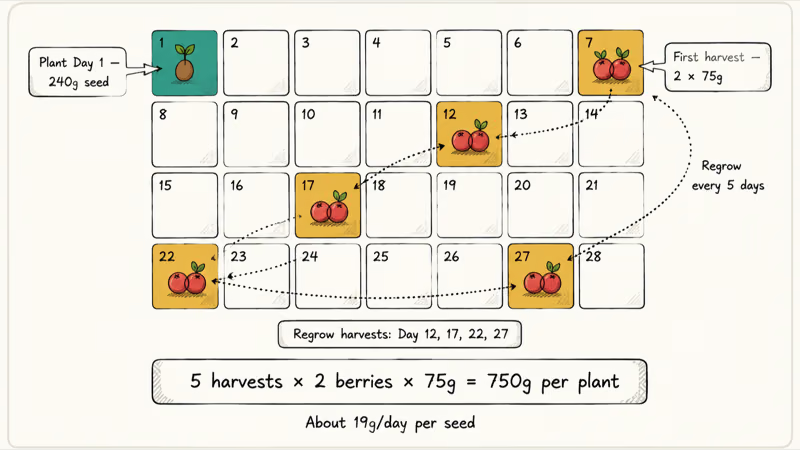
Cranberries are the strongest fall earner. Seeds cost 240 gold, two berries drop per harvest at 75 gold each, and they regrow every 5 days for about 19 gold daily profit per seed. That combination gives cranberries one of the best fall gold-per-day profiles among regular crops.
Grapes are underrated. Seeds cost 60 gold. The crop sells for 80 gold and regrows every 3 days, roughly 17 gold per day. Turn them into Grape Wine for 240 gold per bottle.
Pumpkins are 100 gold for seeds and 320 gold for the finished crop. Daily profit lands around 17 gold. The real value is the giant-crop chance: a 3x3 pumpkin patch occasionally turns into a Giant Pumpkin yielding up to 21 items instead of 9.
According to ConcernedApe’s 1.6 patch notes, base profit calculations for these crops still apply in the current version. Some Artisan multipliers were slightly adjusted, but core crop values remain unchanged.
#Which Crops Work Best in the Greenhouse?
Repair the greenhouse by finishing the Pantry bundle. Any crop grows there year-round.
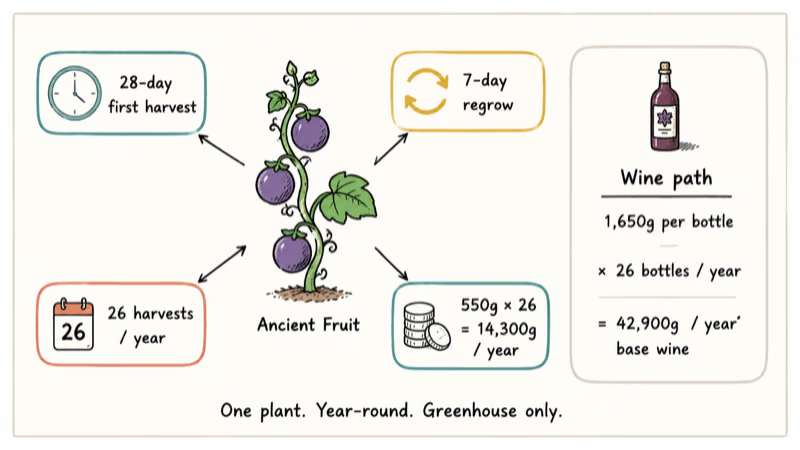
Ancient Fruit is the best greenhouse crop and one of the most profitable plants in the game. Seeds come from Ancient Seeds, found by donating an Ancient Seed artifact to the Museum.
The plant matures in 28 days, then regrows every 7 days forever. Each harvest sells for 550 gold. Processed into Ancient Fruit Wine in a Keg, that’s 1,650 gold per bottle.
One Ancient Fruit plant running year-round produces about 26 harvests per in-game year. At 550 gold each, that’s 14,300 gold per year from a single plant. The Stardew Valley Wiki confirms this yield calculation based on the 7-day regrowth cycle and 28-day season calendar.
Strawberries also work well in greenhouse rows. They regrow every 4 days with no seasonal cutoff, producing 8 or more harvests per season.
For spacing and sprinkler placement, our guide on greenhouse crops in Stardew Valley covers the full layout strategy. If you want the exact sprinkler grid and fruit-tree placement, the Stardew Valley greenhouse layout guide maps the full 10x12 interior.
#Do Artisan Goods Actually Beat Selling Raw Crops?
Yes. By a large margin.
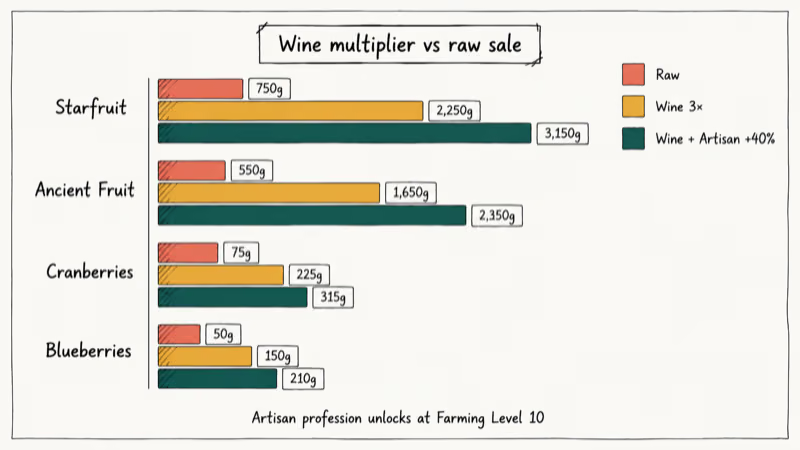
The Artisan profession (Farming Level 10) boosts all Artisan Good values by 40%. A Keg converts any crop into Wine at 3x the base crop price, while a Preserve Jar makes Pickles or Jelly at 2x the base price plus 50 gold.
Wine beats Pickles for almost every crop. The exception is Hops, where Pale Ale has a fixed 300 gold price regardless of base crop value.
| Crop | Raw Price | Wine Price | With Artisan Bonus |
|---|---|---|---|
| Starfruit | 750g | 2,250g | 3,150g |
| Ancient Fruit | 550g | 1,650g | 2,310g |
| Cranberries | 75g ea | 225g | 315g |
| Blueberries | 50g ea | 150g | 210g |
According to Stardew Valley’s official wiki on Kegs, most crops take roughly 7 in-game hours (about 1 game day depending on start time) to process into wine. Building enough Kegs to handle your full harvest is one of the highest-return investments in the game.
For the full Keg setup strategy, our Stardew Valley wine guide covers the processing queue and crop-to-wine ratios.
#Farming Tips That Boost Crop Profits
Plant on Day 1 of every season. Missing the first day on a regrower means losing a full harvest cycle. Cranberries planted on Day 5 instead of Day 1 miss one complete harvest, which costs roughly 150 gold per plant on a Standard farm.
Use Quality Fertilizer on high-value crops. Gold-quality crops sell for 1.25x the base price and Iridium-quality for 2x. Basic Quality Fertilizer is crafted from 2 Sap plus 1 fish, or bought at Pierre’s. On a Starfruit crop, the upgrade from base quality to gold quality adds 187 gold per plant.
Set up Iridium Sprinklers for scale. Use the Stardew Valley sprinkler guide for placement.
Grow Giant Crops. Plant Cauliflower, Melon, or Pumpkin in a 3x3 block. Each day brings a 1% chance the whole patch grows giant, yielding up to 21 items. Harvest with an axe.
#Bottom Line
Start spring with Strawberries from the Egg Festival, then run Blueberries or Starfruit through summer. Plant Cranberries on Fall 1. Once you take the Artisan profession at Farming Level 10, push everything through Kegs. Fill the greenhouse with Ancient Fruit and let it run.
That rotation, automated with Iridium Sprinklers, turns your farm into a near-passive gold machine by Year 2.
#Frequently Asked Questions
What is the single most profitable crop in Stardew Valley?
Ancient Fruit is the most profitable crop over time. It regrows every 7 days indefinitely in the greenhouse, yielding 550 gold per harvest. As wine with the Artisan profession bonus, each bottle sells for 2,310 gold. No other crop matches that per-plant annual yield.
Is Starfruit worth the 400 gold seed cost?
Yes. It sells for 750 gold, netting about 27 gold per day across the 13-day grow cycle. That’s one of the highest daily profit rates for any single-harvest crop. As Starfruit Wine it’s worth 2,250 gold per bottle, or 3,150 gold with the Artisan profession bonus.
Should I sell crops raw or make artisan goods?
Artisan goods win. Wine is 3x the base crop price, and the Artisan profession adds 40% on top at Farming Level 10. Build more Kegs.
What are the best crops for each season?
Spring: Strawberries from the Egg Festival, or Rhubarb if you miss the festival. Summer: Starfruit for max gold per day, or Blueberries if you can’t reach the Oasis. Fall: Cranberries for the best regrowth value. Greenhouse: Ancient Fruit, planted as soon as the building is repaired.
Can I grow crops in winter?
Outdoor crops don’t grow in winter. The greenhouse works for any crop year-round. You can also craft Winter Seeds from 1 Winter Root, 1 Crystal Fruit, 1 Snow Yam, and 1 Crocus, but they produce forage items worth very little gold.
How do sprinklers affect crop profitability?
Sprinklers free up time. An Iridium Sprinkler covers 24 tiles automatically every morning, which means you can run 500+ crops without spending your in-game morning on watering. That time goes to Keg collection, fishing, animal care, and foraging instead. At scale, the difference between manual watering and Iridium Sprinklers can easily translate to several thousand extra gold per day from the activities you can now fit in before noon.
What’s the fastest way to repair the greenhouse?
Complete the Pantry Bundle in the Community Center. You’ll need crops from all four seasons: Parsnip, Green Bean, Cauliflower, and Gold Star Potato for spring; Melon, Tomato, Blueberry, and Hot Pepper for summer; Pumpkin, Yam, Bok Choy, and Amaranth for fall; plus a few fish and foraging items. Most Year 1 players finish the Pantry by late fall. The greenhouse starts paying off the moment your first Ancient Fruit batch finishes its 28-day maturation.
Does crop quality affect profit?
Yes. Gold-quality crops sell for 1.25x the base price and Iridium-quality for 2x. Basic Fertilizer boosts quality chances at low cost. Speed-Gro cuts grow time by 10 percent and Deluxe Speed-Gro by 25 percent, which can squeeze in one extra harvest per season.

Fortnite Stuck on the Loading Screen? Fix It in 2026
Fortnite stuck on the loading screen? Check server status, fix the Windows N Media Pack and DirectX 11 on PC, clear the console cache, and verify files.

Minecraft Keeps Crashing? Java and Bedrock Fixes (2026)
Minecraft keeps crashing on startup or mid-game? Update your GPU driver, remove mods on Java, and reinstall Gaming Services on Bedrock. Fixes for both.

Pokemon GO Not Loading? Fix the Loading Screen 2026
Pokemon GO not loading or stuck on the Pokeball? Check server status, fix automatic date and time, grant location permission, clear the cache, and update.

PS5 Controller Not Charging? 9 Fixes That Work (2026)
DualSense not charging? Swap the cable, use a rear port in Rest Mode, clean the USB-C port, and check power settings. 9 fixes for a dead PS5 controller.