Best SNES Fighting Games: Play the Classics on Super
The best SNES fighting games: Street Fighter II Turbo, Killer Instinct, Mortal Kombat II, Dragon Ball Z Hyper Dimension, and rare cult hits worth playing.
Quick AnswerThe best SNES fighting games are Street Fighter II Turbo, Killer Instinct, Mortal Kombat II, Dragon Ball Z: Hyper Dimension, and Teenage Mutant Ninja Turtles: Tournament Fighters. All five run cleanly on original SNES hardware or modern emulators.
SNES fighting games turned the Super Nintendo into a credible arcade alternative between 1991 and 1996. Street Fighter II Turbo, Killer Instinct, and a handful of cult hits brought one-on-one combat home with little compromise. The titles on this list run cleanly on an original SNES, an SNES Classic Mini, and RetroArch on Mac and iPhone, and they still hold up in 2026.
- Street Fighter II Turbo (1992) is the cleanest arcade port and still teaches Hadoken, Shoryuken, and footsie spacing on a six-button SNES pad.
- Killer Instinct (1995) reuses the pre-rendered sprite pipeline from Donkey Kong Country and built its identity on chains that turn a single hit into a 30-hit Ultra.
- Mortal Kombat II (1994) is the best-balanced MK on SNES; gore was toned down for Nintendo, but characters, fatalities, and frame data survived.
- Dragon Ball Z: Hyper Dimension (1996) is the only SNES fighter that covers the full Frieza, Cell, and Buu sagas in one cartridge.
- An 8BitDo SN30 Pro pad with rollback netplay on RetroArch puts these games online with low latency over a wired connection.
#How Did the SNES Become a Fighting Game Powerhouse?
The SNES launched in Japan in 1990 and the US in 1991, right when Street Fighter II ignited the arcade craze. Earlier consoles couldn’t match the sprite work or animation frames the genre needed.
By 1993 the cartridge library had grown beyond ports. Capcom focused on arcade-faithful conversions, while Rare and Konami built console-first titles that leaned into the hardware. The result was a five-year window where the SNES sat near the center of the fighting game world. The games that survived that window are still the ones worth playing today.
Why does this matter in 2026? The muscle memory you build on a 16-bit fighter still translates to Street Fighter 6 and Tekken 8. A good fighting game controller makes the transition land cleanly.
#What Made These Games Stand Out?
Two camps emerged on the SNES: arcade ports and console exclusives. Each had to master its own constraints, and the best games in each category did.
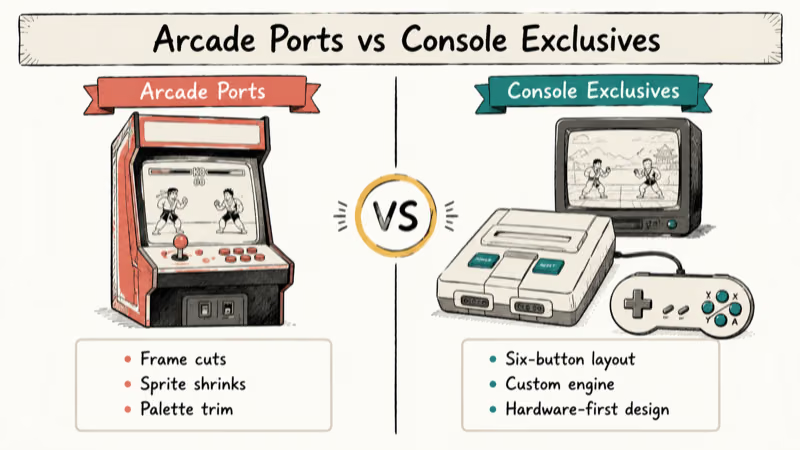
Arcade ports faced harder math. Capcom engineers cut animation frames, shrank sprites, and trimmed color palettes to fit cartridge memory. One mistake made a game feel slow or rubbery. On Street Fighter II Turbo the team got it right enough that the SNES port still gets played in tournaments today, three decades after release.
Console exclusives took the opposite path. Rare built Killer Instinct around the SNES six-button layout instead of porting an arcade title.
#Street Fighter II Turbo: The Arcade Standard at Home
Street Fighter II Turbo is the SNES game that still defines arcade ports. Capcom’s conversion kept the input timing close to the original Capcom CPS arcade board, so the window for a Hadoken motion stays tight and predictable on a CRT.
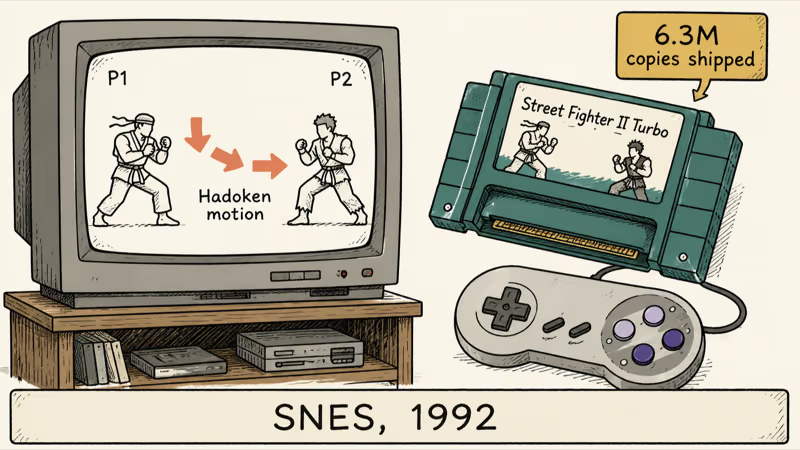
According to Wikipedia’s Street Fighter II overview, more than 6.3 million SNES copies of Street Fighter II were sold, making it Capcom’s best-selling single game until 2013, when Resident Evil 5 finally surpassed it. That staying power is why the SNES port still anchors any list of the system’s best fighters.
Turbo also rebalanced the World Warriors and unlocked the four New Challengers. Tournament players still rotate Ryu, Chun-Li, Sagat, and Vega without anyone dominating bracket play.
#Killer Instinct: Combos Pushed to Extremes
Rare pushed the SNES harder than any other studio building a fighter. Killer Instinct (1995) ported pre-rendered sprite tech from Donkey Kong Country and dropped it into a combo engine that rewards memorization over spacing. Land one hit cleanly and your opponent can eat thirty hits in a single string. That is the appeal and the price of admission.
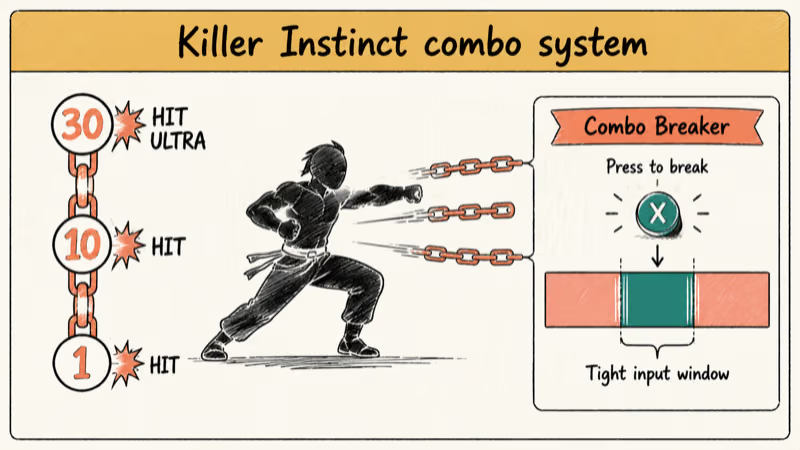
The combo system has a counter. Combo Breakers exist, but the input window is tight, and it gets inconsistent if you panic-mash. Most players need to rehearse breaker inputs in an emulator’s training mode before they land them reliably.
Wikipedia states that Rare generated the SNES sprites on Silicon Graphics workstations, the same pipeline used for Donkey Kong Country. See the Killer Instinct (1994) entry for the hardware notes.
#Mortal Kombat II: The Cleanest MK on Cartridge
Mortal Kombat II (1994) was Midway’s second SNES port. It’s also the one most fans return to. The console version cut blood effects to placate Nintendo’s content rules at the time, but the moves, fatalities, and animations survived. Jax, Kitana, Mileena, and Sub-Zero all play with full move lists.
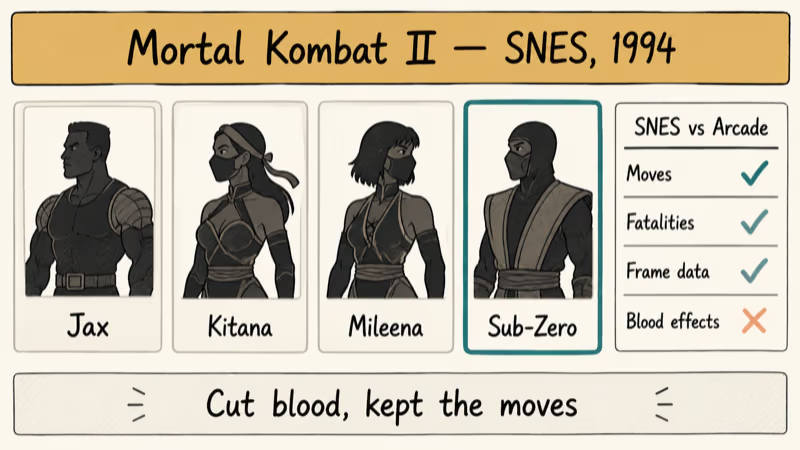
Where MKII shines is in pacing. The faster matches, broader rosters, and refined hit detection set the tone for everything Midway built afterward. Mortal Kombat 3 introduced the dedicated run button a year later, and that change shifted competitive pacing. MKII’s footwork still feels closer to a real fighting game.
According to Wikipedia, the SNES port of Mortal Kombat II shipped in September 1994 across North America and Europe with the ESRB rating intact. The full release log sits on the Mortal Kombat II article.
#Dragon Ball Z: Hyper Dimension and Story Depth
Hyper Dimension (1996) covers the full Dragon Ball Z anime arc from Frieza through Majin Buu, with story-mode intros and endings tied to specific anime moments.
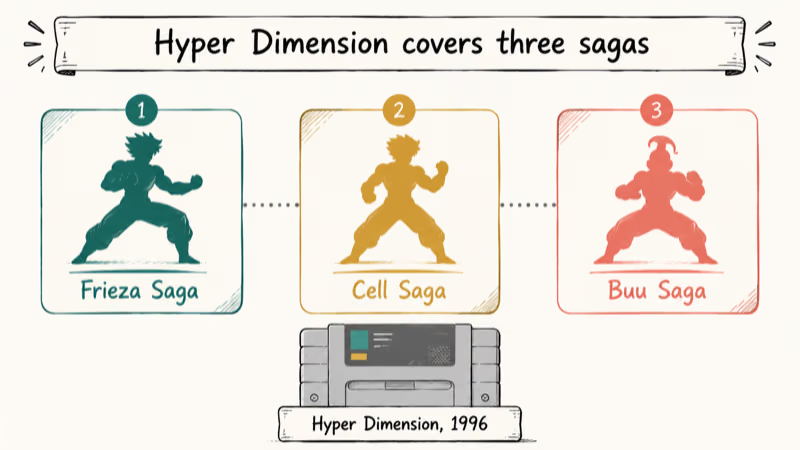
Released late in the SNES life cycle, the cartridge took advantage of mature development tools and shipped with sharper animation than earlier DBZ entries. If you want a fuller list, our best Dragon Ball games guide ranks every entry across the franchise.
The pixel art still looks crisp on a CRT. It also holds up on a modern OLED upscaled through an FPGA scaler like the Retrotink 5X.
#Cult Hits Worth Tracking Down
Sailor Moon S. Each Sailor Scout has unique stats and move lists, and the blocking mechanic is inverted: shielding drains your meter faster than attacking. That single design choice flipped how players approached defense in 1995, and it’s why the game still has a loyal collector base in Japan.
Gundam Wing: Endless Duel. A Japan-only release with detailed sprite work.
Teenage Mutant Ninja Turtles: Tournament Fighters. The SNES version is based on the comics, not the cartoon, and it plays differently from the Genesis port. All four turtles plus the rogues’ gallery are playable, including Shredder, Karai, and Wingnut.
Justice League Task Force. Co-developed by Sunsoft and Blizzard, with Superman, Batman, and Wonder Woman headlining the roster.
#Playing SNES Fighters in 2026
Three options work today: original hardware, the SNES Classic Mini, or emulation on a phone or PC. Original carts on a CRT still feel best for input fidelity. CRTs are scarce now, and composite cables look soft on modern flat panels.
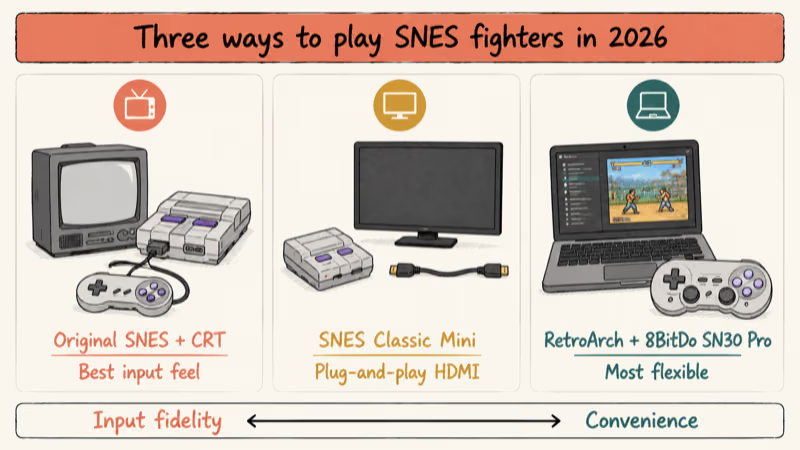
The SNES Classic Mini ships with Street Fighter II Turbo: Hyper Fighting and Super Punch-Out preinstalled. Plug it into HDMI. The bundled controller keeps input lag low, especially on a TV set to game mode.
For everything else, RetroArch with the SNES9x core is the cleanest path. Pair it with our low-end PC emulator setup if your hardware is older than 2018.
Want to extend your retro library beyond the SNES?
- Cube fighters: see our GameCube emulator guide for a parallel walkthrough.
- Sega fans: stack our Dreamcast fighting games roundup on top.
#Bottom Line
Start with Street Fighter II Turbo if you have never played a SNES fighter. The footsie spacing, balanced cast, and clean inputs teach more about fighting games in two hours than most tutorials in modern releases. Pair it with an 8BitDo SN30 Pro if you don’t own original SNES hardware.
If you want flashy combos and instant visual feedback, jump straight into Killer Instinct on either an SNES Classic or RetroArch. Use a six-button arcade pad to give the chains breathing room.
For anime-driven players, Dragon Ball Z: Hyper Dimension is still the only SNES cartridge that handles a full DBZ arc with story-mode pacing. It’s the right pick if you want narrative weight in a 16-bit fighter.
#Frequently Asked Questions
Can I play SNES fighting games on modern devices?
Yes. RetroArch on Windows, macOS, Linux, Android, and iOS handles every game in this guide. You can also use original cartridges on an SNES Classic Mini, an Analogue Super NT FPGA console, or a modded original SNES with HDMI output through an OSSC or Retrotink scaler.
Are SNES fighting games harder than modern versions?
The base difficulty is similar. The friction is in the lack of online matchmaking, no rewind training, and no frame-data overlays.
Which SNES fighter has the best netplay?
Street Fighter II Turbo on RetroArch with rollback code added by community developers. Round-trip latency stays low on a wired connection, and UDP hole-punching connects through most home routers without manual port forwarding.
Did the SNES versions differ from arcade originals?
Sometimes, yes. Mortal Kombat II cut blood, Killer Instinct trimmed intros, and Final Fight 2 changed enough that it barely counts as the same game.
What is the best emulator for SNES fighting games?
RetroArch with the SNES9x core for desktop and Android. On iPhone, Delta and RetroArch both work without noticeable input lag. Paired with an 8BitDo SN30 Pro over Bluetooth, the timing for a Killer Instinct chain stays tight and reliable.
Do SNES fighters work with modern controllers?
Yes. The 8BitDo SN30 Pro pairs over Bluetooth or USB and maps cleanly to the SNES six-button layout.
Why is Sonic the Fighters not on this list?
Sonic the Fighters is a Sega arcade exclusive that never received a SNES port. The closest SNES analog is Super Smash Bros., which arrived later on Nintendo 64 and abandoned one-on-one depth for party-fighter chaos.
Fortnite Stuck on the Loading Screen? Fix It in 2026
Fortnite stuck on the loading screen? Check server status, fix the Windows N Media Pack and DirectX 11 on PC, clear the console cache, and verify files.
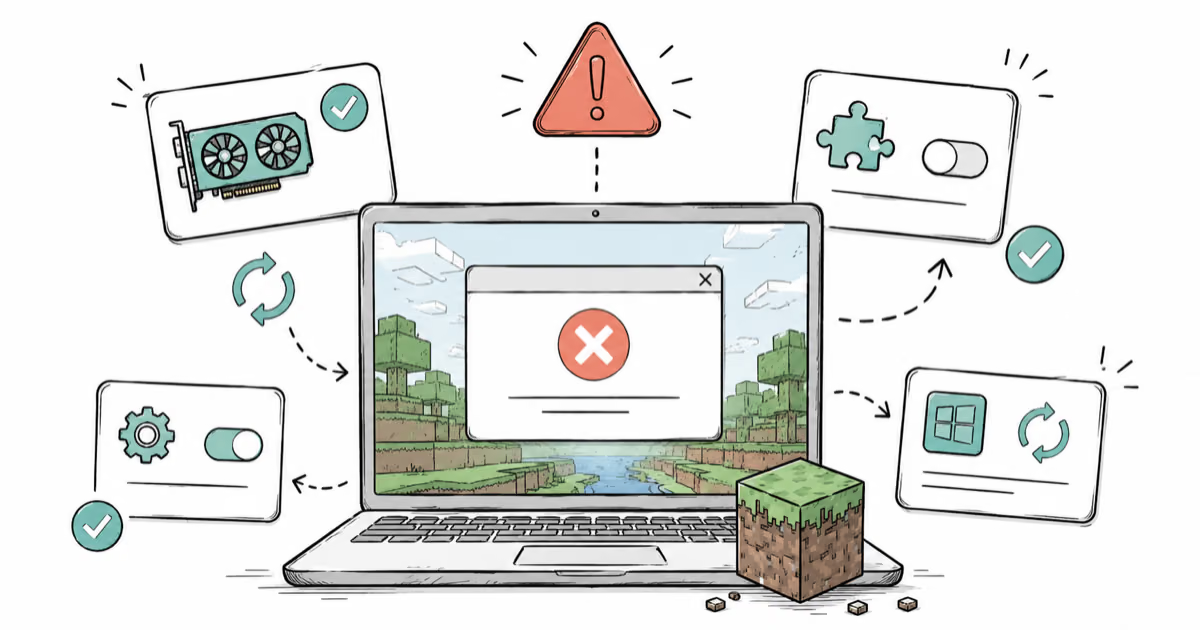
Minecraft Keeps Crashing? Java and Bedrock Fixes (2026)
Minecraft keeps crashing on startup or mid-game? Update your GPU driver, remove mods on Java, and reinstall Gaming Services on Bedrock. Fixes for both.
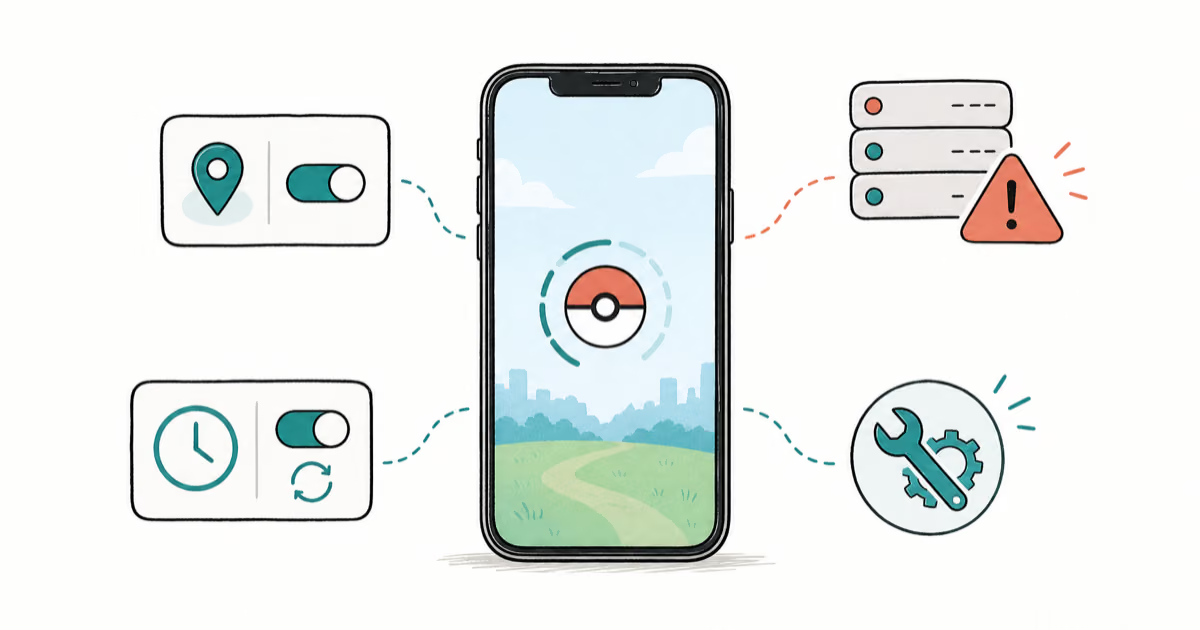
Pokemon GO Not Loading? Fix the Loading Screen 2026
Pokemon GO not loading or stuck on the Pokeball? Check server status, fix automatic date and time, grant location permission, clear the cache, and update.
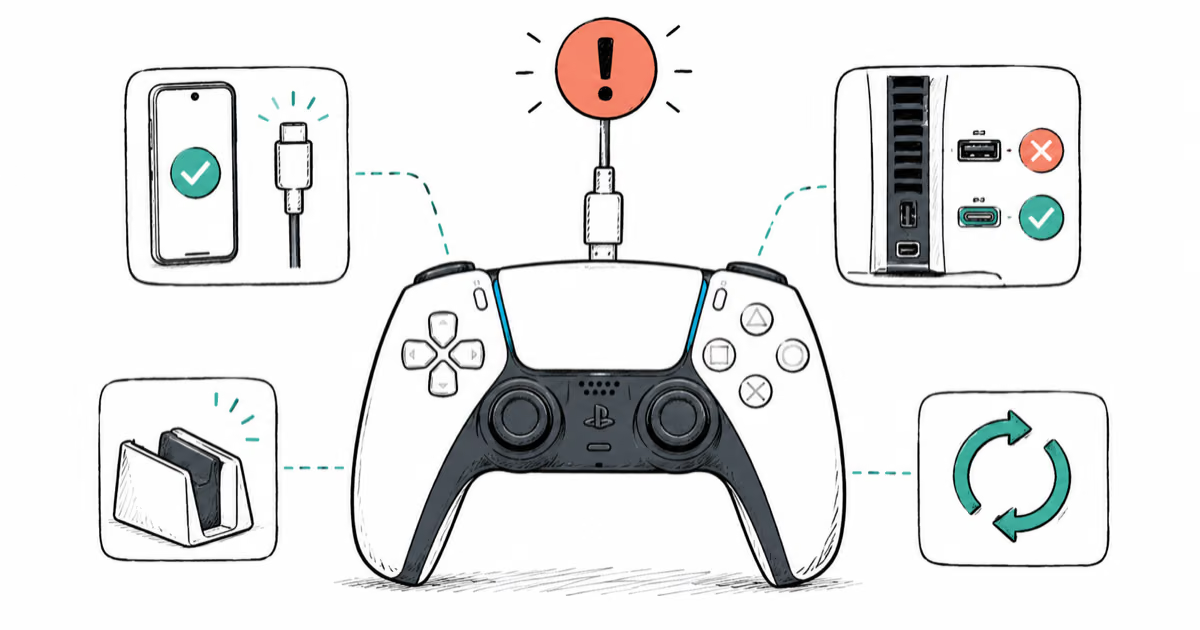
PS5 Controller Not Charging? 9 Fixes That Work (2026)
DualSense not charging? Swap the cable, use a rear port in Rest Mode, clean the USB-C port, and check power settings. 9 fixes for a dead PS5 controller.