Sites Like Omegle: 10 Adult Alternatives + Safety Rules 2026
10 sites like Omegle for adults in 2026. Safety rules, grooming red flags, parental controls, and how to report illegal content the right way.

Quick AnswerOmegle shut down in November 2023 after sustained reports of child exploitation. Sites like Chatrandom, Chatspin, Paltalk, and Shagle copy the same anonymous video format and carry the same risks, so adults should never share identifying details and parents should block them entirely.
Omegle closed in November 2023 because founder Leif K-Brooks couldn’t keep predators off the service. The sites below copy the same anonymous video model, so they attract the same crowd. This guide is written for adults 18+ on their own devices, with safety rules, parental controls, and reporting steps front and center.
- Omegle shut down on November 8, 2023, after sustained NCMEC reports of child exploitation on the platform
- Anonymous video chat sites can’t verify any user’s age, identity, or intent before matching strangers
- Common predator patterns include fast moves to private messages, photo requests, and pressure to meet offline
- Adults should never share their real name, email, phone, school, workplace, or home neighborhood on these sites
- Parental controls (Apple Screen Time, Google Family Link, Microsoft Family Safety) are the only reliable way to block these platforms for minors
#Why Did Omegle Shut Down?
Founder Leif K-Brooks announced the shutdown on November 8, 2023, after 14 years of operation.
The site paired random strangers over webcam with no signup, no profile, and no age check. According to NCMEC’s CyberTipline, reports of online enticement of children rose sharply in the years before the closure, and Omegle was repeatedly named in those reports. K-Brooks stated in his farewell letter that he couldn’t “continually update the platform to meet the safety demands of today’s internet.”
Translation: anonymous video chat is hard to make safe at any reasonable cost.
Strip out signup, age checks, and reputation and you also strip out every barrier between predators and victims. Reactive moderation removes harm only after a user has already seen it. The sites in this guide still accept that trade-off.
#The 10 Most Popular Sites Like Omegle in 2026
Each platform below operates on the same core model: anonymous matching with light or reactive moderation. They’re listed for adult readers comparing what’s out there, not as endorsements. Use parental controls to block all of them on any device a minor can reach.
#Chatrandom
Chatrandom is pure random video chat. Click “Start,” get matched, skip, repeat.
Chatrandom typically shows a few thousand users online at peak hours. Location and gender filters exist behind a paywall. Moderation is reactive, so anything inappropriate reaches your screen first and gets pulled later.
Leaving the chat is the only protective move you fully control.
#Chatspin
Chatspin wraps random matching in Snapchat-style camera filters. Face masks, beauty filters, animated overlays.
The cosmetic angle is also the catch. A filter that hides your face also hides someone else’s. Heavy filters that obscure the entire face are common, and they’re the same trick used by people who don’t want to be recognized later.
#Tinychat
Tinychat skips roulette and drops you into interest-based group rooms.
You can broadcast video to as many as 20 simultaneous viewers, watch quietly without your camera on, or send private direct messages to individuals you’ve spotted in the room. Room topics range from hobby chat to dating to entirely unmoderated free-for-alls, and the names don’t always match the contents inside. Group visibility helps a little because more witnesses see bad behavior, but privacy is the trade-off you make.
Pick the wrong room and you’re exposed.
#Paltalk
Paltalk runs thousands of named chat rooms across music, gaming, hobbies, and dating. Most rooms have labeled topics, active human moderators, and visible user reputations that travel between sessions.
Registration adds friction that deters drive-by predators, and moderation is noticeably more aggressive than on Chatrandom or Chatspin. Identity is still anonymous.
If you must pick one site here, Paltalk is the most defensible.
Defensible isn’t the same as safe.
#FaceFlow
FaceFlow runs entirely in a browser tab. No app download, no account required for guest chat, and one-on-one video, group calls, text, and voice messages on the same page.
Frictionless access pulls in younger users who don’t want a paper trail. Adults will encounter accounts that look underage. Don’t use FaceFlow if you have any doubt about a match’s age.
#Chatroulette
Chatroulette is the original “spin the wheel” matching site and the closest spiritual successor to Omegle.
A large share of matches are idle camera feeds, bot accounts pushing external links, or users redirecting to OnlyFans-style pages. Genuine conversation is rare. Filtering and verification are basically nonexistent.
#Shagle
Shagle advertises live human moderators who watch streams and remove explicit content. Location and gender filters work on mobile and desktop.
Independent reviews suggest Shagle reacts faster than its competitors. Faster cleanup still means you saw the harm before removal. Reactive moderation can’t prevent exposure.
#Hey-People
Hey-People drops video entirely. Text-only chat with “Small talk” or “Dating” mode. No registration.
Cutting video reduces some risk but not the underlying problem. Predators run grooming entirely through text and then push the conversation to encrypted apps. Text channels also make it easier to copy-paste scripted opening lines.
#iMeetzu
iMeetzu blends random video with social-network features. You can match instantly, build a friend list, or join interest rooms.
The mixed purpose blurs user intent. Some accounts want dating. Others look for casual chat. Profile descriptions don’t settle the question, and most matches drop within a minute.
#Fruzo
Fruzo targets mobile users with anonymous video chat, lightweight profiles, and country filters. It also markets itself as a dating app.
Mobile use is convenient and risky in the same breath. People open Fruzo on the bus, in coffee shops, or at the office, and they forget the camera shows their surroundings. Physical privacy and digital privacy fail together. For more anonymous-mode tradeoffs, our guide to anonymous chat apps for Android and iPhone covers the same pattern across other formats.
#How Predators Use Anonymous Chat Sites
Predator behavior on anonymous platforms follows a predictable shape, and naming it helps adults exit early.
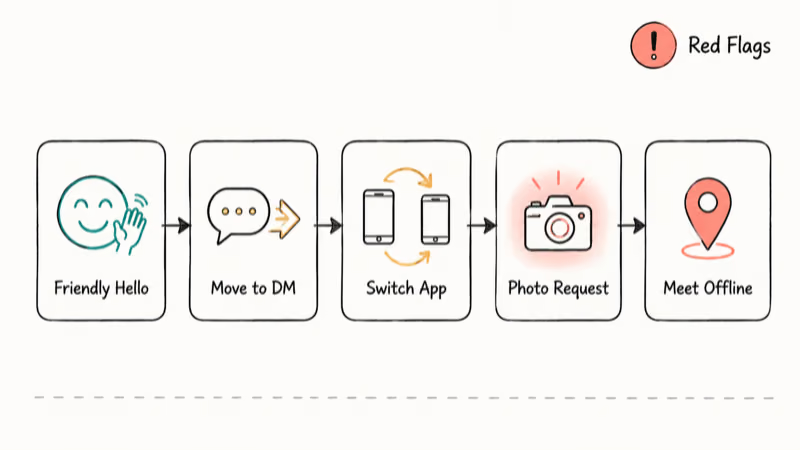
The opening looks normal. A friendly hello, a compliment, a shared interest.
Within minutes the conversation pivots: a request to move to a private DM, then to a different app, then to photos. Pressure builds. A polite reason follows every step: “I don’t want my friends seeing this,” “Snapchat is faster,” “Just one photo.”
Standard moves include posing as a peer, mirroring your stated interests, asking about your school or town, and pushing for video at odd hours. Many actors record the call without telling you. The FBI’s Internet Crime Complaint Center recommends saving screenshots and reporting the incident through the federal portal if any of this happens.
Exit, block, report. Don’t negotiate.
#Safety Rules for Adults Using These Platforms
These rules reduce risk. They don’t eliminate it. The structural problem is zero identity verification, and personal caution alone can’t fix that.
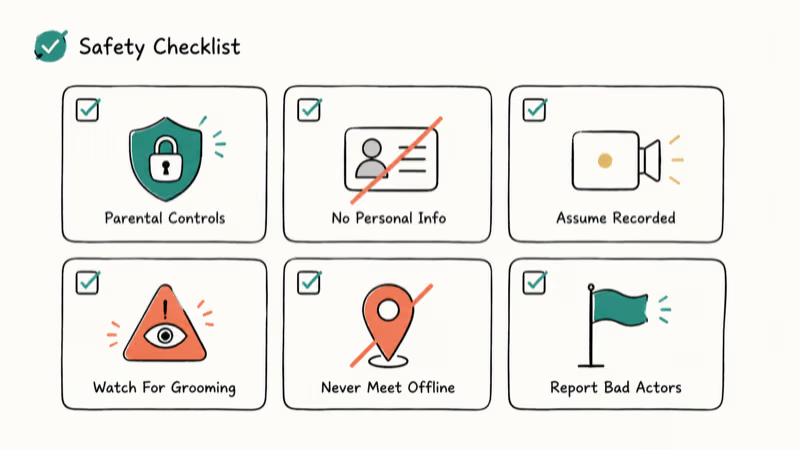
Use official parental controls if any minor can reach the device. Apple’s Screen Time documentation states that web content restrictions can block specific URLs and entire categories of adult sites in iOS 18 and later. Google recommends pairing Family Link before any internet-enabled apps are installed. Microsoft Family Safety enforces similar filters on Windows 11, Edge, and Xbox.
Our Google Chrome parental controls walkthrough covers the desktop side, and how to block porn on iPhone covers content filters at the iOS level. Apply both, then verify the block actually loads from the child’s device, not from your admin account, before you assume the rule sticks.
Never share identifying information. That includes your real name, email, phone, home neighborhood, employer, school, social handles, and license plate.
Treat the chat the way you’d treat a stranger at a bus stop who keeps asking where you live.
Assume everything is recorded. Chat logs are saved server-side. Screenshots happen instantly. Video can be captured without any visible indicator. Treat every session as if a clip might be public next week.
Watch for grooming patterns. Quick moves to a private DM, requests for photos, pressure to meet offline, or a push to switch to an encrypted app are all signals. So is any conversation that pivots from “what’s your favorite hobby” to “where do you go to school” inside the first five minutes. One signal is a yellow flag. Two stacked together is a hard exit, no apology needed.
Don’t meet strangers from these sites in person.
If you decide to meet anyway, tell a trusted friend the time, the place, the person’s username, and a check-in deadline.
Report bad actors every time. Every site has a report button. Use it for explicit content, solicitation, impersonation, and grooming behavior. Reports build the pattern that moderation and law enforcement rely on.
Control your camera and background. No revealing clothing. Blur your background or keep it deliberately generic. Don’t show diplomas, mail, work badges, school logos, license plates, or street views from your window. Predators use any visible detail to triangulate where you live, where you work, or where your kids go to school, so treat the camera the way a journalist treats a source meeting.
#What Should You Do if You See Illegal Content?
Stop chatting. Don’t respond. Don’t try to gather evidence on your own.
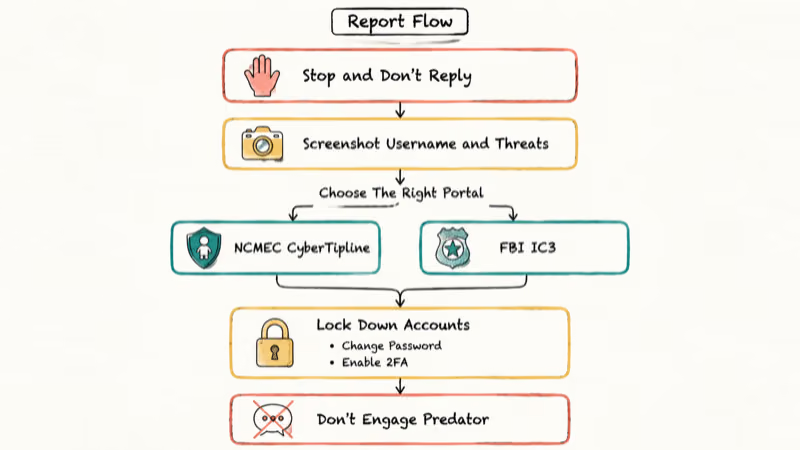
If the content involves minors, report it to NCMEC’s CyberTipline immediately. The portal is open 24/7, and reports route directly to law enforcement. NCMEC states that trained analysts review every report against criminal-content criteria, so borderline cases are still worth submitting.
False positives cost nothing. Missed reports cost a lot.
For sextortion, blackmail, or stalking by an adult, the FBI’s IC3 portal is the right destination.
Take screenshots of the username, profile fields visible at the time, and any threats. Then close the chat and lock down your accounts: change passwords, enable two-factor, and revoke active sessions. Don’t engage with the predator to “catch” them. Investigators handle that part.
#Safer Alternatives to Anonymous Chat
Real connection isn’t the problem. Anonymity without accountability is. Sites that require profiles, history, and consequences attract very different users.
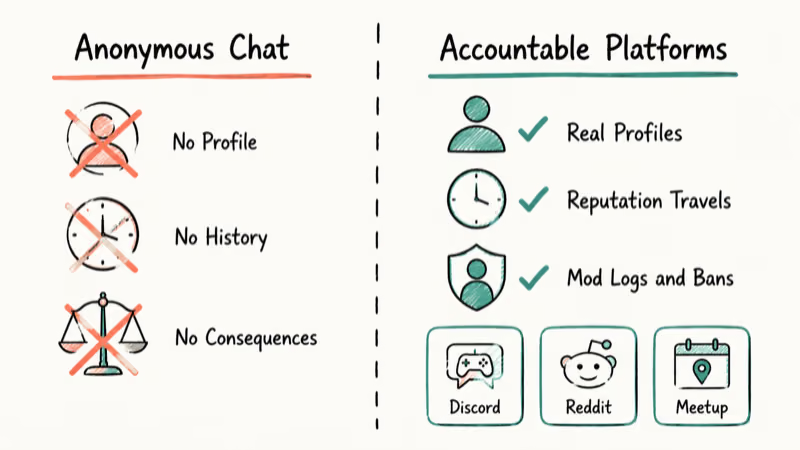
For social chat, look at moderated Discord servers and Reddit communities tied to specific hobbies. Both have ban systems, mod logs, and reputation that travels with an account. Meetup.com pairs interest groups with real names and group reviews before you show up.
Mainstream dating apps require profile photos and at least some form of ID check, which gives bad actors something to lose when they get reported. We cover the same conversation in our best stranger chat apps roundup and the broader apps like Omegle guide for readers who still want to compare features against the safety baseline.
If a household includes teens, layer parental controls on top of every device. Instagram parental controls and our parental control router guide both walk through enforcement that doesn’t depend on a teen’s cooperation.
In every one of these channels, behavior carries cost. That structure does most of the safety work that anonymous platforms refuse to do.
#Frequently Asked Questions
Which site like Omegle is actually safest?
None of them are safe in the way most readers mean. Paltalk and Shagle moderate faster than the rest, and Paltalk’s signup requirement deters drive-by predators. If safety is the priority, use moderated communities like Discord, Reddit, or Meetup instead.
How can you tell if someone is lying about their identity?
You usually can’t.
Reverse-image searches catch some stolen profile photos and live video catches some pre-recorded fakes, but determined predators clear both checks. Assume any anonymous match could be misrepresenting age, gender, or intent, and never share data you wouldn’t hand to a stranger on the street.
Is it legal for adults to use these platforms?
Yes, for adults 18 and older on their own accounts and devices. Most sites claim an 18+ requirement in their terms of service, but enforcement is weak without ID verification, so adults regularly encounter accounts that look underage. Continuing a chat with a suspected minor creates serious legal exposure for the adult. Exit, block, and submit a report through the site’s tools or NCMEC.
How do predators operate on these sites?
They pose as peers or romantic interests and build trust over a few sessions. Then they start asking for photos, personal details, or a switch to an encrypted app. Some push for in-person meetings.
Others record the video and reuse it for sextortion later.
Can you report someone after you have already left the chat?
Yes. Most platforms let you report a username from the chat history or via a support form, even after the session ends.
Are anonymous chat sites actually anonymous?
No. Your IP address is logged by the platform. Chat history is stored server-side. Browser fingerprinting and account linking can tie sessions back to a single person even without a login.
Treat every session as recorded and traceable.
What is the difference between random chat sites and dating apps?
Dating apps require profiles and often ID verification, and behavior carries reputation. Random chat sites remove all three. No profile means no history, and no history means no cost to lying, exploiting, or vanishing.
Are there safer chat platforms designed for teens?
Yes, and they look nothing like Omegle. Discord, Reddit, and large gaming communities require accounts, run active moderation, and ban repeat offenders. Schools sometimes recommend topic-specific apps with adult-supervised channels. Layer parental controls on top so the teen doesn’t have to enforce the boundary alone.
#Bottom Line
Omegle’s exit proved a simple equation: anonymity plus minimal moderation equals predators. Every site in this guide accepts the same trade.
If you must pick one as an adult, Paltalk’s required registration and named-room moderation make it the most defensible choice; treat every other entry as “use at your own risk.” Block all of them on any device a minor can reach using Apple Screen Time, Google Family Link, or Microsoft Family Safety. Spend your real social time on Discord servers, Reddit communities, or Meetup groups where reputation actually exists.
If something goes wrong, save the evidence and report it through NCMEC’s CyberTipline or the FBI’s IC3 portal. That is how patterns get caught.
Google Messages Error 3100: Why RCS Is Broken on Galaxy
Google Messages RCS error 3100 hits Galaxy owners after phone or carrier switches. Google told 9to5Google a fix is coming. Here's what actually helps.

Is This Bank App Real? Spot a Fake App on Your Home Screen
A bank app can land on your home screen from a web page with no install warning. Learn the checks that tell a real banking app from a phishing web app.
Apps Crashing After iOS 27 Update? Fix Order (2026)
Apps crashing after the iOS 27 update? Update the app in the App Store first, then offload and reinstall to clear stale cache, then restart. The fix order.

Do AI Translation Earbuds Work Offline? What to Know
Do AI translation earbuds work offline? A few do with downloaded language packs, but most need the cloud. Here's what works offline and what you give up.