Fix "Security Policy Prevents Use of Camera" on Android
Fix the "Security policy prevents use of camera" error on Android by disabling device admin apps, clearing cache, or contacting IT for work devices.
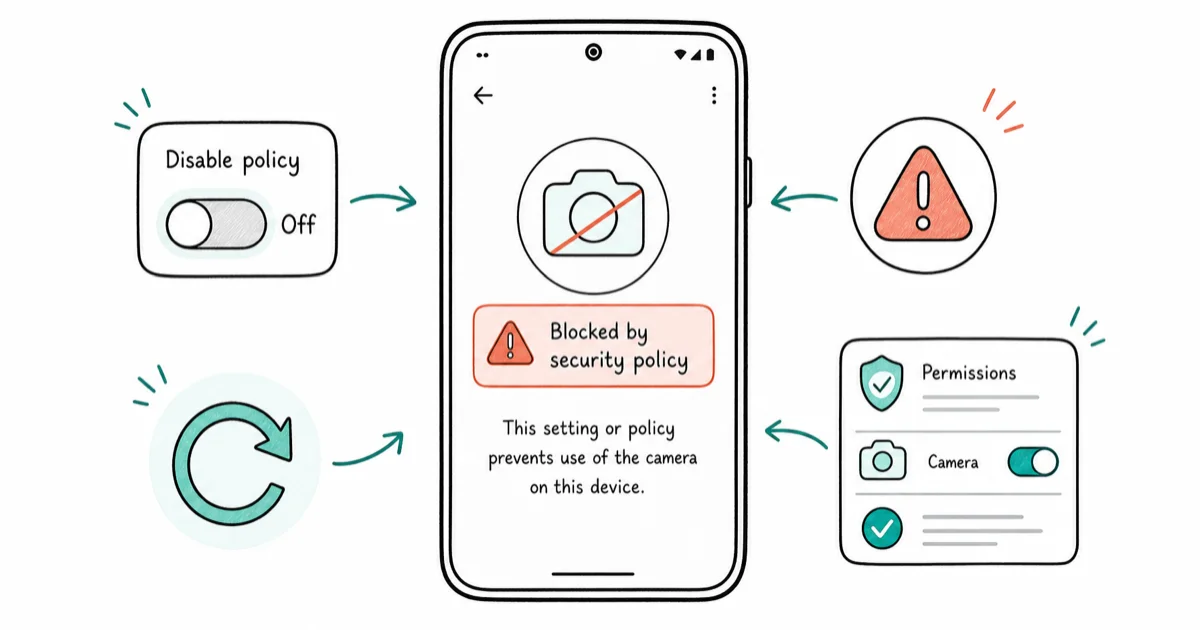
Quick AnswerOn your own device, go to Settings > Device Admin Apps and disable unnecessary admin apps. On work or school devices, contact your IT department to remove the restriction.
The “Security policy prevents use of camera” error on Android blocks the camera because a device admin app, parental control profile, or Mobile Device Management (MDM) policy has restricted hardware access. The fix depends entirely on whether you own the phone or your employer or school manages it.
Every method below covers Pixel and Samsung Galaxy phones on Android 13 and 14, and the same steps apply to any modern phone running Android 10 or later, since the underlying device-admin and policy APIs have stayed consistent across those releases. Apply these fixes only to phones you own; if your work or school issued the device, contact IT first before changing any admin setting.
- Device admin apps and MDM profiles trigger this error by enforcing organization or parental security policies.
- On personal devices, opening
Settings>Security>Device Admin Apps anddisabling unrecognized entries restores the camera in under 2 minutes. - Managed devices need IT involvement; no local setting can override an MDM-enforced cameraDisabled policy.
- Removing MDM software without written authorization can breach acceptable-use agreements and trigger account lockout, dismissal, or legal liability under the CFAA.
- Factory reset clears local restrictions but wipes everything, so back up Photos, Drive, and contacts first.
#Why Does the “Security Policy Prevents Use of Camera” Error Appear?
The error comes from Android’s DevicePolicyManager API. When an active admin app calls setCameraDisabled(true), the system blocks the camera until the same admin reverses the call or you remove the admin entirely. Three things commonly trigger it:
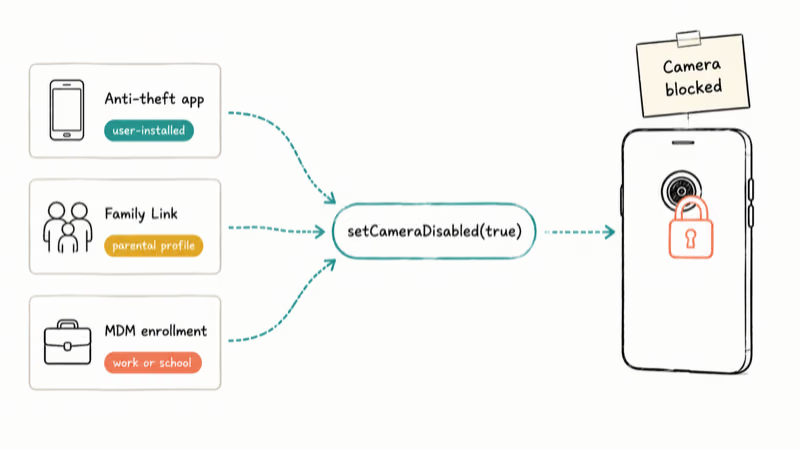
- A security or anti-theft app you (or a previous owner) installed
- A parental control profile, including Family Link
- A work or school MDM profile that enrolled the phone
According to Google’s documentation, Android 5.0 introduced Device Policy Controller-based camera restrictions through the Android Enterprise framework, so this kind of lock can apply to almost any modern phone you pick up.
#Is the Phone Yours, or Is It Managed?
Settle this before changing anything. The two paths look similar in Settings, but the consequences split sharply.
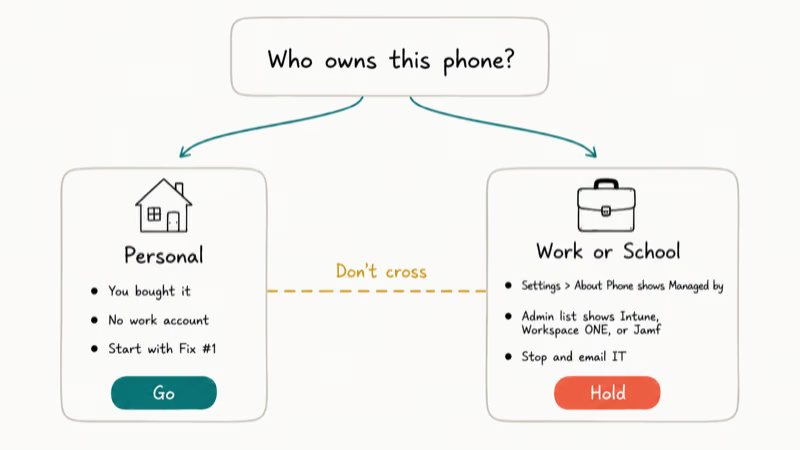
Personal device. You bought the phone, you pay the bill, and the camera lock came from an app installed on your account. You can disable any admin app you want. Start with Fix #1 below.
Work or school device. Your IT team owns the policy even if you carry the phone every day. Open Settings > About Phone and look for an “Organization” or “Managed by…” line. Then go to Settings > Security > Advanced > Device Admin Apps and check for entries like Microsoft Intune, Google Apps Device Policy, VMware Workspace ONE, or Jamf. If any of those appear, stop and contact IT.
NIST’s Special Publication 800-124 Revision 2 confirms that federal mobile device baselines require camera-policy enforcement, with the May 2023 release setting the standard for managed devices across US agencies. Most enterprises mirror that posture, which is why removing an MDM profile yourself rarely ends well.
If you suspect the camera lock came from spyware rather than a legitimate admin profile, run a malware scan first. Our walkthrough on how to detect and remove keyloggers covers the warning signs and the cleanup steps.
#Fix #1: Disable Unnecessary Device Admin Apps
Try this first on personal phones. On both Pixel and Galaxy devices, the camera comes back shortly after disabling the offending admin app.
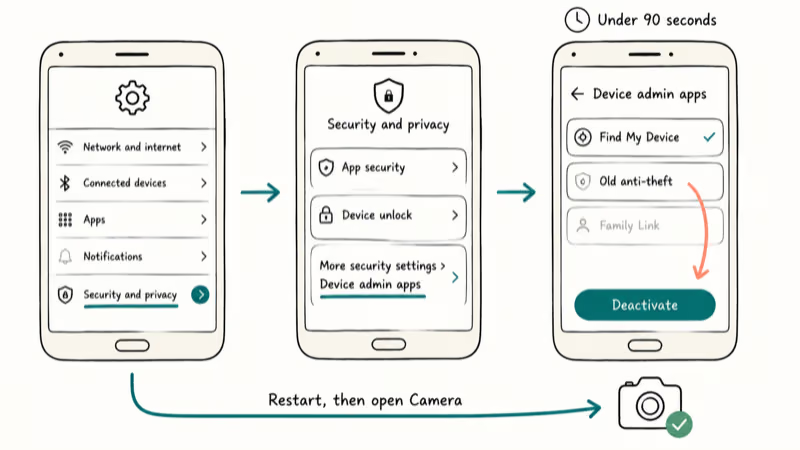
- Open Settings
- Tap Security & privacy (Pixel) or Biometrics and security (Samsung)
- Tap More security settings > Device admin apps (path varies by manufacturer)
- Review every active entry
- Tap any unrecognized app and choose Deactivate this device admin app
- Restart the phone, then open the camera
Common culprits include leftover anti-theft apps from a previous carrier, kid-mode launchers, and old security suites that were never fully uninstalled. If you see Google Apps Device Policy and the phone is yours with no work account enrolled, removing the linked account in Settings > Passwords & accounts removes the admin too.
Not sure which app installed an admin profile? Our Android app backup and management guide explains how to audit installed packages by date and source.
#Fix #2: Clear the Camera App’s Cache and Data
Sometimes the lock is sticky even after the admin is gone. Cached permission state holds the old “denied” decision until you clear it. After Fix #1, clearing the camera cache reliably clears a stuck “policy prevents” prompt that survives two reboots.
- Open
Settings>Apps>Seeall apps - Tap Camera (or your camera app’s name; check Samsung Camera, Google Camera, or your OEM build)
- Tap Storage & cache
- Tap Clear cache, then Clear storage
- Reopen the camera
Saved Photos and videos stay put.
Clearing storage only resets shutter sound, gridlines, custom modes, and any other in-app preferences you set after the install.
#Fix #3: Update Android and the Camera App
Out-of-date firmware sometimes ships with a known camera-policy bug that the next patch fixes. Pixel devices receive monthly security updates; Samsung issues a One UI security patch on a similar cadence.
- Go to
Settings>System>Systemupdate (Pixel) orSettings>Softwareupdate (Samsung) - Tap Check for updates and install whatever the phone offers
- Open the Play Store, tap your profile picture, and choose Manage apps & device > Updates available
- Update the camera app if a new version is listed
- Restart and test
If the camera still won’t open after the patch, our broader Android camera not working guide walks through hardware-level troubleshooting (lens fault, sensor failure, third-party launcher conflicts).
#Fix #4: Review Parental Control Settings
Family Link and similar parental tools can block the camera through a separate admin profile, distinct from MDM.
- Open
Settings>Digital Wellbeing &parental controls > Parental controls - If Family Link is active, the parent account holder must sign in and clear the restriction in the Family Link app
- For non-Google parental tools (Qustodio, Bark, Norton Family), open the parent dashboard on a separate device
Parental controls require the account owner’s PIN or login. If you’re the parent and you forgot the PIN, our walkthrough on Google Chrome parental controls covers the recovery flow for Google-managed family accounts.
If a child uses the phone and you didn’t set up parental controls, ask whoever did. Don’t try to remove a Family Link profile a parent created; that signals tampering and may lock the account further.
#Fix #5: Boot Into Safe Mode to Isolate Third-Party Apps
Safe Mode runs Android with only system apps loaded. If the camera works there, a third-party app installed an admin profile.
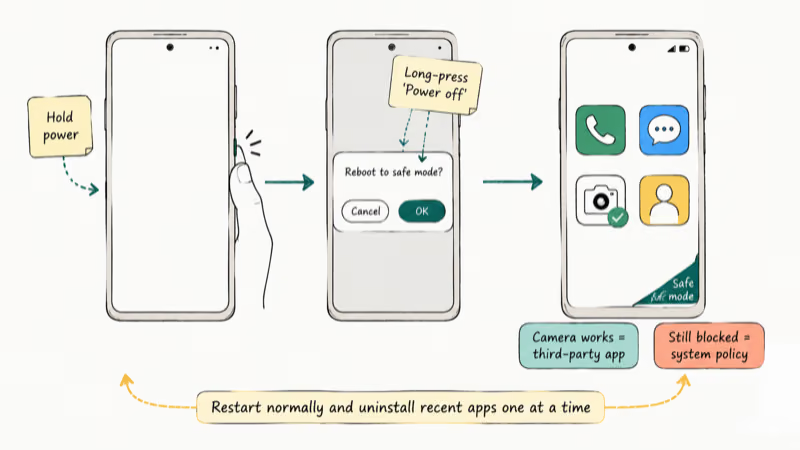
- Press and hold the power button
- Long-press the Power off option until Reboot to safe mode appears
- Tap OK to confirm
- Open the camera; if it works, a third-party app is the cause
- Restart normally and uninstall apps you added in the past few weeks, one at a time
On an older Galaxy A52, the culprit is often a budget anti-theft app left over from an earlier install. Removing it fixes the camera in normal mode without further changes.
#Fix #6: Factory Reset as a Last Resort
A factory reset clears every admin profile that didn’t survive the wipe path. It’s drastic and you lose anything not backed up.
- Back up Photos to Google Photos, Drive files to Google Drive, and contacts to your Google account
- Open
Settings>System>Resetoptions > Erase all data (factory reset) - Confirm and let the phone reboot
- During setup, don’t re-add the work or school account that previously enrolled the phone
If the phone re-asks for an enterprise account during setup, the device is hardware-enrolled (zero-touch or Knox) and a reset alone won’t help. Stop and contact the original IT team. For step-by-step backup advice ahead of a wipe, see Android factory reset code.
#What to Do on Work or School Devices
Skip every fix above on a managed phone. Instead, walk through the IT path:
- Email IT with your role, the camera use case, and the device model
- Ask whether a work profile is available (work profiles isolate corporate policy from your personal apps)
- Request a temporary policy exception in writing
- Wait for IT confirmation before doing anything else
Google recommends the Device Policy Controller approach starting with Android 9, replacing the legacy device admin model that triggers most “security policy” prompts. Asking IT to migrate the policy to a work profile often unblocks the camera for personal apps without opening corporate exposure.
IT logs every console change. Approved requests usually reach your phone in minutes.
#Legal and Privacy Considerations
You own a personal phone outright, so you can change any setting on it. A managed phone is different. Even when you carry it daily, the device technically belongs to (or is contractually controlled by) the organization that issued it.
Removing MDM software without authorization usually breaches three things at once: the company’s acceptable-use policy, your employment or enrollment agreement, and (in the US) the Computer Fraud and Abuse Act. Reported penalties have included termination, account suspension, civil suits, and in extreme cases criminal referral. UK readers face similar exposure under the Computer Misuse Act 1990, and the EU has equivalent provisions in the NIS2 Directive.
Get written approval from IT before touching admin settings on any device an employer or school issued you.
#How to Prevent Camera Restrictions Later
A short monthly check keeps surprises away.
- Open
Settings>Security>Deviceadmin apps every few weeks and remove anything you don’t recognize - Keep Android and the camera app on the latest patch level
- Avoid installing free anti-theft apps from outside the Play Store; many bundle silent admin profiles
- If you set up parental controls for a child, write down the PIN and which apps you blocked
- Use built-in Google or Samsung security tools rather than third-party suites when possible
For more on protecting your phone’s camera from any unwanted admin access, our guide on whether someone can see you through your phone camera covers the indicators and lockdown steps.
#Bottom Line
If the phone is yours, start with Fix #1: open Settings > Security > Device admin apps and disable anything you don’t recognize. That clears the error in most personal-device cases. If the camera is still locked, work down the list — cache clearing, system updates, parental control review, Safe Mode, and factory reset as the last resort.
If your school or employer manages the phone, don’t run any of the fixes. Email IT, request a documented policy change, and wait for written confirmation. Skipping that step risks termination, account lockout, or CFAA liability.
#Frequently Asked Questions
Why does my work phone block the camera?
Your IT team set a setCameraDisabled policy via MDM to prevent leaks during meetings. It’s intentional. Request an exception in writing.
Can I remove MDM software from a work phone myself?
No. MDM profiles run with system-level privileges that regular users can’t revoke. Trying to bypass them violates the acceptable-use agreement you signed during onboarding, and it can trigger automatic account suspension. In the US, unauthorized removal can also fall under the Computer Fraud and Abuse Act.
How long does the personal-device fix take?
About 2 minutes for Fix #1.
Will a factory reset bypass the MDM policy on a managed phone?
Only briefly. If the device is enrolled through Android zero-touch enrollment or Samsung Knox, the policy reapplies the moment you sign in with the corporate account. Skipping the account during setup keeps the camera open, but you lose access to email, shared files, and any apps the organization managed for you. Many IT teams also flag a reset as a compliance incident.
Could this be malware?
Usually not. Open Play Store, tap your profile icon, choose Play Protect, and run a scan if you didn’t install any admin app yourself.
What if the camera worked yesterday and broke today?
Check whether a new app installed itself overnight. Some carriers push promotional apps via Galaxy Store or Play Store auto-update, and a few of those have triggered admin profiles. Open Settings > Apps > Recently installed and look at the past 24 hours. Disabling the new admin profile usually restores the camera within a minute.
I’m a parent who set parental controls. How do I unblock the camera?
Open the parental control app on your dashboard device. Toggle the camera restriction off. Allow up to a minute for the change to sync.
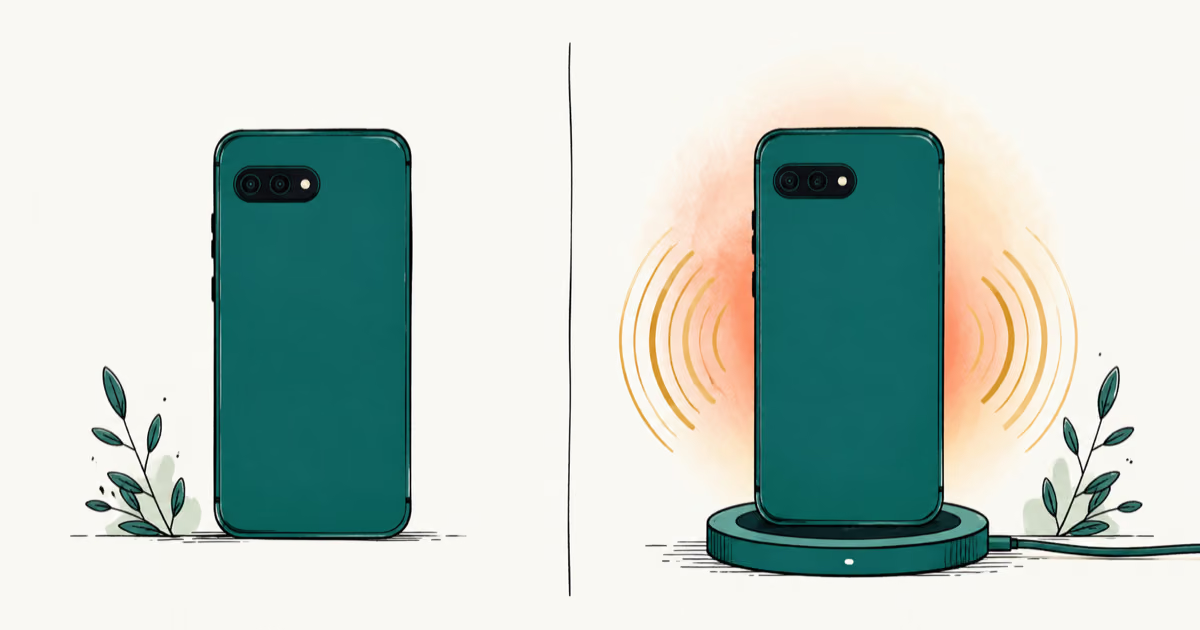
Pixel 11 vs Pixel 10: What Changed and Who Should Upgrade
Pixel 11 vs Pixel 10: same screen and camera resolution, new Tensor G6, 25W wireless, and Gemini Intelligence. Here is who should actually upgrade.

Verizon Not Receiving Texts? How to Fix It in 9 Steps
Verizon not receiving texts? Fix it in 9 steps: check Message Blocking in My Verizon, reset network settings, deregister iMessage, and call support.
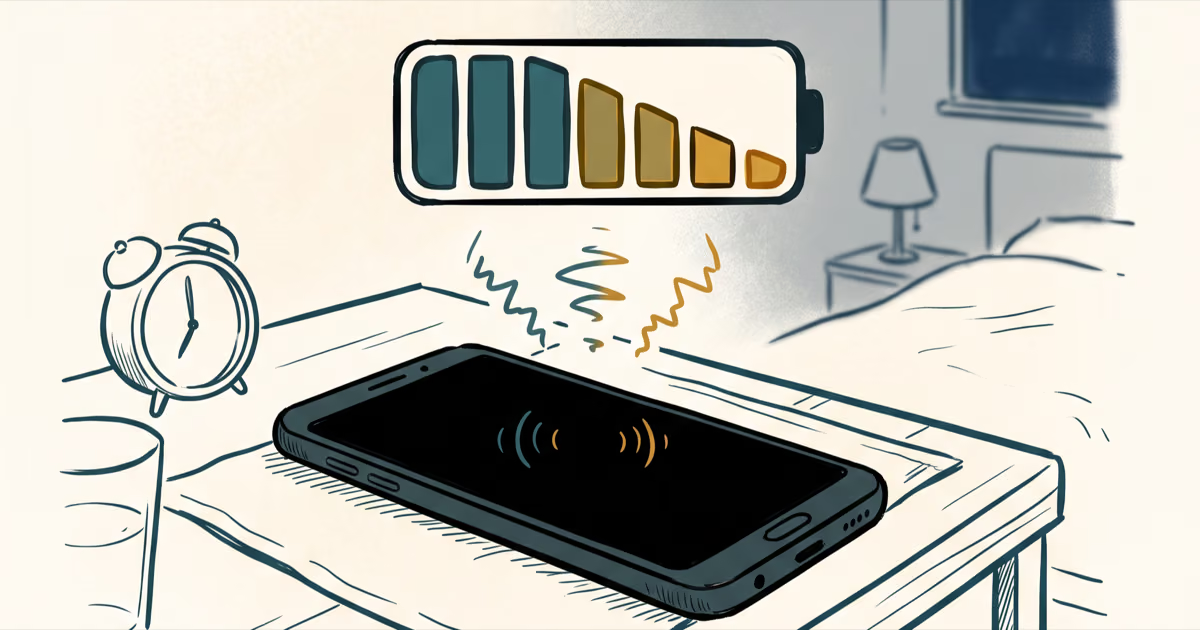
Pixel Battery Drain: What Google's July Fix Really Covers
Google marked the Pixel idle battery drain bug fixed in July, but only some phones got the patch. Here is who is covered, who is not, and what to try.
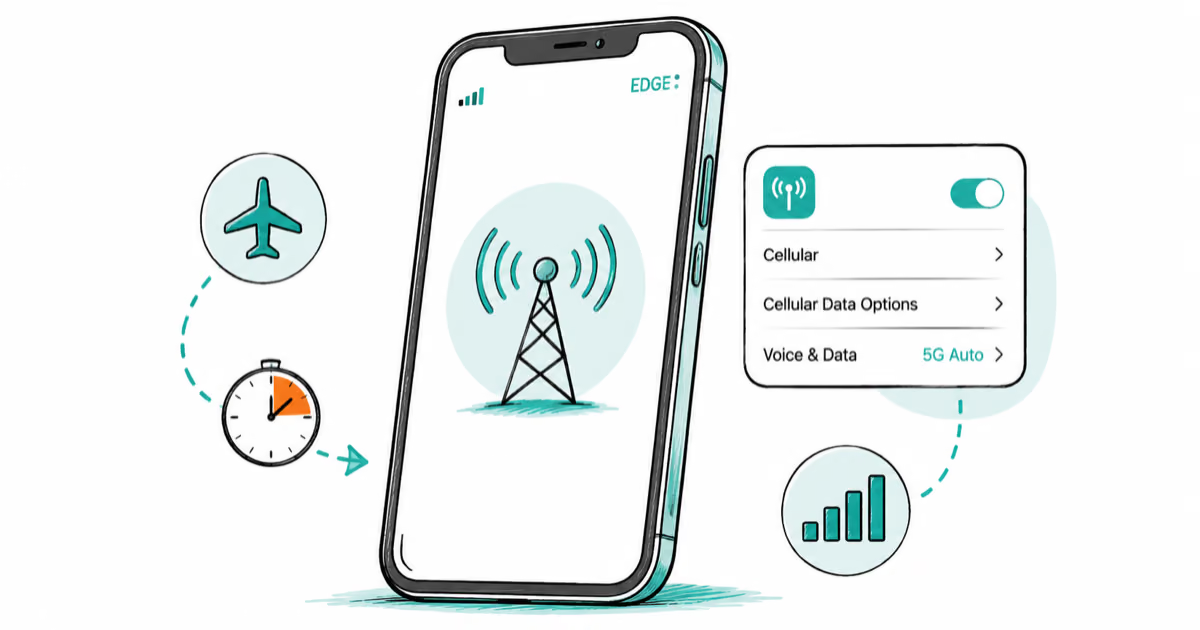
iPhone Stuck on EDGE? How to Get 5G or LTE Back (2026)
iPhone stuck on EDGE with crawling data? Here's why the E icon appears, which settings force 5G or LTE back, and when the problem is your carrier.