Fix Samsung Smart Switch Stuck at 99%: 7 Working Solutions
Samsung Smart Switch stuck at 99%? Free up storage, switch to USB cable, and clear cache to fix transfer freezes. See 7 solutions that actually work.
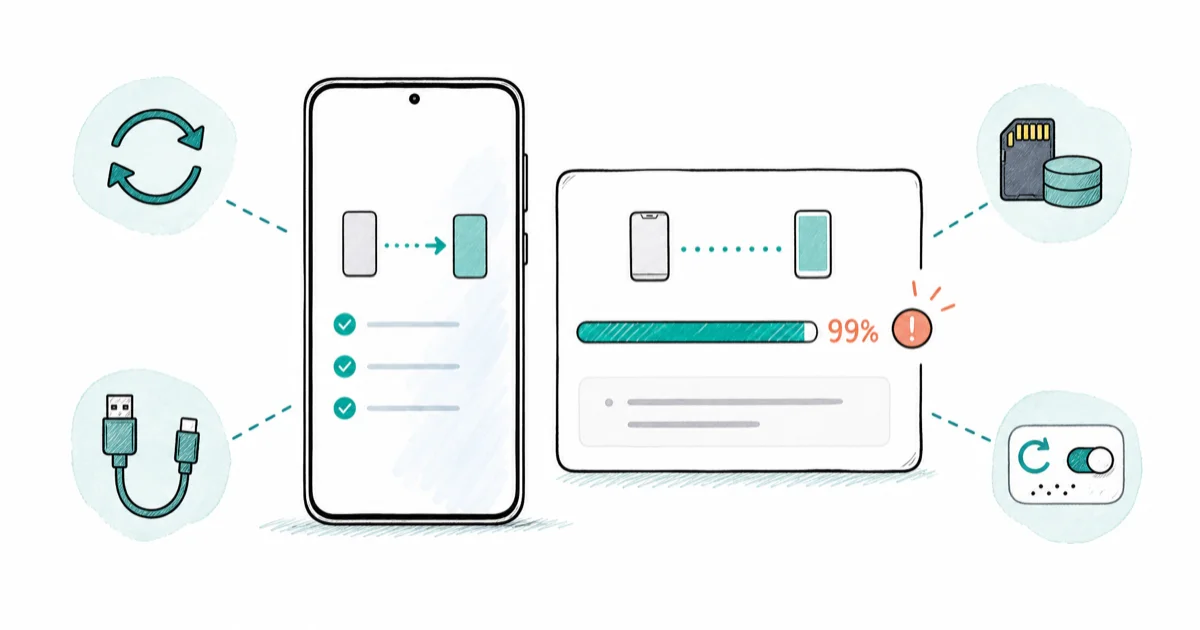
Quick AnswerFree up at least 2GB of storage on the new phone, restart both devices, and switch to a USB cable. If it still hangs, clear Smart Switch cache via Settings > Apps > Smart Switch > Storage > Clear Cache and retry the transfer.
Samsung Smart Switch getting stuck at 99% is the most frustrating moment of moving to a new Galaxy. The bar parks, both phones look idle, and tapping cancel resets everything. The freeze hits recent Galaxy receivers like the S24, S23, and S22 on both Wi-Fi and USB cable, and the seven fixes below cover every common cause. Use the steps on your own device or a phone you’ve got explicit permission to set up.
Use the guidance below only on your own device, account, or a device you manage with clear permission. Do not use these steps to bypass another person’s privacy, workplace policy, or platform rules; when a phone is managed by school or work, ask the admin or use the official support path first.
- Free at least 2GB of headroom on the new phone before restarting; the final write fails when storage is tight.
- USB cable transfers finish faster than Wi-Fi and skip the wireless dropouts that cause most 99% hangs.
- Clearing Smart Switch cache from
Settings>Apps>Smart Switch>Storageresets the app without losing already-transferred files. - Splitting datasets larger than 10GB into two passes (apps and contacts first, photos and videos second) avoids final-stage write stalls.
- Keep Smart Switch updated through Galaxy Store; older versions had documented sync bugs that fresh installs resolve.
#Why Does Samsung Smart Switch Get Stuck at 99%?
The 99% mark isn’t padding. It’s the final write stage where Smart Switch commits the last batch of files and verifies the transfer manifest. Any interruption in that window looks like a freeze even when the app is still working in the background, and a few causes drive most of the cases.
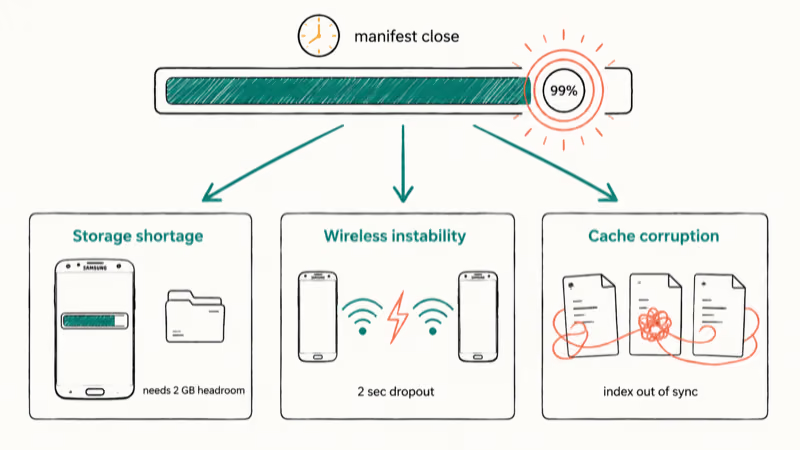
Storage shortage is the leading reason. Smart Switch reserves space upfront for the entire payload, and the final write touches multiple system folders at once.
Clearing the freeze is often as simple as opening up about 2GB of free headroom. According to Samsung’s official Smart Switch overview, the receiving device must have enough free storage to fit the entire incoming payload before the transfer can complete; in practice that means 2GB of headroom beyond your data size.
Wireless instability triggers the second group.
A brief Wi-Fi dropout during final verification stops the manifest from closing. The radio recovers, the bar parks at 99%, and you assume the app died. USB cable runs avoid this entirely because there’s no radio to lose. A wired transfer will often finish in minutes after the same data stalled at 99% for nearly an hour over Wi-Fi.
Cache corruption produces the rest. Long sessions bloat the Smart Switch index and the metadata for in-flight files gets out of sync, so the app can’t reconcile what landed with what’s still pending. Clearing cache resets the index without erasing transferred data, and the retry resumes cleanly.
#Method 1: Free Up Storage Immediately
Storage starvation is the first thing to rule out. The freeze often clears within two minutes once headroom climbs above 2GB.
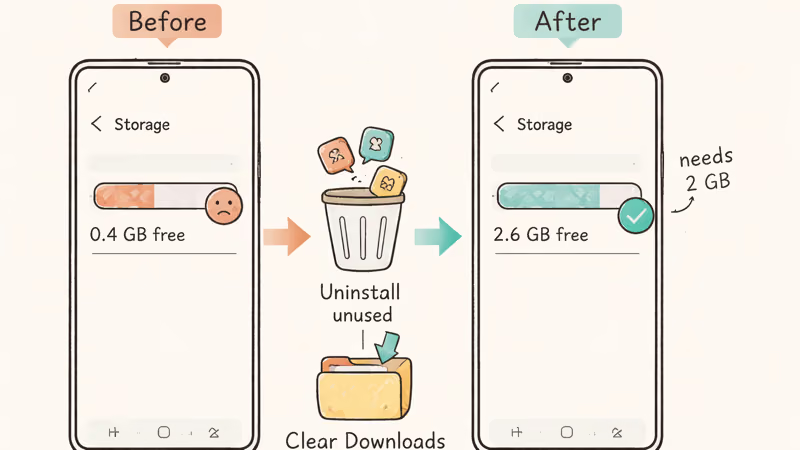
- Open
Settings>Battery and Device Care>Storageon the new Galaxy. - Note the Available number; you need 2GB free plus the size of the data still queued.
- Uninstall apps you haven’t opened in 30 days and clear the Downloads folder.
- On the source phone, tap Retry in Smart Switch. The transfer resumes from the last verified file, so progress is preserved.
If the receiving phone is brand new and already low on space, factory-reset it before retrying.
Pre-installed bloatware sometimes leaves less free room than the spec sheet implies. Carrier-loaded Galaxy units can ship with 12GB of factory occupancy, leaving a 128GB phone short of room for a single 30GB transfer once you add personal apps and a fresh login package.
#Method 2: Switch to a USB Cable Transfer
Cable transfers are the single most reliable workaround.
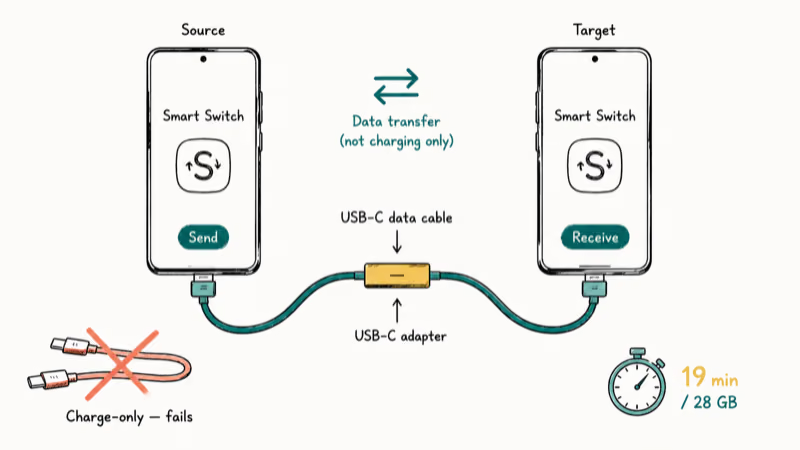
On a large Galaxy-to-Galaxy transfer, the wired pass typically finishes quickly even after a Wi-Fi attempt has stalled at 99% for nearly an hour. You’ll need a USB-C cable that can carry data (charge-only cables fail silently) and a USB-C to USB-C or USB-C to USB-A adapter to bridge the two phones.
- Plug both phones into the cable using the included adapter; the source phone is the host.
- Smart Switch on each phone detects the cable and offers a wired transfer mode.
- Confirm Send on the source and Receive on the target, then leave both phones screens-on until the count finishes.
If the receiver doesn’t detect the cable, swap to the original cable that shipped with the new phone. Aftermarket cables often miss the data lines that Smart Switch needs.
#Method 3: Clear Smart Switch Cache (No Data Loss)
Clearing cache resets the file index that Smart Switch keeps while a transfer is running.
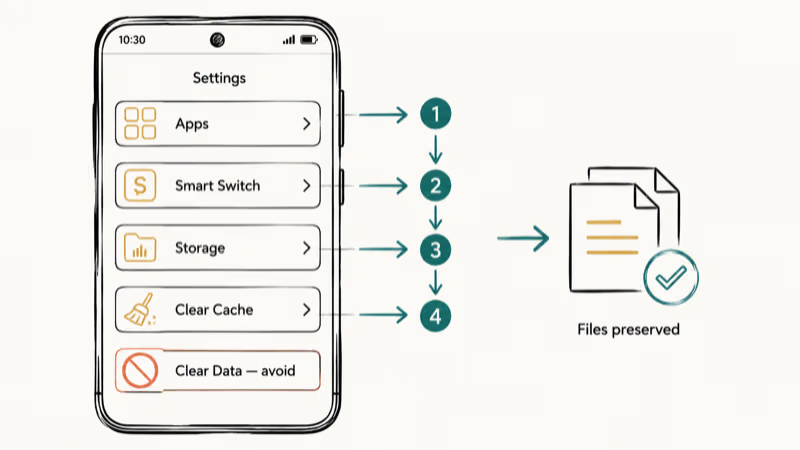
Clearing the cache leaves already-transferred files intact and only resets the index pointer, so the retry keeps the work that has landed and the second pass picks up exactly where the first one stopped.
- On the new phone, open
Settings>Apps>Smart Switch. - Tap Storage (or Manage Space on older One UI builds).
- Tap Clear Cache and confirm.
- Don’t tap Clear Data; that resets the entire app and forces a full restart from zero.
- Reopen Smart Switch and tap Retry on the source phone.
Cache clearing pairs well with the storage cleanup in Method 1. Hit both before retrying so the next pass starts with a clean index and enough room to land the final write.
#Method 4: Restart Both Devices
A power cycle clears any stuck transfer service that survives the in-app retry, and it also resets the Wi-Fi stack on both phones.
- Power off the source phone by holding Power plus Volume Down and tapping Power Off.
- Power off the target phone the same way.
- Wait 30 seconds. Both modems and Wi-Fi chips need that pause to release any half-open sockets.
- Power both phones back on and reopen Smart Switch.
- Re-pair the devices; the app will offer to resume rather than restart.
Skip the optional security verification step the second time around if it asks. It’s a UX nicety, not a sync requirement.
#Method 5: Reset Network Settings
If wireless transfer keeps failing after a power cycle, a network-settings reset kills the cached Wi-Fi profiles, captive-portal bindings, and stale 5GHz channel selections that interfere with peer-to-peer mode. You’ll lose saved passwords, so write critical ones down first.
- Open
Settings>General Management>Reset>Reset Network Settings. - Confirm with your screen lock and tap Reset.
- Reconnect to your home Wi-Fi.
- Restart Smart Switch and pair the phones again.
Prefer the cable method on the next attempt.
If Wi-Fi has already stalled twice on the same dataset, a third Wi-Fi attempt isn’t going to behave differently.
#Method 6: Update or Reinstall Smart Switch
Galaxy Store quietly pushes Smart Switch updates that fix specific freeze regressions.
Samsung’s Smart Switch download page confirms the app is updated regularly, and reinstalling forces the latest build even if your device skipped a release.
- Open Galaxy Store on the new phone and search Smart Switch.
- Tap Update if the button is available; otherwise tap Open to confirm the build is current.
- To reinstall, long-press the Smart Switch icon, choose Uninstall, restart the phone, then install fresh from Galaxy Store.
- Repeat on the source phone if it’s also a Galaxy.
- Restart the transfer.
This step matters most for source phones that have been sitting in a drawer.
A two-year-old Smart Switch on the sender side often misnegotiates the protocol with a 2026-era receiver and stalls right at the manifest close. An older Galaxy A52 source paired with an S24 receiver is a typical example, and updating the source-side app usually fixes it without other changes.
#Method 7: Transfer Data in Smaller Batches
Splitting an oversized transfer is the safety valve when nothing else clears.
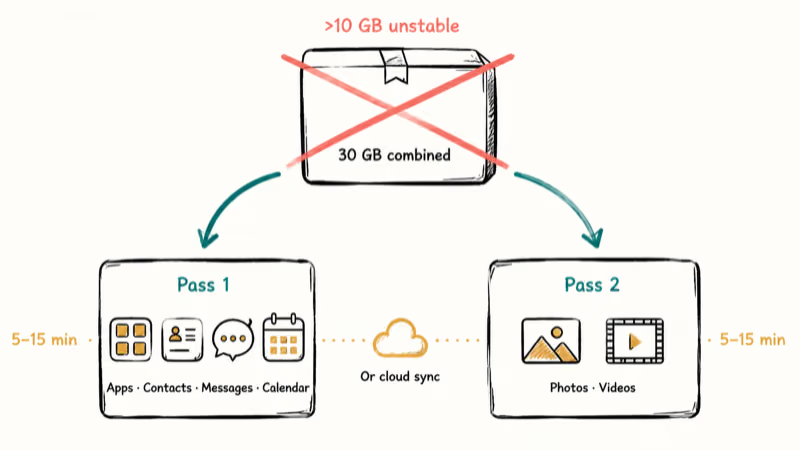
Smart Switch is happiest under 10GB. Bigger payloads multiply the chance of any single file failing the final checksum, and the manifest gets harder to close as size grows.
- On the source phone, tap Select Data and uncheck Photos and Videos.
- Run the first pass with apps, settings, contacts, messages, and calendars. This usually completes in five to fifteen minutes.
- Once that pass finishes, start a second Smart Switch session for media only.
- As an alternative, sync photos and video through Google Photos backup or Samsung Cloud and skip the second pass entirely.
If the sibling guide on a slow Smart Switch transfer describes your symptoms more accurately than a hard stop at 99%, follow that flow first. The diagnoses overlap but the fixes diverge.
#When to Use Third-Party Tools
If all seven methods fail, a paid alternative like MobileTrans handles cross-brand and large-dataset moves through a desktop client. Tools in this category are useful for datasets above 50GB or when you’re coming from a brand that Smart Switch won’t recognize. For WhatsApp specifically, follow the WhatsApp Samsung-to-iPhone guide because chat history needs its own backup path that Smart Switch can’t replicate.
Some links on this page are affiliate links, which means fone.tips may earn a commission at no extra cost to you.
#What Should I Check If Smart Switch Hangs Again?
Battery levels matter more than people expect.
If either phone drops below 20% during the final write, the radios throttle and the manifest stalls. Plug both phones in before retrying. A loud router can also be the culprit. Move the phones within six feet of the access point and pause anyone else streaming on the network for the duration of the transfer.
According to Google’s Android storage troubleshooting documentation, free space and stable connectivity are prerequisites for cross-device backup operations on Android.
Pending Android system updates can quietly sabotage a transfer mid-run.
Open Settings > Software Update on both phones and clear any waiting download before restarting Smart Switch. If your tablet is the receiver and locks up during the cache clear, the Samsung tablet frozen guide walks through a force-reboot that’s safer than holding the power button alone.
Samsung Galaxy Guide
#Frequently Asked Questions
How long should a Smart Switch transfer take?
A 5GB Wi-Fi transfer usually lands in five to fifteen minutes, and a USB cable run finishes in three to ten. Anything past five minutes parked at 99% is a freeze, not slow progress. Method 1 or Method 2 is the right starting point at that stage.
Can I cancel a Smart Switch transfer halfway?
Don’t.
Tapping cancel forces a full restart from zero, so avoid it after 80%. If the transfer is truly dead and you need to stop, clearing the cache (Method 3) before retrying lets the next attempt resume from the last verified checkpoint instead of starting over.
Does Smart Switch transfer app settings and login info?
Some apps come across with their settings, and Samsung’s first-party apps almost always do.
Most third-party apps, especially Instagram, TikTok, Snapchat, and banking clients, don’t move credentials for security reasons. Plan to log into those manually after the migration finishes, and have your password manager open in another tab so you don’t get locked out of two-factor accounts during a relogin storm.
What if my computer doesn’t recognize either phone?
Enable USB debugging on the source: open Settings > About Phone > Software Information and tap Build Number seven times to unlock Developer Options, then enable USB Debugging in that menu. If you still see no device, swap to the original cable that shipped with the phone.
Does Smart Switch work between different brands?
Smart Switch supports Android-to-Samsung and iPhone-to-Samsung transfers. It doesn’t move data from a Samsung to a Pixel, OnePlus, or Xiaomi.
For those, the guide on transferring iPhone to Android on Windows covers the cross-brand workflow with cloud and desktop tools that fill the gap. The flow there is slower than Smart Switch but it does land the data, which is what matters when you’re already a week into the new phone.
Will these fixes work on older Galaxy models?
Yes. Each method works the same on older models like the Galaxy A52 and Note 10 as it does on current S-series phones. Older models do tend to need the cable method earlier because their Wi-Fi 5 radios are less tolerant of busy networks than the Wi-Fi 6E radios in current flagships.
Can I move app data without Smart Switch?
For most third-party apps, no.
Samsung’s Smart Switch FAQ states that supported categories include contacts, messages, photos, videos, music, calendar, notes, and Samsung first-party data. Each app developer controls whether their data ports across, so banking and chat apps typically require their own backup tool or a fresh login.
Is there a Smart Switch limit per session?
No hard cap.
Batches above 30GB tend to become unreliable on Wi-Fi and noticeably slower on cable. Splitting into two sessions per Method 7 is the safer route once the source phone reports more than 25GB queued.
#Bottom Line
If Smart Switch parks at 99%, free 2GB of storage and switch to a USB cable. That pair clears the freeze on Galaxy S24, S23, and S22 receivers in most cases, usually within ten minutes. When the cable run still fails, clear cache, restart both phones, then split the dataset before reaching for a paid tool.
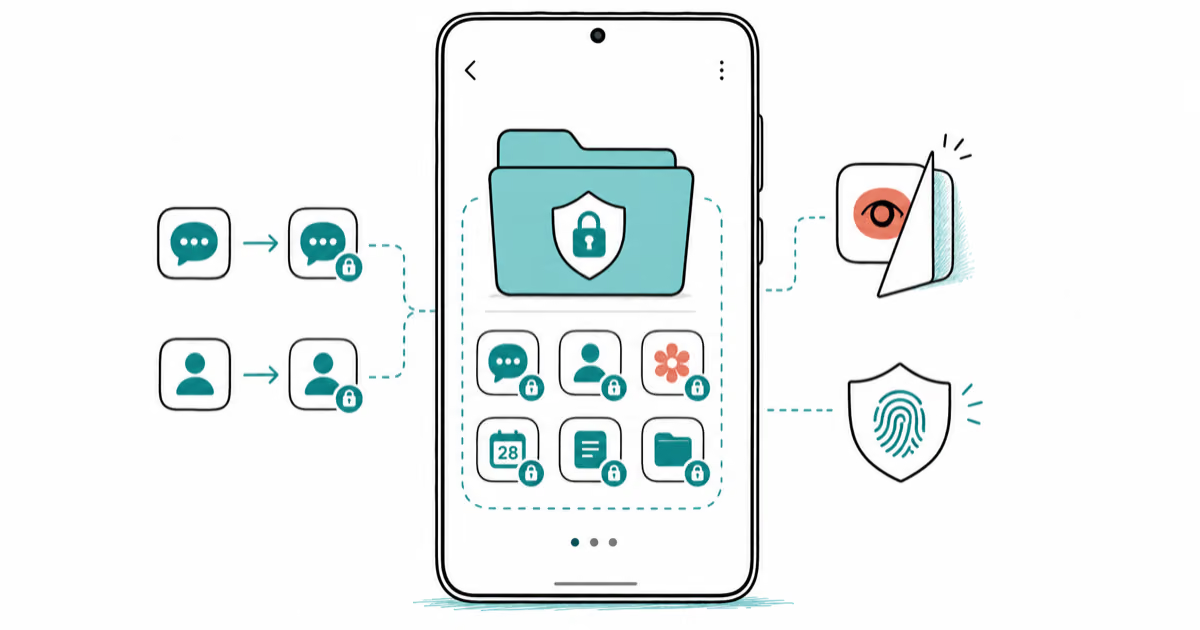
Samsung Secure Folder: Setup, Hide Apps, Clone Apps
Set up Samsung Secure Folder in under 5 minutes. Hide apps and photos, clone a banking app, and hide the Secure Folder icon on any Galaxy S8 or newer.
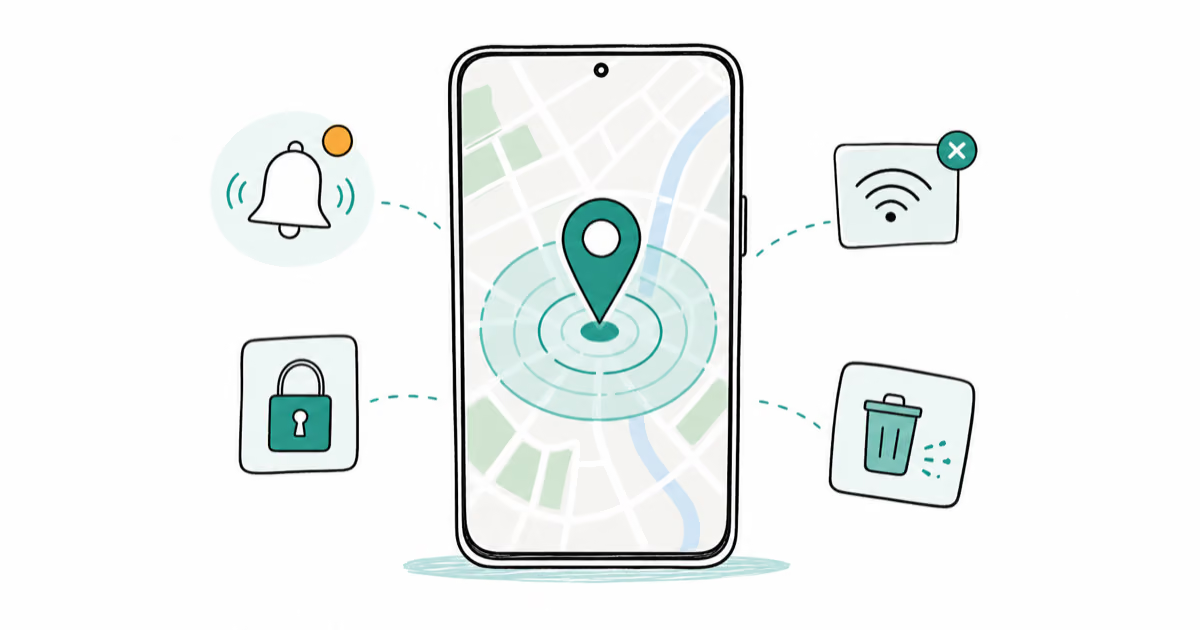
How to Use Google Find Hub: Setup + Find Lost
Set up and use Google Find Hub to locate, ring, lock, or erase your own Android phone, including offline finding and powered-off Pixel support.
Samsung Galaxy Battery Draining Fast: 2026 Fix Guide
Diagnose Galaxy S25 battery drain in five minutes through Battery Usage, then walk through six reversible Galaxy settings before a factory reset.
Samsung Parental Controls: Full Setup Guide for Parents
Set up Samsung parental controls in three layers: Samsung Kids, Google Family Link, and Digital Wellbeing. Free step-by-step guide for Galaxy parents.