Fix Safari "Cannot Open The Page" Address Invalid Error
Safari address invalid error? Verify the URL, clear cache, restart your iPhone, and check your connection. 9 proven methods to fix this Safari error.
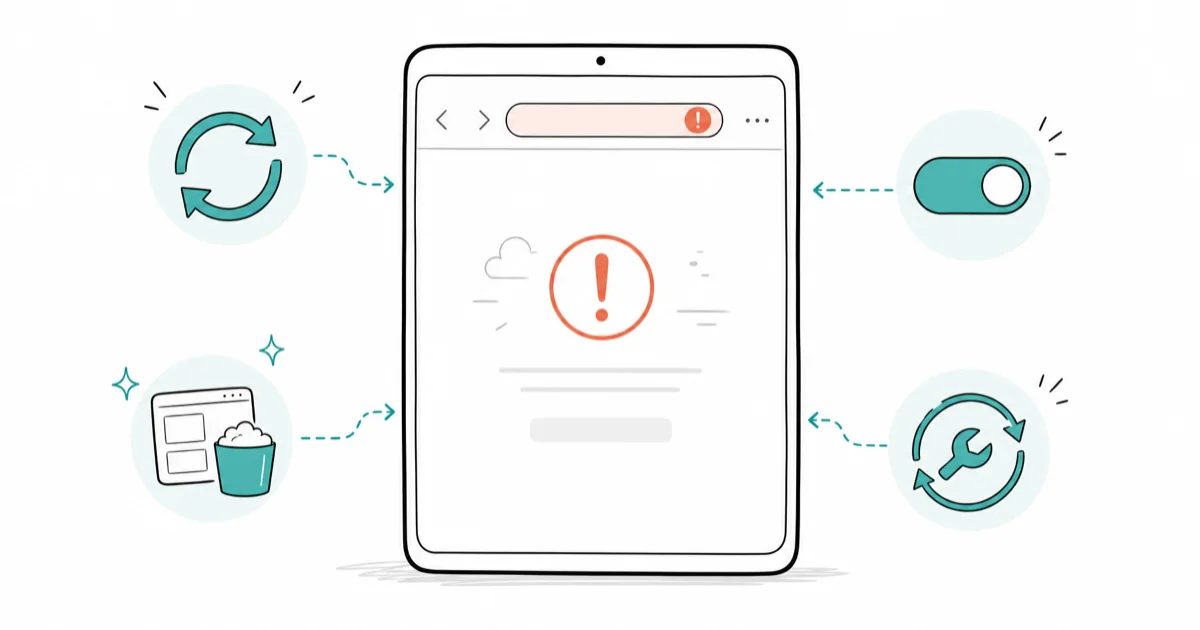
Quick AnswerVerify the URL spelling, clear Safari cache in Settings > Safari > Clear History and Website Data, and restart your iPhone. Most cases resolve with these three steps.
Safari’s “address is invalid” error blocks one specific page or every page you try. The root cause sits in one of five places: the URL, your Wi-Fi, Safari’s local cache, an active extension, or a system-level network setting. The fixes below are ranked by speed for iPhone and iPad, so you start with the cheapest fix first.
- Typos in the URL are the most common cause, followed by stale Safari cache and unstable Wi-Fi. Verify the address first, then clear cache.
- Clearing Safari’s cache in
Settings>Safari>Clear History and Website Datatakes under a minute and resolves most cache-driven failures. - A force restart resolves transient Safari glitches that linger after a normal lock and unlock, especially when one tab errors but others work.
- Disabling Safari extensions one at a time identifies the single extension blocking a specific site, instead of guessing which one is at fault.
- Reset Network Settings is the last step before contacting Apple Support because it forgets every saved Wi-Fi password on the device.
#Why Does Safari Show This Error?
Safari raises this error when it can’t resolve or reach the URL it was handed. According to Apple, 5 distinct conditions can trigger the message, and the wording on the screen does not tell you which one applies. The full troubleshooting page lives at Apple’s Safari support article for iPhone and iPad. The same error message hides several distinct root causes:
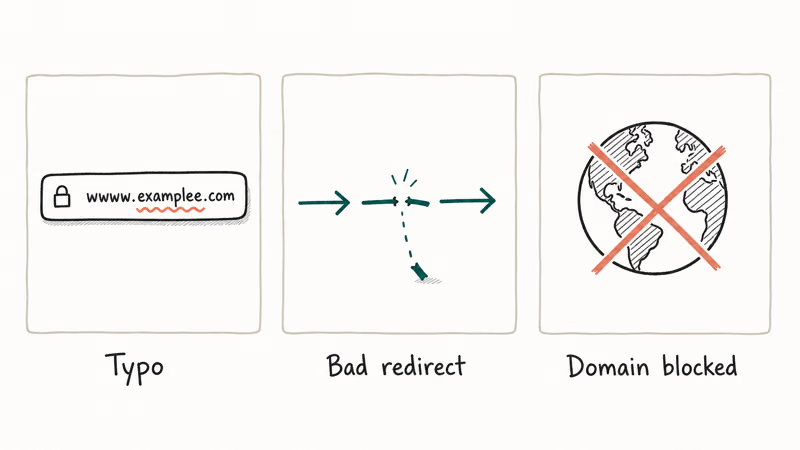
- The URL has a typo, an extra space, or wrong capitalization for a case-sensitive path
- The Wi-Fi or cellular link is dropping packets even though the status bar shows a connection
- Safari’s cached DNS or Service Worker entry for the site is corrupt
- The site’s own DNS or origin server is timing out
- A Safari extension or content blocker is rewriting the request in a way Safari rejects
Same screen, five different fixes.
The fastest path is to rule out the cheapest causes first: the address bar and the cache before anything that touches a setting.
#Method 1: Verify the URL Spelling
The fastest fix is to re-read the address bar character by character.
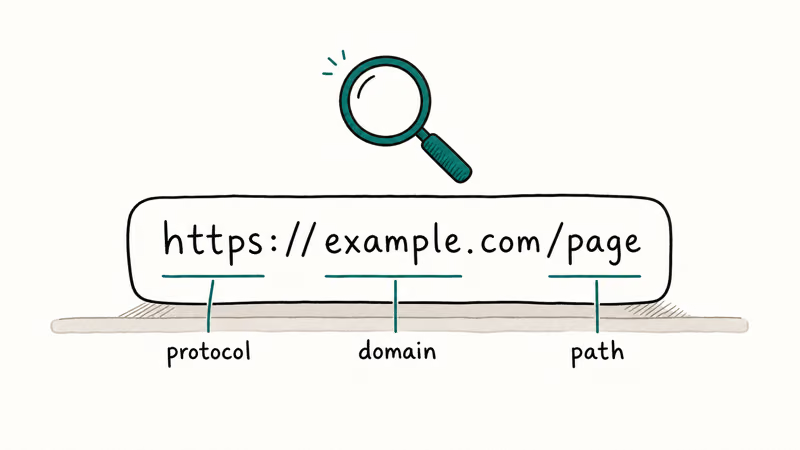
- Tap the address bar to expand the full URL.
- Look for extra spaces before or after the domain, missing periods, and the wrong country-code TLD (
.coversus.com). - Retype the address in a new tab instead of editing the broken one. Autocorrect sometimes “fixes” a domain into a real word.
- If you pasted the URL from Mail or Messages, paste into the Notes app first to see hidden whitespace.
A URL copied from a marketing email can carry a zero-width space pasted between the protocol and the domain. The Notes app exposes it, and removing the stray character clears the error on the next tab open.
#Is Your Internet Connection Stable?
A weak link can return the same invalid-address message even when the URL is correct, because Safari times out on DNS before it shows the connection icon. Run this short check before going further:
- Open
Settings>Wi-Fiand confirm a network is connected, then tap the network name and tap Forget This Network and rejoin it. - Load a different site (try a major one like apple.com) instead of refreshing the broken tab.
- If Wi-Fi fails, swipe down Control Center, turn Wi-Fi off, and load the page over cellular. If cellular data is not working on your iPhone, that’s the underlying problem and Safari is just the messenger.
- Restart the Wi-Fi router (unplug 30 seconds, plug back in) if every site fails on Wi-Fi but cellular works.
If the connection drops only for one specific site, the issue is upstream and not on your device. If every site fails on your home Wi-Fi but works fine on cellular, the problem is the router or the ISP, not Safari. Our deeper guide on how to fix iPhone Wi-Fi not working walks through the case where the Wi-Fi indicator looks fine but pages refuse to load.
If Safari instead says it can’t connect to the server rather than that the address is invalid, use our Safari can’t-connect-to-server fixes.
#Method 3: Clear Safari’s Cache and Browsing Data
Stale cache is the second most common cause behind typos. Apple states that the 5 steps below clear all cached site data on iPhone, and you can find the full guide on Apple’s clear-history-and-cookies page:
- Open Settings.
- Scroll to and tap Safari.
- Tap Clear History and Website Data.
- Leave all data sources checked in the popup.
- Tap Clear History and Data to confirm.
After clearing, Safari rebuilds its DNS cache, cookies, and Service Worker entries from scratch the next time you load each site. The first load on each site after a clear will be slightly slower because every asset is fresh. Bookmarks, saved passwords, and Reader-mode preferences are not affected. A site that had errored for days will often load immediately right after a cache clear.
#Method 4: Force Restart Your iPhone or iPad
Different from a normal power off.
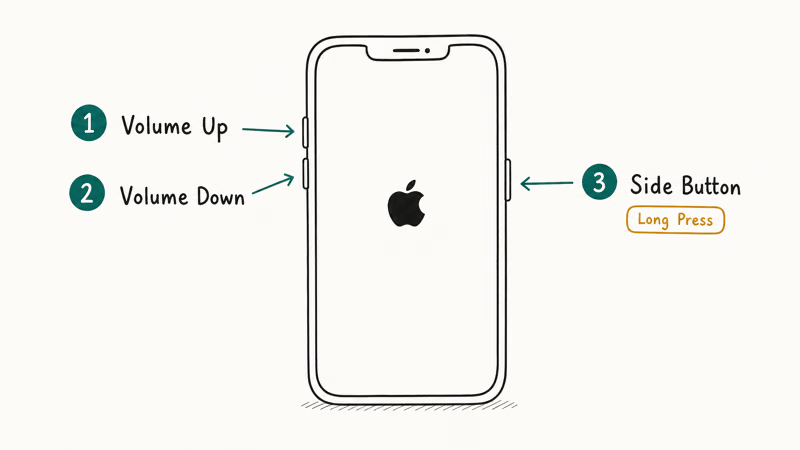
A force restart clears RAM and kills stuck system processes that a soft restart leaves running. The button sequence depends on your model.
For iPhone 8 and later (and iPad models with no Home button): press and quickly release Volume Up, press and quickly release Volume Down, then press and hold the Side button until the Apple logo appears.
For iPhone 7 and 7 Plus: press and hold the Side button and Volume Down together until the Apple logo appears.
For iPhone 6s, SE (1st gen), and earlier: press and hold the Home button and the Top (or Side) button together until the Apple logo appears.
When Method 3 hasn’t fixed a stuck banking-app webview, a force restart is the next step worth trying, because it clears system processes a cache wipe leaves running. The whole sequence usually clears the error within about 90 seconds total, and no app data is lost since a force restart only resets memory, never storage.
#Method 5: Update iOS and Safari
Safari ships as part of iOS, so a Safari fix lives inside the iOS update. Apple’s security updates index lists every iOS release back to iOS 12, and each entry calls out the WebKit and Safari CVEs patched in that release; bug fixes for invalid-address parsing and DNS handling appear there regularly.
- Open
Settings>General>Software Update. - Tap Download and Install if an update is offered.
- Plug in to power and stay on Wi-Fi while the update runs.
- Let the device restart on its own.
Already on the latest iOS? Skip ahead.
#Method 6: Turn Off Safari Extensions
Safari content blockers and extensions sit between the URL and the network and can block legitimate requests. According to Apple’s Safari extensions developer documentation, an extension can declare access to all websites or to a specific list of hosts and can intercept and modify network requests, which is exactly the scope where a misbehaving extension can produce an invalid-address error on one site only.
- Go to
Settings>Safari>Extensions. - Tap the first extension in the list and toggle it Off.
- Reload the broken page in Safari.
- If the page now loads, that extension was the problem. Leave it off, or update or delete it.
- If the page still fails, toggle that extension back On and repeat with the next one.
The most common offenders are aggressive ad blockers and privacy extensions that strip query parameters needed for routing. Bookmark managers and password managers rarely cause this error. Before installing any new extension, check its privacy policy so you know what site data it can read.
#Method 7: Enable Private Browsing and Test
Private mode bypasses cookies, cache, and most site data, which is a fast way to confirm whether your stored data is the cause.
- In Safari, tap the Tabs icon in the bottom right (the two overlapping squares).
- Tap Private at the bottom left.
- Tap Done.
- Open a new tab and enter the URL.
Loads in Private but not in regular?
Then the cache or a cookie for that site is corrupt and Method 3 is the right next step. Private browsing has its own privacy caveats; see our breakdown of whether private browsing can be traced on iPhone for what it actually hides and what it doesn’t.
#Method 8: Check VPN and Security Software
VPN profiles and third-party security apps reroute Safari traffic through tunnels and proxies, and a stalled tunnel produces this exact error.
- Go to
Settings>General>VPN & Device Management. - If a VPN appears as Connected, tap it and toggle Status to off.
- Reload the broken page.
- Open any installed security app (such as McAfee or NordVPN) and disable its web protection or always-on toggle.
- If the page now loads, the VPN or security app is the cause. Switch servers or remove the profile.
On a hotel Wi-Fi, a personal VPN often gets silently blocked by the captive portal. Turning the VPN off lets Safari complete the captive-portal handshake before reconnecting, and re-enabling the VPN after the handshake works normally on the same network.
#Method 9: Reset Network Settings (Last Resort)
Reset Network Settings clears every saved Wi-Fi password, every paired Bluetooth device, and every cellular APN setting on the phone. Use it only after Methods 1 through 8 have failed.
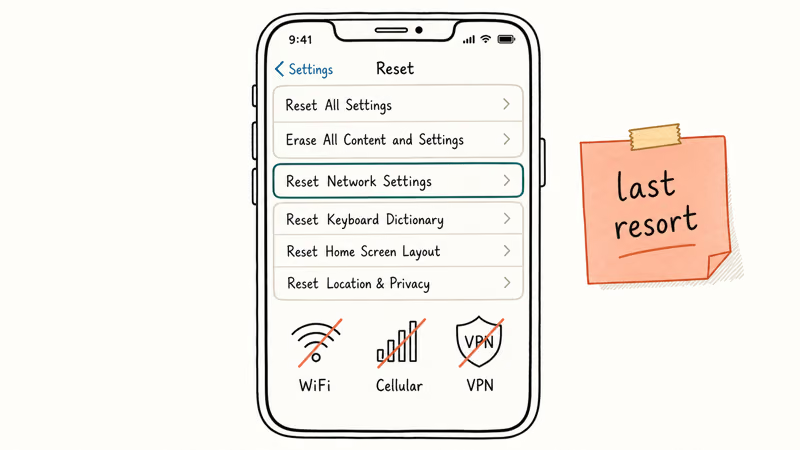
Open Settings>General>Transferor Reset iPhone.- Tap Reset.
- Tap Reset Network Settings.
- Enter your passcode.
- Confirm Reset Network Settings.
The phone restarts and joins no networks until you re-enter the passwords. If you use iCloud Keychain, Wi-Fi passwords sync back automatically once you rejoin a known network with another nearby Apple device. This step clears a persistent invalid-address error that has survived a force restart and a cache clear, and saved Wi-Fi networks come back within a minute of unlocking once iCloud Keychain finishes syncing in the background.
#Preventing Future “Invalid Address” Errors
After running through this nine-step list a few times, the same fixes start to look like prevention.
- Bookmark the sites you visit daily so you stop typing them.
- Turn on AutoFill in
Settings>Passwordsso the saved entry beats your typing speed. - Run iOS updates the week they ship instead of deferring; Safari and WebKit fixes ride along.
- Clear Safari’s cache once a month from
Settings>Safari, even when nothing is broken. - If errors return on a single network, run a speed test on that network before blaming Safari.
#Bottom Line
Run Method 1 (URL check) and Method 3 (clear cache) first because they take under two minutes combined and resolve the majority of these errors. If they fail, Method 4 (force restart) and Method 5 (update iOS) are the next cheapest steps. Reserve Method 9 (Reset Network Settings) for the case where every site fails on every network and the previous eight methods haven’t moved the needle.
If the broken page is HTTPS-specific or the error mentions a secure connection, you’re looking at a different failure mode. Our guide on how to fix Safari can’t establish a secure connection to the server covers TLS and certificate cases the address-invalid message hides.
#Frequently Asked Questions
Why does Safari show this error on some websites but not others?
A site-specific failure points to that site, not your device. Test the same URL on a different network, and try a known-good site like apple.com from your phone. If only one site fails everywhere, it’s a server or DNS issue on the site’s side, and you can wait it out. Short cloud-provider outages can produce the same error for every site behind a single CDN.
Can browser extensions really cause this error?
Yes. Content blockers and tracker filters can strip query parameters that the destination site uses for routing, which makes the request look invalid to Safari. If the error started right after you installed or updated an extension, that extension is the first thing to disable.
How long does clearing Safari’s cache take?
About 30 to 60 seconds in total. The Settings popup confirms in a second or two; the rebuild happens silently as you reload sites.
Does resetting network settings delete my photos or other data?
No. Reset Network Settings touches Wi-Fi passwords, Bluetooth pairings, VPN profiles, and cellular APNs only. Photos, apps, messages, iCloud data, and Apple ID stay where they’re already stored.
What if none of these methods work?
Contact Apple Support with the exact wording of the error and your iOS version. If every site on every network is failing on a fully updated phone, the failure is below the Safari layer. Apple Support will walk you through a deeper restore from there.
Can I fix this error without restarting my device?
Try Methods 1, 3, 6, 7, and 8 first. They skip the restart entirely. If the page still fails, force restart Method 4 next.
How do I know if a website is down versus a device issue?
Open the same URL on a second device on the same Wi-Fi (a laptop is ideal). If the laptop loads it, the issue is on your iPhone or iPad. If the laptop also fails, the website is down or unreachable from your network.
For broader Safari problems beyond the invalid-address message, see our guide on fixing Safari not working on iPhone.
Apple Siri Settlement: Who Qualifies and How to Claim
Apple's $250 million Siri settlement covers iPhone 15 Pro and iPhone 16 models bought June 2024 to March 2025. See who qualifies and how claims work.
iOS 26.6.1 Security Update: What Apple Fixed and Who Gets It
Apple released iOS 26.6.1 on August 17 with 29 security fixes, including an IPSec interception bug. See what it patches, who gets it, and how to update.
iPhone Adaptive Power: How It Works and When to Use It
Learn how iPhone Adaptive Power works, which models support it, what it changes, and when Low Power Mode is still the better battery-saving choice.
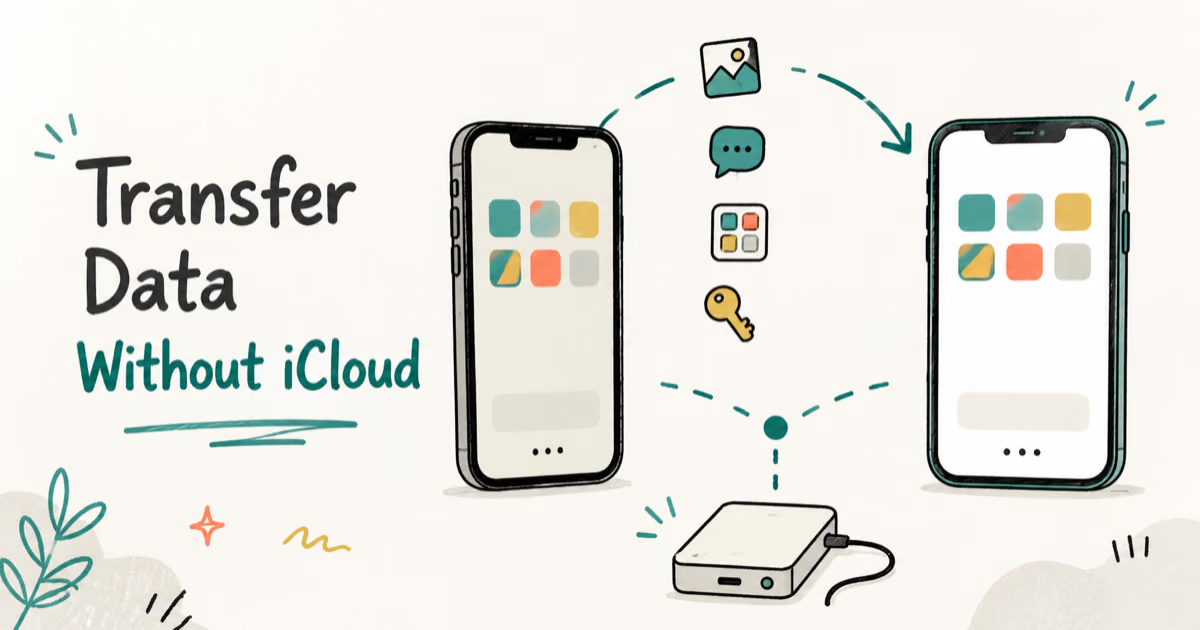
How to Transfer Data to a New iPhone Without iCloud
Move everything to your new iPhone without iCloud: Quick Start device-to-device transfer, wired migration, and encrypted Finder or iTunes backups.