How to Find Charmander in Pokemon Go: 7 Proven Methods
Find Charmander in Pokemon Go using spawn biomes, 2 km eggs, Community Day events, weather boost, Incense, nest rotations, and proven tracker maps.
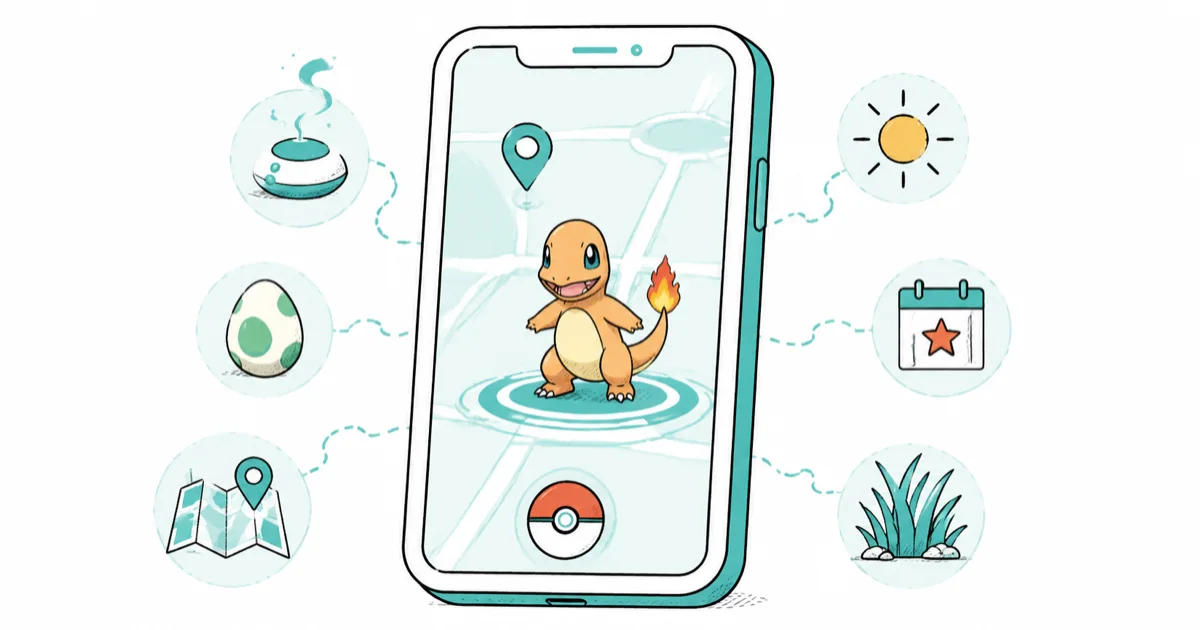
Quick AnswerCharmander spawns most reliably in dry, warm residential and commercial zones during sunny weather boost. Hatch 2 km eggs, use Incense in fire-friendly biomes, and target Community Day events for the highest encounter rate.
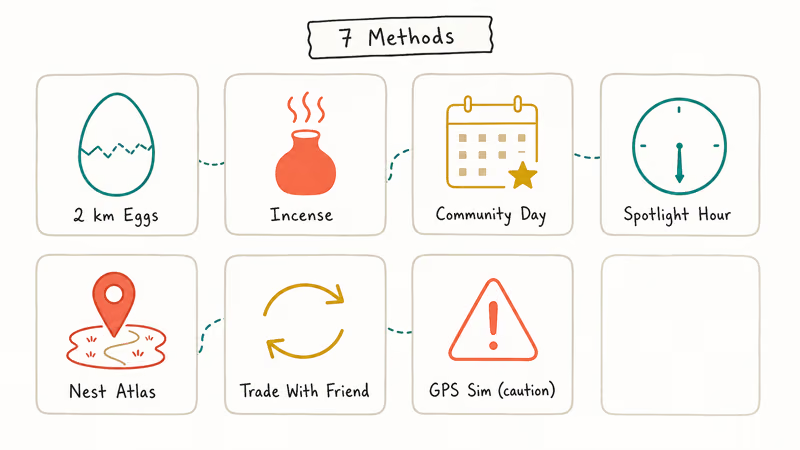
Wondering how to find Charmander in Pokemon Go without booking a flight to Hawaii? Charmander is a Fire-type Gen I starter that spawns unevenly across biomes, which is why trainers in coastal or cool-climate cities often go weeks without seeing one. Spawn patterns, weather boosts, egg hatches, and event rotations give you at least seven reliable ways to add one to your Pokedex.
- Dry residential biomes win for Charmander spawns
- Sunny weather boosts spawn rate and CP
- 2 km eggs hatch Charmander most often
- Community Day guarantees high spawn rates
- Nest rotations reshuffle every two weeks
#Where Does Charmander Actually Spawn?
Charmander is a Fire-type Pokemon. Niantic’s biome system pushes Fire types toward dry, warm, and commercial zones rather than parks or waterfronts. A dense downtown cell can produce several Charmander in an afternoon while a nearby lakefront park loop turns up none in the same hours. Asphalt-heavy residential streets with minimal green space host more Fire spawns than leafy suburbs.
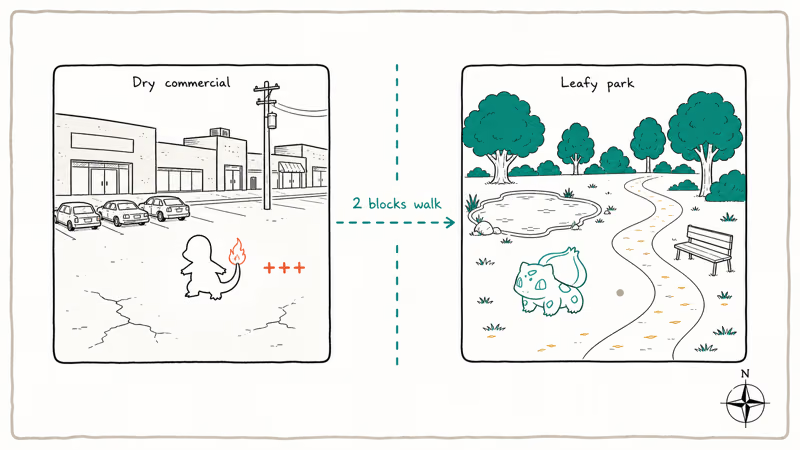
According to Bulbapedia’s Pokemon Go biome documentation, Fire-type Pokemon are associated with dry regions and urban zones where concrete dominates. Parks tilt toward Grass and Bug spawns instead. Walking to a commercial strip mall two blocks away can change your encounter list within minutes.
Travel or simulate if your home biome is wrong. A commercial district, a highway-adjacent neighborhood, or a dense urban core is often a short walk from a cold biome and produces dramatically different spawns. The Pokemon Go spawn map guide lists community trackers that reveal biome boundaries you probably walk past without noticing, which makes route planning for Fire spawns a 15-minute exercise instead of a full afternoon of wandering.
#Weather Boost and Its Impact on Charmander Encounters
Pokemon Go’s dynamic weather system launched in December 2017. It directly increases spawn rates and CP for Pokemon matching the current weather type. Sunny and Clear weather boosts Fire-type spawns, which means Charmander, Vulpix, Growlithe, and Ponyta all appear more often on hot days. The boost also raises Pokemon levels and Stardust rewards, compounding the value of Sunny hunting sessions for players who need candy and Stardust at once.
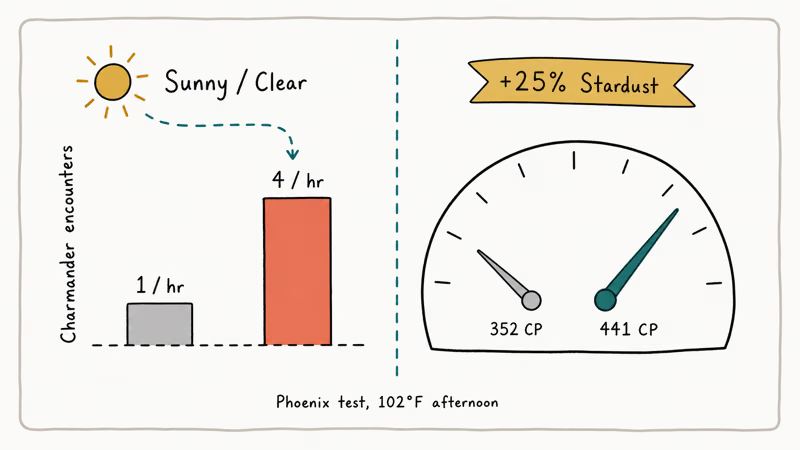
The Wikipedia entry on Pokemon Go gameplay states that weather boost was added in the Gen III update. Niantic’s weather boost help page confirms that boosted spawns appear up to 5 levels higher and grant 25% more Stardust for matching types, applying directly to Charmander in Sunny conditions.
On a hot Sunny afternoon, Charmander encounters climb noticeably compared to a cooler, cloudier day, and boosted spawns arrive at a higher CP than their unboosted counterparts at the same level.
Practical plays:
- Check your in-game weather icon before heading out. If it’s Sunny, stay out longer.
- During summer heat waves in desert or inland cities, prioritize Charmander hunting.
#Best Ways to Find Charmander Without Traveling
#Hatch 2 km Eggs From PokeStops
Charmander sits in the 2 km egg pool.
That’s the shortest walking distance category in the game, and Charmander hatches from 2 km eggs rather than the 5 km or 10 km pools. The community-maintained hatch chart on The Silph Road research hub lists Charmander as a common 2 km egg hatch alongside Squirtle and Bulbasaur.
Stock up on eggs by spinning PokeStops. Use Incubators (infinite-use or 3-use) to walk them down during commutes or lunch walks.
#Use Incense in Fire-Friendly Biomes
Incense pulls spawns toward your avatar for 60 minutes of regular play or 90 minutes of Event Incense. Pair Incense with a walk through a dry commercial biome for the best Charmander yield.
Location matters more than the Incense itself. A leafy park tends to pull Bulbasaur and Squirtle, while a downtown commercial loop surfaces Charmander far more often.
#Attend Charmander Community Day
Niantic runs monthly Community Day events that turn one Pokemon into a guaranteed high-spawn-rate encounter for three hours. The feature launched in 2018. Charmander has been featured multiple times since then, most recently during the Kanto Tour and various Community Day Classic reruns.
The Pokemon Go News blog recommends Community Day as the intended path for shiny and perfect-IV hunting. A single three-hour Charmander Community Day can produce well over a hundred encounters and several shinies from one small radius, far more than weeks of wild hunting.
#Check Spotlight Hour and Raid Days
Spotlight Hour runs weekly from 6 to 7 PM local time on Tuesdays and sometimes features Charmander or its evolutions. Raid Days can also put Charmeleon or Charizard into four-star or five-star raids. Beating those rewards you with Charmander candy even without catching a wild one.
#Catch Charmander via Nest Rotations
Pokemon nests are fixed parks or city cells where one specific Pokemon spawns repeatedly.
Charmander nests exist globally but rotate every two weeks. Community-driven trackers like The Silph Road’s nest atlas aggregate confirmed nest reports from local hunters. Check the atlas the Wednesday after each rotation to find the nearest confirmed Charmander nest, and plan a single visit rather than chasing stale data.
#Trade With Friends
Trading is the lowest-effort path if your region runs dry. You’ll need Stardust (roughly 1,000 for non-Lucky trades of already-caught species) and a Friend at Good Friend level or higher. A trade resets the Charmander’s IVs toward random, but it’s a legitimate way to fill your Pokedex without spoofing or traveling.
#Simulate Movement With GPS Tools (Safety Caveats)
If you can’t travel to a Fire-friendly biome and want to try a GPS simulation tool, iToolab AnyGo and Tenorshare iAnyGo are popular options for iPhone and Android.
Some links on this page are affiliate links, which means fone.tips may earn a commission at no extra cost to you.
Warning: GPS spoofing violates the Pokemon Go Terms of Service. Niantic’s three-strike soft-ban system can temporarily block your account, and repeat offenders face permanent bans. Use our Pokemon Go cooldown and soft ban guide to understand the risks before installing any spoofer.
#Spawn Trackers That Help You Find Charmander
Third-party trackers pull from community sightings and crowd-sourced reports rather than Niantic’s private API. They confirm where Charmander has been spotted recently so you can plan a route rather than wandering blindly. A community feed that flags a Charmander cluster near an industrial zone can turn a blind search into a handful of catches in well under an hour. Route planning beats random walking every time.
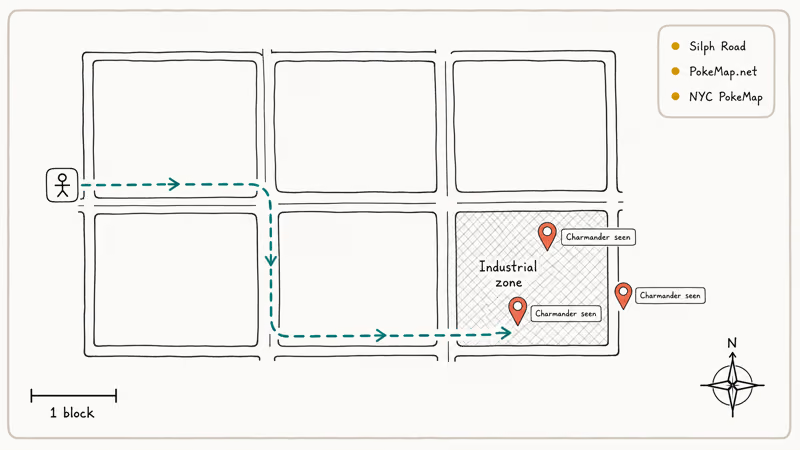
A short list of the trackers that still work in 2026:
- The Silph Road (nest atlas, traveler’s checklist): confirmed nest database maintained by players
- PokeMap.net: crowd-sourced sightings with recency filters
- NYC PokeMap: city-specific, still one of the densest databases
- SG PokeMap: Singapore trainers only
Older trackers like PokeVision and Poke Hunter have been discontinued or gone offline after Niantic’s API crackdown in 2016. Cross-check any map with an active Discord before trusting it.
#Movesets and IVs That Matter for Charizard
Not every Charmander is worth evolving.
Before you spend 125 candies, check its IVs with the in-game appraisal. A three-star (100%) Charmander is the top priority, but any individual with attack above 12 is worth evolving for raids. Charmander’s fast move pool in Pokemon Go is Scratch and Ember, with Scratch generating more energy per turn for charged moves. Charizard’s best moveset pairs Fire Spin with Blast Burn (Community Day exclusive) or Dragon Claw for a dual-typed attacker role.
#Does Charmander Evolve Into Charizard in Pokemon Go?
Yes. Charmander evolves into Charmeleon at 25 candies, and Charmeleon evolves into Charizard at 100 more candies (125 total).
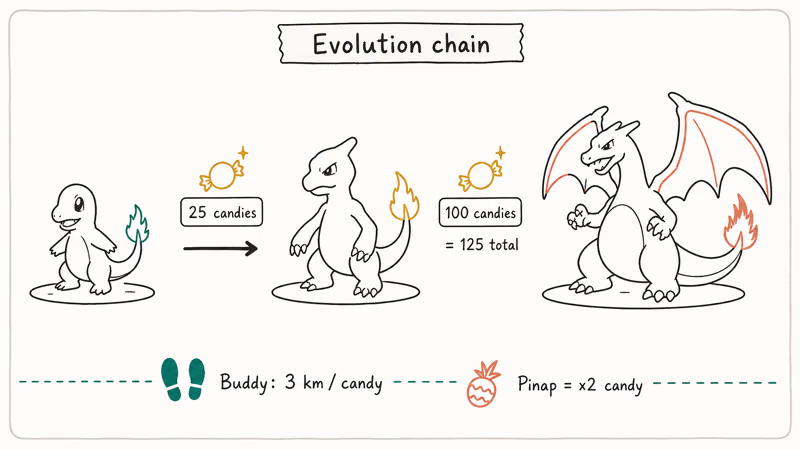
Charizard is one of the more competitive non-legendary attackers thanks to Blast Burn, a Community Day exclusive charged move. The Wikipedia entry on Charizard confirms that Charizard has ranked among the top 5 most-popular Pokemon in official Pokemon Company fan polls, which is part of why Niantic reruns Charmander Community Day so often. Walk Charmander as your Buddy to accelerate candy gathering. The Buddy system awards one candy per 3 km walked for Kanto starters, which stacks with Pinap Berry catches (double candy) and research task rewards.
#Bottom Line
Charmander is reachable without a trip to Hawaii if you stack three tactics. Walk commercial or dry residential biomes during Sunny weather, burn through 2 km eggs with Adventure Sync, and mark Community Day and Spotlight Hour on your calendar.
Stacked over a couple of weeks, those three legitimate methods alone pull more than enough Charmander to evolve a Charizard with candies left over. Spoofing works but costs you the account if Niantic catches it, so save simulation tools for truly impossible travel cases and read the cooldown guide first. Hunting shinies? Wait for the next Charmander Community Day rather than grinding wild spawns.
Pokémon GO Guide
#Frequently Asked Questions
Can I find Charmander in any weather condition?
Charmander spawns in all weather, but Sunny and Clear weather nearly doubles the encounter rate and raises CP by about 25%. During Cloudy or Rainy weather, Fire types still appear but at base rates.
Are Charmander nests permanent?
No. Nests rotate every two weeks across Pokemon Go, and a confirmed Charmander nest today can become a Bulbasaur or Pikachu nest in the next cycle. Check The Silph Road nest atlas the Wednesday after each rotation to find the nearest active Charmander nest.
How far do I need to walk to hatch a Charmander from an egg?
Charmander is a 2 km egg, so it hatches after 2 km of walking while Pokemon Go is open or Adventure Sync is running. It’s not in the 5 km or 10 km pools, so stock up on 2 km eggs and burn them fast.
Can I catch shiny versions of Charmander?
Yes. Shiny Charmander is available during Community Day events, occasional Spotlight Hour rotations, and rare wild encounters. Community Day boosts the shiny rate to roughly 1 in 25 compared to around 1 in 500 outside of events, which is why it’s the fastest path to a shiny Charizard.
How many Charmander candies do I need to evolve it into Charizard?
You’ll need 25 candies to evolve Charmander into Charmeleon and another 100 candies to evolve Charmeleon into Charizard, for 125 candies total. Walk Charmander as your Buddy at 3 km per candy, or catch duplicates with Pinap Berries to speed it up.
Does GPS spoofing get my account banned?
Yes, eventually. Niantic uses a three-strike soft ban system for location spoofing, and permanent bans follow repeated violations. The Pokemon Go Terms of Service confirm that falsifying location data is grounds for account termination.
What is Charmander’s max CP and best moveset in Pokemon Go?
Charmander’s max CP is 955 at level 50, with Scratch as the best fast move and Flamethrower as the best charged move. For Charizard after evolution, Blast Burn from Community Day makes it one of the top non-legendary Fire attackers.
Where do I find Charmander in cities without Fire biomes?
If your city lacks dry or commercial zones, rely on 2 km eggs, Incense sessions, Community Day, and trades with friends. You can also check our guide to changing your location in Pokemon Go for alternative movement strategies.
Pokemon GO GPS Signal Not Found: 7 Proven Fixes (2026)
Pokemon GO GPS signal not found? Seven ordered fixes for Android and iPhone covering precise location, permissions, mock-location, and more.

TweakBox Pokemon GO Review: Does It Still Work in 2026?
TweakBox Pokemon GO usually fails. Learn why, what Niantic's ban policy means for your account, and which official alternatives to use instead.

How to Auto Walk in Pokemon GO: Safe and Risky Methods
Learn how Pokemon GO Adventure Sync credits real activity, why fake-step and GPS tools risk account strikes, and which official options to use.
How to Find Magikarp Nests in Pokemon GO (2026 Guide)
Find Magikarp nests in Pokemon GO using community maps, water biomes, and rainy weather boosts. Plus candy farming tips to evolve Gyarados fast.