Pinfinder Review: Recover Old Screen Time Passcodes
Pinfinder recovers some Screen Time or Restrictions passcodes from older iOS backups. Learn its supported versions, archived status, and firm limits.
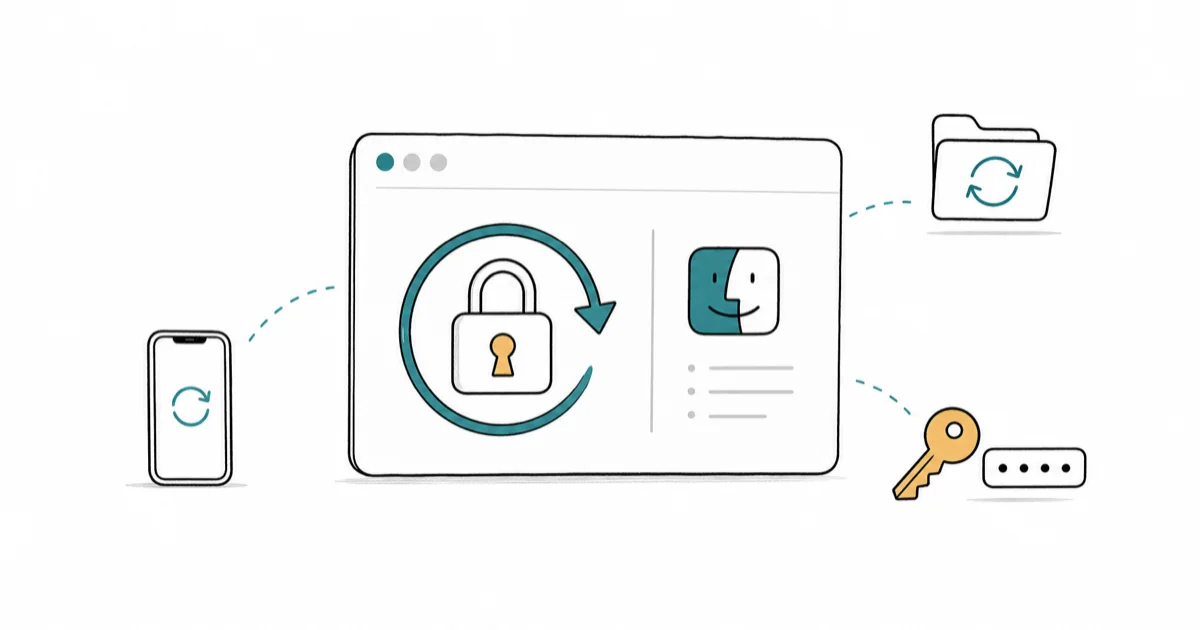
Quick AnswerPinfinder is an archived tool for recovering a Screen Time or Restrictions passcode from supported iOS 8–12 backups. It cannot unlock an iPhone or recover an encrypted-backup password.
Pinfinder reads an older iPhone or iPad backup and attempts to recover its Restrictions or Screen Time passcode. It isn’t an iPhone unlocker or a password-recovery tool for encrypted Finder or iTunes backups.
The project is archived, so use Apple’s supported Screen Time reset first.
- The official Pinfinder repository says it supports iOS 8 through 12.4.4 and doesn’t support iOS 13 or later.
- Pinfinder recovers a Restrictions or Screen Time passcode; it doesn’t recover the password that encrypts a Finder or iTunes backup.
- For iOS 12, the backup must be encrypted and you must already know its encryption password so Pinfinder can read it.
- The GitHub repository was archived in 2024, and its latest release is version 1.7.1 from 2018.
- Apple’s current Screen Time passcode-reset flow is the first choice for your own device or a child account you manage through Family Sharing.
#What Does Pinfinder Actually Recover?
According to the official Pinfinder GitHub repository, the tool finds iOS Screen Time and Restrictions passcodes. Its README sets the supported range at iOS 8 through 12.4.4, says iOS 13 and later are unsupported, and explicitly says the program doesn’t unlock a device.
Pinfinder reads a local iTunes backup and reports the Restrictions or Screen Time code it finds. On iOS 12, the relevant data is available only in an encrypted backup. That doesn’t mean Pinfinder can break the backup encryption: you must provide the existing backup password so the tool can open the backup.
According to the project’s version 1.6.0 release notes, encrypted iTunes backups can be read when the user knows the password. The tool doesn’t discover or crack that password.
#What Can’t Pinfinder Do?
Pinfinder can’t:
- unlock an iPhone or bypass its screen passcode;
- remove Activation Lock or an Apple Account from a device;
- recover a forgotten Finder or iTunes backup-encryption password;
- support iOS 13 or any later iOS release;
- reset a current Screen Time passcode through Apple’s account-recovery system; or
- make an unreadable or corrupted backup usable again.
Claims that it brute-forces an encrypted-backup password, recovers one in a predictable number of minutes, or uses an Apple Account hash from Info.plist aren’t supported by the project’s documentation. If the problem is the phone’s screen lock instead, use the separate iPhone passcode reset guide.
#Use Apple’s Screen Time Reset First
For a current iPhone or iPad, follow Apple’s supported flow instead of downloading an archived binary. Apple’s forgotten Screen Time passcode guide recommends opening Settings > Screen Time, choosing Change Screen Time Passcode, then using the Apple Account originally used to set up passcode recovery.
For a child account, the family organizer resets the code from the organizer’s device by following Apple’s Family Sharing steps.
If the reset rejects an Apple Account that normally works on the device, check whether a different account was used when Screen Time recovery was configured. Don’t erase the device merely because the first account fails.
For more detail, see our forgot Screen Time passcode guide.
#Pinfinder’s Supported Range and Archived Status
Pinfinder’s GitHub repository is read-only because the owner archived it on November 9, 2024. The latest published release is version 1.7.1, dated December 5, 2018.
An archived project can remain useful for an old backup, but the status changes the risk calculation:
- there are no new compatibility fixes for modern macOS, Windows, or Linux releases;
- the maintainer isn’t shipping support for newer iOS backup formats;
- unresolved issues and old binaries shouldn’t be treated as a current support channel; and
- download instructions from third-party mirrors may not match the official release.
Use the official repository and release page if you decide to proceed. Don’t assume a checksum exists unless the release you download actually publishes one, and don’t substitute a download portal for the maintainer’s archive.
#Before Running Pinfinder
Use Pinfinder only on a device and backup you own or are explicitly authorized to manage. Accessing someone else’s backup without consent may be illegal and violate privacy law. A backup can contain messages, credentials, health information, photos, and other private data, so authorization matters more than whether the tool itself is free or open source.
Then verify these prerequisites:
- The source device ran a version from iOS 8 through 12.4.4.
- The backup is from that device and is readable in iTunes or Finder.
- If it’s an iOS 12 backup, it’s encrypted and you know the backup password.
- You need the Restrictions or Screen Time passcode, not the device passcode or backup-encryption password.
- You accept that an archived command-line tool may not run on a current computer without compatibility work.
Backup folders are normally stored under ~/Library/Application Support/MobileSync/Backup/ on macOS or the Apple MobileSync backup location on Windows. A device name and backup date can help you choose the correct folder, but they don’t grant permission to inspect someone else’s data. If Finder won’t create the local copy, troubleshoot the separate greyed-out backup control first.
#How to Run Pinfinder on a Supported Backup
The repository’s README and release notes are the authority for the exact command supported by each Pinfinder release. The general workflow is:
- Keep an untouched copy of the backup before testing an archived tool.
- Download the appropriate binary from the official Pinfinder release page.
- Open Terminal on macOS or Linux, or Command Prompt on Windows.
- Run the binary according to the README. Pinfinder scans the standard iTunes backup location and reports supported backups it can read.
- If an iOS 12 backup is encrypted, enter the backup password you already know when prompted.
- Record the recovered Restrictions or Screen Time code and close the program.
There is no useful universal completion-time estimate. The tool is reading backup data, not running the backup-password brute-force process described by older versions of this article. If it reports an unsupported iOS version, can’t decrypt the backup with the password you supplied, or fails on a current operating system, stop rather than buying a product that promises the same unsupported capability.
#A Forgotten Backup Password Is a Different Problem
According to Apple’s encrypted-backup guidance, an encrypted backup can’t be restored without its password. Apple can’t recover the password for you.
On iOS 11 or later, Reset All Settings can reset the device’s backup-password setting so you can create a new encrypted backup with a new password. It doesn’t decrypt or provide access to old backups. On iOS 10 or earlier, Apple says that reset option isn’t available for the backup password.
Before resetting settings, understand the tradeoff: the old backup remains locked, and you still need a currently usable device to create a new one. Apple’s encrypted-backup overview also explains that encrypted local backups can contain data that unencrypted backups omit, including saved passwords, Wi-Fi settings, Health data, and call history.
Pinfinder can’t change those rules or unlock the old archive. Our iCloud backup download guide covers separately retrievable data.
#If Pinfinder Does Not Work
First classify the failure:
- iOS 13 or later: unsupported by the project. Use Apple’s Screen Time recovery flow.
- Wrong backup password: Pinfinder can’t decrypt the backup or recover that password.
- No local backup: create a backup only if you still control and can unlock the device.
- Archived binary won’t run: don’t disable important operating-system protections simply to force an old utility to launch.
- Backup is corrupted: preserve the original and check whether another valid local or iCloud backup exists.
If you already have a valid iCloud backup and must restore a device, review Apple’s iCloud restore instructions before erasing anything. Apple notes that the initial progress time varies and that apps, photos, and other content can continue restoring in the background. An iCloud restore doesn’t unlock an encrypted local backup, and it isn’t guaranteed to contain everything that backup held.
For a restore already in progress, our estimating time remaining guide explains the status indicators without inventing a fixed completion time.
#Bottom Line
Pinfinder is an archived utility for one historical job: recovering a Restrictions or Screen Time passcode from supported iOS 8–12 backups. It doesn’t support iOS 13 or later, doesn’t unlock a device, and doesn’t recover a Finder or iTunes backup-encryption password.
Use Apple’s current Screen Time reset first. If you have an old, supported backup and proper authorization, read the archived project’s README and use the official release. If the obstacle is the backup password itself, follow Apple’s backup guidance and accept that the old encrypted backup remains inaccessible without that password.
#Frequently Asked Questions
Can Pinfinder recover an encrypted-backup password?
No. It can read a supported encrypted iOS 12 backup only when you already know and supply the backup password. It recovers the Screen Time or Restrictions passcode stored inside that backup.
Can Pinfinder unlock an iPhone?
No. The official repository explicitly says it doesn’t unlock devices. It can’t remove a screen passcode, Activation Lock, or an Apple Account.
Does Pinfinder work on iOS 17, iOS 18, or iOS 26?
No. The project’s documented ceiling is iOS 12.4.4, and it says iOS 13 and later are unsupported.
Is Pinfinder still maintained?
No. The GitHub repository was archived in 2024, and the latest release shown there is version 1.7.1 from 2018.
Do I need an encrypted backup?
For iOS 12, yes, according to the project’s README. You must also know the encryption password. Requirements for earlier supported iOS versions differ, so follow the archived README for the backup you have.
Will Reset All Settings reveal my old backup password?
No. On a supported device it lets you create a new encrypted backup with a new password. The old encrypted backup remains inaccessible without its original password.
Is it safe to erase the iPhone and restore from iCloud?
Only after you confirm that a current, usable iCloud backup exists and understand what it contains. Restoration doesn’t recover the password for an old local backup, and background content may take additional time to return.

Is This Bank App Real? Spot a Fake App on Your Home Screen
A bank app can land on your home screen from a web page with no install warning. Learn the checks that tell a real banking app from a phishing web app.
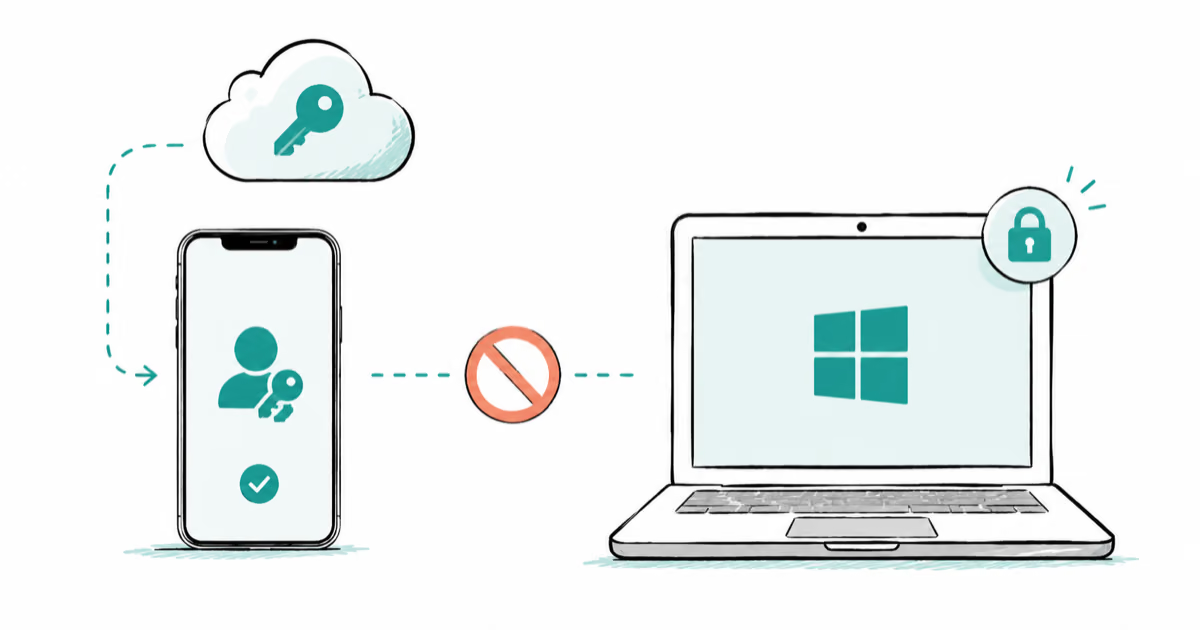
Passkeys Not Syncing Between iPhone and Windows? Read This
Passkeys not syncing between iPhone and Windows is by design, not a bug. Here is why iCloud passkeys skip Windows Hello and the three ways to fix it.

VPN Not Working on Snapdragon X? Why It Fails, How to Fix
Your VPN won't install or connect on a Snapdragon X Copilot Plus PC because Windows on ARM can't emulate the network driver. Here are the fixes that work.

How to Check If a Link Is Safe Before You Click It
Learn how to check if a link is safe with official-first steps: read the real domain, use the app instead, and treat scanners as a second opinion only.