Nvidia Capture Server Proxy: What It Is and How to Manage
Learn what Nvidia Capture Server Proxy is, why it runs with GeForce Experience, and how to disable it without breaking ShadowPlay or NVIDIA App features.
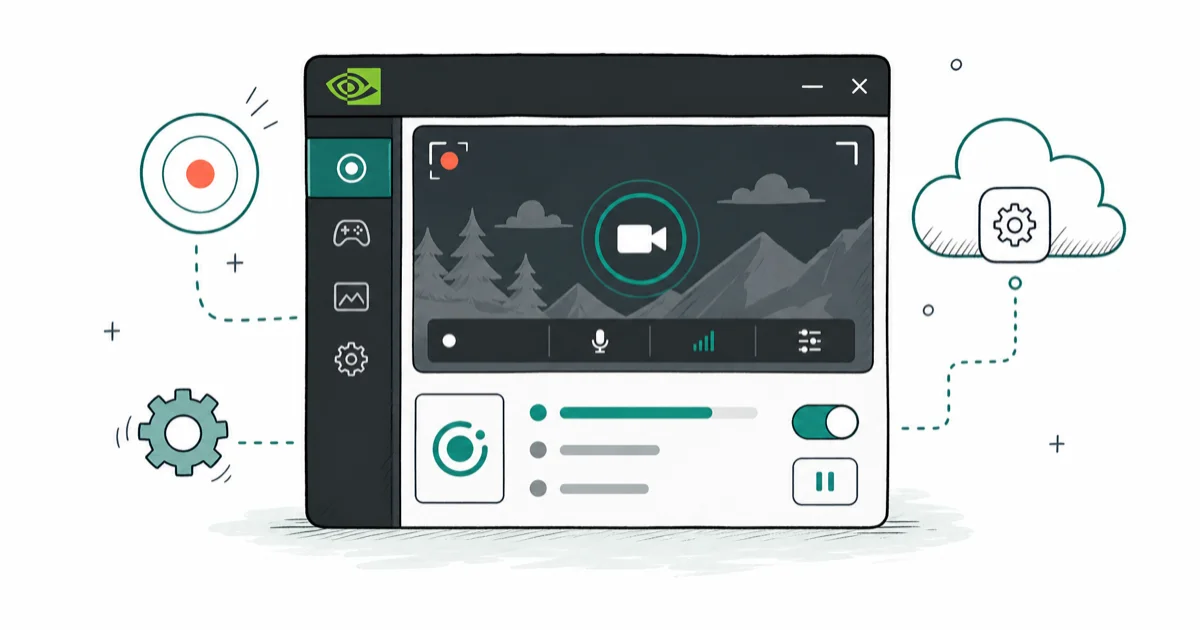
Quick AnswerNvidia Capture Server Proxy is a background process from GeForce Experience or the NVIDIA App that powers ShadowPlay recording and the in-game overlay. To stop it, open the app, go to Settings, and turn off In-Game Overlay.
You opened Task Manager, spotted Nvidia Capture Server Proxy eating CPU, and wondered what it actually does. It belongs to NVIDIA’s GeForce Experience and the newer NVIDIA App, and it powers ShadowPlay recording, Instant Replay, and the in-game overlay. Turning off the overlay is reversible and takes about a minute.
- Nvidia Capture Server Proxy (
nvcsss.exe) is a legitimate component of GeForce Experience and the NVIDIA App, not malware - Disabling the In-Game Overlay in Settings stops the proxy and frees background memory in seconds
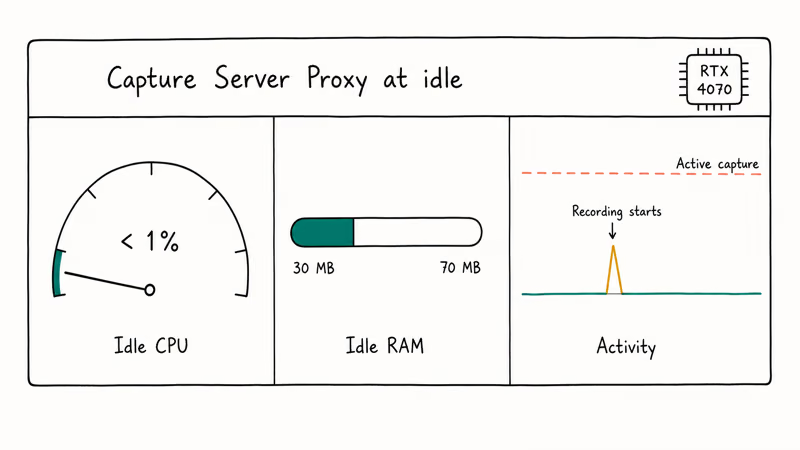
- The process usually spikes during active recording or streaming, while idle usage is typically small
- Uninstalling GeForce Experience or the NVIDIA App removes the proxy entirely if you don’t use ShadowPlay or Instant Replay
- Keeping NVIDIA software updated patches overlay bugs and improves capture stability without slowing your games
#What Nvidia Capture Server Proxy Does
Nvidia Capture Server Proxy is a background helper, signed by NVIDIA Corporation under the file name nvcsss.exe, that ships with GeForce Experience and the NVIDIA App. It runs as a child of nvcontainer.exe and brokers capture-related requests between your game, the GPU’s hardware encoder (NVENC), and any external client such as the overlay or a streaming target.
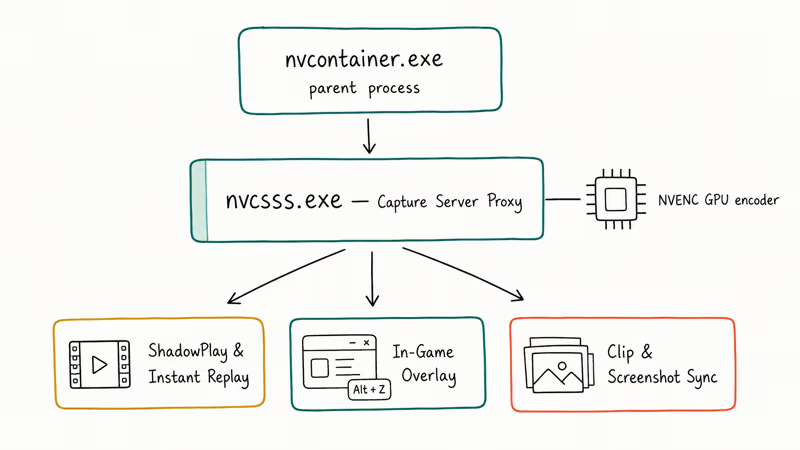
The process plays three roles:
- Powers ShadowPlay and Instant Replay so you can rewind the last 30 seconds (default) of gameplay
- Drives the in-game overlay that toggles with
Alt + Z - Coordinates screenshots and short clips that the NVIDIA App syncs to its gallery
According to NVIDIA’s NVIDIA App overview page, the modern app folds GeForce Experience and the legacy Control Panel into one client. The Capture Server Proxy still ships with the new app because the recording stack underneath didn’t change.
If you also see nvdisplay.container.exe running, that is a separate process for display and topology management, not capture. The two coexist on every recent NVIDIA install.
#Is Nvidia Capture Server Proxy Safe?
Yes. The binary is digitally signed by NVIDIA, lives under C:\Program Files\NVIDIA Corporation\NvContainer\plugins\LocalSystem\, and ships with every modern GeForce Experience build. You can verify the signature yourself by right-clicking the file and checking Properties → Digital Signatures.
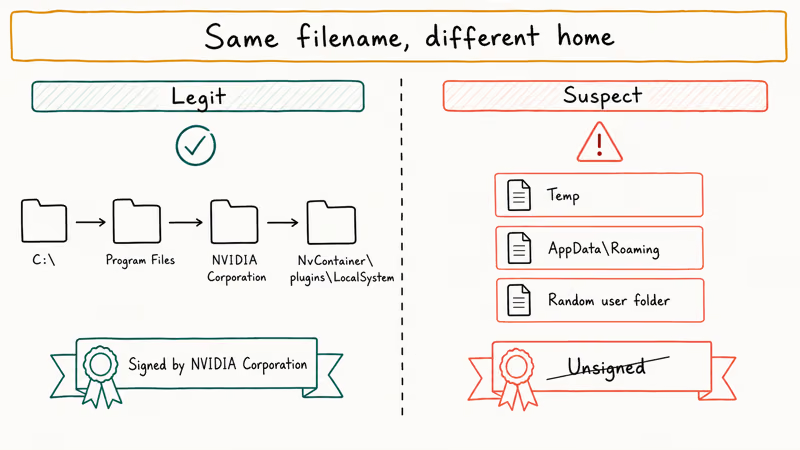
One common malware trick is worth knowing about: any executable can be renamed nvcsss.exe and dropped elsewhere on disk. If Task Manager points to a copy outside the official NvContainer folder, treat it as suspect. Right-click the entry, choose Open file location, and verify the path. Anything in Temp, AppData\Roaming, or a random user folder isn’t the real one.
The legitimate Capture Server Proxy doesn’t touch game memory and doesn’t interact with anti-cheat injection points.
#Performance Impact on Your System
On a modern desktop with at least 16 GB of RAM and a recent CPU, the Capture Server Proxy is usually unobtrusive at idle. The process only wakes up when you open the overlay, start Instant Replay, or hit the screenshot key.
The picture changes on machines with 8 GB of RAM or older quad-core CPUs. Two things drive the cost:
- The recording buffer stays in memory while Instant Replay is enabled, even if you never save a clip
- Frequent NVIDIA App syncs (driver checks, optimal settings) trigger short CPU spikes
According to NVIDIA’s GeForce Experience product page, each major release ships overlay and capture fixes. An outdated install is more likely to misbehave than the proxy itself. If your system is borderline on RAM, this is one of the easier processes to disable.
#How to Disable Nvidia Capture Server Proxy
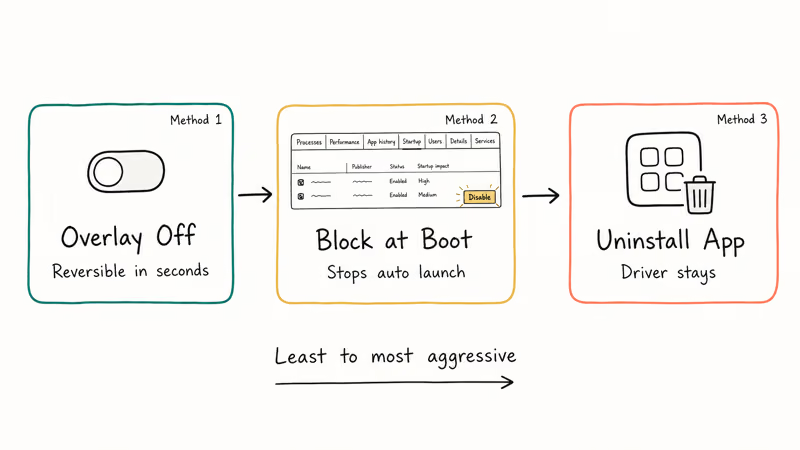
You have three reliable paths, ranked from least to most aggressive. Start with the first one. It’s reversible in seconds.
#Method 1: Turn Off the In-Game Overlay
- Open the NVIDIA App (or GeForce Experience on older systems)
- Click the gear icon to open Settings
- Find the In-Game Overlay toggle on the General tab
- Switch it to Off and close the app
The Capture Server Proxy stops within a few seconds. Verify in Task Manager: the entry under nvcontainer.exe should disappear. This is the cleanest fix because driver updates, game optimization, and the rest of the NVIDIA App keep working.
#Method 2: Disable the Startup Entry
If the proxy still launches at boot:
- Press
Ctrl + Shift + Escto open Task Manager - Switch to the Startup apps tab
- Locate NVIDIA Capture Server Proxy or NVIDIA Share
- Right-click and pick Disable
This blocks the process from starting at login but leaves the rest of the NVIDIA stack intact. Re-enable it from the same screen any time.
#Method 3: Uninstall the App Layer
If you never use ShadowPlay, Instant Replay, or the overlay, uninstall the user-facing app. The driver itself stays put.
- Open Settings → Apps → Installed apps
- Find NVIDIA App or NVIDIA GeForce Experience
- Click the three dots and choose Uninstall
After the next reboot, nvcsss.exe is gone. Your GPU, NVIDIA Control Panel access, and game performance stay the same because they ride on the driver, not the app.
If GeForce Experience refuses to reinstall later with error code 0x0003, restart the NVIDIA Telemetry Container service first. That fix works for many common cases.
#Should You Disable It?
It depends on what you actually use the overlay for:
| Use case | Recommendation |
|---|---|
| Stream to Twitch or YouTube via the overlay | Keep it on |
| Use Instant Replay or ShadowPlay clips | Keep it on |
| Want only the NVIDIA App’s optimization tips | Method 1 (overlay off) |
| Run a low-RAM build and never record | Method 3 (uninstall) |
| Plain desktop, no recording | Method 3 (uninstall) |
If you record clips often, leaving the overlay on saves you the buffer warm-up the first time you press the hotkey each session. If you never record, the overlay buys you nothing on its own.
#Troubleshooting Common Issues
If the proxy is misbehaving instead of just sitting idle, work through these in order.
- Update to the latest driver from NVIDIA’s official drivers page or the NVIDIA App → Drivers tab
- Reinstall the app: Apps → NVIDIA App → Uninstall, then download a fresh installer
- Check for conflicting capture tools. OBS, Razer Cortex, and Xbox Game Bar can all clash with ShadowPlay
- Reset overlay settings inside the app if the overlay opens but capture fails
- Run
sfc /scannowfrom an elevated Command Prompt if you suspect a corrupted system file
Three related fixes apply when the issue is broader than capture itself:
- If NVIDIA Display Settings are not available, reinstall the driver with the Clean install option.
- If NVIDIA Control Panel keeps closing on launch, the same clean-install reset usually clears it.
- If you see the Nvidia Backend process eating CPU, the same overlay toggle silences it.
#Bottom Line
If you record gameplay or stream, leave Nvidia Capture Server Proxy alone. The overhead is small and Instant Replay is too handy to drop for a few hundred MB. If you don’t record, flip the In-Game Overlay off in the NVIDIA App and you’ll get the RAM back without missing anything. Uninstall the app entirely only if you also want to skip the driver-update prompts.
#Frequently Asked Questions
Will disabling Nvidia Capture Server Proxy affect my gaming performance?
For most people the impact is positive. You free up a few hundred MB of RAM and prevent the overlay from intercepting key presses. The only downside is that Instant Replay and ShadowPlay stop working, since both rely on the proxy.
Can I re-enable it after disabling?
Yes. Toggle the In-Game Overlay back on, or re-enable the entry on the Startup apps tab. The proxy restarts within seconds.
Is Nvidia Capture Server Proxy needed for my graphics card to function?
No. Your GPU and games run from the NVIDIA driver, which is a separate install. The Capture Server Proxy only powers GeForce Experience and NVIDIA App features such as ShadowPlay, the overlay, and clip capture. Disabling or removing it has no effect on rendering, refresh rate, or driver updates.
Does it work with all Nvidia graphics cards?
On any GPU that supports GeForce Experience or the NVIDIA App, which covers GTX 600 series and newer. Older Quadro and pre-Kepler cards don’t get the recording stack.
Can it cause games to crash?
Rarely. The usual pattern is an outdated overlay clashing with anti-cheat or another capture tool such as OBS. Turn off the overlay for that game if it crashes.
Is the NVIDIA App the same as GeForce Experience?
The NVIDIA App is the modern replacement for both GeForce Experience and the old Control Panel. NVIDIA announced it as a free, unified client and most existing installs migrated automatically. The Capture Server Proxy ships with the new app under the same file name, so the disable steps in this guide work in either client.
Where is nvcsss.exe located on disk?
The legitimate file lives in C:\Program Files\NVIDIA Corporation\NvContainer\plugins\LocalSystem\. If your Task Manager points to a different path, especially in Temp, AppData, or a random user folder, treat the file as suspicious and run a Windows Defender full scan. Real NVIDIA binaries are signed and stored under Program Files.

Best Laptop for Running LLMs in 2026: Memory Comes First
The best laptop for running LLMs is a memory purchase first. Compare MacBook unified memory against NVIDIA laptop VRAM, and see what each tier really runs.
How to Run a Local LLM on Windows: A 2026 Setup Guide
Run a local LLM on Windows with LM Studio or Ollama. Pick a model that fits your GPU memory, keep every prompt offline, and skip the monthly bill.
Bluetooth Not Working on Snapdragon X? Fixes for 2026
Bluetooth not working on your Snapdragon X Copilot+ PC? Generic audio, mice, and keyboards work, but vendor apps often lack an ARM build. Fixes inside.
Docker Desktop and WSL2 Not Working on Snapdragon X? Fix It
WSL2 runs fine on Snapdragon X, but Docker Desktop ARM is Early Access and throws WSL errors. Use WSL2 plus native ARM64 Ubuntu and Docker Engine.