Best Motivation Apps 2026: 8 Picks for Goals and Habits
Compare 8 best motivation apps for habits, focus, and daily goals on iPhone and Android. See which apps actually work and which to skip in 2026.
Quick AnswerFor most people, Forest and Fabulous are the strongest motivation apps in 2026 because they pair clear goal tracking with consistent daily nudges. If you want recorded affirmations in your own voice, ThinkUp is the stronger choice on both iPhone and Android.
Picking the right motivation app comes down to whether you want focus blocks, habit tracking, daily affirmations, or all three. This guide compares eight popular options on iPhone and Android, narrowing the list to the picks that actually change behavior rather than just look polished. Some are free, some run $40 to $80 per year, and a few feel like polished gimmicks that lose appeal after the first week.
- Forest is a focus timer that grows a virtual tree only if you stay off your phone, and the dead-tree penalty makes it effective at curbing idle scrolling.
- Fabulous walks you through morning, afternoon, and evening rituals with audio coaching, though the deeper content sits behind a paid plan.
- ThinkUp turns daily affirmations into recordings in your own voice, layered over background music you choose.
- Habit trackers like Strides and Way of Life only reveal patterns after several weeks of consistent check-ins, not the first few days.
- No app replaces real behavior change; the picks that stick are the ones you open every single day for the first two weeks.
#How These Apps Were Picked
Each app on this list is judged on three things that matter more than App Store ratings: whether the daily check-in friction stays low, whether the streak feels worth protecting once the novelty wears off, and whether the app actually nudges a behavior change rather than just tracking one. Apps that fail any of those get cut.
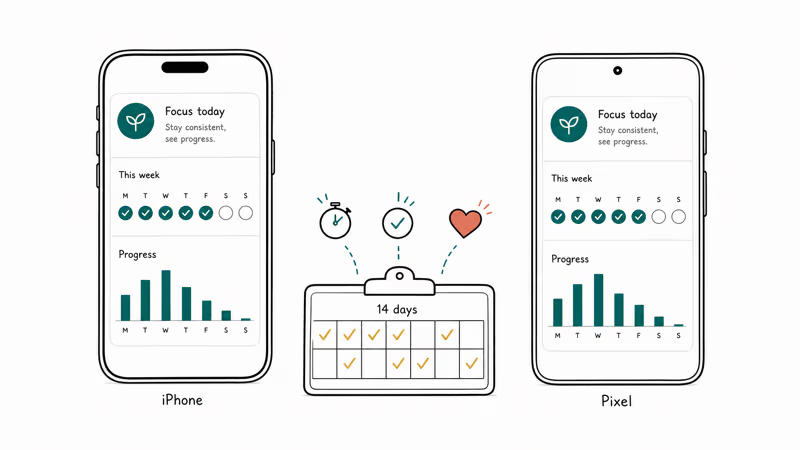
We also leaned on independent research where possible. University College London researchers found that the median time to form a habit is 66 days, with significant variation across people. Their original study is published in the European Journal of Social Psychology, which means the “stick with one app for two weeks” advice in this guide is a starter window, not the full timeline.
#What Does a Good Motivation App Actually Do?
A useful motivation app does one of three jobs well: it helps you start a habit, hold a focus session, or replay an affirming message at the right moment. Apps that try to do all three at once tend to dilute every feature, which is why our top picks each pick a lane and stay in it.
The category overlaps with productivity tools, mindfulness apps, and even fitness coaches. According to Apple’s Screen Time documentation, you can set daily app limits and a Downtime window directly on iPhone, so a paid motivation app needs to offer something the system tools don’t. According to Google’s Digital Wellbeing page, the system reports daily screen time and lets you set per-app timers from Android system settings, which covers the basic distraction-blocking case for free.
Our top picks add a layer the OS can’t: gamification (Forest, Habitica), audio coaching (Fabulous, ThinkUp), or daily streak accountability (Strides, Way of Life). If you only need a focus timer, Android users can stick with Digital Wellbeing alone and iPhone users can use a dedicated screen time app or the built-in tools without paying. Paid motivation apps earn their cost when they add a layer the OS doesn’t.
A separate category covers the best time tracker apps, which log hours rather than build habits. Don’t confuse the two when shopping; a Pomodoro tracker won’t make you start writing if the underlying issue is avoidance.
#Our 8 Best Motivation Apps for 2026
The picks are grouped by what they’re actually good at, not by App Store ratings. Several apps that score 4.7+ in their stores wash out after a week of real use, so the order below reflects sustained daily usefulness, not download counts.
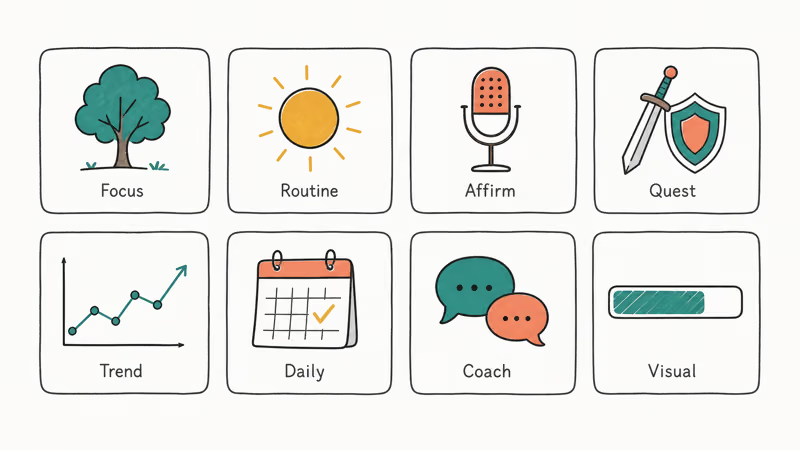
#1. Forest: Best for Focus Timers
Forest is the most stripped-down version of a “stay off your phone” tool. You set a timer between 10 minutes and two hours, a virtual tree starts growing, and if you leave the app to scroll Instagram or check messages, the tree dies. Over enough sessions you grow a virtual forest, which sounds gimmicky until you realize the dead-tree screen is annoying enough to make you put the phone down.
Forest’s App Store listing states that the team partners with the Trees for the Future organization to plant real trees when users earn enough virtual coins, which adds a small extrinsic motivator on top of the focus mechanic.
- iPhone: paid, one-time purchase
- Android: free with ads, premium upgrade available
- Best for: students, anyone who scrolls during focused work
#2. Fabulous: Best for Routine Building
Fabulous walks you through structured morning, afternoon, and evening routines with audio coaching, light meditation, and habit prompts. The free version covers the basics; the paid plan unlocks the deeper coaching tracks. We’ve covered the trade-offs in detail in our Fabulous app review, but the short version is that it works best when you commit to the morning ritual for at least 21 consecutive days.
The Fabulous App Store page states that the program is structured around morning, afternoon, and evening rituals built on behavioral science principles.
- iPhone and Android: 7-day free trial, then a paid annual plan
- Best for: people who want a guided routine, not just a checklist
#3. ThinkUp: Best for Affirmations
ThinkUp turns motivational quotes into recordings in your own voice, played over background music you select. You either pick from a library of affirmations or write your own and read them aloud. Hearing your own voice say “I am focused on the work I started” lands very differently than reading a generic motivational quote on a wallpaper.
According to the ThinkUp App Store page, you can record affirmations in your own voice and play them back with background music, with a free tier that limits affirmation count and a premium plan that removes the cap.
- iPhone and Android: free tier, premium subscription
- Best for: anyone who responds to audio over visual content
#4. Habitica: Best for Gamification
Habitica turns your habits into a role-playing game. You build a character, complete habits and to-dos to earn experience points and coins, and lose health when you skip. The community side adds party quests where missing your habit hurts your teammates’ progress, which adds peer accountability if you join a group.
It’s the right fit for people who already like RPGs and the wrong fit for anyone who finds game mechanics distracting. Engagement tends to peak in week two, once the initial character setup feels rewarding enough to keep coming back to.
- iPhone and Android: free, optional in-app purchases
- Best for: gamers, anyone motivated by progression mechanics
#5. Strides: Best for Goal Tracking
Strides is a flexible tracker that handles four habit types: yes / no daily check-ins, target counts (drink eight glasses), streak goals, and average targets (sleep seven hours per night on average). The dashboard graphs the trend over weeks rather than just showing today’s check.
Strides only gets useful after a few weeks, once the chart has enough data to show the pattern. Before that, it functions like a glorified to-do list.
- iPhone and iPad: free with paid Plus subscription
- Best for: data-driven people who want to see the curve
#6. Way of Life: Best for Daily Yes / No Tracking
Way of Life is the most stripped-down of the daily-check-in apps. Each habit gets a green / red / yellow tap once a day, and the calendar view makes weeks of data legible at a glance. There’s no gamification and no community, which makes it the right tool for people who want an honest mirror, not a coach.
- iPhone and Android: free for limited habits, paid for unlimited
- Best for: minimalists, people who want trends without nagging
#7. Coach.me: Best for Accountability Coaching
Coach.me layers a community and optional paid coaching on top of habit tracking. You can join free accountability groups for habits like “meditate daily” or “write 500 words,” or pay a real coach for one-on-one check-ins. The free side alone is useful; the coaching is best for people who’ve already tried solo habit tracking and bounced off it.
- iPhone and Android: free, paid coaching available
- Best for: people who need external accountability
#8. Productive: Best for Visual Progress
Productive shows your habits as colorful tiles with a clean iOS-style interface. The visual reward of filling in a streak chart is the whole pitch, and for people who respond to visual progress, it’s enough. The Pro plan adds unlimited habits, advanced reminders, and more chart options.
For families, the best chores app for kids covers the same daily-check-in idea but with multiple users, rewards, and parent oversight built in.
- iPhone and Android: free for limited habits, Pro subscription for full features
- Best for: visual learners, iOS aesthetics fans
#Free vs Paid Motivation Apps
The free tier is honestly enough for most people getting started. Forest’s Android version, Way of Life’s basic tier, Habitica’s full game, and Coach.me’s community accountability all run zero dollars. Apple Screen Time and Google Digital Wellbeing add basic limits without any third-party app at all.
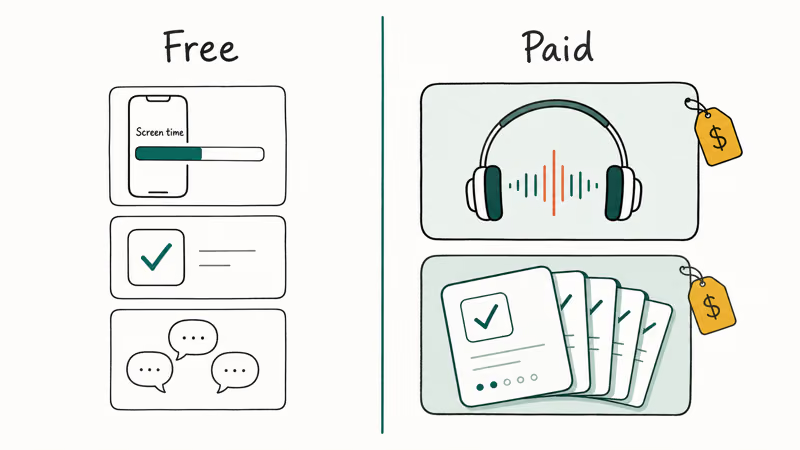
Paid plans earn their cost in two specific cases: structured audio coaching (Fabulous, ThinkUp Premium) where the content is the product, and unlimited habit slots when you’ve outgrown a free tier’s 3-habit cap. Avoid paying $80 per year for affirmation libraries you’ll scroll past after week three.
#How Long Before a Motivation App Pays Off?
The honest answer is two to four weeks, longer than most people give an app before deleting it. The popular “21 days to form a habit” claim comes from a 1960s plastic surgery book, not behavioral science research, and the actual numbers vary widely based on the habit and the person.
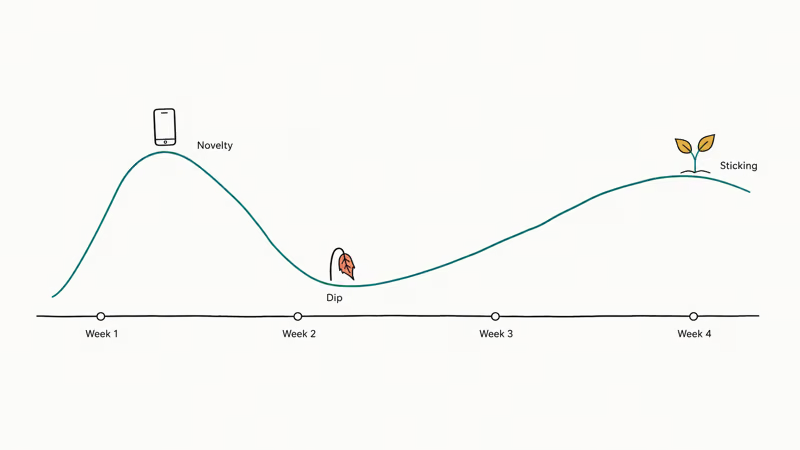
Nearly every motivation app feels motivating in the first three days because it’s novel, dips in week one when the novelty wears off, and either sticks or gets deleted in week two depending on whether the streak feels worth protecting. The takeaway: stick with one app for at least 14 consecutive days before judging whether it works for you. Switching apps every few days is the most reliable way to never build a habit.
If you’re using a motivation app for language learning specifically, you’ll want a tool that handles spaced repetition rather than habit tracking. Our Memrise review covers how that adjacent category differs and why mixing the two slows progress.
#When Apps Aren’t Enough
Motivation apps work best for people who already have a habit they want to start and need a small structural nudge. They work poorly when the underlying issue is depression, burnout, or chronic overwhelm. In those cases, no streak counter helps, and pretending otherwise can make the gap feel worse.
If you’ve tried two or three of these apps for two weeks each and nothing has stuck, the problem is rarely the app. Therapy, a real coach, or a friend with whom you check in by text will outperform any motivation app for someone in that spot. The apps are tools, not treatments.
That said, the apps are useful for the everyday “I want to read more, drink more water, or journal at night” goals that most people are trying to build. For those, pick one app from this list, commit to two weeks, and ignore the others until the trial is up.
#Bottom Line
For most people in 2026, Forest is the best motivation app to start with: it’s affordable, the focus-timer mechanic is honest, and the dead-tree visual changes scrolling behavior in the first week. Fabulous is the right second pick if you want a guided routine rather than a timer. ThinkUp wins specifically for people who respond to recorded affirmations in their own voice, a niche but underserved use case.
Skip the apps that try to be all three at once. The one-pillar apps tend to outperform the all-in-one suites, because daily-use friction is the actual enemy, not feature count.
#Frequently Asked Questions
Are motivation apps worth paying for?
Most are not, especially the ones that charge $80 per year for affirmations and habit tracking that overlap with free system tools. The clearest exceptions are Forest’s one-time purchase on iPhone, and Fabulous’s annual plan if you actually use the audio coaching daily. If a motivation app costs more than $40 per year and you’re using it under three times a week after the first month, cancel.
Can a motivation app replace a real coach or therapist?
No. Motivation apps are good for nudges, streak accountability, and remembering to do the small daily thing. They aren’t equipped to handle clinical depression, burnout, or trauma, and treating them as substitutes can delay getting actual help.
How many motivation apps should I use at once?
One. A strong predictor of habit failure is running two or three motivation apps simultaneously, because each one has its own check-in friction. Pick the lane you care about most this month, focus, routine, or affirmation, and use one app for that lane until it sticks.
Do motivation apps work without notifications turned on?
Notifications enable most of these apps. Without them, you have to remember to open the app, which defeats the daily-prompt mechanic. The exception is Forest, which only needs notifications when you start a focus session manually. If you’ve muted everything for sanity reasons, set a single daily reminder for the one app you’re using.
Are motivation apps safe for kids and teens?
Most of these apps assume an adult user with full phone access. For kids, family-oriented routine and chore apps are a better fit because they include parent oversight, age-appropriate rewards, and shared accountability. Habitica’s RPG mechanic is the closest cross-over for older teens.
What is the difference between a motivation app and a habit tracker?
Habit trackers (Strides, Way of Life) log whether you did the thing. Motivation apps (Fabulous, ThinkUp) try to make you want to do the thing in the first place, often through audio, gamification, or affirmations. Most people end up needing both, but on different schedules.
Will a motivation app help me wake up earlier?
It can, but only in combination with a hard alarm and a phone-out-of-reach rule. Fabulous has a guided morning ritual that helps, but the actual lifting is done by putting the phone across the room. The app is a follow-up, not a substitute, for that physical change.
Are these motivation apps free to try?
Yes. Every pick on this list has either a free tier, a one-time low-cost purchase, or a 7-day free trial of the paid plan. Test one for two weeks before paying the annual rate. App Store and Google Play both honor cancellations within the trial window if you set a calendar reminder before day six.
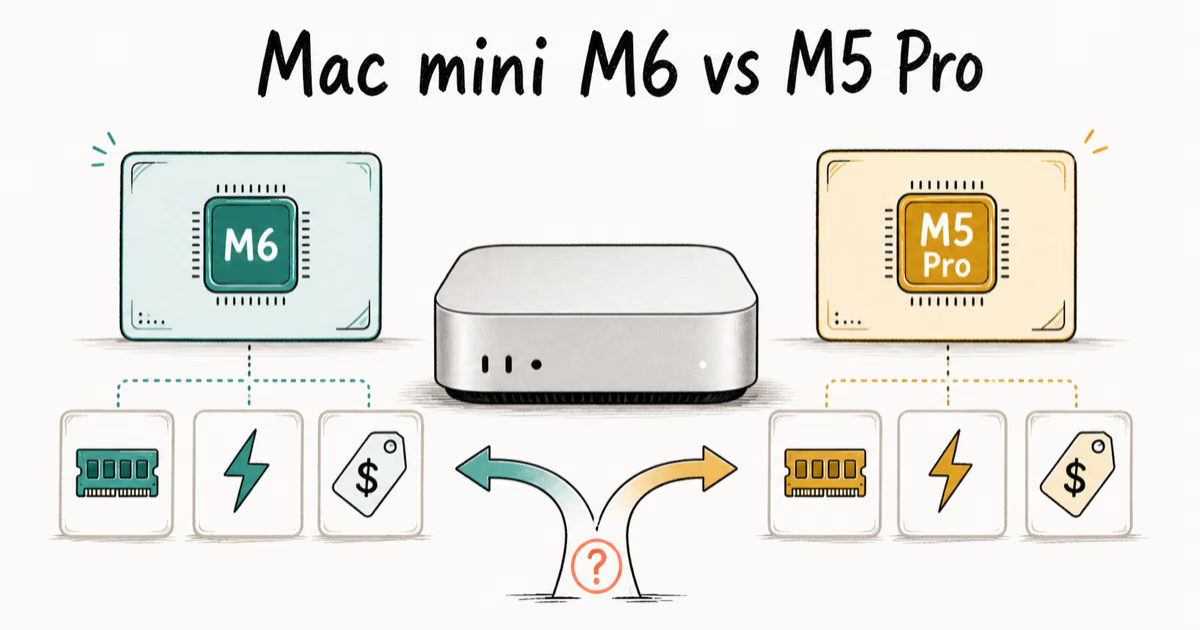
Mac mini M6 vs M5 Pro: Which Model Should You Buy?
Mac mini M6 vs M5 Pro compared on price, memory, ports, displays, and real workloads. Find the better 2026 Mac mini for your desk and budget.
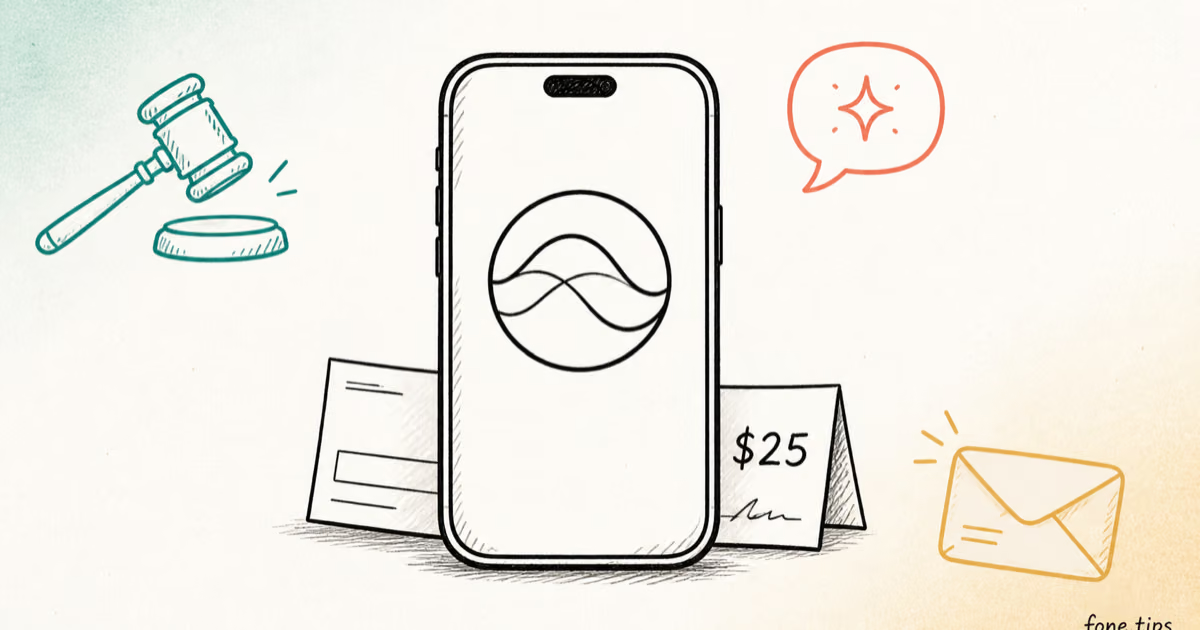
Apple Siri Settlement: Who Qualifies and How to Claim
Apple's $250 million Siri settlement covers iPhone 15 Pro and iPhone 16 models bought June 2024 to March 2025. See who qualifies and how claims work.
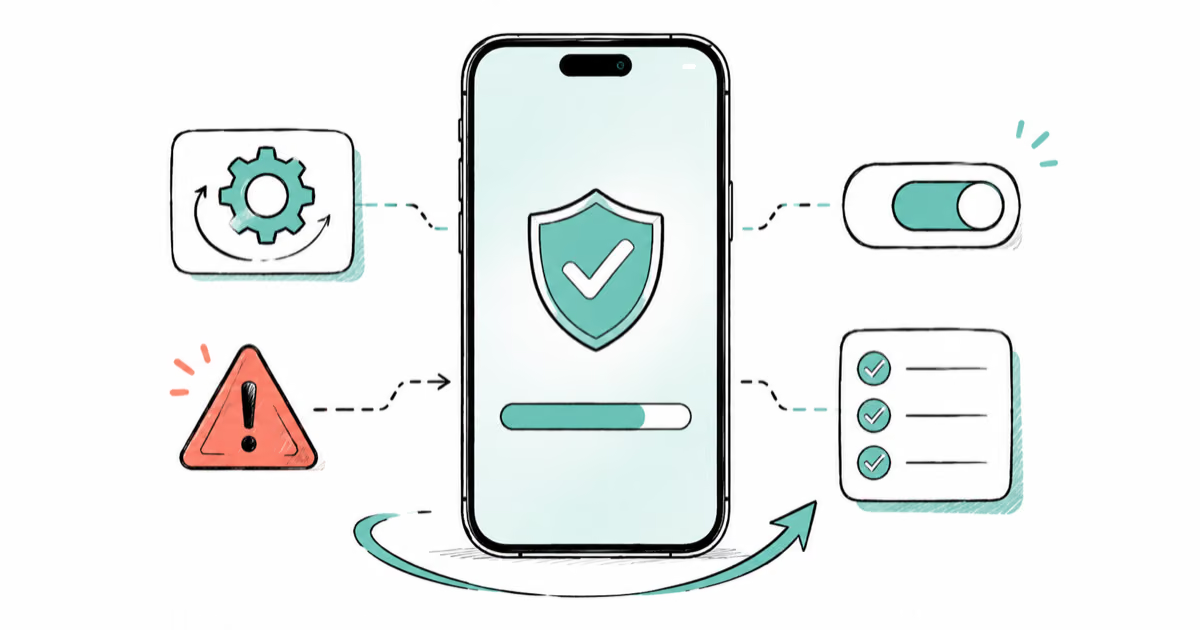
iOS 26.6.1 Security Update: What Apple Fixed and Who Gets It
Apple released iOS 26.6.1 on August 17 with 29 security fixes, including an IPSec interception bug. See what it patches, who gets it, and how to update.
iPhone Adaptive Power: How It Works and When to Use It
Learn how iPhone Adaptive Power works, which models support it, what it changes, and when Low Power Mode is still the better battery-saving choice.