5 Best Marvel Legendary Expansions to Boost Replay Value
Compare the 5 best Marvel Legendary expansions ranked by replay value, mechanics, and roster depth. Dark City, X-Men, World War Hulk, and more.
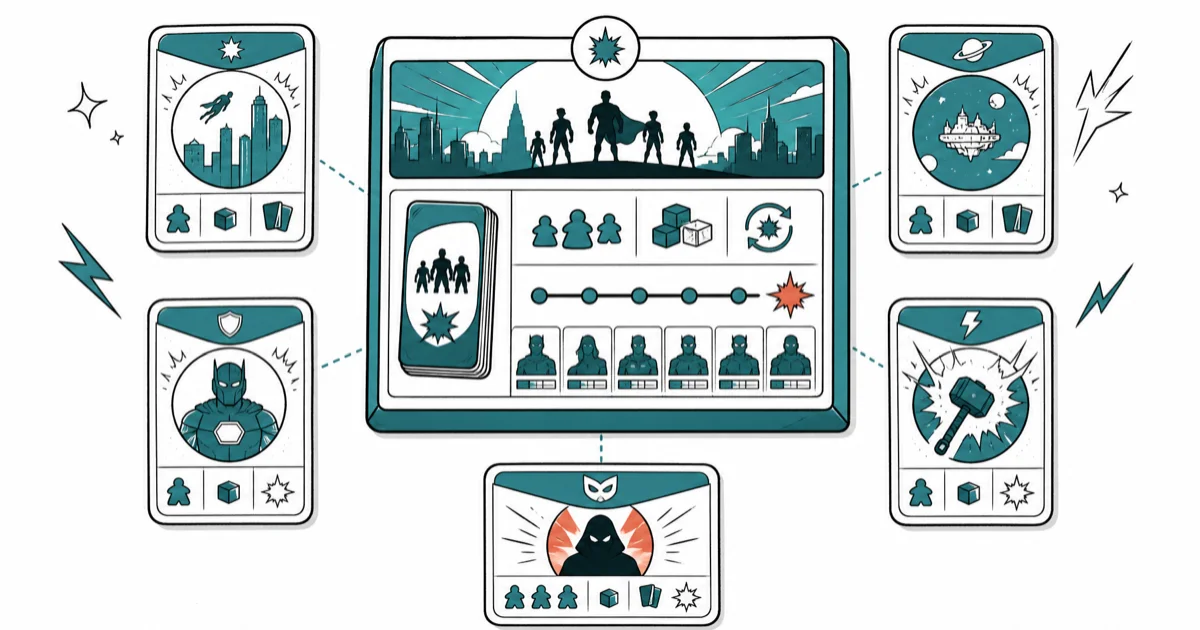
Quick AnswerThe 5 best Marvel Legendary expansions are Dark City, X-Men, World War Hulk, Fantastic Four, and Guardians of the Galaxy. Dark City is the strongest first buy because it doubles the hero roster and adds masterminds like Apocalypse.
Marvel Legendary expansions turn a strong deck-building game into a decade-long playground of heroes, villains, and rule-bending keywords. Out of every major expansion in the line, only five reliably earn permanent shelf space. This guide ranks the 5 best Marvel Legendary expansions, explains why each one earns the slot, and flags two boxes you can safely skip.
- Dark City is widely cited as the strongest first expansion, doubling the hero pool with classic Marvel characters and adding the Apocalypse mastermind.
- World War Hulk introduces the Transform keyword, letting heroes and villains swap mid-game and creating unpredictable matchups.
- Guardians of the Galaxy adds the Artifact mechanic, which lets you seize an opponent card and gain its power on every turn.
- X-Men is the most punishing expansion thanks to Epic mastermind versions plus new Horror and Trap cards that work against the hero deck.
- Fantastic Four packs five new heroes including Silver Surfer alongside the Mole Man and Galactus masterminds in the smallest big-box expansion.
#What Are Marvel Legendary Expansions?
Marvel Legendary is a cooperative deck-building game where two to five players draft hero cards from a shared pool to defeat a chosen Mastermind before time runs out. The BoardGameGeek Legendary listing states that 1 to 5 players can finish a session in 30 to 60 minutes, with Devin Low credited as designer and Upper Deck Entertainment as publisher. Expansions add new heroes, villains, schemes, masterminds, and keyword mechanics that mix into the base box without replacing it.
The expansion line is the reason this game still gets table time more than a decade after release. Wikipedia’s Legendary entry confirms that Upper Deck has released both large “big box” expansions (which add the most content) and smaller themed sets that focus on a specific film, team, or storyline.
If you also collect themed deck-builders, our roundup of the best anime board games covers the strongest non-Marvel options for tabletop nights.
#Core Mechanics That Define a Great Expansion
Not every Marvel Legendary expansion lands the same way at the table, and the difference usually comes down to mechanics rather than character lineup.
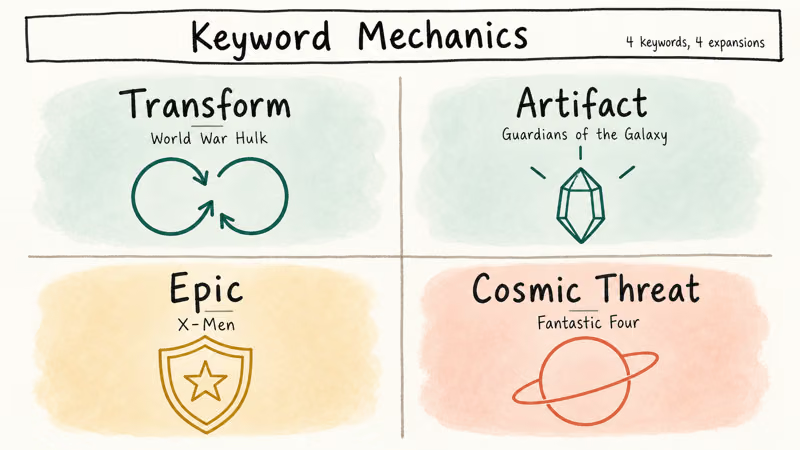
The strongest expansions introduce a single new keyword that changes how you draft heroes from turn one. Transform from World War Hulk forces you to plan around mid-game role swaps. Artifact from Guardians of the Galaxy rewards opportunistic card seizures.
Epic mastermind versions from X-Men reshape difficulty without rewriting the rules, and Cosmic Threat from Fantastic Four scales villain strength based on player count to keep four- and five-player sessions tense.
Weaker expansions either reuse an existing keyword under a new name or pile so many keywords on top of each other that turn time stretches well past the game’s 30 to 60 minute target. Marvel Studios Phase 1 and Ant-Man both fall into that trap, running long without adding new strategic depth, which is why neither earns a slot in the top five.
#5 Best Marvel Legendary Expansions
Each expansion below earned its rank based on three factors: how much new gameplay variety it adds, how often it stays in rotation rather than gathering dust, and how strong the hero and mastermind rosters feel during a four-player session.
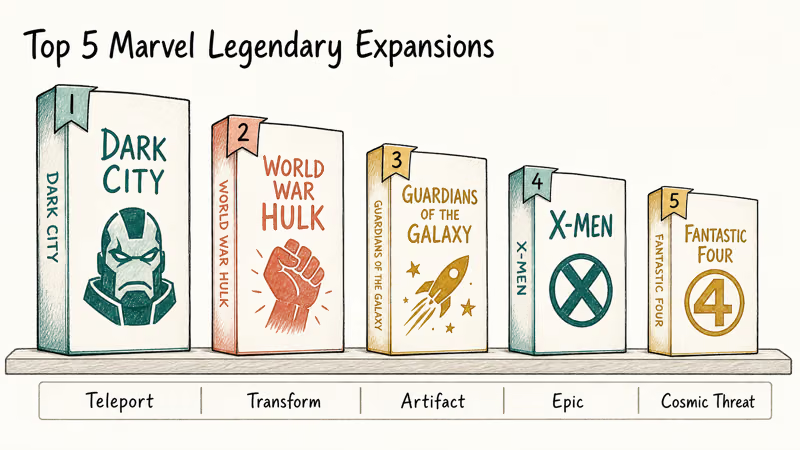
#1. Dark City
Dark City is the first big-box expansion and remains the most-recommended starting point for new collectors. The r/legendary community on Reddit repeatedly ranks Dark City as the must-buy first expansion thanks to its sheer hero count and clean integration with the base game.
What you get inside is a deep roster of classic Marvel characters such as Punisher, Daredevil, Blade, and Iron Fist, plus the Apocalypse mastermind and a handful of new schemes and villain groups. The expansion also brings the Teleport keyword, which forces villains to escape into the city sooner if you let them stack up.
Why it earns the top slot: Dark City roughly doubles the variety of any single play session. With this many added heroes, you can play game after game without ever repeating the same starting roster.
#2. World War Hulk
World War Hulk is the largest big-box expansion and is built around the Transform keyword, which lets a hero or villain card swap into another card mid-fight. The mechanic creates the most unpredictable matchups in the entire Legendary line.
The hero roster includes Hulkbuster Iron Man, She-Hulk, A-Bomb, and several Hulk variants that each behave differently when transformed. Red King is the headline mastermind, supported by Warbound and Illuminati villain groups.
Transform changes how you draft heroes; you stop optimizing for a single combo and start hedging for whichever Hulk-form your team transforms into. The rule overhead is steep enough that Transform-only games can overwhelm newcomers, but it’s a staple in mixed sessions with experienced players.
#3. Guardians of the Galaxy
The Guardians of the Galaxy small-box expansion focuses on the cosmic side of the Marvel universe and introduces the Artifact keyword. Artifact lets you take control of certain villain cards and use their abilities on every turn, which is the closest the game gets to permanent power-ups.
Star-Lord, Gamora, Drax, Rocket Raccoon, and Groot all bring different playstyles, and Thanos appears as the headline mastermind. The expansion also introduces Shards, which work as a one-shot resource pool you can spend for game-changing effects during a critical turn.
Guardians of the Galaxy pairs especially well with Dark City for a four-player setup. The Artifact mechanic feels overpowered in a small base game but balances out beautifully against Dark City’s heavier villain pool.
#4. X-Men
The X-Men big-box expansion is the most punishing in the Legendary lineup. Upper Deck added Epic versions of every villain, plus Horror and Trap cards that load extra penalties onto the hero deck.
The hero roster covers fan favorites like X-23, Havok, Bishop, and Iceman, while Dark Phoenix, Apocalypse (epic version), and Magneto headline the masterminds. The Piercing Energy keyword lets villains spend their victory points to deal a one-time burst of damage, which can swing a near-win into a sudden loss.
Epic mode against Dark Phoenix with a four-hero team is brutal, and a string of losses is common until you mix in Dark City heroes for more sustain. If you already own Dark City and want a real challenge, X-Men is the next box to grab. It’s not a beginner-friendly expansion.
#5. Fantastic Four
Fantastic Four is one of the smaller big-box expansions but earns its spot with one of the strongest single-themed rosters in the line. The expansion includes Mr. Fantastic, Invisible Woman, Human Torch, The Thing, and Silver Surfer alongside the Mole Man and Galactus masterminds.
The Cosmic Threat keyword lets villains scale based on how many heroes are in play, which keeps tension high in larger-player counts. The expansion also adds Doctor Doom variants and Mole Man’s underground emergence mechanic, which forces heroes to defend specific city slots.
Fantastic Four is the box to reach for when your group wants a tightly themed session rather than a chaotic mix-and-match game. It’s the best small-roster expansion in the lineup.
#Two Marvel Legendary Expansions Worth Skipping
Two boxes consistently underwhelm and rarely make it back to the table after the first session. If you collect Marvel video games as well, our list of games like Marvel’s Spider-Man on PS4 is a better way to scratch the comic-book itch than buying these two boxes.
#Marvel Studios Phase 1
Marvel Studios Phase 1 leans entirely on the early MCU films and skips most of the comics roster that makes the base game shine. According to BoardGameGeek’s expansion listing, this set sits well below the average community rating for the Legendary line, and reviews on the BGG forums repeatedly cite the missing characters as the biggest disappointment.
If you’re already a fan of the early MCU and want a casual game with friends new to deck-builders, the box is fine. For everyone else, the hero variety is too thin and the masterminds repeat content from the base game.
#Ant-Man
Ant-Man arrived alongside the second Ant-Man and the Wasp film and reuses the existing Size-Changing keyword under a new “Microscopic” name. The mechanic doesn’t add meaningful new strategy.
Ultron headlines as the mastermind, but most of the heroes feel underpowered when mixed into a Dark City roster. The box tends to drop out of rotation fast once the novelty wears off. Skip it unless you’re completing a collection.
#How Do You Pick the Right Expansion for Your Group?
Match the expansion to how your group plays, not just to your favorite Marvel storyline. Three rules of thumb work for most buyers.
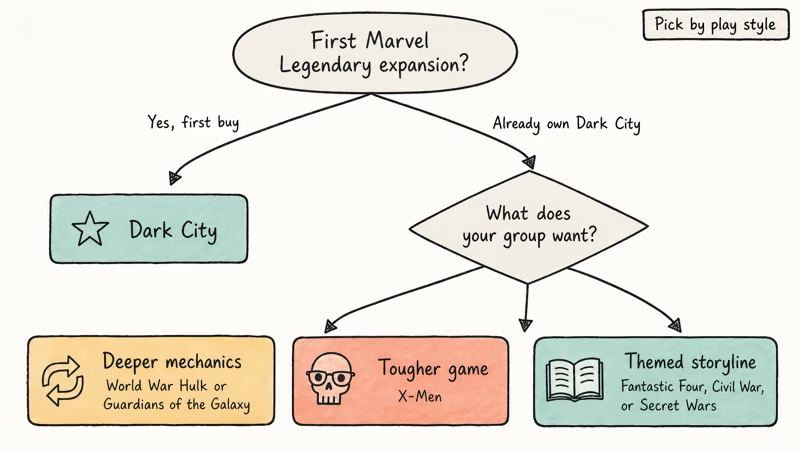
Buy Dark City first. It’s the near-unanimous first pick among Legendary collectors. It doubles the variety of the base game without changing the rules.
Add a complexity layer second. If your group enjoys deeper mechanics, pick World War Hulk for Transform or Guardians of the Galaxy for Artifact. If you prefer a tougher game with the same rules, X-Men is the natural follow-up.
Pick themed boxes for storyline play. Fantastic Four, Civil War, and Secret Wars work best when you want a session built around a specific Marvel arc rather than a chaotic mix.
For digital deck-building options if your tabletop group can’t meet, our guide to the best board game apps covers solid Legendary alternatives that handle scoring and shuffling automatically. Card-game fans who want a similar drafting experience on PC can also browse our ranked list of the best Gwent cards in The Witcher 3, which uses a comparable best-of-three round structure.
#Tips for Mixing and Storing Your Collection
Once you own three or more expansions, organization stops being optional and starts being the difference between a fun game night and a 20-minute setup slog.
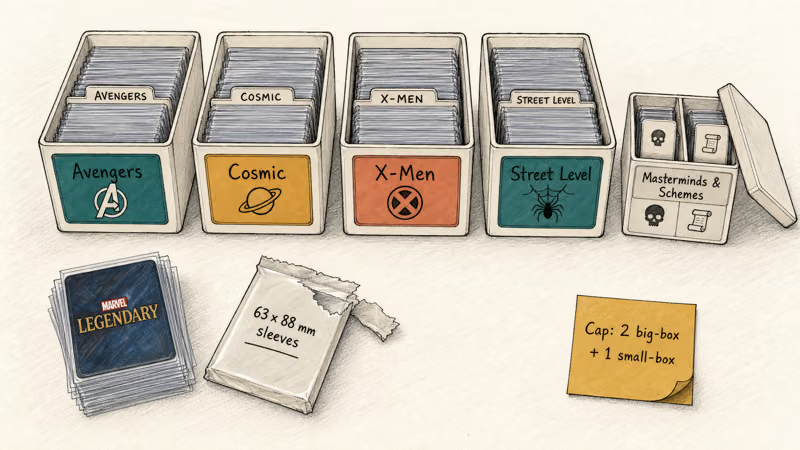
Sort by faction or theme, not by box. Dumping every Avengers, Cosmic, X-Men, and street-level hero set into labeled bins lets you pull a balanced roster in under two minutes. Keep masterminds and schemes in their own divider so the random draw stays fast.
Sleeve the cards you mix most often. Marvel Legendary uses standard 63 by 88 millimeter cards, so any standard-size sleeve from a major brand fits cleanly. Sleeves protect against drink spills and edge wear, which matter once a card has been shuffled across hundreds of plays. A single torn key card is enough to sour a session, and our guide to the best Yu-Gi-Oh card sleeves covers brands that fit Legendary’s card size as well.
Cap your mixed pool at two big-box expansions plus one small-box for first-time mixed sessions. More than that and the game’s variety becomes overwhelming for new players, which slows the early game.
#Bottom Line
If you only buy one Marvel Legendary expansion, make it Dark City. It doubles the hero pool, adds Apocalypse, and remains the single biggest variety upgrade for the base game. Add World War Hulk second if your group enjoys high-complexity rule changes, or X-Men second if you want a harder challenge against the same mastermind framework. Skip Marvel Studios Phase 1 and Ant-Man entirely; both reuse content the base game already covers.
Sleeve your cards before you start mixing expansions, and check the storage tips above so your collection stays organized as it grows.
#Frequently Asked Questions
Are Marvel Legendary expansions compatible with the base game?
Yes. Every expansion in the lineup shuffles directly into the base Legendary deck-builder without requiring rule rewrites. You can mix any combination of expansions in a single session.
Can you mix two or more expansions in one game?
Absolutely. Most Legendary players run mixed sessions once they own three or more expansions. The base rules scale cleanly because each expansion adds new cards rather than replacing old ones.
How many players do Marvel Legendary expansions support?
The base game supports 1 to 5 players, and almost every expansion preserves the same range. A few small-box solo expansions exist, but the standard big-box and small-box releases all play 1 to 5.
Are Marvel Legendary expansions beginner-friendly?
Some are, some aren’t. Dark City and Fantastic Four are great for newer players because they extend the base rules without piling on new keywords. World War Hulk, X-Men, and Guardians of the Galaxy add mechanics that take a game or two to learn.
Do the expansions include new artwork?
Yes. Each expansion ships with original card art that matches the storyline or roster theme. The artwork quality is generally on par with the base game.
Which Marvel Legendary expansion is hardest?
X-Men is the hardest big-box expansion. Epic mastermind versions plus the Horror, Trap, and Piercing Energy keywords stack difficulty on top of the standard mastermind fight. Pair it with high-complexity heroes only if you’re confident in your deck-building.
How many Marvel Legendary expansions are there in total?
Upper Deck has released more than two dozen Marvel Legendary expansions and small-box add-ons since the original launch. Some smaller boxes go in and out of print, so check current availability before chasing the older releases.
Is Marvel Legendary worth getting into in 2026?
Yes. The base deck-builder is still in print, and the active community keeps the rule conversations alive on BoardGameGeek and Reddit. If you enjoy cooperative deck-builders and the Marvel universe, the base game plus Dark City is the most reliable entry point for new players.

Fortnite Stuck on the Loading Screen? Fix It in 2026
Fortnite stuck on the loading screen? Check server status, fix the Windows N Media Pack and DirectX 11 on PC, clear the console cache, and verify files.

Minecraft Keeps Crashing? Java and Bedrock Fixes (2026)
Minecraft keeps crashing on startup or mid-game? Update your GPU driver, remove mods on Java, and reinstall Gaming Services on Bedrock. Fixes for both.

Pokemon GO Not Loading? Fix the Loading Screen 2026
Pokemon GO not loading or stuck on the Pokeball? Check server status, fix automatic date and time, grant location permission, clear the cache, and update.
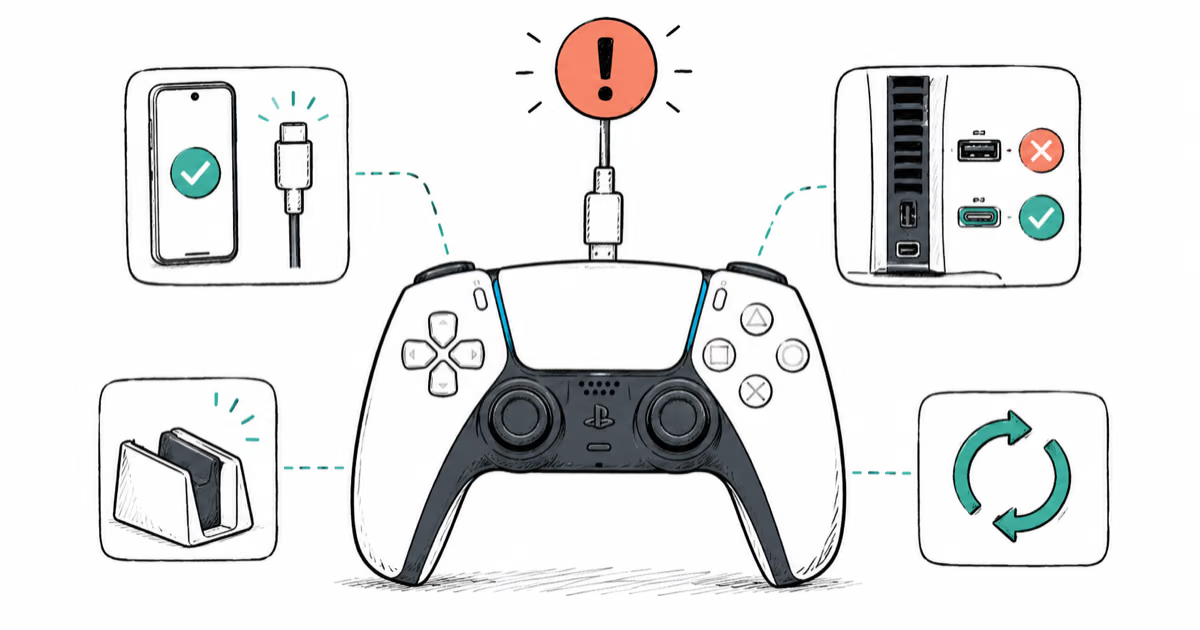
PS5 Controller Not Charging? 9 Fixes That Work (2026)
DualSense not charging? Swap the cable, use a rear port in Rest Mode, clean the USB-C port, and check power settings. 9 fixes for a dead PS5 controller.