Marriage Video Editing: Tools, Workflow, and Pro Tips
Edit wedding video footage with the right tools and workflow. Compare free editors, pro software, and step-by-step techniques for cinematic results.
Quick AnswerFlexClip and Adobe Express handle most wedding edits for free, while Adobe Premiere Pro and Final Cut Pro give pro videographers tighter control over color grading and audio mixing.
Marriage video editing turns hours of raw ceremony and reception footage into a film a couple will rewatch on every anniversary. The right software handles the heavy lifting on color, audio, and pacing so the story carries the day. This guide compares the editors that actually fit wedding work, walks through the edit step by step, and points out where most first-time editors lose hours of time.
- FlexClip and Adobe Express cover free wedding edits with templates, drag-and-drop timelines, and royalty-free music libraries.
- Adobe Premiere Pro and Final Cut Pro stay the pro defaults for color grading, multicam syncing, and tight audio control.
- Color correction is the biggest visual lever; matching white balance across cameras is what makes wedding footage look cinematic.
- Organizing clips into ceremony, reception, speeches, and B-roll folders before importing saves hours of scrubbing later.
- Exporting at 1080p H.264 between 8 and 16 Mbps is the standard sweet spot for sharing on YouTube, Vimeo, or by USB.
#What Are the Best Tools for Marriage Video Editing?
Wedding footage stresses an editor in three places: long takes from multiple cameras, mixed audio sources (vows, toasts, ambient room sound), and warm tungsten light blending with cool window light. The right tool depends on whether you are editing your own wedding or charging clients.
#Free editors that hold up for wedding work
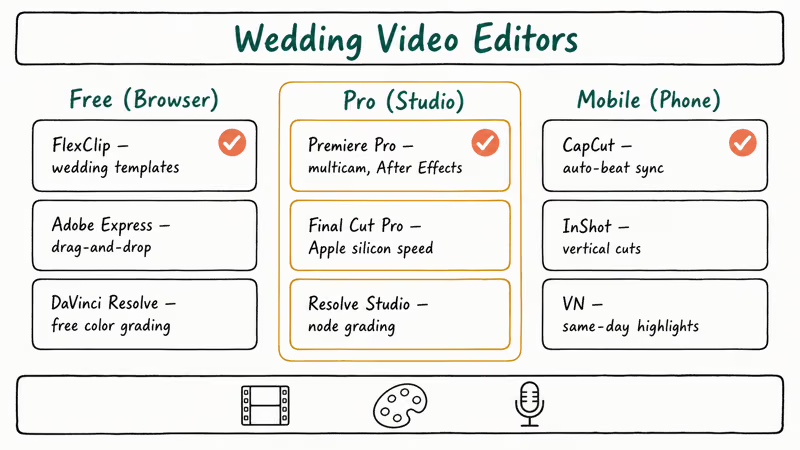
Free doesn’t have to look free. Two browser-based editors handle a typical 90-minute wedding cut without choking.
FlexClip ships wedding-specific templates with pre-built lower thirds, slow-motion presets, and song-matched transitions. It’s the fastest path from “raw clips on an SD card” to “shareable five-minute highlight” for couples who never plan to open a timeline again.
Adobe Express has a drag-and-drop editor, royalty-free music, and animated text presets. It works for save-the-dates and short anniversary edits, not for full ceremony cuts.
CapCut, Clipchamp, and DaVinci Resolve also have free tiers that handle wedding edits. Resolve is the only free option with full color grading and Fairlight audio mixing, and it’s what we reach for when a couple sends footage from three cameras and wants pro-grade color without paying for Premiere.
#Pro software for videographers
Adobe Premiere Pro and Final Cut Pro are the two industry defaults. Premiere wins on cross-platform teamwork and tight integration with After Effects for animated invitations and end credits. Final Cut wins on render speed on Apple silicon Macs and on the magnetic timeline, which makes shuffling ceremony order much faster than Premiere’s track-locking model.
DaVinci Resolve sits beside both as the color and audio favorite, especially for editors who shoot log footage and want full node-based grading. PowerDirector and Filmora target hobbyists who want pro features without the subscription.
If you are torn between Premiere and Final Cut, our iMovie vs Final Cut Pro comparison explains where the Apple ecosystem hits its ceiling, and our DaVinci Resolve vs Premiere Pro breakdown covers the color-grading split.
#Mobile apps for fast highlights
Wedding videographers rarely cut full features on a phone, but mobile apps are useful for same-day highlight reels delivered before guests leave the reception. CapCut, VN, and InShot are the three most common. They all export 4K and they all sync royalty-free music with auto-beat detection. The catch is screen real estate: trimming a 12-minute toast on a 6.7-inch display is painful.
#How Do You Edit a Wedding Video Step by Step?
Order matters more than software here. The editors we know who deliver weddings on time use the same eight-step structure no matter which app they open.
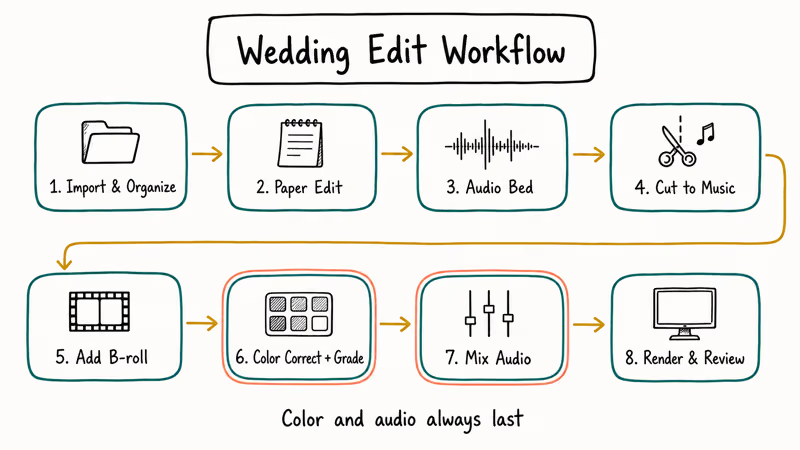
- Import and organize clips. Create folders for Ceremony, Reception, Speeches, B-roll, and Detail Shots before you import anything. Naming clips by camera and time stamp at this stage saves hours later.
- Build a paper edit. Watch every clip once and write a short paragraph for each: what happens, who is in frame, audio quality, and a one-line emotional note. This becomes your storyboard.
- Lay down the audio bed first. Drop the song or vows track on the timeline before any visual clip. The audio sets pacing.
- Cut to the music. Snap clip cuts to drum hits or vocal phrases, especially in the highlight reel.
- Add B-roll on top. Detail shots of rings, flowers, and venue signage cover audio jumps and give the eye a rest.
- Color correct, then color grade. Correction first (fix white balance, exposure, contrast), grading second (apply a consistent look). Doing it in reverse means you grade over uncorrected footage and have to start over.
- Mix audio last. Levels for music, vows, toasts, and ambient sound need a final pass with all video locked. Trying to mix while editing visuals is a trap.
- Render and review on three devices. Watch the export on a phone, a laptop, and a TV before delivery. Color and audio that look fine on a calibrated monitor often look wrong on a phone.
For multicam ceremony coverage, our guide on putting multiple videos on one screen in iMovie walks through the picture-in-picture workflow that doubles as a multicam reveal.
#Color Correction and Grading for Wedding Footage
Color is what separates “uncle with a camera” from “we hired someone good.” Wedding venues throw three light sources at every shot: tungsten chandeliers, cool window light, and dance-floor LEDs that change every two seconds.
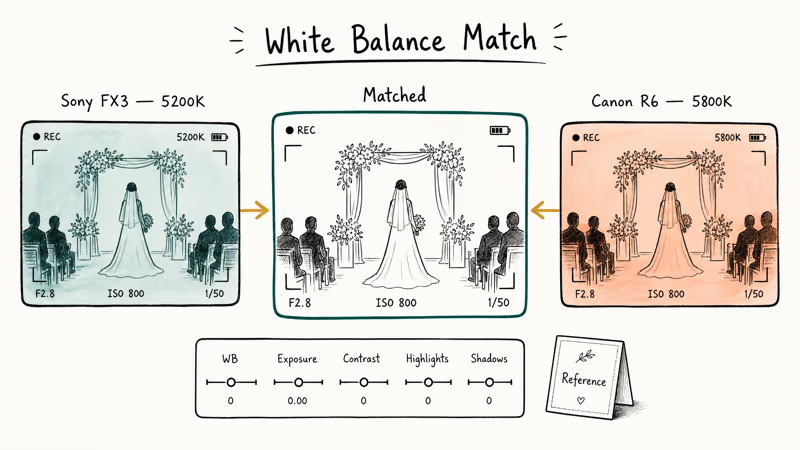
Two camera bodies shooting the same wedding often disagree on white balance, with one running cooler at the altar and the other warmer in the bridal-prep room. Without correction, the cut between cameras can look like the bride changed dresses. The fix is to pull both clips into a color tool like Resolve, sample a neutral reference such as a white napkin, and nudge the warmer camera’s mid-tones to match the other body’s gamma until the cut becomes invisible.
According to Adobe’s Lumetri Color documentation, the Basic Correction panel handles white balance, exposure, contrast, highlights, and shadows in the order pros use during a first pass. That order matters: fixing exposure before white balance gives you the wrong white balance.
For grading, decide on a look before the edit. Warm and creamy works for outdoor ceremonies. Slightly desaturated with lifted blacks works for industrial venues. Apply the look as an adjustment layer above all clips so you can tweak the entire film by changing one node.
Hardware also matters here. Resolve’s color page is GPU-bound, and weak integrated graphics turn what should be a real-time grade into a slideshow of dropped frames. Our guide to the best laptops for video editing under $1,000 covers what to look for in a color-grading rig that won’t stutter on 4K timelines, and explains why dedicated VRAM matters more than raw CPU clock when grading log footage from cinema cameras.
#Audio Mixing for Vows and Receptions
Wedding audio is harder than the video. Vows are quiet and recorded from a lavalier on the officiant. Toasts come from a handheld mic with peaking levels. Ambient room sound carries glasses clinking and chairs scraping.
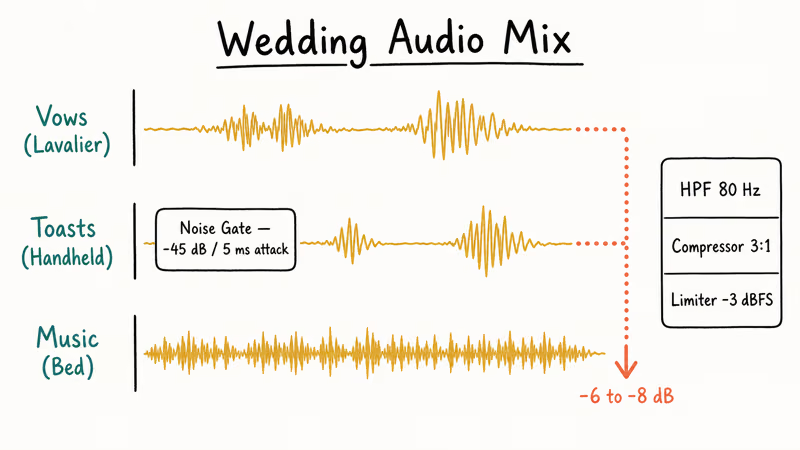
An 80 Hz high-pass filter removes HVAC rumble and outdoor wind without touching the voice, and a gentle 3
compressor levels the calm officiant against the punchy maid-of-honor toast. The second biggest fix is a noise gate on toast audio, set around a -45 dB threshold and 5 ms attack; faster clips the start of words, slower lets room noise leak between sentences.Apple’s Final Cut Pro documentation confirms that the built-in voice isolation tool can clean up reception audio without third-party plugins, and Adobe’s Enhance Speech feature inside Premiere does the same job.
When neither is enough, our walkthroughs on removing background noise in iMovie and fading audio in Premiere cover the manual fallback.
Music sits underneath. The trick is sidechain ducking: when a voice plays, the music drops 6 to 8 dB automatically. Premiere, Final Cut, and Resolve all support this, and it’s the difference between a video that sounds professional and one that sounds like background music drowning out the toast.
#Common Wedding Edit Problems and Fixes
Five problems eat the most time on wedding edits. The fixes are predictable once you have edited a few.
- Mismatched white balance between cameras. Sample a neutral surface (white napkin, gray suit lapel) in each camera’s footage and match them in post.
- Toasts peaking and distorting. Apply a limiter set to -3 dBFS and use the editor’s loudness normalization (Premiere’s “Loudness Radar” or Final Cut’s “Loudness” tool).
- Shaky handheld footage from the dance floor. Warp Stabilizer in Premiere or the built-in stabilization in Final Cut handles most of it. For severely shaky shots, slow the clip to 50% speed first; it disguises remaining motion.
- Long footage with no clear story. Build the paper edit before opening the timeline. The story is in the prep, not the cut.
- Clips with mixed frame rates. Set your sequence to the lowest common frame rate (usually 24 or 30 fps) and let the editor handle conformation. For drone footage at 60 fps mixed with 24 fps cameras, slow the drone clips to 40% speed for slow motion that matches the timeline.
For trims that don’t need a full editor, we still keep VLC on Mac bookmarked. It handles a quick 30-second highlight extract faster than launching Resolve.
#When to Hire a Professional Wedding Video Editor
The honest answer depends on three things: time, technical skill, and how much footage you have.
If you have over 200 GB of multicam footage from three or more cameras, a professional editor saves 40 to 60 hours and delivers tighter color and audio than most first-time editors can match. Wedcuts and Bride&Groom.video are two of the larger services that work directly with videographers and couples. Pricing usually runs $500 to $2,500.
A single-camera shoot with under 60 GB of footage is a different story. A free or low-cost editor gets you 80% of the way there on a free weekend. The last 20% is color and audio polish.
There’s also a middle path that we recommend most often: edit the rough cut yourself, then ship the project file (Premiere XML, Final Cut FCPXML, or Resolve project) to a professional for a color-and-audio pass only. It’s cheaper than full-service editing and you keep creative control over the story, the music, and the pacing of the cut.
#Export Settings and Sharing
The export step is where good edits get ruined by wrong settings. According to YouTube’s recommended upload encoding settings, 1080p video at the H.264 codec with a high bitrate is the platform’s preferred input format, and the same applies to Vimeo, Instagram Reels, and TikTok.
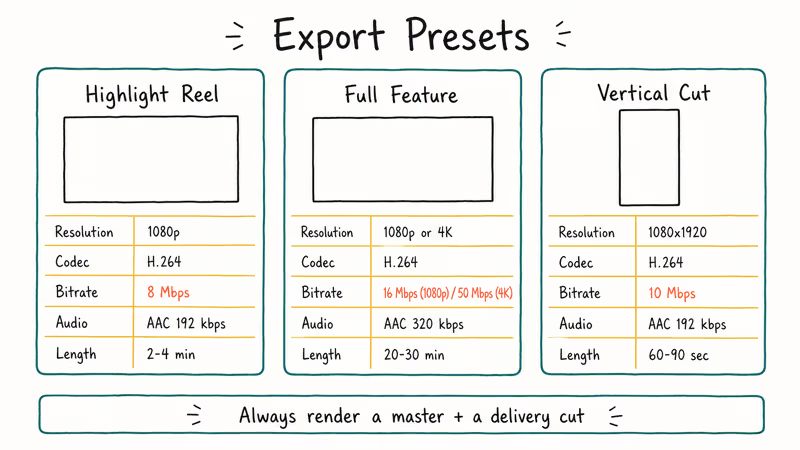
Practical defaults that work for delivery:
- Highlight reel for social: 1080p, H.264, 8 Mbps bitrate, AAC audio at 192 kbps. Two to four minutes long.
- Full feature for couple delivery: 1080p or 4K, H.264, 16 Mbps for 1080p or 50 Mbps for 4K. AAC audio at 320 kbps. Twenty to thirty minutes long.
- Vertical cut for Reels and TikTok: 1080x1920, H.264, 10 Mbps. Sixty to ninety seconds.
Always render two copies: a master at the highest quality your storage can hold, and a delivery cut at the platform-specific settings. Master files are insurance against re-edits years later.
If file sizes balloon past what email or cloud uploads can handle, our online video compressor guide and vertical video editor roundup cover the workflows that solve those exact problems.
#Bottom Line
For couples on a tight timeline, FlexClip is the fastest tool that doesn’t look amateur, and Adobe Express works better when you need animated titles or layered tracks. Videographers handling client weddings should default to Premiere Pro for collaboration, Final Cut Pro for speed on Apple silicon, or DaVinci Resolve when color grading is the priority. Skip mobile-only editing for full features and keep it for same-day highlight reels.
#Frequently Asked Questions
How long does it take to edit a wedding video?
A typical wedding edit runs 25 to 60 hours including color, audio, and revisions. A single-camera ceremony with two hours of footage takes about 25 hours; a three-camera shoot with drone B-roll, ten hours of raw footage, and a 30-minute final cut runs closer to 60. Add 20% if you’ve never used the editor before, since the first wedding always takes longer than the next one.
What’s the best free video editor for wedding videos?
DaVinci Resolve, if you want pro-grade color grading and audio mixing without paying. FlexClip if you want templates and drag-and-drop. Pick by how much editing experience you already have.
Do I need a powerful laptop to edit wedding footage?
For 1080p editing, a recent MacBook Air or a Windows laptop with 16 GB of RAM and an SSD will handle most weddings. For 4K multicam, you want 32 GB of RAM, a discrete GPU, and proxy workflows. Working from external SSDs over USB-C helps when raw footage exceeds the internal drive.
How do I balance music and speech audio?
Use sidechain ducking so the music dips 6 to 8 dB whenever a voice plays. Set music at -18 dBFS as a baseline and voice at -12 dBFS. Apply a high-pass filter at 80 Hz on every voice track to remove room rumble, and run the editor’s built-in loudness normalization on the final mix. The result is a track where vows and toasts sit clearly above the music without the music feeling absent during silences.
What resolution and codec should I export at?
1080p H.264 between 8 and 16 Mbps covers nearly every wedding delivery. AAC audio at 192 kbps. Export 4K only if you shot 4K.
Can I edit a wedding video on my phone?
Yes for short highlights and same-day social cuts. CapCut and InShot are the two mobile editors most commonly used at receptions. They handle 4K, sync to music automatically, and export in vertical or horizontal aspect ratios. Avoid editing the full feature on a phone; the small screen makes precise audio mixing impractical.
How long should the final wedding video be?
A 3 to 5 minute highlight reel plus a 20 to 30 minute feature edit covers most couples. Anything over 45 minutes loses viewers outside the immediate family.
Is hiring a professional editor worth it?
If you have multicam footage, mixed lighting, or less than two weeks until delivery, hiring a professional is usually worth the $500 to $2,500 fee. If you have a single camera, simple light, and a free weekend, a free editor will get you most of the way there. A middle option is to edit the rough cut yourself and pay a pro for a color-and-audio pass.

Best Laptop for Running LLMs in 2026: Memory Comes First
The best laptop for running LLMs is a memory purchase first. Compare MacBook unified memory against NVIDIA laptop VRAM, and see what each tier really runs.
Pixel 11 vs Pixel 10: What Changed and Who Should Upgrade
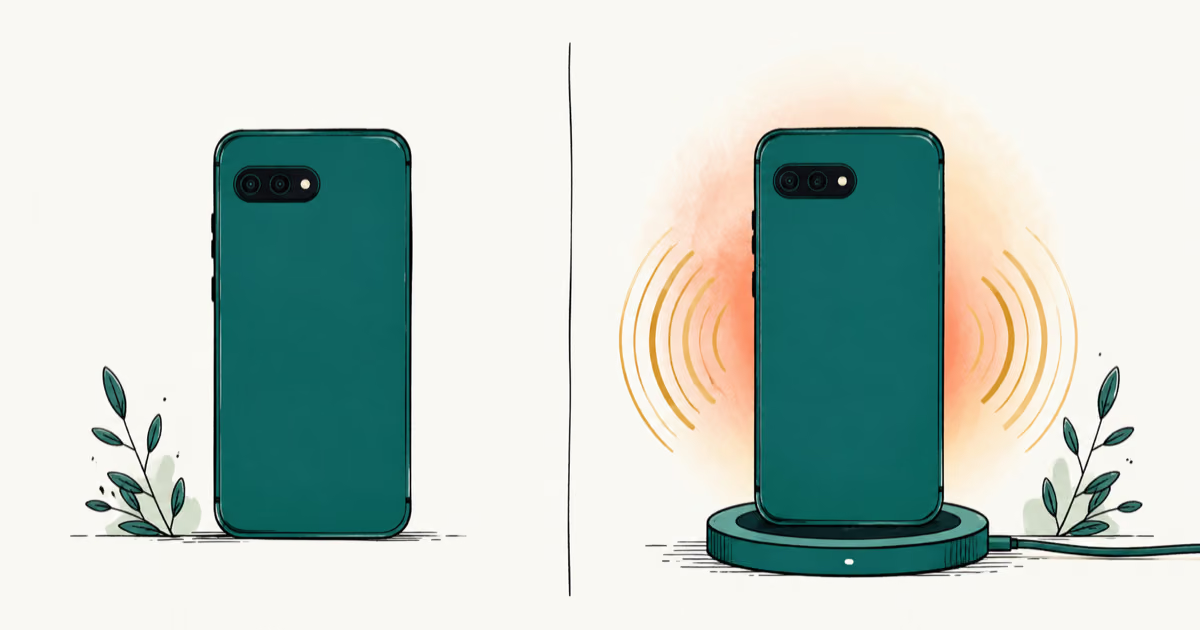
Pixel 11 vs Pixel 10: same screen and camera resolution, new Tensor G6, 25W wireless, and Gemini Intelligence. Here is who should actually upgrade.
Best Power Bank for iPad in 2026: Pro, Air, and Mini
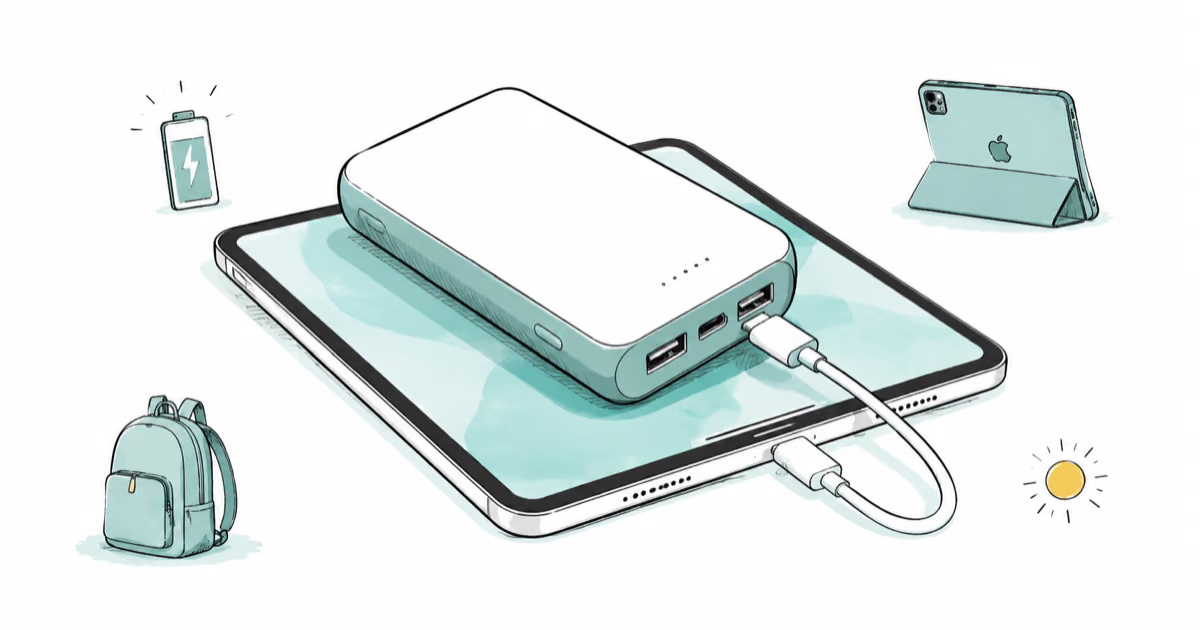
Best power bank for iPad in 2026. Compare mAh tiers and USB-C PD wattage for iPad Pro, Air, and mini, plus airline Wh math, cables, and travel tips.
Best Power Bank With Built-In Cable: Top 2026 Picks
Best power bank with built-in cable picks for 2026. Compare single USB-C, multi-connector, and retractable laptop banks, plus airline Wh math.