M4uFree Downloader: Risks and Legal Movie Alternatives
M4uFree downloads risk DMCA fines, ISP throttling, and malware. See how to buy, rent, or stream the same movies through Tubi, iTunes, and more.

Quick AnswerM4uFree streams unlicensed copyrighted movies, so any download workaround is illegal and exposes your device to malware. Buy or rent the same titles through iTunes, Amazon Video, Vudu, or Google Play Movies, or stream them free on Tubi, Pluto TV, and the Roku Channel.
M4uFree doesn’t have a download button, and the absence is intentional. Any tool that captures M4uFree’s stream URL creates an unauthorized copy of a copyrighted movie, which U.S. copyright law treats as infringement regardless of the technical method used. We pulled together the legal alternatives that let you buy, rent, or stream the same films, plus what to do if you’ve already used the site and want to clean up your device.
- M4uFree streams copyrighted movies without licensing, so every download from the site is an unauthorized copy under U.S. law
- Statutory damages under 17 U.S.C. §504(c) reach $30,000 per work for ordinary infringement and $150,000 per work for willful infringement
- ISPs in the United States send graduated warning letters and can throttle or terminate service for repeat copyright complaints
- Legal free alternatives like Tubi, Pluto TV, the Roku Channel, and Crackle stream thousands of ad-supported movies on phones, TVs, and browsers
- Buying or renting through iTunes, Amazon Video, Vudu, or Google Play Movies typically costs $3 to $6 per title and unlocks legitimate offline downloads in the official app
#M4uFree Has No Download Button by Design
M4uFree’s interface looks like a normal streaming site, but it stops short of any save or download link. The site delivers films inside its embedded player without an offline option.
Two reasons drive that design. First, an explicit download button makes the site easier to take down because it removes the “we only stream, we’re not the downloader” defense the operators rely on when copyright holders file complaints. Second, the operators monetize through ad networks that reward time on page, not file delivery. Users who download a movie close the tab; users who watch on the site keep generating ad impressions while pop-unders fire in the background.
Third-party screen-capture and stream-ripping tools do exist, but they don’t work with M4uFree — they work against it, intercepting the streaming URL to copy a movie the site doesn’t have the right to distribute in the first place. According to the U.S. Copyright Office’s overview of copyright, reproducing a copyrighted work without authorization counts as infringement no matter the technical method. That covers ripping the stream, recording the screen, or grabbing the underlying video file with a browser extension.
The point of this article isn’t to walk through any of those workarounds. It’s to show what happens if you do, and what to use instead.
#What Penalties Could You Face for Downloading?
The legal exposure is bigger than most casual users realize, and it lives in two layers: statute and ISP.
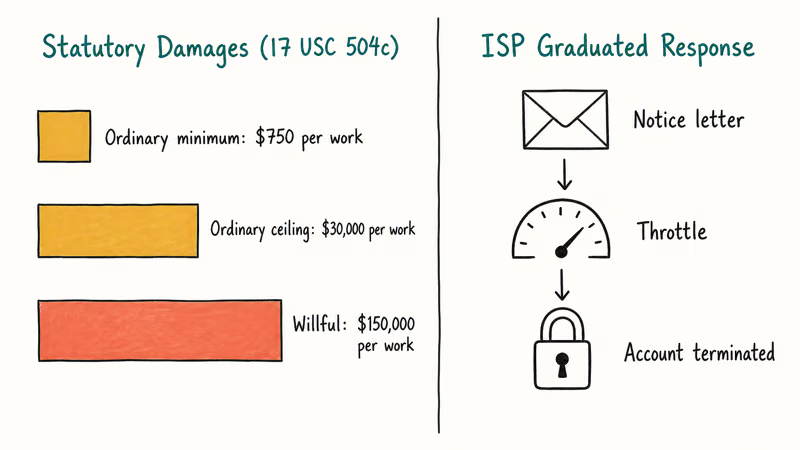
According to Title 17 of the U.S. Code, Section 504(c), copyright holders can pursue statutory damages of $750 to $30,000 per infringed work, with willful infringement pushing the ceiling to $150,000 per work. Criminal penalties for willful, large-scale copyright infringement reach five years in prison for a first offense under federal law and the No Electronic Theft Act. Civil suits against individual home users are uncommon, but they happen, and they typically settle in the low five figures.
ISPs add the second layer.
Most large U.S. providers operate a graduated response complaint process. Rights holders send notices when their content is detected on a residential IP, the ISP forwards them to the account holder, and repeat notices escalate to bandwidth throttling or account termination.
The FCC’s guide to the Digital Millennium Copyright Act confirms that ISPs are required to maintain a repeat-infringer policy to keep their safe harbor protection. ISP copyright notices aren’t felony charges, but they’re still unwelcome and can escalate if repeat complaints keep arriving.
A VPN doesn’t cure any of this.
It hides your IP from the rights holder, but copyright holders pursue piracy through other channels (affiliate logs, payment processors, account telemetry from the site itself), and most consumer VPNs respond to subpoenas. Treat a VPN as a privacy tool, not a legal shield.
#Where to Buy or Rent the Same Movies Legally
When you want a specific movie now and you want to keep it, the rental and purchase services are the cleanest path:
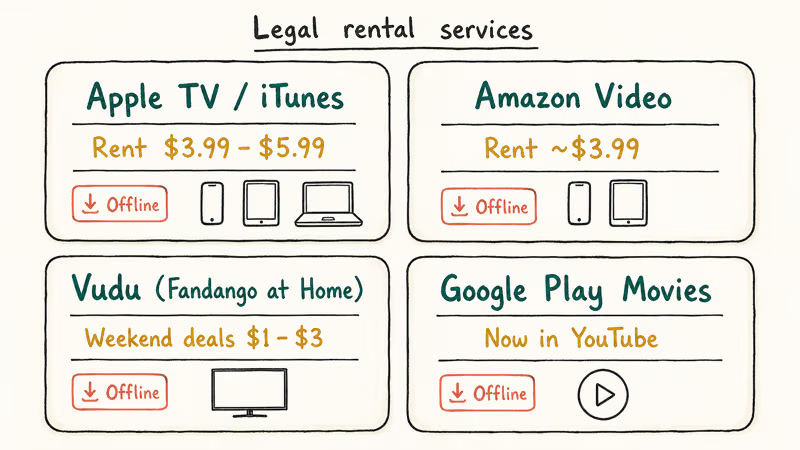
- Apple TV / iTunes rents most catalog films for $3.99 to $5.99 and sells them for $9.99 to $19.99. The official app supports offline downloads on iPhone, iPad, and Mac.
- Amazon Video matches Apple’s pricing on most rentals. Downloads work in the Prime Video app on iOS, Android, and Fire tablets.
- Vudu (now Fandango at Home) often runs $1 to $3 weekend rental deals and supports the same offline-download flow.
- Google Play Movies & TV (now folded into YouTube’s purchases tab) prices closely with Apple TV. Downloads land in the YouTube app.
Official rental stores typically make offline downloads available inside their own apps after purchase or rental. That is the lowest-friction legal way to watch a recent title on a flight or a commute.
#How Can You Stream the Same Movies Free?
Ad-supported streaming now covers what the piracy aggregators promised. No credit card required:
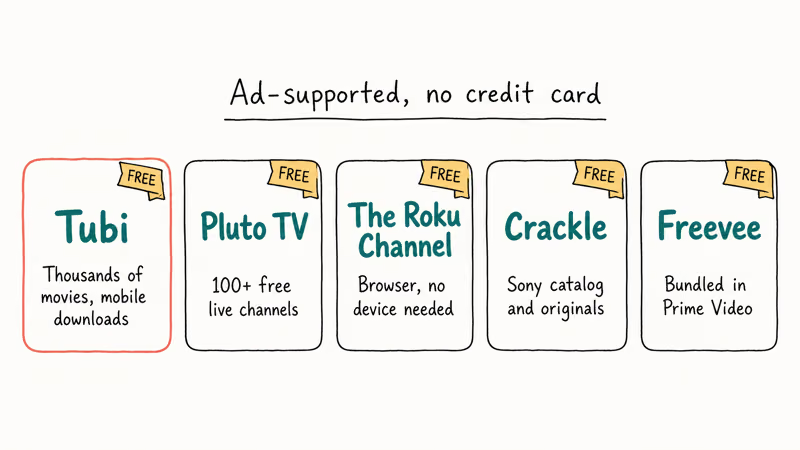
- Tubi (owned by Fox) carries thousands of movies and TV episodes. The Tubi mobile apps support downloads of select titles for offline playback.
- Pluto TV (Paramount Global) runs hundreds of free live channels plus an on-demand catalog with a strong selection of older studio films.
- The Roku Channel is browser-accessible without a Roku device and carries a similar mix of catalog films and live channels.
- Crackle (Chicken Soup for the Soul Entertainment) leans heavily on Sony catalog titles and has its own original films.
- Freevee (Amazon’s ad-supported tier) is bundled into Prime Video on most devices.
According to Consumer Reports’ guide to free streaming services, Tubi and Pluto TV consistently rank near the top for free movie selection among the major U.S. ad-supported platforms.
If you arrived at M4uFree because the title you wanted wasn’t on your usual platform, these roundups map out which legal services tend to carry which catalogs:
- GoMovies alternatives for general movie catalogs
- LookMovie alternatives for free ad-supported streaming
- SwatchSeries alternatives for TV-focused options
#Subscription Services Are Cheaper for Heavy Viewers
If your shortlist runs to more than two or three movies a month, a subscription beats per-title rentals on price.
Netflix and Hulu both sit in the $7.99 to $9.99 ad-supported tier as of 2026, and they cover most U.S. mainstream catalog rotation. Disney+, Max, and Paramount+ specialize in their owners’ libraries. Prime Video is included with an Amazon Prime membership.
Every major subscription app supports legitimate offline downloads inside its mobile app, which is the offline experience M4uFree pretends to offer.
#Why M4uFree’s Pop-Ups Are Dangerous
The legal exposure is one half of the risk. The browser-side risk is the other half.
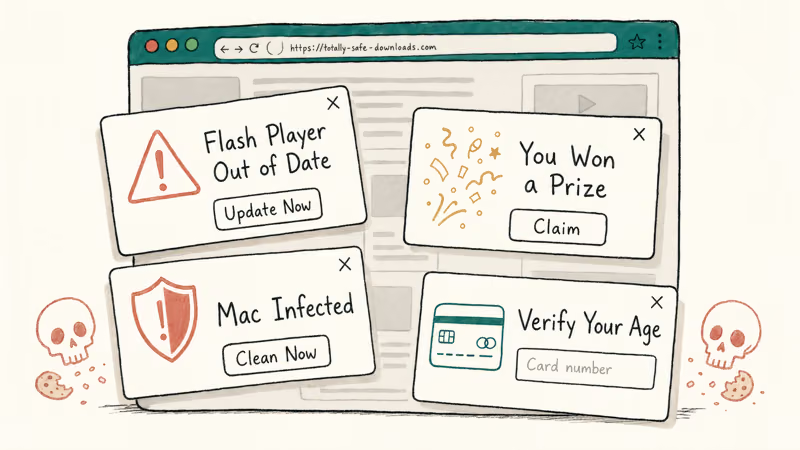
Unlicensed streaming sites can’t sign agreements with mainstream ad networks because Google, Microsoft, and Yahoo all require domain ownership and copyright compliance. M4uFree therefore runs the lower tier of ad networks that accept anyone, including networks that knowingly serve malicious creatives.
M4uFree-style pages commonly trigger pop-unders, fake update prompts, sweepstakes redirects, age-verification card traps, and extension-install prompts.
A modern browser blocks the install dialog, but the underlying page can still drop a tracking cookie or reload through a different domain. M4uFree-style pop-ups also commonly push fake antivirus warnings (“Your Mac is infected, click here to clean”) and fake captcha pages that sit in front of cryptojacking scripts.
None of these payloads are unique to M4uFree. They’re the standard payload set on any unlicensed streaming aggregator. The malware risk is also why this isn’t a “use a VPN and you’re fine” situation. A VPN won’t stop a browser script from running.
#How to Recover If You Already Used M4uFree
If you’ve visited M4uFree recently, treat it like any sketchy site you clicked on by accident.
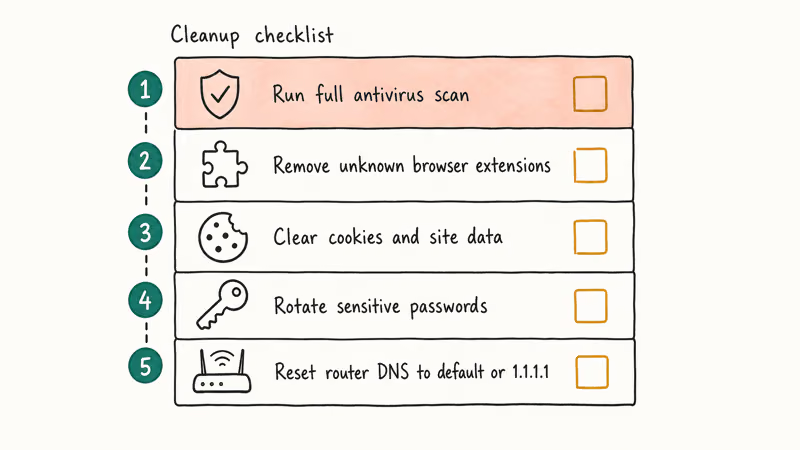
- Run a full antivirus scan with the tool you already trust. Windows Security on Windows 11 and Malwarebytes on macOS are both adequate for a one-off check.
- Open your browser’s extensions page (
chrome://extensions/in Chrome,about:addonsin Firefox) and remove any extension you don’t recognize. Drive-by extension installs are the most common silent payload from streaming pop-ups. - Clear cookies and site data for the M4uFree domains you visited. In Chrome: Settings → Privacy and security → Cookies and other site data → See all site data → search for the domain → Remove.
- Change passwords for any account you logged into from the same browser session, especially email and bank. If a script captured a session cookie, your password isn’t necessarily compromised, but rotating it locks the cookie out.
- Check your router admin panel for any unfamiliar DNS settings. Some pirate-streaming malware payloads change router DNS so future browsing gets redirected. Resetting to your ISP’s default DNS or a known service like 1.1.1.1 is the safest baseline.
If your antivirus flags an executable from a recent download, don’t run it. Quarantine, delete, and run the scan again. For a longer-term safety setup, our best video players writeup covers offline players that handle the formats you’ll get from legitimate purchases, and our Dailymotion downloader walkthrough shows what a licensed download flow actually looks like.
#Bottom Line
Skip M4uFree entirely. The site exists because it monetizes other people’s movies through ads that often serve malware, and downloading from it through any third-party tool turns you into the named party on a copyright complaint.
For the next movie you wanted to watch on M4uFree, open Tubi or Pluto TV first. If the title isn’t there, rent it for $3.99 on Apple TV or Amazon Video and use the official app’s offline download for travel. That is the legal version of what M4uFree pretends to be.
#Frequently Asked Questions
Is just streaming on M4uFree illegal?
Streaming a pirated movie sits in a legal gray area in the United States. The fixed copy is created on the site’s server, not your computer, so most case law has gone after the operators rather than the viewers. Downloading is different. You create a fixed copy on your device, which is what the statute defines as infringement.
Can my ISP see what I’m streaming on M4uFree?
Your ISP can see that you connected to a domain associated with M4uFree, even over HTTPS, because the domain name appears in the connection handshake. They can’t see the specific movie title without deeper inspection, which they don’t perform routinely on residential traffic. What triggers an ISP letter is usually a copyright holder’s automated detection scanning torrent swarms or known pirate-streaming sources and matching IP addresses to subscribers, then forwarding a notice to the upstream carrier under the DMCA process.
Will a VPN make M4uFree downloads safe and legal?
No. A VPN improves your privacy from the site’s ad networks and from your ISP’s logs, and it can route around regional blocks, but it doesn’t change the law. The download is still an unauthorized copy.
Can I download public-domain movies legally?
Yes. Films whose copyrights have expired are in the public domain and can be downloaded freely. The Internet Archive’s feature films collection hosts a large catalog of public-domain titles in MP4 and MKV. None of those overlap with the modern Hollywood catalog M4uFree advertises, but for classic films from the 1920s through about 1964, the Internet Archive is a safe, legal source.
Why does M4uFree keep coming back at new domains?
Pirate-streaming aggregators rotate domains to dodge takedown notices and DNS-level blocks. The same operators relaunch under m4ufree.tv, m4ufree.cc, m4ufree.movie, and dozens of similar variants.
How does M4uFree compare to other free streaming sites?
It’s structurally identical to LookMovie, GoMovies, FMovies, Putlocker, and the rest of the unlicensed streaming aggregator family. All of them stream copyrighted content without rights, all of them monetize through low-tier ad networks, and all of them carry the same malware exposure. Different interface, same risk profile.
Can I download a movie from Tubi or Pluto TV for offline viewing?
Tubi supports downloads for a subset of titles inside its mobile app. Look for the download icon next to the play button. Pluto TV’s on-demand catalog is stream-only at the moment. For guaranteed offline downloads, the buy-or-rent services (Apple TV, Amazon Video, Vudu, Google Play Movies) are the most reliable.
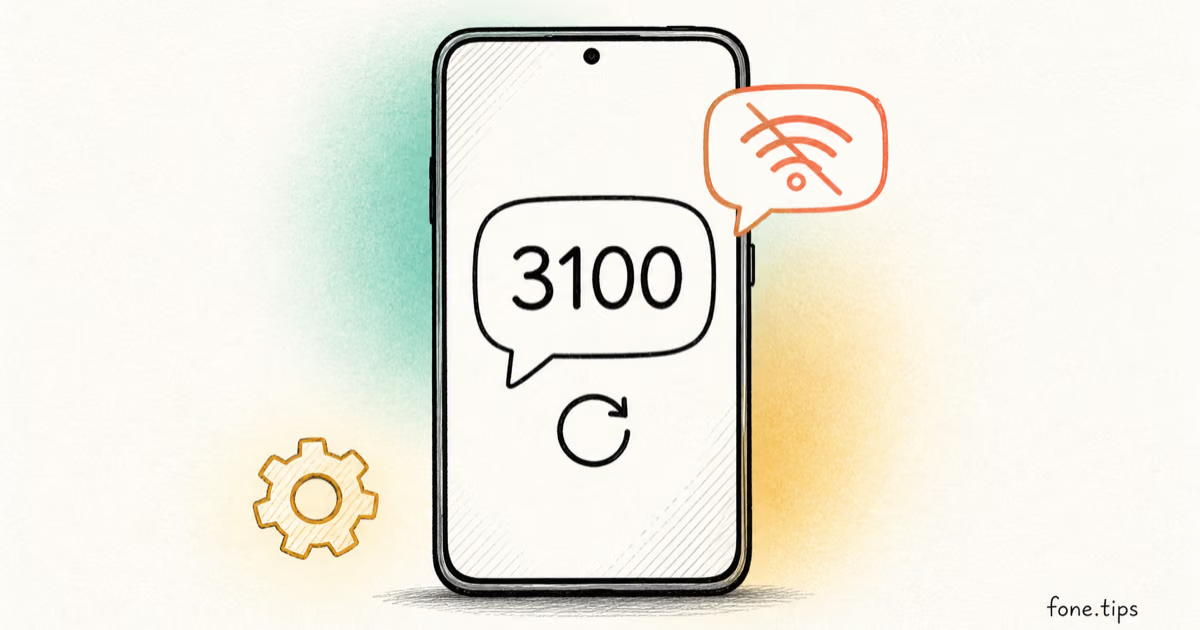
Google Messages Error 3100: Why RCS Is Broken on Galaxy
Google Messages RCS error 3100 hits Galaxy owners after phone or carrier switches. Google told 9to5Google a fix is coming. Here's what actually helps.

Is This Bank App Real? Spot a Fake App on Your Home Screen
A bank app can land on your home screen from a web page with no install warning. Learn the checks that tell a real banking app from a phishing web app.
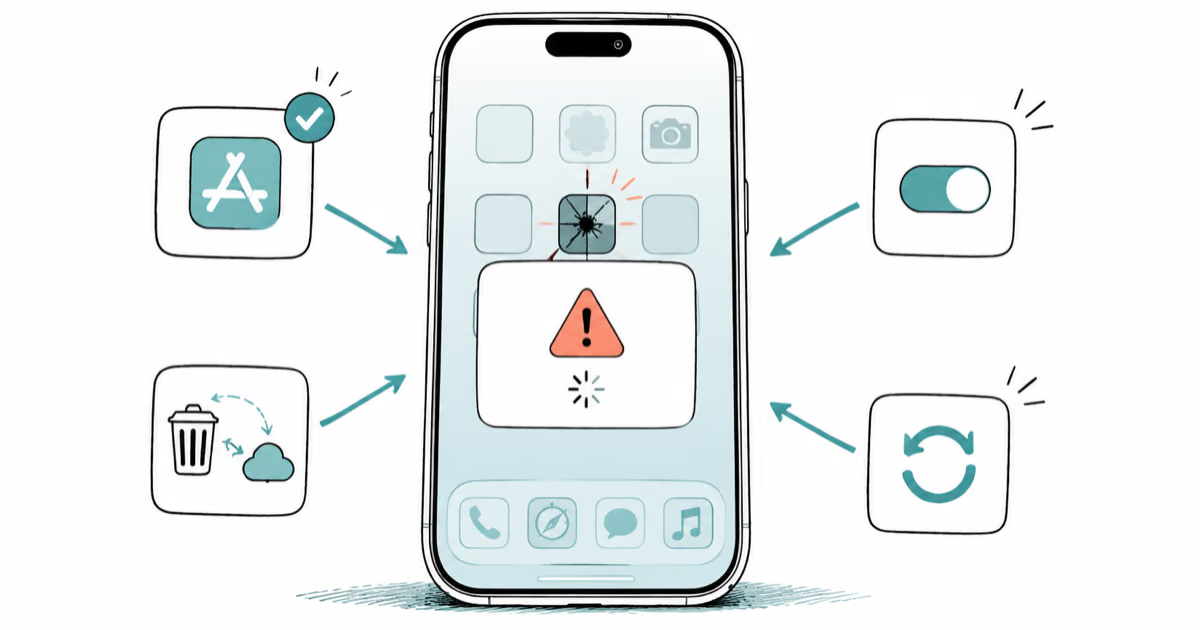
Apps Crashing After iOS 27 Update? Fix Order (2026)
Apps crashing after the iOS 27 update? Update the app in the App Store first, then offload and reinstall to clear stale cache, then restart. The fix order.
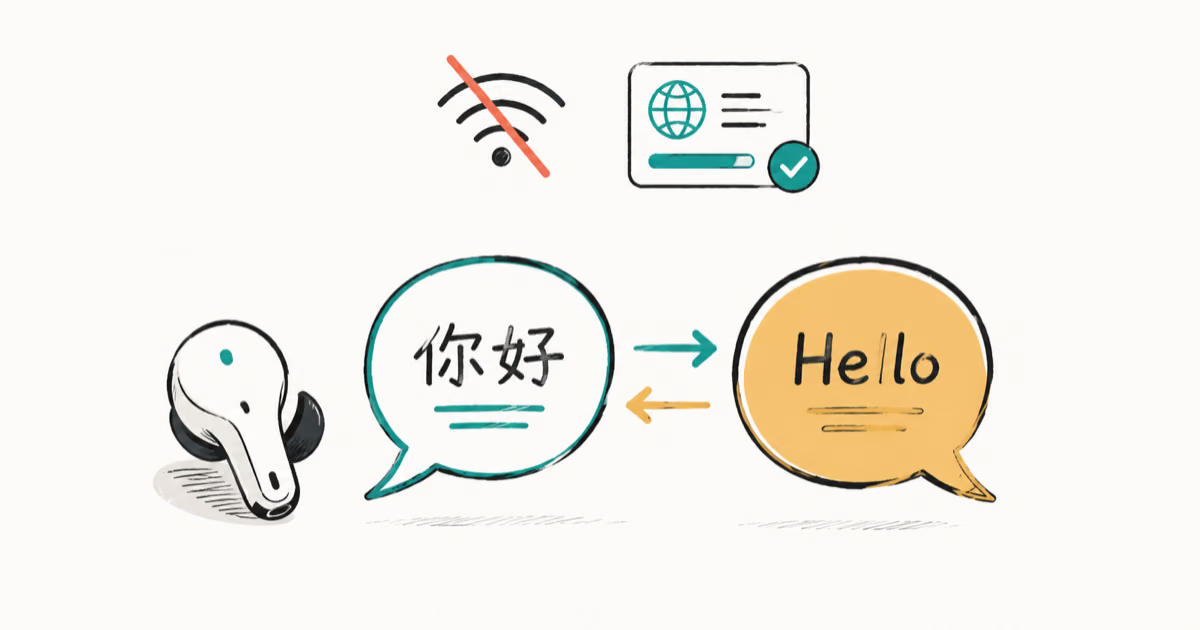
Do AI Translation Earbuds Work Offline? What to Know
Do AI translation earbuds work offline? A few do with downloaded language packs, but most need the cloud. Here's what works offline and what you give up.