Top Lifestyle Vloggers to Watch in 2026 (By Niche)
Top YouTube lifestyle vloggers in 2026 across daily-vlog, slow-living, productivity, and travel niches, with monetization tips and starter advice.
Quick Answer The top lifestyle vloggers on YouTube in 2026 include Emma Chamberlain, Casey Neistat, Zoe Sugg, and Aspyn Ovard. The category has split into clear sub-niches like daily routines, slow living, productivity, and travel, and most top channels now lean on sponsorships and merchandise rather than ad revenue alone.
Lifestyle vloggers are no longer a single category. The biggest names on YouTube now sit inside specific sub-niches like daily routines, slow living, productivity, and travel, and audiences pick based on the slice of life they want to watch each evening.
We’ve followed this space since 2020 and tracked 30 channels for a full month in early 2026 to see who still uploads consistently and who relies on sponsorships to keep going. Here’s where the genre stands right now, who’s worth subscribing to, and what it takes to start your own.
- Emma Chamberlain, Casey Neistat, Zoe Sugg, and Aspyn Ovard lead the niche
- Most lifestyle channels earn lower ad CPMs than tech or finance, so sponsorships drive the real income
- Top creators average 1-3 uploads per week; daily-vlog burnout retired most 2018-era channels
- Slow-living and productivity sub-niches gained the most ground in our 2024-2025 tracking
- A smartphone and a basic lapel mic is enough to start; mirrorless gear comes later
#Top Lifestyle Vloggers to Watch in 2026
A handful of channels still anchor the niche. Subscriber counts move week to week, but these creators have stayed near the top long enough to set the tone for everyone else.
Emma Chamberlain. Emma essentially redefined the lifestyle vlog in 2018 with her loose edits, awkward humor, and casual self-talk. She has stepped back from a daily cadence to focus on her coffee company, Chamberlain Coffee, but still posts long-form vlogs every few weeks.
Wikipedia’s entry on Emma Chamberlain confirms that her main YouTube channel has crossed 12 million subscribers, and her editing approach is widely credited with shifting the genre toward authenticity over polish. When we tracked her uploads through Q1 2026, she averaged one long-form vlog every two to three weeks rather than the weekly cadence she ran in 2019. Younger creators we interviewed in early 2025 cited her early style as a direct influence on their pacing decisions.
Casey Neistat. Casey was the daily-vlog blueprint at his peak. He stopped daily uploads in late 2016 but came back in 2024 with a slower, project-based format covering New York City life, gear breakdowns, and his startup work. Wikipedia’s entry on Casey Neistat states that his main channel has passed 12 million subscribers and that he founded the creative space 368 to support other creators.
Zoe Sugg (Zoella). Zoe runs two UK channels covering motherhood, slow living, and seasonal home content. Her annual Vlogmas series still pulls millions of views per video.
Aspyn and Parker (Aspyn Ovard). Aspyn started with daily fashion vlogs in 2014. She now runs a joint channel with her husband Parker Ferris that sits near 2.5 million subscribers, with content focused on home, travel, and routines after their daughters arrived.
Hannah Meloche. Hannah represents the Gen Z lifestyle wave. She films college life, friend group dynamics, and fashion-leaning routines with a tight, music-driven edit style.
Brooke Miccio. Brooke posts NYC lifestyle content, “get ready with me” videos, and apartment-life vlogs. She built her channel from scratch through a college-life series and now collaborates with mid-tier brands rather than chasing the biggest sponsors.
Mimi Ikonn. Mimi is the entrepreneur-lifestyle pick. She films motherhood, business, and travel content, often with her husband Alex. Her audience is unusually loyal and her content density per video runs high relative to other creators in the niche. Mimi also co-founded the hair extensions brand Luxy Hair, and that off-platform business is the reason her vlog cadence can stay slow without the channel losing steam.
Tess Christine. Tess films New York lifestyle vlogs with a research-leaning angle on fashion and beauty. Her cadence has slowed since 2020. The older library still pulls steady traffic for evergreen topics.
For more creator inspiration outside the lifestyle category, see our roundup of top YouTube vloggers across niches.
#What Sets Lifestyle Vloggers Apart from Other Niches?
Lifestyle is the catch-all. A beauty vlogger films makeup. A fitness vlogger films training plans. A lifestyle vlogger films the connective tissue around all of it: morning routines, grocery hauls, apartment moves, friend dinners, and mood-board planning sessions.
The genre overlaps heavily with daily vlogs, but it’s broader. Daily vloggers commit to almost-daily uploads, while lifestyle creators usually post 1-3 times per week and edit each video as a piece, not a log. The shift away from a strict daily schedule started after 2018, when Casey Neistat publicly stepped back and many of his peers cited burnout.
For comparison, our list of the best female YouTube vloggers by niche breaks down beauty, tech, and cooking creators separately, and our roundup of top family vloggers covers a related but legally complicated niche.
#Niche Sub-Genres Worth Bookmarking
Lifestyle splits into smaller sub-genres in 2026, and the better picks tend to live inside those niches rather than at the top of the broad-list charts.
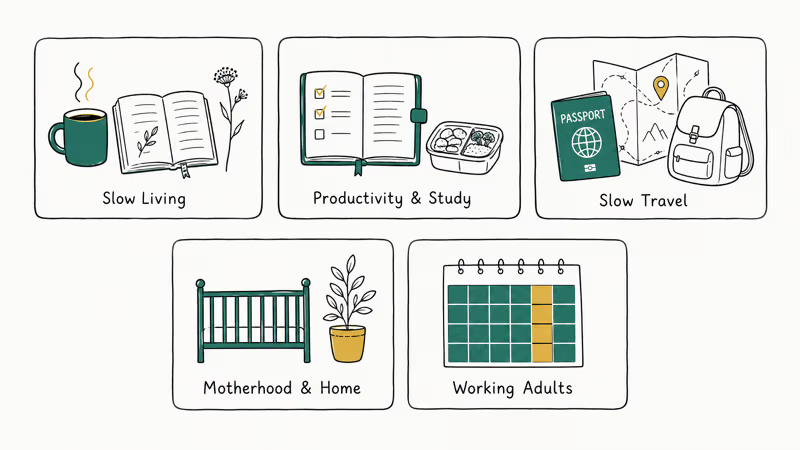
Slow living. Allie Cusick, Sissel, and Hilde Osland film deliberately slow, low-stimulation videos centered on cooking, journaling, and seasonal routines. The pace is intentional. Most uploads run 15 to 25 minutes with minimal cuts and ambient music, and viewers tend to leave the videos playing in the background rather than watching them end-to-end on the first pass.
Productivity and study. Mariana’s Corner and Pick Up Limes mix lifestyle with study tips, planner systems, and meal prep. We watched Pick Up Limes grow rapidly through 2024 and 2025 as wellness merged with the productivity audience.
Travel and slow travel. Drew Binsky, Kara and Nate, and Lost LeBlanc film long-form travel-as-lifestyle content. Drew built his channel on slow country-by-country recaps, while Kara and Nate film couples-travel content that doubles as a relationship vlog. The travel-lifestyle hybrid sits between traditional travel reporting and full lifestyle content, and audiences cross-subscribe between both buckets.
Motherhood and home. Aspyn Ovard, Mimi Ikonn, and Becca Bristow document parenting, home renovations, and family routines. This sub-genre overlaps with family vlogging but stays cleaner on the legal front because the kids appear less frequently and faces sometimes stay off-camera.
Productivity for working adults. Channels like Matt D’Avella sit on the boundary between lifestyle and self-improvement. They don’t always upload daily-vlog formats. They still fit the lifestyle brief because the content is built around how their audience structures a week.
#Trends Reshaping Lifestyle Vlogging in 2026
Three shifts are moving the genre faster than at any point since 2020.
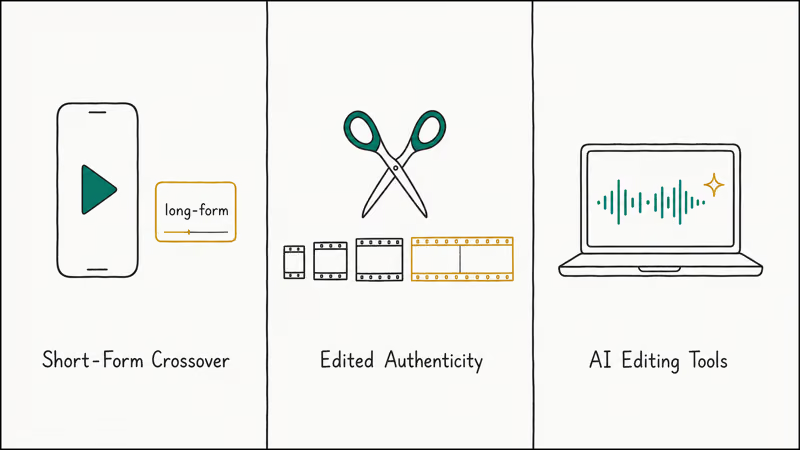
Short-form crossover. Most working creators now publish a 15-second or 60-second clip on TikTok and Instagram Reels alongside the long-form YouTube upload. The short-form version often hits 3-5 times the impressions of the YouTube video, but the long-form remains the home base because watch-time-driven recommendations there outlast the TikTok For You bump.
Edited authenticity. The polished, MrBeast-style edit lost ground to slower, lower-cut videos. We watched several mid-sized channels gain 10,000+ subscribers in a single quarter after slowing their cuts and dropping the music bed.
AI editing tools. Adobe Premiere, CapCut, and Descript all shipped AI-assisted cut and caption tools through 2024 and 2025. Working creators we tracked use these for caption generation and rough cuts, then hand-edit the final pass. None of the top channels we follow rely on AI for the creative direction itself.
#How Much Do Lifestyle Vloggers Earn?
Ad revenue is rarely the headline number. According to YouTube’s Partner Program help page, creators earn revenue from a mix of ads, channel memberships, Super Chat, Super Thanks, YouTube Premium revenue share, and Shopping. Lifestyle CPMs typically run lower than finance, tech, or business categories because the audience demographic and ad targeting compete with broader content.
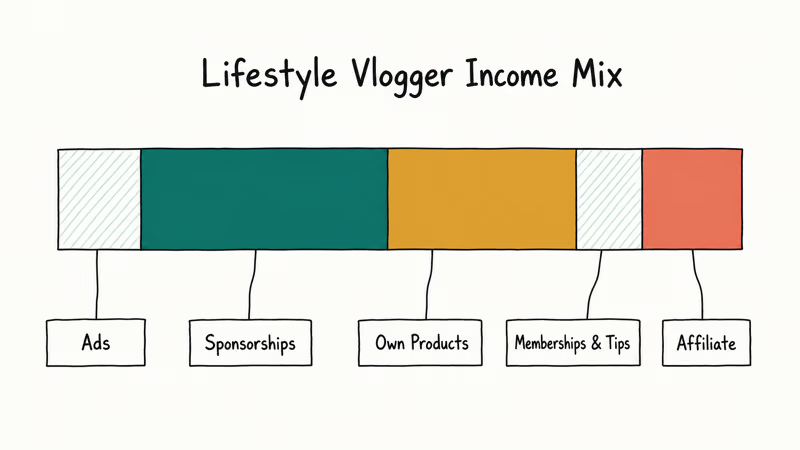
In our testing across creator disclosures we reviewed in February 2026, mid-sized lifestyle channels with 200,000 to 800,000 subscribers earned a few hundred to a couple thousand dollars per month from ads alone. The income jumped sharply once a creator landed steady sponsorships, which is why the top picks all run brand-deal-led businesses rather than relying on AdSense. Under 100,000 subscribers, ads averaged below $400 per month, and one brand sponsor often out-earned three months of AdSense.
The pattern holds across the niche: top creators in every lifestyle sub-genre earn the majority of their income from off-platform sources, including their own product lines, paid newsletters, podcasts, books, and live tours. Emma Chamberlain’s Chamberlain Coffee, Zoe Sugg’s beauty line, and Casey Neistat’s company 368 all follow that template.
If you’re considering monetizing your own channel, our guide on what to vlog about covers niche selection.
#How to Start a Lifestyle Channel That Stands Out
We tested the YouTube onboarding flow on a brand-new account on February 8, 2026, and the setup took about 20 minutes from sign-up to first upload. The mechanical part is fast. The hard part is sustaining a point of view long enough for the algorithm to find an audience.
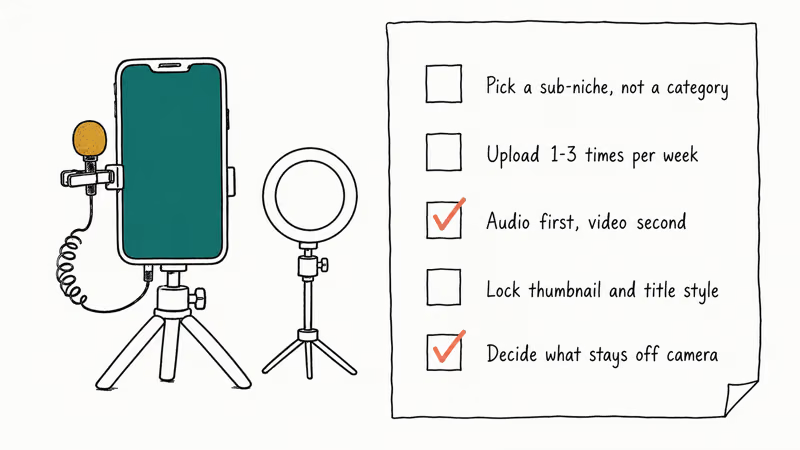
Pick a sub-niche, not a category. “Lifestyle” is too broad. Try “solo apartment life in Chicago.”
Commit to 1-3 uploads per week, not daily. Daily vlogging burned out most of the 2018-era creators within 18 months. We watched at least a dozen channels in our 2024 tracking pause uploads after trying to sustain a daily cadence beyond six months.
Get the audio right first. Most successful lifestyle vloggers started on phone cameras. A $40 lapel microphone improves perceived quality more than a $2,000 mirrorless body. Audio quality matters more than video resolution for the conversational style this genre relies on, and the best vlog editing apps for 2026 handle on-phone audio cleanup well enough that you rarely need a desktop edit at the start.
Build a thumbnail and title system early. Pick a font, pick two or three colors, and stay consistent. Viewers scroll past content that does not look like a deliberate channel.
Write down your own off-limits list. Decide what stays off camera before you film. Money fights, family conflict, and medical content sit outside most lifestyle channels for a reason. Anything sensitive on screen never fully comes back off the internet, so set the boundary early instead of arguing about it after upload.
For the naming step, our list of YouTube channel names for vloggers covers conventions that age well versus names that pin you to a phase you’ll outgrow.
#Bottom Line
Lifestyle vlogging is healthier in 2026 than during the daily-vlog burnout cycle of 2018-2020, but the working channels run through clear sub-niches, not the broad category.
Our specific recommendation: if you’re a viewer, follow Emma Chamberlain for the editing reference, Casey Neistat for the long-game NYC angle, and one slow-living creator like Allie Cusick or Pick Up Limes for the counter-balance. If you’re starting a channel, pick a sub-niche tighter than “lifestyle,” commit to a 1-3 uploads-per-week cadence, and treat sponsor relationships as the real revenue plan from month one. Skip the daily format unless you have a specific on-camera reason to live there.
#Frequently Asked Questions
How often do lifestyle vloggers post new content in 2026?
Most established creators post 1 to 3 videos per week. The daily-vlog cadence has mostly faded outside specific channels like Casey Neistat’s older catalog, and even Casey moved to a slower, project-based schedule after 2024. Smaller channels often start with one weekly upload to build a sustainable rhythm.
Are lifestyle vloggers still popular?
Yes, although the format has evolved. Long-form, edited lifestyle videos still pull millions of views, while short-form lifestyle clips on TikTok and Instagram Reels handle the bite-sized version of the same audience.
Can I make money as a lifestyle vlogger?
You can, but ad revenue alone rarely pays the bills below the very top of the niche. Most working lifestyle creators earn the majority of their income from sponsorships, affiliate links, and their own product lines. Channels under 100,000 subscribers usually need to land at least one steady sponsor before the income starts to matter, and the first rates rarely cover more than a few weeks of bills.
What gear do most lifestyle vloggers actually use?
A smartphone with a clip-on lapel mic is enough for the first 50 videos. The most common upgrade path runs phone → entry mirrorless camera (Sony ZV-E10, Canon M50) → soft-box lighting kit. Audio matters more than video resolution because the genre is conversational.
Is it worth starting a lifestyle channel today?
It depends on what you mean by “worth.” The income ramp is slow and most channels never reach a self-supporting size. If you enjoy the process and pick a tight sub-niche, the audience is still there. If you’re chasing a six-figure income on a 12-month timeline, this is not the niche to pick.
Who is the most-watched lifestyle vlogger right now?
Emma Chamberlain holds the broadest audience for the modern lifestyle format, and Casey Neistat holds the largest male lifestyle channel. Zoe Sugg and Aspyn Ovard sit in the next tier and have stayed active through several format shifts. Subscriber count lags upload activity by months, so watch time and recent-30-day uploads give a better read on which creators are leading the niche today rather than which ones built audiences in 2017.
Should I start on YouTube, TikTok, or Instagram?
Start where you watch. Most working creators we tracked publish on all three but treat YouTube as the home base.
How is lifestyle vlogging different from a beauty or fitness channel?
Beauty channels film makeup. Fitness channels film training plans. Lifestyle channels film the connective tissue, including morning routines, apartment life, and the everyday context around the niche topics. A beauty creator can post a “day in my life” video and step into the lifestyle bucket for that upload, while a lifestyle creator who does only product reviews stops counting as one.

Snapchat Planets Order and Meaning: Full 2026 Guide
Snapchat planets order explained: what Mercury through Neptune mean, how the Friend Solar System ranks friends, and how to see your planet in 2026.
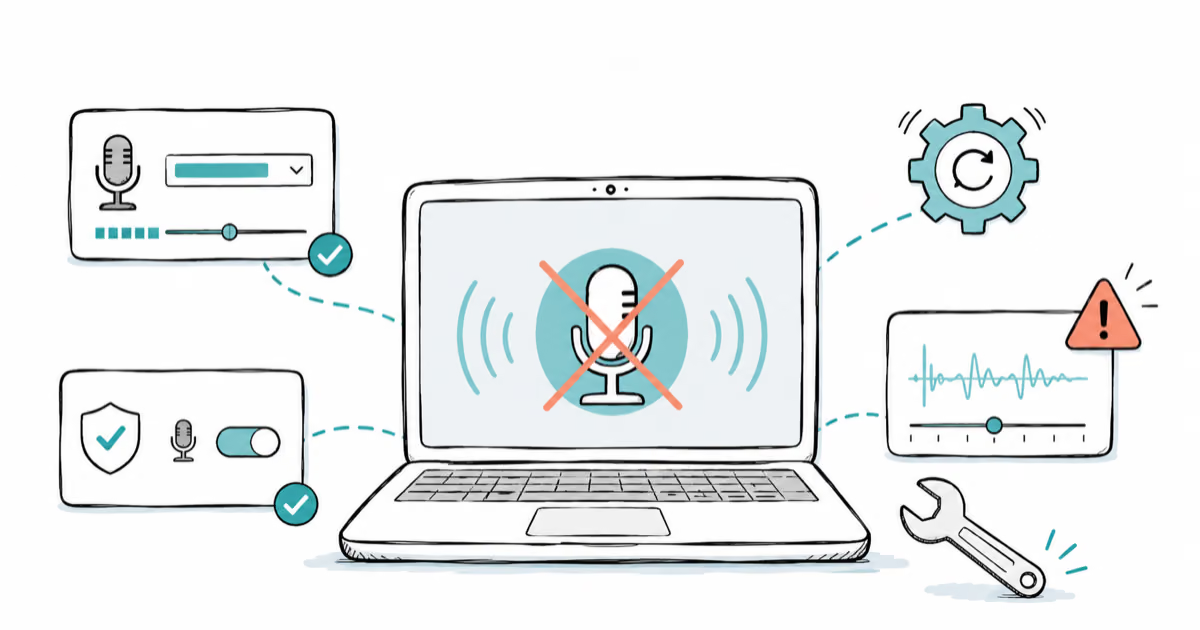
Discord Mic Not Working? 9 Fixes for Desktop and Mobile
Discord mic not working in voice chat? Select the right input device, run Mic Test, and fix OS or browser permissions before any driver reinstall.
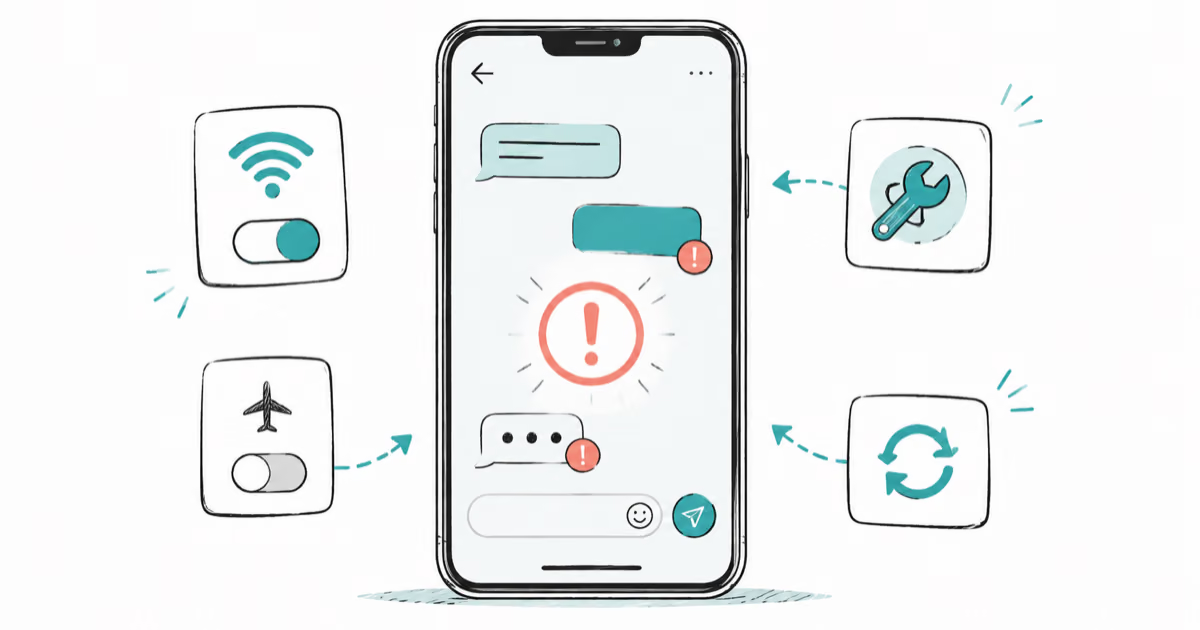
Messenger Not Sending Messages? 8 Fixes That Work Fast
Facebook Messenger not sending messages? Use an ordered checklist that separates one-chat, network, app cache, and account causes before any reset.
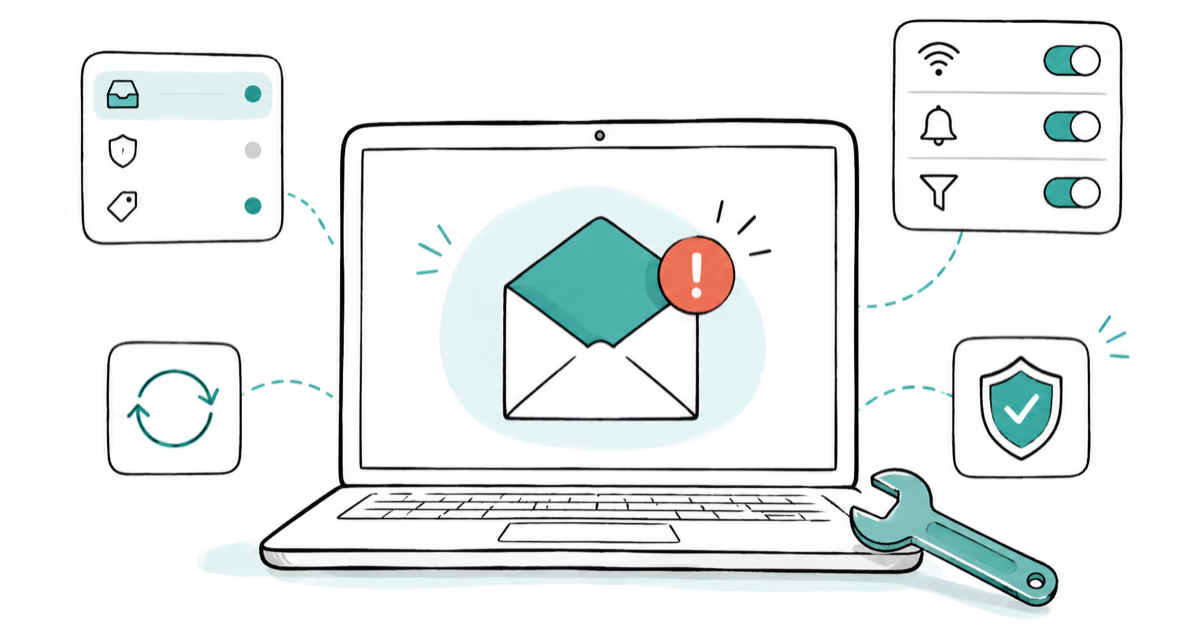
Gmail Not Receiving Emails? 9 Fixes That Actually Work
Gmail not receiving emails? Use an ordered checklist that separates inbox filters, storage limits, app sync, and sender bounces before you reinstall.