iPhone Battery Replacement Cost: Apple vs Third-Party 2026
iPhone battery replacement costs $99-$119 at Apple in 2026. Compare AppleCare+, Geek Squad, uBreakiFix, and DIY pricing in this repair-cost guide.
Quick AnswerApple charges $99 for iPhone 15, 16, and 17 standard battery service and $119 for iPhone 17 Pro and Air in 2026. AppleCare+ covers it free if battery health drops below 80%, and third-party shops run $69 to $129.
Apple charges $99 for most iPhone batteries in 2026, $119 for the iPhone 17 Pro and iPhone Air. Third-party authorized shops match those numbers within a few dollars.
Use the decision framework below before booking. Back up first — if iCloud throws errors at the diagnostic prompt, see our iCloud backup not working fixes before booking.
- Apple charges $99 for iPhone 15, 16, and 17 standard models, $119 for iPhone 17 Pro and iPhone Air
- AppleCare+ covers battery replacement for free if Maximum Capacity drops below 80%
- Best Buy Geek Squad runs $69-$129 by model with Apple-authorized parts and same-day service in most stores
- uBreakiFix by Asurion is Apple-authorized and typically matches Apple’s pricing with same-day turnaround
- DIY iFixit kits cost $25-$60 but void IP water resistance and risk damaging the Face ID flex cable
#How Much Does Apple Charge to Replace an iPhone Battery?
Apple’s out-of-warranty pricing splits into three tiers in 2026. According to Apple’s iPhone battery service page, pricing varies by model and the company quotes the exact fee once you pick your device in the service portal. The table below summarizes the current public pricing tiers.
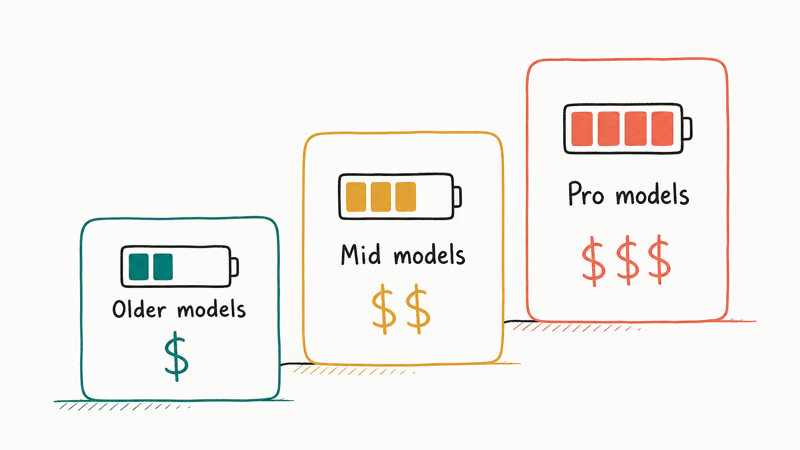
| iPhone tier | Apple service fee | Models included |
|---|---|---|
| Pro and Air | $119 | iPhone 17 Pro, iPhone 17 Pro Max, iPhone Air |
| Standard current generation | $99 | iPhone 17, iPhone 16 series, iPhone 15 series |
| Older standard | $89-$99 | iPhone 14, iPhone 13, iPhone 12, iPhone 11, iPhone XR, iPhone SE |
Tom’s Guide reported in September 2025 and found that Apple set the iPhone Air battery service fee at $119, matching the iPhone 17 Pro tier. The same article noted that older iPhones generally land in the $89 range, though Apple discontinues service for very old hardware once parts inventory runs out.
Every swap includes a genuine Apple battery and a 90-day repair warranty on parts and labor.
Same-day service depends on parts and appointment availability.
#How to Check Battery Health Before You Pay
Open Settings, tap Battery, then tap Battery Health & Charging. The Maximum Capacity percentage at the top is Apple’s diagnostic baseline.
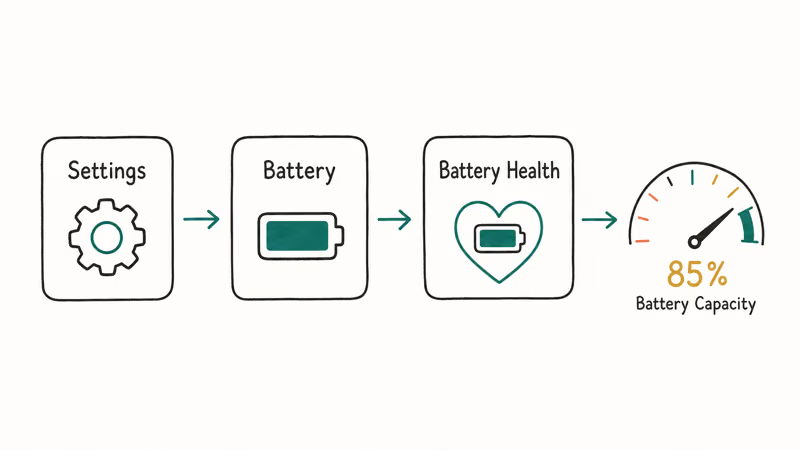
A reading at 82% with midday shutdowns usually points to a runaway app, not a worn cell. Run through our iPhone battery dying fast troubleshooting first.
If you also see a “Service” message under Peak Performance Capability, that is a red flag Apple uses when the battery fails a stress test even at higher capacity. In that case the swap is justified regardless of the percentage.
#When Does AppleCare+ Cover the Replacement for Free?
AppleCare+ pays for the swap once your battery is truly worn. Apple’s iPhone battery service page states that AppleCare+ will replace the battery for no extra charge if the capacity drops below 80%. That is the only condition. No per-incident deductible, no limit on replacements during your coverage window.
A few extra rules worth knowing:
- AppleCare+ must be active on the date of service, not just at the time of purchase
- The 80% rule doesn’t apply if physical damage caused the degradation (e.g., a swollen battery from a drop)
- Verizon, AT&T, and T-Mobile device protection plans usually don’t include battery replacement, so confirm with your carrier before assuming coverage
If you’re still under the standard 1-year Apple limited warranty and the battery has a manufacturing defect (not normal wear), Apple replaces it free even without AppleCare+. That path applies mostly to phones less than 6 months old that drop to 95% capacity unusually fast.
#Third-Party iPhone Battery Replacement Options Compared
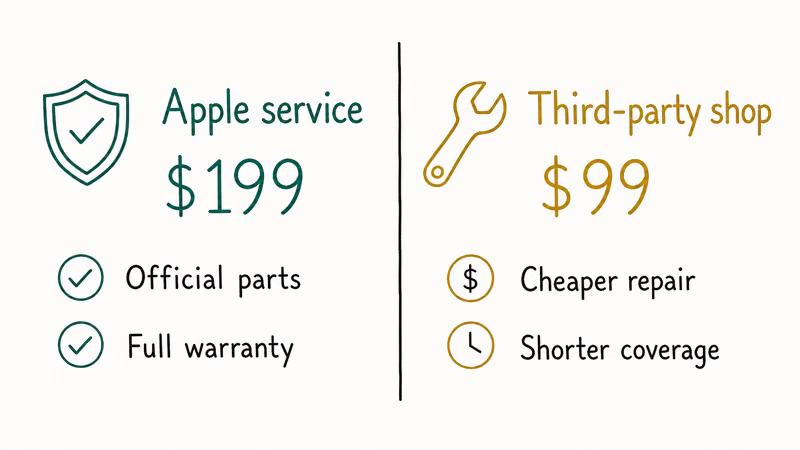
Three categories of third-party service exist, and they differ a lot in warranty, part quality, and risk to your warranty status.
#Best Buy Geek Squad (Apple Authorized)
Best Buy is an Apple Authorized Service Provider, and the company’s published policy says you won’t pay more than Apple charges for the same repair. In practice prices vary $69 to $129 depending on model and location, often matching Apple within a few dollars.
Genuine Apple parts. Same Apple 90-day warranty. Often more convenient than driving to an Apple Store if you live outside major metros.
#uBreakiFix by Asurion (Apple Authorized)
uBreakiFix is Asurion-owned and an Apple Independent Repair Provider. The uBreakiFix iPhone battery service page confirms genuine Apple parts and same-day in-store service in most locations. Pricing tracks Apple closely.
Mail-in works if you don’t have a local store, but the phone will be unavailable while it ships to service and back. Keep the warranty receipt when it comes back with the device.
#Local Independent Repair Shops
Independent shops outside Apple’s network are cheaper but carry tradeoffs:
- Parts are often aftermarket cells, not genuine Apple, so capacity claims may be optimistic
- Apple’s Battery Health screen may show “Unknown Part” or hide the Maximum Capacity reading entirely
- Future Apple service requests can be refused if the technician sees prior third-party work
- Warranty is usually 30-90 days on the part only, often labor-excluded
Local shops make sense for phones already out of any Apple coverage where you accept the part-quality tradeoff. They don’t make sense if you still hold AppleCare+ or expect to trade the phone in to Apple later.
#Replace the Battery vs Upgrade the Phone
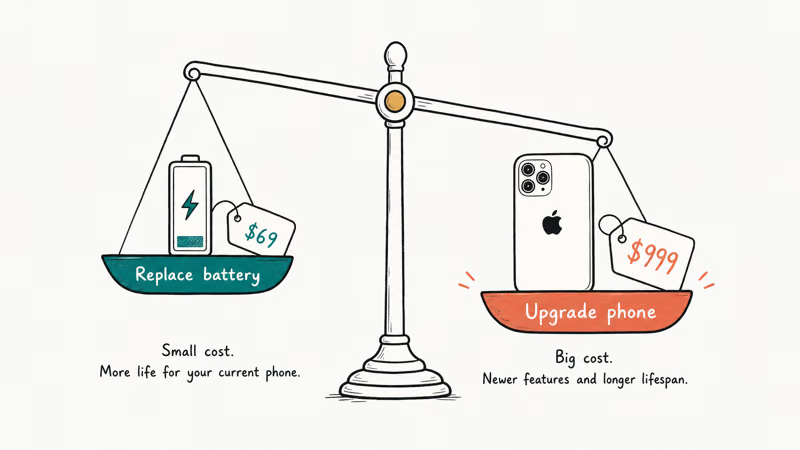
The replace-vs-upgrade decision is mostly about residual value, not the $99 itself. Here is a practical framework:
| iPhone age | Resale value range | Recommended action |
|---|---|---|
| 0-3 years (iPhone 14 or newer) | $300-$900 | Replace battery; protects resale and keeps you AppleCare+ eligible |
| 3-5 years (iPhone 12, 13) | $150-$300 | Replace battery only if no other hardware issues; otherwise upgrade |
| 5-7 years (iPhone XR, 11) | $80-$180 | Skip the swap, trade in toward refurbished iPhone 13 or 14 |
| 7+ years (iPhone X and older) | Under $80 | Recycle through Apple’s trade-in program, don’t invest |
On phones older than 4 years with battery health under 70%, you’ll likely face a second issue (camera module, charging port, lightning to USB-C transition) within 12-18 months. Spending $99 now plus another $200 next year usually beats just buying a $429 refurbished iPhone 14 with a fresh 1-year warranty.
If you’re not ready to commit either way, a MagSafe power bank is the cheapest stopgap. It snaps on and tops up a worn battery through the afternoon while you decide.
Seeing a “Service” message under Settings > Battery? That signals battery health verification failure, not normal wear.
If the phone also has trouble booting, follow our iPhone won’t turn on troubleshooting to rule out a software issue first. Apple uses similar language on MacBooks; see our MacBook battery service warning guide for the Mac equivalent.
#DIY iPhone Battery Replacement: Cost vs Risk
iFixit sells official iPhone battery replacement kits with the tools, adhesive, and pull tabs. iFixit’s iPhone battery wiki lists kit prices from $25 for older models to about $60 for current ones, with separate kits for each iPhone generation. A bare battery without tools runs $15-$40 if you already own a tri-point Y000 screwdriver, a pentalobe driver, and a heat pad.
The honest tradeoff:
- Cost saving: $40-$70 vs paying Apple
- Time investment: 60-120 minutes for first-timers
- Risk: a slipped pry tool can sever the Face ID flex cable (permanent Face ID loss, no fix without replacing the whole display module) or puncture the battery cell (fire risk)
- IP rating loss: the rear adhesive seal that gives iPhone its IP68 water resistance can’t be restored without specialized tools
DIY makes sense for an old iPhone you treat as a learning project, already own an iPhone repair tools kit for, and no longer rely on as a daily driver. Skip DIY entirely if the phone is still your primary device. The $50 you save evaporates the first time the broken IP seal lets water reach the logic board.
Apple’s own Self Service Repair program ships genuine Apple parts to DIYers. Total cost (battery plus tool rental kit) often lands within $20 of just paying Apple.
#Bottom Line
Pay Apple the $99-$119 if your iPhone is 4 years old or newer with battery health between 75% and 80%. The genuine battery, the 90-day warranty, and the protected AppleCare+ eligibility justify the premium over local independent shops.
On an iPhone 11 through iPhone 13 where resale value sits around $150-$250, get a free in-person quote from uBreakiFix or Best Buy first. Take it if they beat Apple by $20 or more with the same Apple-authorized parts.
On anything older than iPhone XR with health under 70%, skip the swap. Put the $99 toward an Apple trade-in credit or a refurbished iPhone 13 from Apple’s certified refurbished store. Skip DIY unless the phone is retired from primary duty and you already own the iFixit tools, the heat pad, and the patience for a 90-minute teardown that one bad pry can turn into a $400 logic-board repair.
#Frequently Asked Questions
How much does Apple charge for an iPhone battery replacement in 2026?
Apple charges $119 for iPhone 17 Pro, iPhone 17 Pro Max, and iPhone Air. The fee is $99 for iPhone 17 standard, iPhone 16 series, and iPhone 15 series. Older models (iPhone 14, 13, 12, 11, XR, SE) typically run $89-$99 depending on parts availability.
Is third-party iPhone battery replacement safe?
It depends on the provider. Best Buy Geek Squad and uBreakiFix by Asurion are both Apple Authorized Service Providers that use genuine Apple batteries and honor a 90-day warranty. Local independent shops outside the Apple network often install aftermarket cells that show “Unknown Part” in Battery Health and can complicate future Apple service.
Will replacing my battery void the iPhone warranty?
No, not if the work is done by Apple or any Apple Authorized Service Provider. A non-authorized shop voids AppleCare+ on the components it touched.
Can I get a free iPhone battery replacement?
Yes, in two cases. Your AppleCare+ is active and Battery Health Maximum Capacity reads below 80%. Or your iPhone is still under the standard 1-year Apple limited warranty and the battery has a manufacturing defect rather than normal wear.
How long does an iPhone battery replacement take?
Apple Stores finish same-day in 1-2 hours including diagnostics. Mail-in service takes 5-7 business days door-to-door.
What battery health percentage means I need a replacement?
Apple considers 80% Maximum Capacity the trigger for replacement under AppleCare+. Below that, the battery is officially “degraded.” Many users notice noticeable midday drain starting around 85-87%, and most people choose to replace once they hit 75-78% to avoid the second-half-of-day stress.
Is it worth replacing the battery on an older iPhone?
For an iPhone 13 or newer the math almost always favors replacement. For an iPhone XR through iPhone 12 it depends on resale value where you live; if your model fetches over $200 in working condition, the $89-$99 swap protects that value. For anything older than iPhone XR, putting the money toward a refurbished iPhone 13 or 14 from Apple’s certified refurbished store usually delivers more long-term value.
Mac mini M6 vs M5 Pro: Which Model Should You Buy?
Mac mini M6 vs M5 Pro compared on price, memory, ports, displays, and real workloads. Find the better 2026 Mac mini for your desk and budget.
Apple Siri Settlement: Who Qualifies and How to Claim
Apple's $250 million Siri settlement covers iPhone 15 Pro and iPhone 16 models bought June 2024 to March 2025. See who qualifies and how claims work.
iOS 26.6.1 Security Update: What Apple Fixed and Who Gets It
Apple released iOS 26.6.1 on August 17 with 29 security fixes, including an IPSec interception bug. See what it patches, who gets it, and how to update.
iPhone Adaptive Power: How It Works and When to Use It
Learn how iPhone Adaptive Power works, which models support it, what it changes, and when Low Power Mode is still the better battery-saving choice.