How to Turn Off the Green Dot on Android Phone (2026)
The green dot on Android can't be disabled. Here's what the privacy indicator means, which app is triggering it, and how to revoke camera or mic access.
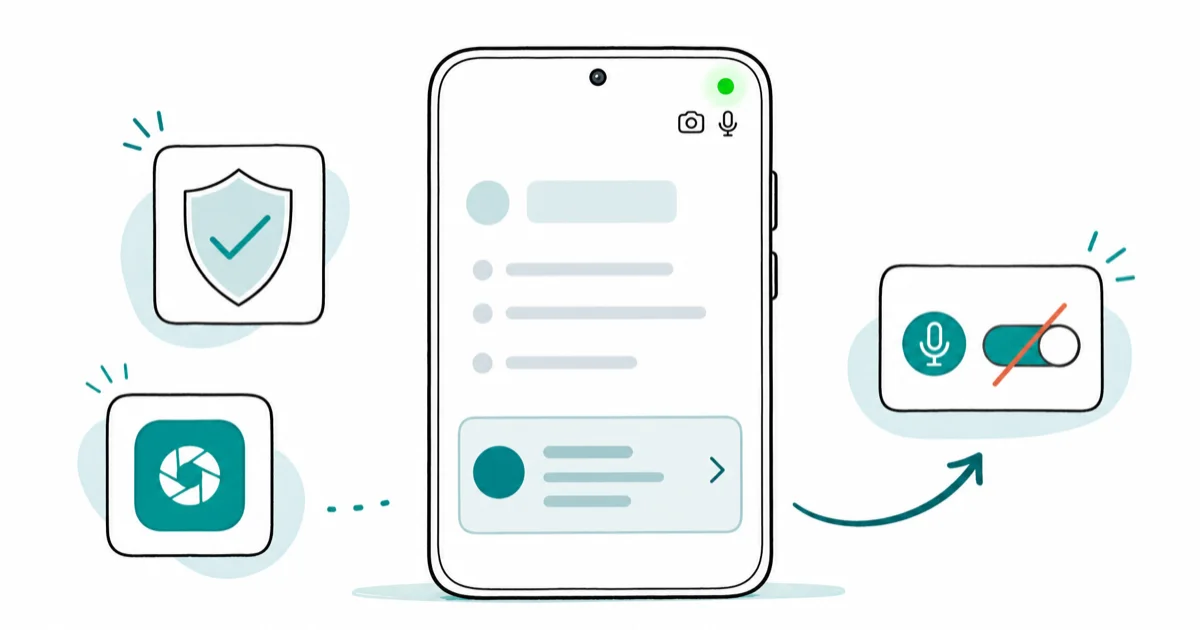
Quick AnswerYou can't turn off the green dot on stock Android 12 and newer. It's a privacy indicator showing an app is using your camera or microphone right now, and Google made it impossible to suppress. The fix is to find which app triggered it and revoke its permission.
If a small green dot keeps appearing in your Android status bar, you can’t actually turn it off on a stock Android 12 or newer phone. The dot is a system privacy indicator that fires whenever an app uses your camera or microphone. This guide covers what it means on your own Android device and what you can do instead.
- The green dot on Android 12 and newer is a system privacy indicator that lights up whenever any app uses your camera or microphone.
- Google designed it to be non-toggleable by apps and users, so there is no Settings switch to disable it on stock Android.
- Tap the dot or open the Privacy Dashboard under
Settings>Privacyto see exactly which app accessed your camera or mic in the last 24 hours. - Revoking camera or microphone permission in
Settings>Privacy>Permission Managerstops a specific app from triggering the dot again. - Samsung One UI, Xiaomi HyperOS, and other OEM skins place the same indicator in slightly different menus, but the behavior is identical.
#Why Is There a Green Dot on Your Android Status Bar?
The green dot is the camera-access indicator Google introduced as part of the Android 12 privacy redesign in October 2021. It also fires for microphone access on Android 13 and newer. The dot lights up almost instantly when an app opens the camera and fades a couple of seconds after the app stops using it.
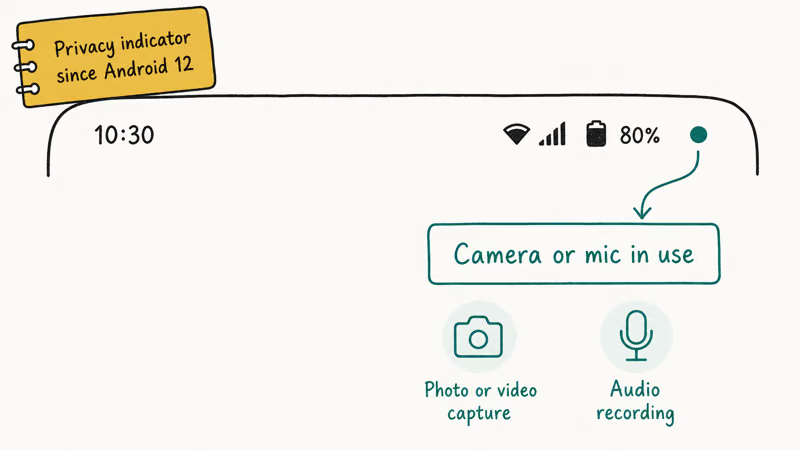
According to Google’s Android 12 privacy announcement on the Keyword blog, the indicator was added so users would have an at-a-glance signal that a sensitive sensor was active, even when the app responsible was minimized. Apple shipped similar indicators on iPhone in iOS 14, which is why the two platforms now look alike at the top of the status bar.
If your overall Android camera stops working after you tweak these privacy settings, our guide on how to fix the Android camera not working walks through the usual permission and cache fixes.
#What the Green Dot Actually Means
It means one of three things is happening on the device you own right now:
- A foreground app you opened is actively using the camera or microphone.
- A background app (video call, voice recorder, smart assistant, fitness tracker) is using them while another app is on screen.
- A briefly active sensor read just ended, and the dot is finishing its short fade-out.
It does not, on its own, mean the device is being spied on. Legitimate apps such as Zoom, WhatsApp, Google Assistant, and Shazam all trigger it as part of normal operation.
#Can You Remove the Green Dot on Stock Android?
No, you can’t remove the green dot on a stock build of Android 12 or newer through any official setting, accessibility tweak, or developer option. Google built the indicator into the SystemUI process and intentionally did not expose a toggle, because a togglable privacy light would defeat its own purpose. The indicator behaves the same way on Pixel, Motorola, OnePlus, and Nokia devices that ship close-to-stock Android.
The Android Open Source Project documentation on platform privacy indicators confirms that the camera and microphone indicators are mandatory for any Android 12+ device that ships with Google Mobile Services. OEMs can restyle the dot, but they can’t let apps or users hide it.
That leaves you three honest options on the phone you own:
- Identify the app triggering it and decide whether you want that app to keep using the sensor.
- Revoke camera or microphone permission for the app so the dot stops appearing.
- Use the global Camera and Microphone toggles in Quick Settings to block all apps for a session.
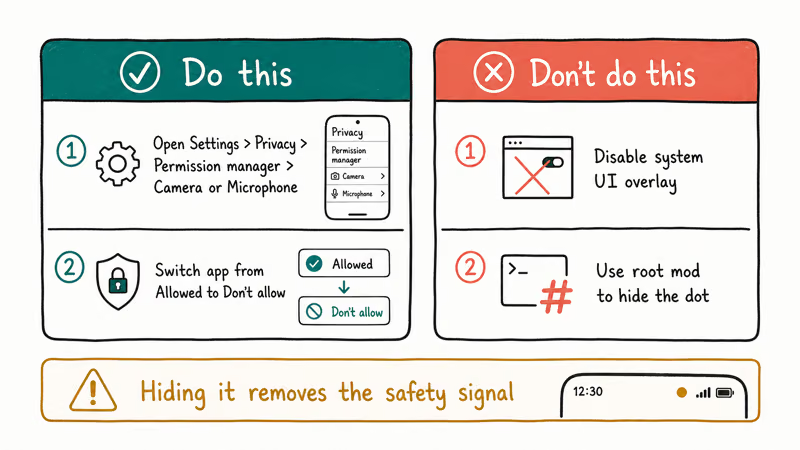
We recommend skipping any guide that tells you to root your Android, install a Magisk module, or sideload a custom ROM to suppress the indicator. Those workarounds defeat a security feature on your own device and break the safety net that catches misbehaving apps. Bypassing the indicator also breaks Google Play Integrity for many banking and payment apps, so you’d be trading a tiny UI complaint for real lost functionality.
#How to Find Which App Triggered the Green Dot
Tapping the dot itself opens a small chip that names the app currently using the camera or microphone. If the dot vanishes before you can tap it, the Privacy Dashboard keeps a 24-hour log on a Pixel, Motorola, OnePlus, or Nokia device:
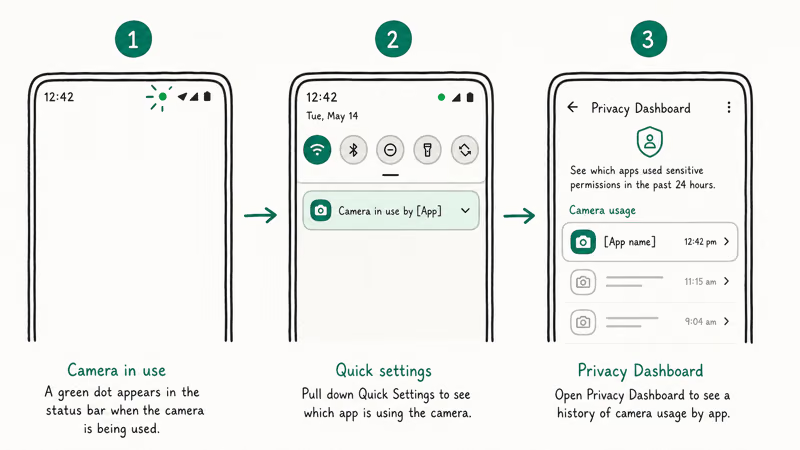
- Open Settings, tap Privacy, then tap Privacy Dashboard.
- Tap Camera or Microphone to see a timeline of every app access in the last 24 hours.
- Tap any entry to jump to that app’s permission screen.
The Privacy Dashboard lists every camera and microphone access with timestamps, so a Zoom call, a Google Assistant trigger, and a Camera app launch each appear as separate entries. According to Google’s Android Help article on app permissions in Android 12+, the dashboard reads from the same permission usage log that the indicator uses, so the two views always agree.
If touch input on the status bar stops responding while you’re trying to tap the dot, our walkthrough on how to fix touch input blocked on Android covers the common screen and Accessibility causes.
#Reading the Permission Manager
Once you know which app is firing the indicator, head to Settings > Privacy > Permission Manager and pick Camera or Microphone. Each app gets one of three states:
- Allow only while using the app: the safest default for most apps.
- Ask every time: useful for low-trust apps you only run occasionally.
- Don’t allow: fully revoked, and the green dot will never fire because of this app again.
#How to Stop the Green Dot from Appearing
The most effective fix is to revoke the permission for whichever app is responsible. After you identify the app in the Privacy Dashboard, change its camera or microphone permission to Don’t allow. The indicator stops firing immediately for that app, and the app can’t reopen the sensor without prompting you again.
For a temporary global block, swipe down twice from the top of the screen to open the full Quick Settings panel and toggle Camera access or Mic access off. Every app on the device is blocked from the sensor until you toggle it back on, and you’ll see a small notification confirming the block.
If you don’t see these toggles, edit the Quick Settings panel by tapping the pencil icon, then drag the Camera access and Mic access tiles into the active area. According to Google’s Pixel security and privacy settings help page, these tiles are part of the standard Android 12+ Pixel build and just need to be added to your active Quick Settings.
This is also a good moment to spot apps you don’t recognize. Our guide on hidden app finder tools for Android explains how to surface sideloaded apps that may not appear in the launcher.
#Samsung, Xiaomi, and Other OEM Skins Handle the Indicator a Little Differently
The indicator is mandatory across all Android 12+ devices that ship Google services, but the menu paths differ slightly. Samsung One UI puts the same controls under Settings > Security and privacy > Permission manager, and Samsung documents this in its official Galaxy security and privacy guide. Xiaomi HyperOS hides the dashboard under Settings > Privacy protection, and its HyperOS privacy page confirms the indicator can’t be disabled.
The visual treatment can shift too. Samsung shows the dot slightly to the left of the time on the status bar, and some Xiaomi builds render it as a tiny pill rather than a perfect circle. The behavior is identical: any app that uses your camera or microphone triggers it, and there’s no first-party off switch.
If your Samsung phone’s screen rotation suddenly stops working while you’re navigating these menus, our guide on Samsung screen rotation not working covers the Accessibility and Auto-rotate fixes.
#A Note on Your Own Device and Privacy Boundaries
This guide is written for the Android phone you own or have explicit, documented permission to manage. Using camera or microphone monitoring tools on a device you don’t own without the owner’s consent can violate federal wiretap law in the United States (18 USC 2511) and similar privacy statutes abroad. The Electronic Frontier Foundation’s surveillance self-defense guide is a good starting point if you suspect monitoring software on a phone you use.
If you found this article because you suspect a green dot is firing when nothing should be using the sensor, run a reputable malware scanner and review your installed apps for anything you didn’t install yourself. Persistent unexplained indicator activity is one of the few real-world hints that something on the device is misbehaving, which is exactly why Google made the dot impossible to silence.
If app installs keep failing while you’re trying to install a scanner, our fix for the error retrieving information from server RH-01 covers the Play Store account and cache reset.
#Bottom Line
The honest answer is the green dot on your Android phone can’t be turned off, by design. Open Settings > Privacy > Privacy Dashboard now, see which app accessed your camera or mic in the last 24 hours, and revoke permission for anything you don’t recognize. Add the Mic access and Camera access tiles to Quick Settings so you can flip a hard global block in two taps.
#Frequently Asked Questions
Can I completely disable the green dot on Android 12 or newer?
No. The indicator is built into the Android system UI and there’s no setting, ADB command, or accessibility option that turns it off on stock Android. Rooting the device or installing a custom ROM could suppress it, but doing so defeats the privacy guarantee the dot exists to provide and breaks Google Play Integrity for banking apps.
Does the green dot mean someone is spying on me?
Not by itself. The dot just means an app on your phone is using the camera or microphone right now, and the vast majority of the time it’s a legitimate app like Zoom, Google Assistant, or a voice recorder. If the dot fires when no obvious app is active, open the Privacy Dashboard to see exactly which app accessed the sensor and when.
Will revoking camera or microphone access break my apps?
It will stop the affected app from using the sensor, which can disable specific features. Video calling apps won’t be able to send video or audio, voice-to-text features will stop working, and camera-based scanners will fail until you grant the permission back. Apps you don’t use often are good candidates for revoking access entirely.
Is the green dot the same on Samsung and Xiaomi phones?
The behavior is the same on every Android 12+ device that ships Google services, but the visual styling and menu paths can differ. Samsung One UI uses Settings > Security and privacy > Permission manager, and Xiaomi HyperOS uses Settings > Privacy protection > Privacy dashboard. The indicator itself can’t be disabled on any of them.
Can apps bypass the green dot indicator?
Reputable apps from the Google Play Store can’t bypass the indicator because the camera and microphone APIs trigger it at the operating-system level, not the app level. Sideloaded malware on a rooted device could theoretically suppress it, which is one reason Google blocks Play Integrity attestation on rooted phones.
Why does the green dot stay on after I close the app?
Some apps keep the camera or microphone open in the background for a few seconds to handle reconnects, especially video-call apps. If the dot lingers for more than ten seconds after you close the responsible app, swipe up to open Recent apps and force-stop the app from the app info screen.
What should I do if the green dot appears when nothing seems to be running?
Open Settings > Privacy > Privacy Dashboard and tap Camera and Microphone to see the timeline of accesses in the last 24 hours. If you spot an app you don’t recognize, uninstall it, then run a malware scan with a reputable tool. Repeated unexplained access from an unknown app is the rare case where the indicator suggests something really wrong.
Does the green dot work on Android 11 or older?
No. The privacy indicator shipped with Android 12 in October 2021 and is not backported to older releases. If you’re on Android 11 or earlier and want similar visibility, third-party tools like the open-source Access Dots app from the Play Store add a software dot, but they can’t enforce it at the system level the way Android 12+ does.
Pixel 11 vs Pixel 10: What Changed and Who Should Upgrade
Pixel 11 vs Pixel 10: same screen and camera resolution, new Tensor G6, 25W wireless, and Gemini Intelligence. Here is who should actually upgrade.

Verizon Not Receiving Texts? How to Fix It in 9 Steps
Verizon not receiving texts? Fix it in 9 steps: check Message Blocking in My Verizon, reset network settings, deregister iMessage, and call support.
Pixel Battery Drain: What Google's July Fix Really Covers
Google marked the Pixel idle battery drain bug fixed in July, but only some phones got the patch. Here is who is covered, who is not, and what to try.
iPhone Stuck on EDGE? How to Get 5G or LTE Back (2026)
iPhone stuck on EDGE with crawling data? Here's why the E icon appears, which settings force 5G or LTE back, and when the problem is your carrier.