Remove Find My iPhone Activation Lock Without Previous Owner
Remove the Find My iPhone Activation Lock legitimately: ask the previous owner to unlink from iCloud, or contact Apple Support with proof of purchase.
Quick AnswerIf you legally own the iPhone, have the previous owner remove it from Find My, or contact Apple Support with proof of purchase. Third-party bypass tools are a last resort for your own device only.
Buying a used iPhone and hitting the Activation Lock screen is frustrating. The lock survives a full factory reset, and the device stays unusable until the original Apple ID is detached. This guide covers the legitimate paths first, and one rule frames every method below: only use them on an iPhone you actually own.
- Activation Lock turns on the moment Find My iPhone is enabled, and a factory reset alone does not clear it.
- The only official paths are having the previous owner unlink the device from iCloud, or contacting Apple Support with documented proof of purchase.
- Apple declines removal for devices flagged as lost, stolen, or enrolled in a school or business MDM profile.
- Third-party bypass tools exist, but they only make sense as a last resort on a device you can prove is yours, and they carry data loss, Apple ID, and iCloud limitations.
- Jailbreaking on its own doesn’t remove Activation Lock; the bypass and the jailbreak are separate operations.
Activation Lock is tied to the original Apple ID and stays in place until that account signs out or removes the device from iCloud. There is no shortcut around that fact, even after a full erase.
#Before You Try Anything: Ownership and Legal Limits
This article only applies if the iPhone is legitimately yours. Activation Lock exists to make a stolen iPhone useless to anyone but its owner, so any “trick” that defeats it on someone else’s device crosses a legal line.
Skip every method below if the iPhone is any of the following:
- Lost or stolen. Return it to the carrier, the police, or the nearest Apple Store.
- Managed by an employer or school under MDM enrollment (only the IT admin can release it).
- Owned by a family member or friend. Ask them to sign in to iCloud and remove the device themselves.
- A purchase with no traceable receipt. Apple won’t process the request without proof.
Bypassing Activation Lock on a device you don’t own is illegal under federal computer access laws in the United States and similar statutes in most other jurisdictions. It also violates the terms of service for both iOS and any tool you would use. If you bought a used iPhone in good faith and it turned out to be locked, talk to the seller first, talk to Apple Support second, and only consider anything else if both fail.
#What Is Find My iPhone Activation Lock?
Activation Lock is a security feature Apple introduced to prevent stolen iPhones from being signed in by anyone other than the original owner. It activates automatically the moment Find My iPhone is switched on.
Even after a full factory reset, the lock screen reappears during setup and asks for the original Apple ID and password. Without those credentials the iPhone can’t finish activation.
According to Apple, the feature has been part of iOS since version 7 and is enabled by default whenever Find My is turned on (see the official Activation Lock support page for the full list of supported devices and conditions). The same page makes clear that the lock is bound to the Apple ID, not the device serial, so swapping parts or reflashing firmware doesn’t detach it.
Apple’s serial-number checker shows the lock status before you have to enter any payment information, and the result page loads in seconds. That free pre-purchase check is the cheapest insurance against ending up with a locked device.
#Method 1: Ask the Previous Owner (Always Try This First)
The cleanest removal is also the simplest: the person who set up the iPhone signs in to iCloud and releases it.
If the previous owner is reachable, ask them to:
- Open iCloud.com and sign in with the Apple ID linked to the device
- Open Find My, pick the iPhone from the device list, and click Erase iPhone if it has not been wiped already
- Once the erase completes, click Remove from Account
Apple’s support page states that completing those 3 steps removes Activation Lock immediately, and that the previous owner doesn’t need physical access to the device for it to work. It’s also free, since Apple Support doesn’t need to be involved at all.
If they’re unreachable, send a written request first by text or email, whatever channel they were using when you bought the device. Keep that message. Apple Support will sometimes ask to see your attempt to contact them before opening a manual removal case.
#Method 2: Contact Apple Support With Proof of Purchase
When the previous owner is not available, the only official alternative is Apple’s manual review process.
Apple Support can release the lock if you can supply:
- The original purchase receipt showing your name and the device serial number
- A government-issued photo ID (asked for in some regions)
- The device’s IMEI or serial number
Apple announced the proof-of-purchase removal workflow alongside iOS 7, and the broad shape of it has stayed the same since: submit the documentation, wait for a case manager to verify the paperwork, and the lock is released remotely. Apple’s published policy is also clear that devices marked as lost or stolen won’t be unlocked under this process, and gray-market or unofficial-retailer purchases are reviewed case-by-case.
Start the request through the Apple Support contact page. Have your documents ready as PDFs or clear photos before you open the case. On the proof-of-purchase route, case managers typically ask for the original Apple receipt as a PDF rather than a phone photo, and an incomplete first submission can cost you an extra round of follow-up emails before the review continues.
For related issues, see our guide on iPad activation errors.
#Method 3: Third-Party Bypass Tools as a Last Resort
If you have exhausted both official routes and you can document that the iPhone is yours, third-party tools become an option to consider, with a long list of caveats.
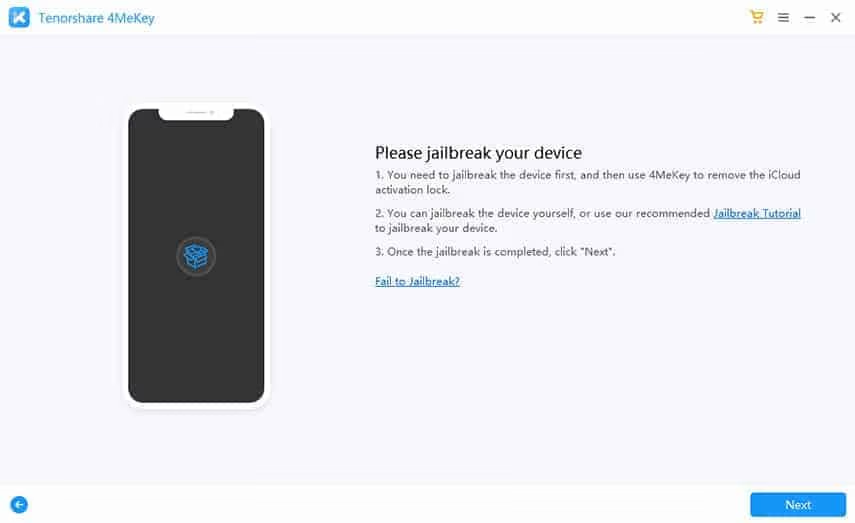
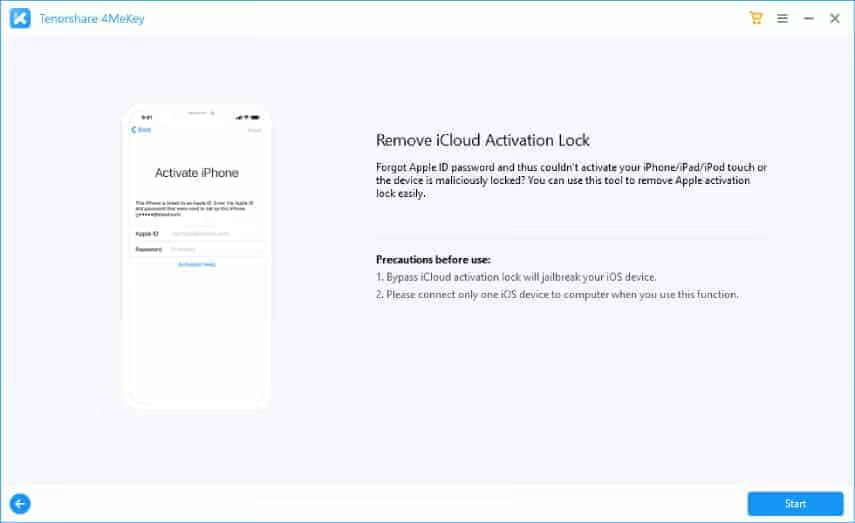
Tenorshare 4MeKey is one of the better-known options for older iPhones. The high-level flow is:
- Install and launch 4MeKey on a Windows or Mac computer
- Click Start, then connect the iPhone with the original Lightning or USB-C cable
- Let the tool download and apply a jailbreak package matched to the iOS version
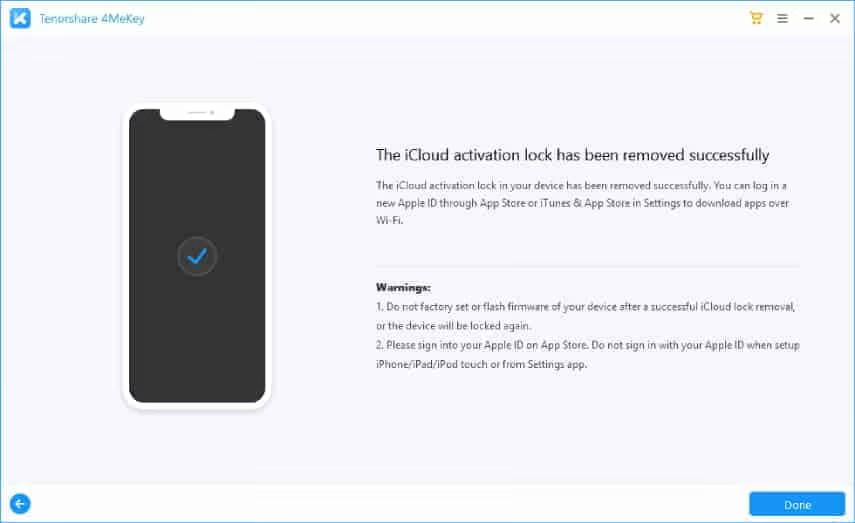
- Follow the on-screen prompts to complete the bypass
Before going down this road, accept the limitations the vendor itself documents:
- The bypass doesn’t restore the original Apple ID. You can’t sign back in with the locked account, use the App Store under that ID, or receive iCloud services tied to it.
- Cellular service may not work on some models after a bypass, because the carrier activation step depends on Apple’s servers.
- iOS updates can re-lock the device. Restoring or upgrading firmware typically reintroduces the Activation Lock screen.
- Jailbreaking voids your warranty and may violate Apple’s terms of service, even if you own the device.
Some links on this page are affiliate links, which means fone.tips may earn a commission at no extra cost to you.
These tools aren’t a substitute for the official Apple workflow. They’re a workaround with permanent trade-offs.
#What If an iCloud Account Is Signed In Without a Password?
This is a different problem from Activation Lock. The device is past the activation screen, but a leftover iCloud account is still signed in and you don’t have the password.
The legitimate first step is still the original owner: have them sign out remotely from iCloud.com, or use Apple’s Account Recovery flow if it was your own account and you lost access. Either route is reversible and Apple-supported, and doesn’t leave the device in the half-detached state a third-party removal can produce.
If neither is possible and you can prove ownership, Tenorshare 4uKey is one of the tools that removes a signed-in Apple ID locally:
- Install and launch 4uKey, then connect the iPhone
- Select Unlock Apple ID and tap Start Remove
- Reset all settings on the device when prompted; the account is dropped after the reset completes
The same caveats apply: you lose access to anything tied to the previous Apple ID, including App Store purchases, iCloud backups, and Find My protection.
For related issues, see how to check if your iPhone is unlocked without a SIM.
#Checking Activation Lock Status Before Buying
The cheapest fix for a locked iPhone is to not buy one in the first place.
Before money changes hands, ask the seller to:
- Go to
Settings>General>Aboutand show you the Carrier Lock field - Walk you through the full setup flow until you can see whether the Activation Lock screen appears
- Sign out of their iCloud and Find My in front of you, ideally before you accept the device
You can also enter the serial number into Apple’s Activation Lock status checker to confirm the lock state before paying. A few minutes of verification at purchase saves you from every method above.
#Jailbreaking vs. Bypass Tools: Key Differences
No, jailbreaking by itself does not remove Activation Lock. This is the most common misconception in the topic.
Jailbreaking gives you elevated system access. The Activation Lock check happens on Apple’s servers, and that check is unaffected by what’s happening inside the OS file system. Bypass tools use a separate technique (usually detaching the device from the activation check rather than removing the lock from the Apple ID itself), and most bundle a jailbreak as an enabling step rather than as the bypass.
Avoid free online services that promise instant Activation Lock removal in exchange for a serial number, an Apple ID, or a payment. Most are scams that harvest your information; a few are outright phishing operations. If you do use a paid third-party tool, pick one with a real refund policy and verifiable customer reviews.
See also iCloud Unlock Deluxe for context on what bypass tools actually do.
#Bottom Line
Start with the official routes.
If the previous owner is reachable, the iCloud removal flow takes minutes and is free. If they’re not, Apple Support with documented proof of purchase is the next legitimate step.
Third-party tools belong at the very end of the list. Use them only for devices you can prove are yours, only after you have understood the data, App Store, and iCloud limitations they create, and only when you accept the legal and security risk that comes with them.
#Frequently Asked Questions
Can I bypass Activation Lock without the previous owner’s Apple ID?
Only with documented proof of ownership through Apple Support. Third-party tools are a last resort, not a shortcut.
Is it safe to remove Activation Lock?
The official Apple path is safe and supported. Third-party bypass tools can void your warranty, may break cellular service, and almost always violate Apple’s terms of service. Treat them as a calculated trade-off, not a clean fix.
What happens after Activation Lock is removed officially?
You can sign in with your own Apple ID, set up Find My under that account, and use every feature of the iPhone normally. There is no residual restriction once Apple has processed the request.
Does removing Activation Lock erase data?
The official Apple Support workflow doesn’t require an extra erase, because the previous owner’s data has typically already been wiped before the device changed hands. Third-party tools that drop an Apple ID often reset all settings as part of the process, and any flow that involves Recovery Mode wipes the device completely, including any local data the previous user happened to leave on it after their own factory reset.
Will Apple Support always remove Activation Lock?
No. Apple Support confirms that requests for devices reported lost or stolen are declined every time, regardless of who is asking. Verified personal purchases with a clean receipt are the strongest cases; gray-market purchases are reviewed individually.
How long does the third-party bypass process take?
Vendor documentation usually quotes a wide range depending on iOS version and device model. Plan for the process taking longer than advertised, and expect at least one failed attempt before it completes.
Apple Siri Settlement: Who Qualifies and How to Claim
Apple's $250 million Siri settlement covers iPhone 15 Pro and iPhone 16 models bought June 2024 to March 2025. See who qualifies and how claims work.
iOS 26.6.1 Security Update: What Apple Fixed and Who Gets It
Apple released iOS 26.6.1 on August 17 with 29 security fixes, including an IPSec interception bug. See what it patches, who gets it, and how to update.
iPhone Adaptive Power: How It Works and When to Use It
Learn how iPhone Adaptive Power works, which models support it, what it changes, and when Low Power Mode is still the better battery-saving choice.
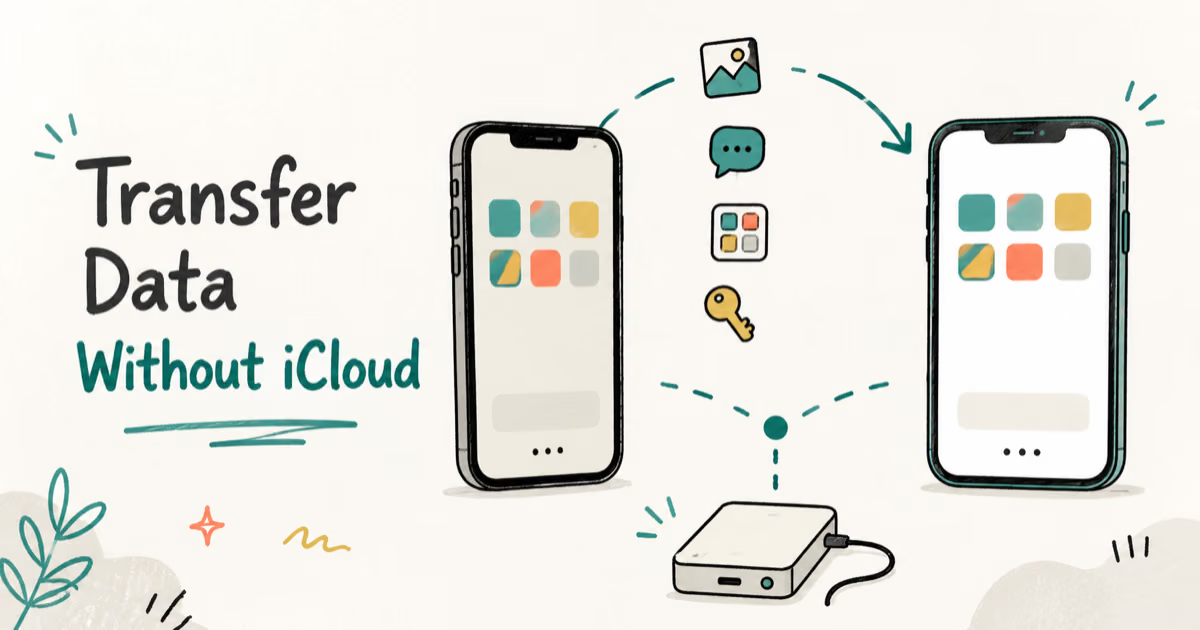
How to Transfer Data to a New iPhone Without iCloud
Move everything to your new iPhone without iCloud: Quick Start device-to-device transfer, wired migration, and encrypted Finder or iTunes backups.