How Can I Find My iPhone If It's Dead? (Find My Tips)
How to find a dead iPhone you own using the Find My network, last known location, Lost Mode, recent locations history, and Apple Support escalation paths.
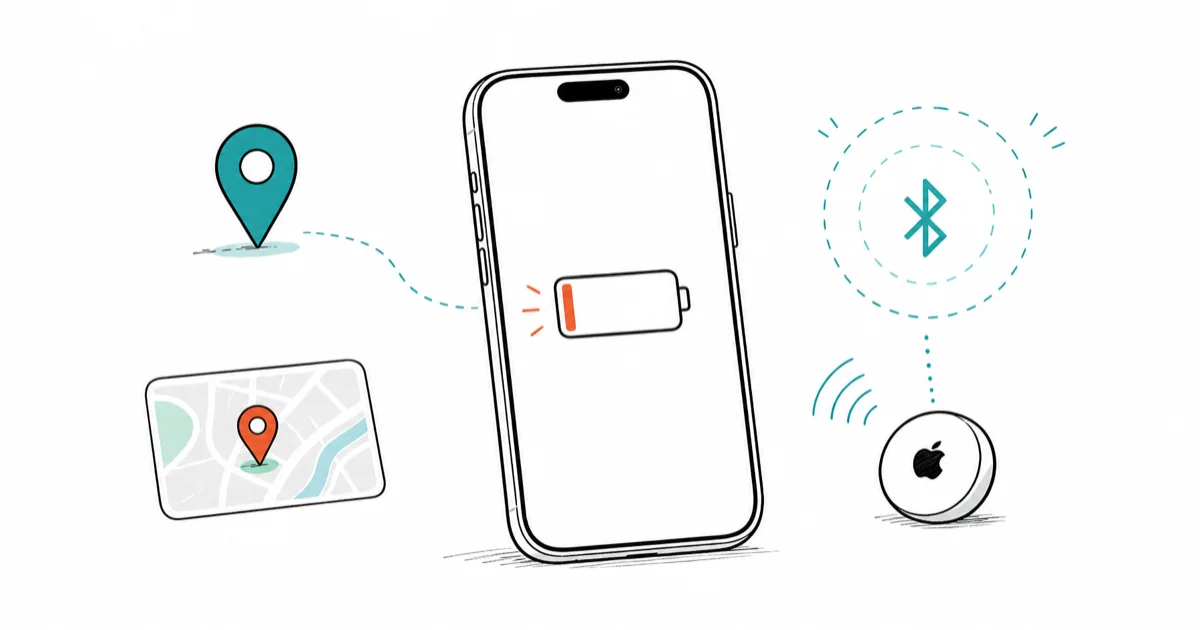
Quick AnswerIf the iPhone you own is dead, sign into iCloud.com/find or the Find My app on another Apple device to see its last known location and the Find My network's Bluetooth pings from nearby Apple devices, which work for up to 24 hours after the battery dies on iOS 15 or later.
Finding a dead iPhone you own is possible when the device is signed into your Apple ID and Find My was switched on before the battery died. Apple’s Find My network turns nearby iPhones, iPads, and Macs into anonymous Bluetooth relays, so a powered-off iPhone running iOS 15 or later can still broadcast its location for hours. This guide walks through the official recovery path, from the first iCloud.com check to filing a police report.
- The Find My network on iOS 15 and later keeps an iPhone discoverable for up to 24 hours after the battery dies, using a low-power reserve that pings nearby Apple devices over Bluetooth.
- Send Last Location must be toggled on in Settings before the device dies, since it transmits one final GPS fix when battery falls under 20 percent.
- Sign into icloud.com/find from any browser to see the last known location, or open the Find My app on a paired Apple device or a family member’s iPhone.
- Activate Lost Mode the moment you suspect theft, since it locks the screen, suspends Apple Pay, and starts logging location updates as soon as the phone powers back on.
- Use this method only on an iPhone you own or one you manage through Family Sharing with the owner’s permission, since tracking someone else’s device is illegal in most jurisdictions.
#How the Find My Network Locates a Dead iPhone
Before iOS 15, a dead iPhone went dark the moment the battery hit zero. That changed with the Find My network’s low-power mode.
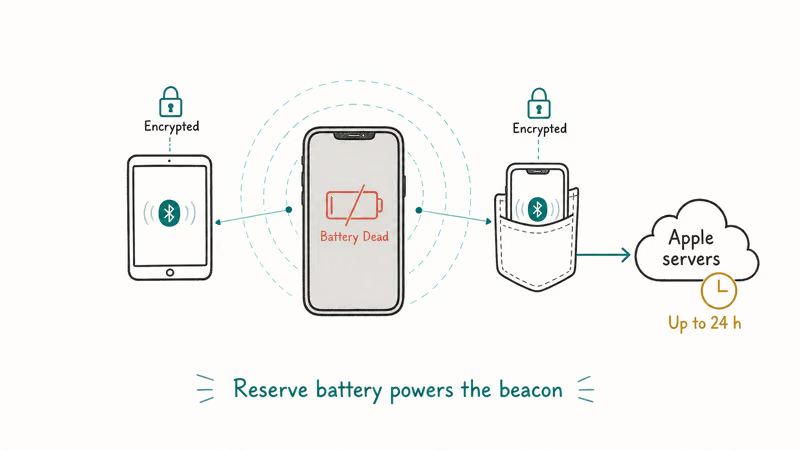
According to Apple’s iOS 15 release notes for Find My, iPhone 11 and later devices reserve a small amount of power that lets the U1 chip and Bluetooth radio keep broadcasting an encrypted location beacon for hours after shutdown. Nearby Apple devices detect the beacon, encrypt the location with your key, and relay it to Apple’s servers without ever seeing what the data contains. It’s the same crowdsourced mesh AirTag relies on.
Apple confirms that the network is end-to-end encrypted so even Apple can’t read the location data. In a dense urban area, a paired device can still show a fix accurate to roughly 30 feet several hours after the phone shuts down, as long as Apple devices keep passing near its last location.
#Requirements Before the iPhone Died
The Find My low-power mode only works if every prerequisite was set up before the battery died. Apple recommends enabling all three toggles the day you buy the phone. The prerequisites are:
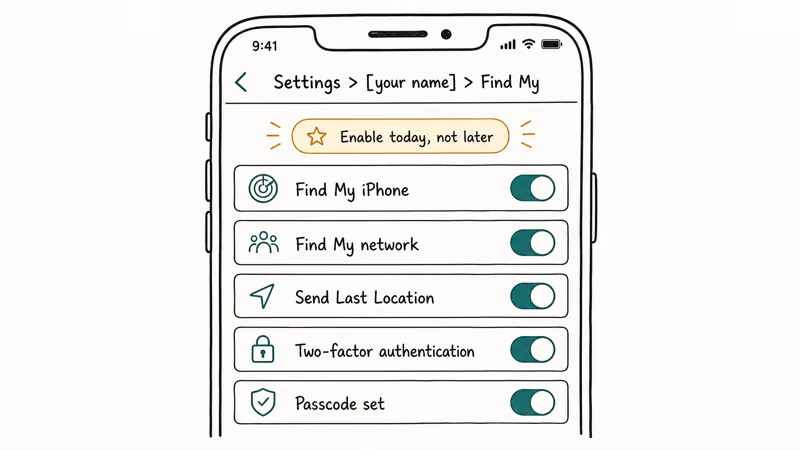
- Find My iPhone toggle on in Settings > [your name] >
Find My>Find MyiPhone - Find My network toggle on (the second switch on the same screen)
- Send Last Location toggle on so a final GPS fix is transmitted at low battery
- Two-factor authentication active on the Apple ID
- A passcode set on the iPhone (Apple requires this for Send Last Location)
If any one of these was off, the Find My network can’t deliver a post-shutdown location. The Last Known Location may still appear if the iPhone reported its position before dying, but no fresh pings will arrive.
#How Do I Locate the iPhone I Own From Another Device?
Two official entry points exist: the Find My app on a paired Apple device, and the iCloud.com web interface. Both pull the same data from Apple’s servers. The iCloud.com map tends to refresh every 60 to 90 seconds, while the Find My app usually updates within about 10 seconds of opening, so the app is the faster of the two for an active search.
#Using the Find My App on a Paired Device
If you have another Apple device signed into the same Apple ID (or are part of a Family Sharing group), open the Find My app and follow these steps:
- Tap the Devices tab at the bottom of the screen
- Select the dead iPhone from the list
- Read the timestamp under the device name (this is when the last location was recorded)
- Tap Directions to launch Maps with the last known coordinates as the destination
- Tap Notify When Found so iOS pushes an alert the moment the iPhone reconnects
When the iPhone is dead but still within the 24-hour Find My network window, the icon shows a solid color with a battery icon.
When the reserve battery is drained or Find My network was disabled, the icon dims and a “No location found” label appears. For deeper diagnosis of that message, see our walkthrough on what no location found means on iPhone.
#Using iCloud.com Find Devices
The web interface works on any browser, including a hotel computer or a friend’s PC. Go to icloud.com/find, sign in with your Apple ID, and approve the two-factor prompt sent to your other devices. Click All Devices at the top of the map, select the iPhone, and the same options appear: Play Sound, Lost Mode, and Erase iPhone.
Borrowing a stranger’s phone? Quit the browser when done.
Apple’s recovery instructions state that signing out of the borrowed Apple ID is unnecessary because iCloud.com uses a separate browser session. The Find My iPhone Checker walkthrough covers what to do when the device list looks incomplete.
#When the Last Known Location Is Hours Old
A stale timestamp is the most common frustration with a dead iPhone, and it’s rarely fixable in real time. Apple stores the last successful location for up to 24 hours, after which the entry disappears from Find My. If the iPhone died while moving on a bus, in a taxi, or in checked luggage, the recorded position is wherever the phone last reported, not where it actually is now.
#Squeeze More Detail From the Map
A few moves can narrow the recovery zone before you give up on the location:
- Toggle between map, satellite, and hybrid view to spot landmarks the map abstracts away
- Zoom to the maximum level and check the building name or street address overlay
- Compare the timestamp with your own movements that day to estimate where the phone fell out
- Tap Notify When Found so iOS pushes an alert the moment any of these things happen: the iPhone is charged, the battery recovers enough for a fresh Find My ping, or someone with a connected Apple device walks past it
#Check Recent Locations on a Paired Mac
If the iPhone was signed into the same iCloud account as a Mac you own, the Significant Locations history on the Mac gives you a frequency map of the phone’s recent stops.
Open System Settings > Privacy & Security > Location Services > System Services > Significant Locations on the Mac to view the same cluster the iPhone was building. This isn’t a real-time fix, but it often surfaces routes (gym, office, coffee shop) the dead iPhone visited in the days before going offline.
#Should I Activate Lost Mode Right Away?
Yes. It’s a one-tap action with no downside.
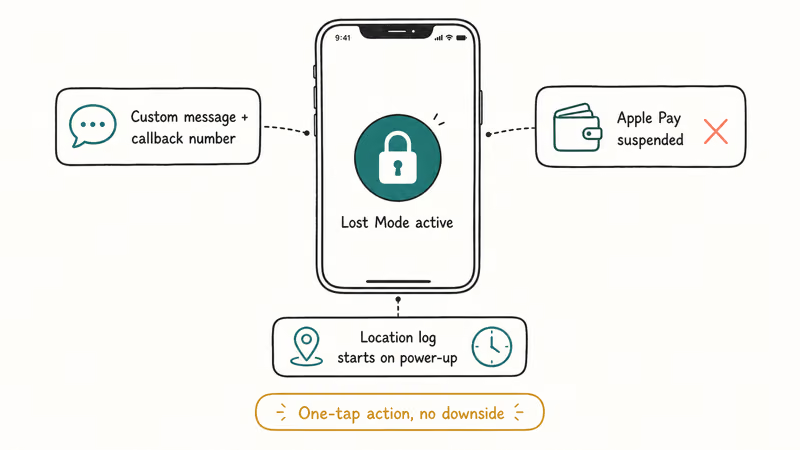
According to Apple’s Find My documentation, Lost Mode locks the screen with your passcode, displays a custom message with a callback number, suspends Apple Pay, and starts a Find My location log that records every fix the iPhone reports after it powers back on. The lock takes effect the instant Apple’s servers accept the request, so any thief who powers the phone on is staring at your message instead of your home screen.
Activate Lost Mode from the Find My app or iCloud.com:
- Select the iPhone from the device list
- Choose Mark as Lost or Lost Mode
- Enter a passcode the phone will require (skip if a passcode is already set)
- Type a short message and a phone number a finder can call
- Confirm the activation and watch for the lock acknowledgment on the map screen
A locked iPhone with a callback number also helps in the honest-finder scenario. Apple’s Lost Mode documentation recommends including a callback number so a finder can reach you without unlocking the device.
#Recovery When Find My Returns Nothing
Even with Find My enabled, some iPhones never produce a fresh location. The reserve battery may have drained, the device may be inside a Faraday bag, or a thief may have powered it off the moment it was taken. When the map won’t refresh, switch tracks from technical recovery to procedural recovery.
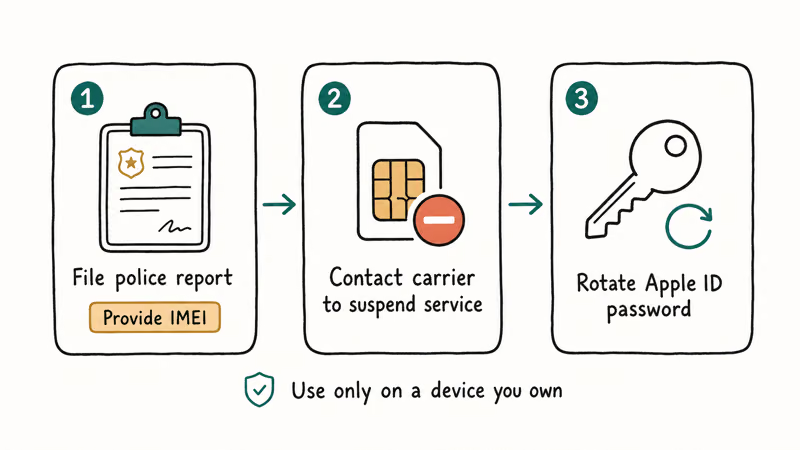
#File a Police Report With the IMEI
Police departments won’t investigate a stolen iPhone without an IMEI or serial number.
Find both numbers in Settings > General > About on a previous iCloud backup, on the original Apple receipt, or in your Apple ID account at appleid.apple.com under Devices. Our IMEI number tracker explains how carriers use the IMEI to flag stolen devices for blacklisting.
#Contact Your Carrier to Suspend Service
A SIM-locked iPhone is far less attractive to a thief. Suspending service also blocks data charges if someone tries to keep using it.
Most US carriers process suspensions through the same number you use for billing support. For a deeper look at network-level tracking limits, see our breakdown on tracking iPhone without iCloud and our guide to tracking a lost phone for non-Apple recovery angles.
#Change Your Apple ID Password
The instant Find My can’t recover the device, change your Apple ID password at appleid.apple.com. This forces a sign-out from any session a thief might try to use, including iMessage, iCloud Drive, and Apple Pay. Two-factor authentication should already block sign-ins from new devices, but a password rotation is the belt-and-braces step.
#Legal Limits on Tracking Someone Else’s iPhone
Use these methods only on a phone you’re authorized to track.
That means an iPhone signed into your own Apple ID, an iPhone you bought and registered as your primary device, or a Family Sharing member’s iPhone you have permission to locate. Using Find My on a partner’s, employee’s, or stranger’s iPhone without consent violates US federal stalking statutes, the UK’s Protection from Harassment Act, and the EU’s GDPR. Don’t.
Apple states that the Find My network is private by design and that location data is end-to-end encrypted between your devices, so Apple can’t share it with a third party who claims they own the phone. If you suspect someone is tracking you without consent, our guide to detecting spyware on iPhone explains how to audit Find My access and revoke unauthorized devices.
#Bottom Line
Run the recovery in this order, and stop at the first step that works.
First, open the Find My app or iCloud.com/find to read the last known location and trigger Notify When Found. Then activate Lost Mode within 60 seconds of confirming the device is missing so the lock and message take effect before a thief tries a hard reset. If no location appears within an hour, gather the IMEI from your Apple ID account, file a police report, ask your carrier to suspend service, and rotate your Apple ID password.
Trying these steps out of order, especially erasing the device before Lost Mode is active, almost always closes off the cheapest recovery path. The Find My network does the heavy lifting only when Find My iPhone, Find My network, and Send Last Location were all on before the battery died, so verify those three toggles on every device you own today.
#Frequently Asked Questions
Can I find my iPhone if it has been dead for a week?
Probably not through Find My. Apple keeps the last known location for up to 24 hours after the device goes offline, after which the entry usually disappears from the map. You can still log into icloud.com/find to enable Lost Mode so a lock activates the next time the iPhone is charged.
Does Find My drain my battery?
The impact is tiny.
Apple’s Find My network uses an ultra-low-power Bluetooth beacon that adds only a few percent of daily battery use. The reserve power that keeps a dead iPhone trackable comes from a dedicated buffer Apple sets aside, not from your day-to-day battery. Turning Find My off typically saves only a few percent of overnight battery at most, which isn’t worth losing the ability to locate the phone. Leave it on.
Will Find My work if the iPhone is in airplane mode?
Yes, mostly. Bluetooth and the U1 chip stay active in airplane mode by default on iOS 15 and later, so the Find My network can still pick up the beacon. If Bluetooth was disabled manually, the device goes dark.
What happens if I erase my iPhone remotely?
Erasing wipes the device the moment it reconnects to the internet. You lose the ability to track it afterward, so only choose Erase when you’re certain you won’t recover the phone. Apple keeps the activation lock attached to your Apple ID after the wipe, which makes the device unusable for anyone without your credentials.
Can I find my iPhone using a Google account?
Not directly. Find My is Apple-only, but if Google Maps was installed with Location History enabled, you can sign into Google Maps Timeline on the web to see the iPhone’s recent movement history.
That data has nothing to do with Apple’s servers and can fill in the gaps Find My leaves behind. For dead AirPods specifically, our guide on finding AirPods when dead covers a similar last-known-location workflow.
How accurate is the Find My network on a dead iPhone?
It depends on foot traffic.
Find My network accuracy hinges on how many Apple devices walk past your iPhone’s last location. In a busy city block the accuracy can drop to 10 to 30 feet. In a rural area with few nearby iPhones it can balloon to a few hundred feet or fail entirely. Both extremes are common, which is why the same phone can be pinpointed downtown but vanish in the countryside.
Should I trust a stranger who messages me about my Lost Mode iPhone?
Be careful. Phishing rings target Lost Mode contact numbers with fake “we found your iPhone, sign in here to claim it” links that lead to credential-stealing Apple ID lookalike pages. Apple confirms that legitimate recovery never asks for your Apple ID password through a text link, so verify any handoff in person at a public location or through Apple Support before sharing anything.
Apple Siri Settlement: Who Qualifies and How to Claim
Apple's $250 million Siri settlement covers iPhone 15 Pro and iPhone 16 models bought June 2024 to March 2025. See who qualifies and how claims work.
iOS 26.6.1 Security Update: What Apple Fixed and Who Gets It
Apple released iOS 26.6.1 on August 17 with 29 security fixes, including an IPSec interception bug. See what it patches, who gets it, and how to update.
iPhone Adaptive Power: How It Works and When to Use It
Learn how iPhone Adaptive Power works, which models support it, what it changes, and when Low Power Mode is still the better battery-saving choice.
How to Transfer Data to a New iPhone Without iCloud
Move everything to your new iPhone without iCloud: Quick Start device-to-device transfer, wired migration, and encrypted Finder or iTunes backups.