How Does Discord Make Money? Understanding the Business
Discover how Discord makes money through Nitro subscriptions, server boosts, and its freemium model while keeping the core platform free for all users.
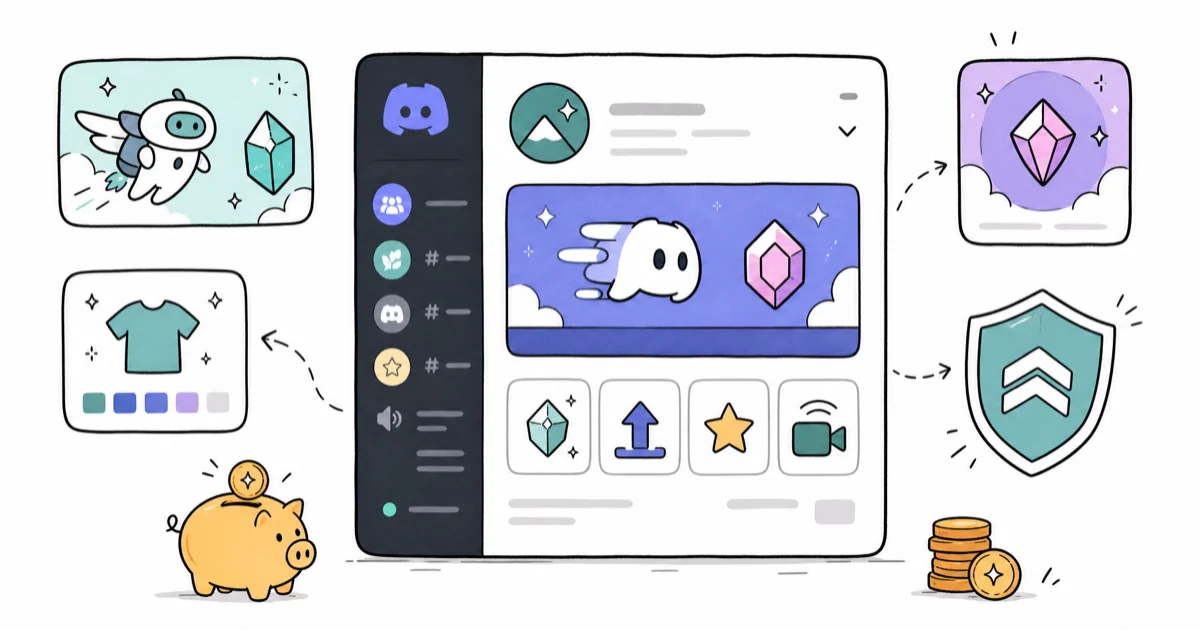
Quick AnswerDiscord makes money primarily through Nitro subscriptions, which offer perks like custom emojis, larger file uploads, and HD streaming, along with Server Boosts.
Discord keeps its core platform completely free. So how does Discord actually make money? The answer mixes premium subscriptions, virtual perks, and creator-economy features that users want to pay for.
- Discord’s primary revenue source is Nitro, a premium subscription priced at $9.99/month or $99.99/year, with a cheaper Nitro Basic tier at $2.99/month
- Server Boosts cost $4.99 per boost per month, with Nitro subscribers getting a 30% discount, and servers earn perks across three tiers requiring 2, 7, or 14 boosts
- Discord operates a freemium model with over 150 million active users across 19 million active servers, keeping all core text, voice, and video features permanently free
- Game sales through verified Discord servers earn the platform a 10% commission, providing developers exposure while generating an additional revenue stream
- Strategic partnerships with companies like PlayStation Network generate revenue through exclusive content deals and targeted non-intrusive advertising arrangements
#What Is Discord, and How Did It Get So Big?
According to Wikipedia’s Discord article, Discord launched in May 2015 after founders Jason Citron and Stan Vishnevskiy hit voice-chat problems while building their previous game. The service now serves hundreds of millions of users monthly.

With over 150 million active users and 19 million active servers, Discord offers text, voice, and video communication across multiple devices. Its cross-platform availability and integration with services like YouTube and Spotify have made it the default chat layer for a generation of online communities. Many users compare it favorably against voice-meeting apps like Zoom and Skype for its user-friendly interface and persistent community channels.
On the messaging side, Discord’s server-first model differs from contact-based apps like Telegram and WhatsApp, where conversations live inside one-to-one threads instead of topic channels.
Discord also complements game-streaming platforms rather than replacing them, as covered in our Discord vs Twitch comparison, and people often use it alongside WhatsApp when they need to find someone on WhatsApp outside of a Discord server.
Everything that follows assumes you are looking at how Discord earns money on your own account or a server you legitimately own or moderate. Reselling Nitro keys, scraping the API for paid features, or wiring up unofficial “free Nitro” tools violates Discord’s Terms of Service, and any monetization strategy for your own community has to stay inside Discord’s official creator monetization rules.
#How Does Discord Stay Free for Most Users?
Discord uses a freemium business model: broad free access, paid extras.
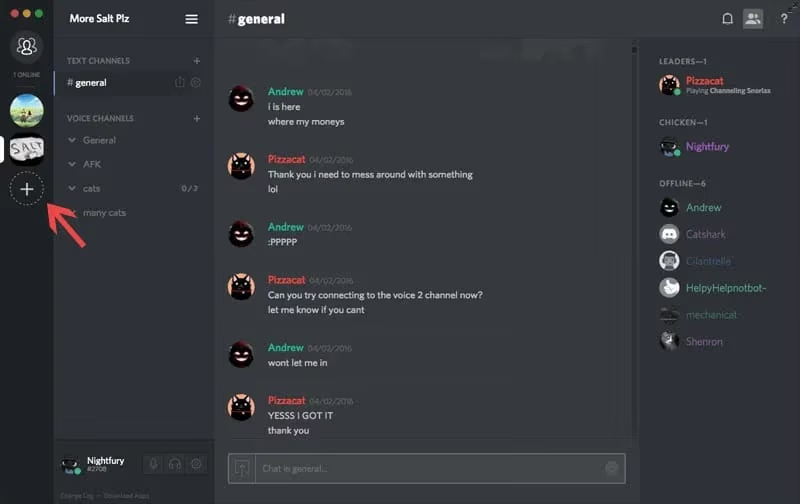
#Free Features
- Text, voice, and video communication
- Server creation and management
- Basic file sharing
- Cross-platform accessibility
#Premium Features
- Enhanced audio and video quality
- Increased file upload limits
- Custom emojis and animated avatars
- Server boosting capabilities
Free users keep Discord’s network effect alive. Paid users (Nitro subscribers and Server Boosters) fund the audio, video, and trust-and-safety infrastructure that everyone else uses. That is why Discord has never put the core chat product behind a paywall, and why the company has kept text, voice, and video chat fully free even as Nitro pricing has shifted year by year.
#Main Revenue Streams
#1. Discord Nitro Subscriptions
Discord’s primary revenue source is its premium subscription service, Discord Nitro. There are two paid tiers, and both are managed inside Discord’s own billing system, never through third-party “key shops.”
According to Discord’s official Nitro page, the standard Nitro plan costs $9.99 per month or $99.99 per year, while Nitro Basic sits at $2.99 per month and skips the heavier perks like HD video and bundled Server Boosts.
Nitro subscribers enjoy a range of enhanced features:
- Custom and animated emojis across every server
- Increased file upload size (up to 500 MB on the standard tier)
- HD video streaming up to 4K 60fps
- 2 bundled Server Boosts per month plus a 30% Boost discount
- Custom profile badges, animated avatars, and longer messages
Nitro Basic mainly helps users who need larger uploads without the full set of premium video, profile, and Server Boost perks. The full Nitro tier is aimed at users who also want HD streaming, bundled boosts, and broader profile customization.
#2. Server Boosting
Server boosting is another major revenue stream and community-engagement tool.
Discord’s Server Boost support article states that each boost costs $4.99 per month, with Nitro subscribers receiving a built-in 30% discount. The 3 boost tiers stack as follows:
- Level 1 (2 boosts): 128 Kbps audio, 50 extra emoji slots
- Level 2 (7 boosts): 256 Kbps audio, 150 emoji slots
- Level 3 (14 boosts): 384 Kbps audio, 250 emoji slots, vanity URL
Server Boost perks are most useful for communities that rely on live voice rooms, larger emoji libraries, and higher-quality streaming. Boosting is never a way to gain extra privileges on someone else’s server you don’t control.
#3. Game Sales Commission
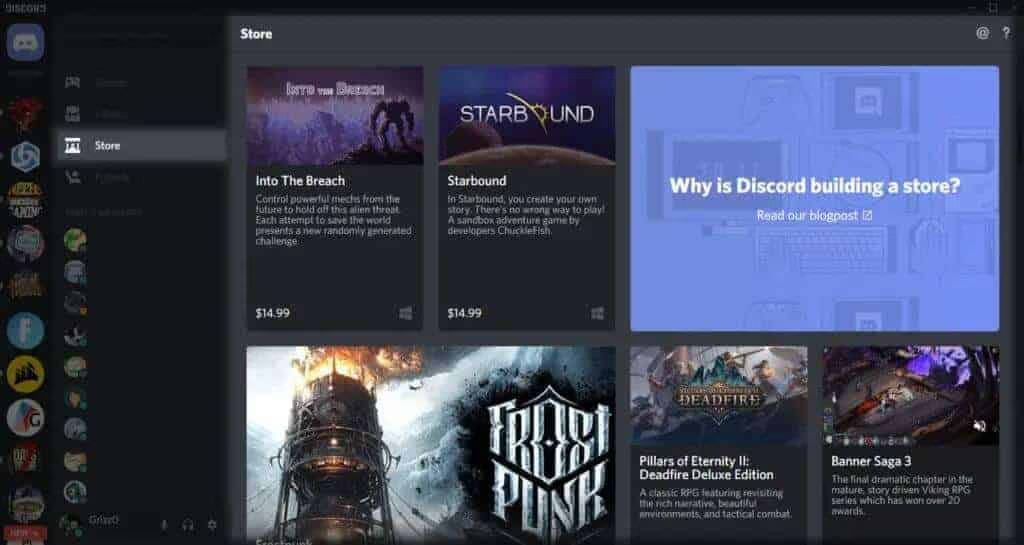
Discord’s standalone game store was short-lived, but the platform still earns money on game sales today:
- Discord takes a 10% commission on games sold through verified servers
- Developers must get their servers verified to qualify
- This model gives developers a built-in audience while creating an additional revenue stream for Discord
#Additional Revenue Sources
#Partnerships and Selective Advertising
Discord has strategic partnerships with game developers, content creators, and brands. A notable example is its integration with PlayStation Network, which lets PSN players surface their game activity inside Discord. These partnerships generally include:
- Exclusive content and promotions
- Targeted, non-intrusive advertising opportunities
- Revenue sharing arrangements with the partner
#Merchandise Sales
Discord runs a small official merch store with T-shirts, hoodies, stickers, and limited-edition items.
#Investments
Discord has secured significant funding from venture capital firms across several rounds. That capital has bankrolled feature expansion, voice and video infrastructure, and trust-and-safety hiring, all of which scale faster than ad-supported chat alternatives could.
#Future Growth Strategies
Looking ahead, Discord is exploring several avenues for continued growth:
- Expanding Premium Offerings: new features and perks for Nitro subscribers
- Virtual Events: hosting online conferences and community events
- Enhanced Gaming Partnerships: exclusive in-game content and virtual merchandise
- New Subscription Plans: specialized plans for businesses or content creators
- Advanced Moderation Tools: paid tools for legitimate server administrators
#Compliance, Creator Monetization, and Discord’s Terms
If you are reading this because you want Discord to make money for you, not just for Discord, here is the legal frame to stay inside.
First, use only your own Discord account and servers you legitimately own or are an authorized moderator on. Reselling Nitro, running paid access to leaked or pirated content, or charging for things that violate Discord’s policies is both against the Terms of Service and a quick path to a banned server.
Second, route monetization through Discord’s official tools: Server Subscriptions, Server Shop, Server Boosts, and partner integrations.
Third, follow the Discord Monetization Policy and the Discord Community Guidelines. Both documents are the canonical reference for what creators can charge for, what content is allowed behind a paywall, and how privacy, intellectual property, and regional law apply to your server.
#Bottom Line
Discord’s revenue is a stacked deck of Nitro, Server Boosts, game commissions, and partnership deals, with the free tier acting as the funnel. The business works because nobody is forced to pay, and the people who do pay are paying for community quality of life rather than for access.
If you want to make money on Discord, stay inside the official creator monetization tools and follow the Terms of Service.
If you’re experiencing issues with Discord, such as Discord not opening, there are troubleshooting steps available to help you resolve the problem and get back to enjoying the platform’s features.
#Frequently Asked Questions
Does Discord still have a game store?
Discord launched a game store in 2018 but discontinued it in 2019, and now takes a commission through verified servers instead.
Is Discord completely free to use?
Yes. Discord offers a wide set of features for free, including unlimited text, voice, and video chat across servers and DMs. Premium features such as bigger uploads, HD streaming, and emoji slots are gated behind Nitro and Server Boosts.
How much does Discord Nitro cost?
Discord Nitro costs $9.99 per month or $99.99 per year on the standard plan. A lighter tier, Nitro Basic, is available for $2.99 per month and skips the heavier perks. Pricing is set on Discord’s official Nitro page; avoid third-party “Nitro key” resellers, which violate the Terms of Service.
Does Discord make money from advertising?
Discord uses minimal, non-intrusive advertising through brand and platform partnerships. Most revenue comes from Nitro subscriptions and Server Boosts, not from selling user attention to ad networks.
What is Server Boosting in Discord?
Server boosting is a paid feature where members chip in to upgrade a server with better audio quality, extra emoji slots, animated icons, a vanity URL, and other perks. Boosts cost $4.99 per month each, with a 30% discount for Nitro subscribers.
Can I monetize my own Discord server legally?
Yes, as long as you use Discord’s official monetization tools (Server Subscriptions, Server Shop, Server Boosts, partner integrations) on a server you own, and you follow Discord’s Terms of Service plus the Monetization Policy. Selling fake Nitro, bypassing billing, or selling access to leaked or pirated content is prohibited. Discord’s Monetization Policy spells out exactly which content types can be paywalled and which can’t, and you should re-read it whenever the policy is updated.
Is Discord profitable, and what does it cost to run?
Discord has not publicly confirmed full GAAP profitability. The company has reported nine-figure annual revenue from Nitro and partnerships, funded in part by previous venture rounds. Hosting, real-time voice infrastructure, and trust-and-safety teams are the largest recurring costs.
Google Messages Error 3100: Why RCS Is Broken on Galaxy
Google Messages RCS error 3100 hits Galaxy owners after phone or carrier switches. Google told 9to5Google a fix is coming. Here's what actually helps.

Is This Bank App Real? Spot a Fake App on Your Home Screen
A bank app can land on your home screen from a web page with no install warning. Learn the checks that tell a real banking app from a phishing web app.
Apps Crashing After iOS 27 Update? Fix Order (2026)
Apps crashing after the iOS 27 update? Update the app in the App Store first, then offload and reinstall to clear stale cache, then restart. The fix order.
Do AI Translation Earbuds Work Offline? What to Know
Do AI translation earbuds work offline? A few do with downloaded language packs, but most need the cloud. Here's what works offline and what you give up.