Top 10 Gothic Horror Games to Play This Halloween (2026)
The top 10 gothic horror games for Halloween 2026, from Castlevania: Symphony of the Night and Bloodborne to Vampyr and The Sinking City detective work.
Quick AnswerBloodborne, Castlevania: Symphony of the Night, and Vampire: The Masquerade Bloodlines are three standout gothic horror games worth revisiting every Halloween.
If you want gothic horror games that still hold up in 2026, you don’t have to chase every new release. The genre’s best work is older, weirder, and built around mood instead of jump scares. This list ranks ten gothic games across PC, PlayStation, and Xbox that feel right for Halloween.
- Castlevania: Symphony of the Night launched in March 1997 in Japan and is widely credited with codifying the Metroidvania structure that later gothic action games inherited.
- Bloodborne, released March 24, 2015 for PS4, stays a PlayStation exclusive in 2026, with no official PC port, so a PS4, PS5, or PlayStation streaming setup is your only legal route.
- Vampire: The Masquerade Bloodlines from 2004 still attracts active modding through the Unofficial Patch project, which keeps the dialogue-driven RPG playable on modern Windows builds.
- Lovecraftian picks like The Sinking City and Call of Cthulhu lean detective rather than action, so expect interview puzzles and dossier work between combat encounters.
- Diablo III sold more than 30 million units across all platforms by 2015, and Blizzard’s 2017 Necromancer DLC remains the cheapest way to extend the campaign for first-time players.
#What Counts as a Gothic Horror Game?
Gothic horror is older than video games. The literary tradition runs from Walpole’s Castle of Otranto in 1764 through Bram Stoker’s Dracula and Mary Shelley’s Frankenstein, and the visual signatures are surprisingly consistent: crumbling architecture, candlelight, fog, blood, religion turned sinister. Games that fit the label borrow those visuals and pair them with slow dread instead of slasher pacing.
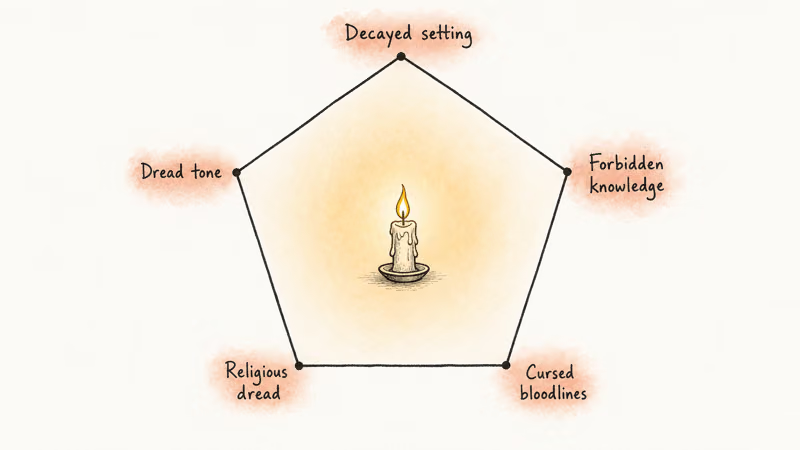
The ten games on this list share three defining traits. Each one builds atmosphere first and combat second. Each one features either vampires, ghosts, cults, or eldritch creatures. And each one looks like it was art-directed by someone who actually reads Poe.
According to Wikipedia’s gothic fiction overview, the genre’s defining traits are isolation, decaying settings, and the supernatural intruding on the everyday. Most modern survival horror borrows that template. Resident Evil, Silent Hill, and the picks below all trace back to the same 18th-century well.
#Atmospheric Pioneers
#1. Castlevania: Symphony of the Night
The 1997 PlayStation entry is the one most “best gothic games” lists open with, and it earns the slot. You play Alucard, Dracula’s half-vampire son, exploring an inverted castle that doubles in size after the first ending. According to Wikipedia’s Symphony of the Night article, the game launched in Japan on March 20, 1997, and reviewers later credited it with merging Castlevania’s whip-action roots with Metroid-style exploration to create the Metroidvania label.
The PS4 Castlevania Requiem release runs the same content on a PS5, and the original soundtrack still sets the tone within the first ten minutes. The pixel art, the harpsichord cues, the gargoyle bosses, it all still works. If you’ve never finished it, skip the auto-map shortcuts and explore blind for at least an hour.
If you bounce off the older controls, the games like Castlevania roundup covers modern Metroidvanias that pick up the torch.
#2. Clive Barker’s Undying
Undying is a first-person 2001 shooter built around Patrick Galloway, an Irish occultist hunting a cursed family in 1923 Ireland. The novelist Clive Barker shaped the story directly. Combat puts a weapon in your right hand and a spell in your left, which the 2007 BioShock would later popularize for a much bigger audience.
On a modern Windows 11 PC, the GOG release still installs cleanly with the community widescreen patch. Expect grainy textures and stiff animations, but the script and voice work hold up. Sourcebooks call it one of the most underplayed gothic games of its era, and that reputation is fair.
#3. Nightmare Creatures
The 1997 PlayStation and Nintendo 64 release drops you into a Victorian London overrun by a cult’s mutated experiments. You alternate between Father Ignatius Blackward, a priest with a polearm, and Nadia Franciscus, a scholar with a saber. Combat is heavy, the lighting is dim, and the soundtrack leans hard on church bells and choral chants.
It hasn’t aged gracefully. Camera angles fight you, and the load times on original hardware are rough. But the mood is pure 1890s penny dreadful, and the atmosphere carries it even when the controls frustrate you.
#Vampire and Bloodline RPGs
#4. Vampire: The Masquerade Bloodlines
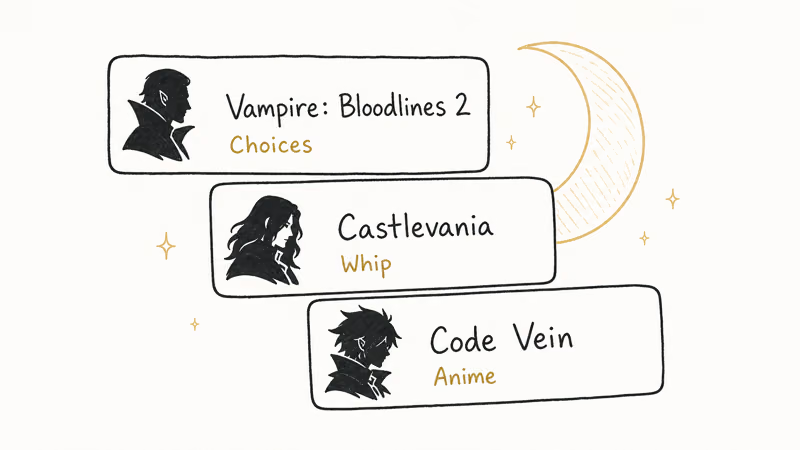
Troika Games released Bloodlines on November 16, 2004, the same day Half-Life 2 launched, which buried the original sales. The game has since become a cult phenomenon. You create a fledgling vampire from one of seven clans, each with distinct dialogue paths, disciplines, and visual mutations. The Malkavian playthrough rewrites half the dialogue into riddles and prophecy.
According to Wikipedia’s Bloodlines article, the community Unofficial Patch from modder Werner “Wesp5” Spahl has been maintained with regular releases since 2004, fixing bugs Troika never got to. The latest Unofficial Patch build on Steam stabilizes the early Santa Monica beach quest that was crash-prone on launch hardware.
Many players call it the Skyrim of vampire role-playing, and if that sounds appealing, the games like Skyrim list lines up nearby titles with similar branching dialogue.
#5. Vampyr
Dontnod’s 2018 release puts you inside Dr. Jonathan Reid, a London surgeon turned vampire in the middle of the 1918 Spanish flu pandemic. Every NPC in the four districts has a name, a routine, and a relationship web. You can feed on any of them, but doing so collapses the social fabric of that district and changes the ending.
On a no-kill playthrough, the difficulty curve climbs sharply by the third district because skill points come from feeding. It’s a meaningful design choice rather than a balance flaw. The dialogue and side-quest writing are the strongest parts. If you liked Mass Effect-style conversation trees with consequence weight, this is the closest gothic match.
#Lovecraftian and Detective Picks
#6. The Sinking City
Frogwares released The Sinking City in 2019, drawing from H.P. Lovecraft’s New England mythos. You play Charles Reed, a private investigator with prophetic visions, working in the flooded town of Oakmont. The town map is open, the case files are real puzzles, and Frogwares’ Sherlock Holmes pedigree shows in how you cross-reference newspaper archives and city records.
According to Frogwares, the studio recovered publishing rights in a 2020 legal dispute and now sells the game directly through Steam, GOG, and the PlayStation Store. The Necronomicon Edition bundles all DLC. The boat sections drag, but the investigation loop is oddly satisfying, especially the way the game refuses to put waypoints on your map.
#7. Call of Cthulhu
Cyanide’s 2018 entry adapts the Chaosium tabletop RPG more than the Lovecraft story it borrows its name from. You play Edward Pierce, an alcoholic Boston detective sent to investigate a fire on Darkwater Island in 1924. The case escalates into cosmic horror through five chapters, with sanity mechanics that distort what you see and hear.
For detective games fans this is one of the stronger gothic crossovers. The interrogations include branching dialogue, the lighting design lands as truly unsettling, and the run time stays under 12 hours, which suits the pacing.
#Modern and Psychological Horror
#8. Fran Bow
Killmonday Games’ 2015 indie tells the story of a ten-year-old girl institutionalized after her parents’ deaths. The visual style is hand-drawn and almost cute, which makes the horror moments hit harder. Fran swallows a pill that shifts her perception, revealing a parallel world of bleeding walls, talking organs, and silent observers.
The puzzles are point-and-click classics, sometimes too obscure without a guide. According to Steam’s Fran Bow store page, more than 24,000 user reviews land it in the “Overwhelmingly Positive” bracket. It’s a short game that splits well across two or three sittings, and it lingers longer than most jump-scare shooters.
If you liked Until Dawn, the games like Until Dawn list covers more story-led horror with branching outcomes.
#Action and Combat Heavyweights
#9. Diablo III
Blizzard’s 2012 isometric action-RPG is the most accessible gothic pick here. You choose from seven classes after the Necromancer DLC, including Crusader and Witch Doctor, and grind through five acts of cathedrals, deserts, and demon-infested wilderness. According to Wikipedia’s Diablo III article, Blizzard reported that the game shipped more than 30 million units across PC, PS4, Xbox One, and Switch by 2015.
On the Switch’s Eternal Collection, season play still rotates fresh content every three months, and the offline co-op for up to four players is the easiest way to introduce a friend to ARPGs. Pair it with the games like Diablo 3 list if you want more loot-driven dungeon crawlers when the season ends.
#10. Bloodborne
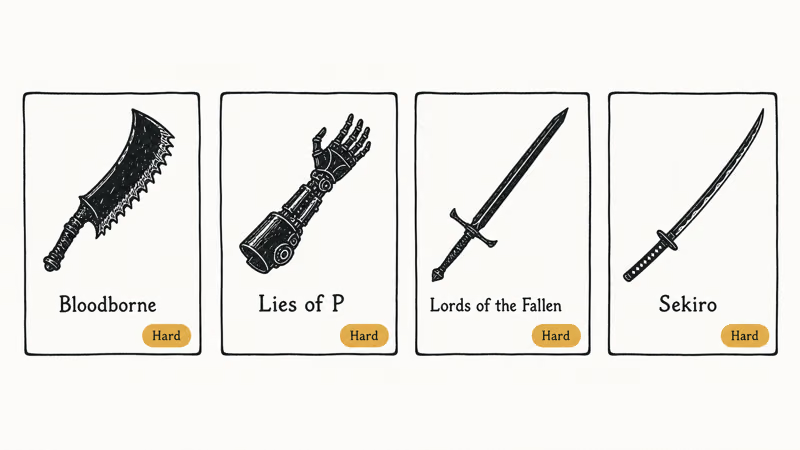
FromSoftware’s 2015 PlayStation exclusive is the gothic peak of the Souls formula. The hunters’ Yharnam setting borrows from Victorian Gothic and Lovecraft equally, with cobblestone alleys, gas lamps, and great ones lurking in the cosmos. According to Wikipedia’s Bloodborne article, the game launched March 24, 2015, sold more than one million copies within a month of release, and was directed by Hidetaka Miyazaki between Dark Souls II and Dark Souls III.
Difficulty is the catch. Father Gascoigne, the first major boss, is a notorious wall that stops many newcomers cold before the game’s systems click. Trick weapons, the Rally system, and faster animation than Dark Souls reward aggression. If you finish it, the games like Bloodborne list has the closest tonal cousins, and the Dark Souls 3 Gold Serpent Ring guide covers FromSoftware’s farming systems in detail.
#Is Bloodborne Really Harder Than Dark Souls?
Most players say yes. Bloodborne removes the shield-and-block crutch that Dark Souls leans on, forcing you to dodge or parry every threat. The Rally system rewards aggression by letting you regain lost health if you hit back within a few seconds, which sounds generous until you realize most bosses punish hesitation harder than mistakes.
Compared with Dark Souls 3, Bloodborne’s early bosses punish hesitation harder because there is no shield to fall back on. The faster animation and tight dodge windows are the main reason. If you’re new to the Souls subgenre, Dark Souls 3 is the gentler on-ramp, and Bloodborne is the next step.
#Where to Start If You’re New to Gothic Games
Pick the gameplay style you already enjoy, then match it to the list. If you prefer top-down action with loot, Diablo III is the safest first pick. If you grew up on Metroid and platformers, Castlevania: Symphony of the Night is the natural entry point. If you want story over combat, Fran Bow and Vampire: The Masquerade Bloodlines reward dialogue-heavy patience.
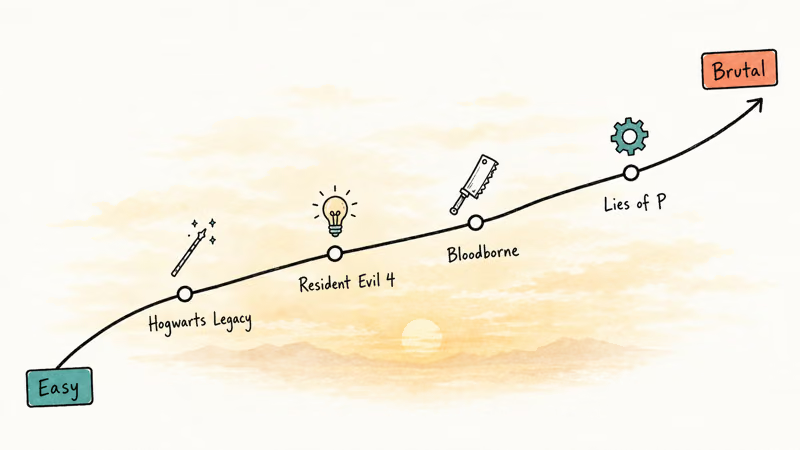
The harder picks, Bloodborne and Vampyr, reward you only after you’ve put a dozen hours in. Save them for later. Diablo III’s Eternal Collection is the gentlest place to bring a newcomer, because the co-op buffer takes the edge off the early hours and keeps the genre approachable.
#Bottom Line
Start with Bloodborne if you want the gothic peak and own a PlayStation. Start with Diablo III’s Eternal Collection if you want the easiest on-ramp and play on any platform. If your PC is your main rig and you want something atmospheric you haven’t touched, Vampire: The Masquerade Bloodlines with the latest Unofficial Patch is still the most replayable RPG on this list.
#Frequently Asked Questions
Are gothic horror games appropriate for younger players?
Most picks on this list carry an ESRB Mature rating for violence, blood, and disturbing imagery. Castlevania: Symphony of the Night is rated Teen and lands closest to the family-friendly end. Bloodborne, Vampyr, and Fran Bow are best treated as 17-and-up regardless of how cute the visuals look, since the themes get dark.
Can I play these games on a Nintendo Switch?
Diablo III: Eternal Collection and Castlevania: Symphony of the Night (via the Castlevania Anniversary Collection or Requiem on PS4) are the most portable picks. Bloodborne is PlayStation exclusive. Vampire: The Masquerade Bloodlines stays PC-only. The Sinking City and Call of Cthulhu both have Switch ports, though performance is rougher than on PS5 or PC.
Do I need to play earlier titles in these series first?
No, each pick on the list works as a standalone. Bloodborne shares no story with the Dark Souls trilogy, and Castlevania: Symphony of the Night follows Castlevania III but stands fully on its own. Vampire: The Masquerade Bloodlines is the only Masquerade video game with a sequel announced (Bloodlines 2), and no prior gameplay is required.
Are any of these games multiplayer?
Diablo III is the only true multiplayer pick, supporting up to four players in co-op across platforms. Bloodborne has asynchronous PvP and limited co-op summoning, but the campaign is built around solo play. Everything else on the list is strictly single-player.
Which gothic game has the best soundtrack?
Castlevania: Symphony of the Night and Bloodborne usually trade the top spot in fan polls. Symphony of the Night’s harpsichord and choral compositions by Michiru Yamane remain a Konami benchmark. Bloodborne’s orchestral score, written by Yuka Kitamura and Tsukasa Saitoh among others, layers strings and choirs that match the cosmic horror reveals beat for beat.
How long does each gothic game take to finish?
Castlevania: Symphony of the Night runs 12 to 15 hours for a completionist file, while Bloodborne usually lands between 35 and 50 hours (longer if you tackle Chalice Dungeons). Vampire: The Masquerade Bloodlines is 30 to 40 hours per clan, and Diablo III’s campaign clears in roughly 15 hours before seasonal play stretches indefinitely. Fran Bow and Nightmare Creatures both finish in under 10 hours.
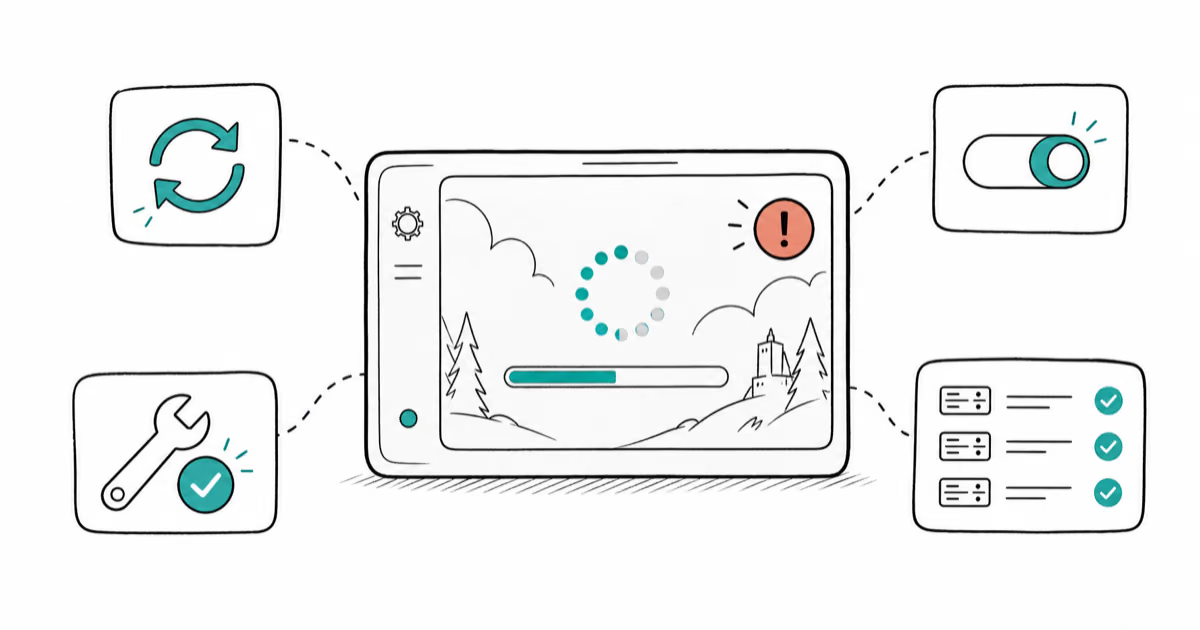
Fortnite Stuck on the Loading Screen? Fix It in 2026
Fortnite stuck on the loading screen? Check server status, fix the Windows N Media Pack and DirectX 11 on PC, clear the console cache, and verify files.
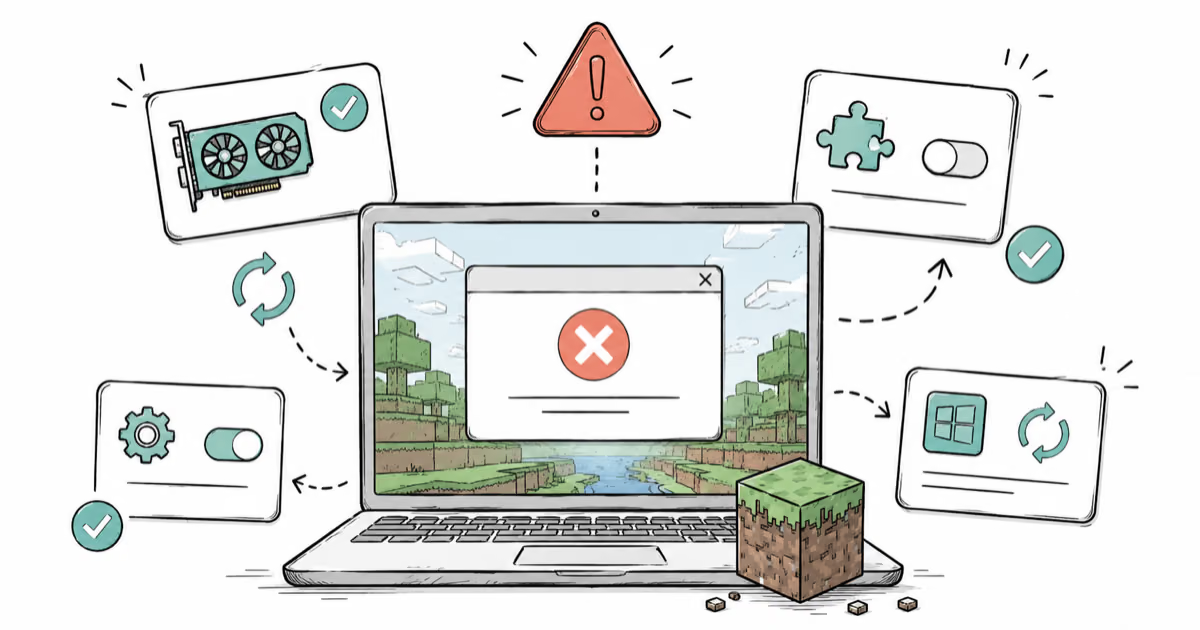
Minecraft Keeps Crashing? Java and Bedrock Fixes (2026)
Minecraft keeps crashing on startup or mid-game? Update your GPU driver, remove mods on Java, and reinstall Gaming Services on Bedrock. Fixes for both.
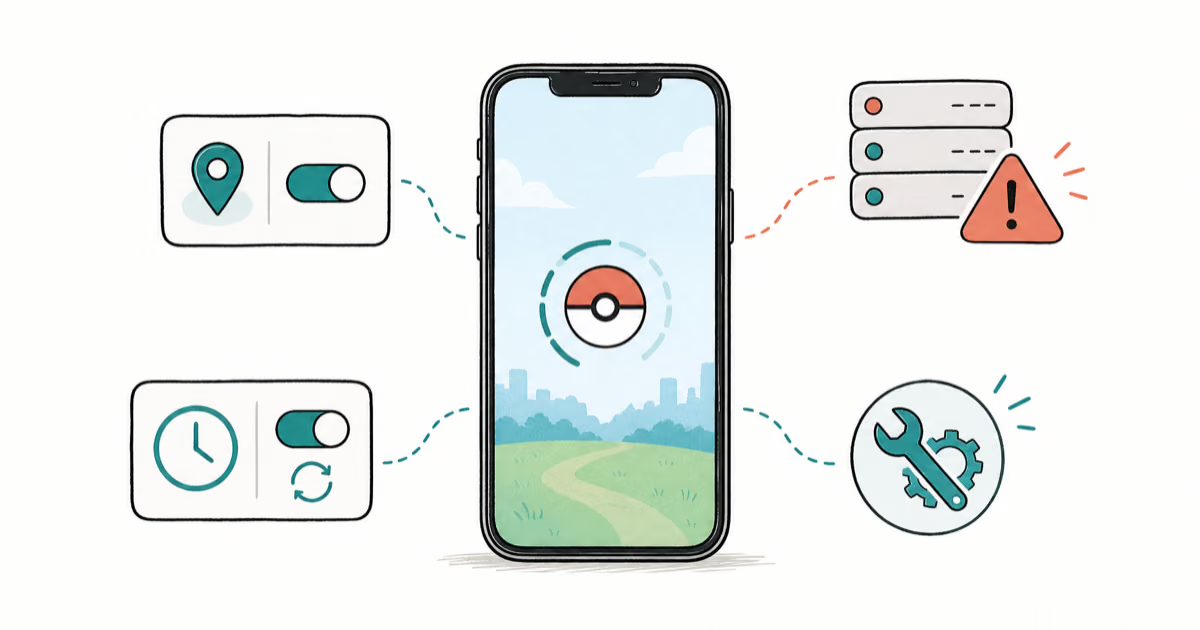
Pokemon GO Not Loading? Fix the Loading Screen 2026
Pokemon GO not loading or stuck on the Pokeball? Check server status, fix automatic date and time, grant location permission, clear the cache, and update.
PS5 Controller Not Charging? 9 Fixes That Work (2026)
DualSense not charging? Swap the cable, use a rear port in Rest Mode, clean the USB-C port, and check power settings. 9 fixes for a dead PS5 controller.