13 Best Games Like Castlevania for Metroidvania Fans in 2026
13 games like Castlevania ranked for 2026. Hollow Knight, Bloodstained, Dead Cells and more picks compared for pacing, exploration depth, and feel.
Quick AnswerThe strongest games like Castlevania are Hollow Knight, Bloodstained: Ritual of the Night, Dead Cells, Ori and the Will of the Wisps, and Axiom Verge. Each keeps the whip-and-explore DNA while adding its own twist on combat, pacing, or mood.
Finding solid games like Castlevania in 2026 means cutting through a crowded Metroidvania shelf to the titles that actually feel like Symphony of the Night. The thirteen picks below are weighed on combat feel, map design, and the moment-to-moment urge to backtrack for one more item. The list starts with picks that stay closest to classic Castlevania whip-and-dodge rhythm, then broadens into roguelites, soulslikes, and platformers that still scratch the same itch.
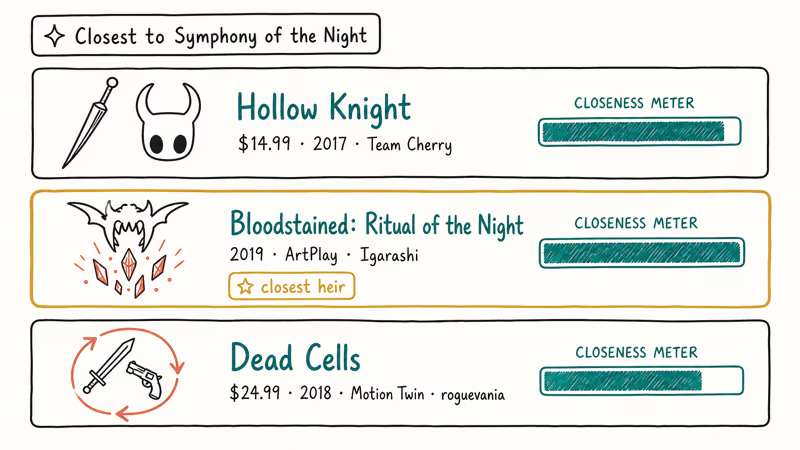
- Hollow Knight is the strongest modern pick: a 2017 Team Cherry release that Wikipedia classifies as a Metroidvania and that took Independent Game of the Year at the 2018 Australian Games Awards.
- Bloodstained: Ritual of the Night is the most direct heir because Koji Igarashi, the Symphony of the Night producer, led its scenario.
- Dead Cells blends Metroidvania exploration with roguelite runs, a format Wikipedia describes as “roguevania”.
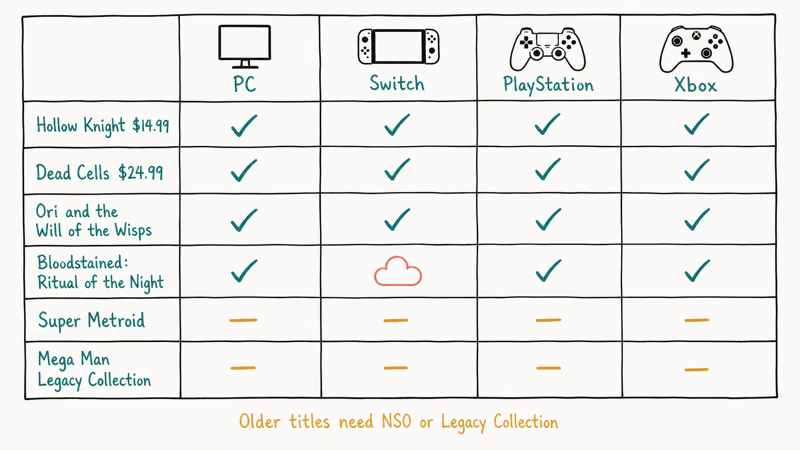
- Budget matters: Hollow Knight sits at $14.99 on Steam, Dead Cells at $24.99, so two of the top picks cost under forty dollars together.
- Ori and the Will of the Wisps is the softer option for players who want platforming precision over gothic dread.
#What Defines a Game Like Castlevania
Castlevania isn’t a single design. The 1986 original was a linear action-platformer. The 1997 release Castlevania: Symphony of the Night turned the series into something else entirely: a nonlinear castle filled with locked rooms, souls to harvest, and stats to grind. According to Wikipedia’s Metroidvania entry, Symphony of the Night is the defining Metroidvania game, established alongside Super Metroid (1994) and Metroid (1986) as one of three foundational titles that locked in the subgenre’s shape.
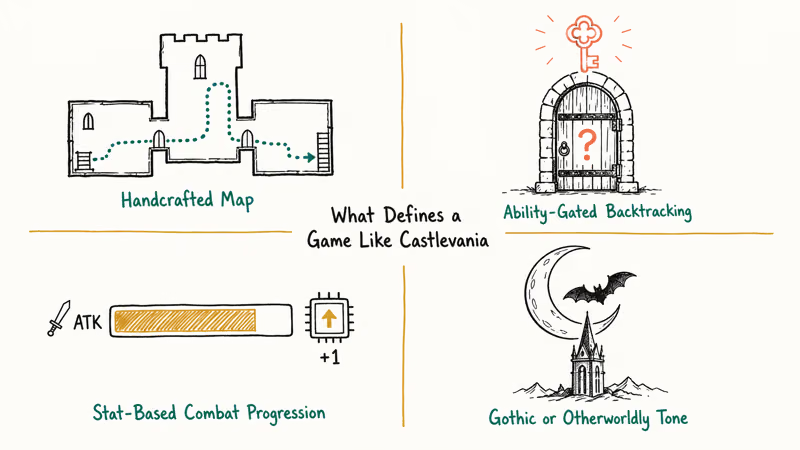
Each of these thirteen games can be scored against four Castlevania fingerprints: a handcrafted map you memorize, ability gates that force smart backtracking, stat-based or upgrade-based combat progression, and a gothic or otherworldly tone. Not every pick hits all four. The ones at the top come close.
If you also enjoy exploration-heavy action RPGs with a darker mood, our roundup of games like Bloodborne covers the 3D soulslike side of the same taste, and games like Kingdom Hearts covers the lighter action-adventure angle.
#Which Modern Games Feel Closest to Symphony of the Night?
These three picks keep the whip-and-candle spirit even when they trade 2D pixels for painted vector art or procedural castles.
#1. Hollow Knight (2017, Team Cherry)
Hollow Knight is the cleanest “if you love Castlevania, play this next” recommendation on the list. Wikipedia’s Hollow Knight article confirms that the game is a 2017 Metroidvania developed by Team Cherry, an Australian independent studio, and it won Independent Game of the Year at the 2018 Australian Games Awards along with Best Sound For Interactive Media from the Australian Screen Sound Guild in 2017.
Buy it first.
The first trip into the Forgotten Crossroads runs about twenty minutes before the map starts branching in ways that reward note-taking. Bosses lean closer to Dark Souls than classic Castlevania. The rhythm of “unlock ability, return to earlier zone, find the door you noticed an hour ago” is pure Symphony of the Night, and at $14.99 on Steam, it’s the highest-value pick here.
#2. Bloodstained: Ritual of the Night (2019, ArtPlay)
Bloodstained is the closest game to Castlevania by bloodline. Koji Igarashi, the producer of Symphony of the Night, wrote the scenario and produced this 2019 title. Wikipedia’s Bloodstained entry confirms that ArtPlay shipped it on June 18, 2019 for PS4, PC, and Xbox One, with a Switch release one week later on June 25, and it “follows the Metroidvania-style gameplay of the post-Symphony of the Night games of the Castlevania series.”
Uncut Igarashi.
The crafting system, the shard drops from enemies, and even the menu rhythm read as a direct continuation of Aria of Sorrow and Dawn of Sorrow. Performance on Switch is rougher than on PC. The design is uncut Igarashi.
#3. Dead Cells (2018, Motion Twin)
Dead Cells is the most successful reinvention of the formula. The Dead Cells Wikipedia page describes it as a roguelike-Metroidvania and coins the label “roguevania” for its hybrid structure. Motion Twin, the French indie team behind it, released the 1.0 build out of early access on August 7, 2018.
Death resets your run.
Runs reset on death, so you don’t build a persistent map the way you do in Castlevania. What carries over is the feel of discovering a new passage and a new weapon in the same minute. The first ten hours easily produce several distinct builds worth pushing further, which is the same compulsion Symphony of the Night triggers with its relic drops across the castle’s inverted second half.
#Best Budget and Platformer Alternatives
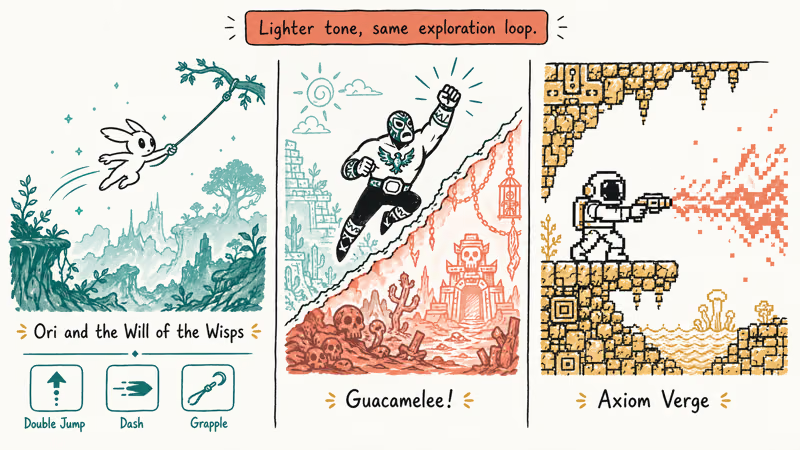
These two picks trade gothic horror for lighter tone, but the exploration loop stays intact.
#4. Ori and the Will of the Wisps (2020, Moon Studios)
Ori is the softer Metroidvania. Wikipedia’s Ori and the Will of the Wisps entry states that Moon Studios released it on Windows and Xbox One on March 11, 2020, with the Switch port following on September 17, 2020. The studio grew from twenty people on the first game to around eighty by the time the sequel shipped.
Precision matters here.
Combat is more technical than the first Ori. A combo string and parry timing finally reward precision. The map still gates you with double jump, dash, and grapple upgrades in the Castlevania pattern. Where Symphony of the Night leans melancholy, Ori leans tragic-hopeful, and the art direction alone justifies the pick.
#5. Guacamelee! (2013, DrinkBox Studios)
Co-op Metroidvania, rare.
Guacamelee is the drop-in co-op answer to the genre. According to the Guacamelee Wikipedia article, DrinkBox Studios launched it in April 2013 on PlayStation 3 and Vita as “a hybrid 2D Metroidvania-style action platform and brawler” with drop-in cooperative play where a second player takes the role of Tostada.
The luchador combat reads closer to a brawler than whip-and-dodge. But the world layout, the dimension-swap mechanic to cross between the living and the dead, and the progression through new movement abilities all match the Castlevania blueprint.
#6. Axiom Verge (2015, Thomas Happ)
Axiom Verge is the throwback pick. Start here if you grew up on NES.
One developer, Thomas Happ, built the entire game in the style of 8-bit Metroid with glitch-as-mechanic weapons. It’s darker and slower than most modern picks. If you grew up with Castlevania III on NES and want something that scratches that specific texture, start with this.
#Older Classics That Still Hold Up
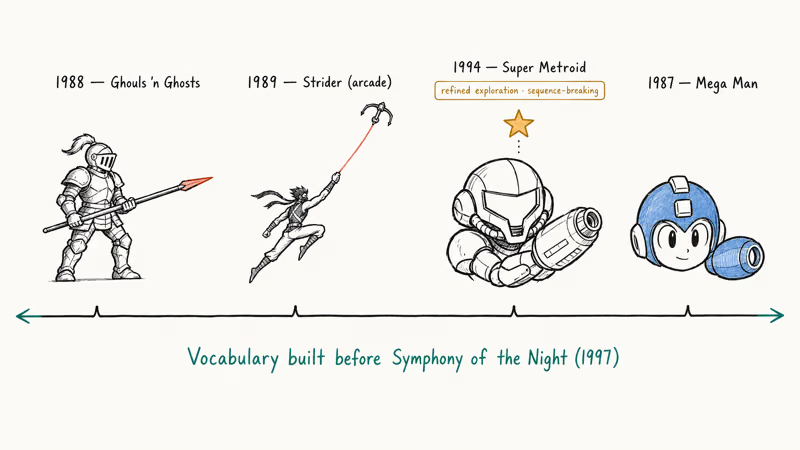
Classic side-scrollers from before the Metroidvania label existed still belong on any “games like Castlevania” list. They built the vocabulary.
#7. Super Metroid (1994, Nintendo R&D1)
The other half of the Metroidvania name. Wikipedia’s Metroidvania entry states that Super Metroid is the 1994 release that refined exploration mechanics and introduced sequence-breaking elements. Play it for the original template: a silent protagonist, a handcrafted map, and ability gates that teach you how the genre thinks.
#8. Mega Man Legacy Collection (2015, Capcom)
Mega Man isn’t a Metroidvania. Not exactly.
Its 2D boss-rush structure, pattern recognition, and power absorption mechanics are cousins to Castlevania’s whip-subweapon rhythm. The Legacy Collection packs the first six NES games and is a reasonable on-ramp if you want to understand why Castlevania’s boss design feels the way it does.
#9. Ghouls ‘n Ghosts (1988, Capcom)
Hard mode, always.
Ghouls ‘n Ghosts sits on the harder end of classic side-scrolling action. The pixel-perfect jumps, the armor-shattering hit feedback, and the horror-adjacent tone all trace a line to Castlevania’s NES era. Bundle releases on modern consoles make it accessible.
#10. Strider (2014, Double Helix Games)
The 2014 Strider remake modernizes the 1989 arcade game with Metroidvania ability gates and a mapped city to re-explore. Combat is faster than Castlevania. But the “unlock the climb grip, find the door that needs it” structure is recognizably the same design tool.
#What About Soulslikes and Indie Darlings?
These three picks widen the circle. They share a feel rather than a literal mechanic set.
#11. Chasm (2018, Bit Kid)
Chasm has procedurally assembled rooms stitched together from handcrafted pieces, a small-town hub, and an item-collection loop that feels engineered for Symphony of the Night fans. Combat is straightforward sword-and-spell. Critics rated it as competent rather than essential, and its roughly six-hour run makes a pleasant midweek pickup.
#12. Dark Souls (2011, FromSoftware)
Different camera, same instinct.
Dark Souls is the 3D cousin. It shares the handcrafted interconnected world, the ability-gated backtracking through shortcuts, and the mood of slow-building dread. A different camera, a different tempo, but the design instinct is the same. Our guide to games like Hollow Knight goes deeper on the soulslike-Metroidvania overlap.
#13. The Mummy Demastered (2017, WayForward)
Permadeath with a twist.
The Mummy Demastered is a 16-bit styled run-and-gun with Metroidvania map design. It’s less ambitious than the top picks, but it delivers a tight six-to-eight hour loop with a permadeath twist where your next character has to recover the previous one’s gear.
#Pricing and Platform at a Glance
Most of these games are cross-platform. Hollow Knight, Dead Cells, and Ori and the Will of the Wisps all ship on PC, Switch, PlayStation, and Xbox. Bloodstained covers the same four plus cloud. Older titles like Super Metroid and Mega Man need a Nintendo Switch Online subscription or a Legacy Collection bundle to play legally.
For broader gift-list research across the Switch ecosystem, our best single-player Switch games post covers adjacent recommendations beyond the Metroidvania niche. If your taste leans more toward gothic atmosphere than platforming, our gothic games roundup pairs well with this list.
#Bottom Line
For the single closest thing to Symphony of the Night in 2026, buy Bloodstained: Ritual of the Night first. Igarashi’s fingerprints are on every menu and drop table. For a first Metroidvania, start with Hollow Knight at $14.99, then graduate to Dead Cells once the itch to push builds further kicks in. Skip Dark Souls and Chasm on your first pass unless you already love slow-burn combat or procedurally varied rooms.
#Frequently Asked Questions
Are all of these games Metroidvanias?
No. Nine of the thirteen picks fit the Metroidvania definition cleanly, including Hollow Knight, Bloodstained, Dead Cells, Ori and the Will of the Wisps, Guacamelee, Axiom Verge, Chasm, Super Metroid, and Strider 2014. Mega Man, Ghouls ‘n Ghosts, Dark Souls, and The Mummy Demastered share overlapping DNA without being textbook Metroidvanias.
What is the best game like Castlevania for a first-time player?
Hollow Knight. It’s inexpensive at $14.99 on Steam, it runs on every modern platform, and it teaches the Metroidvania vocabulary (double jump, wall cling, ability-gated backtracking) without punishing a newcomer too harshly in the first three hours.
Is Bloodstained actually by the Castlevania team?
Yes, effectively.
Do any of these games have co-op?
Guacamelee has drop-in local co-op where a second player takes the role of Tostada. Dead Cells added limited co-op through updates. The rest are single-player only.
Are these games available on Nintendo Switch?
Most of them, yes. Hollow Knight, Bloodstained, Dead Cells, Ori and the Will of the Wisps, Guacamelee, Axiom Verge, Chasm, The Mummy Demastered, and Dark Souls: Remastered all ship natively. Super Metroid and Mega Man entries run through Nintendo Switch Online or Legacy Collection bundles.
Which pick has the best soundtrack?
Hollow Knight’s score by Christopher Larkin is the critical favorite, with hand-scored orchestral and piano tracks that map to each biome. Bloodstained brings back Michiru Yamane, the long-time Castlevania composer, on multiple tracks, and Ori and the Will of the Wisps has Gareth Coker’s award-winning orchestral work. All three are worth buying the soundtrack for, not just the game itself.
Can I play these if I have never finished a Castlevania game?
Yes, absolutely. Hollow Knight, Ori, and Dead Cells teach their systems on the first map with no narrative prerequisites. You don’t need Symphony of the Night context to enjoy them.

Fortnite Stuck on the Loading Screen? Fix It in 2026
Fortnite stuck on the loading screen? Check server status, fix the Windows N Media Pack and DirectX 11 on PC, clear the console cache, and verify files.
Minecraft Keeps Crashing? Java and Bedrock Fixes (2026)
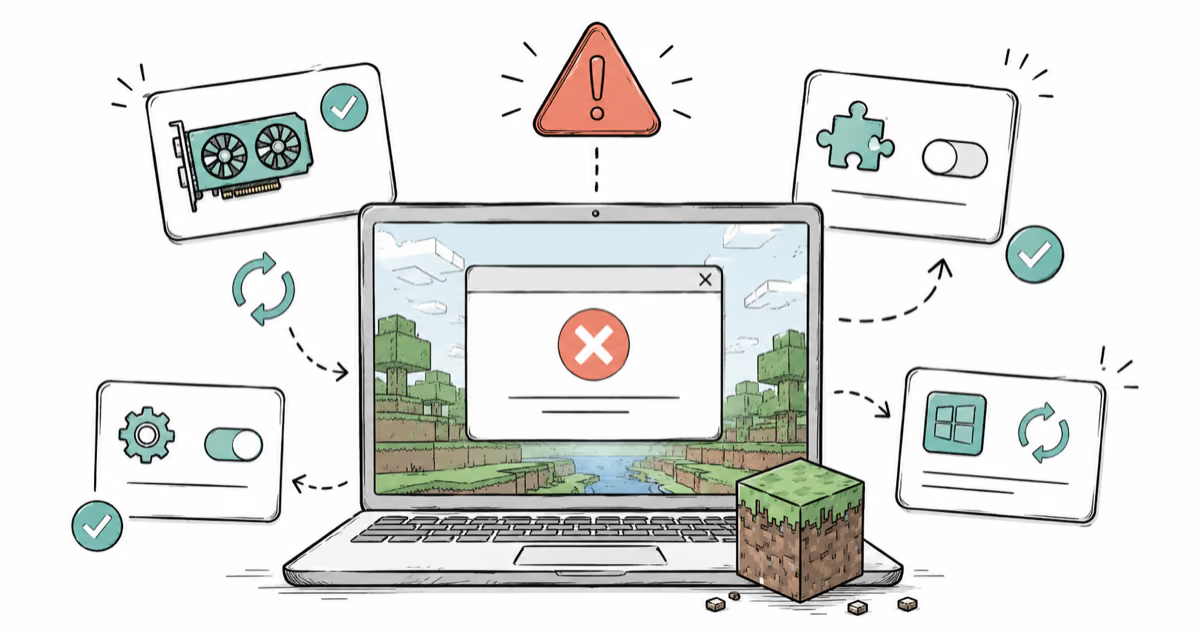
Minecraft keeps crashing on startup or mid-game? Update your GPU driver, remove mods on Java, and reinstall Gaming Services on Bedrock. Fixes for both.

Pokemon GO Not Loading? Fix the Loading Screen 2026
Pokemon GO not loading or stuck on the Pokeball? Check server status, fix automatic date and time, grant location permission, clear the cache, and update.
PS5 Controller Not Charging? 9 Fixes That Work (2026)
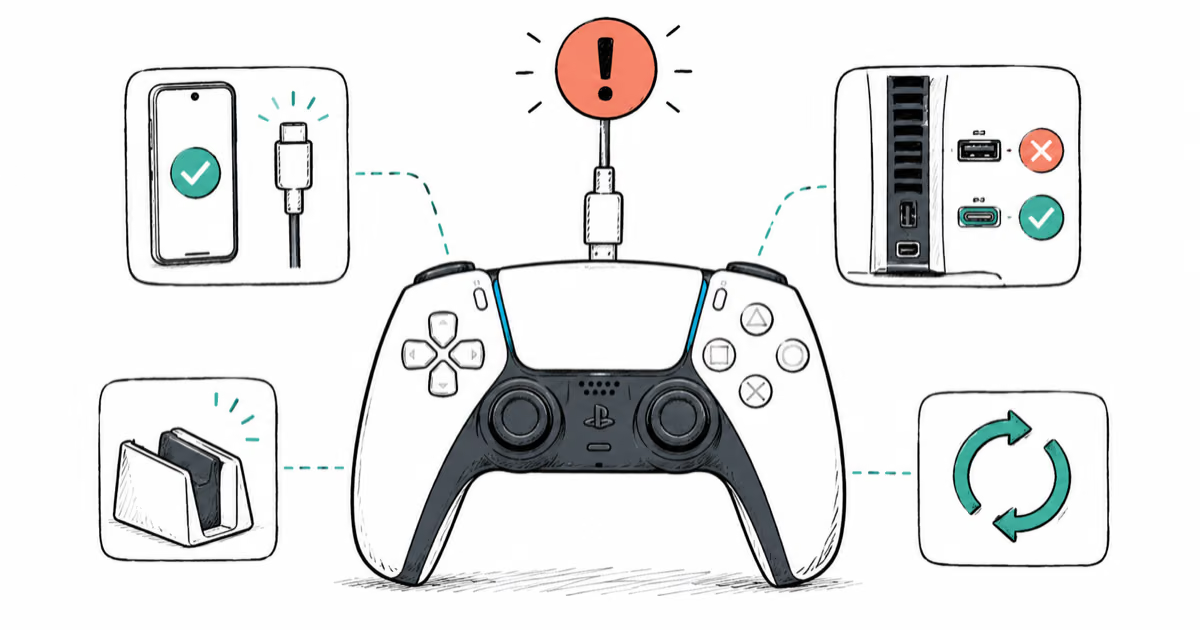
DualSense not charging? Swap the cable, use a rear port in Rest Mode, clean the USB-C port, and check power settings. 9 fixes for a dead PS5 controller.