How to Factory Reset iPad Without iCloud Password (2026)
Forgot your iCloud password? Reset your own iPad with Apple account recovery, Recovery Mode, or proof-of-ownership support. Legal steps only.
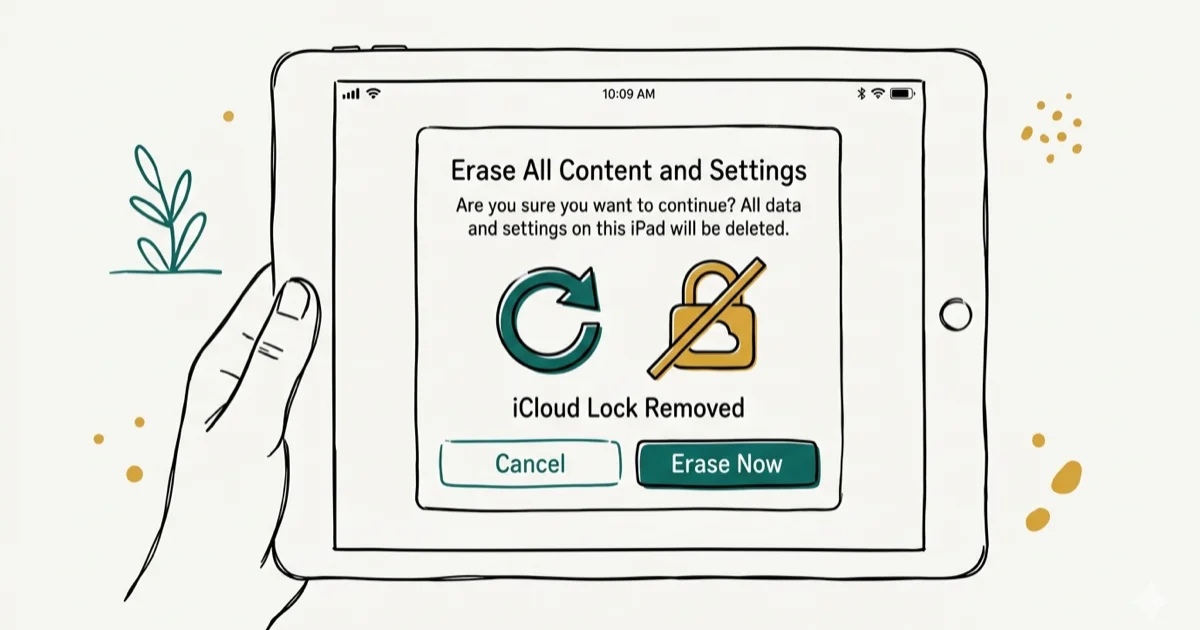
Quick AnswerStart with Apple account recovery at iforgot.apple.com because a factory reset alone will not remove Activation Lock. If recovery fails, Recovery Mode restores the iPad, and Apple Support can unlock it after you submit the original proof of purchase.
This guide is for one situation only. You own the iPad, and you forgot the iCloud password tied to it. Resetting a device that isn’t yours, or removing an Apple ID that isn’t yours, is a different problem with legal consequences we’ll cover below. This walkthrough sticks to the official recovery flow and explains how long a proof-of-ownership unlock through Apple Support actually takes.
- Factory reset alone doesn’t remove Activation Lock when Find My was on at last use
- Start with Apple account recovery at iforgot.apple.com to preserve data and purchases
- Recovery Mode via Finder or iTunes wipes the iPad but can’t bypass Activation Lock
- Apple Support removes Activation Lock free with original receipt plus matching photo ID
- A locked second-hand iPad needs the original owner’s remote sign-out; no DIY path exists
#When Is It Legal to Reset an iPad Without the iCloud Password?
Only when the iPad is yours and you forgot the password. That’s it.
Apple designed Activation Lock as an anti-theft feature. According to Apple’s Activation Lock overview, the lock is tied to the original Apple ID precisely so a stolen iPad can’t be wiped and resold. Bypassing Activation Lock on a device you didn’t buy is, in most jurisdictions, tampering with stolen property.
If you bought a used iPad from a marketplace and it boots straight to an Activation Lock screen with an unfamiliar Apple ID, stop. The device wasn’t properly signed out, and it may be reported lost. The only clean path is to contact the seller and ask them to sign out remotely from iCloud.com Find Devices. We walk through why this matters in our breakdown of how to remove Activation Lock on iCloud-locked iPads.
For your own iPad with a forgotten password, every method in this guide is legitimate. We’ll rank them from safest to most invasive.
#Method 1: Recover Your Apple ID Password (Start Here)
Before any reset, try account recovery. Apple’s official flow, documented at support.apple.com/recovery, handles most forgotten-password cases without erasing a single photo.
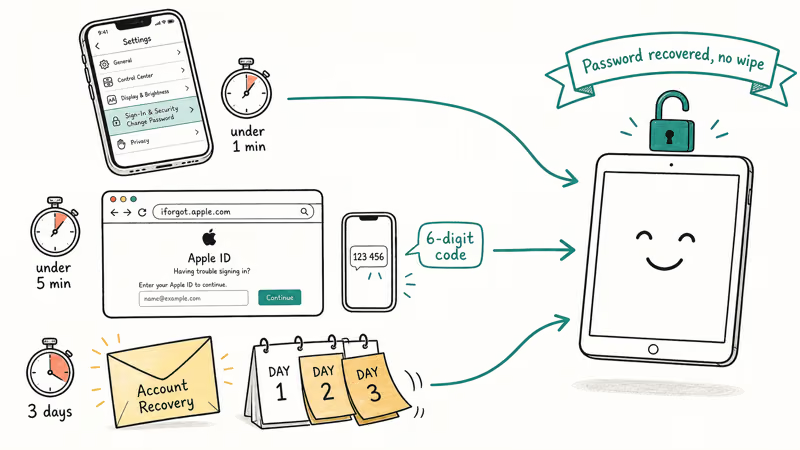
The fast path: on another Apple device already signed into the same Apple ID, go to Settings > [your name] > Sign-In & Security > Change Password, enter the device passcode, then set the new password. This is the shortest route when your iPhone, Mac, or another iPad is handy, and it avoids the browser flow entirely. Expect the whole thing to take under a minute.
If no other Apple device is available, open iforgot.apple.com in a browser, enter your Apple ID email, and answer the trust-factor prompts. Apple sends a reset link to your trusted email or a code to a trusted phone number.
For accounts with zero trusted devices, Apple starts formal account recovery. The waiting period commonly runs a few days before Apple approves the reset, and can stretch longer for high-risk accounts.
Why this beats every other method: it preserves the Apple ID, keeps your purchases, and clears Activation Lock in one step. No wipe needed.
If you have two-factor authentication on an iPhone you still control, password recovery usually finishes quickly. Apple’s two-factor authentication documentation confirms that a trusted phone number or device is enough to shortcut the entire wait.
#Method 2: Recovery Mode via Finder or iTunes
Recovery Mode reinstalls iPadOS and wipes the device. It doesn’t need the iCloud password to run.
However, if Find My iPad was turned on when the iPad was last online, the first screen after the wipe will demand the original Apple ID. This is where many users get stuck. Plan for Method 1 or Method 4 if you suspect Find My is on.
#Put the iPad in Recovery Mode
Connect the iPad to a computer with a USB cable. On macOS Catalina or later, use Finder. On Windows or older macOS, install the latest iTunes from apple.com/itunes.
The button combo depends on the iPad model:
- iPad with a Home button: press and hold Home and Top together until the Recovery Mode screen (cable and computer icon) appears. Keep holding past the Apple logo.
- iPad without a Home button: press Volume Up, release, press Volume Down, release, then press and hold the Top button until the Recovery Mode screen appears.
A dialog appears on the computer with Update or Restore. Choose Restore. Finder downloads the current iPadOS build and wipes the device.
The full download and restore can take a while, mostly depending on your connection speed. If the process pauses past 15 minutes, exit Recovery Mode and start over. That’s usually a flaky USB cable.
#What Happens After the Restore
If Find My was off, the iPad boots to the standard setup screen. You can sign in with any Apple ID, restore from a backup, or set it up fresh. If Find My was on, Activation Lock appears, and you’ll need Method 1 or Method 4 to get past it.
#Why Activation Lock Persists After a Factory Reset
Activation Lock isn’t stored in the iPad’s user data. It’s a server-side check against Apple’s activation servers every time the iPad is wiped or set up. 9to5Mac reports that Activation Lock is the core anti-theft mechanism on modern iPads and iPhones, and it survives DFU restores and firmware swaps. The only way to clear the lock runs through the Apple ID that owns the device.
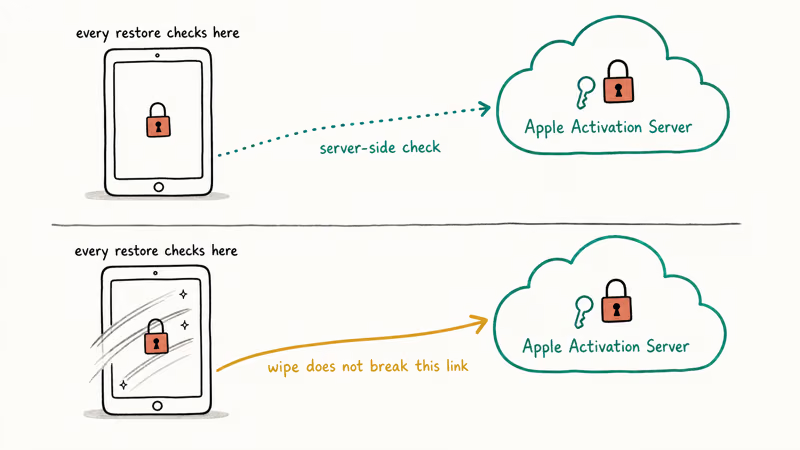
This is exactly why Method 1 matters. Recover the password before the wipe and Activation Lock never triggers.
#Method 3: Erase From Settings (If You Know the Passcode)
If you remember the device passcode but forgot the iCloud password, you can start the wipe from Settings. There’s a catch. Turning off Find My at the end still needs the iCloud password, so if you don’t have that, fall back to Method 1.
Go to Settings > General > Transfer or Reset iPad. Tap Erase All Content and Settings, enter the device passcode, then enter the Apple ID password to turn off Find My. Without that Apple ID password, the wipe won’t finalize, and you need Method 1.
This is the fastest path for a functional iPad you plan to keep. It leaves you with a clean device that isn’t locked to anything, ready to set up as new or restore from a backup. If you want the same checklist for iPhones, we cover how to reset iPhone without a passcode or computer in a dedicated guide. The steps are similar but the Recovery Mode button combo differs on newer iPhones without a Home button.
#Method 4: Apple Support With Proof of Ownership
This is the path Apple recommends when recovery fails and you still have the original receipt. Apple’s contact page lists three starting points: the Apple Support app, the Apple Support website, or an Apple Store appointment.
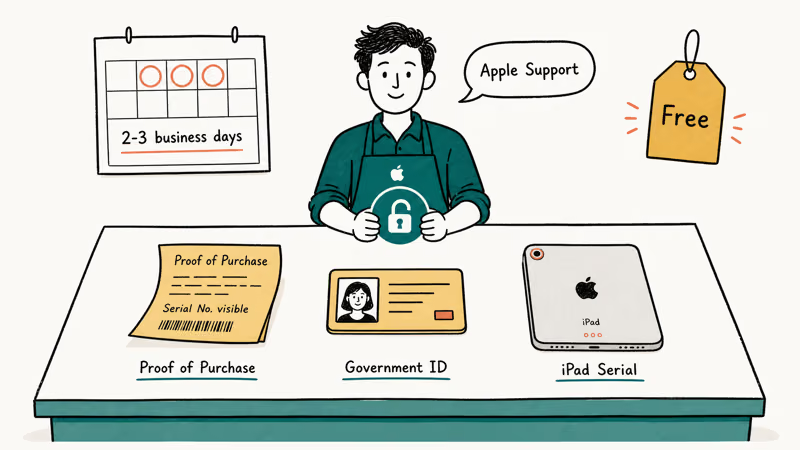
What Apple asks for:
- Original proof of purchase showing the serial number, or an invoice from an authorized reseller
- A government-issued ID that matches the name on the receipt
- The iPad itself (or its serial number from the back of the device or the original box)
A clean receipt plus matching ID typically results in an Activation Lock removal within a few business days. Apple processes this at no cost. They won’t process it based on a screenshot of an Apple ID email, a text-message thread with a seller, or any third-party document.
For a locked Apple ID that’s blocking the whole process, read our companion piece on unlocking an Apple ID account before you escalate.
#Third-Party Unlock Tools and When They Actually Work
A handful of third-party tools advertise iCloud and Activation Lock removal for devices you own. iToolab UnlockGo is one of the most widely marketed options in this category.
Some links on this page are affiliate links, which means fone.tips may earn a commission at no extra cost to you.
Tenorshare 4uKey is another frequent recommendation, especially for older iPads still on legacy chips.
EaseUS MobiUnlock rounds out the short list of tools that surface repeatedly in this niche.
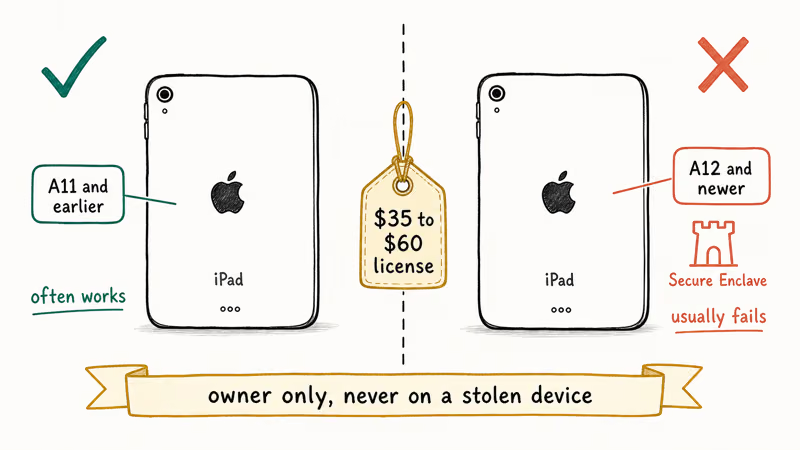
Honest read: they work reliably only on older chipsets (A11 and earlier), and they cost $35-$60 per license. On A12-and-newer iPads (every model since 2018), these tools frequently fail at the Activation Lock stage. Apple moved that check deeper into Secure Enclave.
Use a third-party tool only when all three apply:
- You own the iPad
- You have a passcode-locked screen blocking Method 3
- Apple Support can’t verify ownership (lost receipt, gift, inherited device)
Even then, read the fine print. Most of these tools erase the device during unlock, and the vendor’s refund policy rarely covers a failed bypass on a modern chip. We recommend iCloud unlock alternatives like Apple’s recovery pathway as the primary route. If you’re weighing a passcode workaround on an iPad specifically, we compared options in how to bypass an iPad passcode.
Legal note: using an unlock tool on a device you don’t own generally violates the Computer Fraud and Abuse Act in the United States, and equivalent statutes in the UK, EU, and Canada. Tool vendors place that disclaimer in their EULA. Apple treats unauthorized unlocks as a terms-of-service violation that can block the device from future Apple services.
#Can You Reset a Locked Second-Hand iPad?
Usually, no. If the seller didn’t sign out before handing you the iPad, Apple has no way to distinguish you from someone who stole the device.
The legitimate fix depends on who has the Apple ID.
- Seller reachable: ask them to go to iCloud.com/find, select the iPad, and tap Remove from Account.
- Seller unresponsive: open a dispute with the marketplace (eBay, Swappa, Facebook Marketplace) and request a refund.
- Family member who has passed: Apple’s bereavement process accepts a death certificate plus proof of relationship, documented in Apple’s Digital Legacy guidance.
Prevention is simpler than remediation. Before you buy any used Apple device, ask the seller to demonstrate the Settings > [name] > Sign Out flow live.
#Time Estimates for Each Reset Method
Timing depends on which method works. Here’s what to expect for each path:
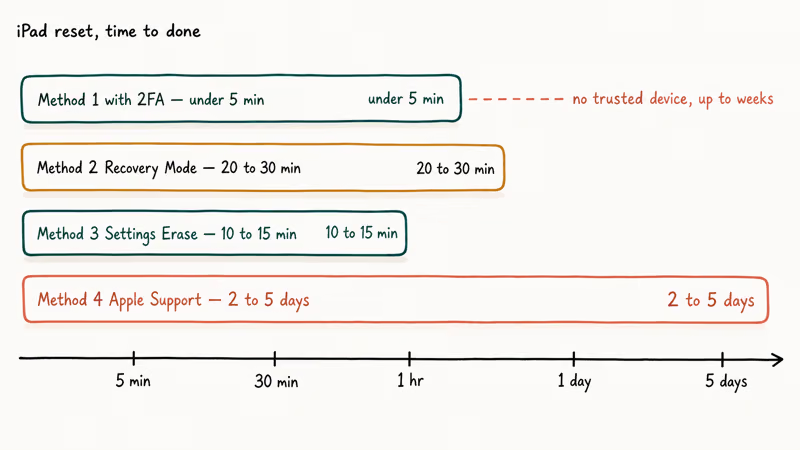
- Method 1, two-factor with trusted device: under 5 minutes
- Method 1, formal account recovery (no trusted device): typically a few days, up to several weeks per Apple’s published policy
- Method 2, Recovery Mode restore: 20-30 minutes end to end, depending on download speed
- Method 3, Settings erase: 10-15 minutes
- Method 4, Apple Support with receipt: 2-5 business days after document verification
If you’re preparing to sell the iPad, budget for Method 1 or Method 4 so the buyer receives an unlocked device. Once the password issue is solved, clearing iCloud storage and removing your Apple ID from the iPad are the right final steps.
#What to Do After the Reset
Once the iPad is reset and no longer Activation Locked, lock in a few fundamentals so you don’t repeat the cycle.
Sign in with your Apple ID and enable two-factor authentication. This is non-negotiable in 2026. Apple’s two-factor authentication documentation states that accounts with 2FA can self-recover in minutes even after a total device loss, because the trusted phone number acts as a built-in recovery key. Without 2FA, you’re back to the same mess you just fixed.
Set a trusted phone number and a trusted email address.
Write the Apple ID and recovery email into a password manager. 1Password, Bitwarden, and Apple’s built-in Passwords app all support secure notes for recovery data. If you use parental restrictions, re-enable them from scratch; we cover the reset flow in turning off parental controls without a password on iPhone and iPad. For a freshly reset iPad that starts freezing or restarting after setup, our checklist on why an iPad keeps freezing covers the common causes.
#Bottom Line
If this is your iPad and you forgot the password, try Apple account recovery at iforgot.apple.com first. It preserves your data and clears Activation Lock in one step.
Drop to Recovery Mode only when recovery fails and Find My was definitely off on the iPad’s last online session. Go to Apple Support with your receipt when Find My was on. Third-party tools are a last resort for older iPads and almost never succeed on A12 or newer chips.
For a second-hand iPad locked by someone else, there’s no legitimate DIY path. Get the original owner to sign out remotely, or refund the purchase.
iPhone tips & tricks
#Frequently Asked Questions
Will a factory reset remove the iCloud Activation Lock?
No. Activation Lock is a server-side check against the Apple ID that set up the iPad, and it survives a full restore. The next setup screen still asks for the original Apple ID credentials if Find My was on when the device went offline. The only ways to clear it are recovering the password, producing proof of ownership to Apple Support, or having the original owner sign out remotely.
How long does Apple account recovery take in 2026?
Minutes with 2FA and a trusted device. Commonly a few days without one, up to several weeks for high-risk accounts.
Is it illegal to unlock an iPad I did not buy?
Yes, generally. Unlocking a device you don’t own qualifies as unauthorized access under United States federal law, and the equivalent statutes in the UK, EU, and Canada. Apple also treats it as a terms-of-service violation.
Can Apple Support remove Activation Lock for free?
Yes, when you submit an original receipt that matches a government-issued ID.
Do third-party iCloud unlock tools still work in 2026?
Inconsistently. On iPads with A11 or older chips (pre-2018 models), tools like 4uKey and UnlockGo often succeed because those chips store the activation check in older firmware. On A12 and newer iPads, Apple moved the check deeper into Secure Enclave, and the same tools fail at the final step more often than not. Refund policies rarely cover a failed bypass on a modern chip, so treat any purchase as a gamble weighted against Apple’s hardware security updates.
What if the previous owner is unreachable?
Open a dispute with the marketplace. There’s no legitimate technical workaround for an iPad signed into someone else’s Apple ID.
Can I reset the iPad without a computer?
Only via Settings > General > Transfer or Reset iPad, which still requires the device passcode and the Apple ID password. Recovery Mode and Method 4 both route through a computer or an Apple Support appointment. If you’ve lost both passwords, a computer-based flow is unavoidable, and you should plan for Method 1 or Method 4 from the start rather than waste cycles on Settings.
Does signing out of iCloud before selling matter that much?
Yes, more than anything else. Before shipping a used iPad, open Settings, tap your name, scroll to the bottom, and tap Sign Out.
How to Transfer Data to a New iPhone Without iCloud
Move everything to your new iPhone without iCloud: Quick Start device-to-device transfer, wired migration, and encrypted Finder or iTunes backups.
Best Wireless Earbuds for iPhone in 2026: USB-C Era Picks
Best wireless earbuds for iPhone in 2026, comparing AirPods Pro 3, Sony WF-1000XM6, Bose QC Ultra, and Anker Liberty 4 NC on the USB-C iPhone lineup.
iPhone Keyboard Lag? 7 Proven Fixes for iOS 26 (2026)
Fix iPhone keyboard lag with 7 proven fixes for iOS 26. Covers restart, storage, predictive text, third-party keyboards, and dictionary reset.
How to Block Porn on an iPhone: A Guide for Parents
Learn how to block porn on iPhone using Screen Time, DNS filtering, and safe browsers. Step-by-step guide for parents to protect kids' devices.