How to Turn Off Parental Controls on iPhone Without Password
Learn how to turn off parental controls on iPhone without a password using iTunes restore, third-party tools, or Apple ID recovery on iOS 13.4 and later.
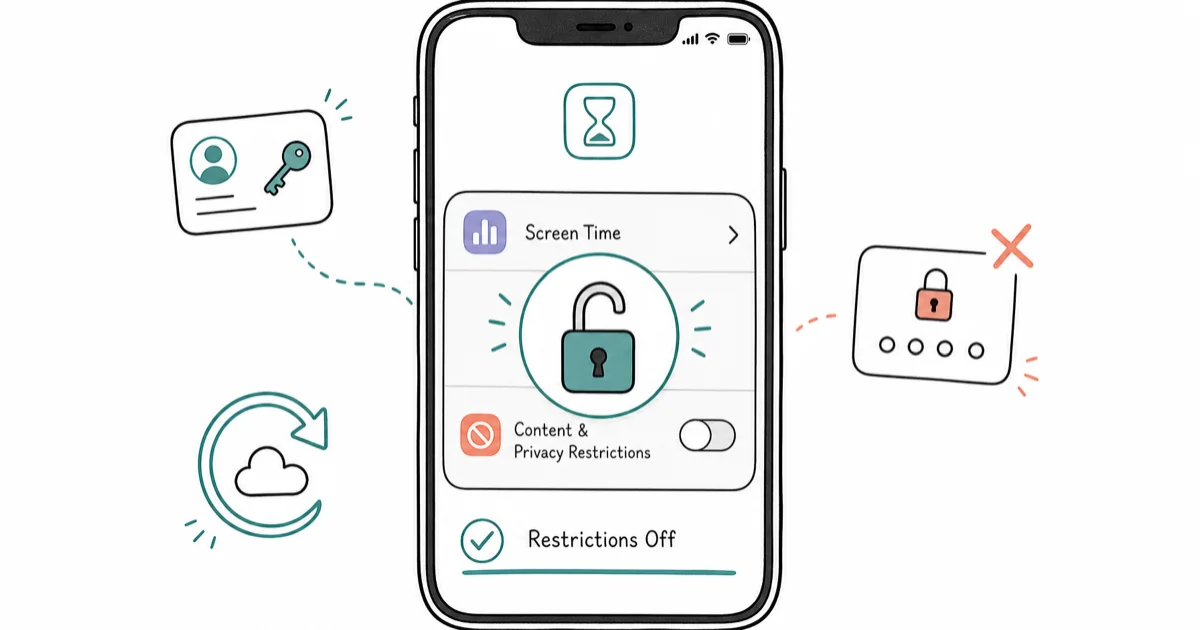
Quick AnswerThe fastest way to remove parental controls without the password is to restore your iPhone through iTunes, which erases all restrictions along with your data. For a non-destructive option, use your Apple ID to reset the Screen Time passcode in Settings > Screen Time > Forgot Passcode.
You’ve forgotten the Screen Time passcode on your own iPhone, and now you can’t change app limits, content restrictions, or even disable the feature. There’s no single magic fix. The right path depends on your iOS version, whether you have your Apple ID password, and how much data you’re willing to lose.
- On iOS 13.4 and later, you can reset a forgotten Screen Time passcode using your Apple ID via
Settings>Screen Time>Forgot Passcode. - Restoring through iTunes removes all parental controls but also erases all data on the device — always back up first.
- iCloud remote erase works if Find My iPhone is enabled, but it also wipes the device completely and requires your Apple ID password.
- Third-party tools like UnlockGo claim to bypass Screen Time without data loss, but they carry warranty and security risks.
- After 10 failed Screen Time passcode attempts, the device enforces a waiting period before allowing further attempts.
#Why Would You Need to Turn Off Parental Controls?
Most people land on this guide for one of four reasons: the child has aged out of the restrictions, the passcode was set up by a parent who no longer has it, the user forgot their own Screen Time passcode after a long period without using it, or the device is being handed down. Each scenario calls for a different method, and some are far less destructive than others.
One important caveat: this guide assumes you own the iPhone. Removing restrictions on someone else’s device, especially a minor’s, can have legal implications. Apple’s Family Sharing documentation ties Screen Time policies to the organizer’s Apple ID.
#What Do iPhone Parental Controls Cover?
Screen Time, the modern container for parental controls on iOS, manages app limits, content filters, communication limits, privacy settings, and purchase restrictions. According to Apple’s Screen Time support documentation, the feature also produces weekly activity reports and allows a Family Sharing organizer to set policies on a child’s device remotely.
Similar controls exist on other platforms, such as Nintendo Switch parental controls, which shows how cross-device safeguards have become standard across consoles, tablets, and phones.
#Method 1: Restoring iPhone Using iTunes (or Finder)
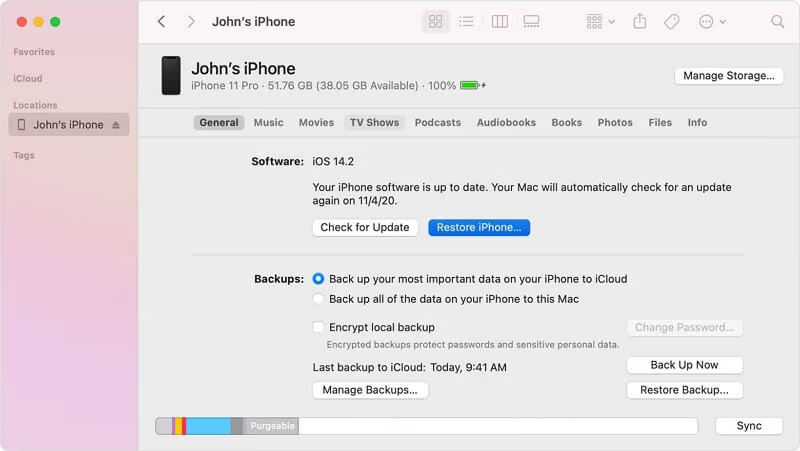
The most reliable way to wipe parental controls is a full restore through iTunes on Windows or Finder on macOS Catalina and later. This wipes the device, which removes Screen Time along with everything else.
#Steps to Restore iPhone via iTunes
- Connect your iPhone to a computer with iTunes or Finder running.
- Select your device in the sidebar.
- Click Restore iPhone in the Summary tab.
- Confirm the action when prompted.
- Wait for the restoration process to complete; it usually finishes in a matter of minutes on a Wi-Fi network.
Apple’s restore documentation confirms that this process replaces the operating system and erases all user data, which is why a backup is non-negotiable before you begin.
Pros: guaranteed restriction removal, no third-party software required, supported on every iPhone model.
Cons: complete data loss if you skip the backup step, requires a computer, and you’ll need your Apple ID password to re-enable Activation Lock afterward.
#Method 2: Using Third-Party Tools
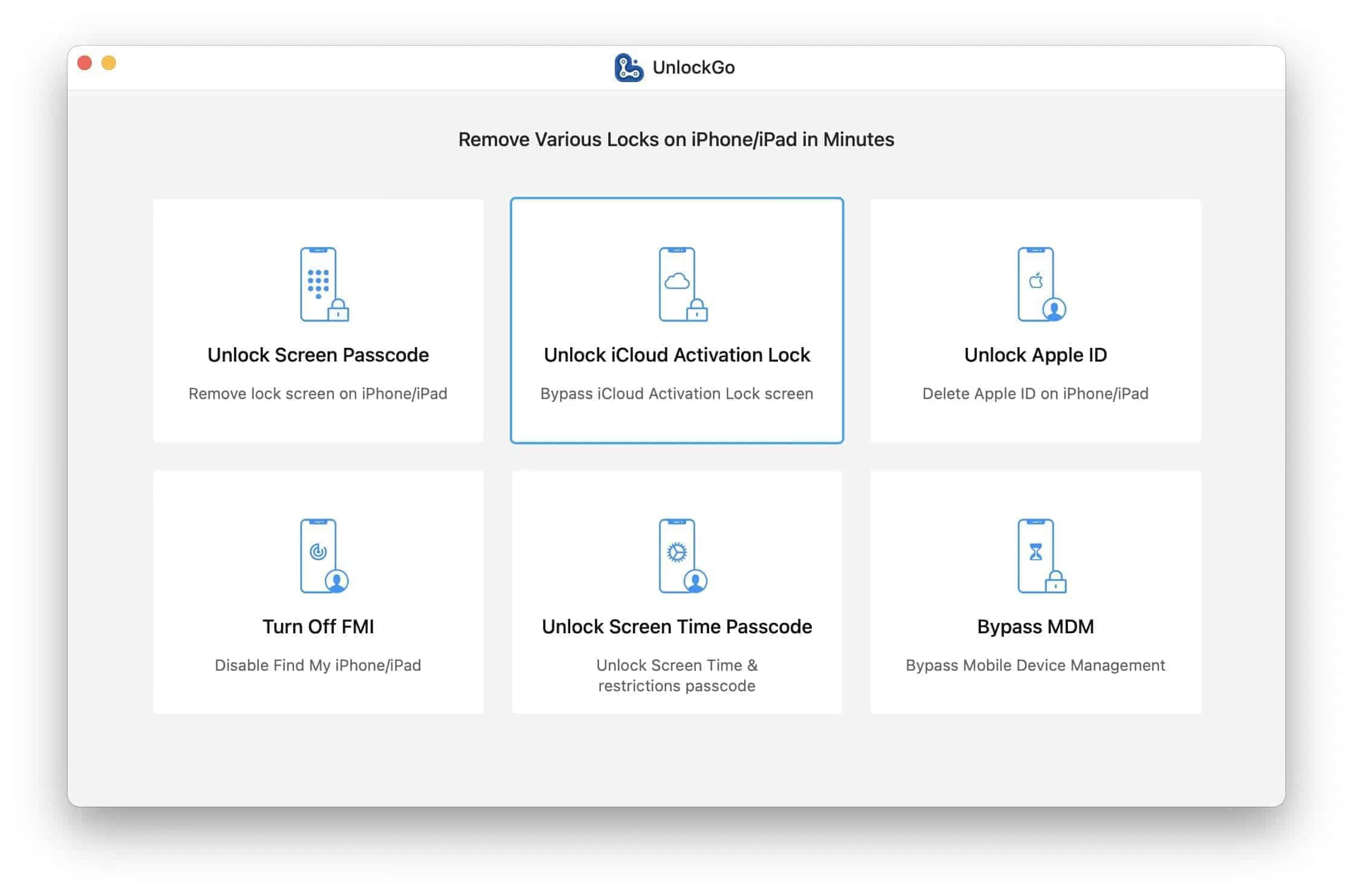
A handful of paid utilities advertise the ability to clear a forgotten Screen Time passcode without wiping the device. Two well-known options are UnlockGo and Tenorshare 4uKey.
Some links on this page are affiliate links, which means fone.tips may earn a commission at no extra cost to you.
#Using UnlockGo to Remove the Screen Time Passcode
- Download and install UnlockGo on your computer.
- Connect your iPhone with a Lightning or USB-C cable.
- Launch UnlockGo and select Remove Screen Time Passcode.
- Follow the on-screen instructions; the run usually takes several minutes.
These tools usually disable Find My iPhone, so keep your Apple ID password handy.
Vendor documentation states that data should remain intact, but results are mixed on iOS 17 and later, where Apple’s secure enclave protections sometimes force a full restore regardless.
Risks worth knowing: vendor lock-in (a one-time license rarely covers future iOS jumps), potential conflicts with managed-device profiles, and the standard caveat that any third-party tool with low-level access could ship a future update you didn’t ask for.
#Method 3: Apple ID Reset (iOS 13.4+)
On iOS 13.4 or later, Apple ships an official no-data-loss recovery path.
#Steps to Reset Screen Time Passcode
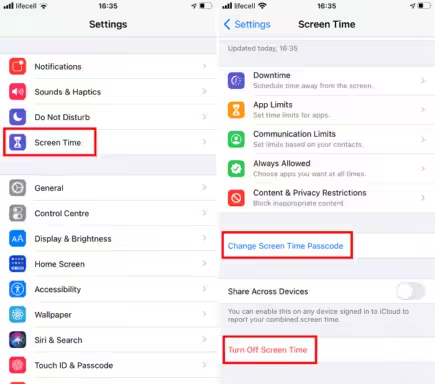
- Go to
Settings>Screen Time. - Tap Change Screen Time Passcode, then Change Screen Time Passcode again.
- Tap Forgot Passcode?
- Enter your Apple ID email and password when prompted.
- Set a new Screen Time passcode (or skip and disable Screen Time entirely).
On an iPhone running iOS 17.4, two-factor authentication can kick in and require a trusted device for the verification code. Apple’s Screen Time recovery page states that this option only appears if you tied your Apple ID to Screen Time during setup; otherwise, the Forgot Passcode? button won’t show.
Advantages: zero data loss, no third-party software, fully supported by Apple.
Limitations: requires iOS 13.4 or later and a working Apple ID. If 10 failed Screen Time passcode attempts have already happened, you may need to wait through the lockout before this option works.
#Method 4: iCloud Erase
If Find My iPhone is enabled and you remember your Apple ID password, you can erase the device remotely through iCloud’s Find Devices service. This nukes restrictions along with the rest of the data.
#Process of Erasing iPhone via iCloud
- Go to icloud.com/find and sign in with your Apple ID.
- Click All Devices and select your iPhone.
- Click Erase iPhone.
- Confirm and wait for the device to come online.
According to Apple’s Find My erase guide, this method works even if the phone is offline; the erase queues until the device next connects to the internet. This approach overlaps with resetting an iPhone without a passcode and computer, so the iCloud route is helpful when you don’t have a computer handy.
#Best Practices Before You Wipe Anything
A short checklist saves a lot of regret:
- Back up first. iCloud Backup or a local Finder/iTunes backup keeps photos, contacts, Health data, and app data recoverable.
- Sign out of accounts. Sign out of iCloud, iMessage, and FaceTime if you plan to hand the phone to a new owner.
- Note your Apple ID password. Every Apple-blessed method asks for it at some stage.
- Confirm ownership. Only remove restrictions on a device you own or are authorized to modify. Apple Support representatives will ask for proof of ownership before assisting with locked devices.
- Update iOS if possible. The Apple ID reset path requires iOS 13.4 or later, and newer iOS versions ship with the smoothest recovery flow.
If you hit related symptoms during the process, such as a prompt that “Accountsd wants to use the login keychain”, that’s typically an iCloud keychain sync issue, not a Screen Time problem. Handle it separately.
#Is It Safe to Remove Parental Controls?
Removing your own controls on your own device is safe in the sense that no data gets corrupted. The real safety question concerns the user, not the data.
For a teenager who set up Screen Time to curb their own scrolling and now wants it off, the answer differs from a parent considering full removal for a young child. Apple recommends keeping content and privacy restrictions on for users under 13, particularly the App Store age filter and the Web Content limit.
If you’re a parent passing the phone down to another child, it’s worth reconfiguring Screen Time rather than disabling it entirely. The default content filter blocks adult websites by URL category, which is hard to replicate manually.
For second-hand iPhones, also confirm Activation Lock status before assuming Screen Time is the only blocker.
#Bottom Line
For most people who own their iPhone and remember their Apple ID password, Method 3 (Apple ID Reset) is the clear winner: no data loss, fully supported by Apple, and free.
If you’re on iOS 13.3 or older, or the Forgot Passcode? button doesn’t appear, fall back to Method 1 (iTunes/Finder restore) after a verified backup. Third-party tools are a last resort, useful if you specifically can’t reach a working Apple ID but worth their cost only when other methods have failed.
iPhone tips & tricks
#Frequently Asked Questions
Can I turn off Screen Time without losing data on iOS 17?
Yes, if you have your Apple ID password. Open Settings > Screen Time > Change Screen Time Passcode > Forgot Passcode?, then sign in with your Apple ID. From there you can either set a new code or tap Turn Off Screen Time, and your photos, messages, and apps stay put. This is the only Apple-supported recovery path that preserves data, and it has been the default flow since iOS 13.4 shipped in March 2020.
Will resetting my iPhone remove all my parental control restrictions?
Yes. A full restore through iTunes, Finder, or iCloud’s Erase iPhone wipes Screen Time, app limits, content filters, and downtime schedules.
Are third-party Screen Time unlock tools safe to use?
They can work, but Apple doesn’t endorse them. Risks include warranty implications, conflicts with managed-device profiles, and the chance that an iOS update breaks the tool a week after you pay for it.
What happens after 10 failed Screen Time passcode attempts?
iOS imposes a lockout that lengthens with each subsequent wrong attempt. Apple’s Screen Time documentation states that you may need to wait between tries before iOS lets you keep guessing. In extreme cases the only path forward is a full restore, so don’t keep guessing past the first lockout.
Can I remove parental controls on someone else’s iPhone?
You shouldn’t. Removing restrictions from a device that doesn’t belong to you, without the owner’s explicit permission, can violate Apple’s terms and possibly local laws.
What should I do if I forget my Apple ID password?
Reset it at iforgot.apple.com.
Does iTunes restore unlock Activation Lock too?
No, restore and Activation Lock are separate locks. A restore wipes data and Screen Time, but Activation Lock stays tied to the Apple ID that last signed in. You’ll still need that Apple ID and password to set the phone up again once the restore finishes, which is why Apple Support representatives always ask for proof of ownership before they help on this front.
How to Transfer Data to a New iPhone Without iCloud
Move everything to your new iPhone without iCloud: Quick Start device-to-device transfer, wired migration, and encrypted Finder or iTunes backups.
Best Wireless Earbuds for iPhone in 2026: USB-C Era Picks
Best wireless earbuds for iPhone in 2026, comparing AirPods Pro 3, Sony WF-1000XM6, Bose QC Ultra, and Anker Liberty 4 NC on the USB-C iPhone lineup.
iPhone Keyboard Lag? 7 Proven Fixes for iOS 26 (2026)
Fix iPhone keyboard lag with 7 proven fixes for iOS 26. Covers restart, storage, predictive text, third-party keyboards, and dictionary reset.
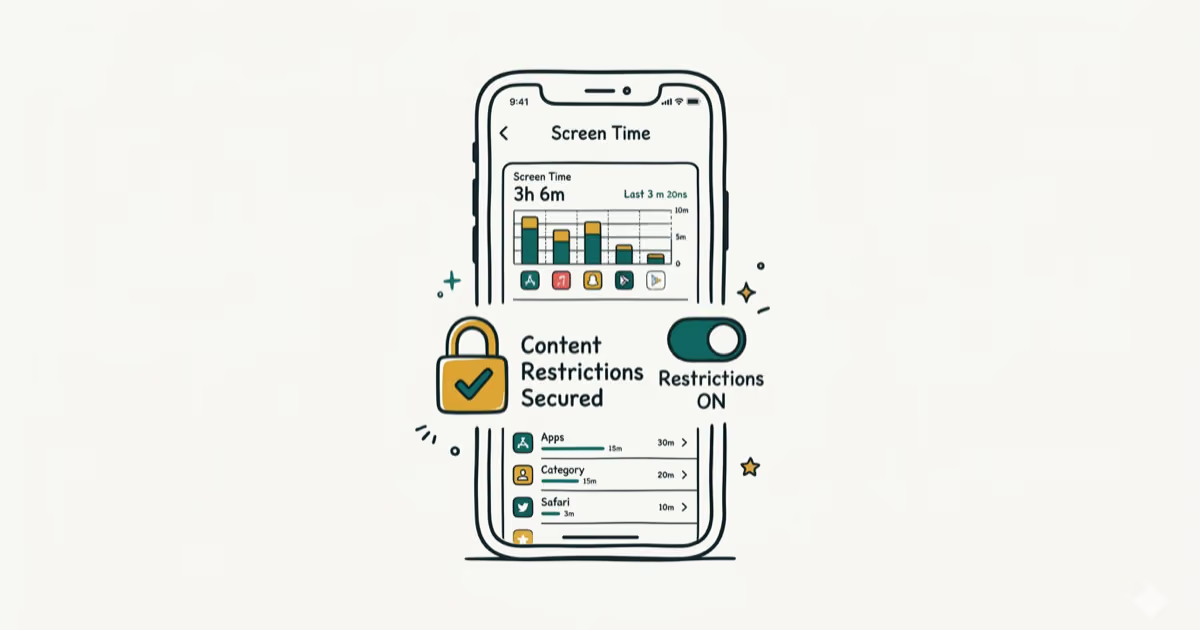
How to Block Porn on an iPhone: A Guide for Parents
Learn how to block porn on iPhone using Screen Time, DNS filtering, and safe browsers. Step-by-step guide for parents to protect kids' devices.