How to Reset iPhone without Passcode and Computer?
Reset your own iPhone without a passcode or computer using iCloud Find My, Recovery Mode, or Apple ID recovery. Step-by-step official Apple methods.
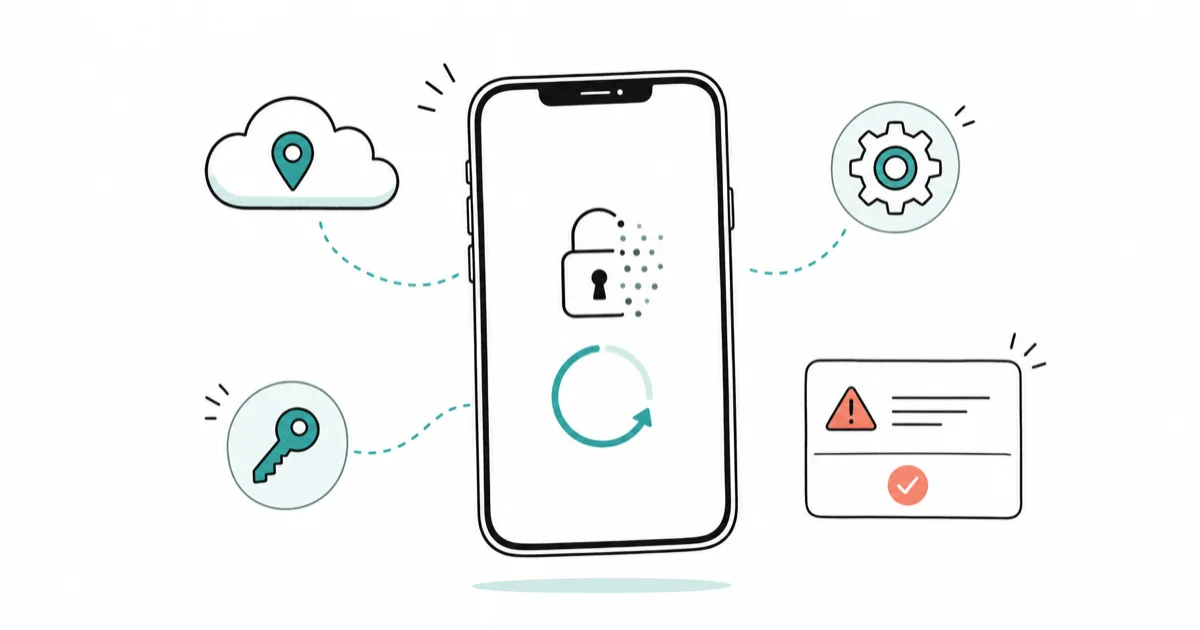
Quick AnswerYou can reset an iPhone without a passcode and computer by signing into iCloud.com on any device, selecting Find My iPhone, choosing your device, and tapping Erase iPhone. This remotely wipes the device without needing physical access to a computer.
This guide is for resetting your own iPhone, a device you legitimately own and can prove ownership of through your Apple ID.
If the iPhone belongs to someone else, stop reading and return it. None of the methods below will give you a usable phone if you can’t sign in with the original Apple ID afterward, because of Activation Lock.
We’ve all done it once: set a strong passcode, then forgotten it after a vacation, a hospital stay, or a long stretch without unlocking the device. The good news is you don’t need a computer at all if Find My iPhone is enabled on your Apple ID.
This article walks through the official Apple paths first, then covers a paid third-party fallback for cases where Find My is off and you have no nearby computer.
- The iCloud Erase iPhone flow at iCloud.com lets you remotely wipe any iPhone linked to your Apple ID from any web browser, with no computer required.
- Find My iPhone must have been enabled on the device before the lock for the remote Erase flow to work; once off, that path closes.
- After any passcode reset, Activation Lock binds the iPhone to your original Apple ID, and you’ll need that password to bring it back online.
- Recovery Mode is Apple’s official fallback when Find My is off, requiring a Lightning cable and any working computer for a one-time restore.
- Resetting an iPhone you don’t own is illegal under US computer access laws and breaks Apple’s Activation Lock terms, so the device won’t activate without the original Apple ID.
#When Is It Safe to Reset an iPhone Without a Passcode?
Three things have to be true before you touch any of the steps below. The device is yours. You can prove ownership. The original Apple ID and password are recoverable.
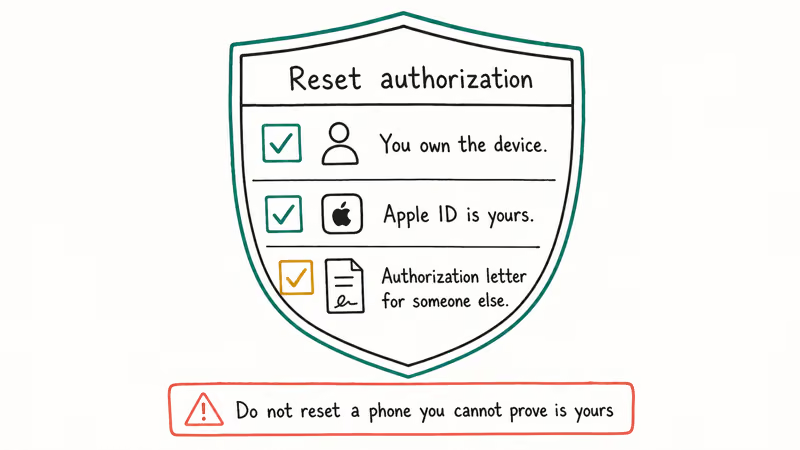
Apple ties every modern iPhone to its original Apple ID through Activation Lock, and that link survives a factory reset. According to Apple’s iPhone support hub, Activation Lock is enforced at the device level, and even a complete restore through Recovery Mode won’t clear it. If you can’t sign back in with that Apple ID, the iPhone becomes a paperweight.
A short legal note.
Resetting an iPhone that isn’t yours, a phone you found, a phone you bought used without proof of deactivation, or someone else’s device, is unlawful in most jurisdictions. Apple states that the device must be removed from the original owner’s account before reuse, and skipping that step constitutes unauthorized access.
If the iPhone was lost or stolen, hand it to local police or return it to the carrier. If you bought it used, ask the seller to sign out of iCloud first and confirm via our Find My iPhone Checker walkthrough that Activation Lock is off.
For your own device, you have four legitimate paths: three from Apple, plus one paid tool as a last resort.
#Method 1: Reset Your iPhone Using iCloud and Find My
This is the simplest method when Find My iPhone was enabled before you lost access. No cable. No computer in front of you. Only a web browser on any phone, tablet, or borrowed laptop.
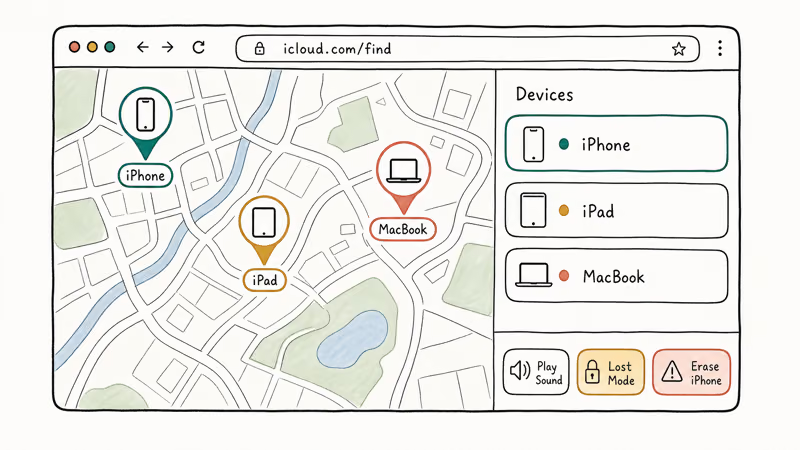
Apple recommends the remote Erase iPhone command as the preferred path for users who can no longer unlock the device but still know their Apple ID password.
Step 1. Open iCloud.com/find on any browser and sign in with the Apple ID linked to the locked iPhone.
Step 2. Pick “All Devices,” then choose your iPhone.
Step 3. Click “Erase iPhone” and confirm. The remote wipe queues immediately, and the device executes it the next time it touches Wi-Fi or cellular.
Once the device reaches Wi-Fi or cellular, the Erase command finishes quickly. The lock screen disappears, the Hello setup screen appears, and the iPhone is ready for a fresh sign-in. If the device is offline at the time, the wipe stays queued in iCloud and runs automatically the moment it next connects to any network.
One catch: after the erase, Activation Lock prompts you for the original Apple ID and password before letting you set up the device again. There’s no skip button.
#Method 2: Restore Your iPhone Using iTunes or Finder
If Find My iPhone was off but you previously synced this iPhone to a specific computer running iTunes (Windows or macOS Mojave and earlier) or Finder (macOS Catalina and later), Apple’s local restore flow still works without typing the passcode.
You’ll need access to that specific computer. A friend’s laptop you’ve never connected to the iPhone won’t trigger the trusted-device shortcut, because iOS only accepts data from previously-authorized hosts.
Step 1. Plug the iPhone into the computer you usually sync with using a Lightning or USB-C cable.
Step 2. Open iTunes or Finder, then wait.
Note. If iTunes asks for the device passcode at this stage, the trusted-device path is closed, so skip to Method 3.
Step 3. Click the device icon, then “Summary” (iTunes) or “General” (Finder), and choose “Restore iPhone.”
Step 4. Confirm the warning that “Restore” wipes the device and reinstalls iOS.
Apple recommends a fresh backup before restoring.
If you can’t unlock the device to make one, your most recent iCloud or iTunes backup is what you’ll restore from afterward.
#Method 3: Use Recovery Mode to Reset an iPhone Without Your Own Computer
Recovery Mode is Apple’s official fallback for any iPhone where the passcode is forgotten and Find My is off. It works on a borrowed Mac or Windows PC, because it bypasses the trusted-device pairing.
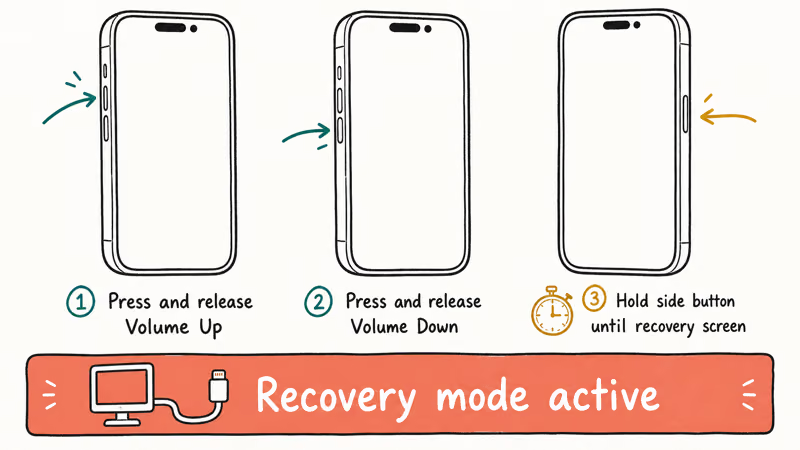
According to Apple’s iPhone Recovery Mode support article, the process takes about 15 minutes and requires only a USB cable plus a working internet connection on the computer.
The exact button sequence to enter Recovery Mode depends on which iPhone model you have, so use the steps that match your device below.
#For iPhone 8 and Newer
Press and quickly release Volume Up. Press and quickly release Volume Down. Then hold the Side button until the Recovery Mode screen appears with the cable icon, about 10 seconds in.
When iTunes or Finder pops up, choose “Restore.” The computer downloads the latest iOS and reinstalls it.
#For iPhone 7 and 7 Plus
Hold Volume Down and the Side (or Top) button together. Keep holding both until the Recovery Mode screen appears. Choose “Restore” when the computer prompts.
#For iPhone 6s and Older
Hold the Home and Top buttons together, then click Restore.
After the restore, Activation Lock will ask for the original Apple ID. If you remember it, sign in and the iPhone is yours again.
#What If You Forgot Your Apple ID Password?
A reset without the Apple ID and its password just produces a locked-out iPhone. Activation Lock means business.
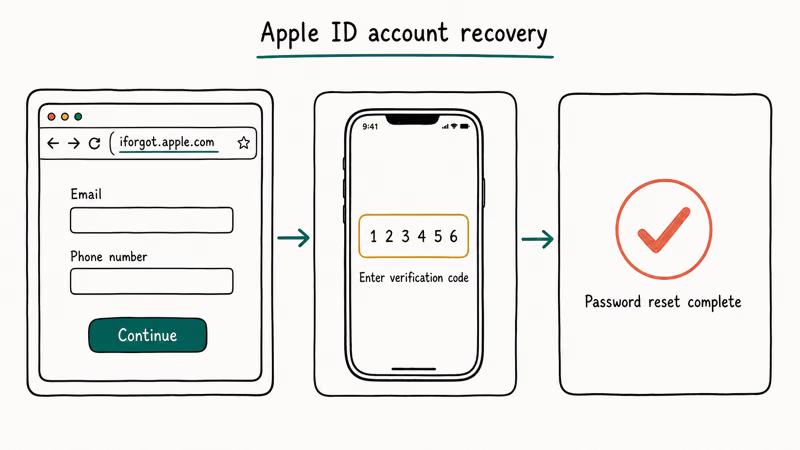
Apple’s iforgot.apple.com flow is the only legitimate way to recover an Apple ID password. According to Apple’s account recovery page, the standard reset takes a few minutes if you have a trusted phone number or recovery contact set up, while full account recovery can take 1 to 14 days when no trusted device is available.
Start at iforgot.apple.com on any browser. Enter the email tied to your Apple ID, then follow the verification prompts, usually an SMS code to a trusted number or a prompt on another Apple device you’re signed into.
If neither path works, request account recovery and Apple emails you when it completes. The wait can range from about a day to over a week, depending on what trusted information Apple is able to verify.
Don’t wipe the iPhone while you wait.
A reset before you have the password leaves the device unusable. See our Apple ID locked guide for details.
#Method 4: Tenorshare 4uKey as a Paid Last Resort
If Find My is off, the trusted computer is gone, Recovery Mode fails, and your Apple ID is unrecoverable through Apple’s own channels, a paid third-party tool is your remaining option.
Tenorshare 4uKey is the most widely reviewed of these. It still can’t bypass Activation Lock on a modern iPhone, that’s an Apple-controlled gate, but it can remove a forgotten screen passcode on the device’s own Apple ID.
Use this only on a device you own, where you also own the Apple ID. It’s a tool, not a workaround for stolen phones.
Step 1. Download Tenorshare 4uKey on a Windows or Mac computer.
Some links on this page are affiliate links, which means fone.tips may earn a commission at no extra cost to you.
Step 2. Connect the iPhone with a Lightning cable and click “Start” on the 4uKey home screen.
Step 3. Follow the on-screen prompts to enter DFU Mode. Older iPhones use a Home button hold; newer ones use the Volume and Side sequence.
Step 4. 4uKey downloads the matching iOS firmware. Click “Start to Remove” to begin the wipe.
Step 5. Wait about 15 to 20 minutes. The iPhone reboots into the fresh Hello screen, with the passcode gone.
After this, you’ll still face Activation Lock if Find My was on. You need the original Apple ID password to clear it. No third-party tool can.
If you’re locked out for other reasons, see our broader guide on what to do when you’re locked out of iPhone or how to unlock activation lock the right way.
#Bottom Line
For your own iPhone, the order is simple. Try iCloud’s Erase iPhone first if Find My was on. If Find My was off but you’ve synced this iPhone to a specific computer before, try the iTunes or Finder restore. Otherwise, Recovery Mode through any available computer is your fallback.
Use Tenorshare 4uKey only as a last resort. Reach for it only on a device you can prove you own.
If you can’t recover the linked Apple ID through iforgot.apple.com, don’t bother wiping. The iPhone stays locked at Activation Lock until that account is back in your hands. Also worth reading: our walkthrough on how to reset iPhone when you still have the passcode.
If you’re tempted to reset a phone you can’t authenticate as yours, please don’t. Return it to its owner, the carrier, or local police. Apple’s Activation Lock is designed exactly to make that the only honest path.
iPhone tips & tricks
#Frequently Asked Questions
Can you reset an iPhone without a computer at all?
Yes, if Find My was enabled beforehand.
Will resetting an iPhone erase everything on it?
Yes. A reset wipes photos, contacts, messages, app data, and account credentials. If you have iCloud Backup enabled, your last backup stays in iCloud and can be restored during the Hello setup screen. iTunes or Finder backups stored on your home computer also remain available.
Can I reset someone else’s iPhone without their passcode?
No, and you shouldn’t try. Apple’s Activation Lock binds the device to the original owner’s Apple ID even after a full factory reset. Apple states that found or stolen iPhones must be returned, and unauthorized access can violate state and federal computer-fraud laws.
Is Tenorshare 4uKey safe to use?
Yes for screen passcode removal, no for Activation Lock bypass.
What if I forgot both my passcode and my Apple ID password?
Go to iforgot.apple.com and start Apple ID recovery first. Don’t touch the iPhone yet. Apple states that the account recovery flow restores access in anywhere from a few minutes to two weeks, depending on what trusted devices and phone numbers you have on file. Once the Apple ID is back, then proceed with one of the reset methods above.
How long does Recovery Mode take to reset an iPhone?
Apple’s support pages confirm that a Recovery Mode restore generally takes about 15 minutes, plus the time to download the latest iOS firmware. On a slower internet connection, the download alone can take 20 to 30 minutes. The whole process should finish in under an hour in most cases.
Does iOS lock me out after too many failed passcode attempts?
Yes. According to Apple, ten wrong tries permanently disables the device.
How to Transfer Data to a New iPhone Without iCloud
Move everything to your new iPhone without iCloud: Quick Start device-to-device transfer, wired migration, and encrypted Finder or iTunes backups.
Best Wireless Earbuds for iPhone in 2026: USB-C Era Picks
Best wireless earbuds for iPhone in 2026, comparing AirPods Pro 3, Sony WF-1000XM6, Bose QC Ultra, and Anker Liberty 4 NC on the USB-C iPhone lineup.
iPhone Keyboard Lag? 7 Proven Fixes for iOS 26 (2026)
Fix iPhone keyboard lag with 7 proven fixes for iOS 26. Covers restart, storage, predictive text, third-party keyboards, and dictionary reset.
How to Block Porn on an iPhone: A Guide for Parents
Learn how to block porn on iPhone using Screen Time, DNS filtering, and safe browsers. Step-by-step guide for parents to protect kids' devices.