DSLR vs. Point and Shoot Camera: Which Should You Buy?
DSLR vs. point and shoot camera compared across image quality, portability, price, and features to help you choose the right camera for your needs.
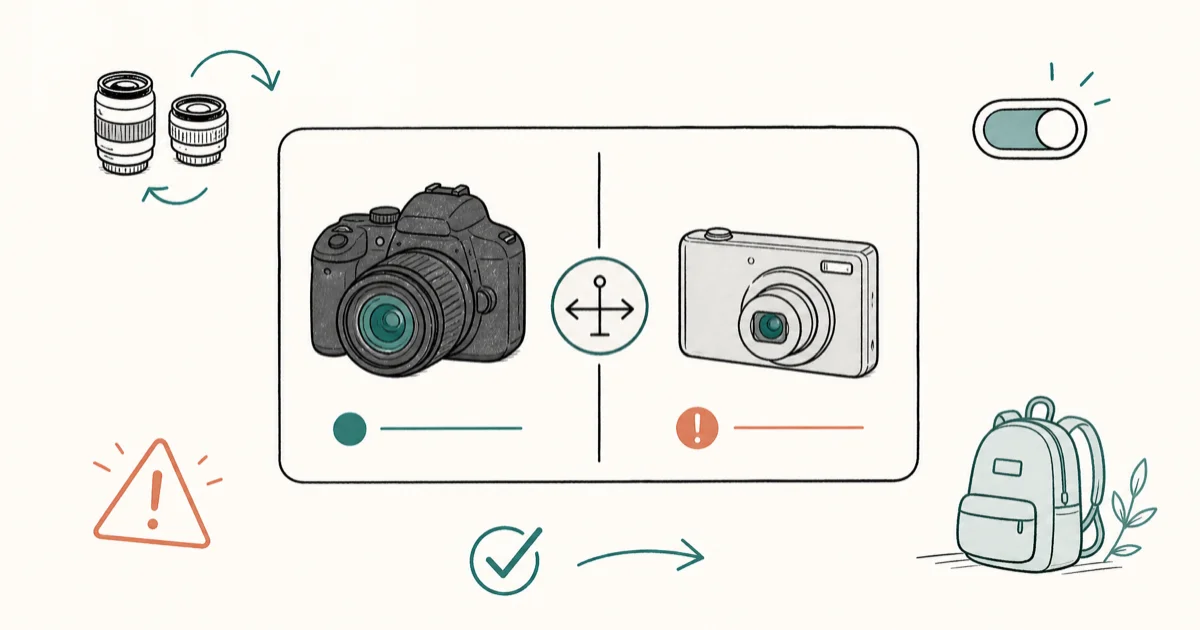
Quick AnswerDSLRs offer superior image quality, interchangeable lenses, and manual controls for serious photographers. Point and shoot cameras are more compact, affordable, and easier to use for casual shooting. Choose a DSLR for creative control or a point and shoot for everyday convenience.
Sensor size, lens flexibility, and pocketability drive almost every meaningful difference between DSLRs and point-and-shoot cameras. This guide compares a Canon EOS Rebel SL3 DSLR against a Sony RX100 VII point-and-shoot across common scenarios, including low-light dining, fast-action sports, landscape, portraiture, and casual travel, to show where each type actually excels.
- DSLR sensors are 20 to 50 times larger than point-and-shoot sensors, which directly translates to better low-light performance and sharper image detail.
- Point-and-shoot cameras use fixed lenses, eliminating the need to carry, buy, or switch lenses. This is a major convenience advantage for travel photography.
- Advanced DSLR cameras shoot up to 10 frames per second, while point-and-shoot cameras have slower autofocus and shutter speeds unsuitable for sports photography.
- DSLR resale value holds significantly higher than equivalent point-and-shoot models, making them a better long-term financial investment for serious photographers.
- Point-and-shoot lenses typically start at 30-35mm, preventing wide-angle shots. This is a key limitation compared to DSLRs that support interchangeable wide, telephoto, and macro lenses.
#DSLR vs Point-and-Shoot: Our Picks and Where to Buy
Here is the short version on each pick and where to get it before the full comparison.
#Canon EOS Rebel SL3
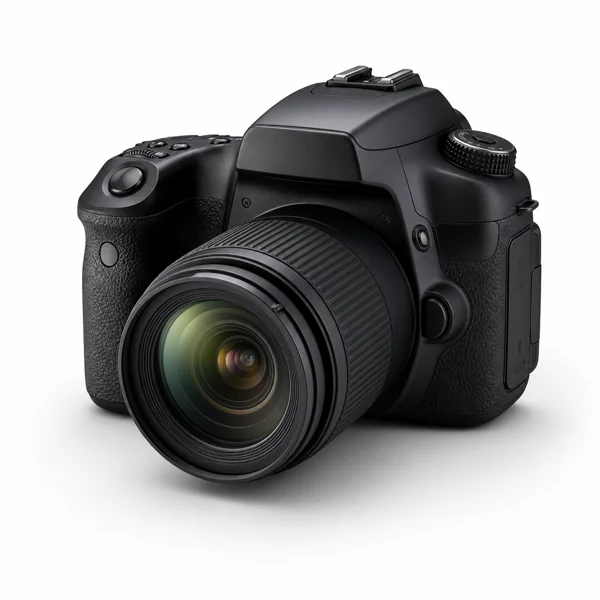
- Larger APS-C sensor gathers more light than a compact
- Interchangeable EF/EF-S lenses for room to grow
- Long ~1070-shot battery life and a flip-out touchscreen
Last updated on Jun 30, 2026
As an Amazon Associate fone.tips earns from qualifying purchases. Prices and availability on Amazon are accurate as of the date above and subject to change.
#Sony RX100 VII
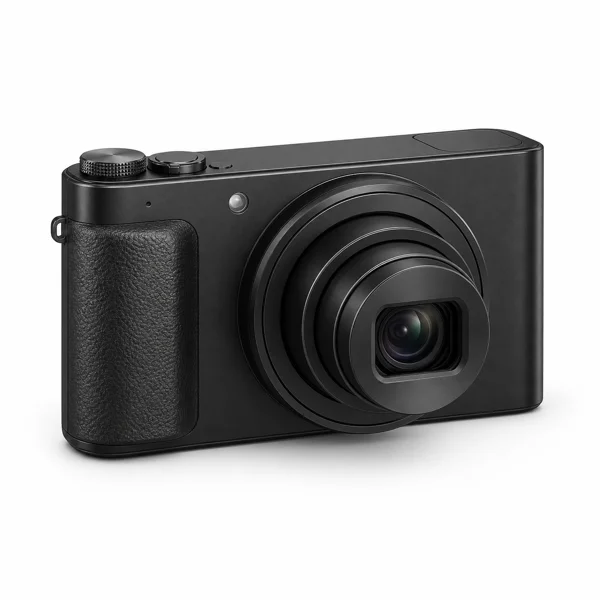
- Fits in a pocket yet covers 24-200mm
- Fast real-time tracking and Eye AF
- 4K HDR video with a flip-up screen for vlogging
Last updated on Jun 30, 2026
As an Amazon Associate fone.tips earns from qualifying purchases. Prices and availability on Amazon are accurate as of the date above and subject to change.
#Key Differences Between DSLR and Point and Shoot Cameras
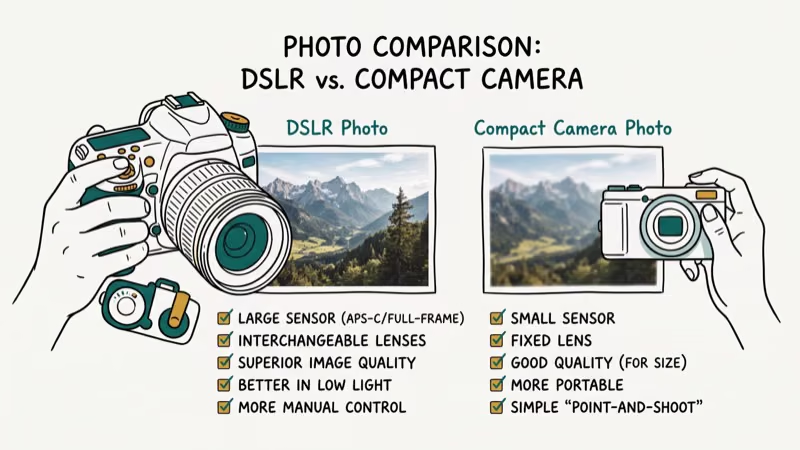
Sensor size is the most important difference. According to Wikipedia’s sensor format reference, an APS-C DSLR sensor measures roughly 23.5 x 15.6mm, many times the surface area of a 1/2.3-inch point-and-shoot sensor at about 6.17 x 4.55mm. The full image sensor format table catalogs every common size used in consumer cameras. That sensor area advantage lets the DSLR capture more light per pixel, producing cleaner images with far less noise in dim conditions.
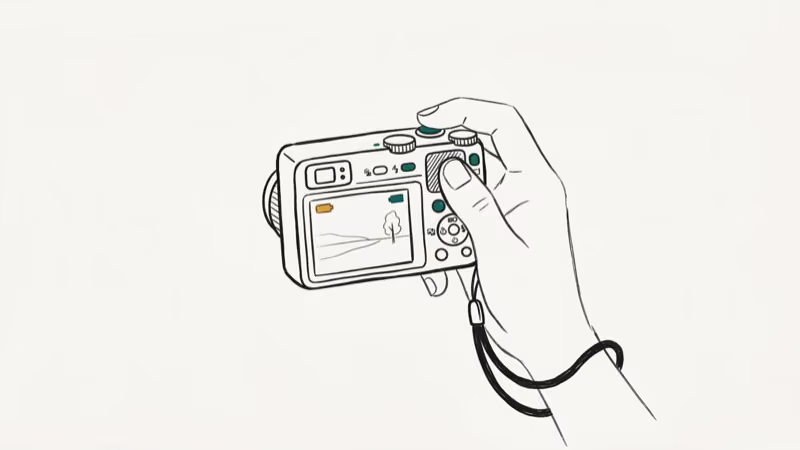
Lens flexibility is the second key difference. DSLRs accept interchangeable lenses, so you can attach wide-angle glass for landscapes, a telephoto for wildlife, or a macro lens for close-up detail shots. Point-and-shoot cameras keep a built-in zoom lens that you can’t remove or swap.
The Wikipedia article on digital cameras confirms that sensor size is the primary factor determining low-light performance and dynamic range. Sony’s spec sheet confirms that the RX100 VII compact uses a 1-inch type Exmor RS CMOS sensor, larger than typical 1/2.3-inch compacts but still smaller than the Canon EOS Rebel SL3’s APS-C CMOS chip. The point-and-shoot camera reference catalogs the full category.
#Point and Shoot Camera Advantages
Size and portability: Point-and-shoot cameras fit in a jacket pocket. You don’t need a camera bag or an extra case. For casual travel, social events, or any situation where carrying a large camera is impractical, a point-and-shoot wins.
Ease of use: Automatic modes handle exposure, focus, and white balance. There’s nothing to configure. A point-and-shoot like the Sony RX100 VII lets a non-photographer get sharp, well-exposed photos within minutes, without reading the manual.
Price: Entry-level point-and-shoot cameras start around $100-$200. A DSLR body alone typically starts at $400-$600, and lenses add significant additional cost.
Fixed lens: Every point-and-shoot camera has a built-in zoom lens. You don’t need to worry about switching lenses, dropping them, or buying multiple glass options.
Large depth of field: The smaller sensor creates a wide depth of field by default, keeping both foreground and background in focus. This works well for travel snapshots and group photos where you want everything sharp.
If you’re also considering home security photography, our guide to the best peephole cameras covers compact camera options built specifically for security use.
#Is a DSLR Actually Worth the Extra Cost?
For serious photographers, yes. For casual users, probably not. Here’s the honest breakdown:
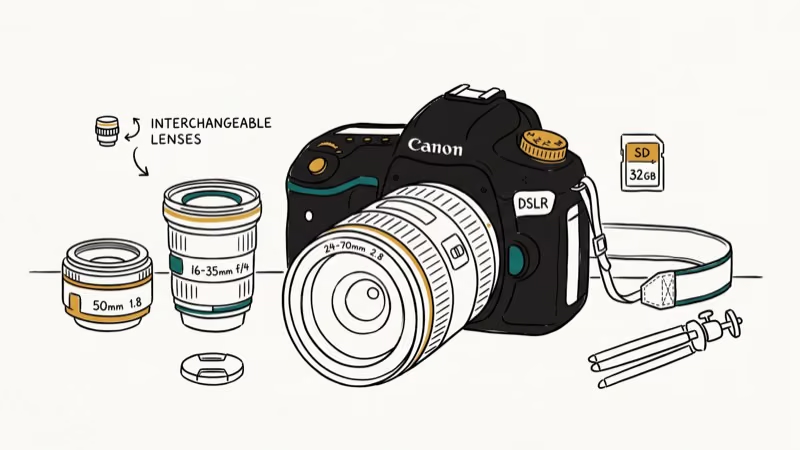
Image quality: The DSLR sensor advantage is real and meaningful. A larger APS-C sensor like the Canon EOS Rebel SL3’s holds up better at high ISO, keeping faces sharper and cleaner in a dim restaurant, while a 1-inch compact like the Sony RX100 VII tends to show more grain in shadow areas at the same ISO.
Speed: Professional DSLRs shoot 10 frames per second with fast autofocus tracking. This makes them the only viable option for sports, wildlife, or action photography. Point-and-shoot cameras struggle with moving subjects.
Creative control: DSLRs give you full manual control over shutter speed, aperture, and ISO. That matters for long-exposure night photography, where you may need a fixed shutter duration and precise aperture control. Many point-and-shoot auto modes offer less exposure control, especially in dark scenes.
Long-term investment: DSLR lenses retain value and can be used across multiple camera bodies. DSLR lenses tend to hold value well on secondhand markets, and can be reused across multiple camera bodies over many years. Point-and-shoot cameras depreciate quickly and can’t be upgraded.
#Advantages of DSLR Cameras
DSLR cameras offer distinct technical advantages that matter for photography beyond casual snapshots:
- Interchangeable lenses: Switch between wide-angle, telephoto, macro, and portrait lenses for different scenarios
- Better autofocus: Phase-detection autofocus tracks moving subjects accurately
- Manual controls: Full control over exposure, depth of field, and timing
- Faster burst rate: 6-10 frames per second for capturing fast action
- Optical viewfinder: See exactly what the lens sees without battery drain
- Weather sealing: Higher-end DSLRs are sealed against dust and moisture
For photographers who also want to share images quickly, pairing a DSLR with a smartphone workflow works well. Our guide on adding text to photos on Android covers editing steps that work for DSLR images transferred to your phone.
#Disadvantages of DSLR Cameras
Size and weight: A DSLR body with a standard kit lens weighs 600-800 grams. Add a 70-200mm telephoto, a spare body, extra batteries, memory cards, and a padded camera bag, and you’re easily over 3 kilograms slung across one shoulder. Your neck notices it after the first hour of shooting. A pocketable Sony RX100 VII or similar compact weighs 200-300 grams complete — about the heft of a smartphone in a thick case.
Complexity: Mastering aperture, shutter speed, ISO, and focus modes takes time. Beginners may produce worse photos with a DSLR in full auto mode than with a modern point-and-shoot because DSLRs don’t have the same intelligent scene-detection algorithms.
Maintenance cost: Mirror mechanisms and optical viewfinders add mechanical complexity. Sensor dust is a real issue when changing lenses outdoors. Budget for sensor cleaning every 6-12 months if you shoot in variable conditions.
Price: Even entry-level DSLRs cost more than comparable point-and-shoot cameras with similar feature sets.
#Which Camera Performs Better in Low Light?
The DSLR wins clearly. At ISO 6400 the Canon EOS Rebel SL3’s larger sensor keeps noise more controlled, while a 1-inch compact like the Sony RX100 VII shows significant noise and detail loss in shadows.
The physics behind this: a larger sensor has bigger individual pixels, each capturing more photons per unit time. More photons per pixel means a cleaner signal, and a cleaner signal means less visible noise. This advantage grows as light levels drop, which is why indoor and night photography consistently favors DSLRs.
#Bottom Line
Choose a point-and-shoot if: you want something pocket-sized, you rarely shoot in low light, you don’t want to spend time learning manual settings, or your budget is under $300.
Choose a DSLR if: you want maximum image quality, you plan to shoot sports or wildlife, you’re willing to invest in lenses, or photography is a serious hobby. The best cameras under $300 guide covers both types if you want specific model recommendations at that price point.
The right camera is the one you actually carry with you. A point-and-shoot that lives in your jacket pocket and rides along to dinner, the school play, and the airport security line will photograph more of your life than a brilliant DSLR sitting at home because the bag was too heavy to grab. For recommendations at different price points, see our best cameras under $400 and best low-light video cameras guides.
Before buying, rent or borrow the heavier option for a weekend. Comfort matters as much as specs when you’re carrying a camera all day.
Also price one spare battery and memory card with the camera body. Accessories can erase a budget advantage quickly.
#Frequently Asked Questions
Are DSLR cameras only for professional photographers?
No. Entry-level DSLRs like the Canon EOS Rebel series or Nikon D3500 are designed specifically for beginners. They include guided modes that explain settings and help you learn. The main barrier is price, not complexity.
Can a point-and-shoot produce high-quality images?
Yes, especially modern high-end models like the Sony RX100 series. A Sony RX100 VII produces excellent photos in good light. The quality gap with DSLRs widens primarily in low light and fast-action scenarios.
Are DSLR cameras too complicated for beginners?
Modern DSLRs include auto modes that work fine without manual knowledge. Plan 2-3 months to feel comfortable with full controls.
Do point-and-shoot cameras have any limitations worth knowing?
The main limitations are low-light performance, slower autofocus for moving subjects, fixed lens, and maximum zoom length. For travel and everyday photography, these rarely matter. For specific shooting situations like sports or concerts, they matter a lot.
Which camera should I choose for travel photography?
Pick a point-and-shoot when weight matters and you’ll use the camera; pick a DSLR when you’ve planned a dedicated photo trip.
What does sensor size actually mean for photo quality?
A larger sensor captures more light, which means sharper images at higher ISO settings, better dynamic range, and the ability to create shallow depth-of-field effects where the subject is sharp and the background is blurred. These are physical advantages that software can’t fully replicate.

Best Laptop for Running LLMs in 2026: Memory Comes First
The best laptop for running LLMs is a memory purchase first. Compare MacBook unified memory against NVIDIA laptop VRAM, and see what each tier really runs.
Pixel 11 vs Pixel 10: What Changed and Who Should Upgrade
Pixel 11 vs Pixel 10: same screen and camera resolution, new Tensor G6, 25W wireless, and Gemini Intelligence. Here is who should actually upgrade.
Best Power Bank for iPad in 2026: Pro, Air, and Mini
Best power bank for iPad in 2026. Compare mAh tiers and USB-C PD wattage for iPad Pro, Air, and mini, plus airline Wh math, cables, and travel tips.
Best Power Bank With Built-In Cable: Top 2026 Picks
Best power bank with built-in cable picks for 2026. Compare single USB-C, multi-connector, and retractable laptop banks, plus airline Wh math.