Chatous Review: Features, Risks, and Safer Alternatives
Chatous review covering hashtag matching, content moderation gaps, privacy risks, and safer random chat app alternatives for adults in 2026.

Quick AnswerChatous is a hashtag-based random chat app that paired strangers worldwide for text and video conversations. Thin content moderation, no real age verification, and inconsistent app store availability make it unsuitable for teens and a cautious-only option for adults.
The Chatous app drew attention by promising hashtag-matched chats worldwide. Reality in 2026 is messier.
- Chatous matched users through hashtags rather than pure random pairing, which produced more on-topic chats than apps that simply throw strangers together.
- App store availability has been inconsistent since 2023, with the iOS and Android listings repeatedly removed and reinstated rather than offering a stable release channel.
- There’s no working age verification beyond a self-declared birthday, so the 17+ rating doesn’t stop minors from joining.
- Media expiration timers exist for photos and audio, but anything visible on screen can still be screenshotted or screen-recorded by the other party.
- Adults wanting interest-based chat should compare moderated alternatives like Discord communities, Reddit-linked chat rooms, or vetted forums before installing a random-stranger app.
#Inside Chatous: Origins and How It Works
Chatous is a mobile messaging app launched in 2014 that pairs users for one-on-one text, voice, and video chats based on hashtags they enter at signup. Instead of clicking a single “Next” button like Omegle’s old web flow, Chatous asked you to type tags such as #music, #anime, or #anxiety, then queued you with other users who had picked overlapping tags.
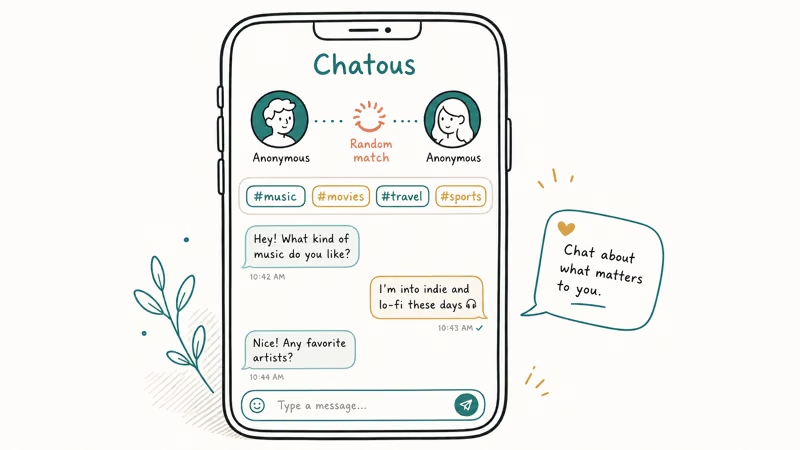
The product positioned itself as a more thoughtful version of stranger chat, with saved contacts and cross-device sync separating it from transient random-chat apps.
Current Chatous-style interest matching has a practical roadblock before any chat begins: app store availability. The App Store listing hasn’t been reliably visible in every region, and Google Play can surface lookalike apps with different developers. That’s a recurring pattern with the brand and a reason most current “Chatous reviews” you’ll see online are reviewing an app that may not be installable for you today.
#Core Features Chatous Offered
For the periods Chatous has been live, the headline features have stayed roughly the same. Here’s what actually shipped:
- Hashtag interest matching. You enter up to several tags, and the app queues a chat with someone using overlapping tags. This produces more relevant openings than pure random pairing.
- Anonymous identity. No real name or photo is required. You pick a display name and can change it at any time.
- Multimedia sharing with expiration. Photos, voice notes, and video clips can be sent with timers, similar to Snapchat-style ephemeral messages.
- Cross-device sync. A web client mirrors mobile chats, so conversations don’t disappear when you switch screens.
- Friends list and persistent chats. You can save a contact you matched with and continue the conversation across days, which most “Next-button” random chat apps deliberately don’t allow.
Reliability is the weak spot users report most often. Text chat can feel instant on a stable connection, but video and voice quality depend heavily on network conditions, app availability, and how actively the current build is maintained.
The hashtag system is the actually useful piece here. Want to talk about a specific TV show? The interest filter does what it says. The problem isn’t whether the feature works, it’s everything wrapped around it.
#Is Chatous Safe for Teens and Adults?
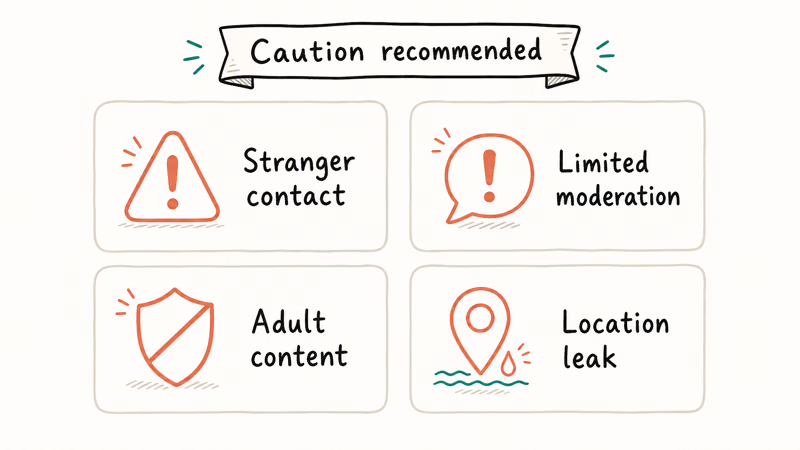
This is where the app falls down. Random chat apps live or die on moderation, and Chatous has historically had very thin guardrails.
The official rating is 17+, but you don’t have to prove anything. According to Apple’s App Store age rating policy, developers self-classify based on content, and Apple’s only check on the user side is the birthday a customer enters once on their Apple ID. That’s the same paper-thin gate every stranger chat app sits behind, and it’s the reason age verification is effectively nonexistent on Chatous.
Three risks follow from that paper-thin gate:
- Exposure to explicit content from other users. Chat partners can send unsolicited images or initiate video that turns inappropriate within seconds.
- Predatory contact. Hashtag tags like
#lonelyor#15f(a common age/gender signal teens still use) are easy targets for grooming. - Fake profiles and scams. With no identity verification, scammers can pose as anyone, and the hashtag system actively helps them find people interested in specific topics.
The FTC’s consumer guidance on protecting kids online recommends parents disable installation of unrated or 17+ apps, talk explicitly about stranger contact risks, and review what apps are installed each month. None of that is built into Chatous itself; the work falls entirely on parents and guardians.
For adults, the safety problem is different but real. You have no way to verify the person on the other end is who they claim to be, and any media you share can be screen-recorded regardless of expiration timers. If you wouldn’t post it on a public account, don’t send it on Chatous.
#Privacy and Data Collection Concerns
Random chat apps often collect more data than their UI suggests. Even when chats look anonymous, the underlying account is tied to a device fingerprint, an IP address, and usage telemetry.
For Chatous specifically, the published privacy policy in earlier versions stated that the app collects messages, hashtags used, IP, device identifiers, and rough location. That’s a lot for a service marketed as anonymous. None of those data points sound dramatic in isolation, but together they’re enough to build a recognizable profile.
A few practical implications worth sitting with:
- IP-based location narrows you to a metro area even without GPS access.
- Hashtag history says a lot about you. A short list of tags chosen over weeks reveals interests, mental health topics, and sometimes relationship status.
- Server-stored media stays on the company’s infrastructure until purged, even after the in-app expiration timer fires on your screen.
If you’re going to use any random chat app, run it through a separate user profile, avoid linking a phone number, and don’t share anything you wouldn’t tolerate appearing on a search result later.
#How Does Chatous Compare to Other Random Chat Apps?
Comparison isn’t apples-to-apples because each app makes different tradeoffs on anonymity, persistence, and moderation. Here’s how Chatous lines up against the apps people typically weigh against it:
| App | Matching style | Persistence | Moderation effort |
|---|---|---|---|
| Chatous | Hashtag interest | Friends list + history | Thin, user-reported only |
| Omegle (shut down 2023) | Pure random | None | Minimal, removed in 2023 closure |
| Discord | Server-based by topic | Full chat history | Active community moderation |
| Reddit Chat | Subreddit-linked | Persistent | Moderated by subreddit team |
| Telegram public groups | Search by topic | Persistent | Variable by group |
Two things stand out from this table. First, the apps with the strongest moderation are the ones built around persistent communities rather than throwaway pairings. Second, Omegle’s founder announced its November 2023 shutdown after 14 years of operation, citing rising legal pressure from lawsuits over predatory contact with minors.
That closure didn’t make stranger chat safer; it just pushed users elsewhere.
Most of the displaced traffic landed in smaller clone apps and Discord servers, where moderation varies wildly from community to community. We covered the original shutdown in our piece on Omegle’s safety record before it went offline, and the safer-alternatives angle in our roundup of video chat alternatives like Omegle. The pattern matters because Chatous sits in the same vulnerable category: small user base, thin moderation budget, predictable exposure to the worst actors that bigger platforms have started filtering out.
If you’re specifically after adult chat platforms, the calculus is different again, and we walk through the legitimate options in our guide to adult-oriented sites like Omegle along with the moderation rules to insist on.
#Safer Alternatives Worth Considering
Most Chatous users want either topic-based conversation or low-pressure social contact.
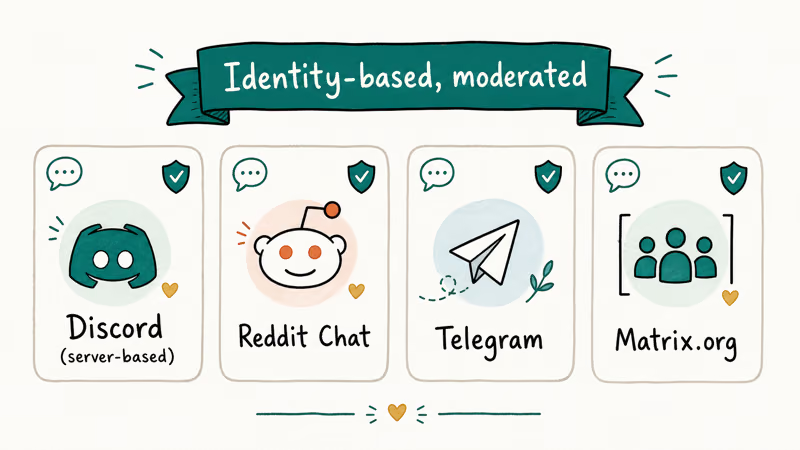
- Topic-based Discord servers. Public servers for hobbies, fandoms, language learning, or mental health support are heavily moderated by community admins. You’re chatting in the open with named accounts, which sharply reduces predation.
- Subreddits with chat features. Reddit’s chat works alongside subreddit moderation, so the same rules that govern the community govern your DMs.
- Vetted anonymous chat apps with reporting tools. Some apps have invested in real moderation and reporting flows. The anonymous chat apps for Android and iPhone guide covers what they actually enforce.
- Stranger chat apps with better safety records. If random pairing is what you want, our list of stranger chat apps worth trying flags which ones have working report buttons and age gates.
- Former-ChatStep users. If you came to Chatous after ChatStep shut down, our ChatStep alternatives roundup covers the better-moderated replacements.
Moderated Discord communities work differently because bad behavior is visible to admins, other members can flag it quickly, and bots can filter link spam in real time. That’s the level of moderation Chatous never built.
#Tips for Safer Use of Random Chat Apps
If you decide to use Chatous or a similar app despite the risks, a few habits sharply reduce exposure:
- Never share identifying details. Real name, school or workplace, phone number, and home neighborhood all stay off the chat.
- Don’t move conversations to other platforms quickly. Scammers push you to WhatsApp, Telegram, or Snapchat early so they can build leverage on platforms with less moderation.
- Turn on operating-system controls. Apple’s Screen Time content and privacy restrictions and Google’s Family Link supervision tools let parents block 17+ apps outright and monitor install attempts.
- Block and report aggressively. Every chat app has a block button; use it the moment someone makes you uncomfortable, and report behavior that violates the app’s terms.
- Don’t share media you can’t tolerate being saved. Expiration timers can’t stop a screenshot or a second phone pointed at the screen.
Common Sense Media’s research on stranger-contact apps found that consistent parent-teen conversations about online behavior reduce risk more than software alone. If you’re a parent reading this for a teen who wants the app, the conversation matters more than any restriction setting.
#Bottom Line
Chatous works as advertised on the feature axis. Hashtag matching produces more relevant chats than pure random pairing, the cross-device sync earns its keep, and the friends list lets occasional conversations build into something. That’s the case for the app at its best.
The negative case is sturdier: no real age verification, reactive moderation, and unstable app store availability since 2023.
For anyone under 18, the answer is no. For adults, install only if you accept that you’re responsible for every safety control yourself and stick to chats about specific public-interest hashtags rather than personal topics. Most people are better served by a moderated Discord server or a topic-based subreddit, where the community does the work Chatous never wired in.
#Frequently Asked Questions
Is Chatous still available in 2026?
Chatous app store listings have been unstable since 2023, with periods where neither the iOS nor Android app appeared in major regions. Even when listings reappear, the developer’s update cadence has been sparse, and look-alike apps with similar names but different developers crowd search results. Always check the developer name and recent reviews before installing anything claiming to be Chatous.
What was the difference between Chatous and Omegle?
Omegle paired purely at random and kept no history. Chatous uses hashtags and retains your friends list across sessions.
Can I use Chatous without sharing my real identity?
Anonymous to other chat partners, yes. Anonymous to the platform itself, no, because Chatous still collects your IP, device identifiers, hashtag history, and rough location.
Is Chatous appropriate for kids or teenagers?
No. The 17+ rating exists for a reason, and there’s no working age verification beyond a self-declared birthday. Random stranger chat with thin moderation is exactly the environment law enforcement and child safety groups warn against. Parents who find Chatous installed on a teen’s device should use operating-system controls to block it.
Does media really disappear when the timer expires on Chatous?
No. The image or video disappears from view, but the content can still be screenshotted, screen-recorded, or photographed off the screen with another phone.
How do I report a problem user on Chatous?
The in-app block and report buttons are the primary tools. They notify the platform but, based on user reports, response times have been slow and outcomes opaque. For serious incidents involving minors or threats, file a report with the platform and contact local law enforcement; the NCMEC CyberTipline accepts reports at missingkids.org/gethelpnow/cybertipline.
What’s a safer alternative if I want interest-based chat?
Discord servers, subreddit chat rooms, and topic-focused forums all give you interest-based conversation with active community moderation and named accounts. The chat quality is generally higher because the people there are committed to a topic rather than passing through.
Start with a public Discord server for the hobby or fandom you care about, sit in the general channel for a week before posting anything, and watch how the moderators respond when rules get broken. That tells you more about whether the community is safe than any feature list could. If you find a server with engaged mods, you’ve got something Chatous never offered.

Google Messages Error 3100: Why RCS Is Broken on Galaxy
Google Messages RCS error 3100 hits Galaxy owners after phone or carrier switches. Google told 9to5Google a fix is coming. Here's what actually helps.

Is This Bank App Real? Spot a Fake App on Your Home Screen
A bank app can land on your home screen from a web page with no install warning. Learn the checks that tell a real banking app from a phishing web app.
Apps Crashing After iOS 27 Update? Fix Order (2026)
Apps crashing after the iOS 27 update? Update the app in the App Store first, then offload and reinstall to clear stale cache, then restart. The fix order.

Do AI Translation Earbuds Work Offline? What to Know
Do AI translation earbuds work offline? A few do with downloaded language packs, but most need the cloud. Here's what works offline and what you give up.