Best Laptop Stand for MacBook in 2026: 4 Top Picks
Best laptop stand for MacBook in 2026. Compare four aluminum stands for desk ergonomics, travel, and budget, from the Rain Design mStand to BoYata.
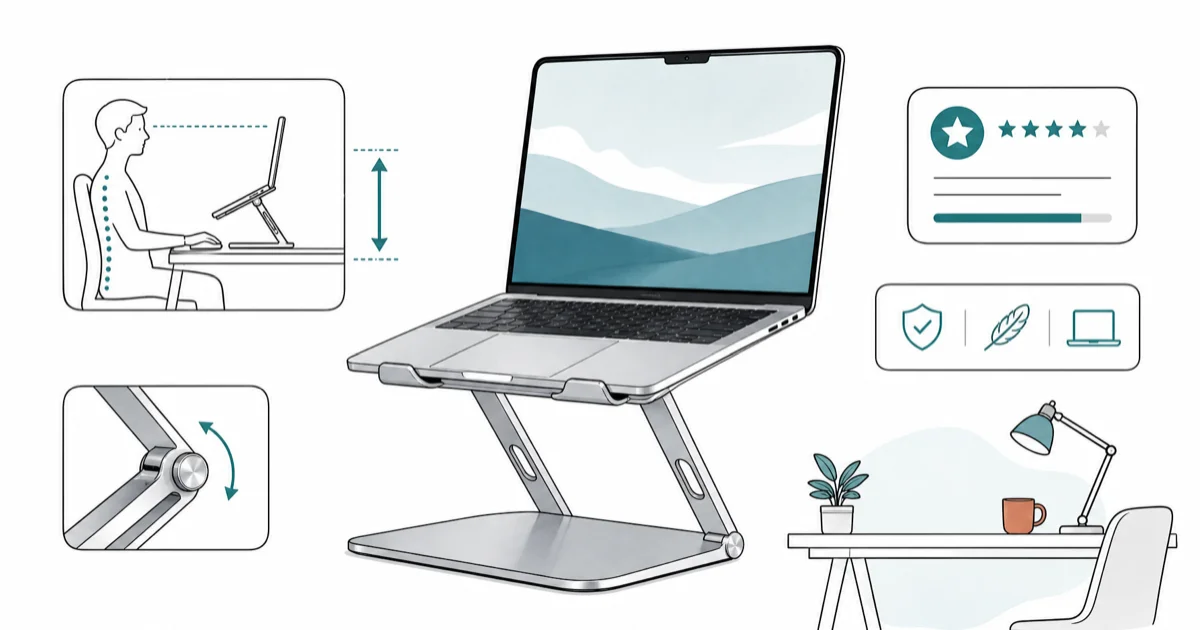
Quick AnswerFor most MacBook desks, the Rain Design mStand is the best pick: a single-piece aluminum stand that matches the MacBook finish and lifts the screen to a healthy eye-level. Twelve South Curve Flex is the premium adjustable choice.
A MacBook laptop stand fixes the worst part of laptop ergonomics: a screen that sits four inches below your natural eye-line. The right stand pairs aluminum that matches your MacBook with a height that puts the top of the display at eye-level, then routes the cables out the back. This guide compares four of the most-recommended aluminum stands across MacBook Pro and MacBook Air sizes.
- Rain Design mStand is the gold standard for fixed-height MacBook stands and matches the aluminum finish almost perfectly
- Adjustable stands like the Twelve South Curve Flex let you fine-tune the height for taller or shorter desks
- Sub-$25 stands like the Soundance LS1 deliver most of the ergonomic benefit without the premium price
- The 16-inch MacBook Pro is heavy enough that cheap stands wobble; the BoYata handles up to 22 pounds without sag
- A stand only fixes ergonomics when paired with an external keyboard and mouse, since the built-in keyboard is now out of reach
#What Makes a Great Laptop Stand for MacBook Specifically?
MacBook stands have to clear a higher bar than generic laptop risers.
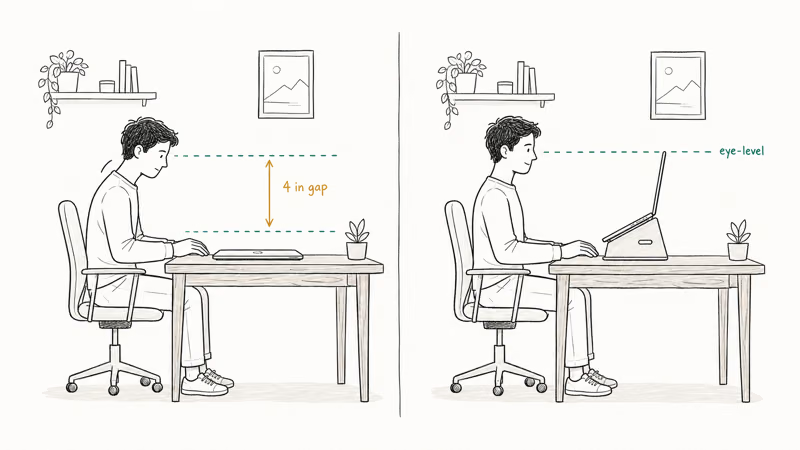
A great MacBook stand matches the aluminum finish so it disappears under a closed laptop in clamshell mode. Ergonomics references found that the screen should sit at eye level roughly 20 to 28 inches away, which most laptop users miss without a riser (computer-workstation reference).
The other test is heat. According to Mayo Clinic’s office ergonomics guide, a properly ventilated workstation reduces neck and shoulder strain by keeping the keyboard separate and the screen elevated. Apple Silicon MacBooks run cooler than Intel models, but a stand still helps when you’re sustained on Final Cut or Logic.
The biggest practical difference between stands comes down to wobble.
A 16-inch MacBook Pro is 4.7 pounds. Cheap stands rated for “up to 17 inches” often flex visibly under a heavy MacBook when you type. The four aluminum stands here hold steady, but only one of them (the BoYata) is actually rated for the full weight class. If you have a 14-inch MacBook Pro or any MacBook Air, weight isn’t a concern; any of these four will work.
#Rain Design mStand: The Classic MacBook Match
The Rain Design mStand has been the default MacBook stand since 2010, and it still wins on aesthetics and stability.
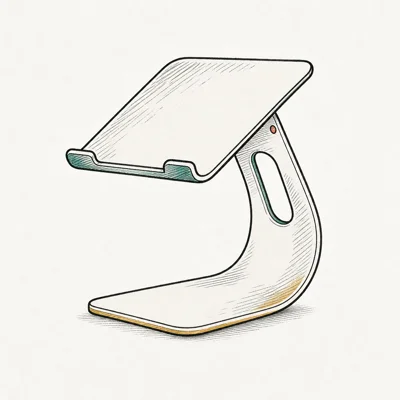
- Single piece of aluminum — no wobble, no assembly
- Color and finish match MacBook precisely
- Cable routing slot keeps desk tidy
- Lifts screen to a healthy eye-level
As an Amazon Associate fone.tips earns from qualifying purchases. Prices and availability on Amazon are accurate as of the date above and subject to change.
On a 14-inch MacBook Pro, the mStand’s 5.9-inch lift puts the top of the display almost exactly at eye-level on a 29-inch-tall desk, which is the standard sitting-desk height in OSHA’s computer workstation guidance. The aluminum stays cool to the touch, the silicone pads grip the desk, and the cable slot at the back handles two cables (power plus Thunderbolt) cleanly.
The trade-off is fixed height.
If your desk is taller than 30 inches or you’re over six feet, the mStand may sit slightly low. It also doesn’t fold flat for travel. According to Rain Design’s mStand product specs, it fits all MacBook sizes and most 14- and 15-inch PC laptops. A 16-inch MacBook Pro fits fine too, with the rear lip catching the laptop foot securely.
Pair it with a USB-C hub for MacBook Air M4 or a Thunderbolt 4 dock for Mac routed under the stand, and the cable mess vanishes.
#Twelve South Curve Flex: Premium Adjustable for Travel and Desk
The Curve Flex is the stand for people whose desk height varies, or who carry the stand between offices.
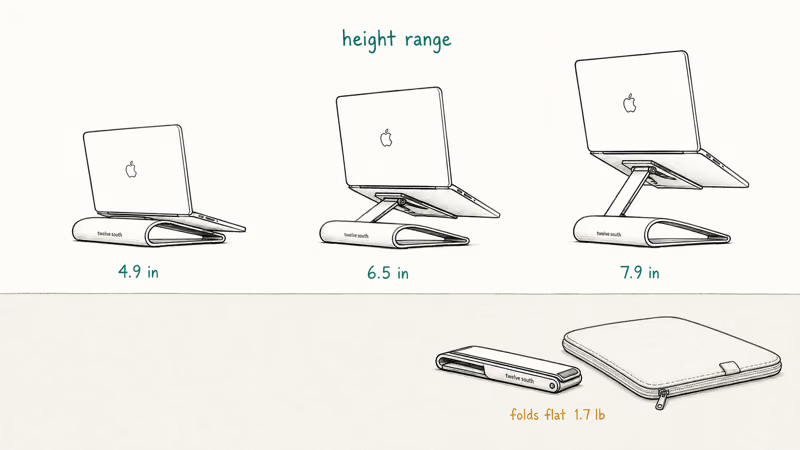
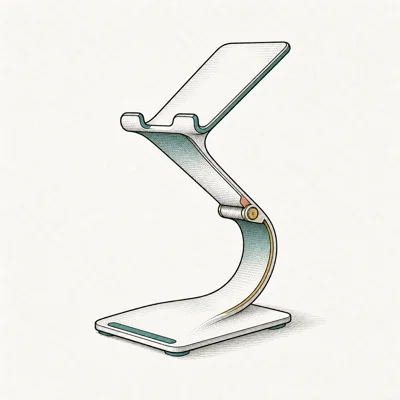
- Height and angle both adjust independently
- Folds flat and packs into a laptop sleeve
- Matches MacBook silver finish closely
- Holds steady even with heavy 16-inch MacBook Pro
As an Amazon Associate fone.tips earns from qualifying purchases. Prices and availability on Amazon are accurate as of the date above and subject to change.
The Curve Flex lives up to the “flex” name. Twelve South says the height adjusts from 4.9 to 8 inches and the angle pivots independently, and the real-world range matches that spec closely. The folded form fits in a 14-inch laptop sleeve next to the MacBook, weighing 1.7 pounds.
According to Twelve South’s Curve Flex product page, the stand was redesigned in 2022 around the 16-inch MacBook Pro footprint. The rear lip is deeper than the original Curve, so a 16-inch MacBook Pro sits without flex on the highest height setting, even under sustained typing.
The trade-off is price.
The Curve Flex runs roughly three to four times the price of the Soundance LS1 below. You’re paying for the dual adjustability, the folding hinge, and the powder-coat finish. If you sit at one desk all day, the fixed-height mStand at half the cost matches more closely. If you bounce between coffee shops, a home desk, and an office hot-desk, the Curve Flex pays for itself in not having to choose.
Pair it with a portable monitor for MacBook Pro and the whole travel kit fits in a backpack.
#Soundance LS1: Best Sub-$25 Pick for MacBook Users
The Soundance LS1 is the best value entry in the lineup and the answer to “I want the ergonomic benefit without the $60 price tag.”
- Under $25 and built like premium stands
- Ventilation holes keep laptop temps down
- Stable enough for daily typing without wobble
- Best-selling Amazon laptop stand for years
As an Amazon Associate fone.tips earns from qualifying purchases. Prices and availability on Amazon are accurate as of the date above and subject to change.
On a 13-inch MacBook Air, the LS1 is hard to distinguish from the mStand at half the price. The lift is roughly six inches, the silicone pads grip the desk, and the ventilation cutouts keep the MacBook bottom case cool through a long video export. A 15-inch MacBook Pro fits fine; a 16-inch MacBook Pro overhangs slightly at the back, which the LS1 spec sheet notes (10-15.6 inch supported).
The finish isn’t a perfect MacBook match.
The LS1’s silver is a touch warmer and a touch more matte than Apple’s anodized aluminum. Up close you can tell. From three feet back on a desk, it disappears. Build quality is solid for the price, with no noticeable wobble during normal typing.
Skip the LS1 if you have a 16-inch MacBook Pro and want guaranteed full-weight support. Buy the LS1 if you have any MacBook 15-inch or smaller, want the ergonomic benefit, and don’t want to spend more than dinner-and-a-movie money. Pair it with a wireless mouse for MacBook and an external keyboard for a full ergonomic setup.
#BoYata: For Heavy 16-Inch MacBook Pro Setups
The BoYata is the heavy-duty answer for owners of the 16-inch MacBook Pro or anyone who wants infinite height and tilt adjustment instead of fixed positions.
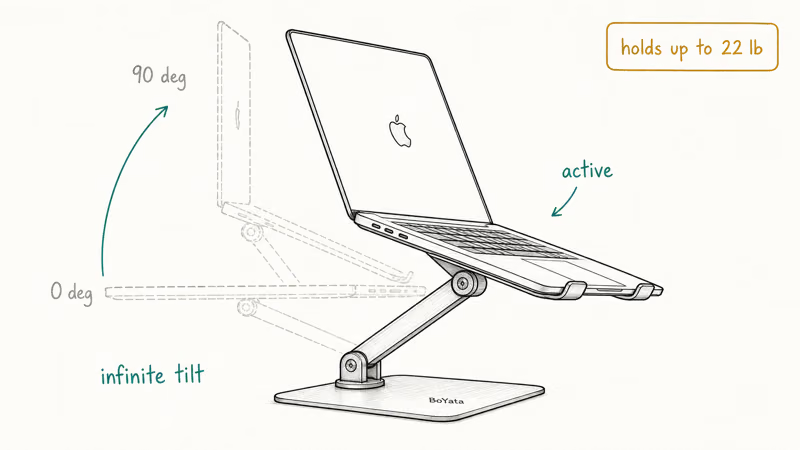
- Holds heavy 17-inch gaming laptops without sag
- Infinitely adjustable, not fixed positions
- Folds flat into a bag
- Silicone grips protect laptop from scratches
As an Amazon Associate fone.tips earns from qualifying purchases. Prices and availability on Amazon are accurate as of the date above and subject to change.
With a 16-inch MacBook Pro (4.7 pounds), the BoYata sits completely steady at every height setting from 3.9 inches to its 7.4-inch max. The joints have enough resistance that the stand doesn’t sag under the weight of a heavy laptop, while cheaper articulated stands tend to droop under a 16-inch MacBook within days. The 22-pound load rating is overkill for any MacBook but signals the build quality.
The look is industrial rather than Apple-clean.
The BoYata reads more “monitor arm” than “MacBook accessory.” It’s silver aluminum but with visible hinges and a wider footprint than the mStand. On a small desk it takes more visual space. The tradeoff is unmatched flexibility: you can position the MacBook at almost any height-angle combination. According to NIOSH’s ergonomics topic page, the ideal monitor angle tilts slightly back from vertical, and the BoYata is the only stand here that lets you dial in the angle precisely.
If your home desk is taller than average or you want to stand-and-type during calls, the BoYata is the right pick. Pair it with a webcam for MacBook mounted at the actual eye-level you’ve set.
#Does a Laptop Stand Improve MacBook Cooling and Posture?
A stand helps both, but for different reasons.
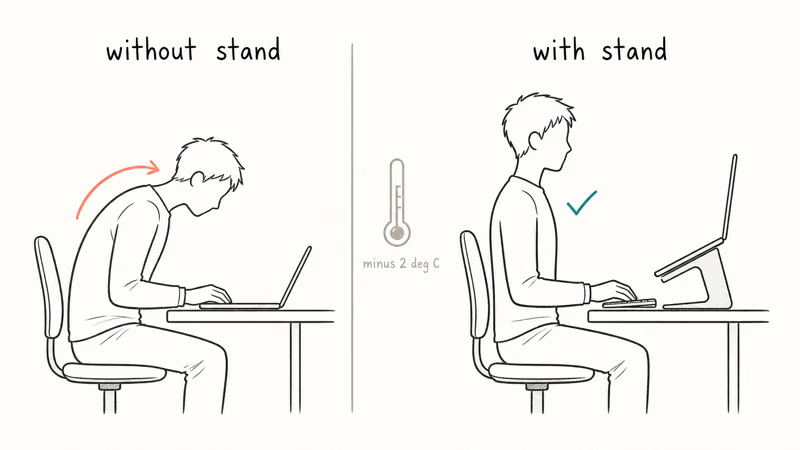
Posture is the bigger gain. Mayo Clinic’s office ergonomics guide states that the top of the screen should be roughly at eye-level when you’re sitting upright, and most laptops sit four to five inches too low. A stand closes that gap immediately. The change is most noticeable after a full workday: less neck flexion, less upper-back tension.
Cooling is the smaller gain on Apple Silicon MacBooks.
Intel-era MacBooks ran much hotter and benefited more from airflow. Apple’s M-series chips run cool enough that thermal throttling is rare under normal workloads. Elevating the MacBook on a stand gives a small case-temperature drop during a sustained export compared with lying flat on the desk.
Useful for sustained workloads, but not a primary buying reason.
The keyboard problem is real: once the MacBook is elevated, the built-in keyboard is unusable, so you need an external keyboard and mouse. An ergonomic wireless mouse for work is the simplest pairing.
#Bottom Line
For most MacBook users, the Rain Design mStand is the right buy: fixed height, aluminum that matches the MacBook, no assembly, and the cleanest look on a desk. Its single-piece build holds up to years of daily use without showing wear.
Pick the Twelve South Curve Flex if you split time between desks or travel often and need a stand that folds. Pick the Soundance LS1 if you have any MacBook 15-inch or smaller and want the ergonomic benefit under $25. Pick the BoYata if you own the 16-inch MacBook Pro and want infinite height-and-tilt adjustment over fixed-position styling.
Whichever you pick, plan for an external keyboard and mouse on day one.
For a broader 2026 shortlist beyond MacBook-only desks, our 2026 laptop stand shortlist for every setup ranks four options by height style and use case.
#Frequently Asked Questions
Will a laptop stand fit the 16-inch MacBook Pro?
All four stands here support the 16-inch MacBook Pro cleanly, except the Soundance LS1 which is officially rated for 10-15.6 inch laptops and lets the 16-inch overhang the rear lip by half an inch. The mStand, Curve Flex, and BoYata all fit without overhang. If you’ve got the 16-inch and want fixed-height clean looks, go mStand; if you want adjustable, go BoYata; if you split between desks, go Curve Flex.
Does a laptop stand work with clamshell mode?
Yes. Every stand here supports clamshell, where you close the MacBook and run external display, keyboard, and mouse.
Do I need an external keyboard with a laptop stand?
Yes, almost without exception. Lifting the MacBook to eye-level moves the built-in keyboard six to eight inches above desk surface, which puts your wrists at an angle that’s unusable for long typing sessions. Plan to buy or have an external keyboard ready when the stand arrives, plus a mouse or trackpad. A low-profile mechanical keyboard and a wireless mouse work well, and budget Bluetooth options are fine too.
Are aluminum laptop stands better than plastic?
Aluminum, every time. Plastic stands flex under heavy MacBooks and the hinges crack within a year of daily use.
Will a laptop stand damage my MacBook?
No, as long as the stand has silicone or rubber pads where the MacBook touches it. All four stands in this guide include grippy non-slip pads at the rear lip and base, preventing both scratching and slipping. Daily insertion and removal over months leaves no scuffs, scratches, or marks on properly padded stands. The bigger risk is cheap third-party stands with bare metal contact points, which are best avoided.
How tall should a laptop stand be for proper ergonomics?
Aim for the top of the MacBook screen to sit at eye-level when you’re upright. On a 29-inch desk that’s roughly 5 to 7 inches of lift.
Can I use a laptop stand on my lap or bed?
The stands in this guide are desk stands and not designed for soft surfaces. Aluminum bases are built to sit flat on a desk; using them on a bed or couch defeats the ergonomic benefit entirely and risks the laptop sliding off as the surface shifts. For lap or bed use, a soft cooling pad with a flat top surface is a better fit. We don’t recommend any of these four picks for non-desk use.
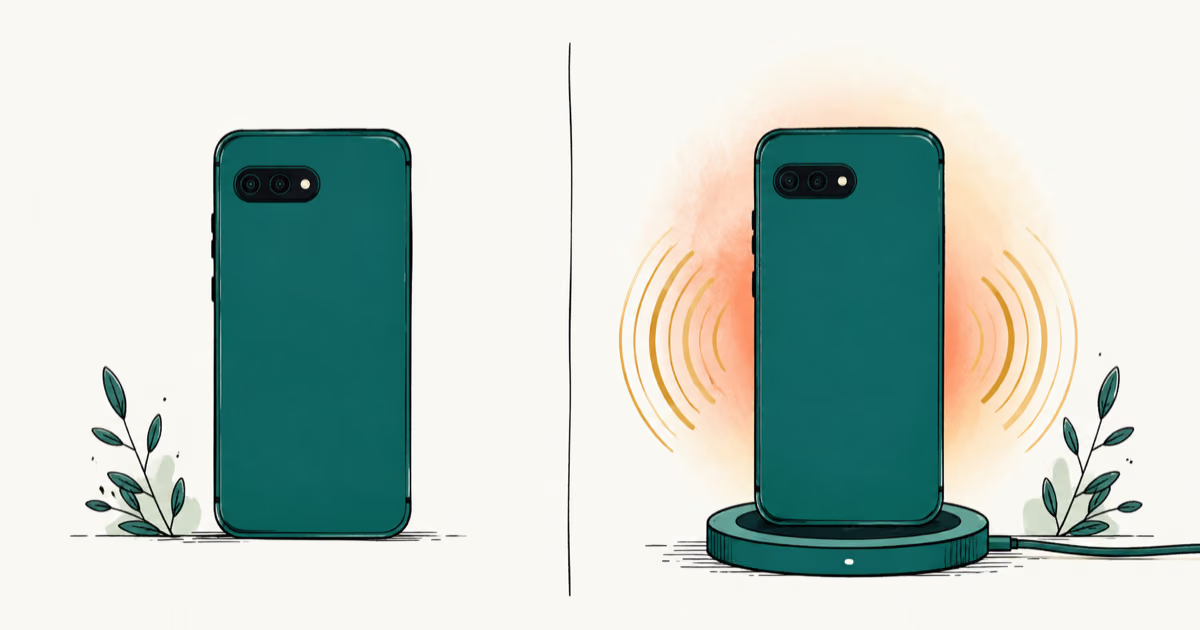
Pixel 11 vs Pixel 10: What Changed and Who Should Upgrade
Pixel 11 vs Pixel 10: same screen and camera resolution, new Tensor G6, 25W wireless, and Gemini Intelligence. Here is who should actually upgrade.
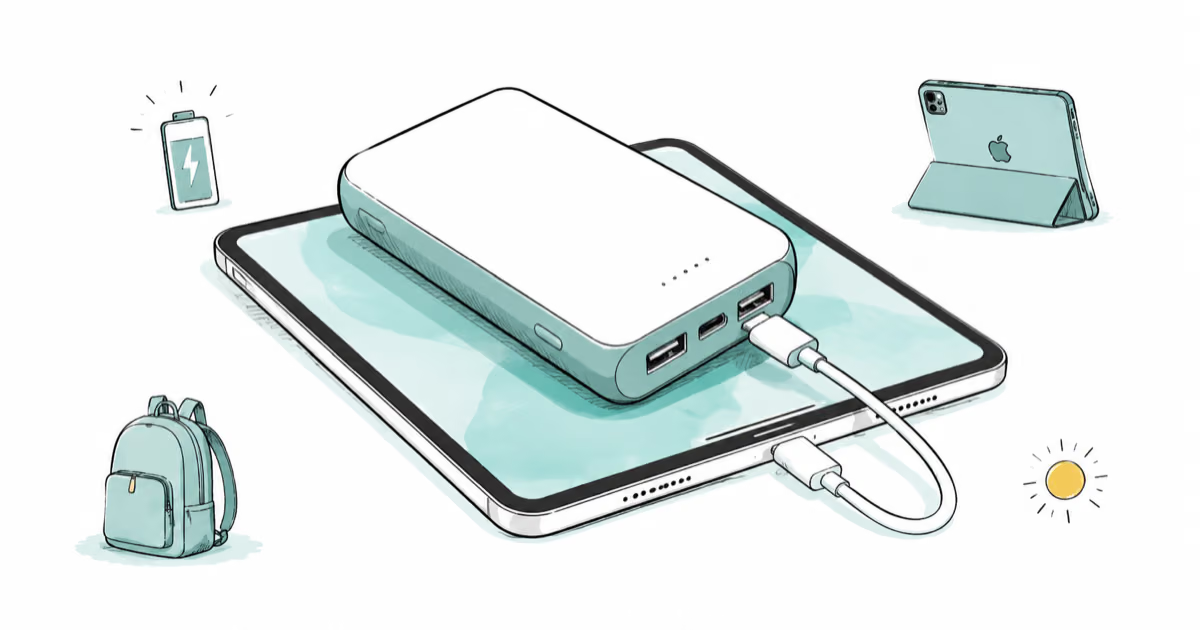
Best Power Bank for iPad in 2026: Pro, Air, and Mini
Best power bank for iPad in 2026. Compare mAh tiers and USB-C PD wattage for iPad Pro, Air, and mini, plus airline Wh math, cables, and travel tips.
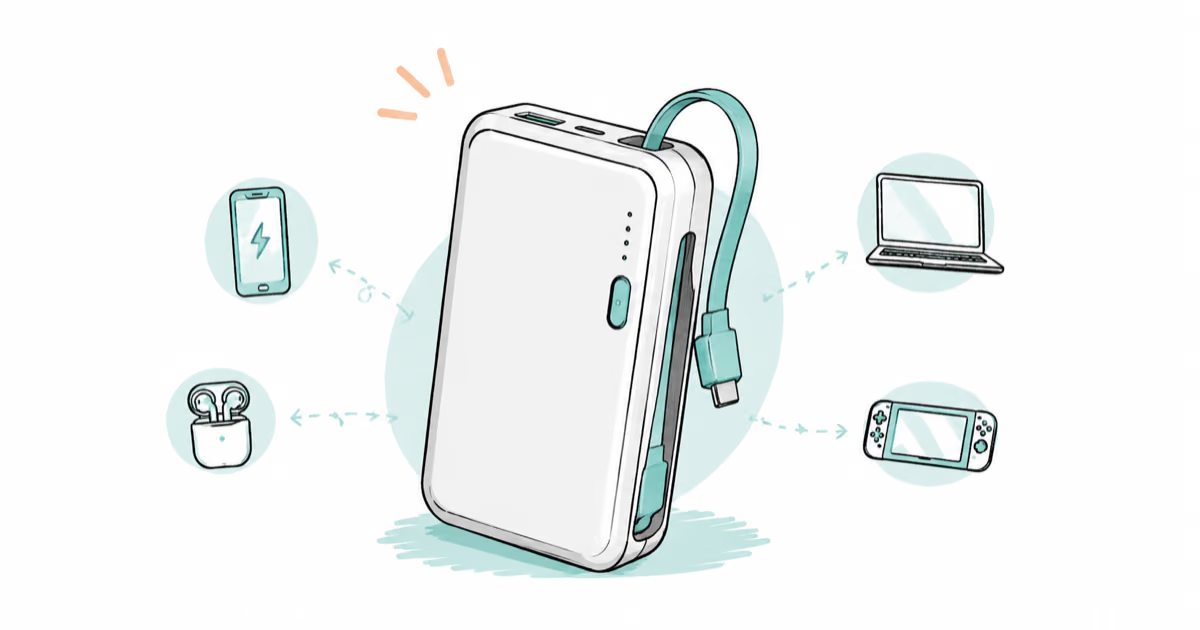
Best Power Bank With Built-In Cable: Top 2026 Picks
Best power bank with built-in cable picks for 2026. Compare single USB-C, multi-connector, and retractable laptop banks, plus airline Wh math.
Best Apple Watch Band for Working Out: Proven Picks
The best Apple Watch band for working out handles sweat and stays put on your wrist. Compare silicone, nylon, and titanium picks for runs and lifts.