Best Power Bank With Built-In Cable: Top 2026 Picks
Best power bank with built-in cable picks for 2026. Compare single USB-C, multi-connector, and retractable laptop banks, plus airline Wh math.
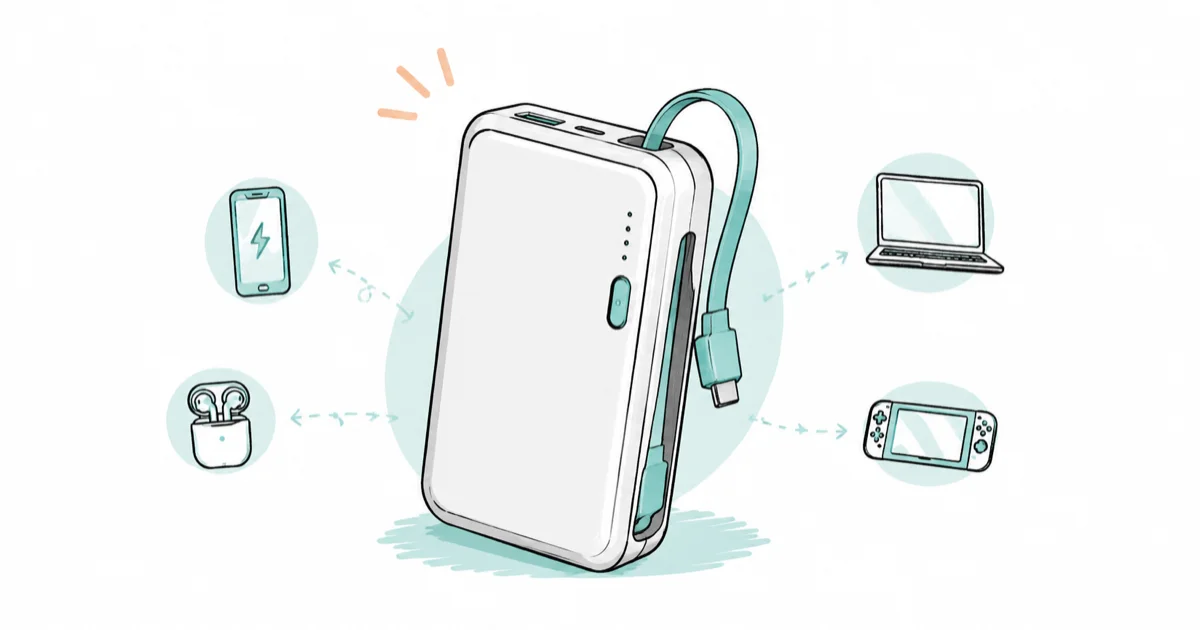
Quick AnswerFor most people, a 20,000mAh bank with one high-watt USB-C cable on the brick is the sweet spot. Multi-cable 10K packs win mixed-device trips, and retractable laptop banks win when a MacBook shares the bag.
A built-in cable power bank is for the day you refuse to dig for a loose USB-C cord. Pick by cable style first, not the biggest mAh sticker. This guide compares single high-watt USB-C bricks, multi-connector packs, and retractable laptop banks.
- Single built-in USB-C at phone-plus-laptop wattage is the everyday default for modern USB-C devices
- Multi-cable 10K packs still win when Lightning or micro-USB gear shares the trip
- Retractable high-watt banks matter when a MacBook or handheld console is in the same bag
- Fixed cables fail at the strain relief first, so detachable still wins if you thrash ports daily
- Airline math stays simple: keep each bank under about 100Wh and always in carry-on
#Built-In Cable Types Explained
“Built-in cable” is three different products wearing one marketing label.
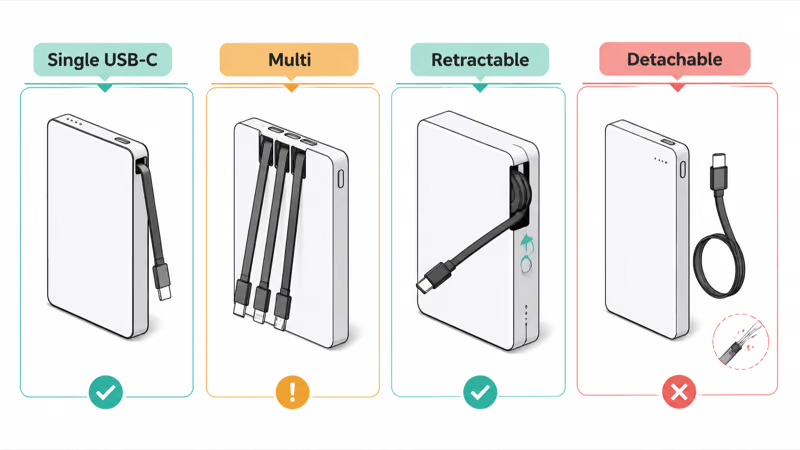
Single fixed USB-C means one short cable lives on the bank. Use it for phones, tablets, Switch-class handhelds, and light laptop top-ups. The Anker 20K class sits here.
Multi-connector fixed cables stack USB-C, Lightning, and sometimes micro-USB on one brick.
That design exists so a mixed friend group or older kit can charge without a pouch of dongles. Charmast-style 10K packs live here.
Retractable laptop banks hide higher-watt USB-C leads in the shell for MacBook-class loads. The Anker 25K laptop bank is the clean example in our registry.
Detachable-cable banks are the control group.
You bring your own lead, replace a frayed wire without junking the battery, and often save weight. They’re not worse. They’re a different failure mode.
Want the wider mAh and wattage map first? Start at our best power bank hub. This page stays on cable architecture. For tablet-first capacity picks, see the best power bank for iPad guide.
#Best Overall: Anker 20K With Built-In USB-C
For one modern kit (USB-C phone, tablet, light laptop work), the Anker Power Bank with a built-in USB-C cable is the pick we point most people to. You get 20,000mAh of capacity, a cable that can’t fall out of the bag, and listed output high enough for phone-fast charging plus meaningful laptop top-ups.
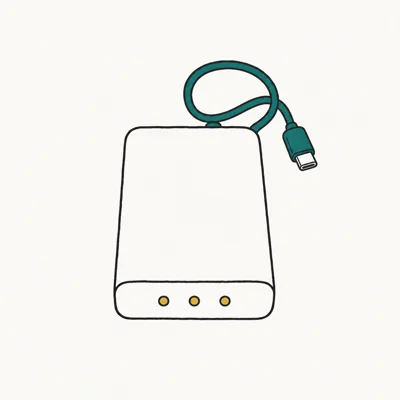
- Built-in USB-C cable removes the daily "where is my cord" tax
- 87W-class max output covers phones, handhelds, and light MacBook Air top-ups
- 20,000mAh stays in the common airline-friendly Wh band for carry-on
Last updated on Aug 8, 2026
As an Amazon Associate fone.tips earns from qualifying purchases. Prices and availability on Amazon are accurate as of the date above and subject to change.
The design bet is simple. Most 2024-2026 phones and tablets already speak USB-C, so one good lead on the bank covers the kit you actually carry.
Extra open ports still let a second device sip power. That two-device pattern is why a 20K brick beats a slim 10K puck for mixed kits.
If the bag is iPhone-first and you care more about magnetic snap than a hanging lead, jump to the MagSafe power bank guide instead. Built-in cable and MagSafe solve the same “one less loose part” problem from opposite directions.
#Best Multi-Cable Pack: Charmast 10K
Mixed Lightning, USB-C, and micro-USB gear makes a single USB-C lead the wrong tool.
A multi-cable 10K pack keeps three connectors on the brick.
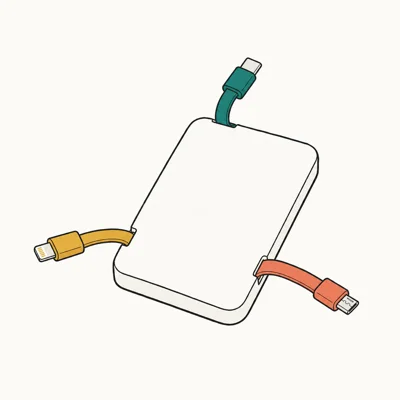
- Built-in USB-C, Lightning, and micro-USB cover almost any pocket device
- 10K size stays light enough for a jacket pocket
- Phone-class wattage is enough when laptop charging is not the job
Last updated on Aug 8, 2026
As an Amazon Associate fone.tips earns from qualifying purchases. Prices and availability on Amazon are accurate as of the date above and subject to change.
Tradeoff is honest: not a laptop brick.
You buy it for connector chaos, not wattage bragging rights. Our international travel power bank guide uses the same multi-cable idea for mixed friend-phone kits on long trips where dongles disappear into seat pockets.
#Best Laptop-Class Retractable: Anker 25K
If the bank has to wake a MacBook on a train tray, fixed phone leads are the wrong ceiling.
A laptop-class bank with retractable USB-C leads keeps high-watt cables attached without a bird’s nest in the pouch.
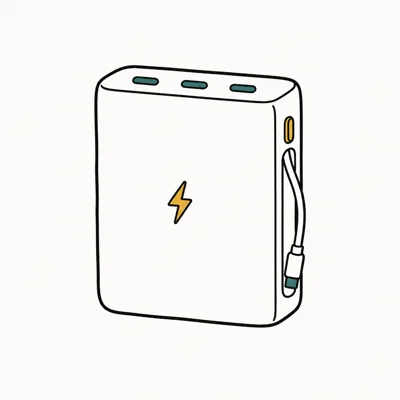
- Retractable cables stay on the bank without a separate cord pouch
- 100W-class USB-C ports match laptop negotiation better than phone bricks
- 25K capacity stays in the common under-100Wh carry-on band
Last updated on Aug 8, 2026
As an Amazon Associate fone.tips earns from qualifying purchases. Prices and availability on Amazon are accurate as of the date above and subject to change.
For wattage ceilings on Apple notebooks, the MacBook Pro power bank guide goes deeper on adapter classes. Remember the weak-link rule: bank, cable, and laptop all negotiate, and the slowest part wins. According to the USB-IF USB Power Delivery overview, a USB-C PD link can scale across a wide wattage range only when every hop agrees on the contract.
#When Does a Detachable Cable Still Win?
Built-in is not automatically smarter.
Choose detachable when you already carry a known-good USB-C cable for a laptop. Same call if you replace cables more often than batteries, or if you want the lightest 10K slab in a running belt.
The INIU 45W-class 10K is the foil in our cluster. It’s fast enough for modern phones, slim, and honest about needing your own lead.
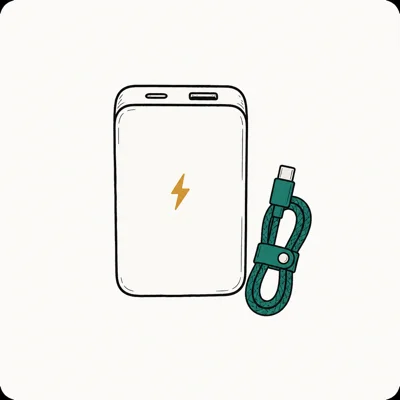
- 45W-class PD headroom on a compact 10K body
- Detachable lead means a frayed cable does not retire the whole bank
- Strong fit when a laptop cable already lives in the same pouch
Last updated on Aug 8, 2026
As an Amazon Associate fone.tips earns from qualifying purchases. Prices and availability on Amazon are accurate as of the date above and subject to change.
Fixed cables usually die at the bend near the housing after months of pocket torsion.
If that’s your pattern, detachable is cheaper long-term even when day-one convenience loses. Pair whichever bank you buy with a cable that can actually hold the wattage you paid for. Our best USB-C cable guide covers the rating traps.
#Capacity Guide for Built-In Cable Banks
Cable style does not change the capacity math. It only changes whether you’ll still have a lead when the battery is empty.
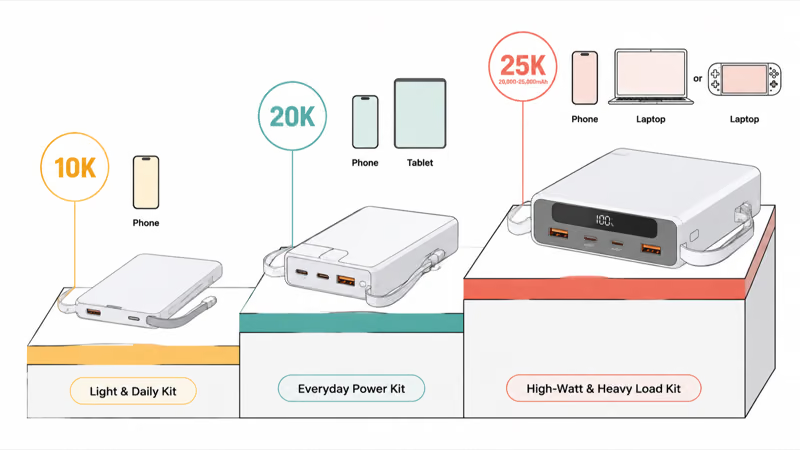
| Kit you actually carry | Practical capacity band | Cable style that fits |
|---|---|---|
| One USB-C phone | 10,000mAh | Single built-in USB-C or detachable slim pack |
| Phone + tablet or two phones | 20,000mAh | Single high-watt built-in USB-C |
| Mixed Lightning / USB-C / micro-USB | 10,000mAh multi-cable | Multi-connector built-in |
| Phone + MacBook or handheld console | 20,000-25,000mAh | High-watt built-in or retractable laptop bank |
A 10,000mAh pack is the daily phone class. A 20,000mAh pack covers phone-plus-tablet days and long travel days without jumping into awkward airline paperwork.
Jump to 25,000mAh only when a laptop is a real load, not a fantasy load. For iPhone-only magnetic carry, wireless waste and pocket thickness matter more than cable clutter, so use the iPhone 17 power bank guide instead of forcing a wired brick.
#Can You Fly With a Built-In Cable Power Bank?
Yes, if the battery itself clears the usual passenger rules. The cable style does not change lithium limits.
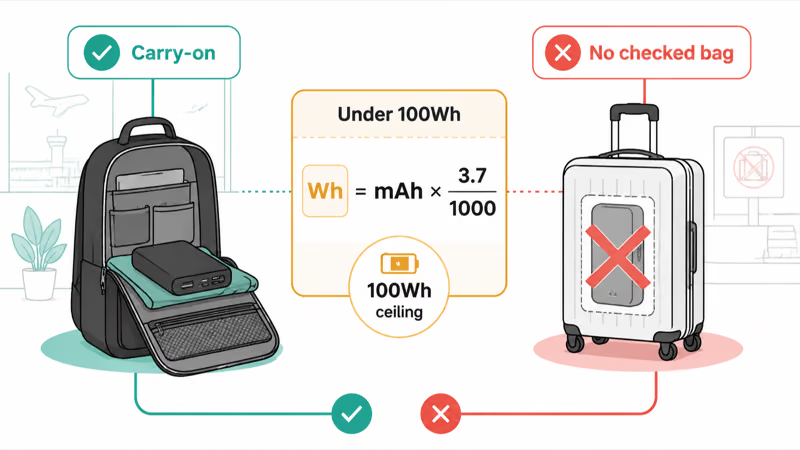
According to TSA portable charger guidance, power banks ride in carry-on, not checked bags. According to the FAA PackSafe battery guidance, spare lithium-ion packs stay in carry-on and the common passenger ceiling sits near 100Wh without airline approval.
Rough conversion most shoppers need:
Wh ≈ (mAh × 3.7) ÷ 1000
That puts a 10,000mAh bank around 37Wh, a 20,000mAh bank around 74Wh, and a 25,000mAh bank in the mid-90s Wh band when makers use the usual 3.7V cell math. Always read the Wh print on the shell at the gate. Makers sometimes print Wh directly, and that printed number beats back-of-napkin mAh conversion when they disagree.
Some carriers also limit bank count and in-flight use. Check that airline before a long-haul day, especially outside the U.S.
#Built-In Cable vs MagSafe vs Wall GaN
These three products get bundled in the same shopping tab and should not.
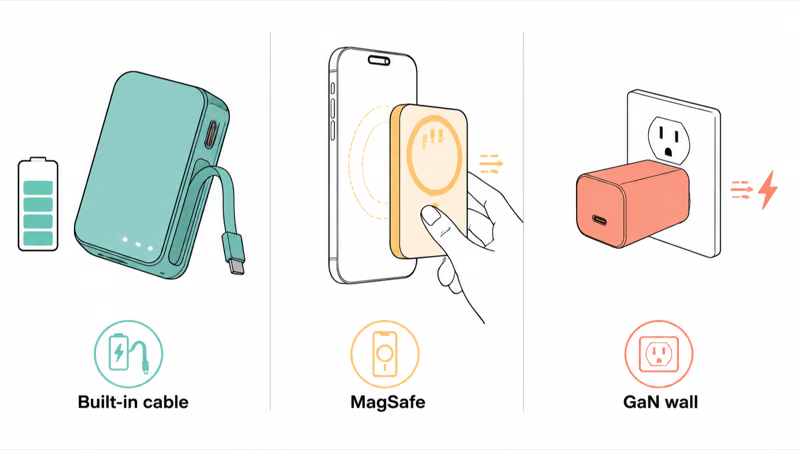
- Built-in cable bank: mobile energy + a lead that can’t get lost.
- MagSafe / Qi2 bank: mobile energy + one-hand snap for iPhone-shaped days.
- GaN wall charger: wall energy, not stored energy. Different job.
If your pain is airport outlet scarcity, buy a bank.
Hotel desk clutter is a GaN wall-charger problem. Grab a compact brick from the best GaN charger guide and stop pretending a power bank is a wall adapter.
iPhone pocket carry with no dangling lead is MagSafe territory, and this page is the wrong aisle. Samsung and other Android USB-C kits usually land back on wired banks; the Samsung power bank guide covers that device lane.
#Bottom Line
Buy the Anker 20K with built-in USB-C if your devices already standardized on USB-C and you want one less loose cord in a travel day bag.
Buy the Charmast-style multi-cable 10K when Lightning or micro-USB still shows up in the group chat.
Buy the Anker 25K retractable class when a MacBook or high-draw handheld is a real passenger, not a maybe.
Keep a detachable slim pack only when you already trust a separate cable and care more about replaceable leads than day-one convenience. Whatever you choose, stay under the common 100Wh carry-on band and put the bank in the cabin bag, not the hold.
#Frequently Asked Questions
Are built-in cable power banks better than regular ones?
They’re better when losing cables is your real failure mode. They’re worse when the fixed lead frays and you would rather replace a $15 cable than a whole bank. Match the design to how you break gear, not to the Amazon badge.
Is a built-in Lightning cable still worth buying in 2026?
Only if you still charge Lightning devices often. USB-C is the default on current iPhones, iPads, and Android flagships, so a Lightning lead is specialty kit now. Multi-cable packs remain useful for mixed groups and older hand-me-down phones.
Can a built-in cable power bank charge a laptop?
Only if the bank and the attached lead both support high enough USB-C PD wattage. Phone-class multi-cable 10K packs usually can’t. 20K 87W-class and 25K 100W-class banks are the laptop-capable tier in this guide. According to Apple’s Mac USB-C cable guidance, the laptop negotiates with the charger and cable together.
Do built-in cables charge slower than separate cables?
Not by default. Speed follows the negotiated PD contract and the cable’s rated path. A weak built-in lead can bottleneck a strong bank the same way a cheap loose cable can. Look for the wattage class on both the bank and the attached lead, not just mAh.
How long do built-in cables usually last?
There’s no single shelf life. Most wear shows up at the bend near the housing after repeated pocket torsion. If you coil the bank tightly in jeans every day, budget for earlier lead wear than someone who keeps the bank in a sleeve pocket of a backpack.
Can I bring two built-in cable power banks on a plane?
Often yes if each unit stays under the common 100Wh passenger threshold and both stay in carry-on. Some airlines cap the count of spare banks per passenger, so read the carrier rule set for that itinerary instead of assuming U.S. domestic habits apply worldwide.
Should I buy built-in cable or MagSafe for an iPhone?
Buy MagSafe or Qi2 when one-hand snap and pocket thickness matter more than multi-device wattage. Buy built-in USB-C when you also top up a tablet, handheld, or light laptop from the same brick. Many people eventually own one of each for different days.
What size built-in cable power bank is best for travel?
20,000mAh is the usual travel compromise for USB-C kits: enough for a long day without jumping into awkward Wh paperwork. Drop to 10,000mAh multi-cable for mixed connectors and light packing. Step to 25,000mAh only when a laptop load is certain.

Best Laptop for Running LLMs in 2026: Memory Comes First
The best laptop for running LLMs is a memory purchase first. Compare MacBook unified memory against NVIDIA laptop VRAM, and see what each tier really runs.
Pixel 11 vs Pixel 10: What Changed and Who Should Upgrade
Pixel 11 vs Pixel 10: same screen and camera resolution, new Tensor G6, 25W wireless, and Gemini Intelligence. Here is who should actually upgrade.
Best Power Bank for iPad in 2026: Pro, Air, and Mini
Best power bank for iPad in 2026. Compare mAh tiers and USB-C PD wattage for iPad Pro, Air, and mini, plus airline Wh math, cables, and travel tips.
Best Apple Watch Band for Working Out: Proven Picks
The best Apple Watch band for working out handles sweat and stays put on your wrist. Compare silicone, nylon, and titanium picks for runs and lifts.