Zoosk vs Tinder 2026: Which Dating App Fits Your Goals?
Zoosk vs Tinder compared for 2026: pricing tiers, matching algorithms, demographics, safety features, and which app fits casual or serious dating.
Quick AnswerZoosk leans toward users in their 30s and 40s seeking relationships, with behavioral matchmaking and gated messaging. Tinder dominates the 18-29 metro crowd with location-based swiping, free chat after a match, and bigger raw user volume.
Picking between Zoosk and Tinder usually comes down to age range, intent, and how much messaging access you want before paying. Both companies publish enough demographic and policy detail to compare side by side, and this guide pulls the verifiable claims together so you can decide before you start a paid trial.
This comparison assumes you are signing up for your own profile, using accurate information per each app’s terms of service, and authorizing any paid features yourself. Online dating involves sharing personal details with strangers, so we also flag the safety features and scam-protection guidance that each platform publishes for new users.
- Zoosk skews older (30s and 40s) and pushes serious-dating intent, while Tinder skews 18-29 and supports both casual and relationship goals depending on the user.
- Tinder allows free messaging once two users mutually swipe right, whereas Zoosk requires a paid plan or Coins to send messages beyond a short trial.
- Tinder published pricing tiers (Plus, Gold, Platinum, Select) with age-based pricing, while Zoosk uses one monthly subscription plus optional Coins for boosts.
- Both apps publish safety centers covering photo verification, blocking, reporting, and scam awareness, with FTC guidance recommending video calls before meeting in person.
- For users 35 and older wanting fewer matches with more context, Zoosk usually fits better; for users 18-30 in major metros wanting volume and free chat after matching, Tinder usually wins.
#How Zoosk Works in 2026
Zoosk launched in 2007 and runs on its own platform separate from the Match Group ecosystem. Sign-up takes about three minutes on mobile and asks for gender, birth date, location, and a profile photo, with optional Facebook or Google sign-in to speed onboarding.
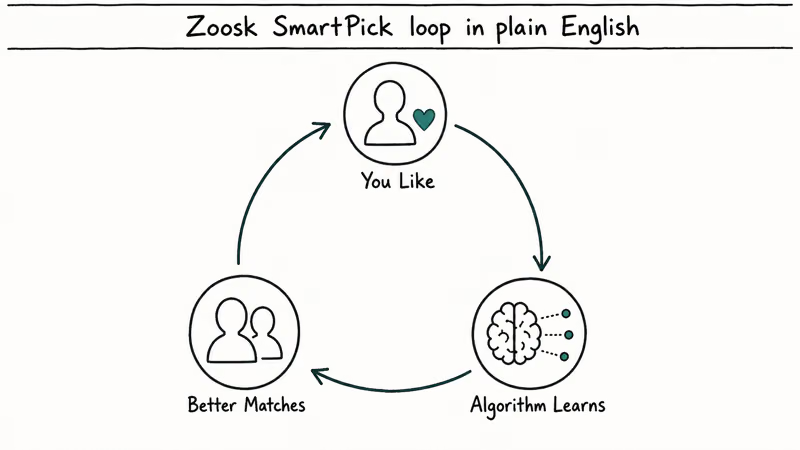
The matching engine is the differentiator. Zoosk uses what it calls Behavioral Matchmaking: an engine that tracks which profiles you like, message, and skip, then surfaces more profiles fitting that pattern over time.
The Carousel feature works like Tinder-style swiping but adds a third option (Maybe) that loops profiles back into your queue later. SmartPick recommendations rely on your stated age preference, location filter, and ongoing profile interactions, so they tend to improve only after the app has enough likes, skips, and messages to learn from.
Premium-only features include unlimited messaging, read receipts, and incognito browsing. Free users can browse profiles, send a limited number of intro messages, and view who liked them, which is enough to evaluate fit but not enough to run real conversations.
#How Tinder Works in 2026
Tinder launched in 2012 and remains the highest-grossing dating app on both iOS and Android app stores, with over 75 million monthly active users worldwide based on its parent company’s investor disclosures. Sign-up takes under two minutes and supports phone number, Apple ID, Google, or Facebook authentication.
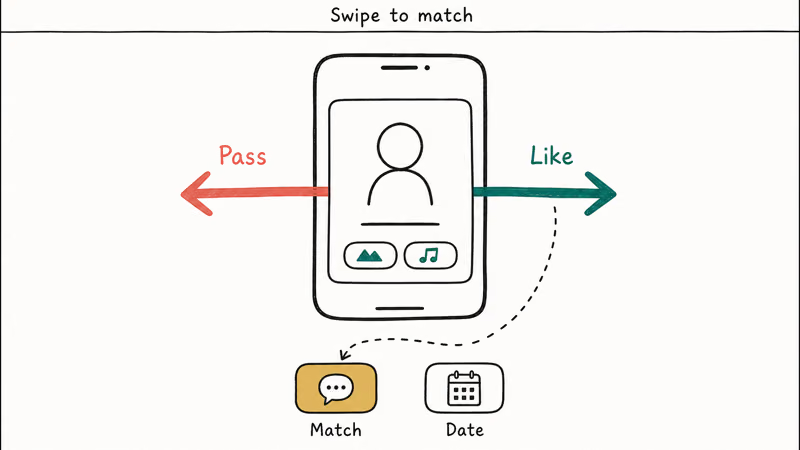
The mechanic is the famous Swipe Right (interest) or Swipe Left (pass) on profiles served by location radius, age filters, and gender preferences. A Match happens when both users swipe right on each other, and only then can either send a message on the free tier. According to Tinder’s official safety center, photo verification, message safety warnings, and a Does This Bother You prompt for harassing messages are built into the standard experience.
Paid upgrades (Plus, Gold, Platinum, and the invite-only Select tier) add features like unlimited likes, seeing who already liked you, Boost visibility, and Message Before Matching. The free tier remains usable indefinitely for users who don’t need volume features. If you’re weighing whether to upgrade, our deep dive on whether Tinder Gold is worth it breaks down the value of paid tiers in detail.
#Which App Is Better for Serious Relationships?
Zoosk leans serious in its product framing, with marketing focused on long-term compatibility and a profile structure that rewards filling out lifestyle and personality questions. The behavioral matchmaking layer means the app increasingly surfaces profiles aligned with whom you actually engage rather than just whom you say you want.
Tinder is mixed by design. The same app serves users seeking casual encounters, friends with benefits, short-term dating, and long-term partnership, with users self-selecting through their bio and Relationship Type tags introduced in recent updates. The split is real: our analysis of whether Tinder is for hookups or dating found user intent varies wildly by region and age bracket.
According to Pew Research’s 2023 survey on online dating, 53 percent of users under 30 have used a dating app, and roughly one in 10 partnered adults met their current partner online. That broader user pattern helps explain why Tinder feels more volume-driven, while Zoosk’s product framing leans toward slower, compatibility-focused conversations.
#Zoosk vs Tinder: Pricing Compared
Pricing is the easiest concrete difference to evaluate before committing. Both apps offer a free tier with restricted features and charge monthly for premium access. Longer commitments come with steep monthly discounts on Zoosk and modest discounts on Tinder.
#Zoosk pricing tiers
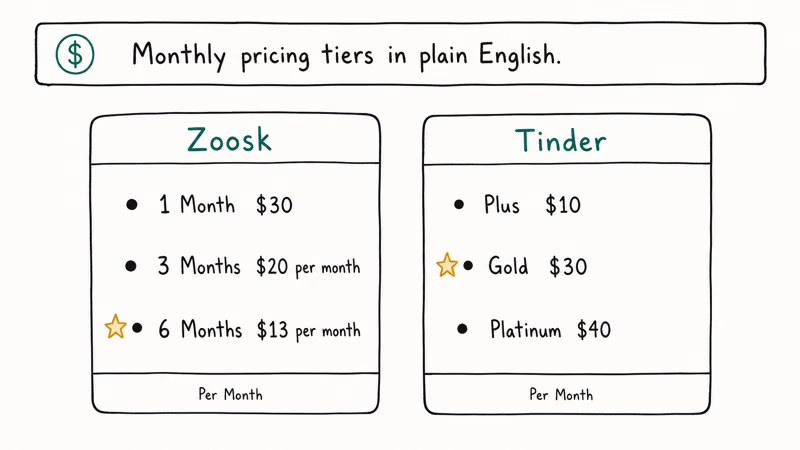
- 1-month subscription: about $29.95 per month
- 3-month subscription: about $19.98 per month, billed quarterly
- 6-month subscription: about $12.49 per month, billed every 6 months
Zoosk also sells Zoosk Coins separately for one-off features like Boosts, Super Sends, and gifts, starting around $10 for the smallest pack.
#Tinder pricing tiers (US, as of mid-2026)
- Tinder Plus: $9.99 to $19.99 per month depending on age (users 30+ historically pay more)
- Tinder Gold: roughly $14.99 to $29.99 per month with the same age split
- Tinder Platinum: roughly $24.99 to $39.99 per month
- Tinder Select: invite-only premium tier, reportedly around $499 per month
Exact prices vary by region, age, and current promotions. According to Tinder’s official help center pricing page, the company adjusts pricing based on factors including location, time of day, and length of subscription, so the price shown in your app may differ from someone else’s.
#Matching Algorithm and User Experience
The core mechanic split is what shapes the daily experience. Zoosk’s Behavioral Matchmaking reads as a slower-burn experience where the recommendations get more accurate over a few weeks of consistent use. This suits users willing to invest time in profile feedback loops and who treat the app as a low-frequency check-in rather than a constant scroll.
Tinder’s swipe stack is faster, more reactive, and more visually focused. Profile depth (bio, prompts, Spotify anthem) plays a secondary role to the main photo.
Tinder’s interface is built for higher-volume swiping, while Zoosk puts more weight on profile context and recommendation feedback. That makes Tinder feel faster in dense markets and Zoosk feel slower but more deliberate.
Messaging access is the other split. Tinder’s free tier allows unlimited messages once you mutually match, while Zoosk gates message sending behind a paid plan or Coins after the brief trial window. For budget-conscious users, this single difference often decides the comparison. Our Bumble vs Tinder comparison covers a similar messaging-rules contrast in case neither Zoosk nor Tinder feels like the right fit.
#Which App Has More Users in Your Area?
Raw user count favors Tinder. Tinder reports over 75 million monthly active users globally per its parent company’s reporting, compared to Zoosk’s stated user base of around 40 million registered members across its history (active monthly users are lower). What matters for matching is not global totals but local density.
Tinder dominates major metropolitan areas including New York, Los Angeles, Chicago, London, and Toronto, where match queues replenish quickly even with tight filters. Zoosk has stronger presence in mid-sized US cities and the 35-plus demographic, where Tinder users thin out fast.
In dense markets, Tinder’s larger active user base usually keeps the queue moving with tighter filters, while Zoosk may require a wider geographic radius to maintain a usable stream of profiles. For rural users or smaller towns, both apps face the same density problem. Pairing both with a broader-radius Match.com account is a common workaround, and our Match vs Tinder comparison covers that pairing in more detail.
#Safety Features and Scam Awareness
Both apps publish safety centers with similar tooling, and the underlying advice is largely the same. According to the FTC’s romance scams consumer alert, losses to romance scams reached $1.14 billion in 2023, with the median individual loss around $2,000, and scammers commonly move conversations off-platform quickly and request money tied to emergencies or travel. Background on the broader category is summarized in the Wikipedia article on online dating services, which tracks the safety-feature evolution across major apps.
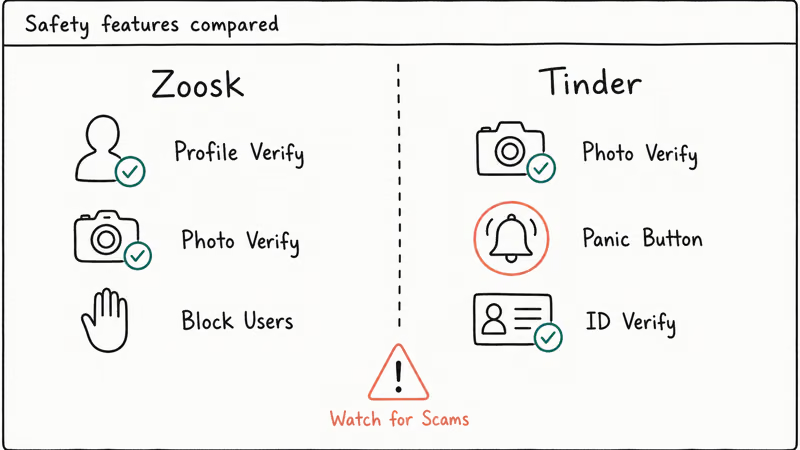
Practical safety habits that work on both apps:
- Use the in-app messaging until you have a few video calls confirming the person matches their photos
- Reverse-image search profile photos that look like stock shots or magazine covers
- Meet first dates in public places during daylight, and tell a friend where you are going
- Never send money, gift cards, or cryptocurrency to anyone you haven’t met in person
- Report and block accounts pushing you to move conversations to WhatsApp or Telegram immediately
Zoosk’s safety guidelines page covers the same essentials plus photo verification details and how to report a suspicious profile. If you want to research someone you matched with before meeting, our guide to username search across dating sites walks through legitimate cross-checks like reverse image lookup and public profile matching.
#Feature Comparison at a Glance
| Feature | Zoosk | Tinder |
|---|---|---|
| Year launched | 2007 | 2012 |
| Stated user base | ~40M registered | 75M+ monthly active |
| Free messaging | Trial only, then paid | Free after mutual match |
| Matching method | Behavioral Matchmaking + Carousel swipe | Location-based swipe stack |
| Primary age group | 30-49 | 18-29 (with 30-49 minority) |
| Video chat | Yes, in-app | No (removed in 2023) |
| Photo verification | Yes | Yes (blue checkmark) |
| Pricing structure | Single tier + Coins | Plus / Gold / Platinum / Select |
| Best for | Relationship-focused users 30+ | Volume swiping in dense metros |
#Bottom Line
Pick Zoosk if you are 35 or older, want fewer but more substantial conversations, and are willing to pay around $12-30 per month for a quieter pool that filters for relationship intent. The behavioral matching repays consistent use, and the video-chat feature helps screen for catfishing before meeting.
Pick Tinder if you are 18 to 30, live in a major metro, want free messaging after mutual matches, and value volume over algorithm depth. The free tier is usable as a real product without paying, paid tiers are flexible enough to skip without losing core functionality, and the platform’s safety tools are mature. If neither app fits, our Tinder vs Hinge comparison covers the other major option for 20s and early 30s users.
Running both apps for a month is a reasonable test if your budget allows. Zoosk’s Carousel is fast enough to evaluate the algorithm in a few weeks, and Tinder’s free tier costs only your time. Whichever you choose, treat the first few dates as low-stakes coffee meetings in public spaces and watch for any pressure to move conversations off-platform.
#Frequently Asked Questions
Which app is better for finding a serious relationship?
Zoosk fits better for users prioritizing long-term relationships, especially in the 30-plus age range, because the behavioral matchmaking layer and the gated messaging together surface fewer but more deliberate connections, and the typical Zoosk user demographic is closer to people actively dating with intent rather than browsing casually.
Is Zoosk or Tinder more expensive?
Zoosk’s monthly plan starts higher at $29.95, but its 6-month plan drops to about $12.49 monthly. Tinder Plus runs as low as $9.99 for users under 30.
Can I message for free on Tinder?
Yes. Once you and another user mutually swipe right, both of you can exchange unlimited messages on Tinder’s free tier with no time limit. Initiating a message before mutual matching requires a paid Platinum subscription, which is the highest of the standard paid tiers and probably overkill for most users.
Does Zoosk have an app or only a website?
Zoosk runs as a mobile app on iOS and Android plus a desktop website, with the same account syncing across all three.
What age groups use Zoosk and Tinder most?
Zoosk skews to users between 30 and 49. Tinder skews younger with most active users between 18 and 29.
Can I video chat with my matches on Tinder?
No. Tinder discontinued its in-app video chat feature in 2023, so you’d need to move to FaceTime, WhatsApp, or another platform after exchanging contact info. Zoosk still offers in-app video chat, which adds a useful safety layer for catfishing checks before agreeing to meet in person and lets you confirm the person actually matches their profile photos.
How do both apps handle catfishing and fake profiles?
Both platforms run automated detection on suspicious accounts and offer photo verification badges users can earn by submitting a pose-matched selfie. Reporting a suspect profile in-app triggers manual review, and FTC guidance suggests video-calling before meeting in person as the most reliable check against catfishing.
Is it worth subscribing to both apps at the same time?
For most users it’s overkill. Running both for a four-week side-by-side test can still be useful if you live in a market where one app dominates and want to see whether the other has enough local density to bother with at all.
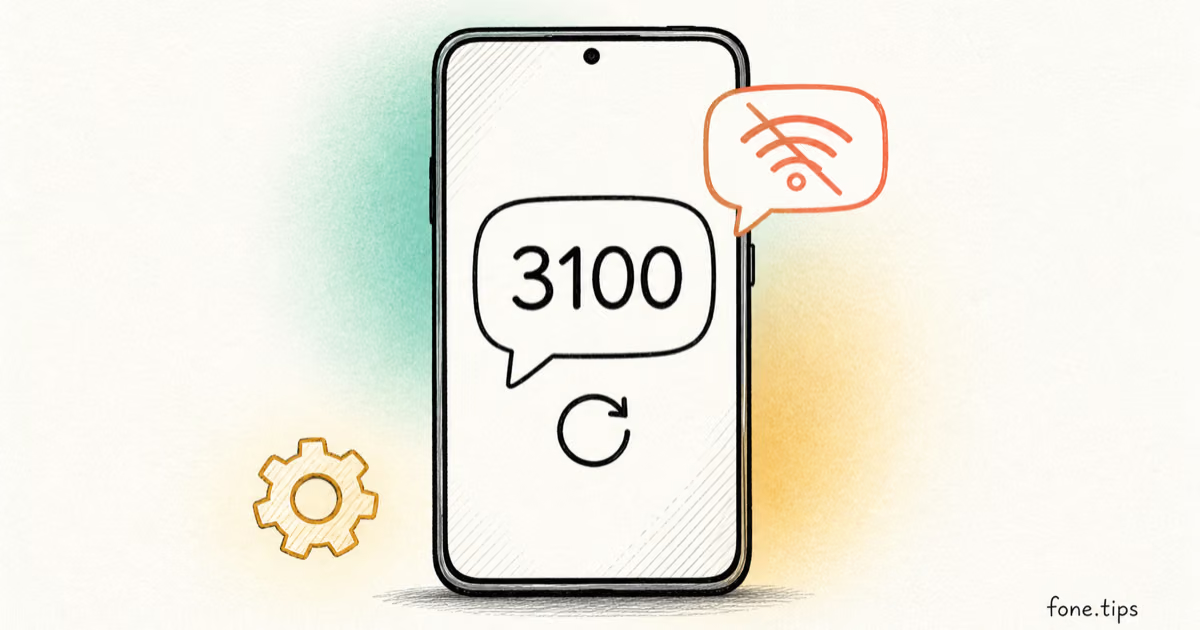
Google Messages Error 3100: Why RCS Is Broken on Galaxy
Google Messages RCS error 3100 hits Galaxy owners after phone or carrier switches. Google told 9to5Google a fix is coming. Here's what actually helps.

Is This Bank App Real? Spot a Fake App on Your Home Screen
A bank app can land on your home screen from a web page with no install warning. Learn the checks that tell a real banking app from a phishing web app.
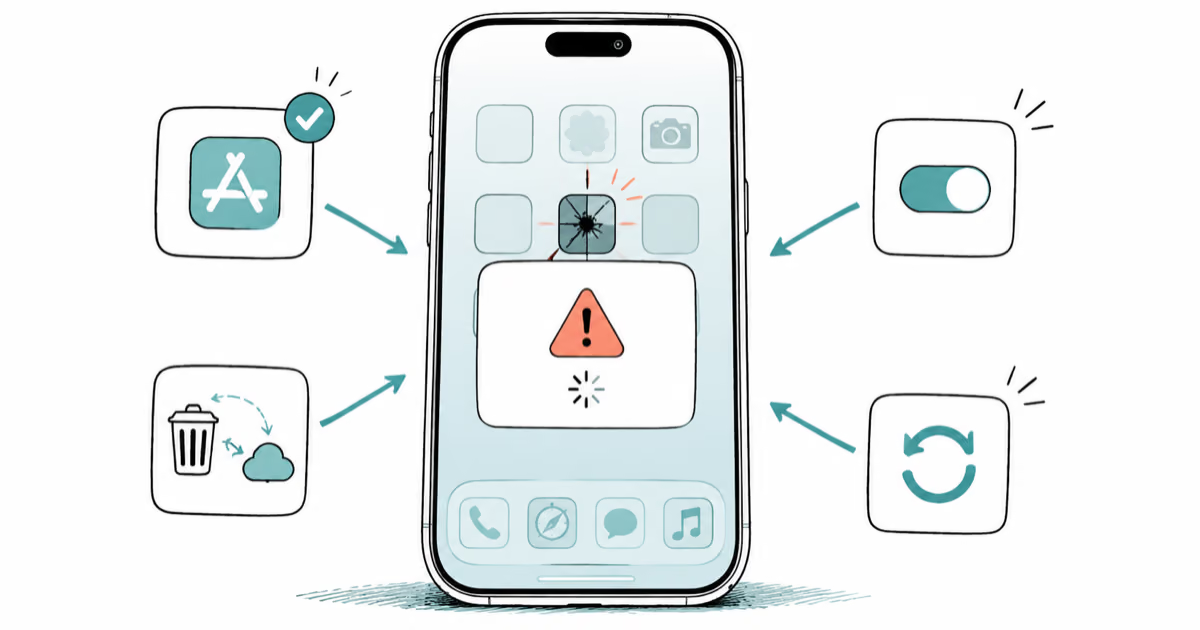
Apps Crashing After iOS 27 Update? Fix Order (2026)
Apps crashing after the iOS 27 update? Update the app in the App Store first, then offload and reinstall to clear stale cache, then restart. The fix order.
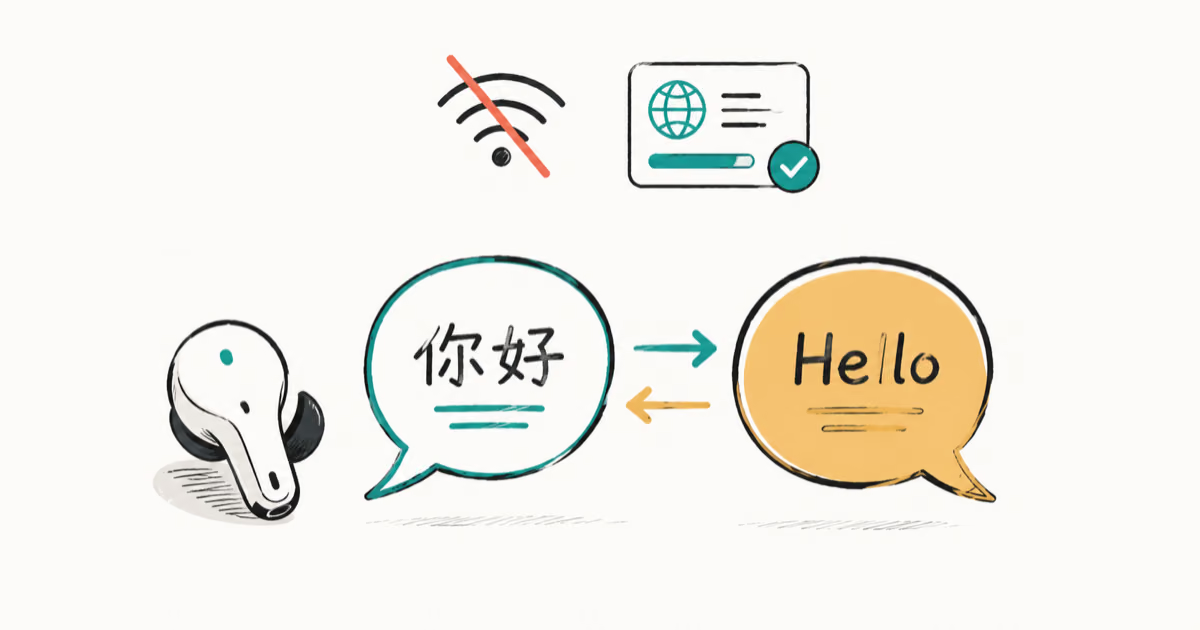
Do AI Translation Earbuds Work Offline? What to Know
Do AI translation earbuds work offline? A few do with downloaded language packs, but most need the cloud. Here's what works offline and what you give up.