Is Tinder for Hookups or Dating? What Users Really Want
Tinder works for both hookups and serious relationships. User intentions, profile clarity, safety habits, and paid features shape dating results.
Quick AnswerTinder is used for both hookups and serious dating. Your profile setup, bio clarity, and communication style determine which experience you get.
Tinder gets labeled as a hookup app, but that’s not the full picture. The platform hosts people looking for everything from one-night stands to long-term relationships, and what you find depends almost entirely on how you use it. A profile with a casual bio and one that explicitly states relationship goals tend to surface very different matches.
- Tinder supports both casual and serious dating, with your profile and bio being the biggest factors in what you attract
- Research shows more dating app users want long-term partners than casual encounters
- A clear, honest bio attracts people with matching intentions and filters out mismatched users faster
- Premium features like Tinder Plus and Gold give you more control but don’t change the core matching experience
- Tinder works best for people aged 18-35 who are comfortable with a photo-first, swipe-based format
#What Do Most People Actually Use Tinder For?
The split between hookups and dating on Tinder is closer than most people think. According to Pew Research Center’s 2023 online dating study, 44% of dating app users say finding a long-term partner is a major reason they use these platforms, while 40% cite casual dating. Only 24% list casual sex as a major motivation.
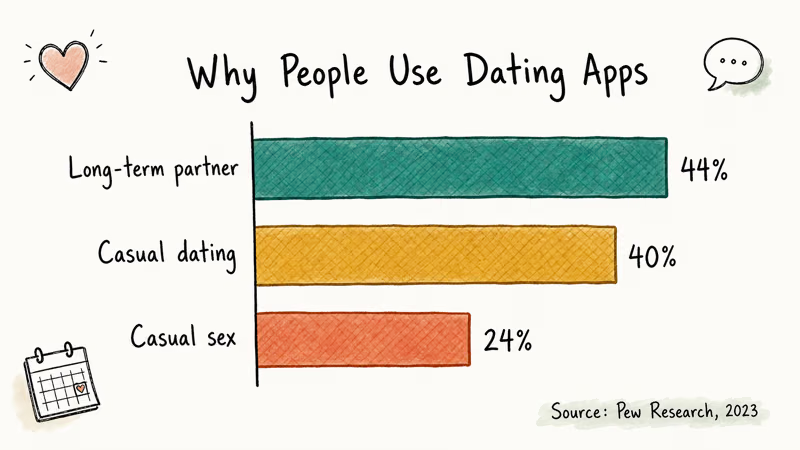
That means most Tinder users aren’t exclusively looking for hookups. The app’s swipe-based interface and photo-forward design created a casual reputation early on, but the actual user base is far more diverse than the stereotype suggests.
Your experience shifts based on location and age group. College towns and major cities tend to have more casual-minded users, while suburban and smaller-city populations skew toward relationship seekers. A relationship-focused profile tends to attract longer opening messages and more follow-up conversations, while a casual profile often generates more matches overall but fewer that lead to actual dates.
#How Your Profile Setup Shapes Your Results
Your Tinder profile is the single biggest factor in what kind of matches you attract. A vague bio with only party photos signals casual interest. A detailed bio mentioning hobbies, values, and relationship goals tells a completely different story.
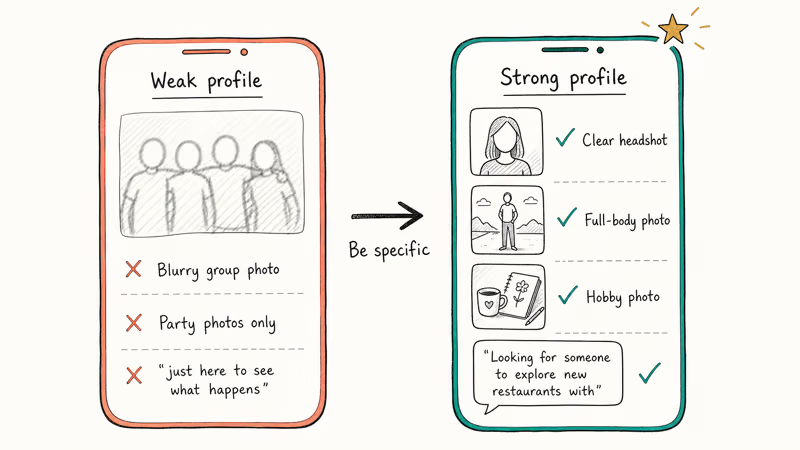
Photos that attract intentional matches:
- Lead with a clear, well-lit headshot showing your face
- Include at least one full-body photo in a normal, everyday setting
- Add 1-2 photos of you doing something you actually enjoy
- Skip group photos where people can’t tell which person is you
Bio tips that filter for what you actually want:
Write 2-3 sentences that show personality beyond your looks. State what you’re looking for directly. “Looking for someone to explore new restaurants with” tells people way more than “just here to see what happens.” Being upfront doesn’t scare away good matches. It filters out bad ones faster.
Use Tinder’s Smart Photos to put your best-performing photo first based on real swipe data.
#Does Tinder Work for Serious Relationships?
Yes, but it takes more deliberate effort than apps built specifically for relationships. Tinder’s design prioritizes quick decisions based on photos, which means relationship seekers need to be more intentional about how they screen matches and move conversations forward.
Here’s what works for people looking for something real:
- State your intentions in your bio. “Looking for something real” or “not here for hookups” is clear enough. Don’t overthink the phrasing.
- Ask meaningful questions early. Move past “hey” within the first few messages. Ask about their interests, weekend plans, or what they’re reading.
- Don’t rush to meet. A few days of consistent messaging builds a baseline. If conversation flows naturally over text, it’ll likely flow in person too.
- Screen for effort. One-word replies, no questions back, or immediately suggesting late-night meetups are signals that someone wants something different than you do.
Tinder’s official safety documentation recommends keeping conversations on the platform initially, since Tinder messages go through Safe Message Filters. Moving to a personal number or messaging app too quickly removes that safety layer.
The comparison between Tinder and Hinge matters here. Hinge prompts users to respond to specific profile details, which naturally creates more substantive conversations. If Tinder’s swipe-first format frustrates you after a few weeks of trying, Hinge is the logical next step for relationship-minded users.
#Tinder Premium Features Worth Knowing About
Tinder offers several paid tiers: Plus, Gold, and Platinum. Whether they improve your experience depends on what you’re trying to do.
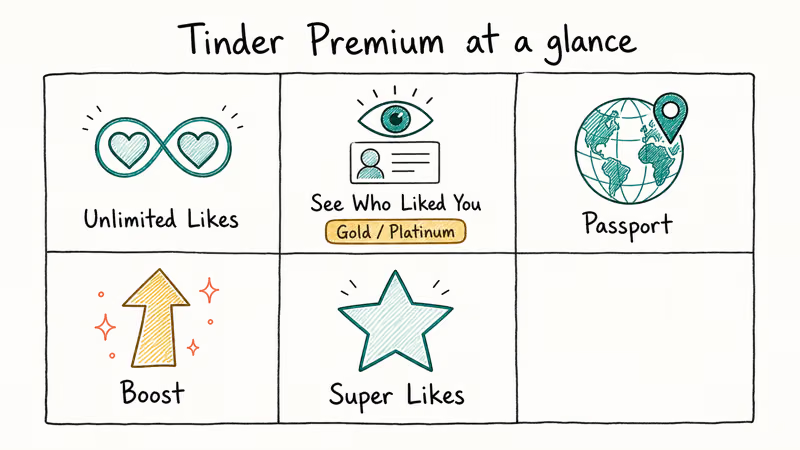
What premium unlocks:
- Unlimited likes: free accounts cap your daily right-swipes
- See who liked you (Gold and Platinum): skip the guessing and evaluate interested users directly
- Passport: match with people in other cities before you travel
- Boost: push your profile to more users for 30 minutes
- Super Likes: signal strong interest to specific profiles
For dating rather than casual browsing, the “See Who Liked You” feature saves the most time. You can evaluate people already interested in you instead of swiping through hundreds of profiles blind. Read the full breakdown of whether Tinder Gold is worth the cost before committing to a subscription.
None of these features fix a weak profile, though. If your photos and bio aren’t working, paying for Boost just shows a bad profile to more people. Fix the basics first.
For users who want to keep their social accounts separate from dating, you can set up Tinder without Facebook using just a phone number.
#How Tinder Compares to Other Dating Apps
Tinder isn’t the only option, and different apps attract different types of users. Tom’s Guide’s best dating apps roundup confirms that each platform attracts a distinct audience depending on its design. Here’s how the major players compare:
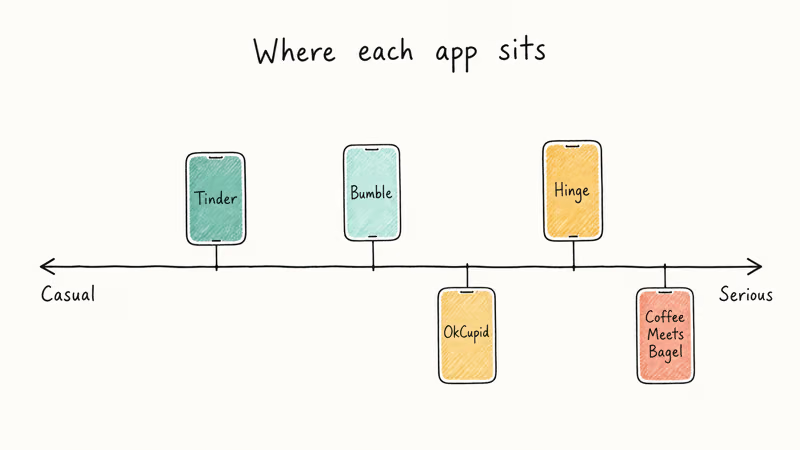
| App | Best For | Profile Style | Match Method |
|---|---|---|---|
| Tinder | Casual dating and hookups | Photo-first, short bio | Mutual swipe |
| Hinge | Relationships | Prompt-based, detailed | Like specific content |
| Bumble | Women-led connections | Photo, bio, and prompts | Women message first |
| OkCupid | Compatibility matching | Long profiles with questions | Algorithm score |
| Coffee Meets Bagel | Low-pressure dating | Curated profiles | Daily limited matches |
The Bumble vs Tinder comparison comes down to one key difference: Bumble requires women to send the first message, which changes the dynamic completely. Women tired of low-effort openers on Tinder tend to prefer Bumble. Men who like to initiate conversations tend to prefer Tinder’s open format.
#Staying Safe While Using Tinder
Online dating involves meeting strangers, so basic safety practices matter regardless of which app you use.
Before meeting in person:
- Keep conversations on Tinder until you’re comfortable, since the app’s Safe Message Filters work only on-platform
- Do a quick search of their name or reverse image search their photos
- Tell a friend where you’re going, who you’re meeting, and when you expect to be back
During the first date:
- Meet in a well-lit public place like a coffee shop or restaurant
- Handle your own transportation so you can leave whenever you want
- Keep the first meeting short, around 30-60 minutes
The FTC recommends watching for romance scammers on all dating platforms. Profiles that push conversations off-app immediately, claim to be deployed overseas, or eventually ask for money are classic red flags. Report suspicious accounts directly within the app.
#Bottom Line
Use Tinder for whatever you’re looking for, but be direct about it in your profile. Write a clear bio, choose photos that honestly represent you, and stop wasting time on matches who want something different. Start with a free account for 2-3 weeks to see what the user base looks like in your area. If you keep wanting the “See Who Liked You” feature, upgrade to Gold and give it a month before deciding if Tinder works for your goals.
#Frequently Asked Questions
Is Tinder still considered a hookup app?
Tinder started with a hookup reputation, but the user base has shifted significantly since then. Pew Research found that more dating app users cite finding a long-term partner as their primary motivation than casual sex. The app has also added features like detailed bios, video chat, and identity verification that support relationship-building beyond quick matches.
Can you find a serious relationship on Tinder?
Yes. State your intentions in your bio, ask real questions in your messages, and don’t rush to meet before you’ve established basic compatibility through conversation.
What is the best way to signal you want a relationship on Tinder?
Write it in your bio. Phrases like “looking for something real” or “relationship-minded” set expectations clearly. Back it up with photos that show your personality beyond just your appearance, and ask matches about their interests rather than leading with physical compliments.
Does paying for Tinder Gold or Platinum help you find better matches?
Premium features give you more visibility and control over who you interact with, but they don’t improve the quality of your profile itself. If your photos and bio aren’t attracting the right people, unlimited swipes and Boosts won’t change that. The most practical upgrade is Gold’s “See Who Liked You” feature, which lets you evaluate already-interested users directly instead of swiping blind. Fix your profile first, then consider whether premium tools are worth the monthly cost.
How do you stay safe when meeting Tinder matches in person?
Always meet in a public place, handle your own transportation, and tell a friend where you’ll be. Keep first dates short and low-commitment, like coffee or a quick drink at a well-lit spot.
Is Tinder better than Bumble or Hinge for dating?
It depends on your preferences and communication style. Tinder has the largest user base for both casual and serious dating, while Bumble gives women more control since they initiate conversations. Hinge focuses on relationships with prompt-based profiles that encourage deeper responses. The most practical approach is to run two apps for a month and compare which one produces better conversations for you.
What age group uses Tinder the most?
Tinder’s core user base falls in the 18-35 range, with the heaviest activity among 18-29 year olds. Users over 35 often gravitate toward platforms like Hinge or Match.com that offer more detailed profiles and compatibility-focused matching.
Google Messages Error 3100: Why RCS Is Broken on Galaxy
Google Messages RCS error 3100 hits Galaxy owners after phone or carrier switches. Google told 9to5Google a fix is coming. Here's what actually helps.
Is This Bank App Real? Spot a Fake App on Your Home Screen
A bank app can land on your home screen from a web page with no install warning. Learn the checks that tell a real banking app from a phishing web app.
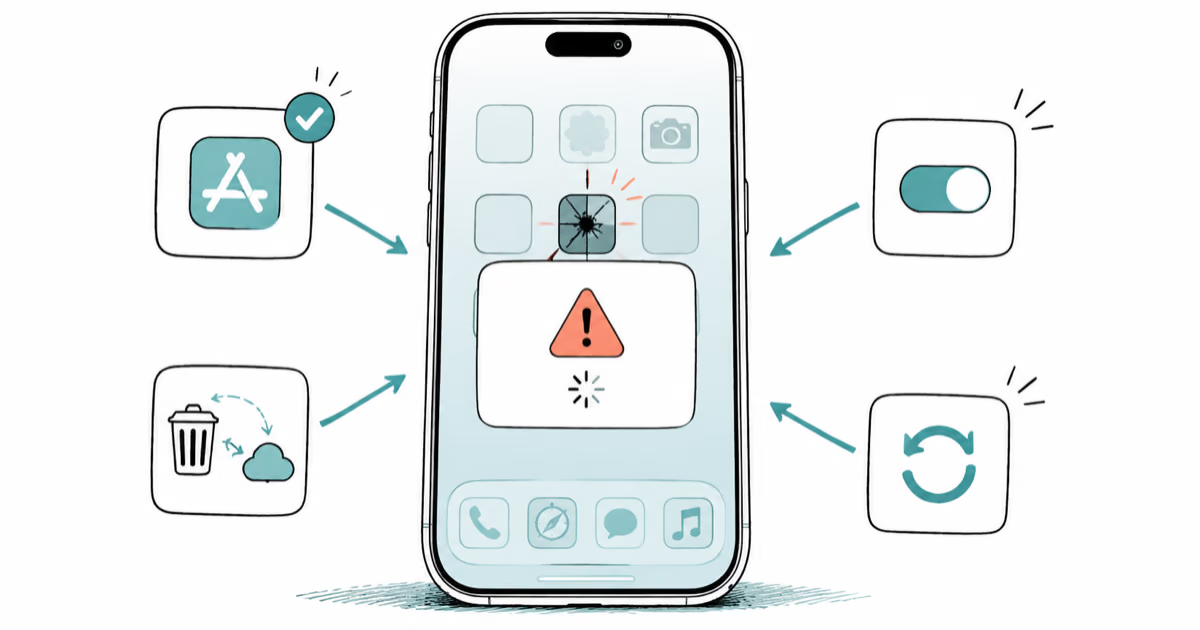
Apps Crashing After iOS 27 Update? Fix Order (2026)
Apps crashing after the iOS 27 update? Update the app in the App Store first, then offload and reinstall to clear stale cache, then restart. The fix order.
Do AI Translation Earbuds Work Offline? What to Know
Do AI translation earbuds work offline? A few do with downloaded language packs, but most need the cloud. Here's what works offline and what you give up.