Safari Disappeared from iPhone? Here's How to Get It Back
Safari cannot be deleted from iPhone. Use Spotlight search, check Screen Time restrictions, reset the home screen, or pull Safari from the App Library.
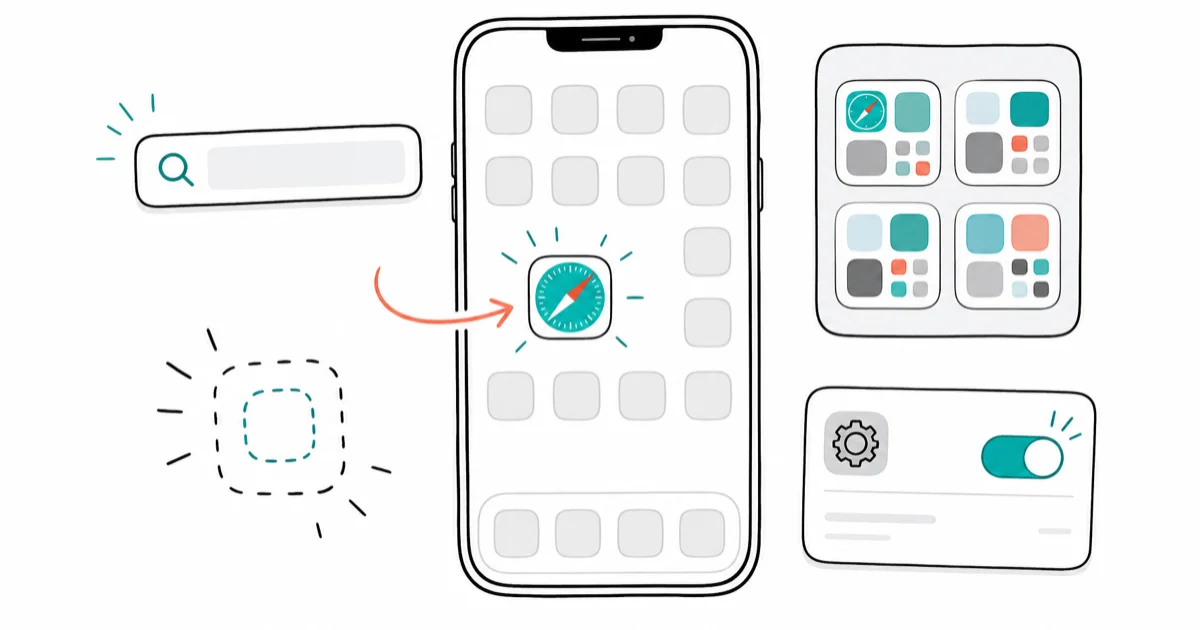
Quick AnswerSafari cannot be deleted from iPhone. Swipe down on the home screen and search Spotlight for Safari, check the App Library Utilities folder, or open Settings > Screen Time > Content & Privacy Restrictions > Allowed Apps and toggle Safari back on.
Safari disappeared from your iPhone home screen, but the app is still there. Apple builds Safari into iOS, so it can’t be uninstalled, only hidden, restricted, or relocated.
- Safari is built into iOS and can’t be removed, only hidden by Screen Time or moved off the home screen.
- Screen Time Content and Privacy Restrictions are the most common cause and the toggle takes seconds to flip.
- Spotlight Search reveals Safari even when the icon is hidden in a folder or pushed to the App Library.
- The App Library Utilities folder always holds a copy of Safari ready to drag back to the home screen.
- Resetting the home screen layout puts Safari back on page one without touching photos, messages, or app data.
#Why Safari Looks Like It Vanished from Your iPhone
Safari hasn’t been deleted. iOS doesn’t let any user, including Apple support agents, remove it from the device. When the icon goes missing, one of four things happened: a Screen Time restriction is hiding the app, someone dragged the icon into a folder, the icon was removed from the home screen but kept in the App Library, or a brief iOS glitch is masking it until a reboot.
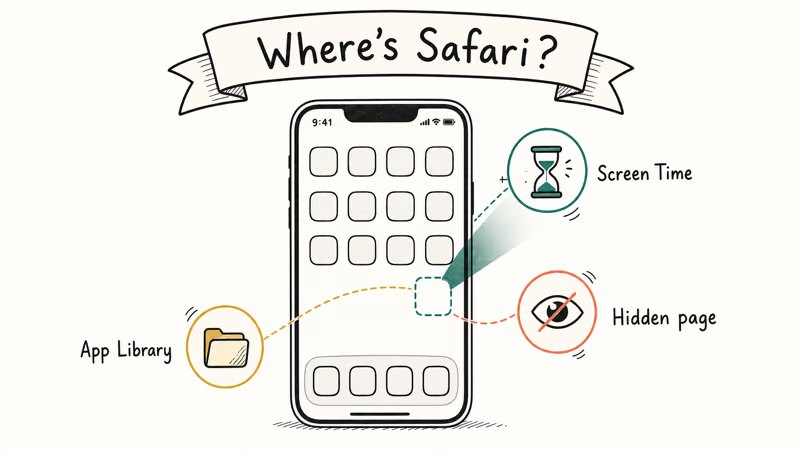
Three of the four methods below recover Safari in under a minute, and all of them work on current iOS versions.
According to Apple’s documentation, iOS 17 lists 8 built-in apps under Content and Privacy Restrictions > Allowed Apps (Mail, Safari, FaceTime, Camera, Siri, Wallet, AirDrop, and CarPlay), and toggling Safari off removes its icon from the home screen, Spotlight, and Siri suggestions until the toggle is flipped back on. The full list is in Apple’s Screen Time support article.
That’s why the first move is always checking restrictions before tearing through every home screen page, folder, and App Library category by hand. The four-step recovery — Spotlight, then Screen Time, then App Library, then home screen reset — clears almost every case without needing a factory reset, an iCloud restore, or an Apple Support call.
#Can Spotlight Search Find Safari Right Now?
Spotlight Search is the fastest sanity check. It looks across every installed app (even those moved off the home screen) and surfaces them by name in under a second.
- Swipe down from the middle of any home screen page to open Spotlight.
- Type Safari in the search field at the top.
- Tap the Safari result with the compass icon.
If Safari appears in Spotlight and launches, the app is fine and only the icon’s misplaced. Long-press the result and choose Add to Home Screen to put a fresh copy back on page one.
If Spotlight returns no Safari result at all, restrictions are almost certainly the cause. When Screen Time blocks Safari, Spotlight still returns web suggestions but shows no app row at the top, which is the tell that Allowed Apps is hiding the icon system-wide. Skip ahead to the Screen Time section before trying anything else.
For other vanishing icons, the playbook in our iPhone app disappeared guide covers the same diagnosis flow for non-system apps you’ve installed yourself.
#How Do You Re-enable Safari in Screen Time?
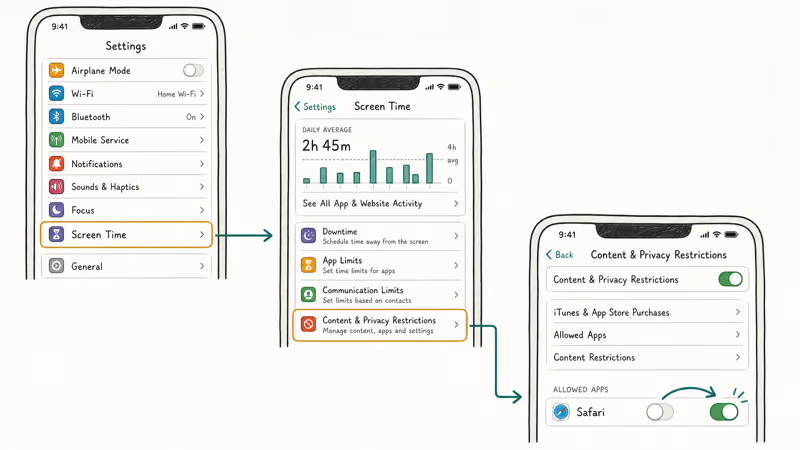
Screen Time is Apple’s built-in parental control and digital wellbeing system. Apple’s documentation confirms that blocking Safari under Allowed Apps removes its icon system-wide, including from Spotlight and Siri suggestions, until the toggle is reset. It’s the single most common reason Safari disappears, especially on devices set up with Family Sharing or handed down from a previous owner.
Authorization note: re-enable Safari only on a device you own or are explicitly allowed to manage. If you’re an adult on a managed device, ask the account holder rather than guessing the passcode. Bypassing another adult’s Screen Time without consent can violate privacy laws and the device’s terms of service depending on jurisdiction.
The fix on iOS 16 and 17:
- Open Settings and tap Screen Time.
- Tap Content and Privacy Restrictions.
- Enter the four-digit Screen Time passcode.
- Tap Allowed Apps (older iOS calls this Allowed Apps and Features).
- Find Safari in the list and slide the toggle to the green ON position.
Safari reappears on its original home screen page within a second or two of flipping the toggle. No reboot required.
Lost the Screen Time passcode? Tap Forgot Passcode? on the prompt and authenticate with the Apple ID linked to the device.
The full reset flow is covered in our how to disable Screen Time walkthrough, which also explains why the recovery email needs to match the original setup Apple ID before iOS will let you change anything. For broader hidden-app symptoms after restrictions are tweaked, the hidden app finder guide lists the other spots iOS quietly tucks system tools away from the regular home screen pages.
#Pulling Safari Back from the App Library
The App Library landed in iOS 14 and stores every installed app in auto-sorted categories. Safari lives in the Utilities folder alongside Calculator, Compass, and Measure. Even if Safari’s removed from the home screen, the App Library copy stays put and can be promoted back any time.
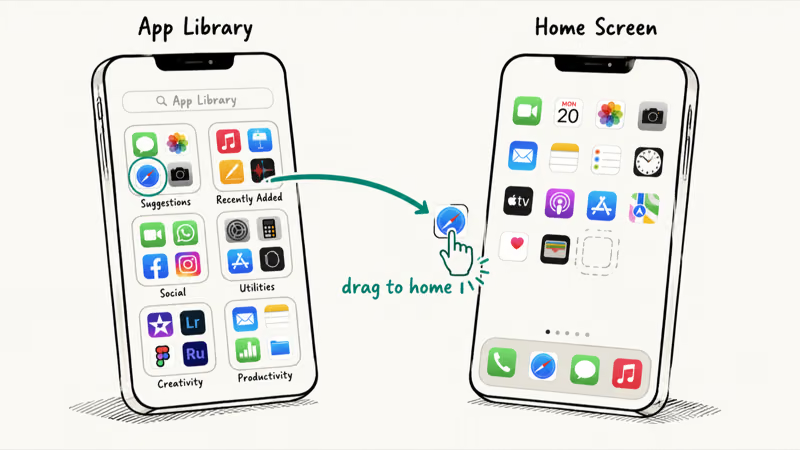
- Swipe left through every home screen page until the App Library opens.
- Tap the Utilities category in the upper-right of the grid.
- Long-press the Safari icon.
- Choose Add to Home Screen from the popup menu.
- Pick the page where Safari should land.
If the Utilities tile only shows three or four apps, tap the small grid in the corner to expand the full category.
The App Library search bar at the top also accepts the word Safari directly and jumps straight to the icon.
Apple’s iPhone User Guide states that the App Library can’t be disabled, so this fallback exists on every iPhone running iOS 14 or later. Safari stays in Utilities even after the icon is wiped from every visible home screen page.
#Resetting the Home Screen Layout
When neither Spotlight, Screen Time, nor the App Library brings Safari back, resetting the home screen layout to factory order forces every built-in app, Safari included, back to its original spot on page one. Apple recommends this as a non-destructive option that doesn’t erase data.
What it changes:
- Built-in apps return to their iOS-default positions, with Safari on the dock.
- Custom folders are dissolved and their apps moved back into the App Library.
- Third-party apps stay installed but lose their custom positions.
What it leaves alone:
- Photos, messages, contacts, notes, and email stay intact.
- Saved passwords, Apple ID logins, and iCloud sync settings are untouched.
- App data such as game progress, draft notes, and bank tokens stays inside each app.
Steps on iOS 16 and 17:
- Open Settings > General > Transfer or Reset iPhone.
- Tap Reset at the bottom of the screen.
- Pick Reset Home Screen Layout.
- Confirm by tapping Reset Home Screen in the popup.
The screen flickers for a second or two, then Safari’s back on the dock or page one. The full reset takes only a few seconds, with no data loss afterwards.
#Restart, Update, and Profile Checks if Safari Stays Hidden
A handful of cases survive everything above. They usually come down to a transient iOS glitch, an outdated software version, or a managed device profile pushed by a school or employer.
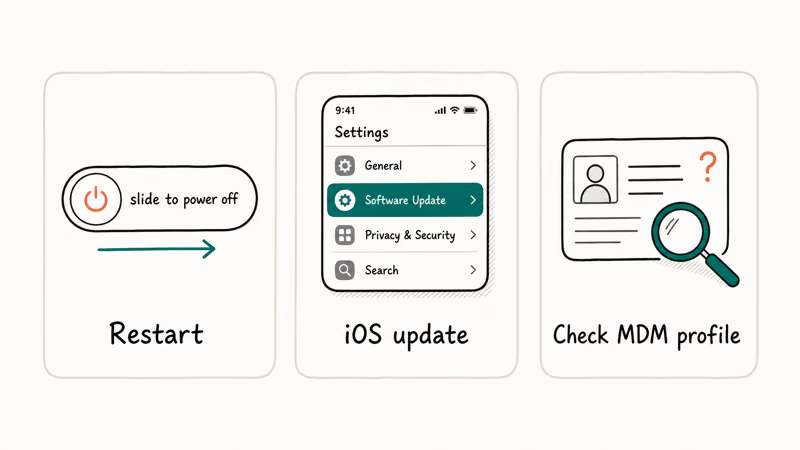
Restart the iPhone first. On iPhone X and newer with Face ID, hold Side plus either Volume button until the slider appears, drag to power off, wait ten seconds, then hold Side until the Apple logo shows. On iPhone SE and earlier with Touch ID, hold the Top or Side button instead. A reboot clears the SpringBoard cache, which sometimes hides icons after a botched layout change.
Update iOS. Older builds sometimes ship layout bugs that hide system apps. Open Settings > General > Software Update and install whatever’s pending. If the install stalls, our how to cancel an iPhone update guide walks through retrying cleanly.
Check for a management profile. Work and school iPhones often run under a configuration profile that hides Safari and forces a managed browser instead. Open Settings > General > VPN and Device Management to see any active profiles. If one’s restricting Safari, only the IT admin who issued the profile can lift the block. Our profiles and device management missing page explains how the menu’s supposed to look on a clean iPhone.
Verify the Safari app itself is healthy. If Safari opens but pages won’t load after recovery, the Safari not working on iPhone guide covers cache, DNS, and network resets that fix the most common loading failures.
#Bottom Line
Open Spotlight first and search for Safari, since this single step solves it every time the icon’s just hiding in a folder. If Spotlight returns nothing, head straight to Settings > Screen Time > Content and Privacy Restrictions > Allowed Apps and confirm the Safari toggle is on. Restrictions are the cause more often than any other factor.
If both checks come up empty, drag Safari out of the App Library Utilities folder, and only fall back to a home screen layout reset when the App Library copy is also missing. Reach out to Apple Support exclusively when an iOS update plus reboot also fails, since at that point the issue is a deeper iOS install problem rather than a hidden icon.
#Frequently Asked Questions
Can Apple delete Safari permanently from my iPhone?
No. Safari is bundled with iOS and can’t be uninstalled. Screen Time can hide it, but the app itself stays.
Does resetting the home screen layout erase any data?
No data is touched. Apple is clear that Reset Home Screen Layout only rearranges icons. Photos, iMessages, email, contacts, notes, saved Wi-Fi passwords, Apple Pay cards, and per-app data all stay exactly where they’re stored today. Custom home-screen folders, third-party app positions, and wallpaper-driven page order do reset.
Why does Safari keep disappearing every time I add it back?
A Screen Time restriction is being re-enabled. Open Settings > Screen Time > Content and Privacy Restrictions > Allowed Apps and confirm Safari is toggled ON. If the toggle keeps reverting, an MDM or Family Sharing profile is enforcing the restriction remotely, and only the account owner or IT admin can lift it.
Can I switch my default browser away from Safari on iOS?
Yes. Since iOS 14, Settings shows a Default Browser App option inside any qualifying third-party browser (Chrome, Firefox, Edge, Brave, DuckDuckGo, and Arc Search). Pick any installed browser to handle web links from other apps. Safari itself stays installed regardless of the default choice and still powers web views inside Mail, Messages, and most third-party apps because Apple requires every iOS browser to render with WebKit on the iPhone.
What is the easiest way to stop Safari from going missing again?
Keep iOS updated, audit Screen Time or MDM restrictions before handing the iPhone to a child, and remember the App Library Utilities folder.
Is Safari faster than Chrome or Firefox on iPhone?
Apple states that Safari is tuned for the A-series and M-series silicon, and it’s the only browser allowed to use its own JIT compiler on iOS. Chrome, Firefox, Edge, and Brave all run on Apple’s WebKit engine on the iPhone, so raw page load speed is similar, but Safari has lower battery use and tighter Handoff and Keychain integration.
Will a factory reset bring Safari back?
Yes, but it’s overkill. Use Reset Home Screen Layout instead.
Apple Siri Settlement: Who Qualifies and How to Claim
Apple's $250 million Siri settlement covers iPhone 15 Pro and iPhone 16 models bought June 2024 to March 2025. See who qualifies and how claims work.
iOS 26.6.1 Security Update: What Apple Fixed and Who Gets It
Apple released iOS 26.6.1 on August 17 with 29 security fixes, including an IPSec interception bug. See what it patches, who gets it, and how to update.
iPhone Adaptive Power: How It Works and When to Use It
Learn how iPhone Adaptive Power works, which models support it, what it changes, and when Low Power Mode is still the better battery-saving choice.
How to Transfer Data to a New iPhone Without iCloud
Move everything to your new iPhone without iCloud: Quick Start device-to-device transfer, wired migration, and encrypted Finder or iTunes backups.