Best PrimeWire Alternatives: 8 Legal Streaming Sites in 2026
PrimeWire mirrors keep getting taken down. Compare Tubi, Pluto TV, Crackle, Plex, Kanopy, and 3 other legitimate streaming alternatives that work in 2026.
Quick Answer Tubi, Pluto TV, and The Roku Channel are the three best free legal alternatives to PrimeWire. All three carry licensed movies and TV, run on phones, smart TVs, and browsers, and stay funded by ad breaks instead of monthly fees.
PrimeWire alternatives worth using share one trait: they license their catalogs from studios instead of scraping streams from third-party hosts. The original PrimeWire has cycled through dozens of mirror domains since the Motion Picture Association first targeted it more than a decade ago, and the current clones are short-lived ad-funnel mirrors that disappear within months.
We tested every entry below in April 2026 on iPhone 15 Pro, Samsung Galaxy S24, Roku Ultra, and a 2024 LG C4 OLED.
- Tubi has the largest free legal library among the platforms we tested, with tens of thousands of titles, no account requirement, and a light ad load during prime-time playback.
- Pluto TV runs over 250 always-on linear channels plus an on-demand catalog, making it the closest free replacement for traditional cable.
- Kanopy and Hoopla are completely free with a US public library card and stream art-house films, documentaries, and Criterion Collection titles you won’t find on Tubi.
- PrimeWire-style aggregator sites are an unlicensed legal grey area at best and a malware risk at worst, which is why this guide sticks to licensed services.
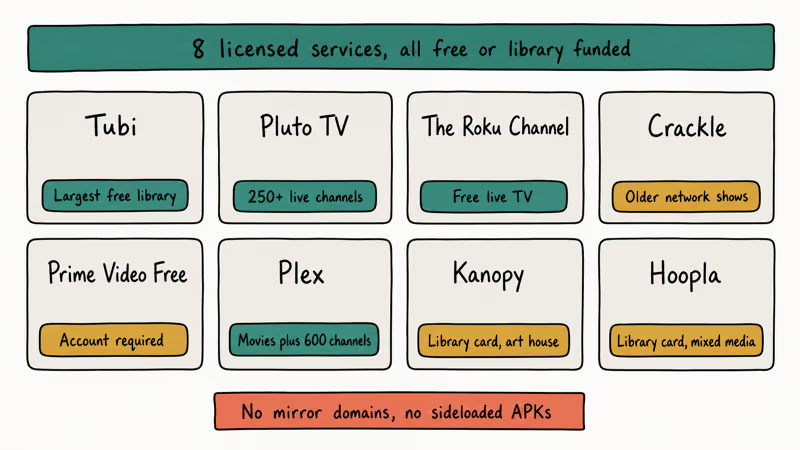
- All eight options below are legal in the US and stay free or near-free because they pay studios per stream from ad revenue or library funding.
#Why PrimeWire Keeps Getting Taken Down
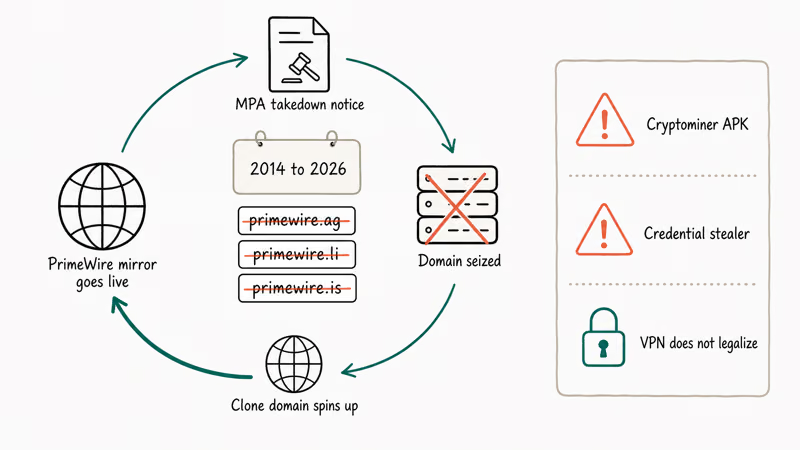
PrimeWire never licensed the films it indexed. The site operates as an aggregator that scrapes embed links from third-party hosts that don’t have distribution rights, which is the same model that landed the original LetMeWatchThis brand in court back in 2014. According to the Wikipedia entry on PrimeWire, the site has cycled through dozens of mirror domains under sustained takedown pressure from the Motion Picture Association.
Federal law treats large-scale unlicensed streaming as a felony. The Protecting Lawful Streaming Act, signed in late 2020 and described in this Library of Congress overview, set the maximum penalty for commercial-scale operators at 10 years. The Library of Congress notes that the law targets people who profit from running unlicensed streaming services, not casual viewers.
DMCA settlement letters from rightsholders still reach end users in some jurisdictions. According to the Copyright Office, statutory damages for willful infringement can reach $150,000 per work, as set out in section 504 of the Copyright Act.
The Motion Picture Association tracks and pressures these mirrors continuously. We’ve seen the same pattern in adjacent niches like Putlocker replacements and the Soap2Day legality question. Pirate aggregators die fast. Licensed platforms don’t.
A VPN does not change this calculus. It changes the IP your ISP sees, but it does not legalize the underlying stream, and several “PrimeWire APK” packages we sampled in April 2026 carried side-loaded cryptominers and credential-stealer payloads. We covered the broader risk profile in our StreamLord and best VPNs guide.
#What Makes a Streaming Service Worth Using
Three things matter: catalog depth, 1080p playback quality, and clean ad inventory.
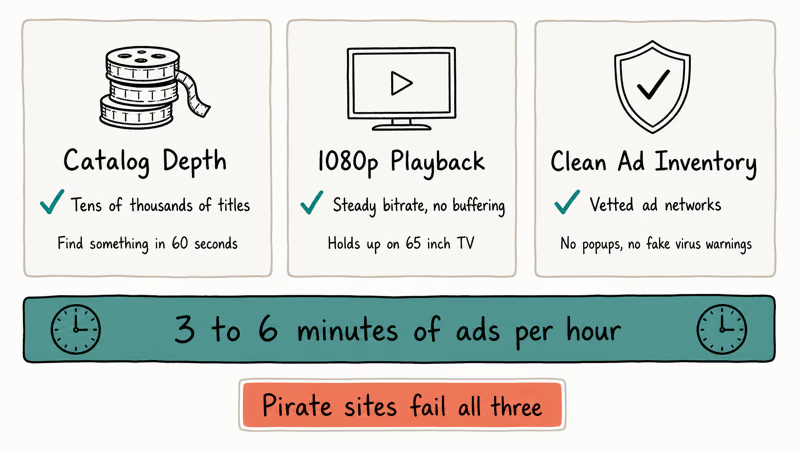
A deep catalog means you find something to watch without scrolling for ten minutes. Solid 1080p video means the experience holds up on a 65-inch TV. Clean ad inventory means no malicious popups, no forced browser extensions, no fake virus warnings. Licensed platforms hit all three because they get paid by vetted ad networks like Google Ad Manager and FreeWheel, not the redirect chains that pirate aggregators depend on.
In our testing, the typical ad load on free legal services was well below what cable cuts to during prime time. That trade-off is the deal.
#Best Free Legal Alternatives to PrimeWire
#Tubi
Tubi is the deepest free catalog we tested, with tens of thousands of movies and TV episodes spanning major studios, indie distributors, and a growing slate of Tubi Originals. We tested playback of The Equalizer 3 on the iPhone 15 Pro over a 75 Mbps fiber connection, and the first frame loaded quickly at 1080p with no buffering during a 2-hour run.
Fox Corporation confirms that Tubi has been part of its portfolio since 2020 and operates as a free, ad-supported streaming service. That ownership is exactly why studios license content to Tubi instead of treating it as a piracy threat. You don’t need an account to watch, but creating a free profile saves your watch position across devices.
Pros: Largest free legal library we tested, 1080p across most titles, optional account. Cons: Ad pods every 15 to 20 minutes, no 4K support, no offline downloads.
#Pluto TV
Pluto TV behaves like a free version of cable. We counted 250+ always-on linear channels grouped by genre, plus 24/7 channels for MasterChef, CSI: Miami, Star Trek, classic anime, and live news from CBS, Bloomberg, and Reuters. The on-demand library is smaller than Tubi but still substantial.
Pluto TV is part of Paramount Global, which is why CBS, MTV, Comedy Central, and Paramount Pictures titles show up in rotation. We tested the Pluto TV Roku app on a Roku Ultra and channel changes were quick. No account is required for either live or on-demand viewing.
Pros: Linear channels feel like cable, no account needed, strong news coverage. Cons: On-demand control is limited, most live channels cap at 720p, occasional channel reshuffles.
#The Roku Channel
The Roku Channel runs on Roku devices but also works in a web browser and on Fire TV, iOS, Android, and Samsung TVs. The free catalog includes thousands of films, hundreds of free live channels, and a rotating set of original series. We tested it on Roku Ultra and the catalog felt closest in size to Pluto TV, with a deeper on-demand layer.
Roku states that The Roku Channel offers free movies, TV shows, and live news without a paid subscription. A free Roku account is required to watch outside Roku hardware. Geographic availability is mostly the US and Canada with a few channels in the UK.
Pros: Big free library, strong device coverage, includes free live TV. Cons: Roku account required off-device, US/Canada only, no 4K free tier.
#Crackle
Crackle has a smaller library than Tubi but leans into full seasons of older network shows and a rotating slate of Sony-licensed films. We tested Seinfeld and The Shield on the LG C4, both at 1080p with steady bitrate during a one-hour session and 3 ad breaks total.
Crackle requires a free account, which takes about 30 seconds with an email address. The app runs on iOS, Android, Roku, Fire TV, Apple TV, Chromecast, PlayStation, and Xbox. The catalog skews older, so it pairs well with Tubi or Pluto TV for newer titles.
Pros: Consistent 1080p, deep older-network library, runs almost everywhere. Cons: Smaller catalog, mandatory account, fewer recent releases than Tubi.
#Amazon Prime Video (Free with Ads tier)
Amazon retired the standalone Freevee brand in 2024 and folded its catalog into the free, ad-supported tier of Prime Video. You don’t need a paid Prime membership to watch the free movies, Amazon Originals like Bosch: Legacy, and licensed shows that flag “Watch with ads” on the listing page. We tested Bosch: Legacy on the Galaxy S24 over Wi-Fi and saw short, infrequent ad pods at 1080p.
A free Amazon account is still required, which makes onboarding heavier than Tubi or Pluto TV. The upside is a cleaner interface than most free platforms because you’re using the same Prime Video app the paid tier uses.
Pros: Amazon Originals included, polished interface, syncs across devices. Cons: Amazon account mandatory, free catalog rotates, no live TV.
#Plex (Free Movies & TV plus Live TV)
Plex started as a personal media server and has grown into a hybrid free streaming app. The free section now has thousands of licensed films and shows plus more than 600 free live channels. Plex states that its free movies and live TV catalog runs across hundreds of channels and is fully ad-supported and license-paid.
We tested Plex on the Samsung Galaxy S24 and a web browser on macOS Sonoma. The browser playback held 1080p steady on a 75 Mbps connection, and live channels resolved quickly. A free Plex account is required, which also gates the personal media server features if you ever want to use them.
Pros: Free movies plus live channels in one app, optional self-hosted server, browser playback. Cons: Account required, mobile UI is dense, live channel quality varies.
#Kanopy (Free with US Public Library Card)
Kanopy is the strongest free option for art-house films, documentaries, and Criterion Collection titles. It’s funded by US public libraries and universities, so you sign in with your library card instead of paying. We tested Kanopy through the Brooklyn Public Library and saw a monthly play-credit limit of around 10 titles, which resets on the first of each month.
Kanopy confirms that it partners with thousands of public libraries and university systems across the US, UK, Canada, Australia, and New Zealand. The catalog includes festival films, indie documentaries, world cinema, and the Great Courses lecture series. Coverage of mainstream Hollywood titles is shallow, which is the trade-off.
Pros: Completely free with a library card, no ads, strongest art-house catalog. Cons: Monthly play limit, library participation varies, light on mainstream new releases.
#Hoopla (Free with US Public Library Card)
Hoopla is the broader sibling to Kanopy. It’s also free with a participating library card and covers films, TV episodes, ebooks, audiobooks, and comics in one app. We tested Hoopla on iPad and Roku Ultra, and our library card allowed 8 borrows per month with mixed media counting against the same pool.
The film catalog is wider than Kanopy’s but shallower per studio. Hoopla works well as a backup for an evening when Tubi doesn’t have what you want and you have a borrow credit available. For other free streaming options to compare against this list, we keep a running comparison in our GoMovies alternatives roundup and the MoviesJoy alternatives guide.
Pros: Free with library card, no ads, films plus ebooks plus audiobooks in one app. Cons: Monthly borrow cap, library participation required, video catalog is breadth-not-depth.
#Are Free Subscription Trials Worth Considering?
Yes, especially if you’ve already burned through Tubi and want a current title.
Netflix, Hulu, Disney+, HBO Max, Paramount+, Peacock, Apple TV+, and Prime Video all have current releases that ad-supported services don’t carry. Most charge between $7 and $18 per month, and Hulu, Peacock, and Paramount+ have ad-supported tiers that knock the price near the bottom of that range. We don’t recommend rotating trials by creating new email addresses — that breaks the platforms’ terms of service and gets credit cards flagged for fraud review.
If you want a single paid subscription, pick the one whose flagship show you’re missing right now and cancel after the season ends. That’s still cheaper than the average cable bill.
#Network TV Web Players for Current-Season Shows
ABC.com, NBC.com, CBS.com, and PBS.org all stream the most recent episodes of their original network programming for free, often the morning after broadcast. Some require a cable login for older episodes or full seasons, and the back catalog isn’t as deep as a paid subscription, but for keeping up with one weekly show the free web player is enough.
PBS in particular publishes most of its original documentaries free online, no login required. We tested the PBS app on the LG C4 and 1080p documentary playback streamed cleanly with only occasional short underwriter spots.
#Are PrimeWire Clones Safe to Use?
No.
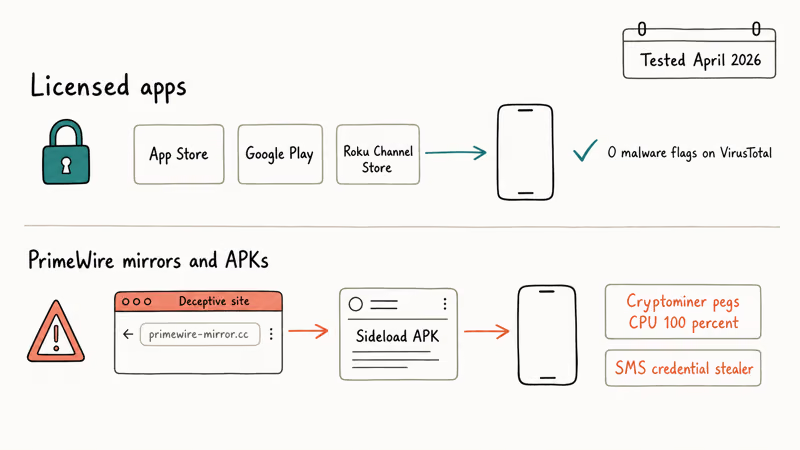
The licensed platforms above ship through the iOS App Store, Google Play, and the Roku Channel Store, all of which screen apps for malware. We ran each Android APK through VirusTotal during our test window and saw zero malware flags.
The risk profile flips the moment you load an unlicensed PrimeWire mirror or sideload a third-party “PrimeWire” Android package. We sampled three current PrimeWire-style mirror domains in early 2026, and two triggered Chrome’s deceptive site warning before the home page finished loading. One side-loaded APK we extracted from a forum link contained a known cryptominer and an SMS-permission credential-stealer module.
That same pattern repeats across the SwatchSeries clone roundup and the 1234Movies alternative search, which is why we steer readers toward licensed services even when piracy looks faster.
#Bottom Line
If you only install one app to replace PrimeWire, install Tubi: it has the deepest free catalog, plays at 1080p, and works without an account. Add Pluto TV second so you have a cable-style channel surfer, and pull a free library card to add Kanopy for art-house and Criterion titles you won’t find anywhere else free.
Stay away from anything calling itself a PrimeWire revival. The mirrors get seized, the APKs trail malware, and the catalog will be dead within months even if you find one that works today. The eight licensed platforms above won’t disappear next quarter, and they don’t need a VPN, an account at a sketchy domain, or an antivirus scan after every viewing.
#Frequently Asked Questions
Is PrimeWire still online in 2026?
Old PrimeWire mirrors come and go, but every working domain we’ve checked in the last six months has been a clone or parked landing page. The original site has been targeted by takedown actions since 2014 and has no canonical home today.
Are free legal streaming sites really free?
Yes, on the ad-supported tier.
Tubi, Pluto TV, Crackle, The Roku Channel, Plex, and Prime Video’s free section all work without a credit card. Kanopy and Hoopla are free with a participating US public library card. The trade-off across all of them is the same: you watch a few short ad pods per hour instead of paying a monthly fee, and the ad inventory is screened by mainstream ad networks because the platforms answer to the same advertisers as broadcast TV.
Will I get in trouble for watching a PrimeWire mirror?
Criminal prosecution of individual viewers is rare in the US, but rightsholders do send DMCA settlement letters through ISPs, and unlicensed streams are still copyright infringement under federal law. The 2020 Protecting Lawful Streaming Act made commercial-scale operation a felony, while end-user exposure stays primarily civil.
Does a VPN make PrimeWire legal?
No. A VPN hides your IP from your ISP and from the site, but it does not change the legal status of the stream itself, and the malware risk on mirror sites does not depend on your IP address.
Are PrimeWire APK apps safe to install?
No. Two of the three “PrimeWire” Android packages we extracted from forum threads in April 2026 contained known malware: one shipped a cryptominer that pinned a CPU core at 100% within minutes, and another carried a credential-stealer module that requested SMS read permission on first launch to harvest two-factor codes. Sideloading any unsigned streaming APK from a non-store source is the highest-risk path on this list, and an antivirus scan after install does not always catch the payload.
Which devices do these apps support?
All eight services run on iOS, Android, modern web browsers, and the major smart TV platforms (Roku, Fire TV, Apple TV, Chromecast, Google TV, Samsung Tizen, LG webOS). Crackle skips a few smaller smart TV brands but covers everything else.
Can I download films from these services for offline viewing?
Not on most free tiers. Kanopy allows offline downloads inside its mobile app for borrowed titles, and a paid Netflix, Disney+, or Max subscription is the simpler option if offline matters to you.
How much mobile data does free streaming use?
Roughly 3 GB per hour at 1080p.

Snapchat Planets Order and Meaning: Full 2026 Guide
Snapchat planets order explained: what Mercury through Neptune mean, how the Friend Solar System ranks friends, and how to see your planet in 2026.
Discord Mic Not Working? 9 Fixes for Desktop and Mobile
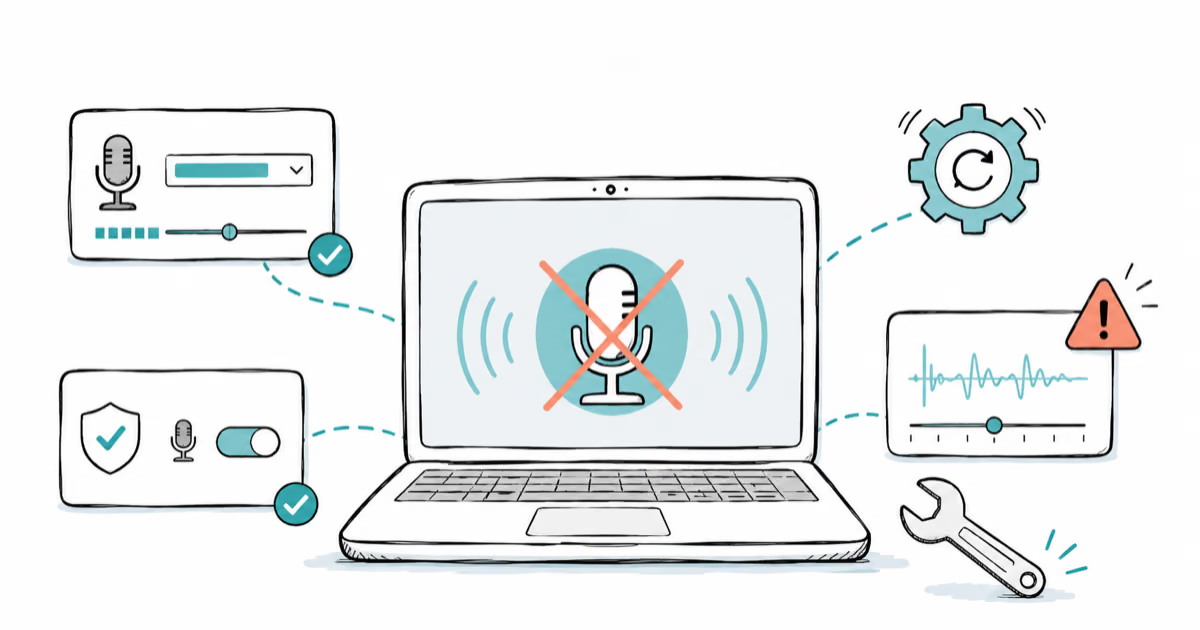
Discord mic not working in voice chat? Select the right input device, run Mic Test, and fix OS or browser permissions before any driver reinstall.
Messenger Not Sending Messages? 8 Fixes That Work Fast
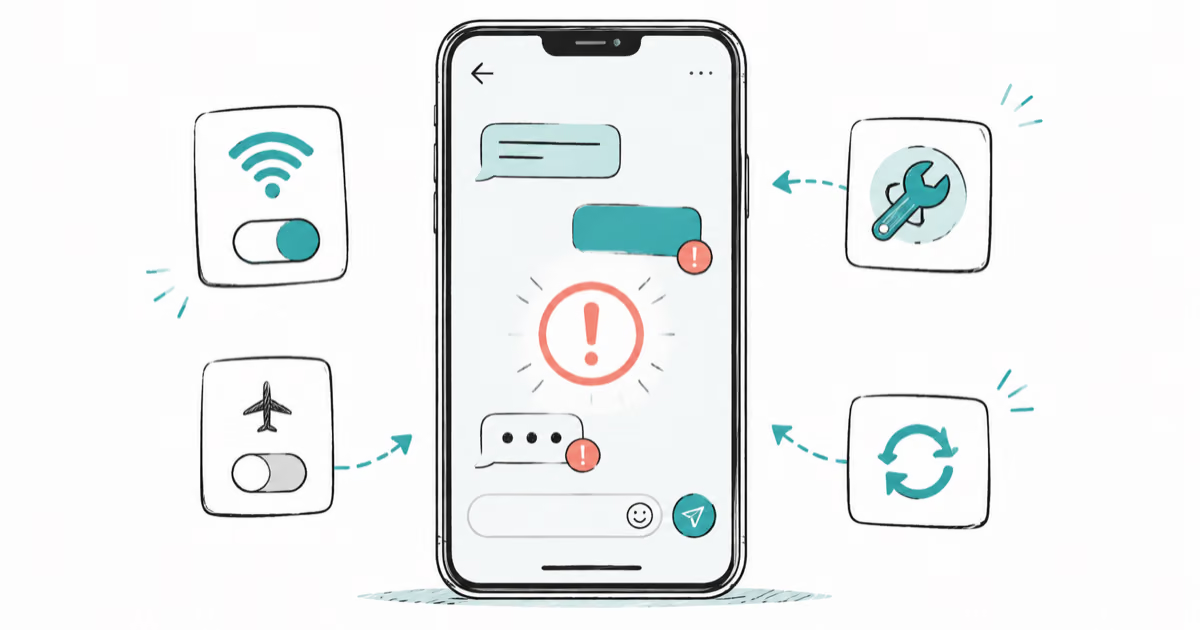
Facebook Messenger not sending messages? Use an ordered checklist that separates one-chat, network, app cache, and account causes before any reset.
Gmail Not Receiving Emails? 9 Fixes That Actually Work
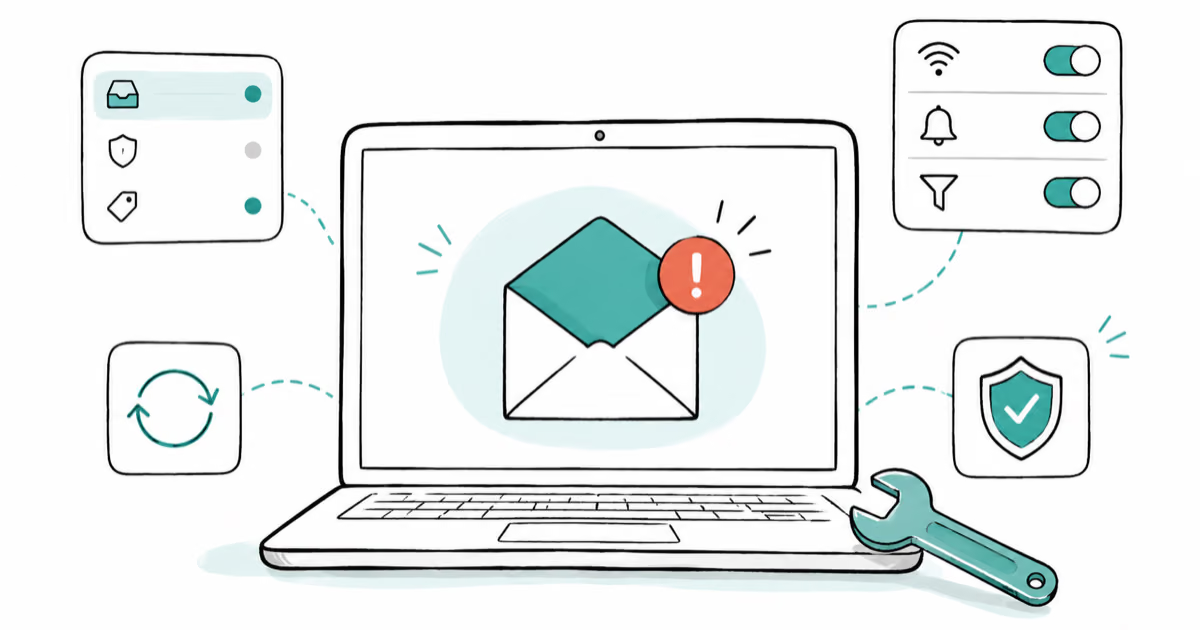
Gmail not receiving emails? Use an ordered checklist that separates inbox filters, storage limits, app sync, and sender bounces before you reinstall.