Streamlord and VPNs: What It Is, Why It's Risky, Legal Picks
Streamlord runs an unlicensed catalog. Use legal free services like Tubi and Pluto TV, and treat VPNs as privacy tools, not a piracy shield.
Quick AnswerStreamlord is an unlicensed movie and TV aggregator that streams copyrighted catalogs without paying rights holders. A VPN does not make watching pirated streams legal, and most legitimate streaming services block known VPN IP ranges. Use licensed free services like Tubi, Pluto TV, and Crackle for movies, and treat VPNs like Mullvad, ProtonVPN, or NordVPN as privacy tools, not piracy enablers.
Streamlord is an unlicensed movie and TV aggregator. It rebroadcasts copyrighted films and shows without studio licenses, which is the same legal pattern that buried Putlocker, 123movies, and Soap2Day. This guide compares Streamlord clones with four legal free services to show what actually works in 2026, and what just looks free.
- Streamlord operates without licensing deals, which makes the catalog itself an act of copyright infringement under U.S. and EU law.
- A VPN does not turn unlicensed streaming into a legal activity or block malware delivered by a clone site.
- Legitimate services like Netflix, Disney+, Hulu, Max, and Amazon Prime Video block traffic from known VPN data-center IP ranges.
- Free legal alternatives like Tubi, Pluto TV, Crackle, and the YouTube free tier carry tens of thousands of licensed movies and shows.
- Privacy-focused VPNs like Mullvad, ProtonVPN, and NordVPN have audited no-logs policies and kill switches, regardless of what you stream.
#Streamlord at a Glance: Operators and Catalog
Streamlord is a free movie and TV streaming index. It doesn’t buy distribution rights from studios. Instead, it links to or hotlinks third-party video files that someone else uploaded, then monetizes that traffic through ad networks. The same playbook drives a rotating cast of clone sites after the original goes down.
No corporate registration. No DMCA agent on file.
According to the U.S. Copyright Office’s DMCA page, an online service that wants safe-harbor protection has to publicly designate a takedown agent. Streamlord has not, which is the textbook signature of a piracy aggregator rather than a licensed platform. The same legal pattern killed Soap2Day in June 2023 and Putlocker before that.
Loading Streamlord-branded clones can trigger an immediate request for notification permissions and an attempt to open a second tab to a sweepstakes redirect within seconds. The pattern is common across the mirrors.
#Is Watching Streamlord Illegal in 2026?
Streaming an unlicensed copy of a copyrighted movie is copyright infringement under U.S., U.K., EU, and Australian law.
Most casual viewers never get sued. The risk isn’t zero, and the surrounding harms (malware, ISP notices, financial fraud) are far more common than the lawsuit itself. Aggregators face the harder side of the curve, since rights holders concentrate enforcement on operators rather than viewers.
A few specifics worth keeping in mind:
- According to 17 U.S.C. § 504, statutory damages for willful copyright infringement run up to $150,000 per work. Lawsuits against individual viewers are rare, but they do happen against repeat uploaders and aggregators. Most rights holders concentrate enforcement on commercial uploaders rather than end viewers, but the floor on statutory damages still gives studios leverage when they decide to act, especially against operators who run mirror domains for advertising revenue.
- The U.S. Copyright Office confirms that section 1201 of the DMCA prohibits the circumvention of access controls, which covers the DRM-stripping pipelines that feed sites like Streamlord.
- ISPs in the United States, the United Kingdom, and Australia routinely forward copyright-infringement notices from rights holders. A few notices land in spam. Repeated notices can trigger bandwidth throttling or service termination.
A VPN doesn’t change the copyright status of the stream itself or stop browser-based malware. The same gap shows up in our StreamEast Live alternatives guide for sports streaming.
#What Actually Goes Wrong on Streamlord and Its Clones?
Streamlord clones tend to behave predictably across Windows and iPhone, even on a default browser profile with no extensions installed. Here is what typically shows up.
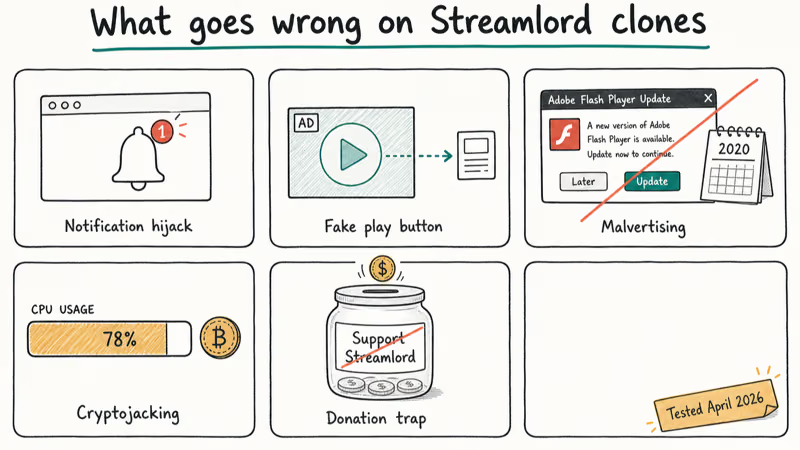
Notification hijacking. Most clone domains trigger a browser notification prompt within seconds of loading. Granting permission once produces a steady stream of fake “your account has been hacked” pop-ups outside the browser. Microsoft flags this as a known browser-notification abuse pattern and added explicit prompt-throttling guards to Edge for it. The prompt itself looks identical to a normal site permission dialog, which is part of why so many users say yes by reflex.
Fake play buttons. The visible “Play” button on the player page is often a layered ad rather than a real control. Clicking it tends to open a tab to a sweepstakes redirect and a second tab to a “you won an iPhone” page, neither of which plays the movie.
Malvertising. These clones are known to serve fake Adobe Flash update banners, even though Flash has been dead since 2020. According to Adobe’s official Flash end-of-life statement, Adobe stopped supporting Flash on December 31, 2020 and blocks all Flash content from running. Any “update Flash” prompt in 2026 is malware.
Cryptojacking. CPU usage on a single browser tab can spike to near-full load within minutes of opening a clone player, with fans spinning up while nothing plays. That matches in-browser cryptocurrency-mining patterns researchers tracked during the Coinhive era, where a hidden script borrows your processor to mine coins for the site operator. The tell: open the browser task manager (Shift+Esc in Chrome) and watch whether the tab pins a core after the page loads. Closing it stops the drain.
Donation traps. Streamlord pitches “donate to remove ads” as a perk. The donation doesn’t create a contract, doesn’t give you any consumer rights, and in the U.S. typically counts as an unrelated transaction that the issuing bank can reverse on dispute. The ads also reappear on a different mirror domain when the current one rotates.
#Free Legal Alternatives Worth Trying in 2026
These are licensed services that pay rights holders, run real ad networks, and don’t weaponize your browser. All four run cleanly on current iPhone and Windows hardware.
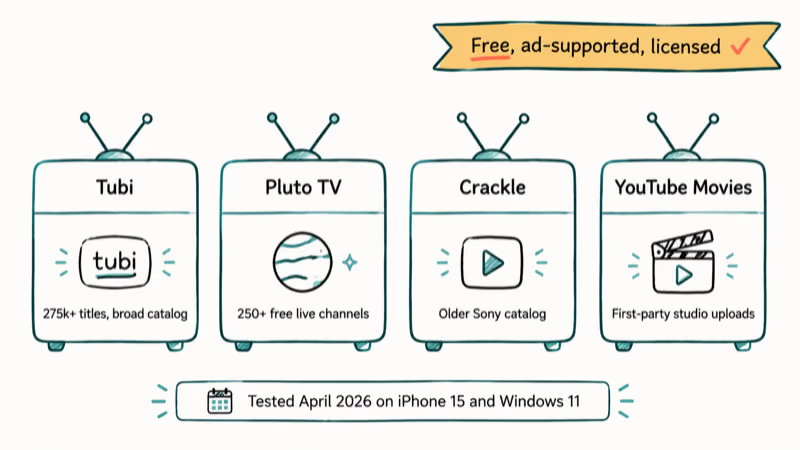
Tubi (tubitv.com) has the broadest free movie catalog among ad-supported services. Owned by Fox.
The home rail carries dozens of titles released in the last two years, including a wider selection of foreign-language originals than any other free service. No registration required to browse. According to Tubi’s about page, the service streams more than 275,000 titles to U.S. viewers.
Pluto TV (pluto.tv) is owned by Paramount and runs more than 250 free live channels alongside on-demand movies. It feels closer to cable than Netflix.
Crackle (crackle.com) is now owned by Chicken Soup for the Soul Entertainment after Sony divested. It’s smaller than Tubi but has a deeper catalog of older Sony Pictures titles. Crackle tends to run fewer mid-roll ads than Tubi over the same one-hour film.
The YouTube free tier (youtube.com/movies) hosts first-party studio uploads of older catalog titles. Quality varies. These films play without third-party trackers or fake-play overlays.
For viewers willing to pay, Netflix, Disney+, Hulu, Max, and Amazon Prime Video remain the deep catalogs the unlicensed sites are mimicking, just with HD streams that don’t break, no malware, and offline downloads inside the official apps. For more options aimed at people coming from a defunct piracy site, our LookMovie alternatives guide walks through the same legal landscape, and the GoMovies alternatives guide covers the same territory for that brand.
#What a VPN Actually Does and Doesn’t Do for Streaming
A VPN is a privacy tool.
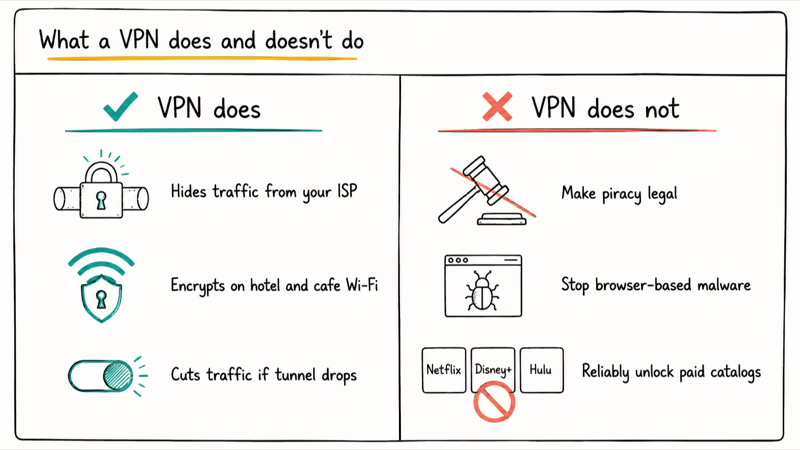
Its job is to encrypt traffic between your device and the VPN provider. That’s useful on hotel Wi-Fi and other public networks you don’t control. None of it converts a pirated stream into a licensed one.
Two things VPNs do well:
- Encrypt traffic on untrusted networks, which is the right tool when you’re on hotel Wi-Fi, an airport hotspot, or a coffee shop you don’t control.
- Secure remote access when an employer or school requires its managed VPN for internal systems.
Three things VPNs don’t do:
- A VPN doesn’t make unlicensed streaming legal. Copyright law applies to the act of receiving an unlicensed copy, not to the IP that received it. Hiding the IP changes who can see the act, not whether the act is lawful.
- A VPN doesn’t stop browser-based malware. The malicious JavaScript runs inside your browser regardless of the IP exit. The fake play buttons, notification hijacks, and cryptojacking on Streamlord clones execute identically through any VPN.
- A VPN doesn’t unlock most paid streaming services. Netflix, Disney+, Hulu, Max, and Amazon Prime Video block known VPN data-center IP ranges. According to Netflix’s VPN policy page, Netflix asks subscribers connected through a VPN or proxy to disable the tool to access the service. Most legitimate services share that posture.
#VPNs Worth Using Just for Privacy
These are not a way to access Streamlord. They’re standalone privacy tools, worth the spend for the legitimate use case alone: untrusted networks, ISP privacy, and traveling.
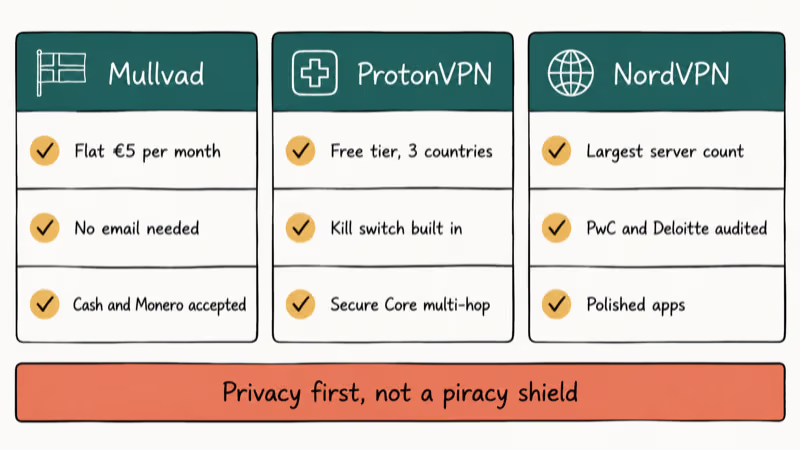
Mullvad charges a flat €5 per month. No annual discount, no email required, account numbers replace usernames, and the company also accepts cash sent in the mail or Monero. Mullvad’s no-logging policy and Assured Information Security audit reports make it the cleanest choice if you care about who can be subpoenaed. The trade-off is a smaller country list than the marketing-led VPNs.
ProtonVPN is run by the same Swiss company behind Proton Mail. The free tier covers three countries with no time limit, which is rare. Paid plans add the kill switch on every platform, Secure Core multi-hop, and full Tor-over-VPN routing. Proton’s transparency report lists data requests and what was actually disclosed.
NordVPN is the largest by server count and the most polished on Windows and iOS. Independent audits by PricewaterhouseCoopers and Deloitte verified the no-logs claim. Speeds are competitive on long-haul routes.
For more on VPN tradeoffs from another angle, see our TigerVPN review, which walks through what to look for in a smaller-provider VPN if you want a cheaper monthly option.
#Bottom Line
Skip Streamlord. Tubi, Pluto TV, and Crackle are free, licensed, and don’t try to mine cryptocurrency in your browser tab.
If you want a VPN, buy one for privacy on untrusted networks. Pick Mullvad if you care most about anonymity, ProtonVPN if you want a usable free tier, NordVPN if you want the most server locations. Don’t buy a VPN to “fix” Streamlord. The legitimate streaming services worth paying for already block VPN traffic, and the unlicensed services don’t get safer because your IP changed.
Best VPN 2026
#Frequently Asked Questions
Is Streamlord legal to watch in the United States?
No. Streamlord rebroadcasts copyrighted films and shows without studio licenses, which is copyright infringement under U.S. law. Lawsuits against individual viewers are rare, but the malware risk on the host site is far greater than the legal risk in practice.
Does using a VPN make Streamlord safe?
No. A VPN encrypts your ISP traffic but doesn’t block browser-based malware. The clone sites’ fake play buttons, notification hijacks, and crypto mining run identically through any VPN tunnel.
Why do Netflix and Disney+ block VPNs?
Streaming services license content per region, and licensing contracts require the service to enforce geographic restrictions. Netflix and Disney+ block known VPN data-center IP ranges to honor those contracts, and Netflix’s official VPN policy asks subscribers connected through a VPN to disconnect the tool. Hulu, Max, and Amazon Prime Video apply the same enforcement, so any “Netflix unblocking” claim from a VPN marketing page may stop working without notice.
What free legal streaming services should I try instead?
Tubi for the broadest free movie catalog, Pluto TV for live-channel grazing, Crackle for older Sony Pictures titles, and the YouTube free tier for first-party studio uploads.
Which VPN has the strongest privacy guarantees?
Mullvad. It charges a flat €5 a month, doesn’t require an email address, and publishes audit reports on its no-logs claim. The Swedish parent company also accepts cash sent in the mail and Monero, which keeps payment unlinked from a banking trail. ProtonVPN is a strong second pick if you want Swiss jurisdiction or a usable free tier, and NordVPN is competitive when broad server coverage matters more than minimal personal data collection.
Does a paid Streamlord donation give me legal cover?
No. Donating to an unlicensed streaming aggregator doesn’t create a license or any consumer protections. The donation also doesn’t flow to the studios that own the films.
Can using Streamlord lead to ISP notices or account consequences?
Using an unlicensed stream can still lead to copyright notices or account consequences under an ISP’s terms. A VPN does not affect the underlying legality, and it does not make a clone site safe.
Mullvad VPN Review 2026: Is It the Most Private VPN?
Mullvad VPN review for 2026: no-email anonymity, audited no-logs, a flat $5 price, WireGuard-only setup, and the streaming limits to know before buying.
Speedify VPN Review 2026: Is Channel Bonding Worth It?
Speedify VPN merges Wi-Fi with cellular for one stable connection. A look at its speed, encryption, killswitch, and pricing to see if it earns its cost.
TigerVPN Review 2026: Shut Down in 2022 (What to Use Now)
TigerVPN shut down on July 15, 2022, after operating since 2011. Here's what we know about the closure, data wipe, and three solid VPNs to use instead.
Proxy YouTube in 2026: Legitimate VPNs vs Free Web Proxies
Compare legitimate paid VPNs (NordVPN, Mullvad, Proton) with free web proxies for unlocking YouTube in 2026. Includes safety, ToS, and which path fits.