Best Online Android Emulator: 7 Browser & Cloud Picks 2026
Online Android emulator guide for 2026 covering browser services, downloadable emulator picks, safety limits, privacy risks, and use-case fit.
Quick AnswerAppetize.io is the best truly online Android emulator in 2026, streaming a full Android device in any browser with a free monthly tier. For unlimited daily use without browser limits, install BlueStacks 5 or LDPlayer on Windows or Mac.
You want to run Android apps without buying a phone or installing heavy software on your laptop. The phrase “online Android emulator” actually covers two very different things in 2026: real browser-based services that stream a virtual phone to you, and downloadable PC emulators you grab from the web. This guide separates the browser tools from the downloadable emulators that are still maintained.
- Appetize.io is the only major emulator that runs Android entirely in a browser, with no local install on Windows, Mac, ChromeOS, or even iPad.
- BlueStacks 5 and LDPlayer 9 are the most stable downloadable picks for everyday use, with the largest game and app compatibility lists.
- Genymotion Cloud is built for developers who need to test apps against many Android versions from a CI pipeline.
- Microsoft retired the Windows Subsystem for Android in 2025, so it’s no longer a maintained option for running Play Store apps on Windows.
- Old-favorites Andy, Jar of Beans, Droid4X, and Windroy are abandoned in 2026 and shouldn’t be downloaded from third-party mirror sites.
#What Counts as an “Online” Android Emulator?
People search for “online Android emulator” with two different goals in mind. Knowing which one you actually want will save you an hour of installer downloads.
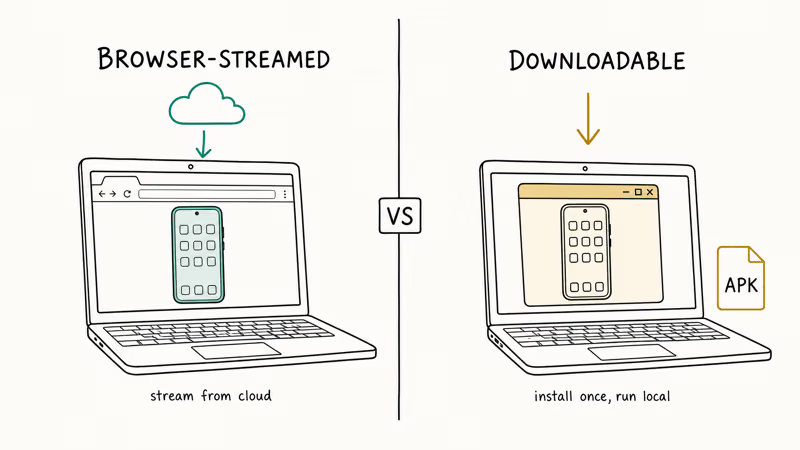
The first group wants a true cloud or browser-based emulator. You open a website, a virtual Android phone loads inside the page, and you tap apps with your mouse. Nothing installs locally. Appetize.io and BrowserStack App Live are the well-known examples.
The second group wants a free Android emulator they can find online and install on their PC. BlueStacks, LDPlayer, NoxPlayer, and the official Android Studio Emulator all fit here. They’re downloadable software, not browser tools.
Both lanes are legitimate. Browser-based services are best for short app demos, sharing a working build with a client, or testing apps on devices you don’t own. Downloadable emulators win when you want long sessions, mod support, controller bindings, or to play heavy 3D games like Genshin Impact, Free Fire, and PUBG Mobile on a bigger screen with stable frame rates.
A safety note before the picks. Use any Android emulator only on apps and accounts you own or have explicit permission to test. Online emulators are great for app QA and developer demos, but trying to use them to dodge bans, geo-restrictions, or anti-cheat checks usually violates the host app’s terms of service and can get accounts suspended.
#Top Browser-Based Android Emulators in 2026
These are the main services in 2026 that run Android inside a normal web browser without asking you to install anything.
#Appetize.io
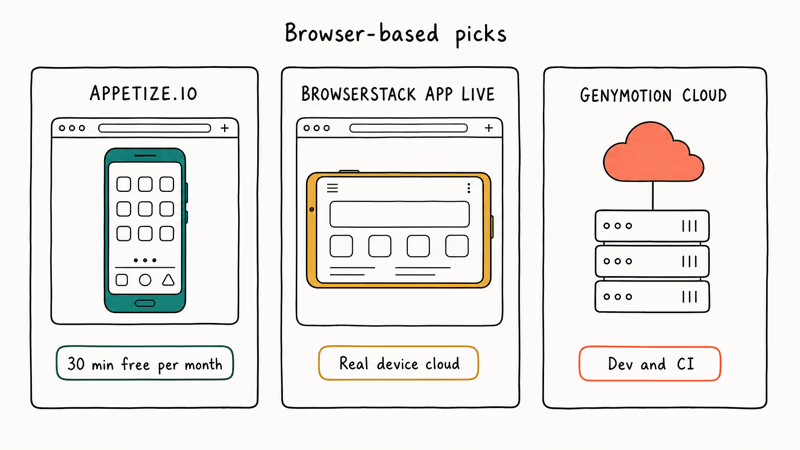
Appetize.io is a browser-based emulator: paste an APK link or upload your own, then run it in the page.
Appetize.io’s pricing page confirms that the free tier includes 30 minutes of streaming per month with a queue at peak times, and paid plans bill per minute for higher concurrency.
It’s the only option on this list that works on iPad and Chromebook in a browser tab. Limitation: you can’t install Google Play Store directly. You upload an APK or use a public APK URL.
#BrowserStack App Live
BrowserStack is built for QA teams and streams real Android devices, not emulators. The flow is the same as a browser emulator: pick a device, pick an OS version, and your app opens in the browser. It’s the right pick when you need to confirm a bug only happens on a specific device like a Samsung Galaxy S22 running Android 13. Free trials are short and the paid plans target organizations, not casual users.
#Genymotion Cloud (SaaS)
Genymotion has both a desktop app and a cloud SaaS version. The cloud option spins up Android virtual devices on AWS or Genymotion’s own infrastructure, accessible from a browser or via API.
Genymotion Cloud is priced for developer teams and app QA, not casual gaming. It isn’t the right pick if you only want to play a game on Friday night.
#When Should You Pick a Downloadable Emulator Instead?
Browser-based emulators are convenient, but they fall apart in three situations: long gaming sessions, anything that needs Google Play Services pre-installed, and anything that needs more than a few minutes of stable use without a queue. If any of those describe your goal, install a desktop emulator. You’ll get smoother performance, real Play Store access, controller mapping, and unlimited session time.
The most common reasons to download instead of stream:
- You want to play Free Fire, PUBG Mobile, Genshin Impact, or other heavy games on a bigger screen with mouse and keyboard
- You need Google Play Store and Play Services to log into apps with your Google account
- You want to multi-instance the same app (run 3 copies of WhatsApp, for example)
- You’re on a metered or unreliable internet connection where streaming would be choppy
For deeper picks tuned to slower hardware, see our lightweight Android emulators guide and the best emulator for low-end PC roundup, both updated for 2026.
#Top Downloadable Picks: BlueStacks, LDPlayer, and Genymotion
These three are the maintained downloadable picks in 2026.
#BlueStacks 5
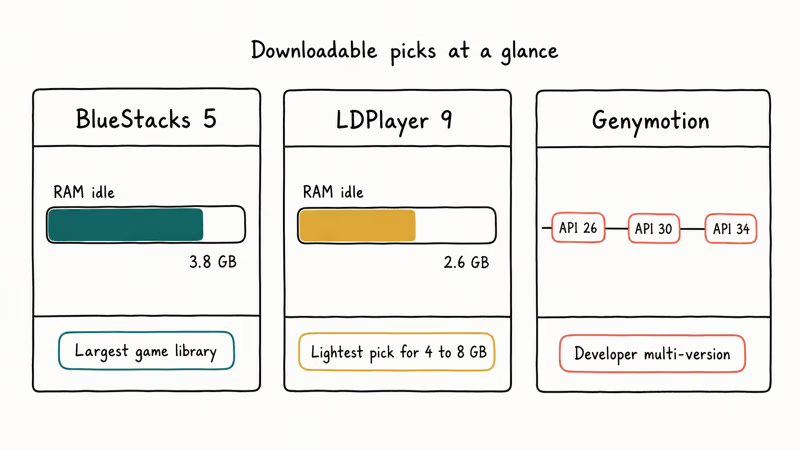
BlueStacks is the most popular Android emulator on the planet, period. According to the BlueStacks system requirements, the minimum spec is 4 GB of RAM, 5 GB of free disk space, and an Intel or AMD processor with virtualization enabled. Expect it to use more memory than lighter gaming-focused emulators.
Strengths: huge app and game library that “just works”, easy multi-instance, built-in macros, controller and keymapping presets for popular games. It also has a long history of working with the Play Store, so logging in with a Google account is straightforward.
If you want to read more about practical BlueStacks tweaks, our guide on how to root BlueStacks covers the developer-side setup, and Pokemon Go on BlueStacks explains why some location-sensitive games block emulators.
Weaknesses: heavy on RAM, ads in the launcher on the free build, push notifications can be flaky.
#LDPlayer 9
LDPlayer is the lightest of the three big downloadable options in 2026. It targets gamers more openly than BlueStacks does, with one-click keymapping templates for Free Fire, PUBG, and similar titles.
Best for: gamers on lower-RAM PCs who want lightweight controls.
#Genymotion (Desktop)
Genymotion’s desktop app is aimed at developers. You spin up a virtual Android device with a chosen API level, screen size, and CPU profile, then test your APK against it.
Free for personal use. Genymotion is built for switching between Android versions and device profiles during app testing. Casual users should skip Genymotion in favor of BlueStacks or LDPlayer.
#The Official Android Studio Emulator
According to Google’s Android developer documentation, the Android Emulator ships with Android Studio and runs system images for API levels through API 34 (Android 14), with options for phone, tablet, Wear OS, Android TV, and Automotive form factors. It’s free and the most accurate emulator if you’re building or debugging an app.
It’s also the heaviest install. You have to download Android Studio first, and it isn’t the smoothest experience for gaming. Pick it if you’re a developer; skip it if you just want to play.
#What Happened to Andy, Jar of Beans, Droid4X, and Windroy?
Short answer: they died. Andy stopped updating around 2018, Droid4X has been dormant for years, Jar of Beans is stuck on Android 4.x Jelly Bean, and Windroy never recovered after its main download mirror went down. If a 2018-era blog tells you to install one of these, close the tab. Mirror downloads from unofficial sites are a known malware vector.
The biggest 2025 change to mention here: Microsoft announced that the Windows Subsystem for Android reached end of support on March 5, 2025, removing the Amazon Appstore-based Android-on-Windows experience as a maintained option. If you saw WSA recommended in older articles, ignore that advice.
#How to Pick the Right Emulator for Your Use Case
Match the tool to what you actually want to do. Here’s the short decision tree.
| Your goal | Best pick | Backup |
|---|---|---|
| Try one APK in a browser, no install | Appetize.io | BrowserStack App Live |
| Play Android games on a 4-8 GB RAM PC | LDPlayer 9 | BlueStacks 5 |
| Play games on a 16 GB+ gaming PC | BlueStacks 5 | LDPlayer 9 |
| Test your own app across Android versions | Android Studio Emulator | Genymotion (desktop) |
| Test against many devices for QA / CI | BrowserStack App Live | Genymotion Cloud |
| Run 3+ accounts of the same app at once | BlueStacks 5 multi-instance | LDPlayer 9 multi |
| Use Android on iPad in a browser | Appetize.io | (no good alternative) |
If you’re coming from iOS and want Android-style apps without buying a phone, see Best Android emulators for iOS in 2026. For the reverse problem (iOS apps on Windows), see iPhone emulator for Windows 10 and 11.
#Safety, Legality, and Privacy Limits
Android emulators are legal to install and use in the United States, Canada, the EU, and the UK. The legal risk isn’t the emulator itself; it’s what you do inside it.
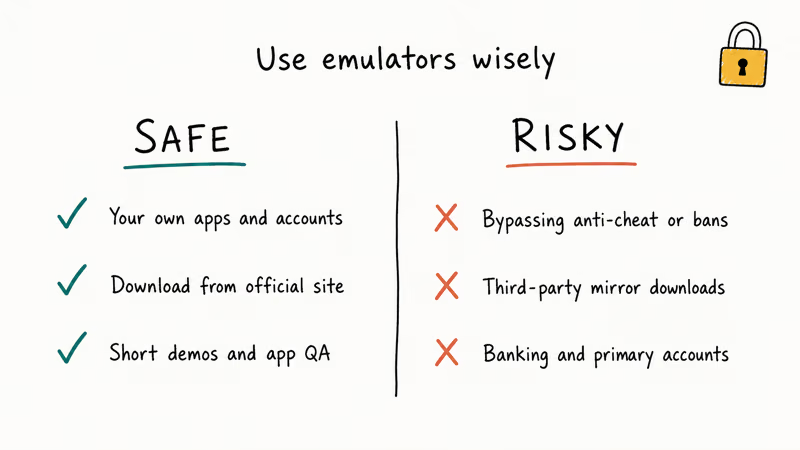
Things to keep in mind:
- Use emulators only on apps and accounts you own or are authorized to test. Logging into someone else’s account, or trying to bypass two-factor authentication on someone else’s device, isn’t OK.
- Many games, including Call of Duty Mobile and Pokemon Go, ban emulators by their terms of service. Niantic, Tencent, and similar publishers detect emulators and can suspend accounts. We’re not your lawyer, but if a game’s TOS says no emulators, that’s the rule.
- Download emulators only from the official site. BlueStacks, LDPlayer, and NoxPlayer all have official sites; “alternate mirrors” of dead emulators like Andy or Droid4X are a known malware vector.
- Watch what you log into inside the emulator. Treat a browser-streamed Android session the same way you’d treat any shared computer; don’t save passwords for accounts you care about.
Genymotion’s Cloud product page states that each session runs on an isolated virtual Android device, which is the right model for app QA and demos. Even so, anything you do inside an online emulator session is potentially observable by the platform operator. Don’t use online emulators for banking apps or anything personal.
#Bottom Line
Open Appetize.io if you only need to demo or test an APK for less than 30 minutes and don’t want to install anything. Install BlueStacks 5 if you have a 16 GB Windows 11 PC and want the largest library of working Android games. Install LDPlayer 9 if your laptop has 4 to 8 GB of RAM and BlueStacks feels sluggish.
Pick Android Studio’s emulator only for app development, and Genymotion only for multi-version testing. Skip every emulator that died around 2018.
#Frequently Asked Questions
Can you actually run Android in a web browser without installing anything?
Yes. Appetize.io is the main option in 2026: upload an APK or paste a public APK URL, and a virtual Android device runs inside the page on Windows, Mac, ChromeOS, Linux, or iPad. The free tier is enough for short demos; teams that need longer sessions or concurrent runs upgrade to per-minute paid plans. BrowserStack App Live and Genymotion Cloud cover the same use case but target QA and CI teams.
Is Appetize.io free?
Appetize.io has a free tier with monthly streaming limits and a queue at peak times. Paid plans bill per minute for higher concurrency.
What is the difference between BlueStacks and the official Android Studio Emulator?
BlueStacks is built for end users who want to play Android games or run Android apps on a PC with one click. The Android Studio Emulator is built for developers who need to test apps against specific API levels and device profiles. BlueStacks has a friendlier launcher, automatic Play Store login, and gaming presets. Android Studio’s emulator is more accurate to real hardware behavior and free of ads, but it’s slower for casual use.
Can I use an online Android emulator to play Pokemon Go or other geo-restricted games?
Technically yes, but Niantic and similar publishers detect most emulators and ban accounts. Don’t try it.
Do online Android emulators support Google Play Services?
Browser-streamed services like Appetize.io often don’t include Google Play Services by default; you upload your own APK instead. Downloadable emulators like BlueStacks, LDPlayer, NoxPlayer, and Genymotion ship with Play Store and Play Services pre-installed, so you sign in with your Google account and download apps the normal way. The Android Studio Emulator includes Play Store on system images marked with the Play Store icon in the Device Manager.
Will Android emulators get my Google account banned?
Google itself is generally tolerant of emulator use for development and testing. The risk is per-app: certain games and anti-cheat systems flag emulators and can ban the in-game account. To minimize risk, use a separate Google account for emulator-only activity, and never log a primary account into an emulator-resident game with strict anti-cheat.
What happened to Andy, Jar of Beans, Droid4X, and Windroy?
All four are abandoned. Andy went silent around 2018, Droid4X has been dormant for years, Jar of Beans is stuck on Android 4.x Jelly Bean, and Windroy never recovered after its mirror went down. If a tutorial recommends any of these in 2026, the article is out of date.
Pixel 11 vs Pixel 10: What Changed and Who Should Upgrade
Pixel 11 vs Pixel 10: same screen and camera resolution, new Tensor G6, 25W wireless, and Gemini Intelligence. Here is who should actually upgrade.

Verizon Not Receiving Texts? How to Fix It in 9 Steps
Verizon not receiving texts? Fix it in 9 steps: check Message Blocking in My Verizon, reset network settings, deregister iMessage, and call support.
Pixel Battery Drain: What Google's July Fix Really Covers
Google marked the Pixel idle battery drain bug fixed in July, but only some phones got the patch. Here is who is covered, who is not, and what to try.
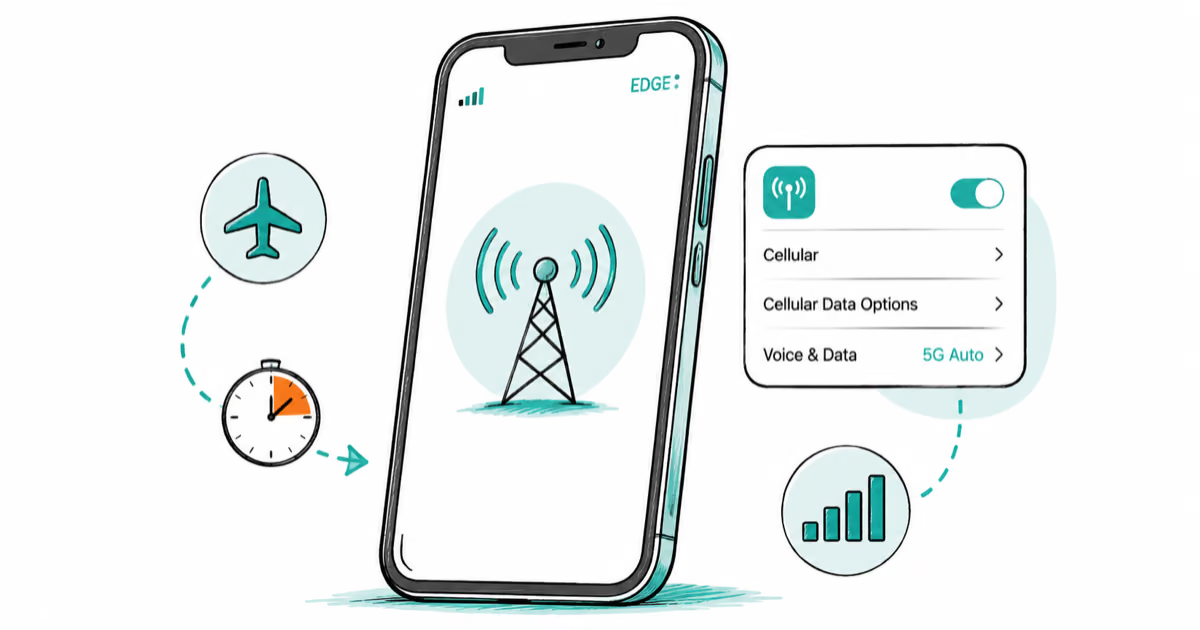
iPhone Stuck on EDGE? How to Get 5G or LTE Back (2026)
iPhone stuck on EDGE with crawling data? Here's why the E icon appears, which settings force 5G or LTE back, and when the problem is your carrier.