No Video Option on iPhone? 9 Fixes That Actually Work
iPhone Camera missing the video option? Try 9 proven fixes covering Screen Time restrictions, Preserve Settings, storage limits, and iOS bugs.
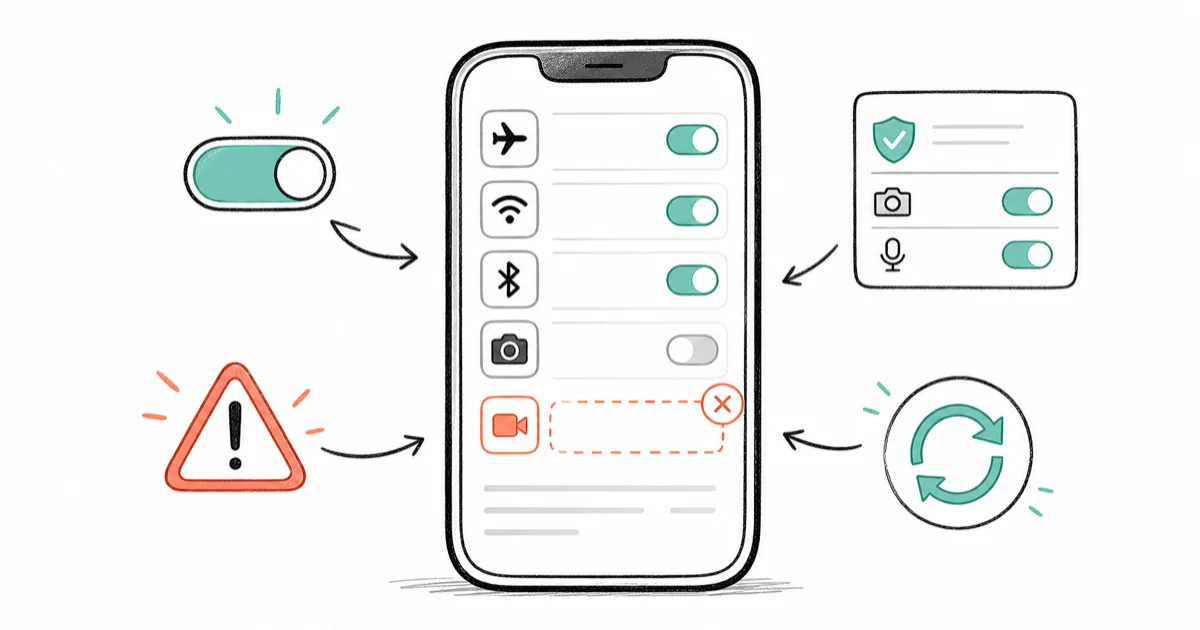
Quick AnswerOpen Settings > Screen Time > Content & Privacy Restrictions > Allowed Apps and turn Camera on. Then go to Settings > Camera > Preserve Settings and enable Camera Mode. A restart and 1GB of free storage clear most remaining cases.
If the video option is missing on your iPhone Camera app, the cause is almost always Screen Time, Preserve Settings, or low storage. These fixes apply to your own device; Screen Time on a managed phone needs the administrator.
- Screen Time content restrictions can hide the entire Camera app or block video; Allowed Apps must list Camera as on
Preserve Settings>Camera Modekeeps the last-used mode active so the slider stops snapping back to Photo- A force-close on the Camera app fixes most one-off glitches in under 10 seconds without losing your last shot
- The Camera app stops recording video when free storage drops below roughly 1GB on iOS 16 and later
- iOS updates patch known camera bugs, including the iOS 17.4 bug that hid Cinematic and Slo-Mo for some users
#Why Is the Video Option Missing on My iPhone?
The mode slider above the shutter button normally cycles through Time-Lapse, Slo-Mo, Video, Photo, Portrait, Pano, and Cinematic. When Video disappears entirely or refuses to highlight, four causes usually explain the problem:
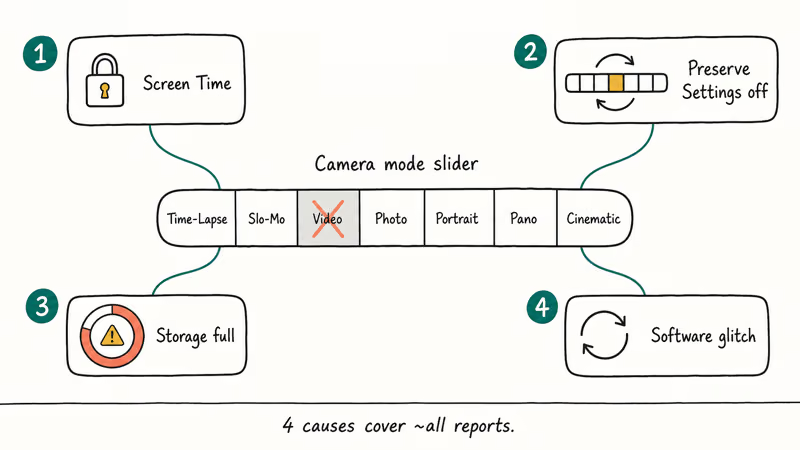
- Screen Time blocked the Camera app. Content & Privacy Restrictions can hide Camera or restrict its features.
- Preserve Settings is off. The slider keeps snapping back to Photo, so it looks like Video is gone when you reopen the app.
- Storage is full. When free space falls below 1GB, video recording is one of the first features to break.
- A software glitch. A force-quit, restart, or iOS update clears the cache that triggered the bug.
According to Apple’s iPhone User Guide for video recording, the Camera app supports Video, Slo-Mo, Time-Lapse, and Cinematic modes on supported models, and the slider is the only way to reach them. If any of these fixes restores the slider, the underlying issue was settings-based, not hardware. Hardware faults are rare and usually pair with a black viewfinder; for that pattern, see our iPhone camera not working guide instead.
#Check Screen Time Camera Restrictions
Screen Time is the most common silent cause. A parental control profile or accidental tap during setup can disable the Camera app entirely or strip its features.
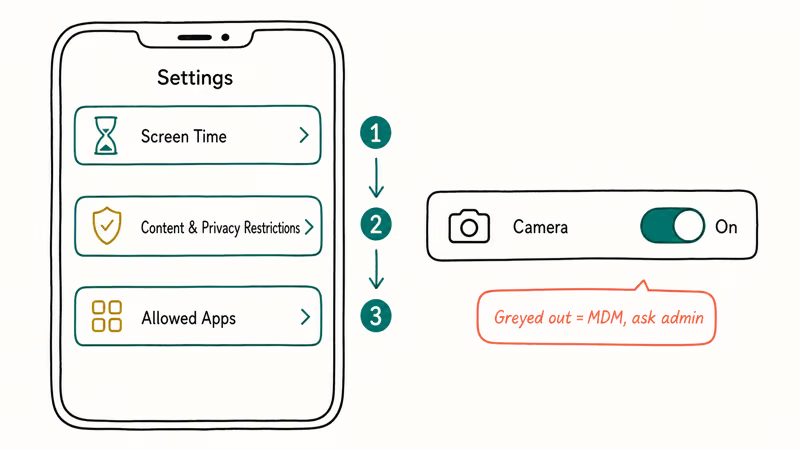
- Open
Settings>Screen Time - Tap Content & Privacy Restrictions
- If the toggle is on, tap Allowed Apps (or Allowed Apps & Features on iOS 18)
- Make sure Camera is switched on
- Back out and tap
Content Restrictions>Web Content>Camera, and confirm video recording is permitted
On a managed profile (school or work MDM), the Camera toggle is greyed out and only the administrator can re-enable it.
Apple’s Screen Time documentation confirms that Content & Privacy Restrictions override every other camera setting, including Preserve Settings. The check comes first because none of the steps below will fix anything until Screen Time is cleared. If an MDM profile hides Camera entirely from the home screen, the user usually can’t resolve it from the device side.
#Reset Camera Preserve Settings
Preserve Settings controls whether Camera remembers the last mode or reopens on Photo.
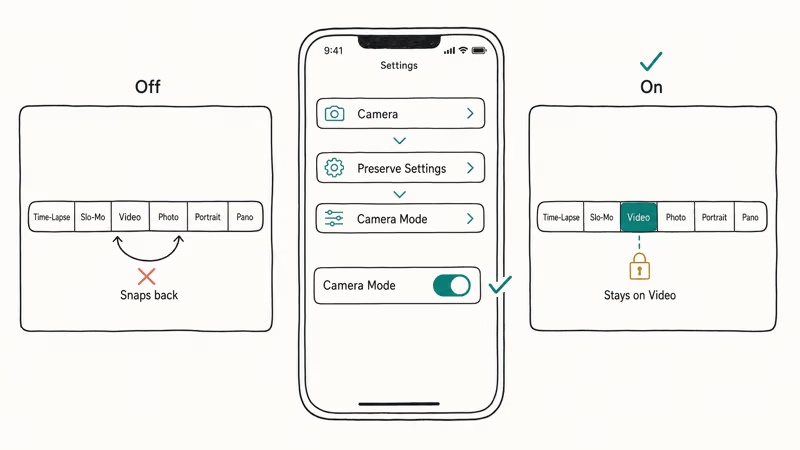
- Open
Settings>Camera>Preserve Settings - Toggle Camera Mode on
- Toggle Creative Controls on while you are there (this preserves filters and aspect ratio)
- Open the Camera app, swipe to Video, close the app, and reopen to confirm
After changing Camera Mode, close and reopen Camera before checking the slider again.
#Restart and Force-Close the Camera App
If Screen Time and Preserve Settings look correct, clear the Camera app’s memory next. A force-close handles most one-off glitches without touching anything else on the phone, and the gesture differs by model so use the right one for your device.
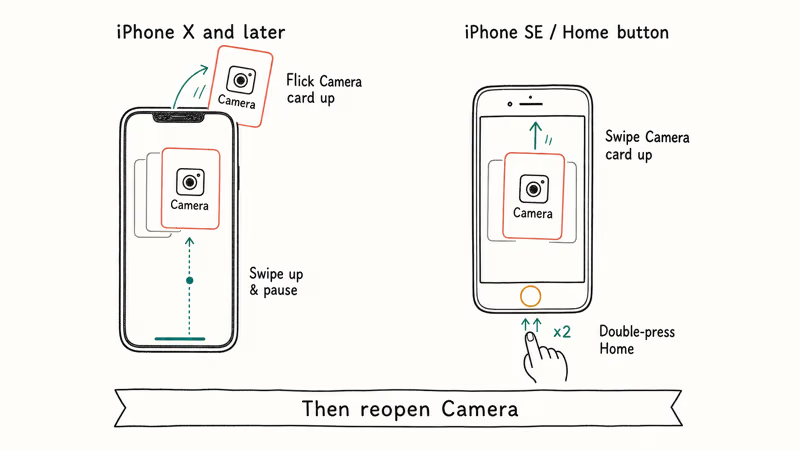
iPhone X and later: Swipe up from the bottom edge and pause in the middle of the screen. Find the Camera app card and swipe it up off the screen.
iPhone SE (2nd or 3rd gen) and earlier: Double-press the Home button to open the app switcher. Swipe the Camera card up to close it.
If a force-close doesn’t fix it, restart the device, since a full reboot clears the temporary state that a force-close alone can leave behind. Apple Support recommends a restart as the first step for any unresponsive built-in app. Do this before changing storage or reset settings, because it leaves photos, accounts, and camera preferences alone.
For iPhone X and later: Hold the side button and either volume button until the slider appears. Slide to power off, wait 30 seconds, then hold the side button to boot.
For iPhone SE and earlier: Hold the side or top button until the slider appears. Slide to power off, wait 30 seconds, then hold the same button to boot.
Open Camera and check the slider before doing anything else.
If the camera is frozen on a black screen rather than just missing the slider, our iPhone frozen guide covers that pattern.
#Free Up Storage Space
The Camera app needs free space to record. When storage drops near zero, iOS quietly kills features in this order: 4K video → Slo-Mo → standard Video → Live Photo. The slider may still appear, but tapping Video does nothing, or the option vanishes from the slider.
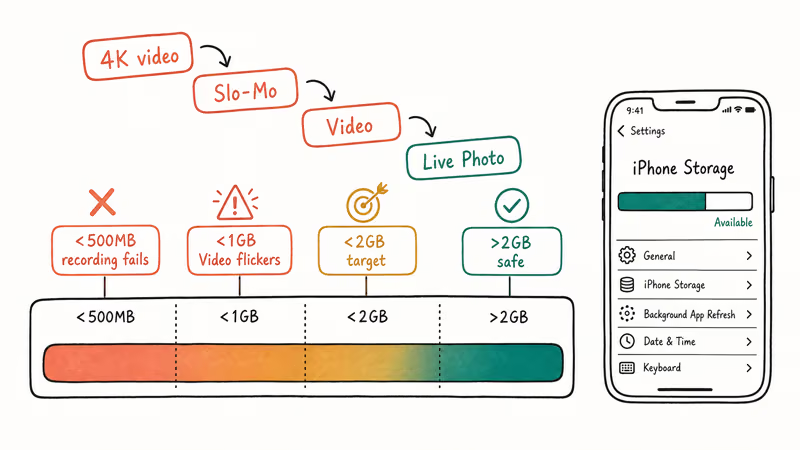
- Open
Settings>General> iPhone Storage - Wait for the bar at the top to load (it scans the disk and can take 30 to 60 seconds)
- Note the Available number at the top right
- Tap any large app to see Offload App (removes the app, keeps documents) or Delete App
- Use the Recommendations at the top, where items like Review Large Attachments and Auto Delete Old Conversations free space without losing photos
Aim for at least 2GB of free space before troubleshooting the Camera app. Anything below 1GB is where Camera features start to misbehave. If you record 4K 60fps, you need closer to 5GB free for a 2-minute clip.
For a deeper storage cleanup, our iPhone unable to load video or photos guide covers the same low-storage failure mode but from the photo library angle.
#Update iOS to Patch Camera Bugs
Apple has shipped at least three Camera bugs since iOS 16 that affected the mode slider. The iOS 17.4 release in March 2024 hid Cinematic and Slo-Mo for a subset of iPhone 14 and 15 users, and 17.4.1 patched it. Keeping iOS current is the cheapest way to avoid these.
- Open
Settings>General>Software Update - Tap Download and Install if an update is waiting
- Plug into a charger and connect to Wi-Fi if you are not already
- Let the update finish without interrupting it
The download is usually 1 to 4GB; the install adds another 10 to 15 minutes after the download completes. According to Apple Support, an iOS install needs at least 1GB of free space plus the download size itself, which is another reason the storage step matters.
#End Active Calls That Hold the Camera
The Camera app can’t record video while another app holds the camera or microphone hardware. FaceTime, Zoom, WhatsApp video calls, Snapchat, and Instagram Reels are the usual suspects.
- Open the App Switcher and look for any active call card with a green or red banner
- End every call you find, including audio-only calls in apps that also have camera permission
- Disable Picture-in-Picture if a video is playing in a floating window (it can hold camera permissions on iOS 17)
- If you use a screen recording app or stream tool, force-close it before opening Camera
This affects FaceTime in particular. Our FaceTime camera not working guide covers the inverse problem.
#Reset All Settings as a Last Resort
When the slider is still broken after the steps above, Reset All Settings clears every preference (Wi-Fi passwords, Bluetooth pairings, wallpaper, keyboard dictionary) without deleting photos, messages, or apps. This usually clears any corrupted Camera preference plist that none of the per-setting toggles can reach.
- Open
Settings>General>Transferor Reset iPhone - Tap Reset
- Tap Reset All Settings
- Enter your passcode and confirm
You’ll need to rejoin Wi-Fi networks afterward and re-pair Bluetooth devices, but Camera, Photos, Messages, and your Apple ID stay intact. Use this only after the lower-impact settings, restart, storage, and update fixes fail.
#Does QuickTake Still Work When the Mode Slider Is Stuck?
Yes, QuickTake is a separate path to video that bypasses the slider entirely. It was added in iOS 13 and works on iPhone XS and later.
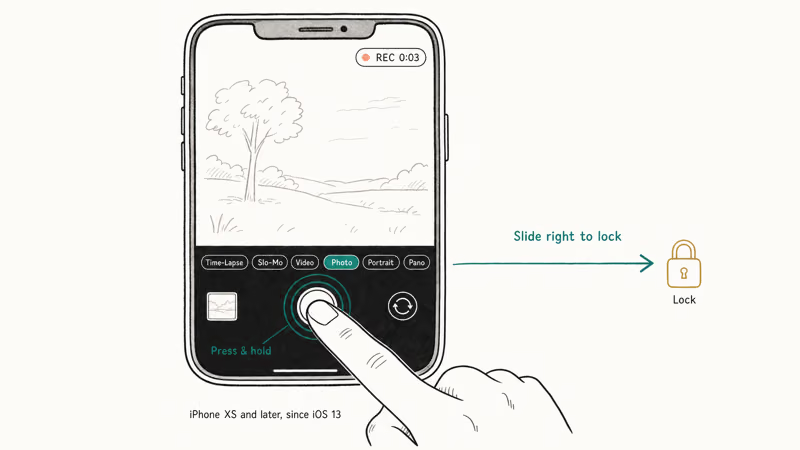
- Open the Camera app in Photo mode (the default)
- Press and hold the white shutter button
- Recording starts immediately; slide right to lock it without holding
- Tap the red square or release the shutter to stop
This is also useful when the slider is visible but Video is greyed out. If QuickTake records normally, the issue is purely with the slider UI; if QuickTake also fails, the cause is deeper (storage, Screen Time, or hardware).
If the viewfinder shows a black screen instead of the slider, that’s a different failure mode that QuickTake can’t work around. And if your iPhone records video but plays it back with a stutter or freeze, the videos won’t play on iPhone fix is the right starting point.
#Bottom Line
Start with the Screen Time check; it blocks Camera before any Camera-specific setting can help. If Camera is allowed but the slider is still broken, toggle Preserve Settings > Camera Mode on, then force-close and restart. Free 2GB of storage and update iOS. Use Reset All Settings only as the final software step before booking a Genius Bar appointment.
#Frequently Asked Questions
Can I take photos when the video option is missing?
Yes. Photo mode runs on a separate code path, so Video failures rarely break stills.
Will a factory reset fix this issue?
A factory reset can fix software corruption, but Reset All Settings (which keeps your data) is far less drastic and should come first. A factory reset wipes every photo, app, account, message, and Health entry on the device. Without a verified iCloud or computer backup the data is gone permanently, so treat the full reset as a last resort.
Can third-party apps record video when the native Camera can’t?
Often, yes. Apps like Filmic Pro, Halide, and ProMovie use their own camera pipelines that can run even when the stock Camera app is glitched. If a third-party recorder works, the issue is software-only and the fixes above will eventually clear it.
Why does my video option only disappear in landscape mode?
Update iOS. Apple has patched two landscape-specific slider bugs since iOS 16.
How do I prevent this from happening again?
Keep iOS current, leave Preserve Settings > Camera Mode on, and aim to keep at least 2GB of free storage. Avoid camera filter apps from outside the App Store, since some third-party VPN-based filter tools have triggered the slider glitch in past iOS versions. Restart the iPhone once a week to clear background memory pressure. None of these prevents every iOS bug, but together they remove the avoidable causes.
Does Low Power Mode block video recording?
Low Power Mode doesn’t block recording itself, but it can drop 4K 60fps and Cinematic mode on older models when the battery is below 20%. The slider stays visible; only the resolution options inside Settings > Camera > Record Video change. Charge above 80% and check the resolution menu again.
What if the video option is greyed out instead of missing?
A greyed-out Video tab usually means another app is holding the camera. Force-close every camera-using app, then reopen Camera.
Can a cracked screen cause the video option to disappear?
A cracked screen doesn’t directly remove the Video option, but a damaged digitizer can fail to register the swipe gesture between modes. If the slider responds in one direction but not the other, that points to digitizer damage rather than software. Book a Genius Bar diagnostic before paying for any repair, since the same one-direction failure can come from a misaligned ribbon cable that re-seats in minutes.
Apple Siri Settlement: Who Qualifies and How to Claim
Apple's $250 million Siri settlement covers iPhone 15 Pro and iPhone 16 models bought June 2024 to March 2025. See who qualifies and how claims work.
iOS 26.6.1 Security Update: What Apple Fixed and Who Gets It
Apple released iOS 26.6.1 on August 17 with 29 security fixes, including an IPSec interception bug. See what it patches, who gets it, and how to update.
iPhone Adaptive Power: How It Works and When to Use It
Learn how iPhone Adaptive Power works, which models support it, what it changes, and when Low Power Mode is still the better battery-saving choice.
How to Transfer Data to a New iPhone Without iCloud
Move everything to your new iPhone without iCloud: Quick Start device-to-device transfer, wired migration, and encrypted Finder or iTunes backups.