League of Legends vs. Dota 2: Which MOBA Should You Play?
League of Legends vs. Dota 2 compared on learning curve, hero pool, esports prize pools, and patch cadence. Pick the right MOBA for your playstyle.
Quick AnswerLeague of Legends is easier for beginners and has a larger active player base, while Dota 2 unlocks every hero for free from day one and rewards deeper strategic mastery.
League of Legends vs. Dota 2 is the MOBA debate that won’t die, and the right answer depends on what you actually want from a 30-minute match. This comparison breaks down where the real friction lives in each game, from the learning curve to the economy to the esports scene.
The short version: one game is easier to pick up, the other rewards a steeper climb, and both will eat your evenings.
- League of Legends has a larger active player base across most regions, so queue times for casual modes typically sit under 2 minutes during peak hours.
- Dota 2 unlocks every hero from the moment you install, while League of Legends gates champions behind Blue Essence, RP, or weekly free rotations.
- The International, Dota 2’s annual world championship, has set multiple records for the largest prize pool in esports history thanks to its crowdfunded battle pass model.
- League of Legends ships meaningful map and item changes each competitive season, while Dota 2’s core mechanics stay more stable across patches.
- Both games are free to download on PC, with monetization limited to cosmetic skins, announcer packs, and battle passes that don’t affect match outcomes.
#What’s the Real Difference Between League of Legends and Dota 2?
Both games hand you a top-down map, three lanes, and a base full of towers to defend. The difference shows up in every other system layered on top.
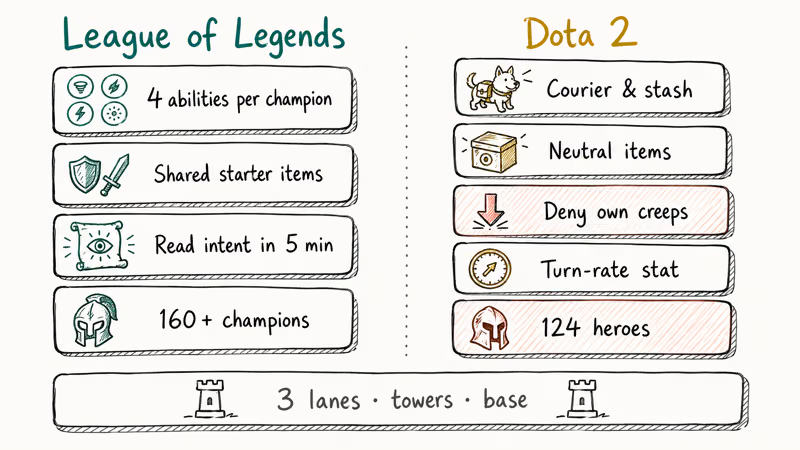
League of Legends, made by Riot Games, leans toward faster matches and clearer abilities. Most champions have four skills, every champion picks up the same starting items, and you can usually read a teammate’s intent within the first 5 minutes.
Dota 2, made by Valve, was built directly on the original DotA mod for Warcraft III. It layers in courier control, a stash, neutral items, denying your own creeps, and a turn-rate stat that matters for skill shots. None of that is filler. It’s why veteran Dota players defend the complexity.
If you want a sense of where each game sits in the broader genre, our best MOBA games roundup lines them up against newer challengers like Smite and Pokémon Unite.
According to Valve’s official Dota 2 heroes page, every hero is available from the moment you install, with no grind, no purchase, and no rotation. Riot’s champion roster confirms that League of Legends has more than 160 playable champions, each one unlockable through gameplay or direct purchase.
#Which MOBA Has a Friendlier Learning Curve?
League of Legends is the friendlier on-ramp for almost everyone.
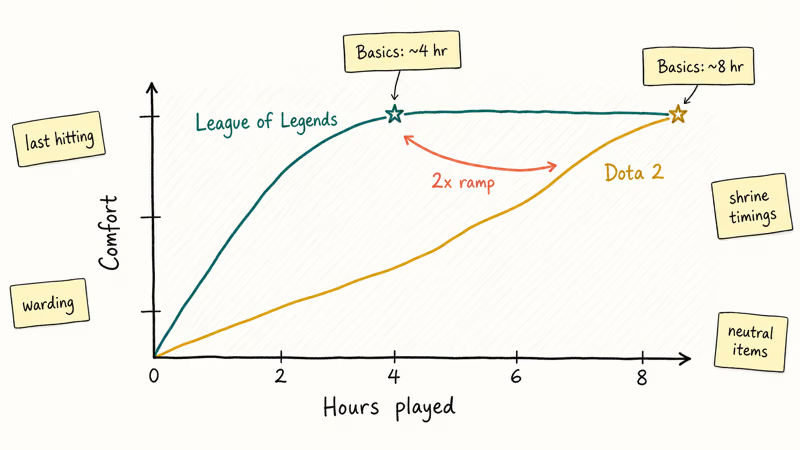
A MOBA newcomer can pick up the basics of League (last hitting, warding, recall) in a single afternoon. Dota 2 tends to take much longer before a newcomer stops asking questions every other minute about jungle camps and shrine timings.
Dota 2’s tutorial covers more material, but the cognitive load only really hits once you queue ranked. You’re tracking 6 inventory slots, neutral items, glyph cooldowns, and the timer on Roshan all at once. League of Legends compresses the same volume of decisions into fewer items and a tighter timing window, which is what makes it feel approachable even though high-level play stays just as demanding.
If you’re learning on the go, our guide to the best mobile MOBA options covers Wild Rift (Riot’s mobile League port) and the Dota Auto Chess descendants. Wild Rift carries over the same champions, runes, and item shop philosophy as the PC client, so it works as a clean gateway to the desktop game.
#Hero Pools, Skins, and Free-to-Play Economics
This is the section where the two games behave very differently.
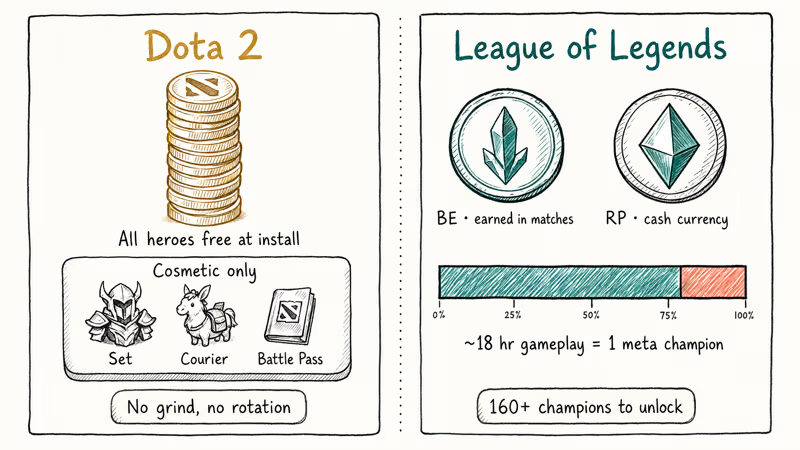
Dota 2’s economy is the simpler of the two. Every hero is free, every game-affecting upgrade is free, and the store sells skins (called sets), couriers, announcer packs, and the seasonal battle pass. You can play 1,000 matches without spending a cent and never lose a competitive edge.
League of Legends gates 160-plus champions behind two currencies. Blue Essence drops from playing matches, while Riot Points are the cash currency. New champions usually rotate through a free-to-play weekly pool, which is fine for casual play but punishing in ranked when the meta shifts to a champion you don’t own. Unlocking several meta champions through gameplay alone takes many hours of matches to bank enough Blue Essence, which is the main friction point for free-to-play ranked players.
Skins are the visible monetization in both games.
League of Legends has the deeper skin catalog with more frequent ultimate-tier releases. Dota 2’s Arcana and Persona skins are rarer but redesign hero animations and voice lines from scratch. Skins in either game are visual only, so they don’t affect hitboxes or damage stats.
For Blizzard fans curious about the lineage, our games like Warcraft 3 write-up walks through how the original DotA mod evolved into the modern Dota 2 client.
#Map Design, Patch Cadence, and Match Pace
League of Legends rewrites Summoner’s Rift in chunks every preseason. The Elemental Drake system rotates between Infernal, Mountain, Cloud, and Ocean variants, and each one warps the terrain plus damage profiles for the match. Riot Games announced the most recent rift overhaul as part of the new season’s preseason notes, which keeps casual returning players on their toes.
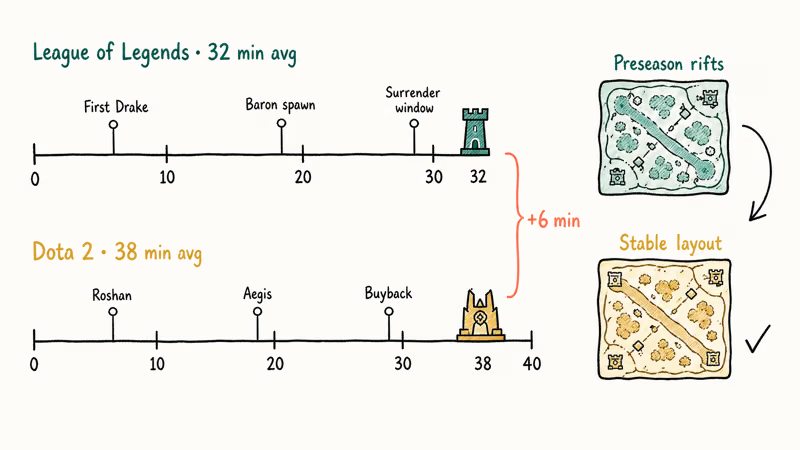
Dota 2 takes the opposite approach.
The map shape stays close to the original layout, with patch updates focused on item rebalances, hero reworks, and neutral-creep tuning. Valve’s patch notes typically focus on numbers rather than terrain. League of Legends matches tend to run shorter than Dota 2 matches, which mirrors the broader pacing difference between the two games.
If you mostly enjoy the comeback rhythm of long strategic games, you’ll likely prefer Dota 2. Players who like deep strategy with structured RPG-style progression sometimes also enjoy our games like Summoners War picks for the slower-paced sessions between MOBA queues.
If you want clean 25 to 35 minute games with surge mechanics like Baron and Elder Dragon, League of Legends fits better.
#Game Modes Beyond Ranked Solo Queue
Both games hide a surprising amount of variety in their secondary queues, and that variety is often where casual players spend most of their time.
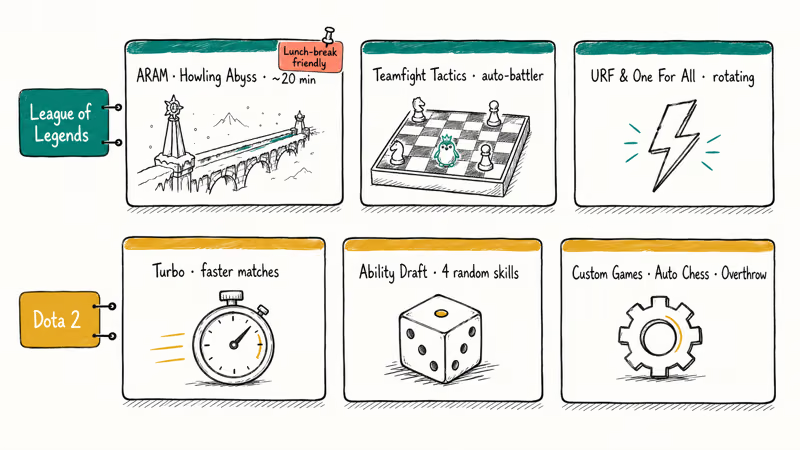
League of Legends ships ARAM (All Random All Mid) on the Howling Abyss map for shorter, single-lane matches. The client also bundles Teamfight Tactics, Riot’s auto-battler, plus seasonal rotating modes like One For All and Ultra Rapid Fire. ARAM games tend to run around 20 minutes, which makes them a clean lunch-break option compared to a standard Summoner’s Rift queue.
Dota 2 counters with Turbo mode for faster matches and Ability Draft for chaos play where every hero rerolls four random abilities. The custom games browser also surfaces community-made modes like Auto Chess, Dota Underlords’ predecessor, and Overthrow.
If you’re after roster depth without the MOBA pressure, our games like Counter-Strike coverage tracks the closest team-based shooter alternatives.
#Esports: The International vs. the World Championship
Both games run flagship tournaments that pull millions of viewers, but they package the spectacle differently.
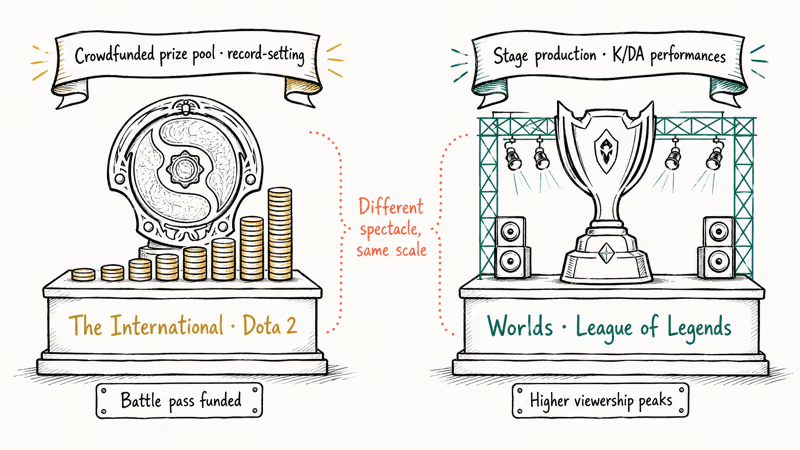
The International is Dota 2’s annual world championship, organized by Valve. According to Liquipedia’s tournament index, The International has hosted some of the largest prize pools in esports history, funded primarily by crowdfunded contributions through the in-game battle pass. Wikipedia’s article on The International confirms that the event has repeatedly broken esports prize-pool records since its first edition in 2011.
The League of Legends World Championship, Riot’s annual finale, leans heavily into stage production and music collaborations. Riot Games announced full live performances tied to the K/DA virtual group and other artist partnerships at recent finals, with concerts staged in the host venues. Opening ceremonies typically feature themed visuals tied to in-game lore, and Worlds finals have been held across cities including Seoul, Paris, and San Francisco over the past several editions.
Worlds typically pulls higher viewership peaks, while The International’s prize pool dwarfs the Worlds purse. Pick whichever broadcast style suits you.
#Bottom Line
For most new players, start with League of Legends. The shorter matches and weekly free rotation get you to a competent baseline faster than Dota 2’s longer games, and the smaller per-match skill load means you can squeeze in two queues over an evening.
Pick Dota 2 if free hero access matters, you enjoy mechanically dense games, and you want a steadier patch rhythm without preseason map redesigns. A common split is to keep Dota 2 for ranked nights and League of Legends for shorter solo sessions when you only have time for a game or two.
#Frequently Asked Questions
Is League of Legends or Dota 2 easier for beginners?
League of Legends has the friendlier learning curve, and the gap is wider than most veterans admit. Champions have four abilities, the item shop has a build-suggestion panel, and matches end faster, so new players cycle through more games per evening. Dota 2 is teachable, but plan to read up on courier control, neutral items, and shrine timings. Most newcomers reach a competent Summoner’s Rift baseline well before they hit the same comfort level in Dota 2.
Which game has more heroes or champions to choose from?
League of Legends has the larger roster, with more than 160 champions versus Dota 2’s roughly 124 heroes. The trade-off: every Dota 2 hero is free from install.
What are the system requirements for League of Legends and Dota 2?
Both games target a wide range of hardware. League of Legends still runs on integrated graphics in older laptops, with Riot recommending an Intel Core i5 or equivalent for smooth play. Dota 2’s newer Source 2 engine has higher minimums, but a modest discrete GPU like a GTX 1650 handles it smoothly at medium settings. Check Riot’s and Valve’s support pages for the current spec sheet before installing.
Which game has a larger active player base?
League of Legends has the larger global player base, especially in Korea and North America. Both games keep queue times short outside off-peak hours.
Are League of Legends and Dota 2 actually free to play?
Yes. Both games are free downloads with unlimited play and paid items restricted to cosmetics.
How long is a typical match in each game?
League of Legends games typically wrap up faster from queue to victory screen than Dota 2 games do. League’s snowball mechanics around Baron and Elder Dragon create faster closeouts. Dota 2’s buyback rule and stash flexibility produce more comeback scenarios that drag matches past the 45-minute mark.
Can the same player be competitive in both games?
Some pros have crossed over, but most stick with one. The mechanics overlap on the surface (lanes, jungle, towers, ultimates), but muscle memory for last hitting and item activations is game-specific.
Fortnite Stuck on the Loading Screen? Fix It in 2026
Fortnite stuck on the loading screen? Check server status, fix the Windows N Media Pack and DirectX 11 on PC, clear the console cache, and verify files.
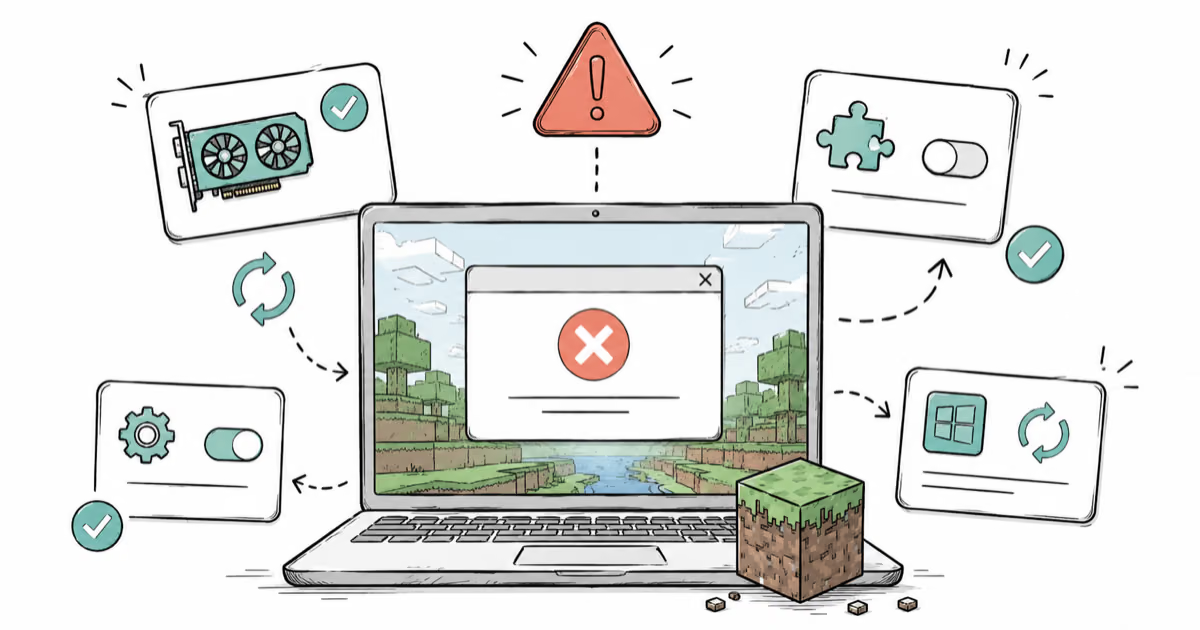
Minecraft Keeps Crashing? Java and Bedrock Fixes (2026)
Minecraft keeps crashing on startup or mid-game? Update your GPU driver, remove mods on Java, and reinstall Gaming Services on Bedrock. Fixes for both.
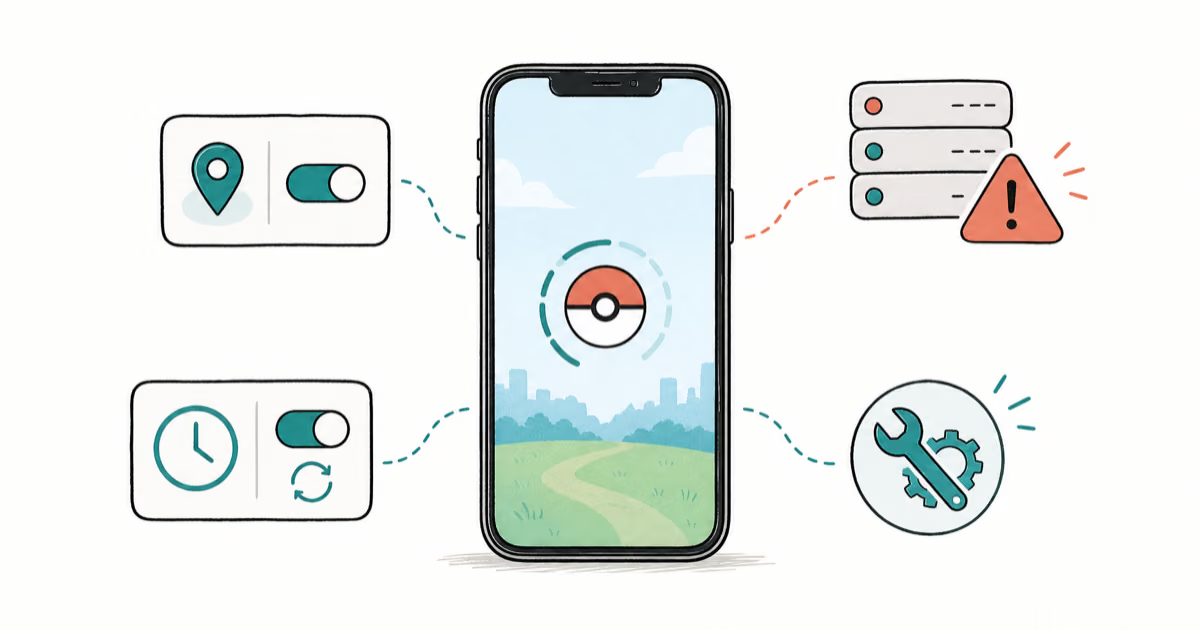
Pokemon GO Not Loading? Fix the Loading Screen 2026
Pokemon GO not loading or stuck on the Pokeball? Check server status, fix automatic date and time, grant location permission, clear the cache, and update.
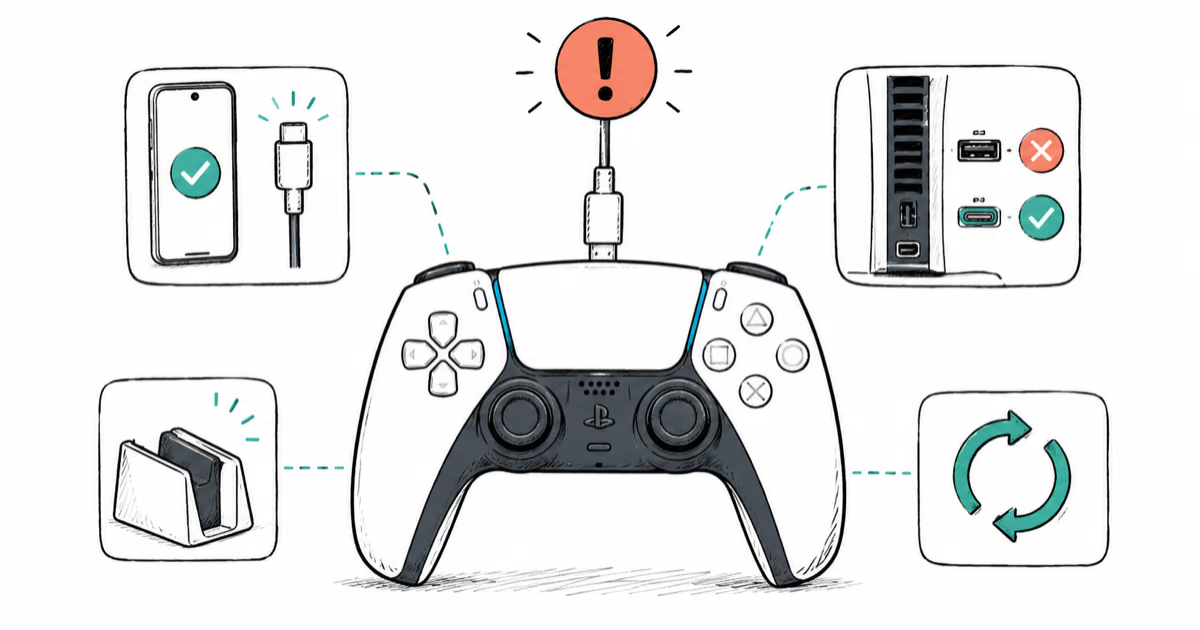
PS5 Controller Not Charging? 9 Fixes That Work (2026)
DualSense not charging? Swap the cable, use a rear port in Rest Mode, clean the USB-C port, and check power settings. 9 fixes for a dead PS5 controller.