iPhone Attempting Data Recovery: Safe Recovery Steps
Handle an iPhone Attempting Data Recovery screen safely: wait for progress, force restart if stalled, choose Update first, and know Restore erases data.
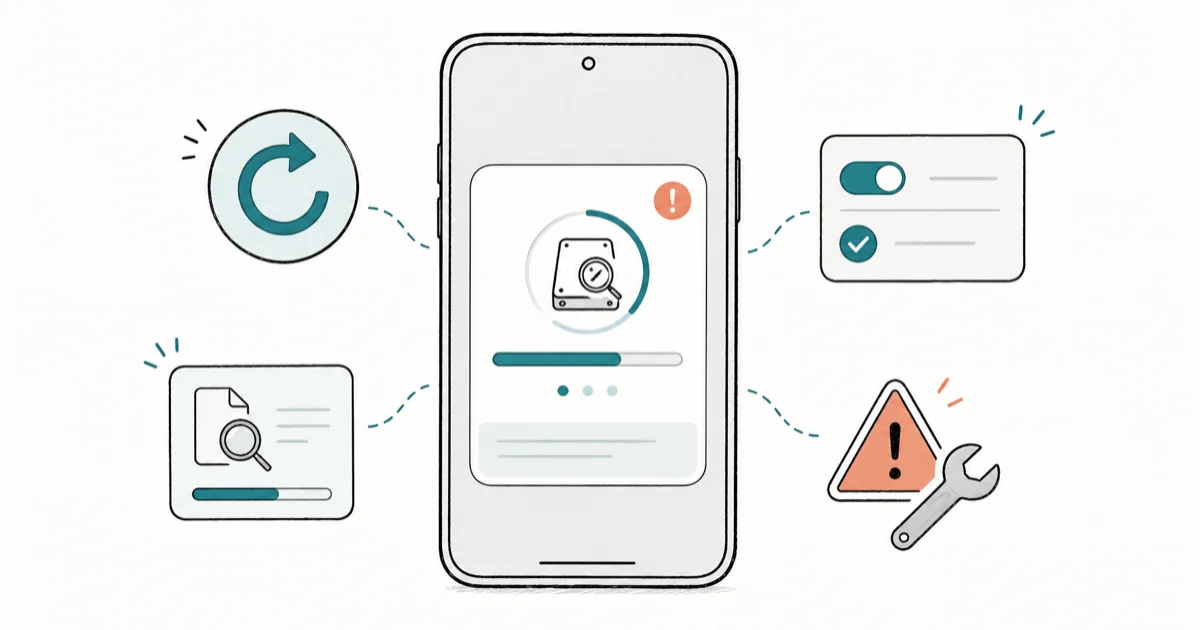
Quick AnswerIf progress is moving, don't interrupt the iPhone. If it stalls or loops, force restart, connect to Finder or Apple Devices, and choose Update first; Restore erases the device.
“Attempting Data Recovery” may be working or caught in a loop. Apple doesn’t publish one universal cause or duration.
Watch for real progress. If the display is changing, leave the iPhone connected to power and don’t interrupt it. If it stops, loops, or shows the computer-and-cable recovery screen, use Apple’s documented recovery paths below.
- There is no Apple-published fixed duration for the “Attempting Data Recovery” message
- Don’t interrupt the device while its progress indicator is moving
- If it stalls or loops, use the force-restart sequence for your iPhone model
- In Finder or Apple Devices, choose Update first to reinstall iOS while keeping personal data
- Restore erases the iPhone; error 4013 or 4014 isn’t proof that the storage chip has failed
#Is the Recovery Actually Stuck?
Look for movement or a change on the display before pressing buttons. A slow operation isn’t the same as a frozen one, and interrupting an active install can create another recovery problem.
According to Apple’s current progress-bar support page, an Apple-logo progress bar is stuck only when it hasn’t moved for at least one hour. That rule belongs to the Apple-logo progress-bar scenario; it shouldn’t be shortened to ten minutes or applied as a universal timer to every “Attempting Data Recovery” screen.
If the progress indicator is moving, wait. If it isn’t moving, the screen keeps returning after a restart, or the iPhone shows the recovery-screen cable graphic, continue with the documented steps. Our stuck Apple logo guide covers that separate display state in more detail.
#Force-Restart Steps by iPhone Model
Use the model-specific sequence in Apple’s current restore-screen guide:
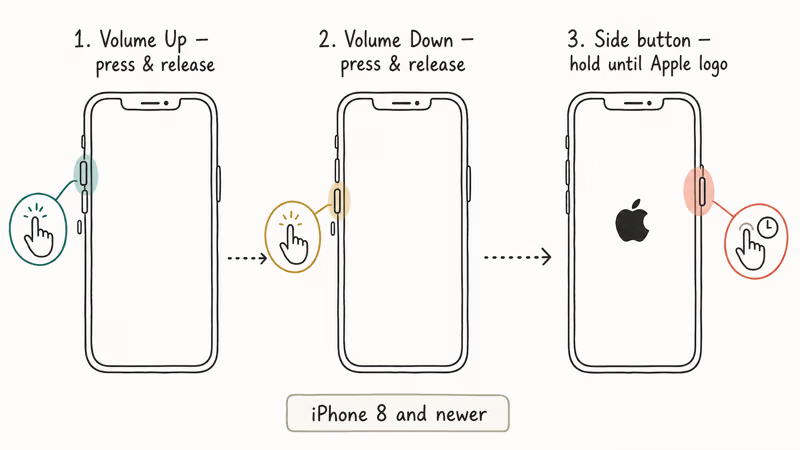
- iPhone 8 or later, including iPhone SE (2nd generation or later): Press and quickly release Volume Up, press and quickly release Volume Down, then hold the Side button until the Apple logo appears.
- iPhone 7 or iPhone 7 Plus: Hold the Side button and Volume Down together until the Apple logo appears.
- iPhone 6s or earlier, including iPhone SE (1st generation): Hold the Home button and the Side or Top button together until the Apple logo appears.
Release the buttons when the Apple logo appears and let the phone try to start. Don’t promise that this will recover data or clear the screen “in most cases”; Apple gives the sequence, not a success percentage or completion time.
If the iPhone won’t turn on at all, follow the power and charging checks in our iPhone won’t turn on guide before repeatedly forcing restarts.
#How Do You Use Recovery Mode Without Erasing Data?
If the same screen returns, connect the iPhone to a Mac or Windows PC with a cable. Use Finder on a Mac or the Apple Devices app on Windows. Apple’s current recovery-mode guide uses those apps; the old version of this article pointed recovery instructions at support ID 108647, which is actually an Apple Account creation page.
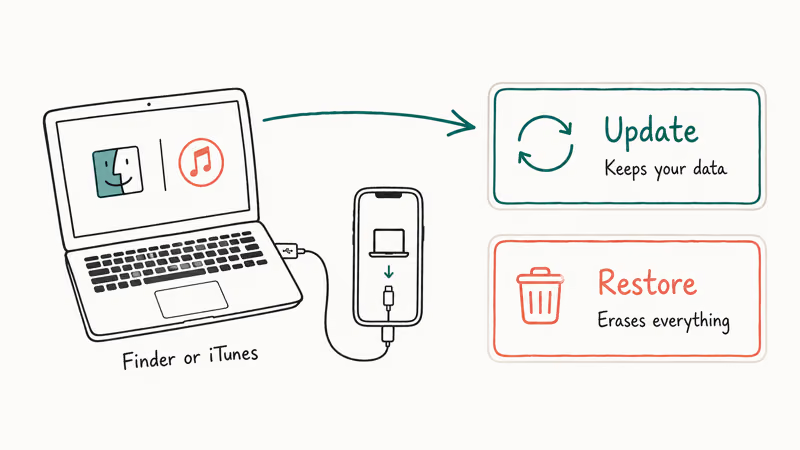
- Connect the iPhone to the computer and open Finder or Apple Devices.
- Repeat the model-specific button sequence, but keep holding until the computer-and-cable recovery screen appears.
- Select the iPhone in Finder or Apple Devices.
- When the computer offers Update or Restore, choose Update first.
According to Apple’s current restore-screen guide, Update, not Restore, reinstalls iOS while keeping personal data. Let the download and installation finish and keep the cable connected. Don’t rely on a fixed installation-time estimate; internet speed, software size, computer performance, and device state vary.
If Update can’t complete, repeat Apple’s recovery steps or contact Apple. Don’t turn “Update failed twice” into an automatic erasure rule; Apple’s current page doesn’t publish that threshold. Our recovery-mode troubleshooting guide covers the same supported boundary.
#Understand What Restore Does
Restore erases the iPhone. Use it only after you understand the data consequence and have exhausted the non-erasing Update path or Apple has directed you to restore.
If you already have an iCloud or computer backup, Apple’s current restore-from-backup guide explains how to choose it during setup after a restore. A backup can return data captured before the backup date; it can’t recreate changes that were never backed up.
Read our guide to what Restore iPhone means before choosing it.
Don’t erase the device because a commercial utility promises unspecified “fragment” recovery afterward.
#Handle Error 4013, 4014, 9, or 4005 Without Guessing
Error 4013 or 4014 doesn’t by itself prove that the NAND storage, logic board, baseband, or a particular connector has failed. According to Apple’s current error 4013/4014 guide, the same troubleshooting also covers errors 9 and 4005:
- Make sure the Mac or Apple Devices app is current.
- Force restart the iPhone using the correct model sequence.
- Connect it with a USB cable and try Update again.
- If the error returns, try another cable or another computer.
- Contact Apple if the device still can’t update or restore.
Those errors can accompany a lost connection or a computer that couldn’t command the update or restore. They justify troubleshooting and, if necessary, service; they don’t authorize a remote hardware diagnosis or a quoted logic-board repair price.
#If Data Is Missing After the Phone Starts
First determine whether the content was stored in iCloud, in a computer backup, or only on the device.
- If an iCloud service such as Photos, Contacts, or Messages was enabled, confirm that the iPhone is signed in to the intended Apple Account and let syncing resume.
- If you have a backup from before the problem, use Apple’s restore-from-backup flow and choose the correct backup date.
- For photos and videos, check
Photos>Recently Deleted. Apple’s current photo recovery guide says items can be recovered there within 30 days of deletion.
No current Apple source says Dr.Fone, ReiBoot, or another consumer utility can scan an updated iPhone for file fragments that iOS missed. Installing a utility can’t substitute for an existing backup and may require trusting a computer with device data.
#Reduce Risk Before the Next Update
Back up before updating, connect the iPhone to power, use Wi-Fi, and make sure the device has enough available storage for the offered update.
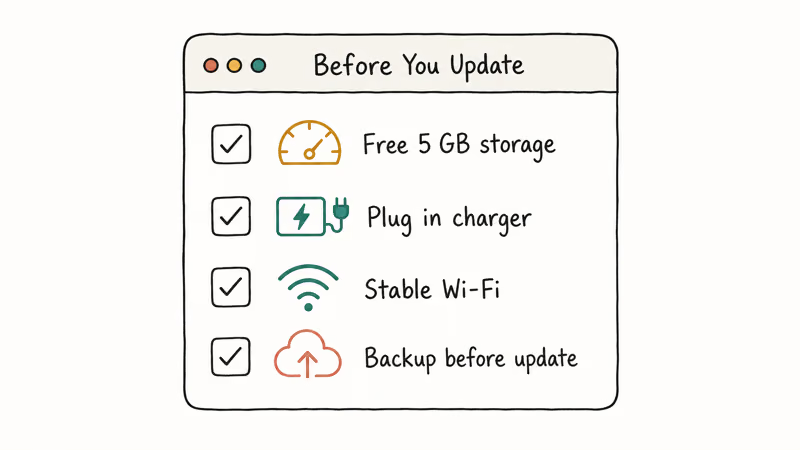
Apple’s backup guide explains iCloud and computer backups. Its backup-method comparison notes that a computer backup must be encrypted if you want it to include Health, Activity, and Keychain data.
If iCloud won’t finish a backup, use our iCloud backup troubleshooting guide before updating.
For the update itself, Apple’s current iPhone update guide says to back up first, connect to power and Wi-Fi, then open Settings > General > Software Update. If the update can’t install, use Apple’s update troubleshooting page to check power, internet access, and available storage. Apple doesn’t prescribe a universal five-gigabyte reserve or a fixed battery percentage for every update.
#When to Contact Apple
Contact Apple if Update repeatedly fails, the recovery screen returns, the iPhone can’t be detected reliably by more than one known-good cable or computer, or the device becomes unusually hot. Bring the exact error code and the steps already tried.
Coverage and repair price depend on the device, inspection result, region, warranty status, and service plan. Don’t assume the repair will be free or quote a board-level price before Apple or an authorized provider diagnoses the device.
#Bottom Line
Don’t use a ten-minute timer or a success-rate claim for “Attempting Data Recovery.” Wait while the display is progressing. If it stalls or loops, force restart using Apple’s model-specific sequence, connect to Finder or Apple Devices, and choose Update first. Restore erases the iPhone. Treat recovery error codes as troubleshooting signals, not proof that a storage chip or logic board has failed.
#Frequently Asked Questions
How long should I wait on Attempting Data Recovery?
Apple doesn’t publish a fixed duration for that exact message. If the display is making progress, don’t interrupt it. Apple’s one-hour rule applies specifically to an Apple-logo progress bar that hasn’t moved, not to every recovery screen.
Will Attempting Data Recovery erase my files?
Don’t rely on a blanket guarantee. In the computer recovery flow, Apple says Update reinstalls iOS while keeping personal data, while Restore erases the device. Whether missing content can return afterward depends on iCloud syncing and backups that already exist.
Should I use DFU mode?
Apple’s current public recovery flow directs users to recovery mode and the Update or Restore choices in Finder or Apple Devices. This article doesn’t add an unsourced timed DFU button sequence or promise that firmware-level work can recover data.
What does error 4013 mean?
It means the update or restore couldn’t complete. Apple recommends updating the computer software, force restarting, reconnecting by USB, trying another cable or computer, and contacting Apple if the error persists. The code alone doesn’t identify a failed storage chip.
Is updating with a computer always safer than updating over Wi-Fi?
Apple documents both update paths and doesn’t say one is universally safer. Back up first, use the supported method available to you, keep the device powered, and follow the current instructions for that method.
Can a third-party tool recover files without a backup?
No current Apple source supports that promise. Avoid erasing or trusting a computer solely because a utility advertises fragment recovery. If the data is critical and no backup exists, stop making changes and ask Apple or a qualified recovery specialist what evidence-preserving options are available, without assuming recovery is possible.
Apple Siri Settlement: Who Qualifies and How to Claim
Apple's $250 million Siri settlement covers iPhone 15 Pro and iPhone 16 models bought June 2024 to March 2025. See who qualifies and how claims work.
iOS 26.6.1 Security Update: What Apple Fixed and Who Gets It
Apple released iOS 26.6.1 on August 17 with 29 security fixes, including an IPSec interception bug. See what it patches, who gets it, and how to update.
iPhone Adaptive Power: How It Works and When to Use It
Learn how iPhone Adaptive Power works, which models support it, what it changes, and when Low Power Mode is still the better battery-saving choice.
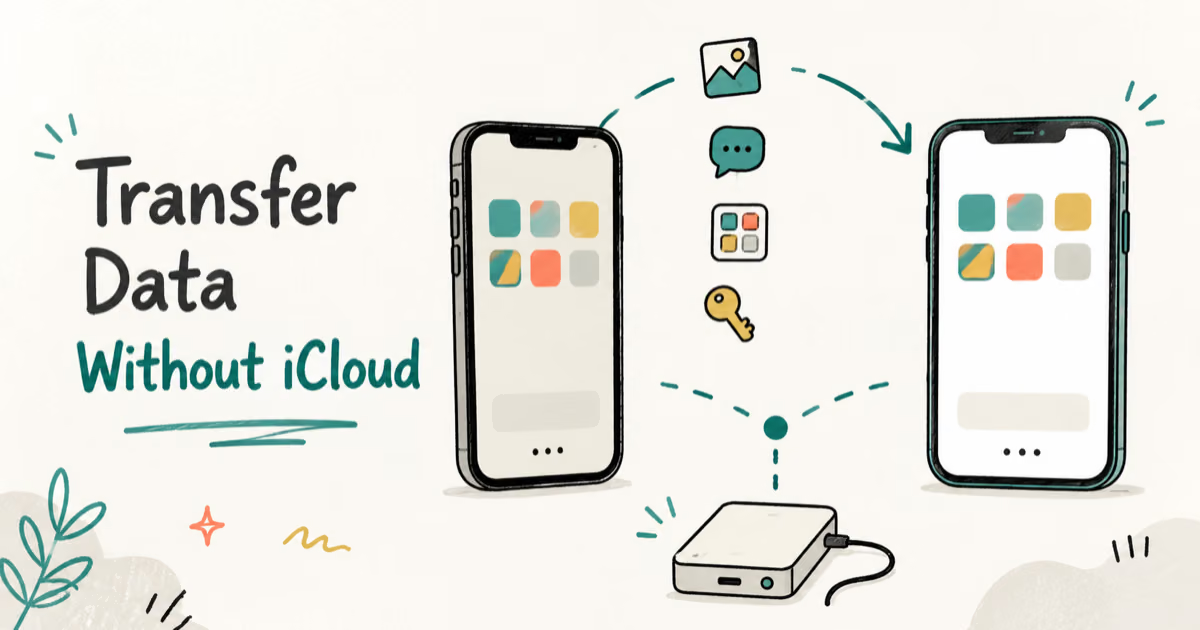
How to Transfer Data to a New iPhone Without iCloud
Move everything to your new iPhone without iCloud: Quick Start device-to-device transfer, wired migration, and encrypted Finder or iTunes backups.