iCloud Removal Service: Guide to Unlocking Your Apple Device
Compare safe iCloud removal services to unlock Activation Lock on iPhone and iPad you own. Official Apple paths first, trusted third-party options after.
Quick AnswerThe safest iCloud removal method is through Apple directly: sign out in Settings with your own credentials, or visit an Apple Store with proof of purchase. Only consider paid services like Tenorshare 4MeKey or iRemove on a device you legally own and after official channels fail.
This guide covers one situation only: an iPhone or iPad you legally own, where Activation Lock is blocking setup. If the device isn’t yours and you don’t have the previous owner’s explicit consent, stop reading and return it. Bypassing Activation Lock on a found or stolen device is illegal in most jurisdictions, and Apple’s servers can re-lock it at any time.
- The safest and free iCloud removal path is signing out through Settings with your own Apple ID, or visiting an Apple Store with original proof of purchase.
- Activation Lock is a deliberate anti-theft feature tied to Apple ID at the server level, so a factory reset alone won’t clear it.
- Third-party tools like Tenorshare 4MeKey and IMEI-based services can bypass the lock for a fee, but should only run on devices you can prove you own.
- “Free iCloud unlock” sites are almost always scams; legitimate paid services exist because the work needs real infrastructure and time.
- If you bought a second-hand iPhone still linked to someone else, asking the seller to remove it from iCloud.com is faster, safer, and cheaper than any bypass.
#What Is iCloud Activation Lock?
Activation Lock is Apple’s anti-theft layer. It ties an iPhone, iPad, Apple Watch, or Mac to a specific Apple ID.
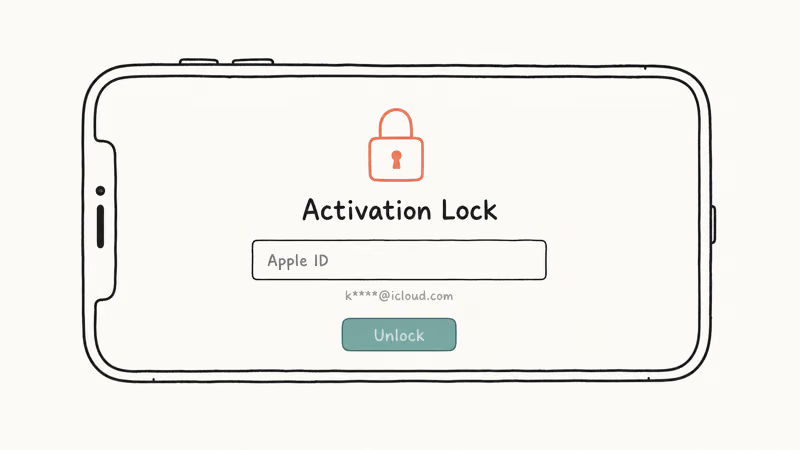
Once Find My is turned on, the device’s serial number is registered with Apple’s activation servers, and that Apple ID is required to wipe, re-activate, or sign out, even after a factory reset. The protection survives full restores through Recovery Mode and DFU, which is the entire point: a thief shouldn’t be able to wipe and resell a stolen iPhone.
Apple confirms that Activation Lock has shipped on every iPhone since iOS 7 launched in 2013, and the protection now covers Apple Watch, Mac with Apple silicon, and AirPods Max. Full details are on Apple’s Activation Lock support article. That long history is why a 10-year-old iPhone 5s pulled from a drawer can still demand the original owner’s password.
Before paying any bypass service, confirm three things: the serial number on the back of the device matches your receipt, the box and proof of purchase are with you, and you’ve actually tried Apple’s free paths below. A bypass that succeeds on the wrong device is still illegal, no matter what the vendor claims.
#Before You Try Any Removal Method
The legal line is simple. Removing iCloud from your own device, or from a device whose previous owner gave you explicit consent (in writing if possible), is fine. Removing it from a phone you found, inherited without paperwork, or bought “as-is” with the lock still on is risky. On a reported-stolen unit, it’s a crime that no consumer software can shield you from.
Inherited a device with no working credentials? Apple has a separate request flow: submit a death certificate plus proof of legal authority through Apple Support, and they’ll handle it for free. An Apple Support agent can walk you through the documentation upload, and it’s worth completing this before paying for any third-party tool.
If the seller is reachable, contact them first. Asking them to sign in at iCloud.com, pick the device, and tap Remove from Account clears the lock in under a minute, and it costs nothing.
#Official Apple Methods That Cost Nothing
The most reliable and secure way to remove an iCloud account is through official Apple channels. Two paths cover almost every scenario.
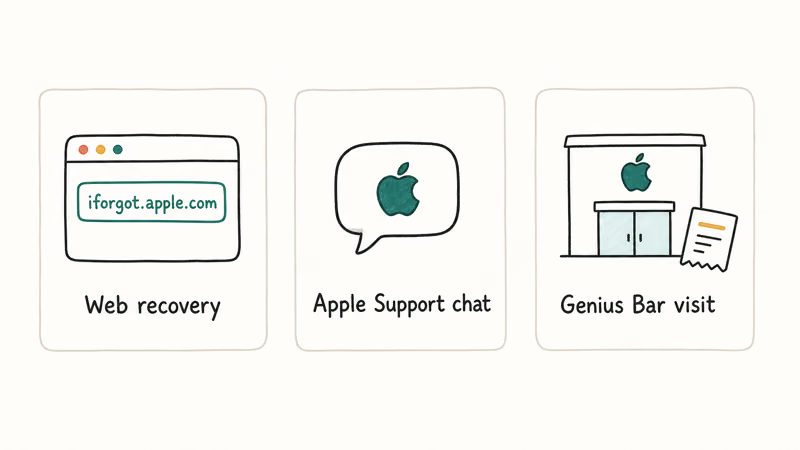
Sign out from Settings. If you remember your credentials, go to Settings > [Your Name] > Sign Out, enter the Apple ID password, and disable Find My when prompted. The same steps are covered in our walkthrough on how to remove Apple ID from iPad or iPhone. The whole flow takes under two minutes and needs no extra tools.
Visit an Apple Store with proof of purchase. If the password is lost but you bought the device new, book a Genius Bar appointment and bring the original receipt. Apple’s published policy confirms that a Genius can clear Activation Lock when ownership is verified. It’s the only first-party route when credentials are gone, and it’s free.
Pros: legal, free, no warranty risk. Cons: needs credentials or paperwork, and a store visit can eat half a day.
If neither path works, the official options end. Any further attempt moves into third-party territory, where success rates and legal exposure both shift.
#Can a Third-Party Service Legally Unlock Someone Else’s iPhone?
Short answer: no service can legally remove Activation Lock from a device you don’t own. Apple’s About Activation Lock page states that only the original Apple ID can sign the device out, and any tool that promises otherwise is either bypassing the lock at the OS level (which doesn’t pass full ownership) or running an IMEI database trick that Apple can reverse with a server-side update.
What third-party services can legally do is help an owner who lost credentials and can’t reach a Store. Examples include an expat with a US-purchased iPhone living overseas, or someone who inherited a device without paperwork the Apple flow accepts. Even then, the device remains in a partial state: signed-in iCloud, App Store, and certain iCloud-dependent features may not work.
If you’re considering a paid tool, screenshot the activation screen and the device’s serial number first, save your proof of purchase, and keep a copy of any seller correspondence. Reputable vendors ask for these before they take payment.
#Reputable Third-Party iCloud Removal Tools
These are the third-party tools that most consistently produce results on owner-verified devices. Use them only after the Apple-direct paths above have failed.
- Tenorshare 4MeKey: desktop software that bypasses Activation Lock without the Apple ID, supports recent iOS versions, and walks you through any required jailbreak step. Best for users comfortable connecting a phone to a Mac.
- Cellunlocks: IMEI-based remote service that doesn’t need a local software install; typical turnaround is around three business days for iPhone and iPad.
- iToolab UnlockGo for iCloud: desktop tool that targets the same scenario as 4MeKey with a slightly different model compatibility list. Useful as a second attempt if the first tool stalls. It also covers Apple Watches and older iPhones that some desktop tools have dropped.
Some links on this page are affiliate links, which means fone.tips may earn a commission at no extra cost to you.
Pros: can recover access when Apple-direct paths are exhausted. Cons: costs $30-$80 typically, success varies by model and iOS version, and signed-in iCloud services usually don’t fully return.
#IMEI-Based Unlock Services
IMEI services run remotely against Apple’s activation database, so you don’t install any software locally. The flow is consistent across vendors:
- Dial *#06# on the device or check
Settings>General>Aboutto read the 15-digit IMEI. - Submit it to one of the vendors listed above.
- Pay the listed fee, usually $25-$60 for iPhone, more for cellular iPad.
- Wait one to five business days for the activation status to flip.
Pros: works without a USB cable, fits iPhones that are dead on arrival, and handles models that desktop tools skip. Cons: success isn’t guaranteed for every IMEI range, refunds depend on the vendor’s policy, and Apple has reversed batch removals in the past when fraud patterns were detected.
#Software Tools for iCloud Removal
Two desktop options come up often in support forums.
iRemove Software is compatible with iOS 17 on supported models and provides step-by-step instructions, though some iPhones require a checkra1n jailbreak first. Dr.Fone – Screen Unlock (iOS) supports a broad iOS range, offers a free trial that confirms whether your specific device is supported, and uses a more guided interface.
Some of these tools may require a checkm8 jailbreak iCloud bypass, a step that carries its own risks: lost warranty, security exposure, and possible bricking on a failed boot.
Pros: often cheaper than IMEI services, useful for offline troubleshooting. Cons: technical knowledge required, signed-in iCloud features stay disabled, and any future iOS update can reset the lock.
#Free or Near-Free Options Worth Trying First
Truly free options are limited, but worth exhausting before paying anyone:
- Use the correct Apple ID and password: the cheapest fix when credentials are recoverable through iforgot.apple.com.
- Contact the previous owner: a one-minute remote sign-out from iCloud.com beats every paid bypass on the market.
- Apple Support with ownership proof: Apple may assist for free if your documentation is solid; the request form walks you through what’s needed.
- DNS bypass: a partial-access trick covered in our iCloud DNS bypass guide; it doesn’t fully unlock the device but lets you use a limited browser and a few apps.
Be wary of any free iCloud unlock site that promises a complete bypass with no payment. Apple recommends ignoring offers that ask only for an IMEI and an email. Those sites are harvesting data, not unlocking phones.
#Red Flags and Scams to Avoid
The iCloud removal market is unfortunately full of bad actors. Common signals to walk away from:
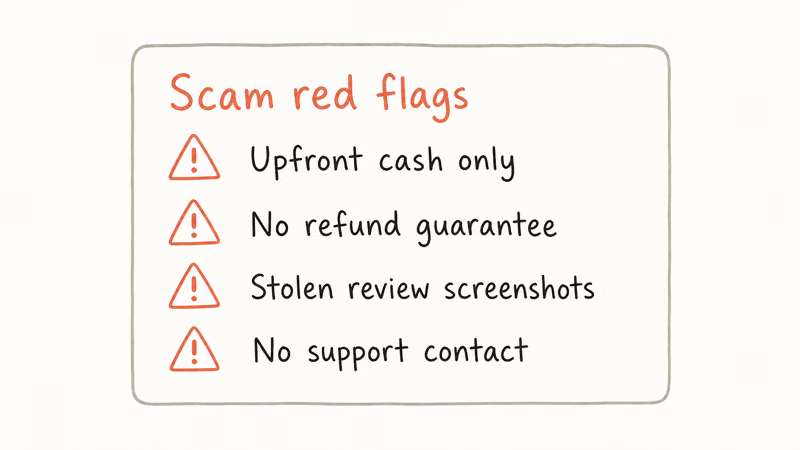
- Services asking for your Apple ID password upfront. No legitimate bypass needs it.
- Prices under $10 or “instant unlock for any model” promises.
- No business address, no phone number, no refund policy.
- Pressure to pay in cryptocurrency only.
- Reviews that all appeared in the same week with similar phrasing.
A legitimate vendor will publish supported models, give a realistic 1-5 day timeline, accept reversible payment methods like credit cards or PayPal, and provide a tracking ticket. If any of those are missing, close the tab.
#Step-by-Step: Using Tenorshare 4MeKey
This walkthrough applies only to a device you legally own, such as a US-purchased iPhone you bought yourself.
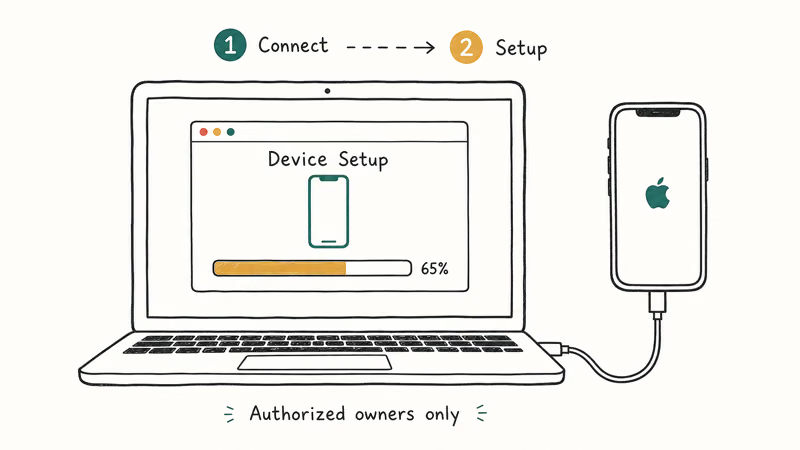
- Download and install 4MeKey on a Mac or Windows PC from the official Tenorshare site.
- Connect the locked iPhone via the original Lightning cable and trust the computer when prompted (if Trust appears).
- Pick Bypass iCloud Activation Lock in the main menu.
- Follow the on-screen prompts to install the required jailbreak. 4MeKey runs the checkra1n image automatically on supported macOS versions.
- Confirm the device model the tool detects, then click Start Bypass.
- Wait 5-15 minutes while the tool processes; don’t unplug the device.
If you’d rather start from the IMEI route, or you bought the phone second-hand and need a paper trail before paying, our guide on how to remove Find My iPhone Activation Lock without the previous owner covers the documentation Apple accepts. The exact steps for other vendors are similar (install, connect, identify, pay, wait), but every tool’s compatibility list differs, so check yours first.
#Choosing the Right Path for Your Situation
Match the method to the answers you can give honestly:
- Do you have the original Apple ID and password? → Settings sign-out is free and instant.
- Do you have proof of purchase but lost the password? → Apple Store, free.
- Is the previous owner reachable? → Ask them to remove the device from iCloud.com, free.
- None of the above, but you legally own the phone? → A reputable third-party tool like Tenorshare 4MeKey or an IMEI service, paid.
- The phone isn’t yours and the previous owner can’t be reached? → Stop. Return it or take it to local police; bypassing isn’t an option.
Budget, speed, and your comfort with desktop software all factor in once you’re in the paid tier. For most owners with legitimate paperwork, the Apple-direct path resolves the problem in a single afternoon.
#Bottom Line
For an iPhone or iPad you actually own, the order is: try the Apple ID password, contact the previous owner if relevant, book an Apple Store visit with proof of purchase, and only then pay a third-party service.
Tenorshare 4MeKey and iToolab UnlockGo for iCloud are the two strongest paid options for owner-verified devices, with IMEI services like Cellunlocks as a fallback for older models or remote situations. If the device isn’t yours and the previous owner can’t be reached, no shortcut is worth the legal risk. Return it.
#Frequently Asked Questions
Is it safe to use online iCloud removal services?
Reputable desktop tools and IMEI vendors are generally safe on devices you own, but the space is crowded with scams. Vet any service for a real business address, refund policy, and supported-model list before paying, and never hand over your Apple ID password upfront.
Is it legal to use iCloud removal services?
Using Apple’s official paths is always legal. Third-party bypasses sit in a gray zone: legal on a device you own with documentation, illegal on a found, inherited-without-paperwork, or reported-stolen device. The vendor doesn’t verify ownership for you, so that responsibility falls on the buyer.
Will removing the iCloud lock affect my device’s warranty?
Unofficial bypasses can void Apple’s warranty, especially if they require a jailbreak. Official sign-out through Settings or an Apple Store visit doesn’t affect warranty status.
How long does the iCloud removal process usually take?
Settings sign-out with a known password is instant. Apple Store removal takes 30-60 minutes at the appointment. IMEI services usually quote 1-5 business days, and desktop tools like 4MeKey complete in 5-15 minutes once the jailbreak step is done.
Can all iCloud-locked devices be unlocked?
No. Devices reported as lost or stolen are flagged in Apple’s database and won’t unlock through any consumer route. Some newer Mac and iPhone models with the Secure Enclave also resist desktop bypasses entirely.
Does an iCloud-removed iPhone work like a normal phone?
Mostly, but not fully. Calls, texts, web, and most App Store apps work. Signed-in iCloud services (iMessage, FaceTime, Photos sync, Find My) usually stay disabled because they tie to the original Apple ID at the server level. That limitation is identical across every consumer bypass tool, since none of them transfer true ownership.
What should I do if the seller refuses to remove iCloud after I bought the phone?
Open a dispute with your payment provider (PayPal, credit card, or marketplace like eBay). Most platforms treat an unremoved iCloud lock as “not as described.” Keep all messages, the listing screenshot, and the device serial as evidence; that paper trail is what unlocks a refund faster than any bypass tool would.
Apple Siri Settlement: Who Qualifies and How to Claim
Apple's $250 million Siri settlement covers iPhone 15 Pro and iPhone 16 models bought June 2024 to March 2025. See who qualifies and how claims work.
iOS 26.6.1 Security Update: What Apple Fixed and Who Gets It
Apple released iOS 26.6.1 on August 17 with 29 security fixes, including an IPSec interception bug. See what it patches, who gets it, and how to update.
iPhone Adaptive Power: How It Works and When to Use It
Learn how iPhone Adaptive Power works, which models support it, what it changes, and when Low Power Mode is still the better battery-saving choice.
How to Transfer Data to a New iPhone Without iCloud
Move everything to your new iPhone without iCloud: Quick Start device-to-device transfer, wired migration, and encrypted Finder or iTunes backups.